Alaska Native Corporations

Alaska Native corporation acquires oil and gas leases in Arctic waters

17?USGSArctic
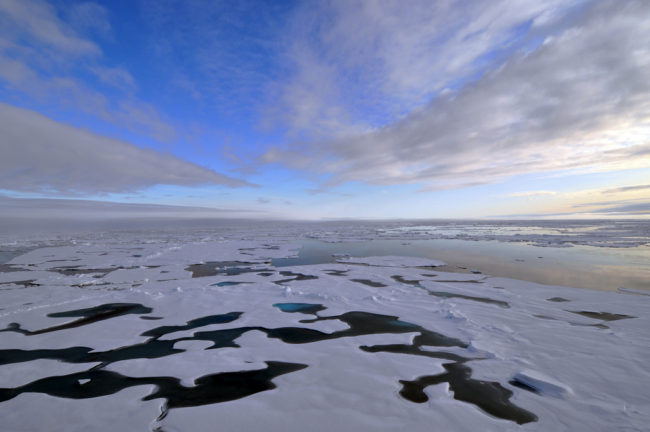
A Native Corporation is now able to explore oil and gas opportunities in the Arctic Ocean. (Photo courtesy of the U.S. Geological Survey)

The Alaska Native corporation representing the North Slope has bought 21 federal leases in the Beaufort sea formerly owned by Shell. That gives the Arctic Slope Regional Corporation, or ASRC, the right to explore for oil and gas in the Arctic Ocean, which has historically been controversial.

Rex Rock Sr. is the president and CEO of ASRC.  He announced Wednesday that the corporation has acquired Shell’s leases in Camden Bay, just off the coast of the Arctic National Wildlife Refuge.

After spending billions on an unsuccessful exploration campaign, Shell halted its efforts to drill in the Arctic in 2015. However, Rock said Shell’s failure to develop on the Outer Continental Shelf doesn’t mean there isn’t opportunity for oil and gas development there.

“We all know how the Chukchi effort ended, yet we know there is still tremendous potential in Alaska’s offshore,” Rock said.

Camden Bay is the site of the Sivulliq and Torpedo prospects. Rock said ASRC also obtained Shell’s data on the sites. He made the announcement at a conference hosted by the Resource Development Council in Anchorage.

The Interior Department is expected to announce soon whether it will include the Arctic in its 5-year plan for offshore oil and gas leasing. Alaska Department of Natural Resources Commissioner Andy Mack said ASRC’s willingness to take on the leases is a sign of local support for offshore drilling — and it should signal to the federal government that the Arctic must be included in the plan.

“For ASRC to take this step out and say we believe that we can do this and we believe this can be done safely and we’re doing this on behalf of our shareholders should speak volumes to the conversations that are going on and the analysis being conducted in Washington, D.C.,” Mack said.

Alaska officials and the oil industry have strongly advocated for Arctic leases to be included in the 5-year plan. Environmental groups oppose their inclusion due to concerns about climate change and impacts to wildlife.

A decision not to offer future lease sales in the new five-year OCS plan would have no effect on current leases.


Correction: An earlier version of this story misstated the number of leases ASRC acquired in the Beaufort Sea. It is 21, not two. 
Sealaska Corp. announces $10.5 million in dividends

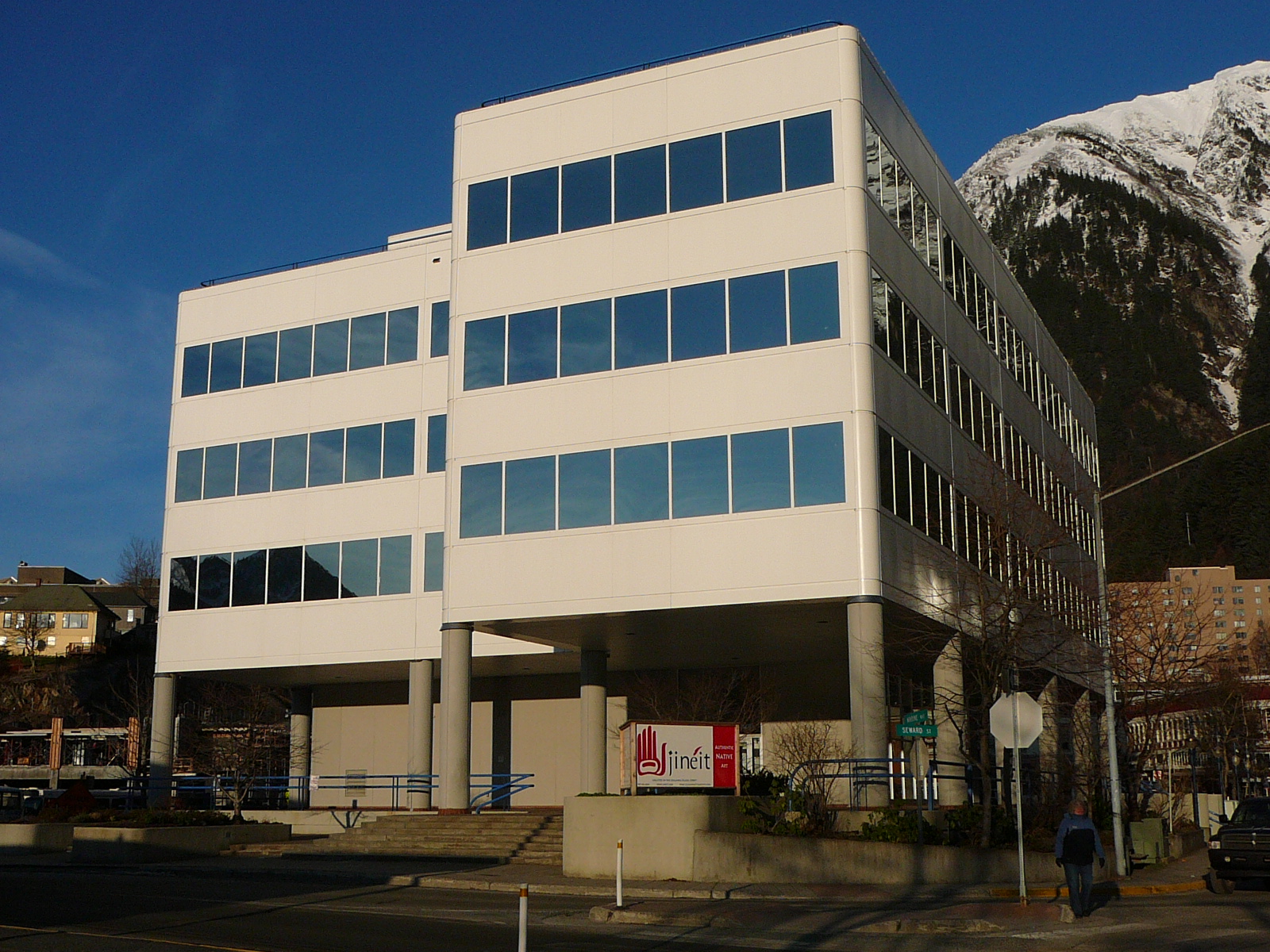
Sealaska Plaza, headquarters of the Southeast regional Native corporation, in Juneau. (Photo by Ed Schoenfeld/CoastAlaska News)

The Sealaska regional Native corporation will distribute $10.5 million to shareholders in November.

That brings the 2016 total payout to $26.4 million.

Payments go to the corporation’s approximately 22,000 shareholders, who live or have roots in Southeast Alaska.

An announcement on Sealaska’s website said most shareholders who also belong to an urban Native corporation, such as Juneau’s Goldbelt, will receive $597 directly. The same is true for at-large shareholders, who are not members of a village or urban corporation.

Most shareholders who also belong to a village Native corporation, such as Saxman’s Cape Fox, will receive $133 directly. The same is true for shadeholders’ descendants. Elders who register for a special program can receive an additional $133.

All amounts are based on ownership of 100 shares. That’s the most common number, but some Sealaska members own more or fewer shares because of gifting or inheritance.

Juneau-based Sealaska’s earnings come from savings, investments and businesses.

About four-fifths of the fall distribution comes from a pool of shared natural-resource earnings made by other regional Native corporations. That makes up the difference between the lower and higher dividend payments.

Sealaska President and CEO Anthony Mallott said in a prepared statement that the corporation’s goals include lessening dependence on the resource-income pool.

The fall dividends will be distributed Nov. 23.

In past years, they’ve been paid in early December.

Concerns over tribal, corporate affiliation prompt candidate to withdraw AFN leadership bid

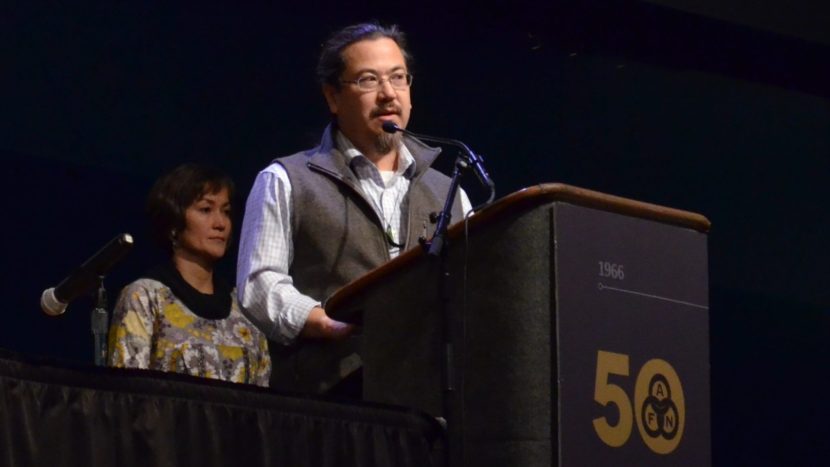
Joe Nelson withdrew his candidacy for co-chair of the Alaska Federation of Natives board at the 2016 convention. Behind him is co-chair Ana Hoffman. (Photo by Jennifer Canfield)

Southeast’s Joe Nelson withdrew his bid for a leadership position on the Alaska Federation of Natives board citing concerns from some in the delegation that the spot should go to a tribal representative. 

Nelson took the stage Saturday to explain to the convention his withdrawal, calling it a “very tough decision.”

“There’s a view that this seat is a tribal seat, a very strongly held view by a good contingent of our AFN population. So, in that sense, you could say maybe this election is rigged, since I’m not being viewed as a tribal person for this purpose right now,” Nelson said to laughter from the crowd. “I have such respect for the tribes and faith in the tribes that I am going to respect that and not push this to a vote this afternoon.”

Outgoing co-chair Jerry Isaac announced on the first day of the convention that he would not seek another term. Isaac, according to his bio on the AFN website, is president of the Copper River Native Association, a tribal nonprofit. The other co-chair, Ana Hoffman, is president and CEO of the Bethel Native Corp.

Nelson said he wanted to unify the delegation by supporting Will Mayo, a former president of the Tanana Chiefs Conference in Fairbanks. Mayo thanked Nelson for the withdrawal.

“Those are the comments of a leader and the heart that he brings to this is a very humble heart. I have found that that kind of a heart is the one that people can follow,” Mayo said.

Nelson, who serves on the AFN board, is a Sealaska Corp. board member and vice chancellor of University of Alaska Southeast. He lives in Juneau and is a member of the Yakutat Tlingit Tribe.

UAS vice chancellor, Sealaska board member nominated for AFN co-chair

Sealaska Board Chairman Joe Nelson
Joe Nelson was nominated for co-chair of the Alaska Federation of Natives. (Photo by Ed Schoenfeld/Coast Alaska News)

Joe Nelson, Sealaska Corp. board member and vice chancellor of University of Alaska Southeast, was nominated by the Southeast regional Native corporation for a leadership position on the Alaska Federation of Natives board.

Co-chair Jerry Isaac announced early on the first day of the 2016 Alaska Federation of Natives convention in Fairbanks that he would not seek another term. AFN delegates are expected to elect a new board co-chair Saturday.

The state plans to clean oil contamination from Alaska Native land

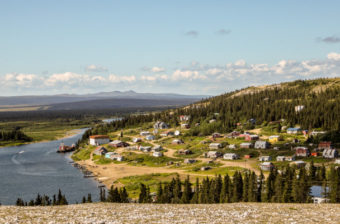
White Mountain’s oil drum storage area is one contaminated site out of 338 sites on ANCSA land that is still in the clean-up process.
White Mountain’s oil drum storage area is one contaminated site out of 338 sites on ANCSA land that is still in the clean-up process. (Photo by Laura Kraegel/KNOM)

The Alaska Department of Environmental Conservation (ADEC) is coordinating the clean-up process of contaminated lands throughout the region and all over the State.

White Mountain’s oil drum storage area is one of nearly 1 thousand sites transferred from federal entities to Alaska Native Corporations under ANCSA. The Bureau of Land Management deems 338 of these sites to be contaminated lands still in need of cleanup, including White Mountain’s oil drum storage area.

Based on a preliminary assessment report done in 1999 by the Ecology and Environment company for the United States Environmental Protection Agency (USEPA), White Mountain’s oil drum site has relatively minor petroleum contamination, up to 540 ppm (parts per million) across a 4-acre site.

As of right now, the contaminated lands have already been designated and surveyed by the Bureau of Land Management, then organized into an online interactive database. Since this database was finished, the BLM’s role in the cleanup process has been very limited.

BLM Project Manager Paul Krabacher says, legally, the BLM can’t do anything, including cleaning up the lands, since the lands have already been conveyed and are no longer managed by the BLM. But, as the clean-up process continues, ADEC focuses on high priority sites, helps negotiate agreements between parties, and examines orphan sites.

John Halverson, the Environmental Program Manager for ADEC’s Contaminated Sites program, defines orphan sites as, “those sites where there’s either known or suspected contamination and there’s not a agency or another party that’s already either working on the site to characterize it and clean it up or planning to do so in the foreseeable future,” explained Halverson.

One example of an orphaned site is White Mountain’s oil drum storage area near the old BIA school. Halverson says the level of contamination and the amount of diesel range organics (DRO) present determines the priority of the site. DROs are a mixture of petroleum hydrocarbons found in diesel fuel.

“We have different clean-up levels based upon the site’s circumstances; even our most conservative clean-up levels are typically based on the contaminants’ potential to migrate to ground water,” stated Halverson. “So, for DRO, our default clean-up level is 250ppm; that’s kind of the starting point, and then people can propose alternative clean-up levels that are higher based on the site’s specific circumstances and information that they collect.”

According to APRN, Daniel Cheyette, Legal Counsel from the Bristol Bay Native Corporation, voiced his concerns about Alaska’s contaminated lands back in August.

“As the landowners, as participants in ANCSA who believed that the land grants were in satisfaction of their land claims, it’s really frustrating that, so many decades later, we still have contaminated sites. And the federal government (is) really moving very slowly in terms of correcting the problems that it created. It’s a step, it’s a start, but it’s taking way too long, and it’s very frustrating for the landowner,” said Cheyette.

According to a DEC report from March 2011 on the White Mountain oil drum storage area, the community’s previous Indian General Assistance Program (IGAP) coordinator indicated that whatever was left of the original 1,000 oil drums would either be transported to Nome’s drum crusher or be reused by the community. Current White Mountain IGAP environmental coordinator Jay Adams says there are still about 60 fifty-five-gallon drums left at the site, less than a mile away from the BIA school building.

Even though the community of White Mountain has removed some of those oil drums on their own, it is not their responsibility to clean up the site. The DEC deemed The Bureau of Indian Affairs as the entity responsible for the cleanup of this site. After repeated attempts to contact the Bureau of Indian Affairs, they could not be reached for comment.

There is no set timeline for the rest of the cleanup at this White Mountain site, or for the other orphaned sites in the region, including the Marshall Fish processing plant and Emmonak’s tank farms.

*Note: more information on the Bureau of Land Management’s report on ANCSA contaminated lands can be found in this article from Alaska Business Monthly.

Hoping for jobs and lower fuel costs, Alaska Native corp Ahtna explores for gas

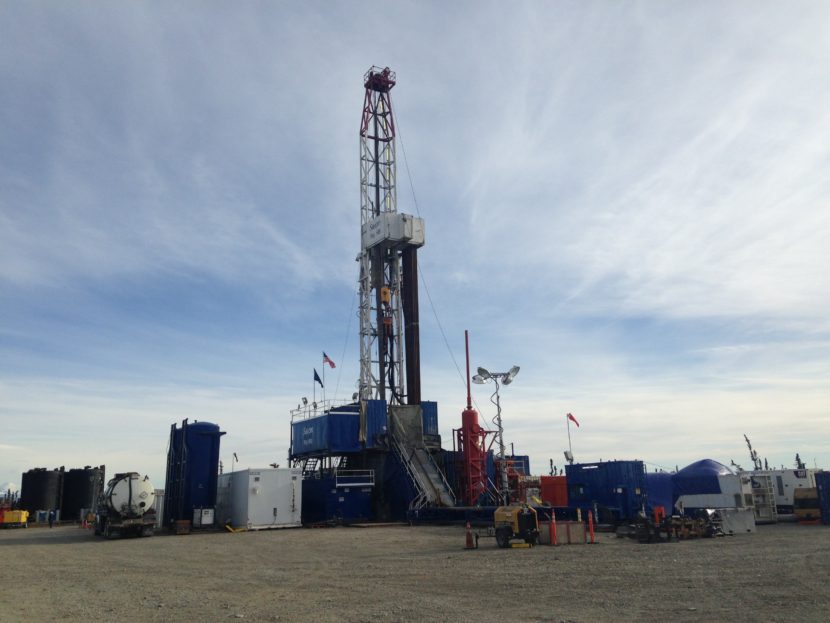
Exploration well Tolsona No. 1 is located about 11 miles west of Glennallen, Alaska.
Exploration well Tolsona No. 1 is located about 11 miles west of Glennallen, Alaska. (Photo by Elizabeth Harball/Alaska’s Energy Desk)

Alaska Native Regional Corporation Ahtna, Inc. is searching for natural gas to reduce local energy costs and provide jobs. Last week, Ahtna, Inc. subsidiary Tolsona Oil & Gas Exploration LLC started drilling an exploration well on state land near Glennallen.

Daniel Lee, oil and gas development manager for Ahtna, gave a tour of the new well on Monday.

“What we’re looking at currently is a great big blue piece of iron, which is a drilling rig,” said Lee. “This is a true exploration, this is a brand new hole that we are drilling in the ground.”

The drill is slowly descending thousands of feet beneath the gravel pad. Ahtna is hoping it will find enough recoverable natural gas to power their eight villages, including Gulkana and Chitina. Ahtna, Inc. president Michelle Anderson explained high fuel costs are a big burden for Interior Alaska.

“To fill your fuel tank up here in the wintertime, for many people, it’s as much as a mortgage payment in Anchorage,” said Anderson.

The Alaska Department of Commerce reports heating fuel prices in Interior Alaska are among the highest in the state. Ahtna hopes natural gas will be a cheaper replacement. They also hope a find will mean more jobs.

Ahtna shareholder and former board member Roy S. Ewan said, “There’s just no work out here. There’s no economic development.”

Ewan said many of Ahtna’s young people move to Anchorage or Fairbanks to find work. Ahtna hopes a natural gas find will change that.

Alaska Native regional corporations driving energy development is a trend worth watching according to Tim Bradner, editor of the Alaska Economic Report. Bradner said in the past, private companies took the lead while Native corporations were either passive partners or bought in later.

“This is kind of a different thing,” said Bradner, “Where the corporations themselves are leading the exploration and putting their own money at risk.”

Fairbanks-based regional Native corporation Doyon, Limited is also exploring for gas in Interior Alaska.

During the tour of Ahtna’s drilling site near Glennallen, Lee said exploration means they might find gas — or they might not.

“Worst case is we get to our targeted depth and there is nothing there, and that’s considered a dry hole,” said Lee. “And with that, you reassess whether you want to move forward with further exploration wells or not.”

Lee said the company chose this spot to drill because it’s promising. However, there’s no guarantee the $11 million project will find what it’s looking for.

Site notifications
Update notification options
Subscribe to notifications