Alaska Native Corporations

AVCP selects first woman CEO

Vivian Korthius, AVCP's newest CEO.
Vivian Korthius, AVCP’s newest CEO. (Photo by Dean Swope/KYUK

The Association of Village Council Presidents has selected its first female CEO: Vivian Johnson Korthuis. The decision comes on the third day of the regional nonprofit corporation’s annual convention, after a year fraught with challenges. Some see this convention, and the change it has brought, as the light at the end of the tunnel.

Vivian Korthuis, AVCP’s first female CEO, said at the end of Thursday’s meeting that she was overwhelmed but confident.

“I think the opportunity exists now to really take AVCP to the next step,”  Korthuis said.

When asked how she would grow AVCP, she pointed to changes in the bylaws that led to her appointment.

“Well I think the board of directors has created a path for the company, and my job is to help them do that,”  Korthuis  said.

Korthuis grew up in the Village of Emmonak and eventually attended Dartmouth College in New Hampshire. She is the first female CEO of a major tribal organization, and also the first to be hired – not elected.

This came about when the executive board asked delegates for control over the process and, in a three-quarters vote, it was granted. Marcy Sherer, vice president of the Native Village of Napaimute approves of the change.

“CEO really should be a hired position so that the executive board has oversight control and can manage the company through the CEO. In that aspect, it’s a very positive move,” Sherer said.

Sherer agrees with her new CEO that this could be a new start for AVCP.

“I think that this is a turn in history, a turn of the page in history,” Sherer said.

But not everyone agrees.

“It’s kind of a strange feeling,” said Mike Williams Sr., who is the alternate delegate for the village of Akiak. He didn’t like the way the vote went down, though he does think Korthuis has strong credentials.

“What we lost is having that direct voice and involvement cut off from the rest of the member tribes,” Williams said.

In the months leading up to the meeting, AVCP’s legal counsel Liz Pederson circulated a letter to the tribes informing them of the proposed changes. Williams and others responded with their own letter, calling the actions illegal under the bylaws. The final voting on the issue, done in a closed meeting on Wednesday, supported AVCP’s recommendations.

The same group raised questions earlier this year about the state of AVCP’s financial health, a topic that took up most of the first day’s meeting. Questions about whether grant funds were spent in compliance with federal regulations went without explanation for some time, and during that period former AVCP president Myron Naneng abruptly resigned.

Regardless of the dissent at this point, the AVCP Executive Board appears to have received the nod from its members to proceed with the recovery plan it laid out during the first day of the meeting.
 

Conoco aims to up North Slope production with new drilling rig

06ConocoDrillRig_Harball
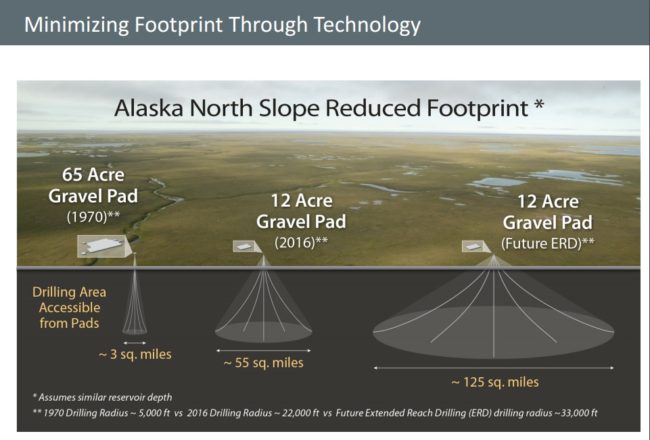
Conoco’s new Extended Reach Drilling Rig will allow the company to access more from a single drill site (Image courtesy ConocoPhillips Alaska)

ConocoPhillips Alaska has announced plans for a new drilling rig on the North Slope that will more than double the area it can develop from a single drill site.

The company is calling it a “potential breakthrough” and said the rig will increase production by making development possible in areas that are currently hard to reach.

It will allow Conoco to access an undeveloped field, Fiord West, from existing infrastructure. Fiord West was discovered in 1996.

Conoco spokeswoman Natalie Lowman said the state would not have extended the company’s Fiord West leases without the contract for the new rig.

“In order to retain our leases, such as those around Fiord West, we have to be able to develop them, and the (extended reach drilling) rig allows us to do that,” Lowman said in an email.

Gov. Bill Walker said in a statement, “I applaud ConocoPhillips and Doyon for their work to spur production during fiscally challenging times. This is welcome news, as it fulfills lease terms for Fiord West.”

ConocoPhillips signed a contract with Doyon Drilling, which is under the Fairbanks-based regional Native corporation, to build the new rig.

It will arrive in Alaska in 2020.

Lowman said under the terms of the contract with Doyon, the company can’t release the rig’s total cost.

Brotherhood, Sisterhood prep for convention

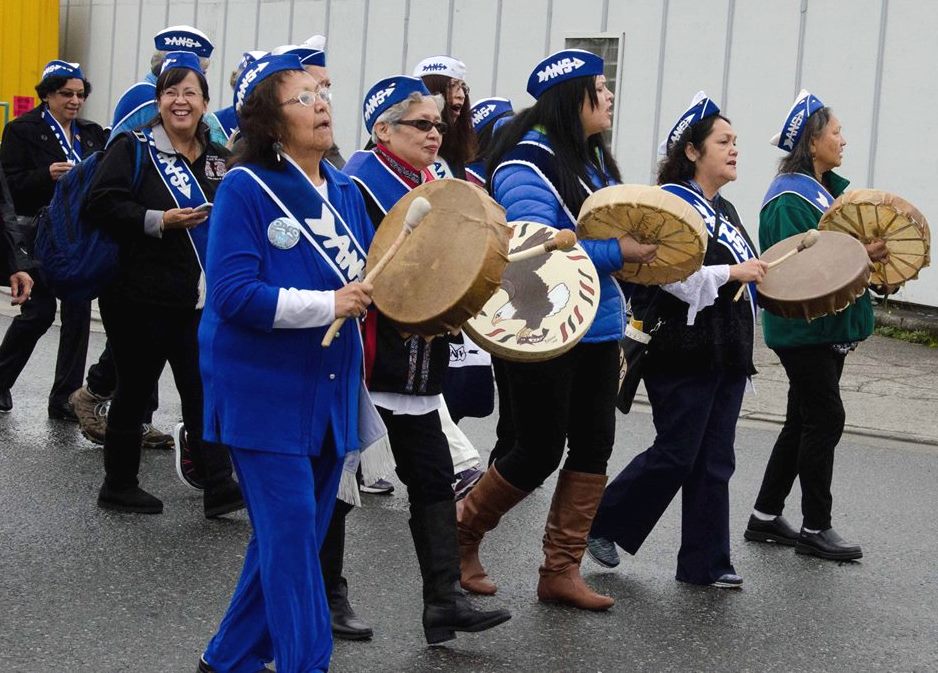
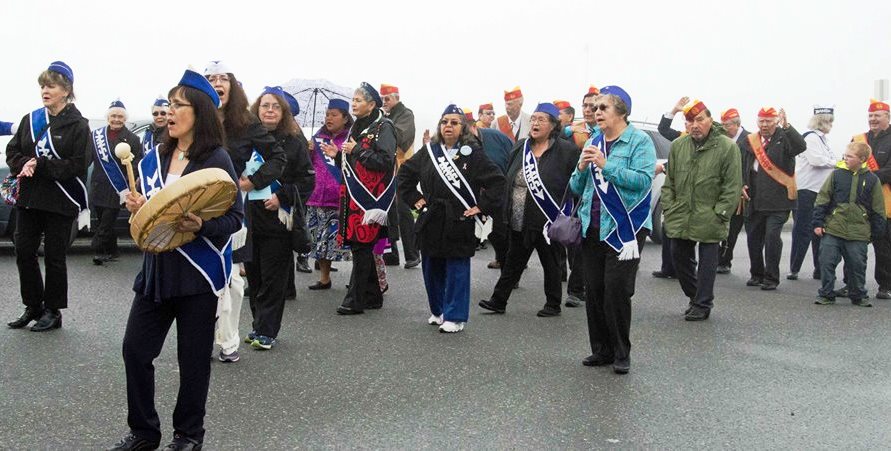
ANB-ANS members march in a parade during the 2015 Grand Camp Convention in Wrangell.-(Photo courtesy Peter Naoroz/ANB)
ANB and ANS members and leaders prepare to march in a parade during the 2015 Grand Camp Convention in Wrangell. (Photo courtesy Peter Naoroz/ANB)

Alaska’s oldest Native organizations are working to attract younger members.

That, subsistence and other issues are on the table at the Alaska Native Brotherhood and Sisterhood’s Grand Camp Convention Oct. 5-8 in Juneau.

The Grand Camp Convention attracts 80 to 100 delegates and members from local chapters, also called camps.

Most are from Southeast, but camps are also in Washington, Oregon and Southcentral Alaska.

ANB and ANS Camp 70 in Juneau host this year’s event.

ANB chapter President Marcelo Quinto said the convention sets the regional, or Grand Camp’s, agendas.

“We are a civil rights organization, but we concentrate on our Native people both in Southeast and we try to assist whenever we can with the rest of our brothers and sisters throughout the state,” he said.

The Alaska Native Brotherhood and Sisterhood are each more than a hundred years old. And in recent decades, many of their programs have been taken over by tribal governments, Native corporations and other organizations.

That means the organizations are smaller than they once were. And their membership is older.

But ANB Grand Camp President Sasha Soboleff said that’s starting to change.

“The youth wave is coming and so we dedicated last year’s convention and this year’s convention to having a focused effort on the young people and how this organization can best respond with their leadership,” he said.

Alaska Native Sisterhood members march in Wrangell during the Grand Camp's 2015 Convention in Wrangell. (Photo Courtesy Peter Naoroz/ANB)
Alaska Native Sisterhood members march in Wrangell during the Grand Camp’s 2015 Convention in Wrangell. (Photo courtesy Peter Naoroz/ANB)

One is Yakutat youth leader Devlin Anderstrom, who will deliver the keynote address.

And Soboleff said in the past year, he’s installed 19 sets of local camp officers who were in their mid-20s or early 30s.

Convention delegates spend the four-day event hearing reports from other Native organizations.

They include the Southeast Alaska Regional Health Consortium, the Central Council of Tlingit and Haida Indian Tribes of Alaska, and the Sealaska regional Native corporation.

They also elect officers and debate and vote on resolutions.

“We come together and talk over all of the ways the local camps are being affected by subsistence, by the economic decline that’s happening, by the impact of what (fisheries) have been going on in terms of subsistence and whether the commercialized part is doing any good, and putting the land that we occupy, whether or not it can be put into trust,” he said.

The Brotherhood and Sisterhood are also considering changes to their constitution.

They address membership, committee structure and other issues. One would create a new, joint executive committee with equal numbers of ANB and ANS members.

Quinto said the camps are trying to modernize.

“We are taking a look at our constitution this year to determine if it needs to be revised so it’s appropriate for this day and age,” he said.

Despite the names, the organizations don’t restrict their membership by race.

Soboleff said many camps have members who are not Alaska Natives.

“So there are lots of people who are welcome to come and who are actually active in our local camps and feel welcome to come down and witness and participate and see how this slice of the world works,” he said.

The convention also includes a culture night and a memorial service.

With assembly approval, Central Council expands plans for 3-acre Immersion Park

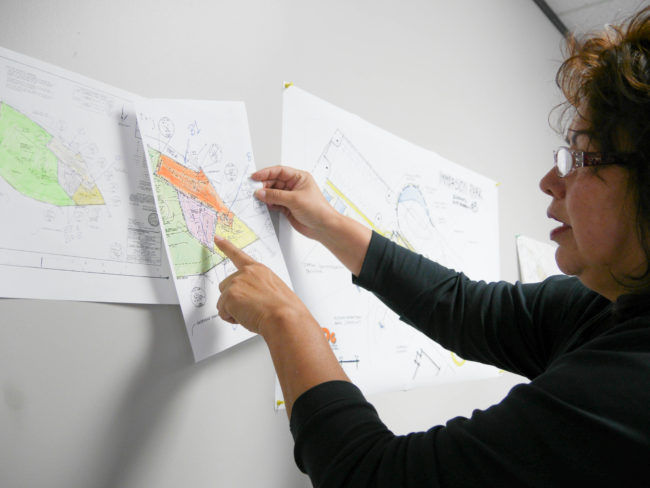
Central Council of Tlingit and Haida Indian Tribes of Alaska Business and Economic Development Manager Mryna Gardner explains the plans for the immersion park. (Photo by Lakeidra Chavis/ KTOO)
Central Council of Tlingit and Haida Indian Tribes of Alaska Business and Economic Development Manager Myrna Gardner explains the plans for the immersion park. (Photo by Lakeidra Chavis/ KTOO)

The Central Council of Tlingit and Haida Indian Tribes of Alaska has a new target date for opening its cultural immersion park at the old Thane Ore House.

Last year, Central Council officials had hoped it would open this summer. Now, they’re shooting for 2018, after the Juneau Assembly approved a 1.2-acre land lease making it possible Monday evening.

Myrna Gardner is spearheading the Tlingit and Haida Immersion Park project.

She said the Central Council wants to put Juneau’s Native culture at the forefront when cruise passengers visit — literally. The cruise ships must pass the nearly 3-acre waterfront site before they arrive in port.

“When they come to Juneau, you have gifts shops and you have art galleries,” she said. “We want to tie the living culture effect of who we are, with it.”

Gardner said that the park will include classes on totem pole and canoe carving, as well as basic language skills. She said it’s important to remember that Southeast Alaska Native cultures are living cultures.

There will also be a restaurant, gift shop and showcases for Alaska Native artists and dance performances.

“When you think about places you’ve gone or traveled, and you read about the history of people and they talk about them in the past tense, our people have been here for 10,000 years,” Gardner said. “However, today we want people to know that we’re still here and you see it and you get to talk to people in other communities.”

Plans for the park are constantly changing.

Over time, Gardner said they plan to line the road up to the property with totem poles from each of the Southeast tribes. The park will use the two large buildings on the property for cultural activities.

“Our plan is to have a huge Haida style longhouse cover it that shows the Haida heritage side,” she said. This side, we’re going to put a façade of Tlingit longhouses in front of it, so you almost get the image you’re walking through a village.”

Gardner says the estimated $3 million park – plans have expanded since it was pitched as a $1.3 million park last year — will be paid for using a collection of federal grants and Central Council funds. She said while the focus is on culture, the park is intended to create jobs and be a revenue source for the Central Council.

“This is about workforce development and job creation,” she said. “We understand that as a business, as a tribe and as a government, we see from the federal state, especially the state, the budget cuts, and the need for creating jobs and employment within our community.”

The lease terms say the city will be also eventually be paid a $1 per park customer.

If the buildings need to be rebuilt, Gardner says then the park could open in 2018.

Forest Service adds to Admiralty Island wilderness

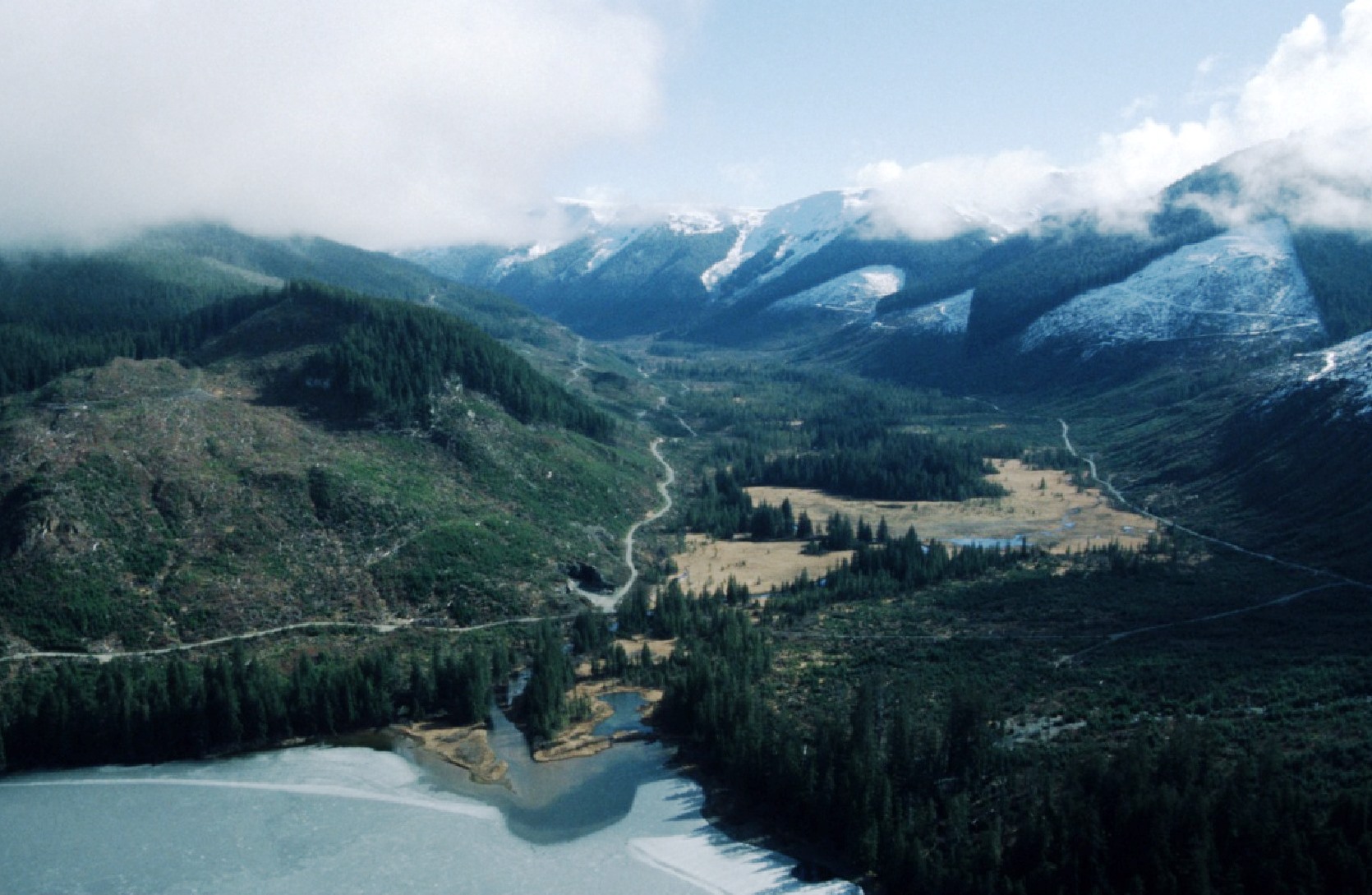
Logged lands near Lake Kathleen, on Admiralty Island, are among those Shee Atiká has agreed to sell to the Forest Service. (Photo courtesy U.S. Forest Service.)
Logged lands at the head of Lake Kathleen, on Admiralty Island, are among those Shee Atiká has sold to the Forest Service to add to its Kootznoowoo Wilderness Area. (Photo courtesy U.S. Forest Service.)

About 4,500 acres of heavily-logged forest will return to wilderness under a deal involving the federal government and a Southeast Alaska Native corporation.

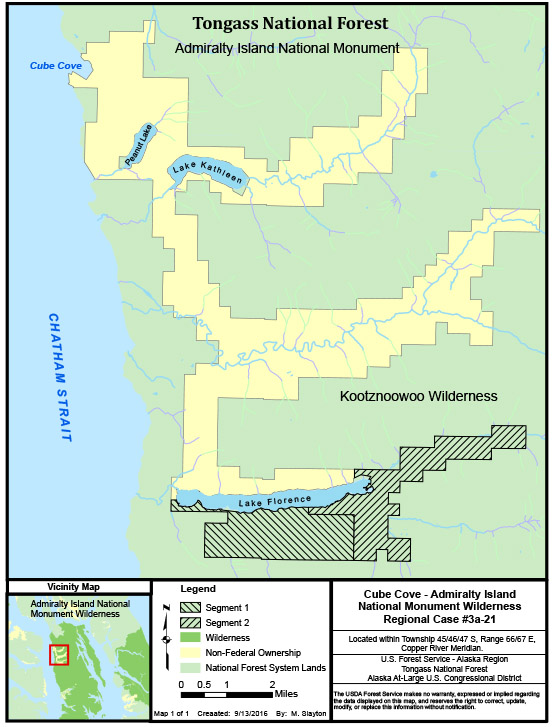
The U.S. Forest Service purchased the acreage near Cube Cove, on the west side of Admiralty Island,  about 30 miles south of Juneau and 20 miles north of Angoon.

Just under $4 million was paid to the owner, Shee Atiká, the Sitka-based Native corporation. It comes from the Forest Service’s Land and Water Conservation Fund.

Recreation, Lands and Minerals Director James King said the property is surrounded by Admiralty Island National Monument and its Kootznoowoo Wilderness Area.

“This restores the concept of creating an island and a monument that is left relatively intact,” he said.

The purchase price covers two of 13 parcels of Cube Cove land owned by Shee Atiká.

The total area is about 22,000 acres and the full value is around $18.3 million.

Cube Cove-area land is being sold to the Forest Service. The two southernmost parcels were purchased for about $4 million. (Map courtesy Forest Service)

The once-forested area was acquired by the corporation under terms of the Alaska Native Claims Settlement Act.

It was extensively logging over an 18-year period ending in 2002.

King said the Forest Service may spend additional funds to speed its restoration.

“It’s possible that as we do further analysis on it, that if we determine to better help the habitat that thinning may occur. But those decisions have not been made yet,” he said.

He said the agency hopes to purchase the remaining Cube Cove acreage, which includes three lakes, over time. But that depends on future federal budgets.

The sale also is part of legislation introduced by Alaska U.S. Sen. Lisa Murkowski earlier this year. Some environmental groups have said it would allow Shee Atiká to purchase and log timberlands on Prince of Wales Island.

Shee Atiká President and CEO Ken Cameron said  the Native corporation hasn’t decided what to do with the $4 million it’s being paid.

Cameron, who declined to be recorded, said it’s on the agenda for a fall planning meeting. He said the corporation understands further sales depend on Congressional appropriations.

The sale has its critics.

The Southeast Alaska Conservation Council’s Buck Lindekugel calls it a mixed bag.

“We’re glad that these valuable lands will be back in public ownership where they can heal,” he said.

“It’s sad, though, because we worked really hard in the 1980s and early 1990s to see if we could come up with an exchange so Lake Florence and Lake Kathleen could have been returned to public ownership before they were clear-cut,” he added.

In an earlier interview, Sitka Conservation Society Executive Director Andrew Thoms said it seemed like an odd deal.

“And now, in this situation, the government would buy back the lands that were logged? And Shee Atiká made a profit on them? And now the government’s buying it back from them? It’s a strange situation,” he said.

And Shee Atiká shareholder Mike Kinville said the corporation shouldn’t give up any of its property.

“Shee Atiká is not making, what is in my opinion, sound decisions. To sell our last pieces of land concerns me,” he said.

The purchase was announced Sept. 16 in a joint news release from the federal agency and the corporation.

King, of the Forest Service, said there’s a reason these particular parcels were bought first.

“It was determined that the most logical way to purchase the lands was to start at the backs of the property or the furthest from the water. And purchase our way out to the waterfront, so that we didn’t isolate pieces of property without access to them,” he said.

The Forest Service said buying up wilderness inholdings is a high priority for the Tongass and is listed in its land management plan.

Doyon’s $2B discount: Fair play or rip off?

cell phone tower
(Creative Commons photo by Razor512)

Doyon, the Fairbanks and interior Alaska Native regional corporation, was in federal court in Washington, D.C., on Monday trying to keep the discount it was to get almost two years ago, when it bid billions of dollars on a portion of the public airwaves reserved for wireless broadband. The discount is worth nearly $2 billion.

But after the auction concluded in January 2015, the Federal Communications Commission ruled that Doyon’s company, Northstar, wasn’t entitled to the 25 percent discount intended for very small businesses.

“They changed the rules after the fact, and that’s what we were arguing against today,” said Sarah Obed, Doyon’s vice president of external affairs, outside the courthouse.

Doyon, Alaska’s largest private landowner, wouldn’t seem to be a “very small business” but the late Sen. Ted Stevens helped create the airwaves spectrum auction, and thanks to him there’s an exception that allows Alaska Native corporations to qualify as small. But the FCC takes issue with Doyon’s heavyweight partner: Dish Network. Dish owns an 85 percent stake in Northstar. Doyon owns a portion of the remaining 15 percent, but Sarah Obed says Doyon is running the show.

“Dish Network does not manage Northstar Wireless. We do. And so that’s something we’re really proud of,” she said.

The FCC, though, says Dish is more than a passive partner because, among other things, it loaned Northstar most of the nearly $6 billion it bid in the auction. Dish has contracts to build and operate the network. And, according to their business agreement, Northstar and Doyon can’t transfer their rights or raise capital elsewhere without Dish’s consent.

“To be frank, I’m appalled that a corporate giant has attempted to use small business discounts to rip off American taxpayers,” FCC commissioner Ajit Pai said of the Dish-Doyon deal at a Senate hearing last year.

Today’s case was heard by a three-judge panel of the U.S. Court of Appeals for the D.C. Circuit.

Site notifications
Update notification options
Subscribe to notifications