Housing

A Sitka high rise apartment’s lone elevator has been out of service for more than a year

A 7-story apartment building next to a church
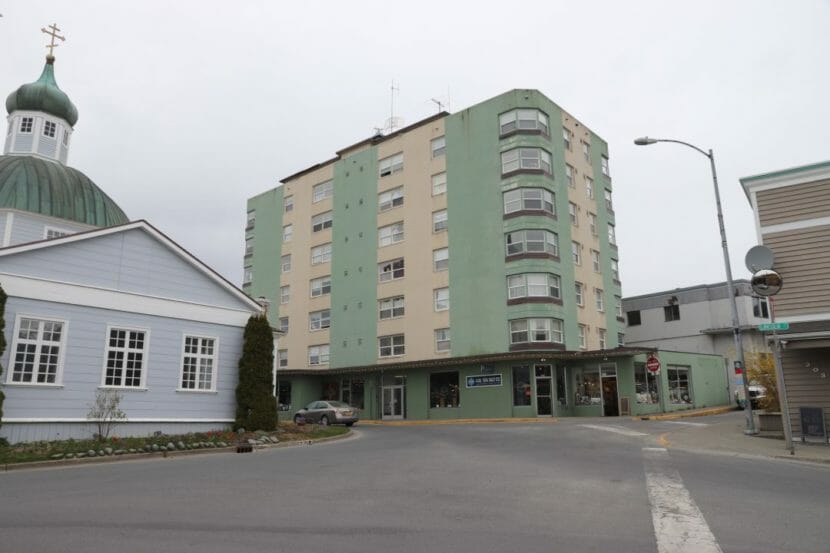
The Cathedral Arms’ first floor is comprised of businesses. Floors two through seven are one-bedroom and studio apartments, with a penthouse apartment on the eighth floor. Tenants say the lone elevator in the building has been on only intermittently for over a year. (Photo by Katherine Rose/KCAW)

Downtown Sitka’s skyline is small but striking. The distinctive St. Michael’s Cathedral in the center of Lincoln Street always draws the eye, juxtaposed against a snow-capped Mt. Verstovia behind it. But there’s one building that overshadows the spire of St. Michaels — an eight-story structure striped in sea foam green and sandy beige.

It’s the Cathedral Arms building, and it’s the largest apartment complex in town. It was built in the early 1950s.

“It’s a sweet old building, and it’s got a lot of character. There’s a lot of good things about it,” Owen Kindig said. He moved into the building in the spring of 2018. He says at first things were good. The views were great, and at $895 a month, it was comparatively affordable for a one-bedroom apartment. Its location was unbeatable. On the corner of the 7th floor, he had a view of Sitka Sound to the south, and Mt. Edgecumbe to the west.

“We had the two best views in Sitka,” Kindig laughs. “And we had, initially, a cordial relationship with the landlord. Things worked out well.”

But by the summer of 2019, things had changed. Kindig opened an AirBnb to rent out the apartment when he and his wife were traveling. Around the same time, the building’s lone elevator started having mechanical problems. Often, it was out of service — without warning. Kindig says he didn’t mind the exercise, but climbing six flights of stairs bothered his guests.

“We had problems, because they needed the elevator. They were coming in with suitcases. Often they were elderly, and they needed to have the elevator,” Kindig said. “And when the elevator wasn’t working, we didn’t get good information from the landlord.”

And Kindig started to notice some of his neighbors were struggling as the elevator went out of service for longer periods, sometimes weeks at a time.

“We knew one person who was, you know, disabled, and couldn’t walk up the steps. And I don’t know how they managed,” Kindig said. “It seemed impossible for them to manage. And yet, they were still there when we left.”

The Kindigs moved out in the fall of 2019. Since the winter of 2020 through March of 2022, tenants say that the elevator has been off. This spring they invited me to visit Cathedral Arms, and I discovered for myself that it was still off.

I spoke with six tenants who currently live in Cathedral Arms, and two who recently moved out. They all said they had no access to the elevator for somewhere between 13 and 16 months. All except Owen Kindig asked to remain unidentified in this story, some for fear of losing their housing.

I also spoke with the owner of the building, a local businessman named Kelly Pellett, who declined to comment. The elevator, however, I’ve learned has been on intermittently since I spoke to him. Then, on April 4, the state Office of Mechanical Inspection issued a cease and desist order after an investigation determined that he may have been operating the elevator without a valid certificate. Until the owner makes the necessary repairs to get the elevator recertified, the state says the elevator must remain off.

The tenants are frustrated with the situation. Some said they’d approached city officials, reached out to Alaska’s congressional delegation, and called state agencies — all without success. That’s because it’s not necessarily illegal for a multi-story apartment complex to go without a working elevator for over a year. And the reasoning is not straightforward.

“When it comes to civil things where there’s not an immediate threat to life and safety, the Alaska public — the Sitka public — doesn’t have much appetite for enforcement that’s really compulsory,” said Scott Brylinsky, a former Sitka building official.

Brylinsky says the city and state do enforce regulations dealing with life and safety. For example, at the Cathedral Arms — years ago — the state fire marshal required the building’s owner to install an exterior fire exit. It was an expensive but necessary addition.

But an out-of-service elevator doesn’t fall into that category. Sitka has never adopted Chapter 11 of the International Building Code, which spells out accessibility requirements for buildings, including elevators. And Brylinsky believes that adopting these codes retroactively in Alaska is politically and practically impossible, due to the burden it would put on private businesses.

“There’s so many places that it can be an issue that I don’t see in a libertarian state like Alaska. You get the government coming in and telling businesses they have to make changes by a certain date or get shut down, or be subject to enforcement action, or be fined,” Brylinsky said. “It just would never work.”

Sitka’s current building official could not comment for this story. Municipal administrator John Leach released a statement confirming that Sitka has not adopted the accessibility requirements in the IBC, and stating that the city believed that matter fell under the federal Americans With Disabilities Act, or ADA, and that tenants could file complaints with the US Department of Justice.

At the state level, Alaska’s Office of Mechanical Inspection certifies elevators for operation as long as they meet certain safety standards. Although no one in the OMI agreed to an interview, in an email, the state’s Chief of Mechanical Inspection, Scott Damerow, said they inspected the Cathedral Arms elevator last July. It did not pass inspection, so they placed it fully out-of-service, pending repairs to bring the elevator back up to code.

Damerow said as far as OMI is concerned, shutting off an elevator is considered “an acceptable alternative to an expensive repair or retrofit.” Once the owner makes repairs to put the elevator back in service, Damerow says they’ll inspect it. But until then, it’s out of their hands.

Municipal Administrator Leach is likely right that this is a matter covered under federal law — but maybe not under the Americans With Disabilities Act.

“The fact that it’s been like this for so long, and they have been trying to get help is concerning,” Leslie Jaehning said. She’s a staff attorney with the Disability Law Center of Alaska. Jaehning says it’s a common misconception that the ADA covers all residential housing. Rather, it covers public accommodations.

However, most privately owned apartment complexes are covered under the much older Fair Housing Act. The FHA prohibits housing providers from discriminating against people with disabilities.

“If somebody is not able to access their home, you know, because their disability makes it unable to go upstairs or things, that is discriminatory,” Jaehning said.

She says under the FHA, if a building has an elevator, the landlord must keep that elevator in working order and repair it quickly if it breaks down, to ensure tenants with disabilities have equal access to their homes. That, or provide a reasonable accommodation.

Jaehning also says there may be even more protections if the landlord gets subsidies for providing housing to low income tenants. She says tenants who believe they’ve been discriminated against can file a complaint with the Alaska State Commission for Human Rights.

But what about the tenants who don’t have disabilities? Do they have any recourse?

“Probably not under the Fair Housing Act, though I would say that the definition of disability under the Fair Housing Act is very broad,” Dan Coons said. He’s an attorney with Alaska Legal Services, a nonprofit law firm that provides free civil legal services to low-income Alaskans.

“There may be some good arguments that state landlord tenant law applies, and that the landlord has a duty under state landlord tenant law to make these kind of repairs,” Coons said.

He says another step tenants can take is filing a civil suit, if they believe the state’s landlord tenant law is being violated.

“It’s a matter of going to the courts and the tenants asserting their rights under the state Landlord-Tenant Act through a lawsuit, but that’s not a small undertaking. It takes a lot of work to get a lawsuit like that in front of the court successfully.”

Compelling a landlord to make repairs under state law through the courts could be both costly and time-consuming. And it doesn’t help tenants right now, who are holding out hope that the elevator will be fixed soon.

“I think that a landlord has a responsibility to the people he serves to keep them healthy and safe,” said former tenant Owen Kindig.

It’s been more than two years since Kindig lived in Cathedral Arms, but he still worries about his former neighbors. He hopes someone will step in to help them.

“I think it’s unsafe. It’s a nuisance, it’s a danger to the people who are living there to not have a working elevator,” he said.

Resurrection Lutheran Church finishes first winter as Juneau’s cold weather shelter

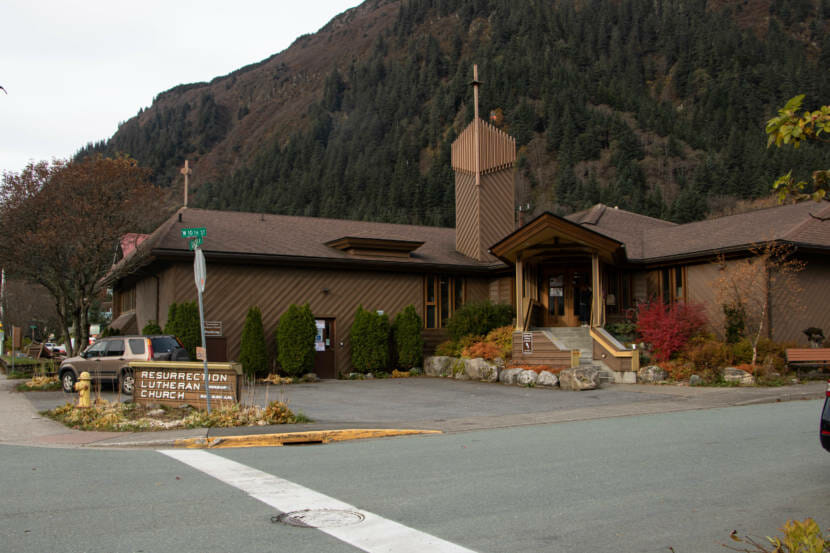
The Resurrection Lutheran Church is located on the corner of W. 10th St. and Glacier Avenue in the Flats neighborhood in downtown Juneau, Alaska. (Photo by Lyndsey Brollini/KTOO)

The Resurrection Lutheran Church finished its first year of running Juneau’s cold weather emergency shelter and just got its permit renewed for another two years to house the shelter. 

The shelter is open from Nov. 15 through April 15 on nights it’s expected to be below freezing. 

Pastor Karen Perkins said the cold weather shelter was busy this year. The shelter was open almost every night and most nights were close to capacity.

“We were scrambling to find cots,” Perkins said. “I mean, we weren’t going to put somebody out on the street to freeze to death. So the staff had to get creative about some safe places to put people.” 

The shelter was started by the City and Borough of Juneau in 2017. In recent years, the city has contracted with organizations in town to run it.

The shelter’s start last fall was last minute — after the nonprofit St. Vincent de Paul pulled out of its contract with the city to provide the shelter. The Resurrection Lutheran Church offered to take over the contract, but it needed to get a permit first

The church got the permit, but only a week before the shelter had to be up and running. And the church pulled it off. Within a week, they found all the staff they needed. Most of the staff stayed for the entire season. 

The capacity of the shelter was 28 because of COVID-19, and sometimes staff had to figure out where to put people when it was past capacity. 

“At one point, we had to make space for cots in what was functionally a storage room,” Perkins said. 

The actual church building also went through some strain while housing the shelter, and it was hard on the building’s plumbing. 

Before the shelter opened, businesses and residents in the area had concerns about the shelter’s impact on the neighborhood. Perkins doesn’t think it was a strain on the neighborhood, with the exception of some noisy nights, and said they were able to handle any issues that came up quickly.

“And so a lot of people who said they had anxiety have since either changed their mind or said, ‘Okay, went well this year,’” Perkins said.

Some of the people who used the shelter this year had never stayed in a shelter before. Perkins thinks it’s a result of Juneau’s housing crisis — people with housing vouchers can’t get housing, people call within an hour and a place is already taken, or people have to move because their landlord is selling. 

Perkins said it was heartbreaking for her to see. 

“It’s hard to face somebody and say, ‘I know that there’s no place to live,’” Perkins said. “And the amount of courage that it takes for somebody to walk the first time into a shelter for the first time, into a food pantry or whatever, is extraordinary. It’s really really tough.”

This year, 263 people used the shelter. Perkins said most of them were there for less than 20 days. 

Now that the church’s permit is renewed, the church is allowed to house the shelter for another two winters. But that doesn’t mean the church will. It would need to extend the contract with the city first. 

Perkins said they renewed the permit to be prepared in case the church needs to house the shelter again. They don’t want to be scrambling at the last minute like last year.

There are a few things they would change based on the lessons they learned this past winter, like training staff more and making sure people who use the shelter regularly don’t store their things around the church. 

Perkins wants to ask people who use the shelter what their recommendations are, and to share their stories on the church’s Facebook. 

“The more the community learns about people’s lives and how it is to not have your own spot, it’ll be helpful for everybody,” Perkins said.

Perkins said the church doesn’t want to become a long-term shelter. It’s hard work to run. But there aren’t better options right now, and this shelter is needed in the community.

“We don’t want people out there on the streets just because we don’t have a better, better plan,” Perkins said.

Perkins said people want to find a long-term solution to the cold weather shelter, but that solution isn’t here yet. So the church is doing what it can by providing an option, if it’s needed. 

Some say Airbnbs are worsening Juneau’s housing crunch

The Flats neighborhood of downtown Juneau.
Downtown Juneau in 2018. (Photo by Matt Miller/KTOO)

The scramble for housing in Juneau is in full swing as it is each spring. 

Lawmakers and their staff are still in town and seasonal tourism and cannery workers are starting to move in. And, thanks to a growing number of short-term rentals like Airbnbs, it could be even more of a challenge for people looking for a place to live. 

Realtor Kelly Moore says this housing crunch is worse than ever.

“Everybody has said that this is typical of this season, but nothing like this. Nothing on this scale,” Moore said.

It’s especially hard for people like Bonilyn Parker. 

Last month, she and her husband received a notice from their landlord that they had six weeks to move out of the place they’ve lived in for more than two years. Their apartment is going to be turned into an Airbnb for summer tourists, which is likely to be more lucrative than its use as a long-term rental.

“Looking for long-term rentals as a local or looking for a single-family home has just been like the struggle of my life,” Parker said.

She tried to ask the property owners to let them stay just until they can move into their next home, but they said no. They may have nowhere to live starting May 1.

“We’ve been really, really panicking about where the heck are we going to live,” Parker said. 

Juneau Assembly Member Carole Triem says the housing issue is becoming critical. 

“We’re kind of reaching for certain people, like a crisis level of housing here in Juneau where there’s just not enough housing,” Triem said.

She points to some Juneau-specific reasons housing is hard to come by, like geography and seasonal tourism. 

“The city is built on the side of a mountain. So here’s just not that many places to build like that, where it’s easy and cheap to build more housing,” she said. “And then also, the site of a mountain comes with a lot of risks like avalanches and landslides. So it’s even more expensive to build and buy housing.” 

City data shows that businesses registering as Airbnb registrations have been increasing in past years, but because these registrations are submitted per owner and not per unit, exact numbers of Airbnb rentals aren’t available. 

Last year, the city gave a tax break for new long-term rental units downtown to try and create more housing that wouldn’t sit empty as Airbnbs. But that hasn’t helped people like Angelique Buzzek. 

Buzzek moved to town to be closer to her daughter and new grandchild. Her husband quickly found a job, working IT for a university. 

They’ve been here for five months but haven’t found a long-term place to live. Buzzek has a service dog, and that has prevented her from being considered for the apartments she has seen. 

“And all you see on Facebook now for rentals is ‘we need, we need’ and like there’s nothing here for anybody,” she said.

So far, they’ve been staying in shorter-term accommodations, like Airbnbs. But they don’t have anything lined up for May. She says her plan right now is to get a tent and find a place to camp.

Assembly member Triem says she expects that the city government will be discussing the housing crisis and counting the number of Airbnbs in the coming weeks. 


Housing in Juneau

Are you a tenant or landlord in Juneau and have thoughts about housing in the city? We want to hear from you. Tell us your story.

Millions of Americans are resorting to risky ways to buy an affordable home

A couple wearing tie-die stand outside a home
Donald Strayer and his wife, Julia, thought they’d found an affordable dream home in Ohio’s Appalachian mountain foothills. But after years of payments directly to the seller, he discovered the owners had kept his money and let the property fall into foreclosure. (Photo courtesy of Donald Strayer)

Five years ago, Donald Strayer thought he’d bought a dream home for his extended family. It was on a pretty spot in Ohio’s Appalachian mountain foothills, with room for him and his wife, his daughter’s family, plus their horses and goats. And he could actually afford it.

Strayer had been turned down for a bank loan because of bad credit — he says it’s because of hospital bills years ago. The 58-year-old former forklift driver has a chronic lung disease and lives off disability. Instead of a regular mortgage, he signed what’s known as a land contract directly with the seller.

The price was $39,900. For a down payment he sold his childhood home, which he inherited when his dad died, “the only thing I had in the whole world.”

For years he made monthly payments of $350 on his new home. And then “one day the sheriff just showed up,” he says. “It was foreclosed and they wanted to take my property.”

It turned out the seller’s family — to whom Strayer had been sending his payments — was keeping the money instead of paying down the mortgage. That left Strayer out a major investment, with no equity and no legal right to the property.

Land contracts and other kinds of alternative financing have been around a long time, with roots in the race-based redlining that blocked Black Americans from traditional mortgages. But legal aid experts say they became more common after the Great Recession, and as housing and rental costs have skyrocketed. They may be the only option for some, but these alternative deals pose a financial risk to families with the least to lose.

“For many American families, homeownership has been the largest source of wealth over the past century,” says Tara Roche with The Pew Charitable Trusts. “Mortgages are a key step to achieving that financial security.”

People of color and those in rural areas are more likely to use these risky arrangements

A first of its kind national survey by The Pew Charitable Trusts finds 36 million Americans — about 20% of all borrowers — have used alternative ways to finance a home at some point, including 7 million currently in such arrangements. The borrowers are largely low-income, more likely to live in rural areas, and disproportionately Hispanic and Black, reflecting the racial gap in homeownership.

Unlike mortgages, alternative financing deals are usually not recorded with any government office. They don’t start with a bank or mortgage company, and so are not subject to the same state or federal regulations.

“In most of our cases, we have handwritten notes that wouldn’t pass muster,” says Peggy Lee, an attorney with Southeastern Ohio Legal Services. She says some of her clients have even been duped into thinking a verbal contract was binding, though they’re not recognized in Ohio.

This leaves borrowers with higher costs and fewer protections. They can be suddenly evicted without a right to a normal foreclosure process. They’re shut out of tax and other homeowner benefits. The legal ambiguity prevented many from being eligible for COVID-19 financial relief or the moratorium on evictions, creating a double whammy for families most likely to suffer during the pandemic.

Another crucial distinction: usually the seller maintains the property deed until the last payment, yet the tenant is responsible for maintenance and repairs.

Two women stand at the entrance to a house
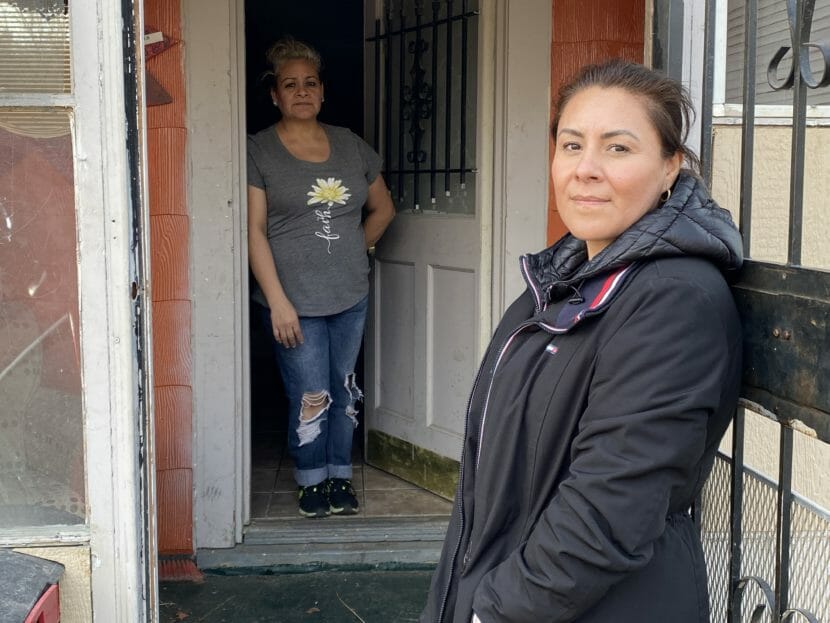
Marisela Orozco (foreground) is letting her sister, Marissa, live in the house she thought she would own after making almost four years of payments. But the owner disappeared, along with the title, and she worries he may return and evict them. (Photo by Laura Ziegler/KCUR 89.3)

In 2014, Marisela Orozco signed a contract to buy a house from the co-worker of a friend in Kansas City, Missouri, for $22,000. At the time she didn’t have authorization to live in the United States, spoke little English, and did not understand how property titles worked.

The house was in rough shape, Orozco told member station KCUR and the Midwest Newsroom, which investigated the high prevalence of these arrangements in the region.

“Walls not done. Little bit of the bathroom finished. No good plumbing,” she said. “But I say, ‘OK,’ we fix it up’. And I move in with my kids, fixing things little by little when I have the money.”

But after 44 months of regular payments, and more than $10,000 in home improvements, the owner disappeared, never giving Orozco the title to the house.

Repeat offenders engage in “profit-driven ‘churning'”

Legal aid attorneys say they’ve seen more alternative financing since the 2008 subprime mortgage crisis, when millions lost their homes to foreclosure. Large investors bought the houses in bulk, many of them in disrepair and in economically struggling areas, then marketed alternative financing schemes to resell them.

Several state attorneys general have filed suits alleging deceptive practices. Pennsylvania recently won a partial victory when a judge ordered that 285 homes be immediately deeded to people who’d signed alternative leasing arrangements.

Some experts worry about the possibility of another spike coming out of the pandemic, as mortgage bailouts and moratoriums expire and foreclosures start to rise.

In rural Ohio, attorney Lee says given the severe housing crunch, a dilapidated home may be the only one some people can afford. But she finds it distressing to see clients invest thousands fixing up a place, believing it will pay off, when the seller never actually intends to turn it over.

“They just want to shift the burden of making repairs by letting them think they’re going to build some sort of equity in the home,” she says. “And then, oops, the first time something goes wrong… they’re in eviction court.”

The Pew survey finds a lot of repeat offenders, calling it “profit-driven ‘churning'” when an owner initiates the sale of the same house over and over.

States are starting to consider more protections for borrowers

Since it’s hard to track alternative financing arrangements, there’s been a lack of data on who uses them, where they live, and what their experiences are. Pew’s Roche hopes the information in the survey “can help inform policymakers, who are considering policies for alternative home financing borrowers.”

Some states have been trying to better protect consumers, and Roche is seeing an uptick this year in proposed legislation.

Sarah Mancini, with the National Consumer Law Center, would like to at least ensure a house is habitable, the same protection a renter would have. And in case of problems, she says there should be a process more akin to foreclosure, so tenants aren’t at risk of sudden eviction.

Beyond that, Mancini would like to see traditional, smaller mortgages more available, and not as difficult to get approved.

“We know there’s a racial wealth gap. We know that individuals of color are more likely to have experienced a bump in the road at some point that may have caused a payment default,” she says.

Instead of requiring an “unreasonably high credit score,” she says lenders should look at someone’s current income and ability to pay.

Steve Vockrodt of the Midwest Newsroom and Laura Ziegler of KCUR contributed reporting to this story.

Copyright 2022 NPR. To see more, visit https://www.npr.org.

In Anchorage’s tight housing market, some families see no clear road out of homelessness

A couple stands in the middle of a hotel room filled with their belongings.
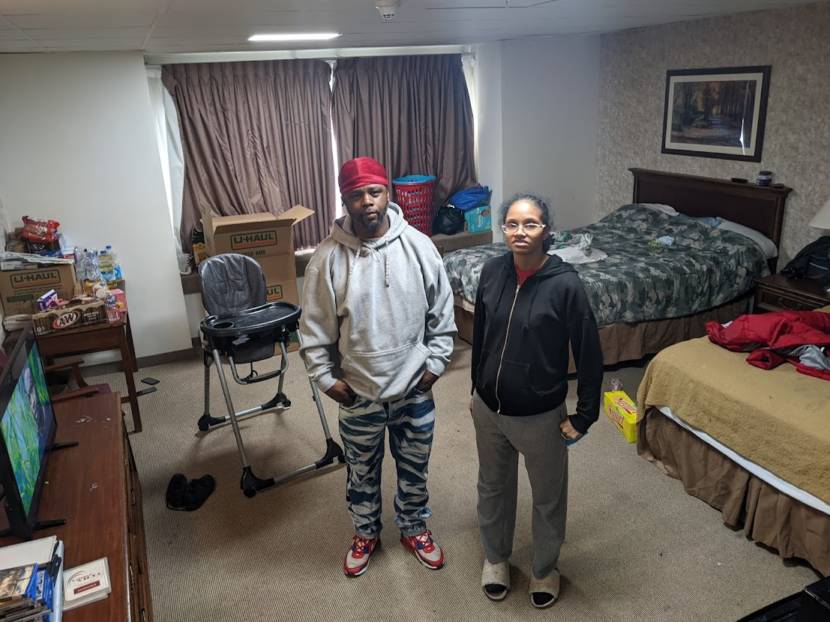
Richard Brady and Rhonda Tate in their hotel room where they’ve stayed with six kids for the last two months. Tate says she’s been losing weight despite being five months pregnant because the room doesn’t have a kitchen. (Photo by Lex Treinen/Alaska Public Media)

On a recent weekday morning, Rhonda Tate sat at a table in the corner of an Anchorage McDonald’s, across the street from the Alex Hotel where she lives with her partner and six kids.

She waited for a sausage sandwich. Her doctor recently told her she was losing weight despite being five months pregnant. At the hotel in Spenard, she said, it’s hard to get the calories she needs.

“We’re a family that is used to eating three meals a day, or whenever we want to eat, we could cook,” she said. “And we only have like a little fryer and then a little pot.”

For the past two months, the family of eight has lived out of two hotel rooms. There’s two queen beds and a bathroom in each room. There’s no living room. Instead of a kitchen, there’s just a table with a box of soda and some basic groceries. Cardboard boxes line the walls. The family keeps many of their belongings packed in case they have to leave with little notice. That’s happened a few times since they moved to Anchorage from Las Vegas about six months ago.

“It makes me feel like we’re not in control of anything,” said Tate’s partner Richard Brady. “And that’s not a good feeling for me.”

Since getting to town, Brady has worked a number of different places to pay the bills, from a landscaper to the Sullivan Arena homeless shelter to an industrial bread bakery. He recently took a job at the gas station in Girdwood. He’ll take a shuttle there five days a week and work nights for $17 an hour. He said his salary hasn’t been enough to support his family and afford a home in the city’s expensive housing market.

So they’ve been stuck in the family shelter system for six months, and they’re not sure what else to do.

The city’s shelter system serves more than 140 families, according to the Anchorage Coalition to End Homelessness. Before the pandemic, the city relied on church volunteers to open their doors each night to families during the winter months. But families had to leave during the day.

When the pandemic hit, churches paused the program to protect volunteers, many of whom were older and more at risk of severe illness from COVID-19. At the same time, the federal emergency COVID dollars poured in, so the city moved families to their own hotel rooms.

Having their own place to stay — even if it is a hotel room — has given some stability to many families during the pandemic, said Dave Mayo-Kiely, who coordinates the Anchorage School District’s homeless family program.

Two children, dressed for school, smile for a photo in a hotel lobby
Rhonda Tate’s daughters Mercii (left) and Lydia wait for the bus at the lobby for a school bus. (Photo by Lex Treinen/Alaska Public Media)

But there have been bumps in the system, he said. Communication between the city, families and organizations that support them has sometimes been spotty. Some hotels have decided not to renew contracts with the city if they have one bad tenant, forcing dozens of families to move with just a few days’ notice. It’s hard on families, especially kids, said Mayo-Kiely.

“No one really likes to move,” he said. “If you’re at one motel for a couple of weeks, then you’ve got to transition to another one. I mean — that’s certainly disruptive.”

Tate and Brady said while they’re thankful for all the help they’ve gotten so far, they’re eager to get out of the hotel. They qualify for federal housing vouchers, but they’ve been waiting about six months for an apartment to free up that’s big enough for their family.

Brady said when they call to check where they are on the waiting list, they’re told that there’s not enough available housing — demand far exceeds supply. He doesn’t know if the family is any closer to getting housing than they were six months ago.

“It’s just like, what else could we do here?” he said. “I mean, what else are we to do?”

Natasha Gamache, an advocate for homeless families in Anchorage, said Brady’s and Tate’s experience is common. Gamache, who is also homeless with her kids and looking for permanent housing, said even finding someone to call in an emergency can be daunting.

“People will say, ‘Oh, well just call 211, and they’ll tell you what to do,’” she said, referencing the number for the community resource hotline. “And it’s not that simple. It almost never works out properly.”

When she was looking for a place to stay this winter, she said, she got bounced from the 211 hotline to the Abused Women’s Aid in Crisis shelter to the Anchorage Police Department and then to the Red Cross. She said she was ultimately told that her best bet would be to find a safe parking lot and sleep in her car.

“There’s a lot of miscommunication and misunderstandings and a lot of kind of passing the buck, and it is incredibly frustrating,” she said.

Terria Ware, with the Anchorage Coalition to End Homelessness, said big families are having to wait a long time for a home — sometimes up to a year. The problem isn’t funding, she said, it’s available housing.

“We need more units,” she said. “And if you’re talking about families, some of our families are quite large. So where are those three-bedrooms?”

Ware said city officials, nonprofits and a team from federal Department of Housing and Urban Development are racing to find more permanent housing in Anchorage as the city hands off its control of the pandemic shelter response to social service organizations and tries to move out of its largest shelter at the Sullivan Arena.

It’s an uphill battle to find more units. Some landlords or hotel owners have had a bad experience renting to agencies that serve homeless people and have stopped contracting with them, said Denice Delgado, social services director for the Salvation Army in Anchorage.

“Some of them were completely frustrated after the pandemic of not getting payment or having to go through the eviction process, and some have got out of the rental game altogether, or refuse to take vouchers,” she said.

Despite the challenges, there are some families moving into more permanent housing. Nearly 300 families with children have been housed since September, according to the Anchorage Coalition to End Homelessness. Delgado said the Salvation Army helped find permanent stable housing for 450 families last year.

Back at the Alex Hotel on a recent morning, Tate’s family was getting restless. She and four of her kids were waiting in the lobby for the school bus. Tate looked sleepy. The kids squirmed around on the couches.

“They need their own space,” she said. “I need them to have a room. Just being cooped up in this one room, it’s just too much.”

She said her kids are also behind on their schoolwork. Last year in Las Vegas, Tate said, she struggled with an abusive ex-partner and wasn’t able to get her kids to classes.

Here in Anchorage, she said, they like their new school and she’s glad they moved to Alaska even though housing has been really hard.

Her daughter, Lydia, who’s in first grade, is looking forward to her own space.

“I want my own room so I can play with my Barbie dolls. I know my mom and dad doesn’t have that much money, so I’m gonna let them buy stuff for my other sister and my other brother,” she said.

Tate, reclined on a couch nearby, forced a smile. She said after her kids make it to school, she’d try to get in a quick nap before a job interview at FedEx.

It’s getting even harder to find a house in Anchorage. A local economist shares her struggle.

""
Hannah Hennighausen, her partner Ben Milner and their dog Peanut. Hennighausen and Milner have been looking for a home in Anchorage for about a month. (Courtesy of Hannah Hennighausen)

Anchorage’s housing market has become frustratingly competitive for many home buyers, who are finding themselves locked in bidding wars over a smaller and smaller pool of homes.

Hannah Hennighausen is one of those hopeful buyers. She’s also a postdoctoral researcher in the economics department at the University of Alaska Anchorage. She studies how the real estate and insurance markets are influenced by natural disaster risk. We asked how her house search is going.

Listen here:

The following transcript has been lightly edited for length and clarity.

Hannah Hennighausen: My partner and I recently learned that we’re going to be able to stay in Anchorage long term, which is great for us. And so we started looking for a home approximately a month ago. We’ve toured at this point, probably 12 or 15 houses, put offers on a couple and… so far we don’t have a home yet.

So far, I’ve been outbid. Most recently, I think our bid was pretty similar to the winning bid, except they offered all cash. And they waived all contingencies, where we still kept our life safety contingency and do not have all cash.

Kavitha George: Is waiving contingencies getting more common? And I’ve been even hearing about people placing bids without seeing the house first?

Hannah Hennighausen: Sight unseen definitely appears to be common. Definitely trying to pay cash is something that realtors and sellers are looking for. But for me, I would say the most unfortunate consequence of this market is the fact that all these contingencies are being waived. Inspection, contingencies, appraisal gaps, whatever they may be, are things that I think in the past have, in some ways served as buyer protection. You can imagine an inspection looking for faulty wiring or whatever it may be, are now needing to be waived.

Kavitha George: Could you see that backfiring on the next generation of buyers over the next five or 10 years?

Hannah Hennighausen: Yes, so it’s because the market is so competitive, because there are so many bids on each of these houses. And I’m not an expert, but I would say that my gut feeling is that that could have negative consequences for people who potentially are already a bit stretched to get into a home because these prices are quite high as well. And then maybe they don’t have the cash flow to cover some of the things that need to be fixed in a home that otherwise would be covered by a seller in a different market.

Kavitha George: Got it. So help us break down some of the major forces impacting the housing market right now. We’re seeing low stock, less construction — what’s causing this tight market?

Hannah Hennighausen: Anchorage’s for sale inventory is very low right now. In February 2022, there was a 65% drop in inventory relative to February 2020, just before lockdowns began. In real terms, that dropping inventory equates to 788 homes.

Low inventory is being driven by a number of factors, including a shift toward remote work, a lack of new construction, and the fact that current homeowners — many of whom refinance their mortgages under historically low rates — have little incentive to put their homes on the market, as they will be met with many of the same roadblocks facing first time homebuyers.

And that inventory that does that does come on the market is purchased quickly. So in February 2022, the median property was on the market for four days before it was purchased. Compare that to February 2020, when the median property sat for 23 days on the market before it was purchased. But low inventory is only one side of the puzzle here. We’re also seeing large increases in demand stemming in part from a change in preferences towards homeownership and especially single family homes.

Together, these shifts in supply and demand mean that, nationally, housing prices have increased by approximately 20% over the last two years. It also means that in an effort to get in a home, homeowners are increasingly waiving these inspection contingencies I talked about and paying cash when they can.

Kavitha George: Is the pandemic entirely to blame for these problems? Are there other factors at play?

Hannah Hennighausen: I saw when I was looking at the data, the pandemic is playing a large role, a very large role. But we were already seeing a drop in for-sale inventory before the pandemic began. And that I think is in part because people are staying in their homes longer as they age. So it used to be that as you aged, you sold your home and maybe even moved in with your kids, wherever it may be. But now people are staying longer in their homes. And so that inventory is just not being released to the market.

Kavitha George: The other thing that’s at play is that interest rates are also ramping up. And that certainly doesn’t help the issue of affordable housing in the short term. Could you explain how that’s expected to impact home buying over the next year or so?

Hannah Hennighausen: Sure. So, with increasing interest rates, we should see a decrease in home prices as people are increasingly priced out of the market, as their mortgages get bigger. The extent to which that is true depends on the proportion of cash buyers in a given market — those cash buyers are largely unaffected by interest rates. And how much rent prices are rising, because a rental property is going to be your substitute for a mortgage. So if rent prices are increasing even faster, then it’s still rational to get that mortgage. And the degree to which people are willing to extend themselves in order to purchase a home. The reality is that people need a roof over their head, and they will pay what they need, either through a mortgage or through rent.

Kavitha George: How does this market affect first-time buyers?

Hannah Hennighausen: For first-time homebuyers, this is an especially difficult market. When you don’t have the cash to pay for a home outright, or at the very least cash to cover an appraisal gap or fix faulty wiring, your offer will be seen as less competitive than others. In the meantime, you’ll be paying increased rental prices, further cutting into your ability to save towards a home.

Kavitha George: And renters might feel like this doesn’t apply to them. But does it?

Hannah Hennighausen: Oh, absolutely. I mean, every time a property exchanges hands, there’s potentially a new loan on it. And you know, even if it’s not a loan, even if it was paid with cash, landlords certainly want their properties to be rented at the market rate and that market rate is increasing.

Kavitha George: So what fixes this? How do we get out of this?

Hannah Hennighausen: There are a couple of solutions. A lot of them are going to be based on who you vote into office. So we definitely want to change some of our zoning laws to ensure that we can have more multi-unit structures on a given lot. The number of minimum parking spaces for each residential lot — if we can reduce that, then we can put more residential lots in. So in general, zoning, increasing construction where we can. I think that’ll be through an easier permitting process, maybe even some subsidies. I think building more, having more inventory is the best way forward.

Site notifications
Update notification options
Subscribe to notifications