Housing

Alaska avalanche expert says more should be done to avoid putting homes in slide paths

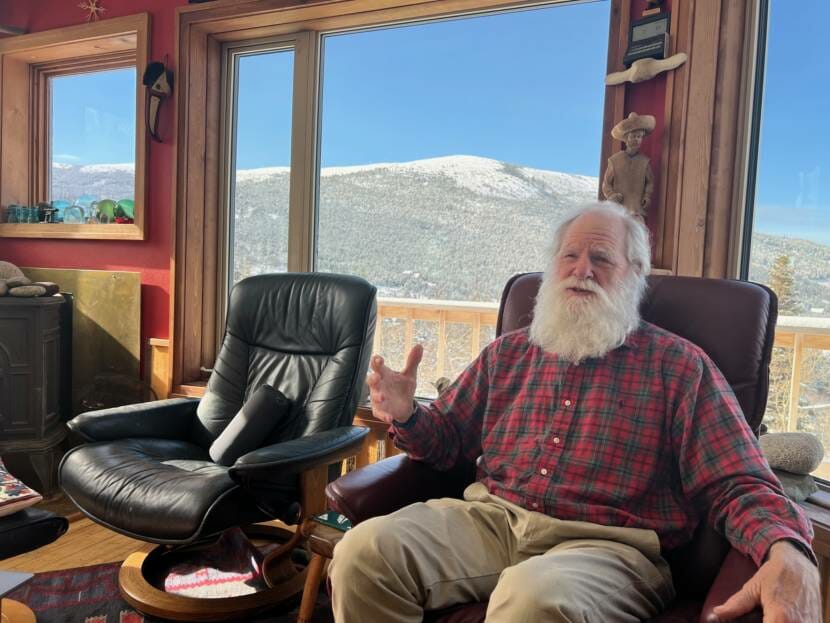
A man with a large, white beard sitting in a home with sweeping mountain views
Avalanche expert Doug Fesler, at his home in the foothills of the Chugach Mountains in Anchorage on April 5, 2022. (Photo by Casey Grove/Alaska Public Media)

Residents of an Eagle River neighborhood cut off by an avalanche last month were reconnected Monday after crews finished clearing debris from Hiland Road. Municipal officials described the slide as a “100-year event.”

But one longtime avalanche researcher in the area says the risk of another large avalanche like it is probably greater than people might guess from those statements.

Doug Fesler is an avalanche expert and the founder, along with his wife Jill Fredston, of the Alaska Mountain Safety Center.

Fesler says more should be done to understand and avoid similar known avalanche paths because such large slides can be deadly.

Listen here:

The following transcript has been lightly edited for clarity.

Doug Fesler: We had a fair amount of snow — several feet of snow early in the winter. And then we had very cold temperatures, you know. So what that did is it made a temperature gradient in the snowpack, which triggered a process to create snow called faceted snow, and faceted snow is notoriously weak. Anyway, that condition existed down near the ground, and still exists.

But on top of it, now we’ve got several more layers. And we also had an event in December where we had two or three days of freezing mist, which created an ice lens on top of this. And then on top of that, there was more layers put up there.

On the night that this avalanche was triggered, the wind came up, big wind slab was formed, and it was off and running.

Casey Grove: It seemed like it caught people by surprise that this would have happened there in a way that it would have impacted houses. But is it really that uncommon for that area or for that actual slide path?

Doug Fesler: That was a bigger than usual avalanche, and terms were used like, “massive, huge,” and so forth. To me, it wasn’t massive, it was just big, given the size of that path. And given the recent history that we have, which is very little.

I’ve heard some people talk about it as being a 100-year avalanche. And by that they mean, that would be the biggest event to happen in 100 years. I don’t think it was a 100-year avalanche, though. I think it was somewhere between a 30- and 50-year avalanche. And, you know, we don’t know, and there’s no way to find out unless you have a history.

And I’ve spent 50 years in that valley and other valleys studying these avalanches and recording the events that come down, when they hit houses or come close to houses. This was the largest avalanche that’s happened in that valley in my tenure.

Casey Grove: And I guess when somebody says, “This is a 100-year event,” whether it’s a flood or an avalanche or whatever, or a 50-year event, that doesn’t mean once it has happened that it will not happen again for 50 years…

Doug Fesler: It doesn’t. That 100-year event or that 50-year event, that could happen in consecutive years. It could happen a century or more apart. And when I hear somebody say, “Oh, it was a 100-year avalanche,” I listened to it. And then the message in between is that this was a pretty large avalanche.

Casey Grove: What is being done to sort of figure out what risk may still exist there. Is there enough being done? Do you know?

Doug Fesler: No, I don’t think there’s enough being done. I think that the municipality needs to go back, and number one they need to approve the ordinances for mitigation of these houses. They shouldn’t be letting people build houses in avalanche paths. It’s stupid, because it’s just going to keep coming back time and time again, it’s not going to go away. The houses can be somewhat protected, in some cases considerably protected. In other cases, just marginally protected. But protection isn’t the answer. Really, avoidance is the answer.

Casey Grove: You were saying that it could be even less (than a 100-year even), like 50 or something like that. But in the Alps and little villages over there, they’ve got so much more record that they can kind of make those claims maybe more accurately, right?

Doug Fesler: Exactly. I mean, literally, they have records going back to the 1300s. And they have, you know, certain landmark buildings like a church or something in a small village where the avalanche is remembered to have stopped right on the edge. You know, “God made that happen.” And they didn’t forget it. And so it’s nice to have those kinds of records. We don’t have anything close to that. And most people are pretty clueless when it comes to avalanches. They think they know they’re in a path, but what does that mean? But if you wake up in the morning and you open the blinds and you see, “Oh my god, look at the backyard. It’s totally filled with snow!” You’re looking up at it, you’re not looking down at it. That usually makes an impression on people where they want to know a little more.

Casey Grove: And that seems like maybe the least worst scenario, would be just waking up and seeing some snow filling up your backyard. But what’s the worst case scenario for somebody that’s in a slide path like that, that it goes and it impacts houses?

Doug Fesler: Well, unfortunately, the worst impact is the house gets obliterated and the people in it all die. That’s the worst. I remember one woman who was sitting in a Lazy Boy recliner with her remote control in her hand. She was obviously watching some show on TV. Big avalanche came down and took the entire house off a concrete block foundation, just gone. (The) house was obliterated into little pieces about a foot long maybe and blowing all the way out into the lake. About a half-mile of debris, lots of debris, all the insulation, the boards, all splintered pieces, it was unrecognizable. That’s the worst case.
Alaska renters face uncertainty as federal pandemic rental assistance nears end

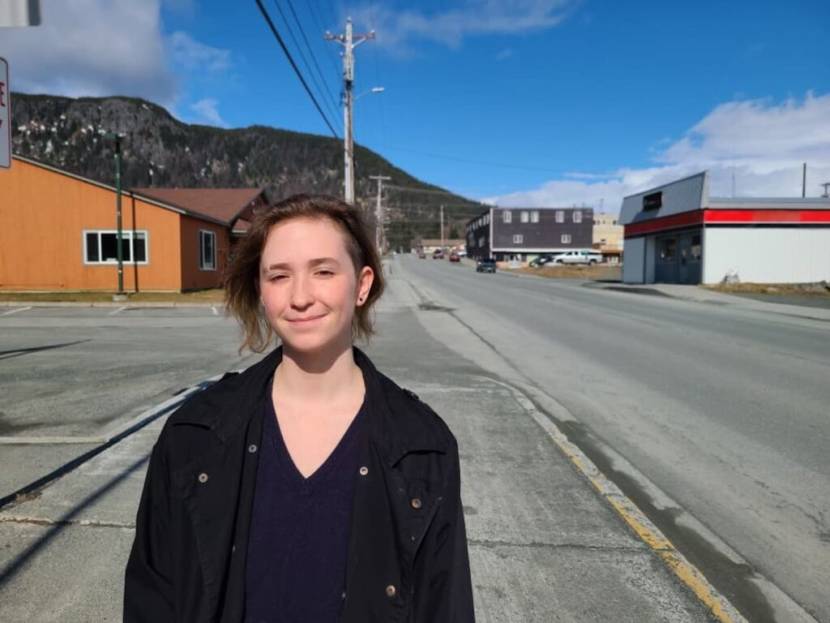
Photo portrait of a young woman standing by an empty street
Haines resident Emma Brouillette, 18, benefitted from COVID rental assistance. With the program ending, she’s struggling to find more affordable housing. (Photo by Corinne Smith/KHNS)

Tens of thousands of Alaska tenants got help with rent during the pandemic. But the federal rental assistance program is set to expire by the early summer, and many still face challenges finding and affording housing.

Eighteen-year-old Haines resident Emma Brouillette has moved three times since graduating from Haines High school last year.

“It’s definitely really scary,” she said. “So my rent is $1,000 a month. I get around $450 every week for my paycheck. So I don’t actually get to save any of that.”

Brouillette works in the kitchen for a heliski tour company. She says paying for a studio apartment in town, plus utilities and food, is a stretch. She’s been supporting herself since she was sixteen. She says that with her qualifications, finding an entry level job that pays a living wage has been difficult.

“Between COVID and us not having tourism, so many businesses are closed, there’s not too many jobs out and about that can offer sort of a lot of progression,” Brouillette said. “So I’ve been doing my best to look around for jobs that can provide. And with COVID, so many people are having that same struggle. So people are sticking to their apartments, sticking to where it’s safe.”

Last fall, Brouillette was working at a local pizza restaurant and struggling to get by when she saw a posting and applied for COVID rental assistance.

“I found it to be incredibly helpful,” she said. “Because it helped with my mental state with my stress, it wrote that off as one less thing that needed to be done, and allowed me to work on myself.”

Now, with federal funding ending, she’s looking for a better paying job and a more affordable place, ideally splitting costs with a roommate.

But she says it’s also hard to save for a deposit for a new place while covering her bills.

“I have a job, and I’m able to pay for things, but I’m not able to look at a better job,” Brouillette said. “With my lease ending, if I want to try to find a new place, I need to find another source of income so I’m able to pay that first month of rent and that down (payment) deposit so I can actually move.”

31-year-old Joe Aultman-Moore is facing similar housing challenges. He was displaced from his home during the deadly Beach Road landslide in 2020. His cabin was deemed too risky to return to.

“When that was rendered unlivable after the slide, I essentially had to move into town somewhere,” he said. “I had to scramble to find a place in the middle of winter.”

He found emergency housing following the disaster, then rented a studio apartment in Fort Seward for $850 a month. As a former tour guide, but with no summer tours during the pandemic, he qualified for the COVID rental assistance.

“That’s made living in town possible throughout the continuing pandemic,” Aultman-Moore said. “But once that ends, I’m essentially going to have to move out of there. So, you know, continuing on, it’s pretty much still up in the air.”

Aultman-Moore says he was able to put away savings during that time and is working toward building his own tiny home.

“My long term plan going forward is to build a tiny house and stop paying for rent. Because that’s the only way that it makes sense to continue to live here,” he said. “Because, yeah, like rent going up and seasonal workers coming in and the renting situation constantly shifting around here. It’s just, it’s impossible to manage.”

The Alaska Housing Finance Corporation says it has distributed more than $220 million from the federal COVID relief program. In all, 100 Haines households benefited.

Housing Corporation spokesperson Stacey Barnes said one-third of all renters in the state applied, and over 66,000 Alaskans benefited.

“The idea that an individual or a family was questioning where they may sleep the next night or the next month because they lost hours associated with their job, maybe they lost their job altogether,” Barnes said. “Or maybe they had to care for a family member who became closely in contact with someone else who had COVID. Or perhaps they had COVID themselves. And so knowing that financial relief was on the way, was something that has made a tremendous impact.”

The program paid any past rent due, then made direct rental payments  landlords in three-month installments. In the Haines Borough alone, that totaled over $660,000 in assistance. There were two rounds of funding over the last year, but assistance is now set to end by early summer.

“While our country is now coming out of the COVID pandemic, those individuals are able to return to full employment, and make the decisions that are in the best interest of their family without having completely drawn down their savings without having built up huge credit card debt. And by maintaining the security of their housing,” Barnes said.

But renters are still facing major challenges affording housing.

Heather Parker is an attorney with Alaska Legal Services based in Juneau. She says they’re seeing an increase in evictions across Southeast Alaska in recent months as tenants face the end of federal rental assistance.

“Even though this particular COVID housing benefit is kind of coming to an end, I just want people to know that state and federal law still applies. And there are still obligations that landlords and tenants have under state law,” Parker said.

In particular, Parker says tenants have process rights during evictions.

Janine Allen is an advocate with Southeast Alaska Independent Living based in Haines. She says with federal rental assistance ending, they’re working to connect seniors and people with disabilities with additional assistance like for food and fuel. But housing availability continues to be a major challenge, especially for those on a fixed income.

“The housing situation in Haines seems hard for pretty much everybody right now, regardless of your income. And then if you have a disability or if you’re a senior it’s just nearly impossible.”

Looking ahead, renters like Joe Aultman-Moore, whose Beach Road cabin was condemned, say more needs to be done to address housing options and affordability.

“You’re on a treadmill,” he said. “And if anything goes wrong, like if you stumble in the slightest, you’re gonna go flying off that treadmill real quick.”

Alaska Legal Services staffs a statewide housing hotline for both tenants and landlords at 855-743-1001. There are also housing resources at alaskalawhelp.org. Alaska’s 2-1-1 hotline connects residents to a variety of public benefits, including housing assistance. 

Juneau newspaper advocates for people experiencing homelessness

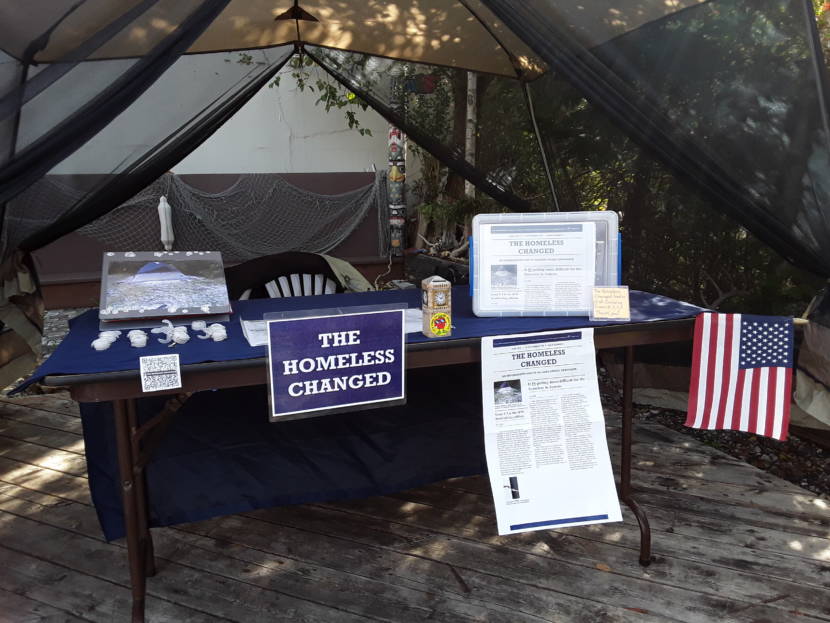
A booth with copies of The Homeless Changed, a newspaper started by Brian Buchman, in September 2020 when it was introduced in Ketchikan. The newspaper shares stories from people experiencing homelessness in Juneau, Alaska.  (Photo courtesy of Brian Buchman)

About every other month outside of Foodland IGA in downtown Juneau, Brian Buchman hands out a newspaper called The Homeless Changed.

Buchman started the paper two years ago on March 15, 2020 and it is now on its 11th edition. Stories come from both Buchman and other people in the community who experience homelessness. 

“They give me a writing they’d like to see in the paper or I transcribe it for them while they explain it because they may have difficulty writing it,” Buchman said.

They cover topics like the general morale of the community of people experiencing homelessness and the policies that impact them. The paper advocates for people in the community and is created to support them.

One of the stories in the last edition is about ideas for long-term housing for people experiencing homelessness in Juneau. 

Buchman gives out a black-and-white version of the paper for free and the color version is a $3 suggested donation. 

He said he has gotten a lot of support for the paper so far from businesses and the people who buy the paper.

“People are so generous,” Buchman said. “People give $20 bills for color editions when they’re only asked to do a $3 suggested donation. People have given $50 bills for a color edition and sometimes, even over these two years, higher amounts.”

Buchman is hoping to hand out the latest issue of the paper late this week or early next week outside of Foodland IGA. The paper is also available online through the crowdfunding platform Patreon.

A new study gives many Alaska communities their first look at how fast erosion is approaching

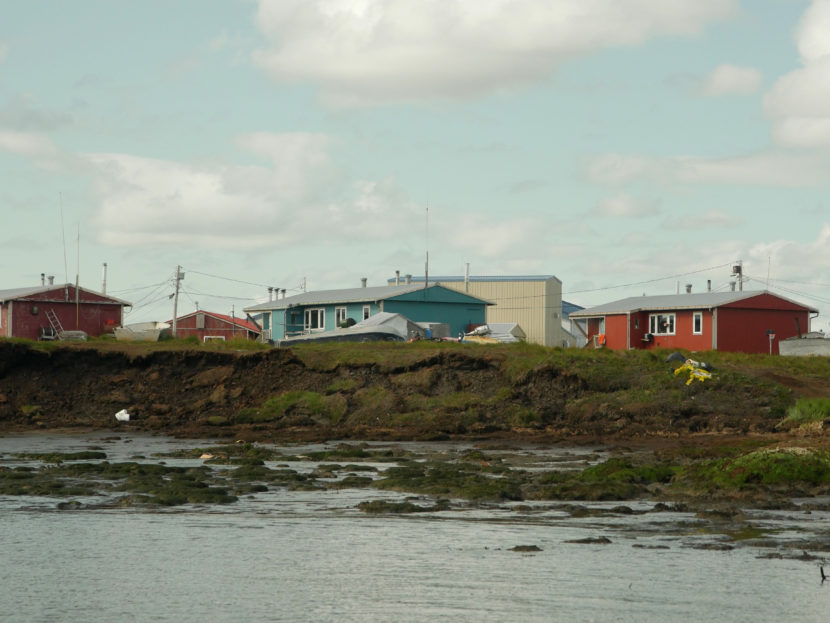
The village of Newtok in western Alaska, in August 2016. (Photo by Eric Keto/Alaska’s Energy Desk)

Erosion is threatening coastal communities around the state, but until now it hasn’t been clear to what extent. A study published in November 2021 by the state’s coastal hazards program forecasts how much land erosion could wipe away in 48 of Alaska’s coastal communities.

It’s the most comprehensive erosion assessment ever done in the state, and the results are both surprising communities and helping them receive funding to adapt.

On the lower Yukon River, Leo Mahaney leads the village of Nunam Iqua’s environmental department. Before Mahaney saw the state’s erosion forecast for Nunam Iqua, he said that he wasn’t that worried about erosion.

“I don’t think the community really looks at erosion being a big problem right now,” Mahaney said. “Because it’s barely noticeable.”

Mahaney said that the erosion was easy to ignore because Nunam Iqua does not have high, cut banks. In other communities that do, it’s noticeable when a chunk of the riverbank falls off into the water. In Nunam Iqua, it can seem like erosion is taking land more gradually.

But according to the state’s assessment, erosion is happening quickly in Nunam Iqua. The study predicts that in the next 40 years, 11 structures in the village will be threatened.

Looking at the state’s study, Mahaney was surprised to see how much land is projected to disappear.

“I had no idea that by 2039 to 2059 it would go that far,” Mahaney said. “Moving houses and all that water line infrastructure. I know it’s not going to be cheap.”

The study roughly estimates that replacing the threatened infrastructure in Nunam Iqua will cost over $4 million over the next 40 years.

Many communities in the Yukon-Kuskokwim Delta face much higher costs to adapt to the changing environment. Although Yukon-Kuskokwim Delta villages only make up a third of the communities included in this study, they made up 80% of the costs caused by erosion.

Mahaney said that he would share this study with community leaders, who he expects will start taking more action on erosion.

“I think it will start kicking off a long term plan,” Mahaney said.

For many communities, this is their first ever erosion forecast based on scientific data. Other reports that  looked at erosion in the past, like the Denali Commission’s 2019 statewide threat assessment, often relied on a community’s anecdotal record of erosion rates.

But anecdotal evidence of erosion can sometimes be insufficient proof when applying for grants.

“There have been plenty of issues with Alaska Native communities accessing agency resources to work on erosion issues because there was no scientific documentation,” said Jacquelyn Overbeck, manager of the state’s coastal hazards program, which conducted this study.

Several grants that help communities facing environmental threats, like the U.S. Department of Housing and Urban Development Imminent Threat Program and the Federal Emergency Management Agency’s Hazard Mitigation Assistance Program, require a third party to verify the threat exists. That’s what this new study helps to do.

The Denali Commission recognized this need for Alaskan communities to have a science-based erosion assessment and funded the state coastal hazards program’s study.

Jessica Lewis-Nicori is a tribal council member and a high school science teacher in Chefornak, another village in the Yukon-Kuskokwim Delta. She said that Chefornak used the state’s erosion assessment in a recent grant application to move five homes in the village that are in the most immediate danger due to erosion.

“It’s kind of like, ‘Oh look, the science does support our claim that these houses are falling and the river’s eroding,’” Lewis-Nicori said.

Chefornak received the funding and plans to move those homes by 2023.

One reason why this kind of comprehensive erosion assessment is only coming out now is that new technology just recently made it possible.

The erosion forecasts are created by measuring how much each community’s coastline has moved in the past to predict how much it will move in the future. That’s done by taking aerial images of each community, dating back from the 1950’s to present day. Those images are then mapped on top of each other and combined with data on where the community’s infrastructure is located.

Overbeck, one of the study’s authors, says that takes a lot of computing power.

“In the last five to 10 years has been the development of that technology to do it on a really large scale, which is what we needed for Alaska,” Overbeck said.

There is one key limitation of the state’s erosion assessment. It did not take climate change into account.

Scientists believe that climate change is accelerating erosion in many of Alaska’s coastal communities as sea ice protects shorelines for fewer months of the year. Studies predict that storms will also increase in frequency in Western Alaska.

However, Overbeck said that the state’s erosion study lacked the data to show how much that would affect erosion rates. There were not enough images of communities’ shorelines to calculate any change in erosion rates.

She said that means communities can likely expect more erosion than what these forecasts show.

Overbeck said that the state is involved in efforts to collect aerial images of communities more often, including high-resolution satellite images. That could help answer the question of how much climate change is accelerating erosion. Until then, this study is the best erosion estimate many communities have to help them plan for the future.

But for now, Overbeck said the state’s coastal hazards program is moving on from erosion to look at how much flooding Alaska’s coastal communities can expect to see in the future.

Mayor: Part of Skagway RV park where boarding school stood should go to tribal government

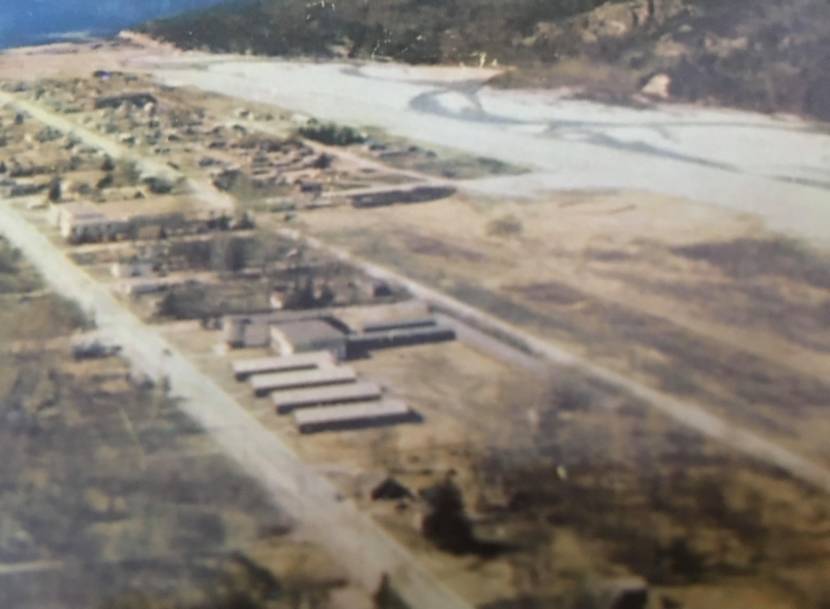
An old, blurry aerial photo of Skagway showing the Pious X Mission School
View of Skagway’s valley looking south at the Pius Mission X School. The four long buildings were the barracks. The square building was the main school building. (Photo courtesy of Andrew Beierly.)

Skagway’s mayor has proposed giving half of the land that was once a Native boarding school to the local tribal government. Mayor Andrew Cremata made the proposal on Monday night during a special assembly meeting to discuss the long-term future of the five acres that’s now a municipal-owned RV park.

What’s now the Garden City RV park was once the site of the Pius X Mission School, where Native children were indoctrinated into Western culture in the mid-1900s.

Cremata started the Feb. 28 meeting with a proposal that appeared to take many in the room by surprise.

“There is a scar at Garden City, and it covers a wound that was created when the Pius X Mission was operational,” Cremata said. “I would recommend seriously entertaining taking half of that property, recognizing the scar exists and in an effort to heal that scar, generously give that property to the Skagway Traditional Council, half of it, where the mission is buried. And then we agree as part of an agreement between the Skagway Traditional Council and the municipality of Skagway to erect a monument that spans both pieces of property.”

The RV park was purchased in 2013 from the Catholic Church and is currently awaiting an archeological study. The bodies of hundreds of Native schoolchildren have been found buried at similar schools in Canada.

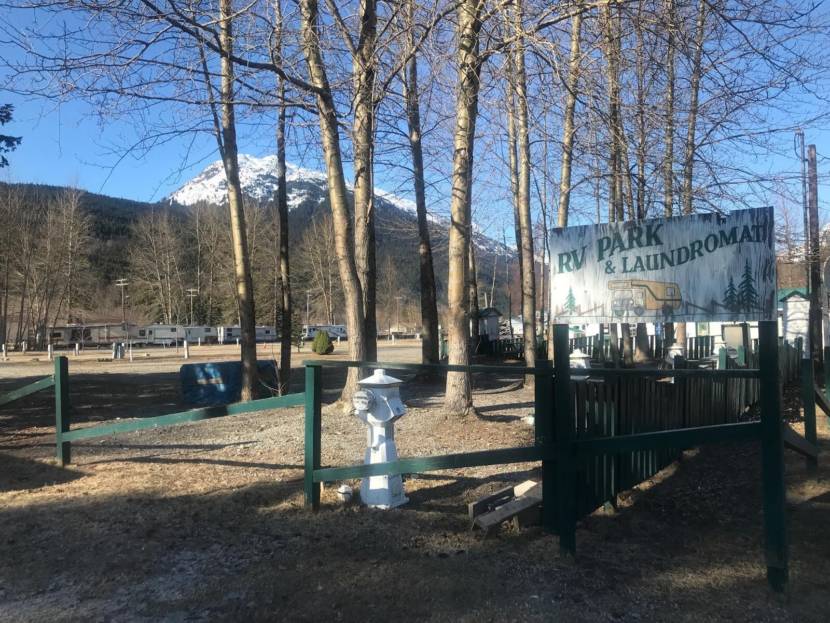
The Garden City RV Park in Skagway in April, 2021. (Photo by Mike Swasey/KHNS)

The Skagway Traditional Council has stated that it wants to see the results of the archeological study before determining how much of the land they think is appropriate to receive.

Monday’s meeting was also about developing a long-term plan for the park’s future. Some residents want it to remain a viable option for low-cost employee housing. Others want the revenue and economic diversity it offers as an RV park. Still others want the land to be sectioned off and sold for development.

Assemblyperson Dustin Stone argued that creating lots for sale won’t solve Skagway’s longstanding seasonal housing shortage.

“There is, I guess for lack of a better term, a crisis for people who are looking to buy their first home who’ve been here year-round. But the real housing crisis in this town is we don’t have anywhere to house people that come here to work and support our economy all summer,” said Stone.

Assemblyperson Orion Hanson argued against making the park accessible for seasonal housing.

“I don’t think an RV park ever should have been our band-aid for employee housing. What’s far more appropriate is we develop a trailer court if you’re looking for cheap, affordable housing, and the only place really to do that properly is across the bridge,” he said.

The municipality does own about five acres of land near the intersection of the Dyea Road and the Klondike Highway north of downtown that is set aside for the development of either a trailer park or an RV park.

Borough Manager Brad Ryan said the municipality has received an estimate for the cost of extending utilities to that area.

“We have a pretty recent estimate it’s about $10 million. We actually have a grant application in for it as well,” he said.

Assemblyperson Reba Hylton says she wants to keep a portion of Garden City as an RV park as a way to diversify Skagway’s tourism-based economy instead of strictly relying on cruise ships.

“I do support RV traffic. I think it’s an important part of our economy, and we really need to invest all we can. And I would love to see half of Garden City RV park continue to be an RV park. I think having green space and having nice facilities, especially close to a school is really, really important. I think the minimum we should give back is half of it,” she said.

She also wants the Catholic Church to take some responsibility for the mission school, which it sold to Skagway’s local government for $1.5 million.

“I think we should ask the Catholic Church to give us half of that money back too. They should be paying for that. We wrote them a $25,000 check in the last check run. Give that back, please. We want to do what’s right, they should do what’s right as well,” Hylton said.

After the nearly two-hour meeting, the mayor asked for the discussion to continue at the committee level.

After more than a decade, overcrowded Shaktoolik is finally getting new homes

A couple and child sitting on a couch
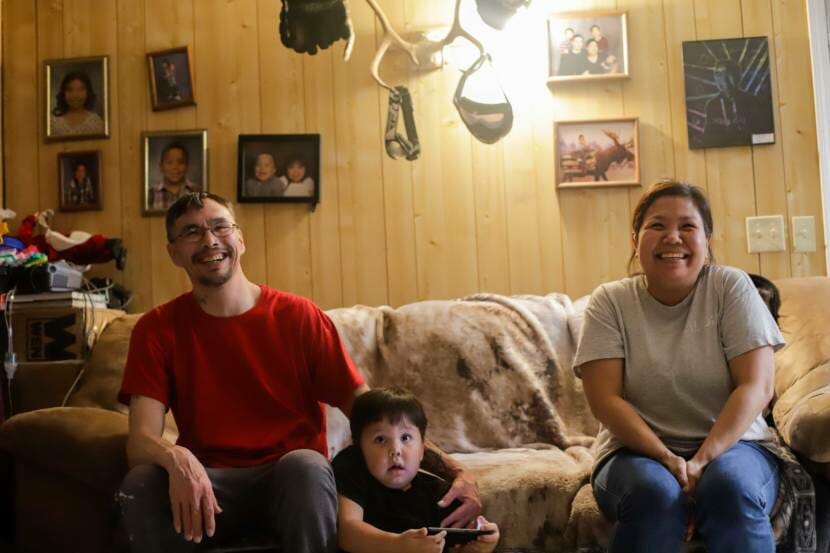
Sophia Katchatag, her husband Murphy Katchatag and their son Eric, Jr., 4, watch TV in their small, two bedroom home in Shaktoolik, Alaska, in January 2022. (Photo by Jeff Chen/Alaska Public Media)

The smell of moose soup and the sounds of “Teenage Mutant Ninja Turtles” fill Sophia Katchatag’s small, two-bedroom home in the Norton Sound village of Shaktoolik. She and her husband share one room with their two younger children. Their two older kids share another room.

“I mean, I would love for me and my husband to have our own bed, but we just work with it,” she said.

Their teenage daughter wants her own room, too, but Katchatag said expanding isn’t financially feasible even with two incomes, especially with the recent spikes in lumber prices. She said she feels lucky to have her own place at all, which the family inherited in May and renovated with money from the region’s tribal housing authority. In the past, they shared a single bedroom in her mom’s house, living with extended family.

“To be honest it was hard, it was challenging,” she said. “Not having your own privacy, your own space and having to be on everyone’s schedule, do things on their time.”

Statewide, Alaskans are twice as likely to live in an overcrowded household than the national average. Rates are highest in small, off-the-road-system communities like Shaktoolik, where around 60% of residents live in overcrowded conditions. The federal Department of Housing and Urban Development defines overcrowded as more than one person to a room in the house, including the living room and kitchen, and severely overcrowded as more than 1.5 people to a room.

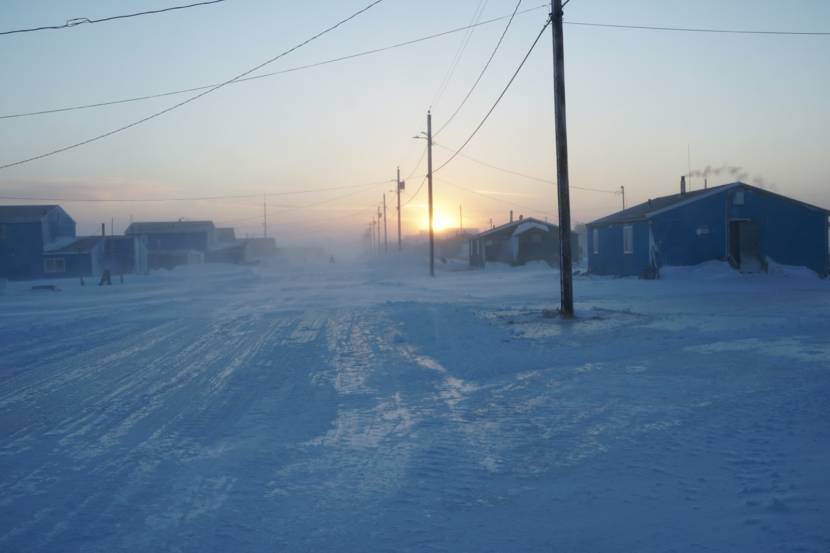
A wind-whipped village street in winter
A winter storm whips through Shaktoolik in January 2022. (Photo by Erin McKinstry)

“To be honest, in some of our places, if you’re living in a house that only has 1.5 individuals per room, that’s not going to be one of the more overcrowded houses in your community,” said Brian Wilson, executive director of the Alaska Coalition on Housing and Homelessness.

The problem is perennial, but the COVID-19 pandemic has made living with it harder.

Cramped conditions offer little space to work from home, conduct virtual schooling or quarantine, and they put multigenerational households at increased risk of infection, especially in communities with limited access to water and sewer.

“You know if one person in that home contracts COVID-19, it is impossible to physically space out and prevent the spread of that,” Wilson said.

Thankfully, he said, the places in the state with the highest rates of overcrowding also have the highest rates of vaccination. And in Shaktoolik, the tribe used federal COVID relief funding to retrofit an old clinic as a quarantine house. But, he said, the risk is still high.

“These are primarily smaller communities where everybody knows everybody, and it’s a beautiful thing culturally to say that if I live in one of those communities and I see my uncle or my brother or my friend’s nephew in a houseless situation, that I take them in,” Wilson said. “Unfortunately, the byproduct of that is the severe overcrowding, which can also be a very dangerous.”

Not enough homes

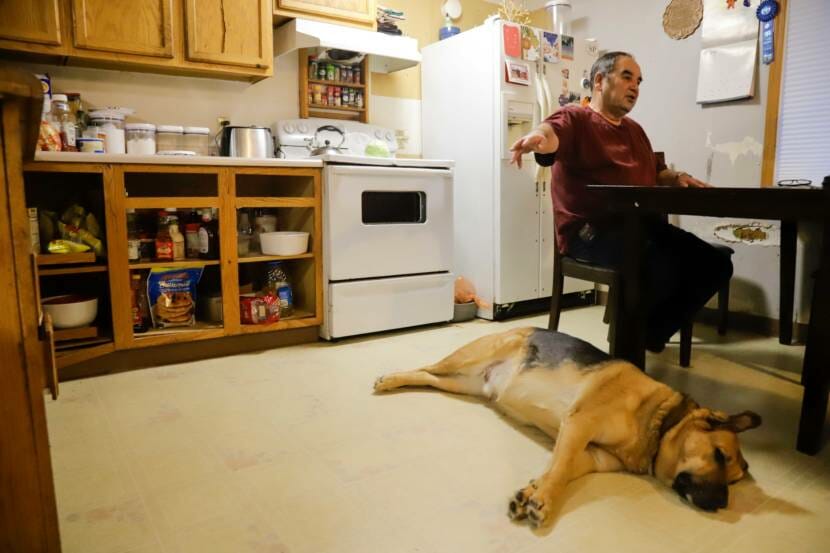
A man sitting at a kitchen table with a large dog lying on the floor next to him
Bering Straits Regional Housing Authority commissioner Eugene Asicksik has worked on housing issues in Shaktoolik for decades. He sees progress, but not enough. (Photo by Jeff Chen/Alaska Public Media)

Former Shaktoolik mayor and current Bering Straits Regional Housing Authority commissioner Eugene Asicksik said overcrowding leads to a host of problems in his community.

“You have too many adults living under one roof,” he said. “I think that adds to the social problems that occur when you have adults arguing or, you know, having a different opinion or fighting over the TV remote control and all that stuff.”

He’s been working to address housing issues in Shaktoolik for decades, and he does see some progress being made. But he said part of the problem is something that can’t be changed: Shaktoolik’s geography. The few vacant homes need work because of the harsh climate and substandard construction. And because the town is only accessible by barge or small plane, high construction costs keep people from building more or renovating.

“Everything has to be ordered,” Asicksik said. “One sheet of plywood can cost you over $100, $130 sometimes.”

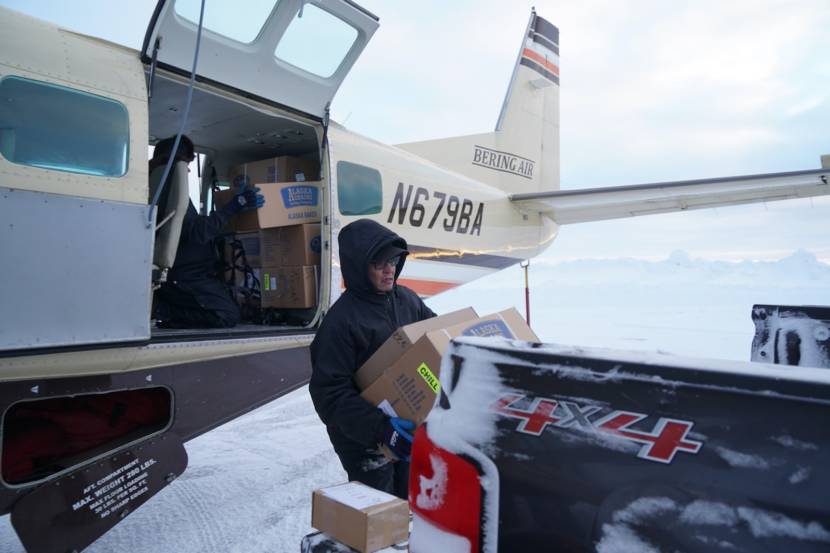
A man unloading boxes from an airplane into the bed of a pickup
Agent Reuben Paniptchuk unloads a Bering Air flight at the Shaktoolik airstrip in January 2022. Bush planes are the village’s only lifeline in the winter months, when conditions don’t allow for barge access. (Photo by Erin McKinstry)

Financing is difficult, too, because most of the land is owned by the village corporation instead of homeowners and bank loans are often inaccessible. Asicksik said he learned that personally, when he expanded his own home to make space for his children and grandchildren, and he had a hard time accessing a loan because he didn’t own the land. He had to put everything he owned up for collateral.

Climate change is also eroding buildable land and slowing down economic activities like crab fishing, which used to provide more jobs in the village.

And, Asicksik said, there’s a lack of awareness and resources to address the problem.

“I don’t think there’s much consideration to what goes on in the bush,” he said.

Roughly 250 people live in Shaktoolik, which is about 125 miles east of Nome. The community is around 97% Alaska Native.

The region’s federally funded tribal housing authority is responsible for the bulk of the town’s residential construction. They haven’t built here in more than a decade, but thanks in part to federal COVID relief funding, Shaktoolik is getting four new modular houses.

That’s welcome news for city clerk Isabelle Jackson. Like many other residents, she’d thought about leaving because of the high cost of living and lack of housing options. But the subsistence lifestyle and the tight-knit community have kept her here. She’s waited almost 10 years for a home of her own.

“I remember the moment when they called me, and after they said I’m one of the recipients for a three-bedroom home, I started crying. I got quiet. Tears rolled down my eyes, just for, you know, happiness,” Jackson said.

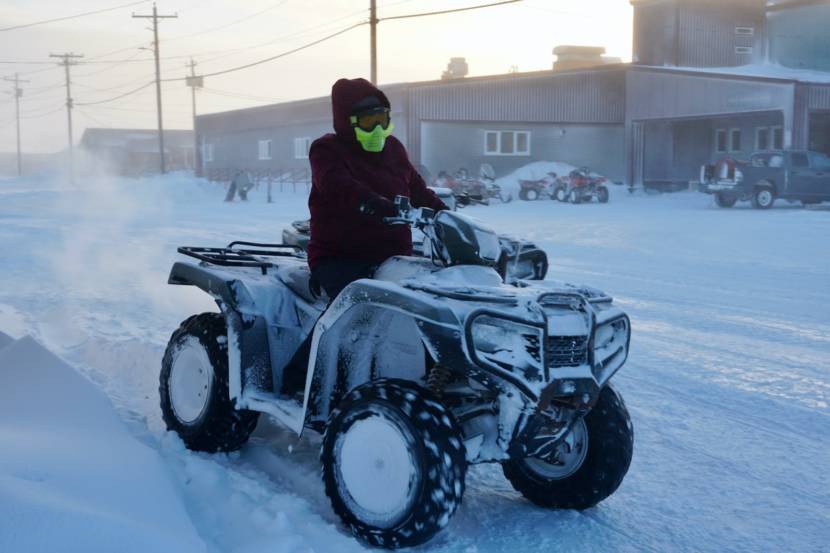
A woman driving and ATV on a snowy street
Isabelle Jackson rides her ATV between her home and the Shaktoolik city office, where she works as the city clerk. She’s been on the waitlist for a new home since 2013. (Photo by Erin McKinstry)

Jackson will pay an income-based rent for 25 years and then own the home outright. Right now, she and two of her kids share a hallway. Her father, who’s sick, sleeps on the couch. That’s been particularly difficult during the pandemic ,when they’ve worried about spreading the coronavirus.

“We’re, like, helping each other out, you know, taking care of him right now. But yeah, it’s difficult when my son wants to, you know, play and stuff, but he has to, you know, be quiet and have that respect,” she said.

Tackling a complex problem

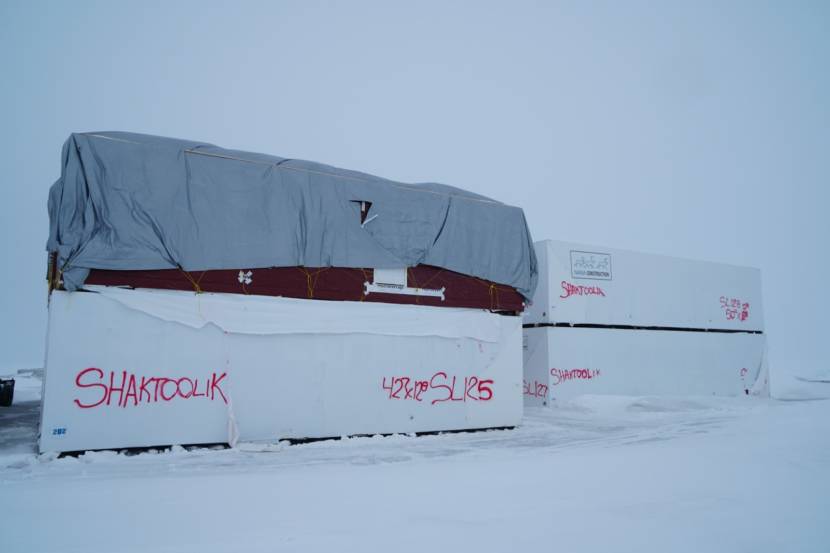
Shaktoolik’s four new modular houses, including Jackson’s, are stacked in Nome’s shipyard until the barge can access Shaktoolik in the spring. They were pre-built in Big Lake by NANA Construction last summer, but weather delayed their arrival.

Shipping containers stacked up in the snow
Shaktoolik’s four new modular homes sit in Nome’s shipyard. Recipients were chosen based on a number of criteria, including current housing conditions, veteran status, and length of time on the waitlist. (Photo by Erin McKinstry)

Jolene Lyon, CEO and President of the Bering Straits Regional Housing Authority, said that ideally they would have built them onsite to help create job opportunities for residents. But when the extra funding from the CARES Act and American Rescue Plan came in, they wanted to act fast.

“Our main objective is to get homes up and going in these communities. And in this instance, this was the fastest way to do it,” she said from her office in Nome. “Right now, COVID is frightening too many people. Being able to have your own space alleviates a lot of that mental stress.”

The tribal housing authority serves 17 villages in the Bering Straits region, which is the third most overcrowded region in the state. Lyon said building in such a diverse and remote region isn’t easy. From different soil types to harsh winter storms to permafrost, there’s no one-size-fits-all design.

“The challenges are not just in building a home, it’s designing a home that works for the environment in the community that you’re in,” Lyon said. “And so we ask the tribe as much information as to what they want, versus what we’ll be able to provide for that build.”

Normally, federal funding allows the housing authority to bring new homes to each village every decade, but the extra funding is helping them build more homes more quickly. In addition to the modular homes, they’re also bringing three new homes to the remote island of Diomede and four to Wales on the western tip of the Seward Peninsula.

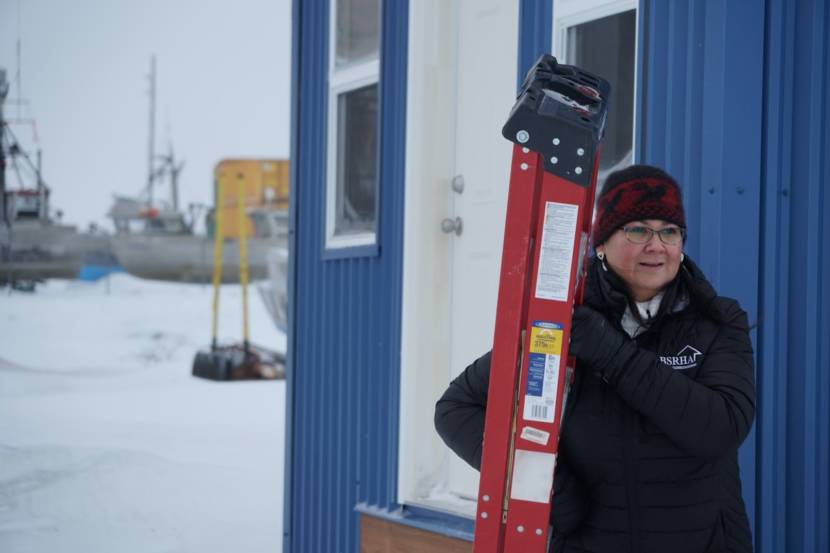
A woman carrying a stepladder outside in the snow
Bering Straits Regional Housing Authority President and CEO Jolene Lyon carries a ladder from the tiny home that will head to Diomede in the spring. The organization hopes to use the design as a model for future projects. (Photo by Erin McKinstry)

Still, it’s only a small dent in the problem.

“We don’t have the funding,” Lyon said. “That makes it very difficult and frustrating sometimes, when you know that the need is greater than that. And you could deliver on doing more but it’s just that’s not the reality of it.”

And even if they did have the funding, income requirements and program guidelines keep some people in the region from accessing new homes.

Lyon said the region needs an estimated 400 new homes to meet the need and alleviate overcrowding. They’ll tackle the problem one home at a time.

Site notifications
Update notification options
Subscribe to notifications