Tourism

Australian woman to return home this week after nearly 10 years in Bali prison

Schapelle Corby's trial was covered feverishly by the Australian media and broadcast on multiple television networks. Her guilty verdict and twenty year sentence caused outrage and calls for boycotts of Bali, a popular tourist destination for Australians.
Schapelle Corby’s trial was covered feverishly by the Australian media and broadcast on multiple television networks. Her guilty verdict and twenty-year sentence caused outrage and calls for boycotts of Bali, a popular tourist destination for Australians. Firdia Lisnawati/AP

It’s not entirely clear why Schapelle Corby’s case so captivated a nation.

The Australian woman was 27 in 2004 when she was caught with 9 pounds of marijuana in her bag upon landing in Bali for a two-week vacation. She was convicted in 2005, and sentenced to 20 years in prison. That sentence was ultimately reduced, and in 2014 she was released on parole. Now, she is set to return home to Australia this week.

Before her arrest, Corby was an ordinary young woman, working in her family’s fish and chip shop in the suburbs of Australia’s Gold Coast.

And yet, as The Sydney Morning Herald reports, hundreds of thousands of Australians watched in 2005 as Corby tearfully awaited her verdict. The Associated Press compared the “media bonanza” of her trial to that surrounding O.J. Simpson’s. Corby has inspired an HBO documentary, “Free Schapelle” T-shirts, and a call for a boycott of tourism to Bali. Her case inspired diplomatic dramas between Indonesia and Australia, and even a new slang term — to be “schapelled,” or “screwed over, brutally.”

Corby has always maintained her innocence, which might explain in part why her case has captured so much attention. A photogenic young woman, her face was splashed across tabloid covers and television screens. Fiona Connolly, editor-in-chief of Woman’s Day magazine, recently told The Sydney Morning Herald, “I was the first person to put Schapelle on a magazine cover. My publisher said, ‘Are you joking me?’ But that issue sold its socks off. She’s a profitable cover star.”

An unauthorized version of Michael Buble’s song Home played on Australian radio stations during her trial, mixing in quotes from Corby. Far from being upset about the remix, Buble told The Sun Herald he was glad his song was being used to cover the case.

“This song was written for people who are going through hard times such as this. I hope she can find her way home,” Buble told the paper in 2005.

Some have speculated that Corby’s case became sensationalized in part because she was so “ordinary.” As Australia consular affairs expert Alex Oliver told The Sydney Morning Herald, “It could have been me or my child.” Many Australians travel to Bali (1.14 million in 2016, according to Traveller.com) and perhaps Corby was simply easy to project anxieties on. Australian travelers now often wrap their suitcases in cling film to prevent tampering with luggage, according the Herald.

But support for Corby sometimes took on ugly, nationalist tones.

In an academic paper in The International Journal of the Humanities, media studies professor Anthony Lambert argued that Corby became a symbol of national identity for Australia. She represented whiteness, female vulnerability, and perhaps the suggestion of “Western ways of being under threat” as she faced trial in a foreign country, in a foreign language. A terror attack in Bali just two years earlier had killed 88 Australians. Lambert argues this history was fresh in the minds of those who tuned in to watch as Corby sobbed, at the mercy of a foreign system.

At times, the coverage became overtly racist. Lambert recalls Sydney radio talk show host Malcolm T. Elliot comparing the Indonesian judges to monkeys, saying, “They are straight out of the trees.”

As for the woman at the center of all of this, she remains mysterious. Though Corby co-wrote a memoir, published in 2006, she has mostly shied away from the media attention. Her family has asked for privacy as she prepares to return home, but one can only guess it will be difficult to find. As the editor of Woman’s Day told the Herald this week, “I’d be sitting next to her on the plane if I could.”

Copyright 2017 NPR. To see more, visit http://www.npr.org/.

Leaving timber behind, an Alaska town Ketchikan turns to tourism

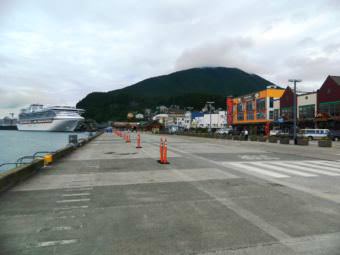
Ketchikan sits on an island at the southernmost end of southeast Alaska, a prime spot for cruise ships navigating Alaska's Inside Passage. (Photo by Elissa Nadworny/NPR)
Ketchikan sits on an island at the southernmost end of southeast Alaska, a prime spot for cruise ships navigating Alaska’s Inside Passage. (Photo by Elissa Nadworny/NPR)

What happens to a town when a key industry collapses?

Sometimes it dies. But sometimes it finds a way to reinvent itself.

Case in point: Ketchikan, Alaska, where the demise of the timber industry has led to a radical transformation.

Many people who used to earn their livelihoods through timber have now turned to jobs in tourism.

It’s an identity shift that makes the city far different from what it was in the logging heyday.

“It was this boomtown!” says longtime Ketchikan resident Eric Collins. “It was just a crazy, wild frontier place.”

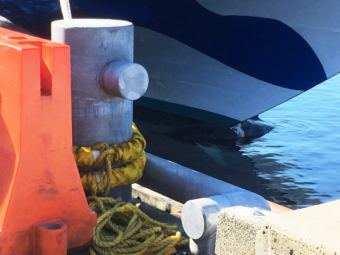
Now, it’s a tourism magnet. Ketchikan is expecting 1 million visitors this summer. They’ll flow into town off as many as six giant cruise ships a day.

To give a sense of scale, figure that the borough of Ketchikan is home to about 13,000 people. In just one day, Ketchikan may see 13,000 cruise ship visitors.

“We’ll double in population for eight hours,” says Harbormaster Dave Dixon as he waits dockside for the morning’s first arrival.

Passengers aboard the Nieuw Amsterdam cruise ship look out at Ketchikan. (Photo by Elissa Nadworny/NPR)

Each season, he braces for the tourists’ questions that might come his way:

“Can we see polar bears here?” (Um, no, that would be more than 1,000 miles away, in the Arctic.)

And this humdinger: “Is Alaska part of the United States?” (Well, yes, since it became a state in 1959.)

“Kind of unexpected that someone would ask me that,” Dixon says with a chuckle, noting that he’s pretty sure the question came from an American. “Maybe geography class was not their high point.”

Ketchikan sits on an island at the southernmost end of southeast Alaska, a prime spot for cruise ships navigating Alaska’s Inside Passage. The landscape is spectacular: snow-capped mountains, glaciers descending into narrow fjords, and all around, the dense Tongass National Forest. At 17 million acres (bigger than West Virginia), the Tongass is the largest national forest in the U.S.

For many decades, the spruce, hemlock and cedar trees of the Tongass have also been a source of timber for the logging industry. At its peak, logging camps dotted the islands of southeast Alaska, and pulp mills were robust economic drivers of the region.

One by one, those pulp mills shut down, faced with global competition, new environmental regulations, lawsuits and fines for pollution violations.

The Tongass National Forest, near Ketchikan, Alaska. The spruce, hemlock and cedar trees of the Tongass have been a source of timber for the logging industry. (Photo by Elissa Nadworny/NPR)
The Tongass National Forest, near Ketchikan, Alaska. The spruce, hemlock and cedar trees of the Tongass have been a source of timber for the logging industry.
(Photo by Elissa Nadworny/NPR)

Ketchikan’s pulp mill was the last one still operating in Alaska when it shut down in 1997. Hundreds of good-paying jobs and the businesses that supported them went with it.

For some, it’s been an uncomfortable transition. “We don’t know who we are anymore,” Collins says. “We had shoe stores in Ketchikan. We had work clothes stores in Ketchikan. We had a Chevy dealer and a Ford dealer. They’re all gone.”

What’s replaced them? Lots of jewelry and watch stores, some of them owned by the cruise ship companies themselves. Also, souvenir and gift shops, as well as local tour operations.

The newer businesses provide seasonal retail work, but it’s nowhere near as well paid as the old jobs: Those were year-round, “family-sustaining jobs,” Collins explains.

Now, he says, at the end of September, “within a few day period, the town will be boarded up downtown. Literally, most of the businesses will be closed. And then the people will leave town.” The workers will head on to their winter seasonal work, maybe in Colorado or the Caribbean.

Collins has a long view of the logging industry, and of Ketchikan.

Some of his earliest memories are of the nearby logging camp where he lived with his family in the late 1960s.

They moved to Ketchikan when he was 9. It was the heyday of timber, and Collins knew that a good job in the industry would be waiting for him after high school.

It was. He started working on tugboats, bringing supplies to the logging camps and the Ketchikan pulp mill, and eventually he worked his way up to captain,

When the pulp mill shut down in ’97, “it was crazy,” Collins says. “People were leaving town as fast as they could. Property values plummeted. I remember foreclosures, auctions at the courthouse, people losing everything, not being able to get a job, and selling their houses and leaving town.”

Longtime Ketchikan resident Eric Collins used to work on tugboats, bringing supplies to the logging camps and the Ketchikan pulp mill. Now, he's a cruise ship pilot, steering giant tour vessels into Ketchikan. (Photo by Elissa Nadworny/NPR)
Longtime Ketchikan resident Eric Collins used to work on tugboats, bringing supplies to the logging camps and the Ketchikan pulp mill. Now, he’s a cruise ship pilot, steering giant tour vessels into Ketchikan.
(Photo by Elissa Nadworny/NPR)

The company Collins worked for was in charge of cleaning out the logging camps and the pulp mill, and shutting them down.

“I ended up being the last employee, and I shut the lights out, ” he says. “Left the office, turned out the lights and went home, started my new job.”

Collins is now a cruise ship pilot, steering those giant tour vessels into Ketchikan.

He loves his work, but still, he says, “I miss tugboats. Tugboater at heart.”

Back on the Ketchikan dock, Harbormaster Dave Dixon spies the morning’s first arrival hoving into port.

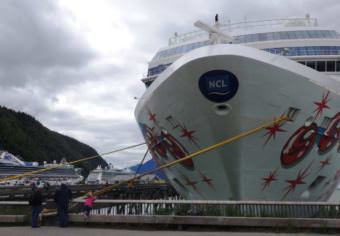
“Yep! There they are,” he says, as he watches Holland America’s Nieuw Amsterdam cruise ship sidle to the dock, with some 2,000 passengers aboard.

The ship looks like a floating skyscraper, the length of three football fields.

When the gangplank is lowered, the tourists march ashore and find a gaggle of tour operators waiting to entice them with local offerings:

“The world’s largest totem poles!”

“An all-you-can-eat Dungeness crab feast!”

“Active eagle nests, seals, a chance for killer whales and humpbacks!”

And if the tourists want a theatrical taste of the industry that used to fuel Ketchikan, they can go watch timber sports at the Great Alaskan Lumberjack Show, where burly competitors in flannel shirts and suspenders chop stumps, saw logs, and heave axes at a bullseye.

The “Our Land” series is produced by Elissa Nadworny.

Copyright 2017 NPR. To see more, visit http://www.npr.org/.

About The ‘Our Land’ Project

Our Land is a project from special correspondent Melissa Block. She’s traveling the country, capturing how people’s identity is shaped by where they live. Help her decide where to go and who to spend time with by filling out this form.

As states tighten restrictions on ivory, Skagway carvers worry about the future

Bruce Schindler carves a piece of mammoth ivory using a dental tool. (Photo by Abbey Collins/KHNS)

Restrictions on the ivory industry are multiplying in the U.S., causing concern for artists in Alaska.

Alaska Native carvers do have a degree of protection under federal law. But, non-Native carvers who only work with fossilized ivory are not shielded in the same way.

In Skagway, where thousands of cruise visitors stop each summer, there is a small but significant group of ivory carvers and sellers who are worried about the future of their craft.

Bruce Schindler hunches over a work table in his sunny Skagway studio.

He uses a dental tool he’s adapted to for carving to work on a small piece of fossilized mammoth ivory.

He holds up the piece, revealing a pair of eyes.

Schindler came to Skagway in 1993 to drive a tour bus. Soon after, he started working with ivory.

The mammoth ivory he restores and carves comes from the Dawson City area, in the Yukon.

“I go up and I’ll drive hundreds of miles of dirt roads, going from gold mine to gold mine, searching for miners who are willing to sell some of the tusks they find,” Schindler said.

The mammoth tusks are unearthed as a byproduct of mining.

The tusks will start to deteriorate Schindler says, if they aren’t purchased and restored.

“Once a frozen tusk is brought to the surface by a miner, it will start to degrade,” Schindler said. “It will start to rot. If you don’t take actions to preserve it, in a few years it will be completely worthless.”

“In a few more years it will just be dust,” he said.

He collects thousands of pounds of fossilized tusks and brings them back to his studio, where he restores them or carves them into smaller pieces. Schindler also works with fossilized walrus tusks.

Last year, the Obama administration put an almost complete ban the commercial trade of African elephant ivory in the U.S.

That ban didn’t touch the fossil ivories that Schindler and others in Skagway use. Those are still legal.

Alaska Natives are permitted to harvest walrus ivory under the Marine Mammal Protection Act.

But some states have gone a step further, implementing tougher restrictions that prohibit the trade of nearly all ivory.

Schindler’s concern is that a similar ban could come to Alaska and devastate the industry here.

Natural Resources Defense Council is one of several groups that have lobbied states to put tougher restrictions on ivory.

The council’s not going after anything protected under federal law, staff attorney Zak Smith said. That includes the walrus ivory that Alaska Natives are allowed to harvest.

The fossilized ivory is a different story.

“NRDC supports the closure of domestic ivory markets focused on elephant ivory,” Smith said. “Including ivory markets that offer a cover for elephant ivory, for the illegal trade in elephant ivory.”

Illegal elephant ivory is often presented as a legal product, Smith said.

Prohibiting the trade of other ivories could help cut back on illegal behavior. And some states agree with that logic.

For example, California has a ban that extends to fossilized ivory.

Those outside laws are already affecting Alaska carvers.

Schindler has lost about half his customers – artists who used to purchase tusks from him for their own work, he said.

Locally, Schindler said the market is strong. But there is still uncertainty.

Kathy Wassman’s family owns a shop called Taiya River Arts. Wassman wears ivory jewelry that she carved herself.

Customers sometimes question the ethics of what they’re purchasing, she said.

“I think it’s a teaching moment most of the time,” Wassman said. “It’s an opportunity to let people know that, hey what you’re looking at is unique and it has nothing to do with endangered species.”

Kathy Wassman’s family sells a variety of ivory products in their store Taiya River Arts. (Photo by Abbey Collins/KHNS)Kathy Wassman’s family sells a variety of ivory products in their store Taiya River Arts. (Photo by Abbey Collins/KHNS)
Kathy Wassman’s family sells a variety of ivory products in their store Taiya River Arts. (Photo by Abbey Collins/KHNS)

Schindler says, as carvers, they aren’t against most of what ivory bans in other states entail.

“To add Alaskan ivories to this ban is shameful,” Schindler said. “It’s misguided.”

A resolution was introduced in the Alaska Senate in February that aims at protecting legally acquired walrus, mammoth and mastodon ivory from current and future laws.

Schindler also has been lobbying for local support.

The Skagway Assembly recently voted to endorse the resolution in the Senate.

Schindler continues to push to protect the legal ivory industry in Alaska. But, he already is starting to diversify his business.

“Mammoth ivory is still going to stay the center of what I do,” Schindler said. “But I’m starting to work gold. Because I have access to gold miners, I’m buying gold from them. … I want a backup.”

He said that no matter what happens, the Skagway artists will find their way forward.

“We will adapt,” Schindler said. “But it will be a shell of what we have done. And the beauty and the joy of restoring something that just had no life beforehand.”

They’re worried the momentum against the ivory trade doesn’t consider the unique and important role it plays in local economies like Skagway’s.

Boosters of Juneau’s city museum dig in over proposed cuts

Facing a nearly $2 million revenue shortfall, the City and Borough of Juneau will have to make some difficult decisions.

The Juneau-Douglas City Museum is included on a list of proposed cuts, but what would happen to the tens of thousands of items in its collection?

The Juneau-Douglas City Museum. (Photo by Casey Kelly/KTOO)

The city museum has about 85,000 items in its collection. Here’s one that’s special to Joel Probst, chairman of the Friends of the Juneau-Douglas City Museum.

“I’m not gonna lie, it might not be appropriate, but the the Eagle Brewing Company bottle that’s in here with the original Eagle Brewing Co. logo,” Probst said, gesturing to the 111-year-old exhibit. “This blue label logo it’s one of my favorites. I think it’s pretty neat for something that’s truly Juneau, Alaska, from that time period.”

It is truly Juneau; the beer bottle and its ornate label are from the beginning of the 1900s when beer was brewed for the saloons serving thirsty miners.

Cranking the cam of the museum’s miniature stamp mill replica, the sound of metal on metal echoes throughout the museum. The kids love this one.

“That sound here in Juneau that would have been going on for many, many years constantly,” Probst said over the din.

The camshaft is a replica of the hundreds of heavy steel stamps that crushed the ore from the mines — a sound that once echoed across the Gastineau Channel 24 hours a day, seven days a week.

“It was one of those things that you were so used to that rhythm. It reverberated through everything,” Probst said.

Joel Probst, chairman of the Friends of of the Juneau-Douglas City Museum, demonstrates a replica stamp mill on April 26, 2017. (Photo by Jacob Resneck/KTOO)

The city museum costs about $300,000 annually to operate. A report from the city manager’s office noted that closing the museum would save more than quarter-million dollars in the first year.

The museum received low ranks in a budget survey about 90 people completed to identify possible cuts.

“There will certainly be pushback on the list of possible reductions,” City Manager Rorie Watt said earlier this month, “but what we’ve given the Assembly is choice.”

But what’s not spelled out in any detail is what would become of the museum’s collection much of which came from the community.

“It’s very touching to see a family who has gone through the loss of a family member — a patriarch, matriarch in Juneau — bring us something that’s very precious,” Museum Director Jane Lindsey said. “We take that very seriously.”

It’s not the only museum in town: there’s the Alaska State Museum in downtown Juneau. Might it have interest in the collection? Could it take it over if the city zeroed out funding?

“The short answer to that is no — we don’t, we wouldn’t,” said Scott Carrlee, the state museum’s curator. The state museum is operating with a skeleton crew having already lost 30 percent of its staff. “Right now with the financial situation that the state finds itself in, we just don’t have the resources or the capacity to take over a collection of that size.”

Cuts will have to happen or taxes will rise. Even those who love the museum understand that.

“Services are going to be affected whether it’s the museum or something else,” Probst said. “We’re not the only thing that’s on the table right now — it’s citywide services.”

Deep cuts, dig deeper into savings, raise taxes and fees, or a combination thereof, are the stark choices the Juneau Assembly is grappling between now and June 5.

Until then the city is accepting public comment as it weighs its priorities.

Government shutdown would close Skagway’s national park at the start of cruise ship season

Park ranger Charlotte Henson leads a group of visitors on a walking tour of Skagway focused on the story of Company L. (Photo by Emily Files/KHNS)

In less than a week, the first cruise ship of the season will dock in Skagway, bringing thousands of visitors to the busy Northern Lynn Canal port.

But if lawmakers in Washington haven’t agreed on a spending plan by then, a government shutdown would close one popular visitor attraction – Skagway’s national park.

Congress has until midnight Friday to agree on a budget. If that doesn’t happen, funding will expire and the federal government will shut down.

That means many federal departments and employees would have to close their doors and stop working, including Alaska’s national parks.

Last year, the Klondike Gold Rush National Historical Park in Skagway welcomed nearly a million visitors. It’s the most visited park in Alaska.

Superintendent Mike Tranel said they’re currently ramping up operations for the summer season.

The flood of visitors coming into town will have to find something else to do if the government shuts down.

The park service follows a contingency plan laid out by the Department of the Interior.

“If the government shuts down the buildings that – any of the public buildings are closed and any of the offices and maintenance buildings, anything is closed and locked and not available to the public,” Tranel said.

The Klondike Park is a major piece of Skagway’s downtown visitor industry, and operates a number of museums, along with guided tours that attract hundreds of people on busy cruise ship days.

It also oversees the U.S. side of the popular Chilkoot Trail.

Most local employees would be furloughed in the event of a shutdown, Tranel said.

“We’re close to our full staffing for the summer season, which is around 60 employees – 30 permanent and term employees and then 30 additional seasonal or summer-only employees,” Tranel said. “All of those would be affected except for two,”

The park service employs about 1,100 employees statewide at the peak of the summer season.

This isn’t an unprecedented situation.

The last time the government shutdown was in 2013. One big difference was that shutdown happened in October, after the tourism season had died down.

“It wasn’t during the peak of the tourism season,” Tranel said. “We had a couple of staff members who were just checking on security of buildings and things like that. Everyone else gets furlough notices whether they’re a permanent employee, seasonal employee or term employee.”

It’s hard to imagine a worse time of year for the park to face a potential closure.

Skagway is on the cusp of an expected 1 million visitor season. The first cruise ship docks on May 2, bringing just over 2,000 visitors to town.

Two other ships will arrive later in the week. The first four-ship day is the following week on May 9.

Tranel hopes the park will be operating normally when the visitors arrive.

“The Department of the Interior, which the National Park Service is part of, is hopeful that Congress will pass a continuing resolution and there won’t be a government shutdown,” Tranel said. “We’ve been instructed to continue business as usual and to not invest a lot of time and effort in contingency effort for a shutdown and proceed as normal.”

Fears of a shutdown were alleviated somewhat on Tuesday, when President Donald Trump indicated he may be able to wait on federal funding for a border wall.

Congress still needs to come to an agreement on the rest of the budget.

This isn’t the first time in recent months that federal politics have led to uncertainty for Alaska National Parks.

Parks worried a federal hiring freeze in February would stop essential seasonal employment. After a couple weeks in limbo they were able to hire summer staff.

Juneau city manager proposes shuttering history museum

Fresh snow covers the ground surrounding the Juneau Douglas City Museum in Juneau on November 25, 2016, Alaska. (Photo courtesy Tripp J Crouse)
Fresh snow covers the ground surrounding the Juneau-Douglas City Museum in Juneau on November 25, 2016. The museum could be one public facility on the chopping block for City and Borough of Juneau. (Photo courtesy Tripp J Crouse)

Cost-cutting by the City and Borough of Juneau could mean closing several public facilities.

On the chopping block are the Juneau-Douglas City Museum, Mt. Jumbo Gym in Douglas and Eagle Valley Center. The cuts and efficiencies were presented Wednesday to the Juneau Assembly’s finance committee by City Manager Rorie Watt.

“We have a $1.9 million deficit between our revenues and projected expenditures,” Watt said. “We’ve suggested to the Assembly that we use $1.4 million on our fund balance savings and half a million in reductions.”

Closing the museum located next to the state capitol would save $228,000 in the first fiscal year. A projected annual savings would increase to about $375,000.

City Library Director Robert Barr whose office oversees the museum, said he hopes the Juneau Assembly will spare the museum.

“We believe that everything that we do provides value and is worthwhile to the community at large,” Barr said Thursday. “We of course recognize that it’s a tightening budget time and decisions will have to get made somewhere but we’d prefer it not be elimination of the museum.”

It’s still early in the budgeting process and the city manager’s proposed cuts are not a done deal.

The choice of the city museum stems from its low ranking in budgeting focus groups attended by about 90 volunteers.

Watt said it will ultimately be up to elected Assembly members to address the $1.9 million deficit.

“They could decide to use more or less savings,” he said. “They could decide to raise revenue and they could increase the cuts — it’s all on the table.”

The finance committee will continue to meet weekly through mid-May and is accepting public comment.

The city is scheduled to adopt next year’s budget in June.

Site notifications
Update notification options
Subscribe to notifications