University of Alaska

UAS offers low cost Alaska Native language, arts courses

University of Alaska Southeast's Juneau campus on Tuesday, Nov. 15, 2016. (Photo by Quinton Chandler/KTOO)
University of Alaska Southeast’s Juneau campus on Tuesday, Nov. 15, 2016. (Photo by Quinton Chandler/KTOO)

This fall, the University of Alaska Southeast is opening up some of its Alaska Native language and Northwest Coast arts classes to the community at-large at reduced rates.  

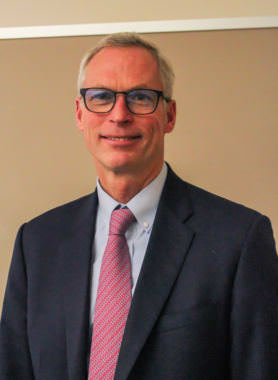
UAS Chancellor Rick Caulfield said with few fluent speakers left, there’s an urgent need to create language learning opportunities.

“As a University I think we have an obligation certainly to provide the academic pathway for those who want to study the language and help create critical mass of more people who are speakers of the language or at least conversant in the language,” Caulfield said.

Regular students will study alongside community members taking advantage of the non-credit option.

“Often we’ll have individuals in the community, for example, who grew up understanding some Tlingit, the Tlingit language in their home, but have never had a chance to really study it,” Caulfield said. “Often they can add a lot to the instruction because they bring what they knew from growing up into the classroom and that benefits the students who are doing it for academic credit as well.”

Ishmael Hope (Ḵaagwáaskʼ) and Lance Twitchell (Du Aaní Kawdinook Xh’unei) will teach the evening Tlingit classes at beginning and intermediate levels.

Caulfield said the university also is working closely with Sealaska Heritage Institute to make Juneau and Southeast Alaska the center for Northwest Coast arts.

Abel Ryan is teaching Northwest Coast design classes. Lyle James (Xeetli.éesh) is teaching a drum-making course, in which students will work with pre-processed deer hide to create a wooden-framed drum.

Classes begin Monday. The reduced community rate is $75 per credit. Contact the UAS admissions office at 796-6100 or visit the campus One Stop to enroll.

More classes from UAS Artist in Residence Nicholas Galanin (Yéil Ya-Tseen) will be announced later this semester.

Agreement reached over former Auke Bay Marine Station

A chain-link fence cordons off the entrance to the Auke Bay Marine Station on Tuesday, Jan. 31, 2017. Juneau Docks and Harbors is interested in the NOAA property for potential expansion of Statter Harbor. (Photo Tripp J Crouse/KTOO)
A chain-link fence cordons off the entrance to the Auke Bay Marine Station on Tuesday, Jan. 31, 2017. University of Alaska Southeast will use the former lab for teaching and research space, Juneau Docks and Harbors will use part of the property to expand Statter Harbor. (Photo Tripp J Crouse/KTOO)

NOAA’s federal property on Auke Bay will be split between the University of Alaska Southeast and City and Borough of Juneau.

The deal to subdivide the waterfront acreage was announced Monday.

“This agreement between UAS and CBJ to partition the Auke Bay Marine Station property is good for Juneau because it both supports marine education and research at UAS, and allows for future harbor expansion,” University Chancellor Rick Caulfield said in a joint press release with the city and university. “This is a ‘win-win’ for all involved.”

The former NOAA marine lab has been largely vacant since the Ted Stevens Marine Research Institute on Lena Point opened in 2005.

Last year, both the city and university submitted competing applications to take over the 4-acre property and its buildings after talks to share the property stalled.

But in February the Juneau Assembly urged both sides to return to the table. Those discussions resulted in the formal agreement that’s been signed and forwarded to the federal agency in charge of surplus property.

The university plans to use the former lab building for research and education programs in marine biology and other disciplines.

Juneau Docks & Harbors will use the water access to add to its expansion of Statter Harbor where it plans to build a larger breakwater for larger ships.

“We reached a goal to jointly acquire the facility,” CBJ Port Engineer Gary Gillette said in the release. “We’re hoping to get it all taken care of so both UAS and CBJ can move forward with their plans.”

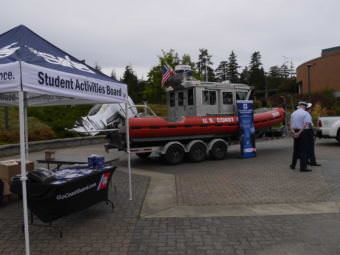
The Coast Guard already leases part of the facility. Its future on the site isn’t certain though the city has said it would like to keep it as a tenant.

The federal government could turn over the facility as early as November 1.

The federal government won’t charge for the property.

City officials have previously indicated that taking over its share of the facilities could cost about $250,000, which would likely require approval from the planning commission and Juneau Assembly.

STEM program guides Kodiak student from middle school to college

A science, technology, engineering, and math program geared towards Alaska Native students has guided one Kodiak local through both middle school and high school. And now, he’s off to college.

The Alaska Native Science and Engineering Program, or ANSEP, encourage its students to enter STEM careers.

Kris Hill-McLaughlin and 26 other recent high school graduates participated this summer in Alaska Native Science and Engineering Program's Bridge program on the University of Alaska Anchorage campus. In ANSEP students are encouraged to enter science, technology, engineering and math careers. (Photo by Kayla Desroches/KMXT)
Kris Hill-McLaughlin and 26 other recent high school graduates participated this summer in Alaska Native Science and Engineering Program’s Bridge program on the University of Alaska Anchorage campus. In ANSEP students are encouraged to enter science, technology, engineering and math careers. (Photo by Kayla Desroches/KMXT)

Kris Hill-McLaughlin says his own ambitions fall on the engineering side. He says he’s has been with ANSEP since 6th grade. He’s now 19.

This summer he participated alongside 26 other recent high school graduates in ANSEP’s Bridge program on the University of Alaska Anchorage campus.

While there, he interned with the ExxonMobil Corporation and took a college-level trigonometry course.

“The classes themselves are pretty intense because they’re condensing a whole semester class into three weeks, so you have to be really motivated and focused to accomplish that class.”

He had the chance to talk with current UAA students said while in Anchorage.

“They’re youth mentors if you will. They help you out with classes, they help you out with college life in general,” he said. “You can also ask them questions, and you learn a lot from just talking to them.”

The program offers students the chance to live on campus and meet others with similar interests.

Hill-McLaughlin appreciated the chance to hang out and interact with other students, because he says he’s a little shy and not used to being social.

“Some of the other students in the program had that problem as well,” he said. “Because where they go they’re usually isolated too. There’s not a lot of people in a small area for some places around Alaska.”

Other students in the program come from communities such as Bethel, Palmer, Dillingham and Unalakleet.

The next time Hill-McLaughlin stays on the Anchorage campus, it’ll be as a student. He’s enrolling at UAA to study mechanical engineering.

ANSEP continues to offer its students support through their college years, he said.

University of Alaska Fairbanks intern looks at nucleotides as health supplement

Fish oil is oil derived from the tissues of oily fish. Fish oils contain the omega-3 fatty acids eicosapentaenoic acid (EPA) and docosahexaenoic acid (DHA), precursors of certain eicosanoids that are known to reduce inflammation in the body,and have other health benefits. (Creative Commons photo by Natesh Ramasamy/Flickr)

Interns this summer with the Alaska Seafood Marketing Institute are looking at food science in Kodiak, and one is investigating a new health food fad.

University of Alaska Fairbanks student Alina Fairbanks is doing market research focusing on nucleotides.

“A lot people when I explain this to them they’re like fish oil. Well, kinda. We want to extract nucleotides from pollock, right now because the Pollock Conservation Cooperative is funding me, but we want to utilize the entire product of a fish. … A lot of people are exploring new ideas.”

Fairbanks said her research is on the powdered form, as opposed to pills or liquid, such as fish oil.

“There’s three markets right now that I’ve discovered, so they’ll put nucleotides in baby formula because nucleotides are commonly found in breast milk … so, in baby formula, animal food, and for human’s dietary supplements. A lot of body builders will actually take them.”

She said nucleotides are supposed to improve the immune system and help in cell regeneration.

There are two other interns with the Alaska Seafood Marketing Institute on the island.

Camron Christoffersen, who recently graduated Brigham Young University, is looking into the Food and Drug Administration’s methods for killing parasites before consumption.

The third intern, UAF student Phil Ganz, is helping to document the process. He uses video to make this and other scientific topics accessible to the general public.

All three interns wrap up their time on the island at the end of the month.

University of Alaska could receive $5 million for capital projects

Five million dollars is coming down the legislative pipe for the state’s university system to spend on major building renovations and repairs.

The Legislature passed its capital budget Thursday and it’s waiting for the governor’s signature.

University of Alaska officials said the Board of Regents will decide how to distribute the money to Alaska universities at its Aug. 9 meeting.

Michael Ciri, vice chancellor for administration at the University of Alaska Southeast, said capital project dollars typically go to major building projects. For example, he said an operating budget would pay for fixing a damaged roof, but a roof replacement is paid for through the university’s capital budget.

He said UAS generally spends money on capital projects to save money on upkeep over time.

Bethel scientist returns home to study climate change

Jasmine Gil, originally from Bethel, is studying the effects of wildfires on permafrost with the Polaris Project, 50 miles north of the Yukon-Kuskokwim hub. (Photo by Katie Basile/KYUK)

What happens after fire scorches the tundra, and what follows when carbon that’s been locked away for millennia gets released?

Currently, a group of scientists is camping 50 miles north of Bethel are attempting to answer these questions.

For one scientist the research is personal because it means coming home.

“I didn’t sleep very well before I came here. I was very excited to come back,” said Jasmine Gil, laughing, on her first day back in Bethel in 10 years.

Gil grew up in Bethel.

Her mom is from Kwethluk, and her family lives throughout the Delta.

When she was 10, Gil moved to Sitka with her parents.

Last spring, she graduated from University of Alaska Anchorage with a degree in natural sciences.

“I’ve always been an outdoors person, and so it felt fitting that what I would do with my life was something that would keep me outside,” Gil said.

She’s stayed outside since graduating, studying humpback whales and songbirds in Southeast Alaska, then traveling to Hawaii to restore seabird habitats.

“Now, I’m back here in Bethel, where it all started.”

For Gil, the outdoors, science, and tradition have all come to intertwine.

“I spent my summers at fish camp,” she said. “I think from that experience it drew me into science, but not with the idea that I knew solid subjects. Science was told to me through origin story.”

Gil’s mother would tell her stories of the land: of salmon, of how humans affected the animals and systems around them.

Only later, as Gil continued studying science, would she realize that these stories were as legitimate as the stories she had learned in school.

“The cosmology of Yup’ik people is quite beautiful,” Gil said. “But I think I had to delve into those scientific facts to realize that what I learned here was just as important as what’s being taught to me in textbooks, but it’s structured differently and it’s more poetic.”

Gil and about a dozen recent graduates from across the nation have traveled north of Bethel to Kuka Creek to study the massive 2015 wildfire’s effects on the permafrost below.

By one estimate, twice as much carbon is stored in permafrost as in the atmosphere. Wildfires could release that carbon, creating dramatic, and possibly, drastic effects on the planet.

“It’s a carbon bomb waiting to go off,” is the way Gil described the situation.

With the Arctic warming twice as fast as the rest of the globe, and the research so close to home, she feels an urgency unique to this project.

“I’m hoping that we can publish some information or get something out of it that we can share, and people can understand the gravity of what’s going on.”

Gil and her team will be in Kuka Creek for the next two weeks.

The research is with the Polaris Project, which invested eight years in studying the effects of climate change in Siberia.

This summer, the project has turned its attention to the Yukon-Kuskokwim Delta.

Site notifications
Update notification options
Subscribe to notifications