University of Alaska

Senate cuts $63 million more from budget than House

The Senate voted 16-4 Monday on a state government budget that goes $63 million deeper in cuts than the House budget.

That’s mainly because the Senate voted for $100 million in executive branch cuts that aren’t allocated.

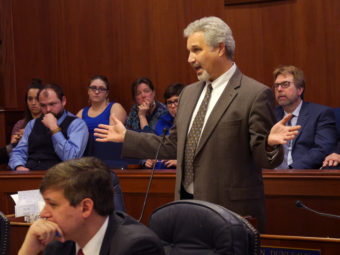
Sen. Pete Kelly, R-Fairbanks, wraps up the discussion on the state operating budget shortly before it was passed out of the Senate, March 14, 2016. (Photo by Skip Gray/360 North)
Sen. Pete Kelly, R-Fairbanks, wraps up the discussion on the state operating budget shortly before it was passed out of the Senate. (Photo by Skip Gray/360 North)

Fairbanks Republican Sen. Pete Kelly said the Legislature can work out the specifics before the end of the session.

“This $100 million was mostly recognition of those kinds of structural changes — Medicaid reform is a pretty good example,” Kelly said. “Somewhere in the neighborhood of $31 million this year and … over $100 million each year after that.”

Before the vote, minority caucus Democrats proposed an amendment to eliminate the unallocated cut.

They also proposed restoring money for several different programs, including Permanent Fund inflation proofing, senior benefits and prekindergarten. They wanted to pay for some of these programs by reducing spending through cuts to oil and gas tax credits, and reducing spending on several stalled infrastructure projects.

All of the amendments failed.

Anchorage Democratic Sen. Berta Gardner said the state can afford to fund the education measures she included in one amendment.

“This amendment chooses education and Alaska’s children over projects that may once have been a great idea but that we simply can’t afford anymore,” Gardner. “The amendment restores pre-K education, Online With Libraries, the teacher mentor program, and the unallocated $10-million university cut.”

The cost of Gardner’s amendment would be offset by cuts to the Knik Arm Crossing, the Susitna-Watana hydroelectric dam, and the Ambler mining district road.

Eagle River Republican Sen. Anna MacKinnon said it would be wrong to use cuts in spending on construction projects to pay for budget items that will pop up every year.

“We have tough decisions to make, and I appreciate scrubbing the budget and looking at one-time funding to fulfill re-occurring costs, but it’s just not the way to do business,” MacKinnon said. “You do not take one-time money, and invest it in re-occurring costs. It just means we’re going to face the same battle next year.”

The two houses will resolve the differences between their versions of the budget through a conference committee. The Senate bill includes $25 million more for the University of Alaska. But it would cost less than the House in other areas, including $8 million less for Health and Social Services and $7 million less for transportation.

Before the conference committee is assigned, both Houses will consider major changes to oil and gas tax credits and the Permanent Fund, as well as the Medicaid and criminal justice overhauls.


Listen: Postcard from 14th Annual Oratory Event

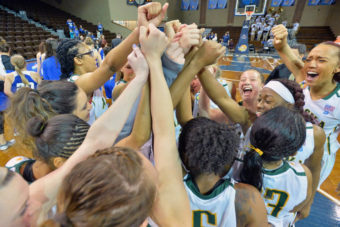
14th Annual Oratory Event participants
Participants in the 14th Annual Oratory Event at the University of Alaska Southeast, March 5. (Photo by Elasonga Milligrock)

On Saturday, the Native and Rural Student Center at the University of Alaska Southeast hosted its 14th Annual Oratory Event. Students competed in the categories of oratory, storytelling, Alaska Native language and dramatic declamation.

This year, 15 students stepped forward. Listen to this audio postcard from the event.

Woosh.ji.een Dance Group at 14th Annual Oratory Event
The Woosh.ji.een Dance Group performed at the 14th Annual Oratory Event. (Photo by Elasonga Milligrock)

That was Lyle James with the Woosh.ji.een Dance Group,  student Emmanuele Gullen, Vice Chancellor Joe Nelson, students Megan Johnson, David Russell-Jensen, Nathan Block, Sandy Edwardson, David Sheakley, and assistant professor Ernestine Hayes.

All student participants received supplemental scholarships worth $250 to $500.

State budget bill with $280 million in cuts due for House vote

The House Finance Committee sent its budget proposal to the full House of Representatives on Wednesday. The budget, with some late changes, would cut spending by $280 million. It also spends $225 million in funds left from the current budget.

There were some intense exchanges between committee members before the final vote.

Rep. Lynn Gattis, R-Wasilla, during discussions about the state operating budget shortly before it was passed out of the House Finance Committee, March 9, 2016. (Photo by Skip Gray/360 North)

Wasilla Republican Rep. Lynn Gattis questioned why the leftover funds from the current budget only emerged recently.

“Folks in my district are saying, ‘Why in the heck would I trust you to go and tax me or take my Permanent Fund dividend, when you guys are playing these shell games?’” she said.

But Eagle River Republican Rep. Dan Saddler said spending the savings was a legitimate budget strategy.

On Tuesday, the committee added $30 million for an addiction treatment program, and restored $2.7 million for public broadcasting and $1.7 million dollars for the Nome Youth Facility.

But it didn’t vote to restore $25 million for the University of Alaska.

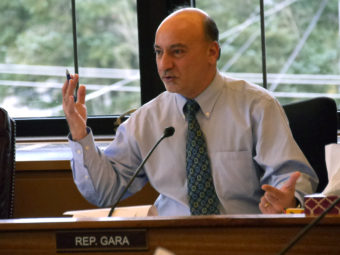
Anchorage Democratic Rep. Les Gara said the budget shortchanged vulnerable Alaskans. He noted the spending plan cuts all state funding for pre-kindergarten.

Rep. Les Gara, D-Anchorage
Rep. Les Gara, D-Anchorage, during discussions about the state operating budget shortly before the House Finance Committee passed it on Wednesday. (Photo by Skip Gray/360 North)

“I understand we have to cut waste. But we don’t have to cut the things that make a difference in people’s lives,” he said. “That’s where I draw the line. And we crossed that line over and over and over yesterday. I don’t believe we have to cut things that senior citizens rely on. Three hundred and fifty thousand dollars got cut from senior citizen help for people who need emergency housing.”

But Committee Co-Chairman Mark Neuman said that as the state considers cutting Permanent Fund dividends and raising taxes, it must cut spending.

“I’ve had to tell every group, every person that’s walked into my office that has approached me on the street – wherever they talk to me – no. I can tell you, look you straight into the eye that everybody that has walked into my office was told no, we don’t have the money.”

The House is scheduled to discuss the budget — and potentially vote on it — on Thursday. The Senate may vote on its version of the budget on Saturday. Then the two houses will work to resolve the differences.

House committee may quintuple Gov. Walker’s state budget cuts

As legislators make cuts to the state’s budget, they’re looking to draw money from various state funds to cover costs. But changes drawing money from the fund to help rural Alaskans pay utility bills – and cutting money to local governments — are raising concerns.

The House Finance Committee is considering a budget bill that would cut state government spending $418 million more than the $100 million in cuts Gov. Bill Walker proposed.

House Bill 256 would change the source of funding for two budget items. A $76.7 million payment to the Teachers’ Retirement System would be paid from a fund for college scholarships and grants.

And $24.7 million for the University of Alaska would come from the Power Cost Equalization Fund, rather than the operating budget.

Big Lake Republican Rep. Mark Neuman said the proposal draws on available funds to meet the committee’s priority: balancing the state’s budget. Neuman is the committee’s co-chairman.

Rep. Mark Neuman, R-Big Lake, at a House Majority press availability, Jan. 22, 2016. (Photo by Skip Gray/360 North)
Rep. Mark Neuman, R-Big Lake, at a House Majority press availability, Jan. 22. (Photo by Skip Gray/360 North)

“We’re still in the first innings here,” Neuman said. “We’re trying to make sure we’re setting up the budget for the final decisions that we have to do.”

The Teachers’ Retirement System would receive money from the Higher Education Investment Fund, which was started four years ago with $400 million. It was launched to fund Alaska Education Grants, which are for post-secondary students with unmet financial needs and Alaska Performance Scholarships for students with high grades.

If the state draws out similar amounts annually to the proposed $76.7 million, the fund would be exhausted in a few years. Neuman said he expects all current grant and scholarship recipients to continue to receive the money.

The $24.7 million for the university is a small share of the overall $900 million Power Cost Equalization Fund.

But the proposal concerns Newhalen resident Evelynn Trefon. She’s a board member for a small regional electric co-op, whose customers benefit roughly $90 per month from cost equalization.

“Power cost equalization was set aside as a fund to help rural Alaskans and it wasn’t designed to help the University of Alaska,” Trefon said. “They need to look at the budget situation and figure out their own source of revenue funding. And power cost equalization is essential for rural Alaskans.”

Neuman said drawing money for the university this year shouldn’t have any effect on PCE payments.

“This was excess funds. It’s funds that weren’t needed to make the mandatory, statutory payment for power cost equalization,” he said. “It has no effect on paying PCE or any future payments.”

The House Finance Committee also cut a $35 million payment that Walker planned for community revenue sharing. If this change is kept, it would be the second straight year that the state didn’t add money to the revenue sharing program.

Without more money, the program fund would be so low that there could be no revenue sharing in two years.

Alaska Municipal League Executive Director Kathie Wasserman is concerned about the issue. She noted that rural areas depend on the money to provide basic services.

“The large communities – it will impact them. The small communities, it could devastate,” Wasserman said. “And then, when you look at the other cost shifting that is going on, due to the budget crunch that we have, I’m not sure how some municipalities are going to make it through.”

Neuman said he’s aware of the concern, and the committee would like to make changes that would make revenue sharing more secure.

“Everything is on the table right now,” he said. “I’m certainly cognizant of the needs of a lot of the communities in the state of Alaska, particularly the small, rural villages across Alaska, and their ability to do their governmental functions. And, yes, we’re certainly taking those under consideration.”

The committee also cut $25 million from the Public Employee Retirement System. That money could be restored in the next week based on the details of a state actuarial analysis of the pension obligations.

And it proposed a cut of roughly $25 million for the AKLNG pipeline project. Committee members want more details about how the money would be spent before budgeting it. Walker asked for the money to prepare the pipeline’s front-end engineering and design work.

This week, the committee has been hearing public testimony on the budget from residents statewide, ahead of a vote on the budget. It would then head to a vote by the full House before being considered by the Senate.

UAS hosts 14th Annual Oratory Event on Saturday

The 14th annual Oratory Event is Saturday at the University of Alaska Southeast. The day-long event, based in Alaska Native languages, includes storytelling, speeches and dramatic presentations of poetry, songs and more.

Heather Burge in the 13th Annual Oratory Event. (Photo courtesy Kolene James)
Heather Burge in last year’s event. (Photo courtesy Kolene James)

“It’s really amazing to watch the students in action,” said Kolene James on a KTOO’s Juneau Afternoon. James is the director of the Native and Rural Student Center at UAS that organizes the event.

“They’re really passionate about their presentations. They really put their heart into their presentations and you can tell when they get up to the microphone, they just emote their energy, their love into their presentations. So it’s pretty inspiring,” said James.

Participants’ presentations must be between 5 and 15 minutes long and this year’s theme is equity.

“We have students who are talking about environmental issues, they’re talking about education and their concerns, they’re talking about the health care system and unmet needs in their home communities. We have students from all over Alaska who are attending UAS. We even have a student from Hawaii who is going to participate as well and there’s a lot of similarities in the inequities that we experience in both states, Hawaii and Alaska. This is a great opportunity to hear our college students, and if we have some brave high school students, what’s on their mind,” said James.

Konrad Frank in the 13th Annual Oratory Event. (Photo courtesy of Kolene James)
Konrad Frank in last year’s event. (Photo courtesy of Kolene James)

In the theme of equity, all participants will receive help with tuition. The free event begins at 9 a.m. Saturday in the Egan Lecture Hall.

UAF makes effort to combat failures in sexual assault cases

UAF is one of a few Land, Sea and Space Grant universities in the U.S. (Photo by Jimmy Emerson)
UAF is one of a few Land, Sea and Space Grant universities in the U.S. (Creative Commons photo by Jimmy Emerson)

It’s been more than four months since the University of Alaska Fairbanks announced it failed to follow its own procedures in disciplining students accused of sexual assault. At the time, an independent review of the UA system was ordered.

UAF said it now has transparent procedures and software in place to prevent similar lapses, but the review is delayed.

Last week UAF student and sexual assault survivor Amy Cross testified before University Board of Regents. She applauded UAF’s efforts to be more responsive to assault victims and raise awareness about campus sexual assaults. But she said more could be done, even in times of financial hardships.

“As you consider the budget, I ask that you remember that Title IX is not just a trending topic,” Cross said. “Sexual harassment, assault and stalking are serious problems that will not be resolved unless we can change our rape-supportive culture.”

UAF Vice Chancellor Mike Sfraga said the school has new tracking software installed that flags any reports of Title IX violations. And all procedures have been reviewed and toughened.

“The bottom line is we have this triangle of checks and balances,” said Sfraga. “It ensures that practices and policies and procedures are being followed the way the Board of Regents mandates us to, the way the law mandates us to. It’s just completely tracked.”

Sfraga says based on the review, administrators decided to reverse an earlier decision to hire a temporary outside professional for the critical Dean of Students position and have hired internally.

Laura McCollough, former Director of Residence Life has been tapped for the post.

Meanwhile, an independent review of UAF’s lapses has seen delays. Roberta Graham, a representative for the University Statewide System said she hopes an executive summary will now be available at the end of March.

Site notifications
Update notification options
Subscribe to notifications