Climate Change

Toxic algal blooms in Southeast will likely become less predictable with warming seas

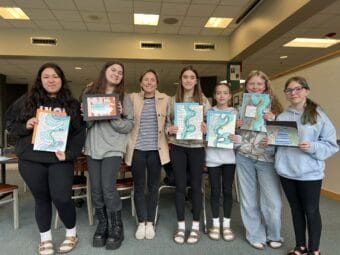
Mt. Edgecumbe High School students dig for butter clams and blue mussels in Starrigavan Estuary.
Mt. Edgecumbe High School students dig for butter clams and blue mussels in Starrigavan Estuary. (Photo courtesy of Helen Dangel)

Listen to this story:

The Southeast Alaska Tribal Ocean Research network posted a paralytic shellfish toxin advisory for recreational and subsistence harvesting in communities across Southeast this week.  

The advisory warns of high toxin levels in all shellfish species in Sitka, Skagway and Ketchikan and in butter clams in Juneau, Kake, Craig, Hydaburg and Kasaan. 

John Harley, a shellfish expert at the University of Alaska Southeast, said that Sitka had a harmful algal bloom that led to high shellfish toxins in early April — the earliest since scientists started keeping a record in 2016. 

“I think that the window in which we have to think about harmful algal blooms occurring is increasing,” he said. 

An old adage was that months ending with the letter ‘r’ were safe for harvesting. Harley said researchers in this region don’t know whether that was ever a useful rule of thumb, since data only goes back about a decade in this region. But he said that as the ocean warms, blooms will likely become less predictable.  

Jeff Feldpausch, the resource protection director for the Sitka Tribe of Alaska, said to never assume is safe. 

“I wouldn’t recommend people eat shellfish unless it’s tested,” he said. “Other than that, you’re just going to be taking that risk.”

Feldpausch recommends tribal members and the general public send samples of their shellfish harvest to the Sitka Tribe of Alaska’s environmental research lab to test for toxins and wait to get results back before eating them. 

Alaska has one of the highest rates of paralytic shellfish poisoning in the world. The state reported 132 cases between 1993 and 2021, including five deaths. That’s in part because Alaska is the only coastal state in the U.S. without a state-run toxin testing system for recreational and subsistence shellfish harvesting. Feldpausch said testing would be a heavy lift for the state.

“The state of Alaska has countless miles of shoreline and potential areas that they would need to sample,” he said. 

In fact, Alaska has more miles of shoreline than all Lower 48 states combined. The state’s high rate of shellfish poisoning could also be due in part to a tradition of shellfish harvesting across remote communities where testing is less common.

Carol Brady, Alaska’s shellfish program coordinator, said the state does routinely test commercial operations, so store-bought shellfish is considered safe. The state ramps up testing in the spring and summer.

“Between May 1 to October 31 it requires testing of the first lot harvested each week, of each species,” she said. 

An alga called Alexandrium catenella is responsible for paralytic shellfish poisoning. The alga produces a neurotoxin that builds up in clams, mussels and other shellfish that feed on it. There is more toxic algae for them to feast on when conditions are ripe for a bloom, meaning there’s plenty of sunlight, nutrients, calm seas and the water is warm enough. Once the toxin concentration in shellfish is above the federal regulatory limit, it’s dangerous for people to eat. Just one milligram can kill a person. 

Symptoms of poisoning include tingling or numbing in the arms, legs and lips as well as nausea and difficulty breathing. People with these symptoms should seek medical care immediately. 

To prevent foodborne illness, state officials recommend checking advisories before going out to forage, avoiding shellfish that are sitting in the sun, harvesting as soon as the tide goes out, putting the harvest on ice immediately and cooking everything thoroughly. While freezing and cooking won’t kill Alexandrium catenella, it can kill harmful bacteria like vibrio and norovirus. 

To report paralytic shellfish poisoning cases, contact the Alaska Department of Health and Social Services at (907) 269-8000, or (800) 478-0084 after hours.

Arctic sea ice has been hitting record lows. Scientists just lost a critical tool for studying it.

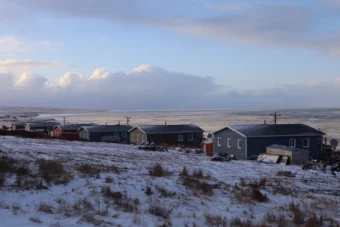
Wintertime shore ice near the village of Shaktoolik.
Wintertime shore ice near the village of Shaktoolik. (Laura Kraegel/KNOM)

The National Oceanic and Atmospheric Administration announced on Tuesday that it will defund a program that catalogs decades sea ice data in Alaska. Scientists say the program’s termination could create a gap in climate research at a time when polar ice is dwindling to historic lows.

Rick Thoman, a climate specialist at the Alaska Center for Climate Assessment and Policy in Fairbanks, is among them. On Tuesday, just a couple hours after he got the news about the program cuts, he was taking a tour group past an art installation about sea ice at the International Arctic Research Center.

The installation is in a long hallway at the University of Alaska Fairbanks, covered with vertical stripes in shades of blue and red. Thoman explained that bluer stripes mean the temperature was cooler than the 100-plus year average, while red stripes were warmer than average.

At the end of the hallway, the stripes stop. The years from about 2000 until the present day blend together, forming a solid block of scarlet.

Climate specialist Rick Thoman stands in front of the International Arctic Research Center’s Climate Stripes art installation on May 6, 2025. (Shelby Herbert/KUAC)

A guest asked Thoman what changed, and his answer was simple: less ice means higher temperatures.

“A lot of what’s driving this is the collapse of sea ice,” he said. “Both decreased extent and the thinning of sea ice — and, of course, increasing greenhouse gasses.

That long-term Arctic temperature data is safe, but the United States’ premier catalog of sea ice data — NOAA’s sea ice index — isn’t. The organization announced earlier this week that it will decommission the program, and the index stopped updating on May 6.

That development came as a shock to climate specialist Rick Thoman, but it comes after many other NOAA cuts this year. According to an internal budget document, the Trump administration is seeking to end nearly all of the agency’s climate research.

The termination of the index is one chapter in a long series of cuts the White House has made — or proposed — in recent months. February saw hundreds of probationary jobs slashed. And April saw a request for sweeping cuts to research funding.

It also follows an Alaska Climate Research Center report that said Arctic sea ice has been at or near record low levels since December, with 58,000 square miles fewer than the previous record low, which was set in 2017.

Scientists and barges left without a map

Hajo Eicken, director of the International Arctic Research Center at UAF, said the loss of the ice index could greatly impact the lives and livelihoods of coastal Alaskans. For example, it could make it harder for people to know the best time to schedule the barges that resupply communities off the road system.

“All of that type of activity relies on the sea ice information that gives you a sense of what’s normal,” Eicken said. “Like, what can we expect for a particular year?”

And Thoman said the scientific community will mourn the loss of the sea ice index, which he uses for his own research all the time. He said he used fresh ice data from the Bering, Chukchi, and Beaufort seas every day, which allowed him to track how things are changing relative to previous years.

Thoman said other global sea ice monitoring programs, like those in Europe and Japan, could pick up the slack. But the loss of the NOAA-funded sea ice index, which he calls “the gold standard,” will sting.

“When people ask me, ‘What does the sea ice concentration look like in the Bering Sea? What’s the ice extent now compared to last year in the short term?’ The answer is going to be: ‘We don’t know,'” he said.

NOAA officials did not respond to a request for comment by press time Wednesday.

Alaska could lose a beloved climate communicator if NOAA cuts happen

Rick Thoman poses during a trip to Anchorage. (Adam Nicely/Alaska Public Media)

One of Alaska’s most prolific climate communicators could lose his job if the Trump administration’s proposed cuts to the National Oceanic and Atmospheric Administration go through. 

The Trump administration laid out a plan to slash NOAA’s budget in a memo leaked this month. The draft cuts would eliminate several research institutes the agency funds in Alaska, including the Fairbanks-based Alaska Center for Climate Assessment and Policy, or ACCAP.

That’s where Rick Thoman works. He’s a climate specialist who is known as the state’s go-to source for weather information. He hosts weekly radio spots for communities across the state and writes a blog covering timely topics like extreme weather, seasonal outlooks and ice conditions.

But Thoman’s salary is funded entirely by NOAA, and three-quarters of that is through the base funding that ACCAP receives from the Oceanic and Atmospheric Research office that would be terminated if the cuts become a reality. 

He said cutting his interpretive services would leave Alaskans in the dark.

“The weather doesn’t care whether we’re forecasting it or interpreting it or anything,” he said. “It’s going to happen. But we will be in a much, I think, reduced position to prepare for it and respond to it.”

John Davies is a retired seismologist and former state legislator in Fairbanks. He said he relies on Thoman’s reports as an avid gardener. 

“Right now, we’re making a decision about when we should put our plants out in the greenhouse, and we’re trying to anticipate when we’re going to put plants in the ground.”

Davies also built his own home, and said that he used the climate information Thoman compiles to figure out how much insulation and fuel he’d need to stay warm. He said that the long-range climate data Thoman makes accessible to the public is invaluable.

Staff at NOAA’s Juneau offices and the White House declined to comment. Final funding decisions will be made when Congress votes on a budget in the coming months.

Southeast landslide conference canceled amid federal uncertainty

Amber Winkel (left) and Todd Winkel (right) make their way across the Beach Road landslide in order to check on their home in January 2021. (Henry Leasia/KHNS)

Dozens of fire chiefs, city planners, tribal natural resource managers and other officials from across Southeast Alaska were set to gather last month for a second annual landslide conference.

But that didn’t happen.

The event’s organizers cancelled the gathering amid uncertainty over federal agencies’ ability to interact with regional landslide efforts moving forward. Another factor: President Donald Trump signed an executive order in February limiting travel by federal employees.

“Our state partners were pretty insistent that the federal representatives really needed to be there,” said Ron Heintz, a senior researcher with the Sitka Sound Science Center, which helped organize the conference.

“It would be very difficult to make plans and do things in the future without any sort of certainty of what the government landscape was going to look like in the next 12 months or so,” he added.

The two-day conference, which was scheduled to take place in Sitka starting March 11, was meant to pool landslide-related knowledge and strategies for managing the risk. Attendees should have included representatives from federal agencies like the National Weather Service and U.S. Geological Survey.

The gathering was born out of a broader, regionwide effort dubbed the Southeast Alaska Landslide Information and Preparedness Partnership. It’s made up of representatives from Southeast communities all seeking to better understand and prepare for landslide risk, which is increasing with climate change.

The region has seen four fatal landslides over the last decade, including one that killed two people in Haines in 2020.

Lisa Busch, who runs the partnership as a contractor for the Central Council of the Tlingit and Haida Indian Tribes of Alaska, said in-person gatherings like the conference are crucial.

“This is where the exchange of knowledge happens, so the communities can tell agencies and scientists what they’re concerned about, what they’re anxious about, what their needs are,” Busch said. “And the agencies and the scientists can talk to community members about what they know.”

Heintz echoed that point, noting that communities across the region are wrestling with a slew of similar challenges. Among them: modeling when and where landslides might happen, determining how to respond when they do occur, and making zoning and land-use decisions that could put fewer people at risk.

“These are all really difficult and complex questions, and that’s what we discuss in these, with this group of people that meet,” Heintz said. “And it’s really important that you do that face-to-face.”

Derek Poinsette has participated in the regional partnership as a member of the Haines borough planning commission. He said these types of events ensure landslide-related research and planning efforts aren’t siloed in different communities.

He added that Haines has seen benefits from the effort, including a state-funded landslide risk analysis published earlier this year. The borough had that opportunity due to connections made through the regionwide partnership.

“Not every community has one of those, so we’re kind of special in that regard,” Poinsette said.

Beyond the conference, Busch said federal agencies have played a key role in helping gauge landslide risk in Southeast, including by installing monitoring equipment. That work will likely be affected, she added, if federal employees can’t get back to the region.

“It’s kind of like you’re hooked up to an IV or a blood pressure machine, and a nurse can’t check on you,” Busch said. “What’s the point in gathering the information?”

In the meantime, she said, the risk isn’t going away.

“Landslides don’t care who runs the government,” Busch said. “We’re still going to have to deal with landslides here.”

A new school takes shape in Mertarvik

The new front of the new school in Mertarvik on March 19, 2025. (Glennesha Carl)

Editor’s note: This story is part of “Lessons from Newtok,” which connects youth from Newtok (Niugtaq), Alaska and Provincetown, Mass. through a pen pal exchange exploring the impacts of climate change. Students will document their communities with photography and writing, sharing insights on Indigenous knowledge, science, and local responses. Though Provincetown and Newtok’s new townsite of Mertarvik seem worlds apart, both coastal communities face rising seas, erosion, and environmental change. “Lessons From Newtok” offers a unique perspective on how youth are navigating our changing climate.

This fall season, an essential part of the Newtok relocation project happened. Barges bringing construction materials for the new school arrived at the Mertarvik Project Site.

I watched the barges arrive before ice formed on the river. The arrival of additional school children as the last families moved over to Mertarvik means that a new school must be built. A couple of pickup trucks were pulling a trailer with the school construction materials on them. I watched as they carefully drove from the barge landing to the new school site.

This move was challenging, especially as winter set in and the river is covered with lots of ice regardless of the tide. My family moved from Niugtaq to Mertarvik last fall, and on our last trip we took seven hours to get to Mertarvik from Niugtaq because we were stuck in the ice until the tide moved out.

The new school in Mertarvik is under construction. March 19, 2025. (Rayna Charles)

The Lower Kuskokwim School District (LKSD) has full funding approved by the state for school construction, and now the foundation and basic structure are underway. Students are currently attending school in the Mertarvik Evacuation Center (MEC) while we wait for the new school to be built. The new school is named the Mertarvik Pioneer School and is located by the generator, not too far from the Evacuation Center. It will be a little smaller than the old school at Niugtaq. According to Kim Sweet, LKSD’s director of operations, the new school will hopefully be completed in August 2026. The total cost of new construction for the school is roughly $56 million, but that is not all the school district has to pay for. There is a demolition that has to be paid for as well.

“So part of this project agreement is also the demolition of Newtok. So it’s not just about ‘do I have enough money to build a school, it’s do I have enough money to build a school and demo Newtok?’” Sweet said.

LKSD and the State of Alaska came to an agreement to fund the new school in Mertarvik. The agreement also states that the district has to demolish the old school in Newtok and keep students in school until the new building is ready. The total cost of the project is over $81 million, with $68 million going to new construction and the rest going to demolition and maintenance of the MEC building for educational purposes.

The back of the new school in Mertarvik on March 19, 2025. (Rayna Charles)

The original project agreement between LKSD and the State of Alaska budgeted for a 24,000-square-foot school.

“The original project agreement was much less, like 24,000 square feet, which is barely enough for, I mean, basically it eliminated two classrooms, and then the amount spent was about $55 million,” Sweet said.

After LKSD officials went back to the State of Alaska and said that they needed a bigger school, the district was granted additional funds to build a 31,000-square-foot school.

According to Mertarvik Site Administrator Dawn Lloyd, the building is still in progress with about 30% completed. She said the gym will be three quarters the size of a standard high school basketball court. We are all excited about the gym because basketball is our favorite sport!

How Alaska Native youth are protecting the land for their future ancestors

Clockwise from top center: Malia Towne, Mackenzie Englishoe, Sophie Swope and Jazmyn Lee Vent. (Mer Young/High Country News)

Alaska Native youth are living through a pivotal time, bearing witness to the dramatic impacts of climate change that have occurred during their lifetimes: rapidly melting permafrost, warming oceans and declining salmon runs. Subsistence living, which is critical to Alaska Native culture and rural food security, has suffered in turn, whether it involves Iñupiaq whale hunts, Gwich’in caribou harvest or Tlingit salmon fishing. The threat to a shared way of life is uniting many Indigenous people across the state, calling them to protect Alaska Native homelands and cultural continuity.

In light of this, many Alaska Native youth are dedicating their careers to protecting the environment and bringing Indigenous knowledge into mainstream spaces, including environmental science, policy work, increased tribal co-management and conservation initiatives. High Country News talked to four young Alaska Native women from different parts of the state who are working in climate advocacy, from community organizing to fishery sciences.

JAZMYN LEE VENT

Siqiniq Jazmyn Lee Vent (Koyukon Athabascan and Iñupiaq) has attended Ambler Road meetings for half her life. Vent, who is 24, went to her first meeting at 12 years old. At that time, the Ambler Road project — which would build a 211-mile-long highway to a mining project through sensitive habitat — was in the beginning stages, and different road maps were still being considered.

“I remember that, in our hall, a bunch of our elders (were) sitting in the meeting, and even though they might have not known exactly what was going on in those early stages of the proposed development, they knew that it was really important to show up and speak out against it,” Vent said. “So I really try to carry that with me.”

Vent co-founded No Ambler Road in 2023 to amplify the voices that oppose the proposed road, which could harm caribou migration patterns and habitat along with salmon spawning streams. For Vent and many others working on No Ambler Road, the project is much too risky, given that caribou populations are declining in Alaska and across the Arctic, and people can’t fish in the Yukon River.


I really envision a future where Alaska Native people have title to our land and are able to engage in these decision-making processes that directly impact our livelihoods.

– Jazmyn Lee Vent


Projects like these are often at the whims of the current administration. Last year, the Biden administration rejected the Ambler Road project, citing the harmful impacts it could have on the environment. But the U.S. Army Corps of Engineers never fully revoked the project’s permit, and Alaska’s congressional delegation and Gov. Michael Dunleavy support building the road, while President Donald Trump has long been enthusiastic about resource extraction in Alaska.

Vent wants the federal government to uphold the Alaska National Interest Lands Conservation Act (ANILCA) and its obligation to sustain subsistence hunting and fishing. Most of all, though, Vent wants Alaska Native people to be centered in these decisions and for companies, politicians and governments to leave their homeland alone.

“People might think this is crazy,” Vent said, “but I really envision a future where Alaska Native people have title to our land and are able to engage in these decision-making processes that directly impact our livelihoods.”

SOPHIE SWOPE

Anaan’arar Sophie Swope (Yup’ik) founded the Mother Kuskokwim nonprofit three years ago at 24 in her hometown of Bethel, Alaska.

Previously, she was the self-governance director for Orutsararmiut Traditional Native Council, which was in consultation with federal agencies about the Donlin Gold Mine project. If built, it would be one of the largest open-pit gold mines in the world — and it would be located dangerously close to salmon spawning tributaries in the Yukon-Kuskokwim Delta (Y-K Delta).

“I noticed the energy was low,” Swope said. “I kind of stood up and was like, ‘Hey guys, this stuff is really important, and we have to really fight to take care of all of our natural resources. Because it’s all that we have, and it creates who we are.’”

It was a key experience that inspired her to found Mother Kuskokwim. Swope now works full-time on fighting the Donlin Gold Mine, a project that is supported by her own Native corporation, Calista Corporation, despite its potential impact on salmon populations.

She helped organize a lawsuit against the U.S. Army Corps of Engineers, arguing that its environmental impact statement was insufficient — a lawsuit the group recently won.


This stuff is really important, and we have to really fight to take care of all of our natural resources. Because it’s all that we have, and it creates who we are.

– Sophie Swope


If chemicals from the mine get into rivers and food, it would be devastating for people in the Y-K Delta, who already suffer from extremely low salmon runs. And Swope doesn’t want future generations to have to worry about toxicity in their food or having a large tailings dam nearby.

“One day, I will have children, and hopefully I’ll have grandchildren, too,” Swope said. “I want them to have the same access to these resources that our DNA was literally created to thrive off of.”

Her elders taught her how to find her own voice. Now she wants younger generations to realize that they can and should use their voices when their way of life is threatened — and that they, too, have an obligation to take care of this place for future generations.

“Our time here on this Earth is very short,” Swope said. “We were gifted all of the things that we have by our ancestors, and we’re only borrowing this space on earth from the future generations.”

MALIA TOWNE

Malia Towne, who is Haida and Tlingit, grew up subsistence fishing every summer on her family’s traditional lands near Ketchikan, Alaska. As the years went by, they watched as the salmon population that their community had relied on for centuries began to fluctuate and decline. “It made me realize that something needed to be done,” said Towne.

Towne’s Tlingit values drove her to work in fishing sustainability.

“Everything is circular within traditional values,” she said. “What I do today affects tomorrow. It’s the whole reason I got into this work, because I want to be able to continue practicing what my ancestors practiced and want future generations to be able to do the same.”

Now a senior at Northern Arizona University, Towne, who is 20, studies environmental science, hoping to help ensure healthy fishing populations within Alaska. Last summer, she worked at the Alaska Longline Fishermen’s Association, a nonprofit that promotes sustainable fishing practices and flourishing coastal communities. Her goal is to protect subsistence salmon harvesting and create more access for subsistence fishers, many of whom are Alaska Native.


Everything is circular within traditional values. What I do today affects tomorrow.

– Malia Towne


“My mom says it’s genetic,” joked Towne. Her grandfather worked in fishing sustainability, and her sister does as well. “It’s in our blood.”

Towne aims to create policies that prevent environmental damage from happening in the first place, as opposed to laws that merely slap Band-Aids on serious injuries that have already occurred. These policies would incorporate an Indigenous approach to conservation, protecting the environment while still allowing for sustainable harvesting and resource use.

Towne cited the recent movement to list the king salmon as endangered. “It’s something that needs to be protected, but you shouldn’t cut off all access, because that hurts more people,” she said. “It’s incredibly detrimental to subsistence fishers.”

After graduating, Towne plans to return to Alaska and continue working on fishing sustainability, ideally in tribal co-management. She hopes that the policies she works on today will help salmon populations thrive for generations to come.

“What we do now is important, whether or not it’s recognized or appreciated today,” she said. “It will be appreciated eventually. Eventually, we’ll be thankful for it.”

MACKENZIE ENGLISHOE

Mackenzie Englishoe’s great-grandparents taught her to live off the land, using Gwichya Gwich’in knowledge that had been passed down for centuries. Englishoe’s great-grandparents, who experienced the dramatic changes caused by colonization, dedicated their lives to ensuring that her generation would be able to continue living the Gwich’in way of life.

“Our relationship to the land, it’s physical, mental, emotional and spiritual,” said Englishoe, who was raised between the remote Chandalar Lake in the Brooks Range, and Gwichyaa Zhee (Fort Yukon), a village of roughly 500 people on the Yukon River. “When I think about the future, I cannot — I will not — live in a future that does not have that, or where I’m not able to provide that for my family.”

Englishoe, 21, is living during another time of change. Using the traditional knowledge her great-grandparents taught her, she works on climate crisis issues that impact villages in Interior Alaska: fostering healthy caribou and moose populations, protecting Indigenous land rights and water and improving wildfire management. She’s been particularly involved in efforts to combat king salmon’s decline in the Yukon River, advocating for closing salmon fishing in Area M near the Aleutian Islands and ending bottom trawling.


When I think about the future, I cannot — I will not — live in a future that does not have that, or where I’m not able to provide that for my family.

– Mackenzie Englishoe


“Seeing the king salmon decline over time has really broken me,” she said. “And then seeing people who do not have this connection to the salmon, people who are not from these lands, making decisions about it, and a lack of action from them. … It’s just broken me.”

Last March, Englishoe was elected the emerging leaders chair for the Tanana Chiefs Conference, representing 42 Alaska Native communities in the Interior Region through her role as youth advisor. She wants young Alaska Natives to know that they’re capable of making change and that they deserve to have a seat at the table.

“Indigenous people, we do this work out of a place of love. For our community, for future generations, but also for people who are not Native,” she said. Everything is connected, she explained, from the salmon to the bears to entire food systems beyond Alaska. “So we’re trying to protect everybody, out of love.”

How Alaska Native youth are protecting the land for their future ancestors was originally published on April 1, 2025, at High Country News

Site notifications
Update notification options
Subscribe to notifications