Oceans

Luxury cruises don’t signal Arctic shipping boom, expert says

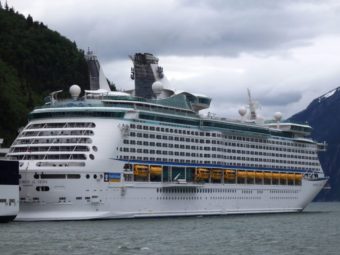
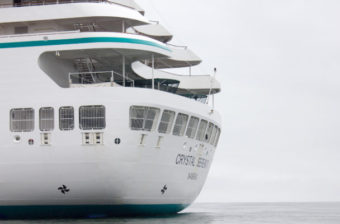
The company that sent the first big luxury cruise ship through U.S. and Canadian Arctic waters is preparing the Crystal Serenity for a repeat performance in 2017, but one expert believes this year’s historic transit doesn’t mean the Arctic is likely to become a hotspot for global shipping anytime soon.
The hoopla over the luxury cruise ship Crystal Serenity’s arrival in New York on Sept. 16 after a 32-day voyage from Alaska through the Arctic has died down a bit.

Crystal Cruises’ CEO and President Edie Rodriguez still was enthusiastic last week as she described what she said was a smashingly successful cruise.

“By every standard,” Rodriguez said, “a monumental success!”

Coast Guard passenger-vessel safety specialist Cecil McNutt agreed – at least, to the extent that nothing bad happened.

“It pretty much went without a hitch,” McNutt said.

Rodriguez said it all went off so well the company is well under way in preparing the 1,000-passenger Crystal Serenity’s second cruise next year on the same route.

“It was so popular that we are doing it again,” Rodriguez said.

It would’ve been unthinkable until now for a big luxury cruise ship like the Crystal Serenity to transit formerly ice-choked Arctic waters, especially the Northwest Passage.

A steady decline in Arctic sea ice due to the warming climate has made it possible.

Still, sea-ice conditions in the Arctic have always been unpredictable, which is why the company went to such lengths to prepare for the cruise, including lengthy consultations with U.S. and Canadian coast guards.

But McNutt said ice wasn’t a problem this year.

“I got some reports from the ship itself that showed that the vessel was sailing basically in pretty much ice-free conditions,” McNutt said.

In fact, one of the ship’s passengers told a reporter they spent much of their voyage looking for sea ice, instead looking out for it.

One of the predictable things about the Arctic is that conditions there are unpredictable.

McNutt said that’s why rough weather that set in late last month forced the Coast Guard relocate an evacuation site that was to be used in a big field-training exercise held to practice rescuing passengers from a cruise ship that runs into trouble in waters off Alaska.

“I guess the one lesson learned is that Mother Nature always rules,” McNutt said.

And that, said Arctic maritime expert Lawson Brigham, is why the Crystal Serenity’s voyage does not necessarily signal the beginning of boom in cruise tourism or other kinds of shipping in this part of the circumpolar north.

Arctic sea ice has receded enough in late summer for cruise ships and other vessels to take advantage of the open water, Brigham said. But for the rest of the year, it’s as difficult and expensive to operate in the region as it’s always been.

“The challenge for using the Arctic Ocean for navigation is that it is, in fact, ice-covered,” Lawson said. “It’s ice-covered partially or fully likely nine months out of the year, through (the end of) the century.”

Brigham is a distinguished professor of geography and Arctic policy at the University of Alaska-Fairbanks, and a retired Coast Guard officer with years of experience serving in the Arctic.

He thinks despite all the talk of a shipping boom in the Arctic Ocean brought on by receding sea ice opening up more shipping lanes, the law of economics make that unlikely.

“It is all about economics,” he said.

Brigham said the only type of shipping that’s likely increase in the near future is the kind that brings raw materials out of the region that have become more accessible by receding sea ice.

“The biggest increase in traffic will be the movement of natural resources out of the Arctic to global market,” Brigham said.

Brigham thinks that kind of shipping isn’t likely to increase much on this side of the Arctic until global prices rebound for such commodities as iron ore, nickel, copper and hydrocarbons.

And even then, he expects the shipping lanes on the Eurasian side of the Arctic Ocean will be busier because there’s generally less sea ice along that coastline and because nations there have for decades been building up their shipping and industrial infrastructure.

“Where is offshore development? Where is hydrocarbon development? In the Norwegian Arctic right now and in the Russian Arctic – not in our Arctic and not in the Canadian Arctic,” Brigham said.

Brigham said receding sea ice may open shorter Arctic routes that may enable ships to get their goods to market more quickly. But that’s not guaranteed, due to weather and other uncertainties that come with operating in the region. Those include a lack of up-to-date maps and hydrography of the continental shelves and Arctic Ocean floor.

Brigham he said recent expansions of the Panama and Suez canals and other facilities in the lower latitudes suggest investors aren’t likely to gamble big sums on the still-risky venture of Arctic shipping. At least, not yet.

New satellite-based technology aims to crack down on illegal fishing

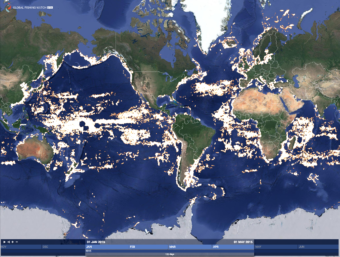
A satellite-based program from Google, Oceana, and SkyTruth hopes to help everyone track the movement of commercial fishing vessels around the world. (Courtesy Oceana.)

Commercial fishing in Alaska is a multibillion dollar industry. But every year, billions of dollars are lost to illegal fishing around the world. A new satellite-based surveillance system makes it easier to track illegal fishing. But some fishermen aren’t ready for Big Brother watching their every move.

Worldwide, overfishing is a huge problem. Jacqueline Savitz, vice president of the conservation group Oceana, says populations of big fish, like halibut, have dropped 90 percent. But the fish can rebound when their habitats are protected.

“We actually see fish stocks coming back and getting to levels where they’re sustainable, so we can continue to live off the interest, if you will, and not fish down the principal,” said Savitz. “But we also have a problem with illegal fishing. It’s about a $23 billion industry globally.”

Now, there’s a new tool for people who want to prevent illegal fishing: Global Fishing Watch. It’s a free, web-based, interactive map of the world’s traceable commercial fishing activity, dating back to January 2012.

It’s based off information gathered from vessels’ Automatic Identification Systems (AIS). The boats broadcast  signals including their location, who they are, and where they’re headed.

Not all boats have to use AIS. Currently, the International Maritime Organization only requires it for large vessels like big oceangoing cargo ships and certain vessels on international voyages

While AIS technology has been around for a while, this is the first time all its information is publicly available.

As ocean traffic increases, Savitz hopes Global Fishing Watch will increase accountability. She points to Alaska’s waters as an example

“There’s a lot of change happening up there with the changing climate and potential new shipping routes through the Arctic and the Bering Strait,” she said. “There are going to be areas that are protected. How are we going to know if they are really being protected?”

That’s what this project hopes to do. But fisherman Roger Rowland doesn’t like the idea that everyone can track his vessel. He wants to protect his fishing hot spots.

“With my salmon fishery, I don’t want people knowing where I am,” said Rowland. “Since I’m not legally required to have it, I turn it off.”

Rowland owns a 58-foot seiner based in Unalaska. Because his boat is small, he isn’t required to constantly run AIS.

Even though Rowland likes his secrecy, he thinks Global Fishing Watch could be helpful for certain fisheries.

“When I’m pot cod fishing, I do have legal areas where I cannot go,” he said. “My boat cannot go inside a ring around a sea lion rookery, and so it’s good for that. Nobody is sneaking in there because someone is watching.”

John Amos is the president of SkyTruth, a nonprofit that uses technology to highlight what’s happening in the environment. He says even though fishermen like Rowland might not want to be tracked, there’s a benefit for people who play by the rules.

“People care about where and how their food is being produced,” said Amos. “Here’s an opportunity for fishing vessel captains to create personal relationships with their consumers at the seafood market or at the restaurant table and say, ‘Look, we are the good guys, and we’re going to show you.’”

There will always be fishermen who turn off their AIS, but Amos believes Global Fishing Watch will help crack down on the amount of unregulated and unreported fishing as well as empower individuals to monitor patches of ocean they care about.

Maritime industry looks to train a skilled workforce

Whether it’s seafood processing or in a shipyard there aren’t enough skilled workers to meet the jobs in Alaska.

A group of maritime businesses are looking to train Alaskans to fill skilled jobs in their industry.

The partnership, “Maritime Works” was presented at the annual Southeast Conference meeting in Petersburg last week.

A commercial for APICC plays on a big screen at the front of the conference showing industrial workers in the Alaska frontier.

Alaska Process Industry Careers Consortium or APICC is a group led by big businesses and corporations training Alaskans for jobs within the state: companies in oil and gas, mining, and water and waste water industries.

Maritime Works is a group of maritime industry businesses that has recently partnered with APICC.

Kris Norosz  is with Maritime Works and also does government relations for Icicle Seafoods in Petersburg.

“I knew that we needed to come together to do something,” Norosz said. “As employers we noticed that we had a lot of skilled jobs but not a lot of skilled Alaskans to fill those jobs. So we knew we had a problem because it was absolutely crucial to our operations that these skilled positions are filled.”

She gave the example of her Petersburg plant, which employs hundreds of seafood workers every year.

“If we don’t have a can machinist we’ve got hundreds of people out of work in the summer while the salmon is stacking up and it’s a disaster,” she said.

The same thing could happen without electricians, refrigeration engineers and other jobs that deal with fisheries or ships. There’s also an aging workforce with limited younger workers ready to take over those skilled jobs, Norosz said.

“We’re working toward high dollar, blue collar careers in the maritime industry that work for both employees and employers and that’s really the crux of it,” said Julie Decker, who is with Maritime Works as the executive director for the Alaska Fisheries Development Foundation in Wrangell.

Decker said there is a growing awareness in the state of the importance of the maritime industry.

Joining with APICC gives Maritime Works the opportunity to partner with state agencies, the University of Alaska and training providers.

APICC was formed about 17 years ago and started a two-year process technician degree program at several state campuses.

Since then they’ve seen hundreds of graduates.

APICC executive director Cari Ann Carty said on average those AA graduates are making $105,000 salaries five years into the job.

“We work with the training programs that are already in place,” Carty said. “We don’t try to recreate the wheel or make a new organization, all the really great training programs that are already out there and just kind of make those really industry specific.”

Doug Ward, who is with Maritime Works through Ketchikan’s shipyard, Vigor Alaska, said their approach is different than other workforce development projects.

“It’s jobs driven,” Ward said. “It’s got employers in the wheel house of workforce investment and that’s a brand new turn of events.”

He says the Maritime industry will be partnering with school districts and tribes in the region to expand technical training possibilities.

In the future Maritime Works hopes to grow new jobs such as advanced manufacturing and seafood processing, looking at ways to use fish waste for things like supplements and cosmetics.

Alaska fisheries escape effects of climate change for now

Commercial fishing in Alaska is a multi-billion dollar industry.
Commercial fishing in Alaska is a multi-billion dollar industry. (Aftab Uzzaman/Flickr)

With coastlines eroding, temperatures rising, and sea ice retreating, Alaska is feeling the effects of a warming planet. But a new federal report suggests fisheries in the state haven’t experienced many observable impacts of climate change so far.

Commercial fishing in Alaska is a multi-billion dollar industry. For 18 consecutive years, fishermen have hauled more fish into Dutch Harbor than anywhere else in the country. But at this point, researcher Terry Johnson says climate change isn’t a hot topic in the industry, even though it could affect young fishermen.

“We aren’t talking about next year, but we are talking about within this century or within the working lives of young people who are just coming into the fishery now,” he said.

Johnson says interest in the topic is growing among fishermen.

As a researcher for Sea Grant — an offshoot of the National Oceanic and Atmospheric Administration — he’s synthesized hundreds of scientific papers, interviewed scientists and stakeholders, and combed through popular media to compile this report.

Johnson says climate change will have different effects on different fisheries — salmon might do better in warmer waters, while pollock and crab might fare worse.

Johnson says short-term ocean warming events, like El Niño or the Blob, could preview the long-term effects of climate change on fisheries.

“If 50 years from now, the long-term ambient temperatures are the same as they were last year during a short-term event, you can see how stocks reshuffle themselves,” he said. “Some prosper and some diminish.”

Johnson says so far, observable impacts of long-term climate change on Alaska’s fisheries have been relatively mild. Commercially important fish species are prospering while sport and subsistence resources are within normal ranges. Exceptions like the sweeping decline of Chinook salmon could be tied to climate change or ocean acidification, but the research isn’t there yet.

And Johnson says seeing Alaska’s future is as easy as looking south.

“You want to know what Alaska is going to be like 100 years from now?” Johnson said. “Look at Washington, because the temperatures are warmer there. If nothing changes, eventually we are going to get a similar type of long-term temperature increase here.”

Johnson says fisherman deal with change all the time.

The fishing industry is constantly adapting — from market collapses to advances in technology to shifts in resource management. Johnson says that flexibility has primed them, so they can adjust to climate change.

Ask a Climatologist: The Blob is back

A map of sea surface temperatures from Sept. 19th shows the blob below Alaska. (Graphic courtesy of NOAA)

The Blob is back. The term was coined a few years ago to describe a warm patch of water in the Gulf of Alaska and northern Pacific Ocean. It can turn the weather warm and dry in the state.

Brian Brettschneider is a climatologist in Anchorage who closely tracks Alaska climate data and trends. Alaska’s Energy Desk is checking in with him regularly for the segment- Ask a Climatologist.

Brettschneider says earlier this year, it looked like the Blob was gone, but that wasn’t quite right.

Interview Transcript:

Brian: It’s always been there, it’s just been hovering below the surface, so if you looked at sea surface temperatures, it kind of looked like it was getting back to normal, but all that warmth was just kind of pushed down a little bit and now it’s making its way back to the surface. And it really looks like the blob again.

Annie: And when you look at a map of this, it’s really striking, can you describe it?

Brian: When you look at these maps of sea surface temperatures- the ones that have been released the last few weeks- they really show this very pronounced warm water anomaly sitting just south of mainland Alaska in the Gulf of Alaska. Of course the colors they use in the maps in general for above normal conditions are red, so you have this red circle sitting below Alaska and it really does look like a blob.

Annie: What effect does this have on Alaska?

Brian: When there’s warm waters that surround Alaska it really promotes warm surface temperatures in the state. It also affects the upper level patterns. The last time the blob was this pronounced we had a strong upper level high pressure that set up and that really kept us dry. And then to the downstream side of that in Canada and the northern part of the lower 48, that actually drove their winds, made [them] come from the North, so it made it colder and snowier over there. But over here, in our part of the world, it promoted above normal temperatures and below normal precipitation.

Annie: And what is the connection between the blob and global warming?

Brian: Global warming, I like to say, adds a baseline. It’s like a background noise that gets slightly louder every year. But the blob is something that sits on top of that. So for example, at some point in the past, a blob pattern may have only been two or three degrees above normal, whereas now its four or five, maybe six degrees above normal. So it’s just something that adds on to the background conditions.

Did a large ship kill this Sitka Sound whale?

Researchers collect samples from a beached humpback whale carcass Saturday on a Sitka Sound beach. (Drone photo by Joe Serio)

A dead whale found floating near Sitka last week was probably killed by a ship, according to a pathologist who inspected the carcass.

The humpback whale was spotted floating in Sitka Sound on Sept. 13.

A team from the Sitka Tribe of Alaska and the University of Alaska Southeast arrived last weekend to check out the carcass, which was beached.

The whale was a sub-adult, about 42 feet long, said Kathy Burek of Alaska Veterinary Pathology Services.

It had been dead for about a week.

“It had indications of hemorrhage where it had been struck and possibly carried by a ship,” she said. “So there are areas of trauma that look convincing that it had had a major blunt impact.”

It was likely a large vessel, such as a tanker, cruise ship or ferry, she said, but she’s not positive.

“We can’t quite say it definitively at this point,” she said. “First of all, we’ve only had a limited amount of time to access the animal because of the tides. Also, because there’d been a lot of changes because the animal had rotted for a while.”

Researchers collect samples from a beached humpback whale carcass Saturday on a Sitka Sound beach. (Drone photo by Joe Serio)

The team cut into the whale, removing blubber and other tissue for further study.

Burek said they climbed into the carcass for the difficult task of finding and removing its ear plugs.

“These plugs are formed by yearly laying down of ear wax,” she said. “And since a whale doesn’t have a big opening out from the ear, it just tends to accumulate. If you can get that, there are ways to count those rings and be able to be more definitive about how old the animal was.”

The whale’s age is not yet determined. It takes a month to analyze the plugs, Burek said.

Other samples will be used to determine whether the whale had been exposed to toxic algae blooms.

Those have become more common as climate change has warmed the Pacific Ocean.

Scientists are also interested in discovering what the whale had been eating, Burek said. In a southern Baranof Island whale death earlier this summer, the animal turned out to be malnourished.

“We didn’t actually figure out a cause of death at all on that one,” she said. “But its body condition did not look optimal, so that’s another reason why we’re doing those studies on nutrition.”

The most recent whale carcass was left tied up on the beach, a present for the bears, Burek said.

She also hopes follow-up examination will reveal more information about its injuries.

Site notifications
Update notification options
Subscribe to notifications