Bethel Spirits sells beer and wine in September 2016. The Bethel Native Corp. store is only open for 30 days a year. (Photo by Dean Swope/KYUK)
The governor’s office plans to meet with leaders from Bethel and Napaskiak to discuss the impact of legal alcohol sales on Yukon-Kuskokwim Delta communities.
Gov. Walker’s staff proposed the meeting in response to a resolution issued by Napaskiak’s Tribal Council this week, which urged the governor to declare a state of emergency in their region. According to tribal council members, Bethel’s liquor store has led to a sharp increase in alcohol-related deaths that they compare to the state’s opioid crisis.
Tribal Administrator Sharon Williams said that five Napaskiak residents have died in alcohol-related incidents since Bethel legalized alcohol sales in 2016. That’s a little over 1 percent of the village’s total population.
Williams said that she hasn’t heard from the governor’s office yet. Governor Walker’s Press Secretary, Austin Baird, said that they plan to iron out the details of a meeting with Bethel and Napaskiak leaders within the next two weeks.
“There’s been a lot of attention to the opioid epidemic, and that’s certainly an enormous issue, but alcohol has been a constant issue,” said Baird. “It’s a very painful and complicated issue, and that I would expect to be a part of the conversation.”
Baird added that questions surrounding Bethel’s liquor store specifically should be addressed at a community level.
Inspired by the Napaskiak Tribal Council, the village of Marshall issued its own resolution Friday afternoon urging Gov. Walker to declare a state of emergency in their community too. Tribal Administrator Nick Andrew claims Bethel’s liquor store has contributed to an increase in alcohol-related crime in Marshall, and adding that the village has no way of coping with it. Beyond occasional visits from state troopers, Marshall hasn’t had a police force — or any other law enforcement — in over a decade.
“We have a generation of children and they have no idea what a police department is,” Andrew said. “You all take police officers for granted, and once it’s taken away, there’s an uneasiness that envelops the community.”
Andrew said state budget cuts meant Marshall could no longer afford law enforcement.
Juneau students and school administrators will meet with local legislators Saturday to discuss concerns surrounding the district’s new mascot, the Thunder Bears.
Juneau students chose “Thunder Bears” in February as the new mascot for the district’s combined football team. The name combined aspects of both the Juneau-Douglas High School Crimson Bears and the Thunder Mountain Falcons. The district said at the time it would be the mascot for all district-wide teams going forward.
Googling the name brings up an Urban Dictionary definition that describes “thunderbear” as a nickname for someone who goes on drunken tirades. It says it is often attributed to people of Native American descent. That definition was posted in 2004.
Students, staff and community members became concerned shortly after the vote when the definition was discovered online.
Reps. Justin Parish and Sam Kito III will meet with Superintendent Mark Miller and student representatives from all district high schools to discuss whether to keep the new mascot or choose another.
The public meeting will be held in room 519 of the Alaska State Capitol Building from 10 a.m. to noon Saturday.
Napaskiak Tribal Administrator Sharon Williams, seen here in July 2017, says that Bethel’s liquor store has led to an increase in alcohol-related deaths. (Photo by Katie Basile/KYUK)
The Native village of Napaskiak asked Gov. Bill Walker on Tuesday to declare a state of emergency, following an increase in alcohol-related deaths.
Bethel’s liquor store has disrupted village life so badly that it requires state and federal intervention, according to tribal council members.
“We’ve buried so many loved ones already,” said Napaskiak tribal administrator Sharon Williams. “I know we did before the liquor store opened, but ever since the liquor store opened (we’ve had) death after death. It’s wearing us down.”
In the years since Bethel’s liquor store opened in 2016, Williams said that community members have died in four-wheeler, boat and snowmachine accidents while driving intoxicated.
A man died near town in an alcohol-related accident only a few weeks ago, and he was someone Williams knew.
According to the tribal council’s resolution, even school attendance has been affected by alcohol disturbances.
“Something needs to be done,” Williams said. “We can’t take it any more.”
Napaskiak has used gaming revenue to hire four village police officers, said Williams, as well as employees for the village’s small jail. They might need to hire more.
The jail is often used to hold disorderly, intoxicated people for five or six hours, but after an alcohol-related murder in Napaskiak last July, village police officers doubled that holding period to 12 hours.
The tribal council’s resolution calls for Bethel’s liquor store to close, but Williams said that there might be ways to better regulate it.
Perhaps villages could provide a list of people they want barred from buying alcohol.
“It would be really good if our councils gave names to the state of Alaska to write on their state ID, ‘no alcohol sales,’ because they’re repeat offenders in the village,” Williams said. “I know it can be done.”
The governor’s office has not yet responded to Napaskiak’s resolution.
There’s more bad news about the nation’s devastating opioid epidemic.
In just one year, overdoses from opioids jumped by about 30 percent, according to the a report released Tuesday by the Centers for Disease Control and Prevention.
The overall increase in opioid overdoses seen in hospital emergency rooms between the third quarter of 2016 and 2017 occurred across the nation. Some parts of the country experienced far greater increases than others while a few reported declines, the analysis shows.
“We have an emergency on our hands,” says CDC Acting Director Anne Schuchat. “The fast-moving opioid overdose epidemic continues and is accelerating.”
The largest regional increase occurred in the Midwest, which saw a 69.7 percent jump in opioid overdoses, according to the report. The jump was driven in part by a 109 percent increase in Wisconsin. Overdoses increased 40.3 percent in the West, 21.3 percent in the Northeast, 20.2 percent in the Southwest, and 14 percent in the Southeast.
“We saw, sadly, that in every region, in every age group of adults, in both men and women, overdoses from opioids are increasing,” Schuchat says.
The latest data could underestimate the overdoses, since many people who overdose never end up in the emergency room. “It might be even worse,” Schuchat says.
The report didn’t specify why overdoses vary around the country. But one factor is probably the differences in availability of newer, highly potent illegal opioids, such as fentanyl, which have been flooding the country in recent years, Schuchat says.
“We think that the number of people addicted to opioids is relatively stable. But the substances are more dangerous than five years ago,” Schuchat says. “The margin of error for taking one of these substances is small now and people may not know what they have.”
The supply of those more-dangerous drugs is increasing faster in some parts of the country than in others, which may help explain the geographic variations, Schuchat says.
“Overall as a nation, we are still failing to adequately respond to the opioid addiction epidemic,” says Dr. Andrew Kolodny, co-director of opioid policy research at Brandeis University. “It is concerning that 20 years into this epidemic, it is still getting worse. The number of Americans experiencing opioid overdoses is still increasing.”
Although the Trump administration recently declared the epidemic to be an emergency, a significant increase in funding is urgently needed to treat Americans addicted to opioids. Kolodny says.
“It’s kind of like pointing to a burning building and saying, ‘Oh, there’s a fire there. There’s an emergency.’ And then not calling the fire department and watching it burn down,” Kolodny says. “There’s been a lot of talk from Congress and from the administration and a recognition that we need to do something about this problem. But nothing yet has happened.”
Others say the key is integrating addiction treatment better into the health care system. For example, emergency room staff need better training to make sure addicts get follow-up addiction treatment, says Jessica Hulsey Nickel, president and chief executive officer of the Addiction Policy Forum. Too often addicts are simply revived and sent home without follow-up care, only to overdose again, she says.
“We can use this near-death experience — use it as moment to change that person’s life,” Nickel says.
The latest analysis is an attempt by the CDC to track the opioid epidemic more closely, Schuchat says. Previously the agency looked at death from opioids, which lag behind reports from emergency rooms.
“We wanted more timely information,” Schuchat says.
The analysis was based on about 91 million emergency room visits that occurred between July 2016 and September 2017, including 142,557 visits that were suspected opioid overdoses.
That survey showed an increase of 29.7 percent in 52 jurisdictions in 45 states between July through September of 2016 and the same period in 2017, according to the report.
The researchers also analyzed 45 million emergency department visits that occurred in 16 states during the same period, which included 119,198 suspected opioid overdoses.
That analysis showed a 34.5 percent increase between the same periods in 2016 and 2017. But those increases varied dramatically from state to state, even within a region.
For example, overdoses increased 105 percent in Delaware, compared with 80.6 percent in Pennsylvania and 34 percent in Maine. Overdoses may have actually slightly decreased in Massachusetts, New Hampshire, and Rhode Island. In Kentucky, CDC’s analysis showed a 15 percent drop in overdoses.
Copyright 2018 NPR. To see more, visit http://www.npr.org/.
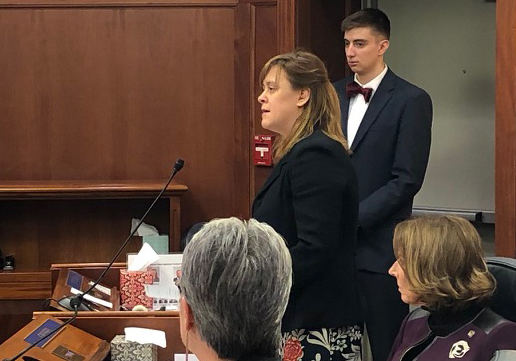
Sen. Mia Costello, R-Anchorage, speaks during the Senate floor debate on House Bill 195 on March 1, 2018. The bill would allow car insurers to use credit histories to determine premium rates for renewals. (Photo by Andrew Kitchenman/KTOO)
A bill passed by the Alaska Senate on Thursday would allow car insurers to use credit histories to determine premium rates when customers renew their policies.
Until 2003, insurers in Alaska were barred from using credit histories to determine how much customers would pay. That year, the state allowed them to start using these records for new applicants. But they still couldn’t use them for people who are renewing policies.
House Bill 195 would allow the companies to begin to use these histories.
Anchorage Republican Sen. Mia Costello said during the floor debate that the bill would allow those with good credit to pay lower, “preferred” rates.
“Like it or not, credit scores are actually an indicator of risk, and so this is what that insurance is entirely based on,” she said.
Anchorage Democratic Sen. Bill Wielechowski opposed the bill. He pointed to a 2003 state report that found that areas with low-income and minority Alaskans would pay more.
“Everyone will have people in their district who will suffer if this bill passes,” he said. “The working poor will suffer. Minorities will suffer. Those in rural Alaska will suffer. Seniors will suffer.”
He said auto insurance premiums should be based on people’s driving records. He quoted research by Consumer Reports magazine.
“In the vast amount of states that allow the use of credit scores, a poor credit history will have a greater impact on your auto insurance premium than a drunk driving conviction,” he said.
Soldotna Republican Sen. Peter Micciche voted for the bill. He noted that new insurance consumers have been affected by similar rules for 15 years.
“I represent all Alaskans in my district, not just the underprivileged,” he said, later adding, “We’re talking about this in a way, almost as though it hasn’t been the law of the land for many years that credit history is used.”
The Legislature passed a similar bill two years ago. Gov. Bill Walker vetoed it. But Walker introduced the new version, which includes more consumer protections than the earlier bill.
For example, the bill would require insurers to notify consumers that there are a series of exemptions allowing some consumers to not have their credit histories used. Those exemptions include people who have had serious injuries, divorces, or unemployment that lasts at least three months from involuntary terminations.
In addition, when people appeal the use of their credit histories, the state Division of Insurance would be able to decide on the appeal. In the bill Walker vetoed, the insurer would have ruled on the appeal.
The Senate voted 13-4 to pass the bill, with Wielechowski and three fellow Democrats – Tom Begich and Berta Gardner of Anchorage and Dennis Egan of Juneau – the only noes. Sens. Lyman Hoffman of Bethel, Shelley Hughes of Palmer and Gary Stevens of Kodiak were absent.
The House passed the bill 39-0 last year. Nikiski Republican Mike Chenault was absent. The bill now heads to Walker’s desk.
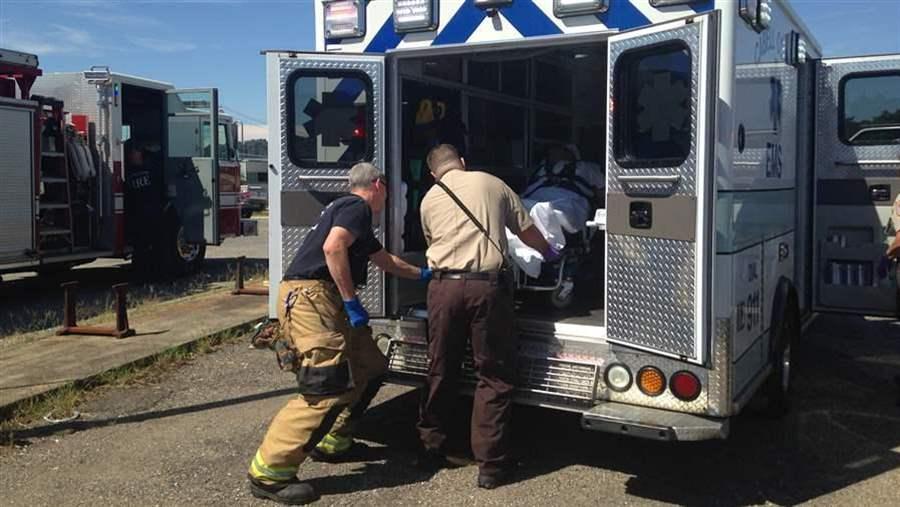
A woman is loaded into an ambulance in Huntington, West Virginia, following an opioid overdose rescue. Experts say a decline in overdose deaths in 14 states is due in part to increased use of the overdose antidote naloxone. (Photo by Pew Charitable Trusts)
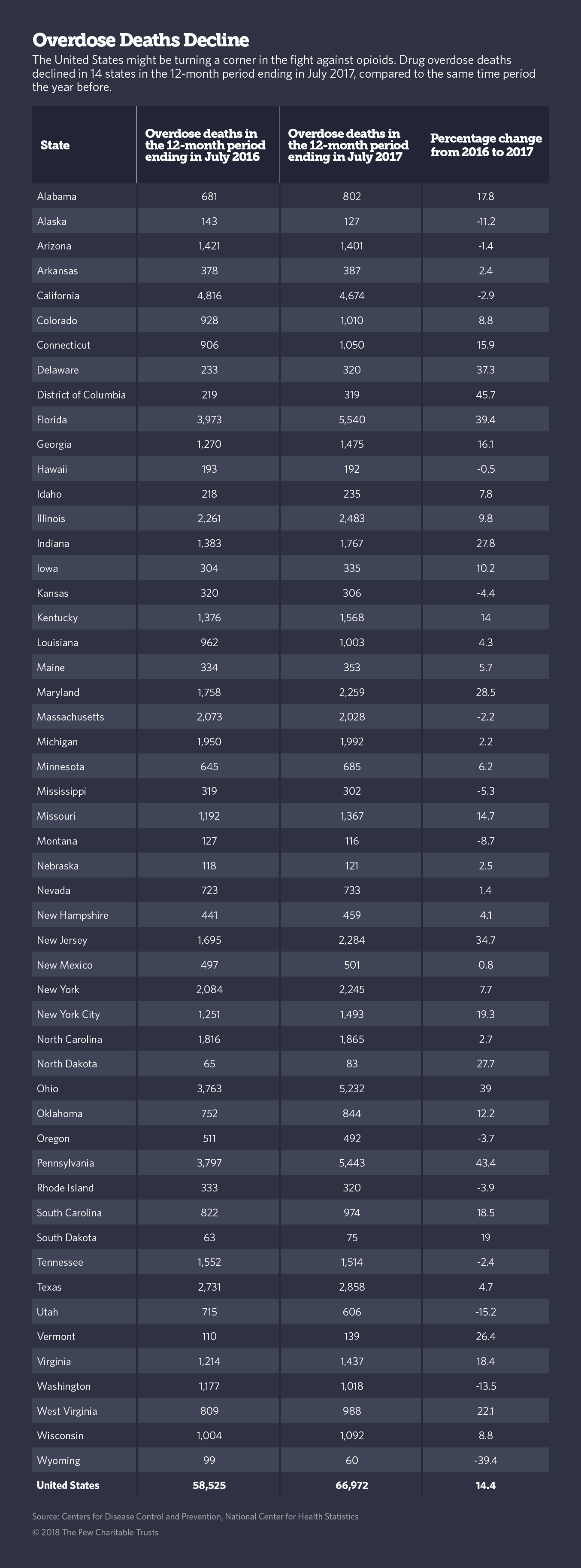
New provisional data released this month by the Centers for Disease Control and Prevention shows that drug overdose deaths declined in 14 states during the 12-month period that ended July 2017, a potentially hopeful sign that policies aimed at curbing the death toll may be working.
In an opioid epidemic that began in the late 1990s, drug deaths have been climbing steadily every year, in nearly every state. A break in that trend, even if limited to just 14 states, has prompted cautious optimism among some public health experts.
“It could be welcome news,” said Caleb Alexander, an epidemiologist and co-director of Johns Hopkins University’s Center for Drug Safety and Effectiveness.
“If we’re truly at a plateau or inflection point, it would be the best news all year,” he said. “But we’re still seeing rates of overdose that are leaps and bounds higher than what we were seeing a decade ago and far beyond any other country in the world.”
The reported drop in overdose deaths occurred in Wyoming, Utah, Washington, Alaska, Montana, Mississippi, Kansas, Rhode Island, Oregon, California, Tennessee, Massachusetts, Arizona and Hawaii. That compares with declines in only three states — Nebraska, Washington and Wyoming — reported for an earlier 12-month period that ended in January 2017.
But even as more states saw a drop in deaths, several saw death spikes of more than 30 percent, most likely due to the increasing presence of the deadly synthetic drug fentanyl in the illicit drug supply, drug experts say. Those are Delaware, Florida, New Jersey, Ohio and Pennsylvania, along with the District of Columbia.
Published monthly since August, the new CDC statistics are a compilation of death certificate data from all 50 states for a rolling 12-month period ending seven months prior to release of each report. The seven-month delay is roughly the amount of time it takes for states to complete death investigations and report causes of death, and for the CDC to compile the data.
Previously, the CDC only made death data available once a year and it was 12 to 14 months behind. In a fast-moving opioid scourge, epidemiologists say the increased frequency of overdose death reporting is a welcome improvement.
Farida Ahmad, a public health expert with the CDC, cautioned that the monthly provisional death numbers are subject to change because as many as 2 percent of death certificates for the time period have not been reported. A final death count for 2017 will not be available until November, she said.
Increased Volatility
In Alaska, where deaths declined more than 11 percent between the 12-month period ending July 2016 and the 12-month period ending July 2017, the state’s public health chief, Jay Butler, said the trend has been cause for some optimism.
The greatest portion of that decline was in prescription opioids, drugs such as OxyContin, Percocet and Vicodin, Butler said.
“And we may be seeing a plateauing, if not a decline, in overdose deaths from heroin,” he added. “The bad news is that we’re seeing more deaths from fentanyl.”
Indeed, fentanyl-related deaths spiked more than 70 percent nationwide in the 12-month period ending July 2017, according to the report.
“Using illicit drugs has always been a game of roulette,” Butler said. “There’s just more bullets in the chamber now.
“When the epidemic was driven primarily by prescription opioids, we saw a smoldering and chronically escalating problem,” he said. “Now we’re seeing outbreaks and clusters of death resulting from bad batches of heroin or counterfeit pills laced with fentanyl.”
Still Rising
The recent drop in opioid deaths in some states might be significant, experts say, but they caution it should be seen in the context of the worst drug death epidemic in U.S. history.
In 2016, the annual overdose death count reached nearly 64,000, more than three times as many as in 1999. It surpassed the number of fatalities from automobile crashes and homicides, becoming the No. 1 cause of death among Americans 50 and younger.
Aside from the 14 states seeing declines, there are few signs of relief ahead.
Nationwide, the death toll is still rising, although possibly at a lower rate than in the past two years. According to the CDC’s current provisional report, the total number of overdose deaths increased 14 percent in the 12-month period ending in July 2017, compared to a 21 percent increase in the 12- month period that ended in January 2017.
One reason could be a decline in the availability of prescription painkillers. Even as overdose deaths spiraled over the last five years, the rate of prescribed opioid consumption began to decline.
That could mean lower rates of heroin use, addiction and overdose deaths in the future, Alexander said. A vast majority — 86 percent — of young, urban injection drug users started misusing prescription opioids before turning to heroin, according to surveys by the National Institute on Drug Abuse.
Another likely reason for a tapering in death counts is the widespread use of the overdose antidote naloxone, public health experts say.
“It’s hard to imagine how high the death toll would be without naloxone,” said Michael Kilkenny, the Cabell-Huntington public health director in West Virginia.
“It’s a little too soon to tell,” he said, “but we may be seeing the beginning of a decline in the number of deaths in Huntington,” a small city that has the highest overdose death rate in West Virginia, the state with the highest overdose death rate in the country.
Close
Update notification options
Subscribe to notifications
Subscribe
Get notifications about news related to the topics you care about. You can unsubscribe anytime.



9(MDEwMjQ0ODM1MDEzNDk4MTEzNjU3NTRhYg004))