Alcohol & Substance Abuse

State organizing new opioid task force

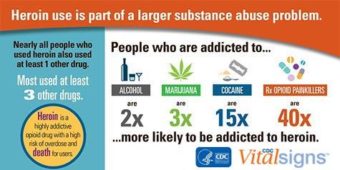
Heroin use is part of a larger substance abuse problem.
Graphic courtesy of CDC.

The state is convening a new task force to try and tackle the high rates of heroin use, prescription opioid abuse and related deaths in Alaska.

The 20-member Alaska Opioid Policy Task Force is charged with coming up with recommendations on policy changes that could help address heroin and opioid abuse and deaths around the state.

The state Advisory Board on Alcoholism and Drug Abuse and other partners announced the new group Wednesday. The board’s executive director, Kate Burkhart, said the new group will try to work with existing community entities as much as possible.

“The task force is going to be working closely with community organizations and coalitions to ensure that the final recommendations on how to address issues related to the heroin epidemic are relevant and applicable to communities statewide,” Burkhart said.

The state is still finalizing members of the new group, but it will draw on a diverse range of experiences, she said.

“We’ll be looking at the health care sector, the criminal justice sector, the public health sector, health care practices, recovery support, those kinds of things to provide kind of a three-dimensional picture of how the state and communities can help reduce the impact of heroin and opioid abuse on families and individuals,” she said.

The body will also include representatives from the tribal health system and behavioral health realm, a mix of urban and rural perspectives, and people whose lives have been affected by addiction.

“We have people that are in recovery themselves, as well as family members that have been affected by heroin or opioid addiction in their family,” Burkhart said.

The group is expected to have recommendations for the governor and legislature by the end of November. The first meeting will be May 20. In the meantime, Burkhart said the groups partnering to put together the task force will be collecting resources for task force members, and making connections with existing community groups. Because the task force is limited in size, Burkhart said reaching out to other groups is a priority.

Before the task force convenes for its first meeting, Dillingham will have a chance to weigh in on those issues when the advisory board on alcoholism and drug abuse meets in Dillingham, May 11-13.

“The work of the task force will be part of the agenda at that board meeting, and we will be having a public event,” Burkhart said. “There’s an opportunity for folks in Dillingham to come and in a more relaxed way interact with board members and they can talk about the work of the opioid task force, they can talk about issues related to mental health or substance abuse.”

Justices Consider Whether Police May Force A Breath Test Without A Warrant

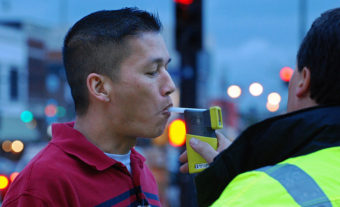
The U.S. Supreme Court heard arguments Wednesday on whether police must get a warrant before forcing a driver to submit to a blood alcohol or breath test. All 50 states have laws that allow revocation of a driver’s license for such a refusal. But a dozen states and the federal government have additional laws that provide criminal punishment – jail terms – for such refusals.

The states concede that breath tests and blood draws each constitute a “search” of a person’s body and normally, under the Constitution, a search requires a warrant. But the question before the court was whether states can get around the warrant requirement by enacting laws that making it a crime to refuse to submit to a test.

Three defendants from North Dakota and Minnesota are challenging their convictions for refusing to take either a blood alcohol or breath test. Their lawyer, Charles Rothfeld, told the justices that the fundamental problem with the statutes at issue here is that they make it a crime to assert a constitutional right – namely, the right to be free from a bodily search unless the police get a warrant.

One way to look at it, Justice Samuel Alito said, is that the defendants are “reneging on a bargain.” The bargain is: we give you a license to drive, and in exchange, you agree to take a blood alcohol test.

Rothfeld rejected that idea, noting that the defendants here had no idea they had ever consented to that bargain.

Justice Stephen Breyer suggested that breath tests are different from blood alcohol tests: there is no bodily intrusion except for the insertion of a straw into the mouth to breathe into; there is no pain; and it can be done roadside.

Justice Elena Kagan asked why the court should not deem a breath test as necessary to measure evidence of quickly dissipating alcohol in the blood.

But if all that sounds as though the Court was friendly to the idea of warrantless blood alcohol and breath tests, the worm turned quickly when the lawyers for the states and the federal government began to present their arguments.

Lawyer Thomas McCarthy, representing North Dakota, tried to tell the justices that they would be putting the states “in a terrible bind” if search warrants were to become required for these tests.

Justices, both liberal and conservative, pounced.

“In Wyoming it takes five minutes” to get a warrant, we are told, said Justice Breyer, and in Montana, 15.

Justice Kagan added that “over 40” states have set up electronic systems for getting warrants.

But McCarthy maintained that in rural North Dakota it would take a half hour to an hour to get a warrant.

“Why is it harder to get somebody on the phone” in a rural area than in a busy city, asked Justice Anthony Kennedy, adding puckishly that you would “think people in the rural areas were sitting waiting for the phone” to ring.

Rural areas have fewer resources, replied McCarthy, and fewer people to process warrant requests.

“So that excuses you from a constitutional requirement?” said Justice Sonia Sotomayor. “We’re now going to bend the Fourth Amendment” to “give a pass to North Dakota?”

As the justices pressed for “practical” explanations from the states, Justice Kagan asked what the justification is for not getting a warrant if other similar states can get one in 10 or 15 minutes.

“You’re asking for an extraordinary exception here,” Justice Kennedy said, “and you’re just not answering the question.”

Lawyer Kathryn Keena, representing Minnesota, didn’t have any more luck with her argument, though she tried to persuade the justices that they were blind to the facts of life in rural Minnesota and North Dakota, while she, who had grown up in “a town of 2,000, twenty miles from the North Dakota border,” could tell them a thing or two.

Her argument suffered even more when the federal government’s Ian Gershengorn, while arguing against a warrant requirement, made a contradictory point. It is urban areas that have trouble meeting the warrant requirement, he maintained, because a city like New York is so busy that its courts may have time for terrorism warrants, but not warrants to get a blood alcohol test.

In rebuttal, however, lawyer Rothfeld countered that studies conducted by the National Highway Transportation Safety Administration show that routine warrant procedures – in rural and urban areas alike – drive down test refusals, and drive up DUI convictions.

Copyright 2016 NPR. To see more, visit http://www.npr.org/.

Alcohol sales begin in Bethel, effect on Yukon-Kuskokwim communities unclear

bottles-203838_640Legal alcohol sales began in Bethel last week. It’s the first time alcohol has been sold in the city in more than 40 years.

One restaurant is already selling beer and wine. Two package liquor stores are set to open in the future. But some community leaders are concerned about how Bethel’s alcohol sales may affect dry villages in the Yukon-Kuskokwim Delta region.

Susan Murphy has lived in Bethel for her whole life. She remembers what the city was like when it was wet.

“How awful it was, back in the early 70s and late 60s,” she said. “There’d be people drunk and passing out. The winter times were especially bad because people would be freezing to death.”

Bethel wasn’t the only city that struggled, either. Murphy said communities around the Yukon-Kuskokwim Delta — like Napaskiak, Aniak and Marshall — had to contend with alcohol that was brought in from Bethel, most often illegally.

As a tribal judge on the Orutsararmiut Native Council and school board chair for the Lower Kuskokwim School District, Murphy said she has seen alcohol lead to abuse, neglect, and other problems for families in dry communities.

“And I’m afraid that’s just going to triple and quadruple with the availability of alcohol in Bethel,” she said.

Father Chuck Peterson is the pastor at the Immaculate Conception Catholic Church in Bethel. Like Murphy, he said Bethel’s new alcohol sales may be a bigger concern for visitors coming from the villages.

“People come from downriver and upriver to Bethel to do their shopping,” he said. “Sometimes they stop by the liquor store, and they don’t get their shopping done. They are the ones who are most vulnerable because nobody in the town wants to take them in when they’re drunk.”

And if they’re not stranded in the city, Peterson and Murphy said drunk driving could become a bigger issue as people travel to Bethel by boat and snow machine. As alcohol sales expand, they predict social services and law enforcement will be overwhelmed as well. But others aren’t so sure.

Richard Alstrom is the former City Manager of St. Mary’s, north of Bethel on the Yukon River. He held the job when the community went damp 10 years ago, and he said the village’s status — whether it’s dry or damp — hasn’t made much difference. Either way, he said alcohol gets into the village.

“Alcohol came to St. Mary’s when it was dry, and alcohol is coming to St. Mary’s when it’s damp,” he said. “So it’s hard to say if there has been any change at all.”

Upriver from St. Mary’s, the village of Emmonak has been dry since 1991. The community is 120 miles northwest of Bethel near the mouth of the Yukon River, and the people there travel in and out of Bethel frequently.
Martin Moore is Emmonak’s City Manager. He said he hasn’t seen much impact yet from new alcohol sales in Bethel. As is the case in St. Mary’s, he said alcohol arrives in Emmonak regardless of what’s happening in surrounding communities.

“It’s an issue, it has been an issue, and it’ll continue to be an issue,” he said.

If Emmonak is going to cut down on illegal alcohol, Moore said that will be up to locals. For years, the community has looked into establishing a tribal government and court, but it’s unclear when that may happen. Until then, Moore said leadership from elders is key.

“It’s up to the people of Emmonak and the elder people to start working together to deal with the younger group and help them plan their lives,” he said. “It’s not going to happen overnight. It’s going to take some time.”

But Murphy said the more available alcohol is, the bigger the challenge will be for communities that have voted themselves dry.

“What will happen is people will come into Bethel, buy a bottle, get drunk and become Bethel’s problem,” she said. “Or they’ll buy a bottle and drink in the boat or on the snow machine on the way back to the village. They’ll be the state troopers’ problem, then.”

According to spokesperson Megan Peters with the Alaska State Troopers, the state has no plans to develop or adopt new procedures in response to Bethel’s legal alcohol sales.

Bill to reform minor consuming penalties nears passage

A bill with big implications for alcohol and marijuana has sailed out of the House Judiciary Committee without opposition.

Senate Bill 165, sponsored by Sen. Peter Micciche, R-Soldotna, deals primarily with reforming the rules around alcohol consumption for minors and adults younger than 21.

The bill changes the minor consuming alcohol violation under Title 4, making it a $500 penalty, similar to a parking ticket. That fee can be reduced as low as $50 if a person completes a treatment program within six months of the judgment, which supporters of the bill say is a more effective way of dealing with youth substance abuse than the current system.

The rule change would also keep a young person’s name from appearing on the state’s CourtView website, which Micciche said in earlier testimony can devastate a young person’s life.

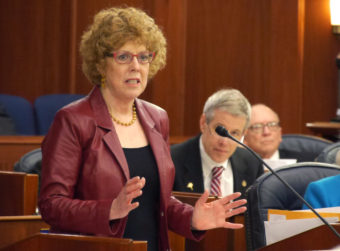
Judiciary Chair Rep. Gabrielle LeDoux, R-Anchorage, calls the change a significant improvement.

Rep. Gabrielle LeDoux, R-Anchorage, wraps up debate on House Bil
Rep. Gabrielle LeDoux, R-Anchorage, wraps up debate on House Bill 126 relating to a code of military justice, Feb. 3, 2016. (Photo by Skip Gray/360 North)

“As someone who once upon a time had teenage children, I always was kind of perplexed by some of the insanity in our alcohol regulation relating to minors,” LeDoux said in closing remarks. “This fixes a lot.”

Many Title 4 laws haven’t been updated since 1980, according to Chuck Kopp, aide to Sen. Micciche.

Another part of the legislation clears a roadblock currently faced by residents hoping to start cannabis businesses across the state. It authorizes the Department of Public Safety to run criminal background checks on applicants for commercial cannabis permits, which are currently under review by the state’s Alcohol and Marijuana Control Office.

Public health officials as well as members of the alcohol industry, who are often on opposing sides of regulatory debates, have both spoken in support of the measure.

Proponents are optimistic it will pass this session.

As Fentanyl Deaths Spike, States and CDC Respond

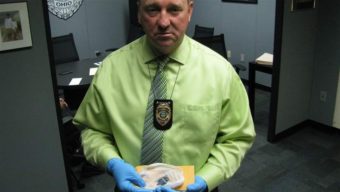
Bill Collins, police chief in Marion, Ohio, holds “blue drop” heroin laced with the painkiller fentanyl. Overdose deaths caused by fentanyl are surging. AP

When Ohio tallied what many already knew was an alarming surge in overdose deaths from an opioid known as fentanyl, the state asked the U.S. Centers for Disease Control and Prevention to investigate.

The rash of fatal overdoses in Ohio — a more than fivefold increase in 2014 — was not an isolated outbreak. Fentanyl is killing more people than heroin in many parts of the country. And the death toll will likely keep growing, said CDC investigators Matt Gladden and John Halpin at the fifth annual Rx Drug Abuse and Heroin Summit here.

Fentanyl, used in its legal pharmaceutical form to treat severe pain, represents the latest evolution of an epidemic of opioid addiction that began with prescription painkillers and moved to heroin, as users demanded cheaper drugs and greater highs.

At least 28,000 people died of opioid overdoses in 2014, the highest number of deaths in U.S. history. Of those, fentanyl was involved in 5,554 fatalities, a 79 percent increase over 2013, according to a December CDC report.

Unpublished data for the first half of 2015 indicate an even steeper spike in fentanyl deaths, Gladden said.

Cheap and Lethal

Fifty times stronger than heroin and a hundred times stronger than morphine, fentanyl is relatively cheap to produce illicitly and efficient to transport. It is often mixed with heroin, so that users are unaware they are inhaling or injecting the dangerous drug.

But after watching many of their friends drop dead over the last couple of years, most drug users say they are trying to avoid fentanyl, according to Traci Green, an associate professor of epidemiology at Brown University. Green was a panelist at the summit, presenting her findings from a study of fentanyl deaths in Rhode Island.

Users can sometimes detect fentanyl by color. It can be whiter than pure heroin powder, which typically has a brownish tint.

Still, some users seek out the powerful opioid for its superior high, Gladden said. “They find out someone just overdosed from it and they want to know where they can buy it.”

Because of its potency, the fast-acting opioid is more likely to cause an overdose than heroin or prescription painkillers. And fentanyl overdoses are more likely to be fatal: Because an overdose of fentanyl can shut down the lungs within two to three minutes of injection or inhalation, victims are less likely to be rescued than those who overdose on other opioids.

For suppliers of fentanyl, losing customers to fatal overdoses has not been a deterrent. Nor has drug users’ apparent fear of inadvertently using the deadly drug. When mixed with heroin, it creates a superior product that commands a higher price. Drug dealers keep producing it because it creates more addicts who are willing to pay for it, said the CDC’s Halpin.

The CDC’s analysis of Drug Enforcement Administration data revealed a twelvefold increase in law enforcement seizures of fentanyl since June 2013, primarily in Florida, Indiana, Kentucky, Maryland, Massachusetts, New Hampshire, New Jersey, Ohio, Pennsylvania and Virginia. This indicates a surging supply of the drug, which in some states already has propelled a significantly higher number of overdose deaths.

In 2014, drug overdose deaths jumped in many of the same states: New Hampshire (74 percent; all due to fentanyl, according to Gladden); Indiana (10 percent), Maryland and Massachusetts (19 percent); Ohio (18 percent); Pennsylvania (13 percent); and Virginia (15 percent), according to the CDC.

In Ohio, the agency found, the typical fentanyl-related overdose victim was a 38-year-old white male with a high school diploma and some college education. Many Ohio overdose victims had bipolar disorder, depression or other mental illnesses. And many had recently left a prison, jail, hospital or treatment facility. The deadliest month was April 2015, when 124 Ohioans died of fentanyl involved overdoses, the study found.

How to Respond

The CDC recommends that officials in Ohio issue warnings about the deadly street drug; intensify surveillance in the eight counties with the highest death rates; make the overdose-reversal drug naloxone more widely available; and ensure first responders are equipped with multiple doses of the antidote.

Because fentanyl is so potent, victims who overdose on the drug frequently require multiple doses of naloxone to be revived. They also need immediate follow-up treatment in a medical facility, making it imperative that bystanders call 911.

In general, the CDC calls for Ohio and other states to be more vigilant about testing for fentanyl in post-mortem toxicology reports to determine where fentanyl may be putting drug users at highest risk. Once fentanyl is detected, first responders in the area should be on high alert.

Long term, public health authorities and medical professionals should try to reduce the demand for fentanyl and other opioids through addiction prevention efforts, including safer practices in prescribing painkillers and improved systems for monitoring prescriptions.

Getting more people into treatment also will reduce that demand.

In Rhode Island, Brown University’s Green said, the state is sending recovery coaches to emergency rooms when people overdose to help them get into treatment. The next step, she said, will be to start overdose victims on addiction medication before they leave the hospital.

Read original article – April 01, 2016
As Fentanyl Deaths Spike, States and CDC Respond

To Help Newborns Dependent On Opioids, Hospitals Rethink Mom’s Role

Carolyn Rossi, a registered nurse at the Hospital of Central Connecticut, says the opioid epidemic has required nurses who used to specialize in care for infants gain insights into caring for addicted mothers, as well. Rusty Kimball/Courtesy of Hartford HealthCare
Carolyn Rossi, a registered nurse at the Hospital of Central Connecticut, says the opioid epidemic has required nurses who used to specialize in care for infants gain insights into caring for addicted mothers, as well.
Rusty Kimball/Courtesy of Hartford HealthCare

Carolyn Rossi has been a registered nurse for 27 years, and she’s been fiercely protective of infants in her intensive care unit — babies born too soon, babies born with physical and cognitive abnormalities and, increasingly, babies born dependent on opioids.

As clinical manager of the nurseries at the Hospital of Central Connecticut, Rossi works in the neonatal intensive care unit. Like many hospitals across the country, the facility near Hartford has seen a dramatic rise in recent years in the number of babies born with neonatal abstinence syndrome. The National Institute of Drug Abuse reports that more than 21,000 infants born in the U.S. in 2012 (the most recent year for which data are available) experienced symptoms of opioid withdrawal. The hospital says each such baby in its care costs roughly $50,000 to treat.

These fragile and fitful newborns present new challenges for hospitals. Some research suggests the children do best when they can be held for hours at a time, preferably by their mothers, in quiet, private rooms, as they go through the process of being weaned off the drugs.

But delivering care that way requires changing the attitudes of many doctors and nurses about addiction.

Rossi, for example, says her initial training in the best ways to care for newborns in withdrawal was very different from what the research now suggests.

“You know, we looked at it like, ‘They are drug addicts and the baby is born a drug addict and we’re trying to protect the baby from the mother,’ ” Rossi says. “Like we were going to cure the baby, but not cure the mother and the family. So it was a lot about taking babies away from moms.”

That turns out not to be a useful strategy if you’re hoping to engage the help and support of a mother who already feels stigmatized by her drug habit, says Kate Sims, who directs women’s and children’s services at the hospital.

“She’s feeling guilt herself,” Sims says. “And then [she] comes in here and, unfortunately, as best as we are as providers and nurses, we’re also judgmental. And so it’s felt.”

A lack of trust between mother and a nurse makes treating the baby even harder, Sims says.

So the hospital is now trying to make sure everyone in patient care sees the addicted mother first as a mom. In some cases that means getting care providers to understand that addiction isn’t a moral failure, and that many people who are addicted come from a lifetime of trauma. Rossi says it’s been hard for nurses who have been trained to be baby specialists to become mom specialists, too.

“It’s a big culture change for me personally, and I know for the NICU nurses that are in here,” she says. “You really do believe you’re doing the right thing until something like this comes along.”

The hospital’s approach to caring for these infants is changing, in other ways, too. Dr. Annmarie Golioto, chief of pediatrics and the head of the hospital’s nursery, says a bright, loud and bustling intensive care unit is a hard environment for a baby going through withdrawal. So she’s gotten approval to use a few rooms just outside the intensive care unit as a quiet, monitored space for a baby and mother to stay for as long as the baby needs it.

“We’ve had to figure out: ‘How can we use our rooms differently?’ ” says Golioto. “How can we use our space differently? And how we can partner with mom differently to have that relationship with her, to say, ‘We expect you to stay here with your baby and take care of the baby after you’ve been discharged.’ ”

Golioto hopes the new setting will shorten recovery times for the children and decrease the amount of morphine a baby needs to ease withdrawal. She’s also hopeful these moves will inspire some mothers to think differently about their newborns.

“The thinking was, ‘My baby is being taken care of. There are nurses there. There are doctors there. I don’t need to be here. They’re getting everything they need,’ ” says Golioto. “We’re trying to change the thinking — ‘no, they’re not getting everything they need if you’re not here. Because they need you.’ ”

Rossi says she recognized the value in this new nursing approach the very first time she saw it in action. It was last December, she recalls. Rossi gave a mother a hospital room to stay in for more than a month while her baby went through withdrawal.

“She was just thrilled,” Rossi says. Though the mother couldn’t be at the hospital 24/7, “she was here as much as she could be,” the nurse says, “and just knowing that she had the flexibility helped me understand that she is a mom. She is a great mom. She wants to be a better mom.”

Nearly every aspect of the opioid epidemic worsened in 2014, according to the federal government’s latest figures. And even though the Hospital of Central Connecticut’s programs are just a few months old, health care workers there hope the changes they’ve made in their culture of care will, at the very least, give vulnerable moms and babies a better start.

This story is second in our four-part series Treating the Tiniest Opioid Patients, a collaboration produced by NPR’s National & Science Desks, local member stations and Kaiser Health News.

Site notifications
Update notification options
Subscribe to notifications