Family

At an Anchorage homeless shelter, an unexpected birth

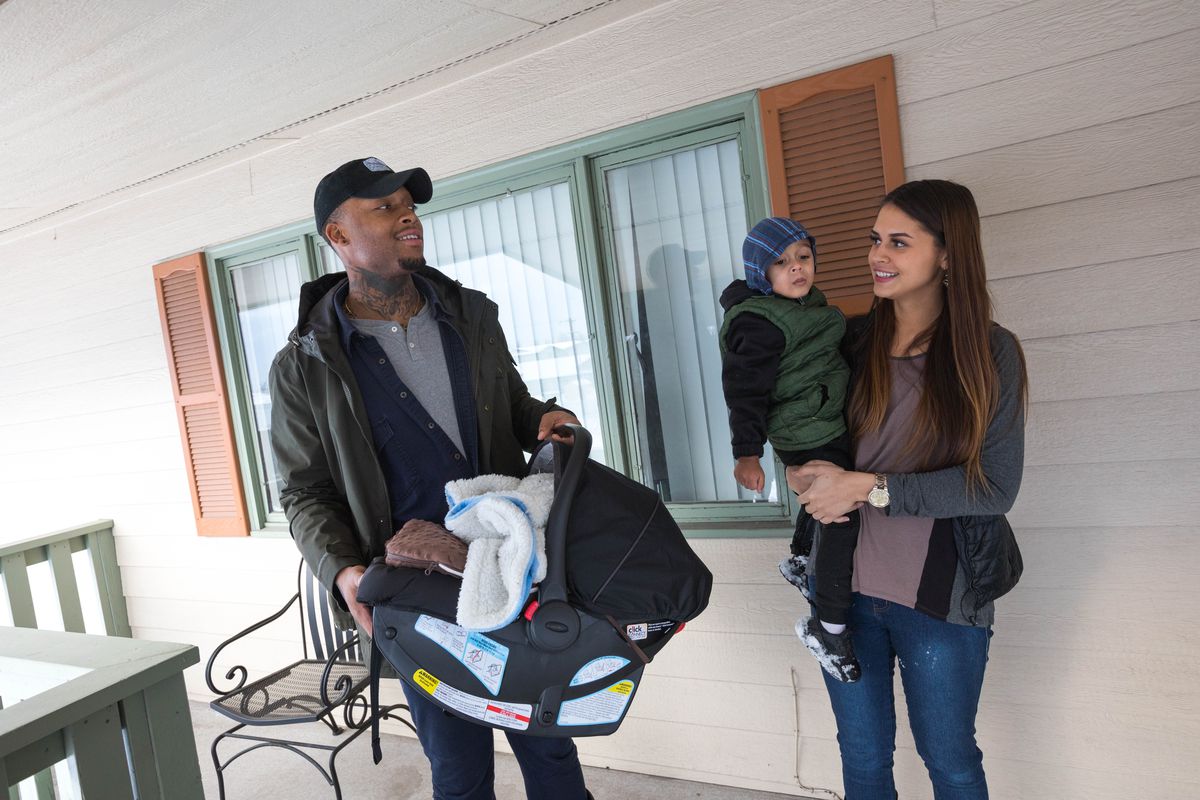
David Dumpson, left, holds newborn Kahleel, and fiancee Hannah Johnson, holds their 2-year-old son Kohen, as they check out an apartment in East Anchorage on Tuesday. (Photo Loren Holmes / ADN)
David Dumpson, left, holds newborn Kahleel, and fiancee Hannah Johnson, holds their 2-year-old son Kohen, as they check out an apartment in East Anchorage on Tuesday. (Photo by Loren Holmes/Anchorage Daily News)

The life story of a baby boy named Kahleel began one morning in January at The Salvation Army’s McKinnell House, a homeless shelter for families on the edge of downtown Anchorage.

Behind the closed door of Room 14, David Dumpson, 24, and Hannah Johnson, 22, were starting to stir. It was just before 7 a.m. They’d been at the shelter six weeks with their 2-year-old son Kohen. The night before, neither could sleep.

“We were up all night just talking and talking and talking,” she said.

There was plenty to discuss. They had a baby coming in March. They wanted to be prepared. They hoped to get into low-income housing. They needed a car. And work. And child care. So many details. The crib. The clothes. The car seat.

The two met through Facebook and mutual friends in 2014. Dumpson, who graduated from East High School, was just out of the Army at the time. Johnson, who went to Bartlett, was living in Eagle River, working at Cold Stone Creamery.

“The day we met was the day we never wanted to leave each other,” she said.

After a year or so, Kohen came. Then they moved to Sacramento and tried to make a go at being on their own. Dumpson went to school and Johnson worked at a laundromat and a security company. And then she found out she was pregnant again.

She bought prenatal vitamins and saw a doctor a few times, she said. It seemed best to move back home. She wanted to have her baby at the Alaska Native Medical Center, she said. Getting back took most of what they had, and there wasn’t much left over for a deposit on a place. The shelter was a way into low-income housing.

“You know how when you come back you usually stay with family?” Johnson said. “Both of our families have nine kids. There is like no room in our houses.”

And so they found themselves in a room at McKinnell, getting Kohen ready for breakfast the morning of Jan. 24. Johnson felt a contraction grip her belly.

“I didn’t really think too much of it. She was still insisting that we go to breakfast,” Dumpson said.

Johnson thought it was false labor, but the contractions kept up. Dumpson drew a bath and Johnson got in to ease the pain. Maybe this was it, but probably not. They kept expecting things to slow down.

“It was like every five minutes, then every three minutes, then every one minute,” Johnson said.

Johnson called her mother in Eagle River. They needed a ride to the hospital, she said. She got dressed. Then she turned to face Dumpson. There was a gush. Water on the floor.

“We both looked up at each other and we were like ‘Oh, crap,'” she said.

They called Johnson’s mother again. She told them to call 911. Johnson dialed and held the phone to her ear. Anchorage Fire Department dispatcher Tia Kempton’s voice came through steadily. Get on the bed, she told Johnson. The contractions were relentless. Breathe with me, Kempton said. Now: Ask David if he can see the head.

“The whole time I’m getting everything ready,” Dumpson said, ” … waiting for our transportation to the hospital.”

But this was a shift of gears. He got on the bed with her. He looked. The baby’s head was crowning.

This is what he thought but didn’t say: “I’m going to have to deliver this baby. I’m going to have to deliver this baby. I’m going to have to deliver this baby.”

This is what he did: he stayed totally calm, just like he’d learned from his military first-aid training. They were going to do this, he told Johnson.

“I was just trying to make sure I kept calm as possible,” he said. “I wanted to make sure she wasn’t seeing any kind of state of panic.”

Wait: Where was little Kohen? There he was, quiet, at the end of the bed. It hadn’t been long, 20 minutes, maybe 30, since they were just headed to breakfast.

“He does this face with his little eyebrows; he looks confused and concerned at the same time,” Johnson said.

Get towels, Kempton said. Dumpson got towels. A huge contraction. A scream. Johnson threw the phone and screamed again. The baby’s head wasn’t in the right position. He couldn’t move any farther.

“There was blood all over my hands. I had to pivot the baby’s head, rotate it,” Dumpson said.

Kempton called back.

“It was pretty much all screaming,” she said.

Push, she said into Johnson’s ear. More screaming.

“All right, baby, we got to push,” Dumpson said.

“Push!” Kempton and Dumpson yelled together.

One push. Two. Three.

Baby.
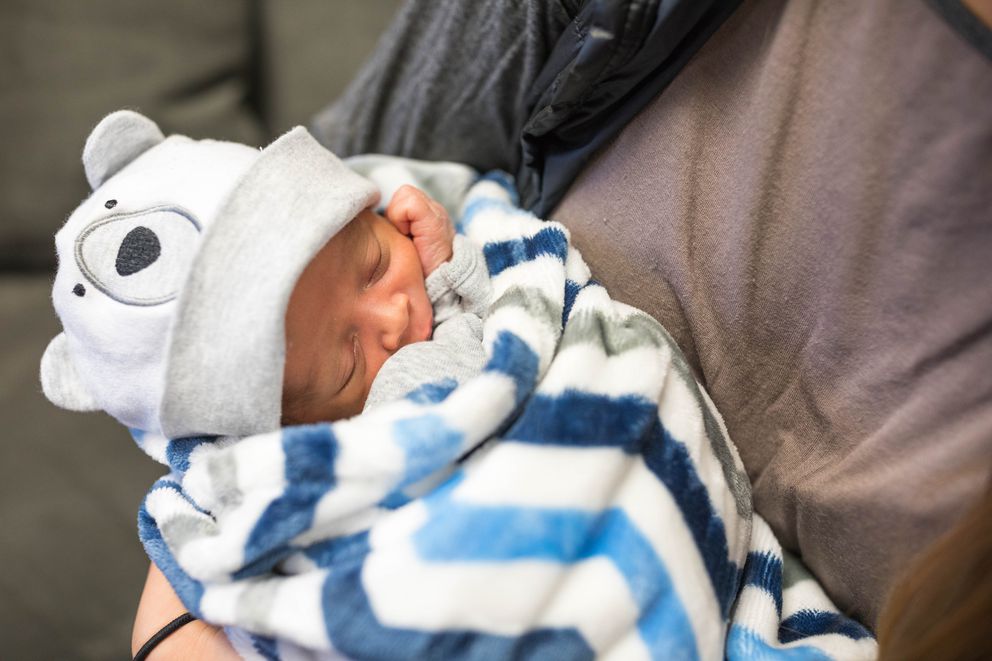
Hannah Johnson holds her son Kahleel at the McKinnell House on Tuesday. He was born on Jan. 24. (Photo by Loren Holmes/Anchorage Daily News)

Dumpson held his son in his hands. Kempton told them to stay put. The paramedics were at the door.

“I felt blessed, so grateful,” Dumpson said. “My son was OK.”

They weren’t quite ready, but there he was: 5 pounds, 13 ounces, somehow almost full term because of a miscalculation with his due date.

They named him Kahleel. They’d read somewhere one of the name’s meanings was “wealth,” Johnson said. They didn’t have everything they needed for him yet, but still, she said, he made them feel rich.

Long ago, Patsy Ann left her mark on historic Juneau, but where?

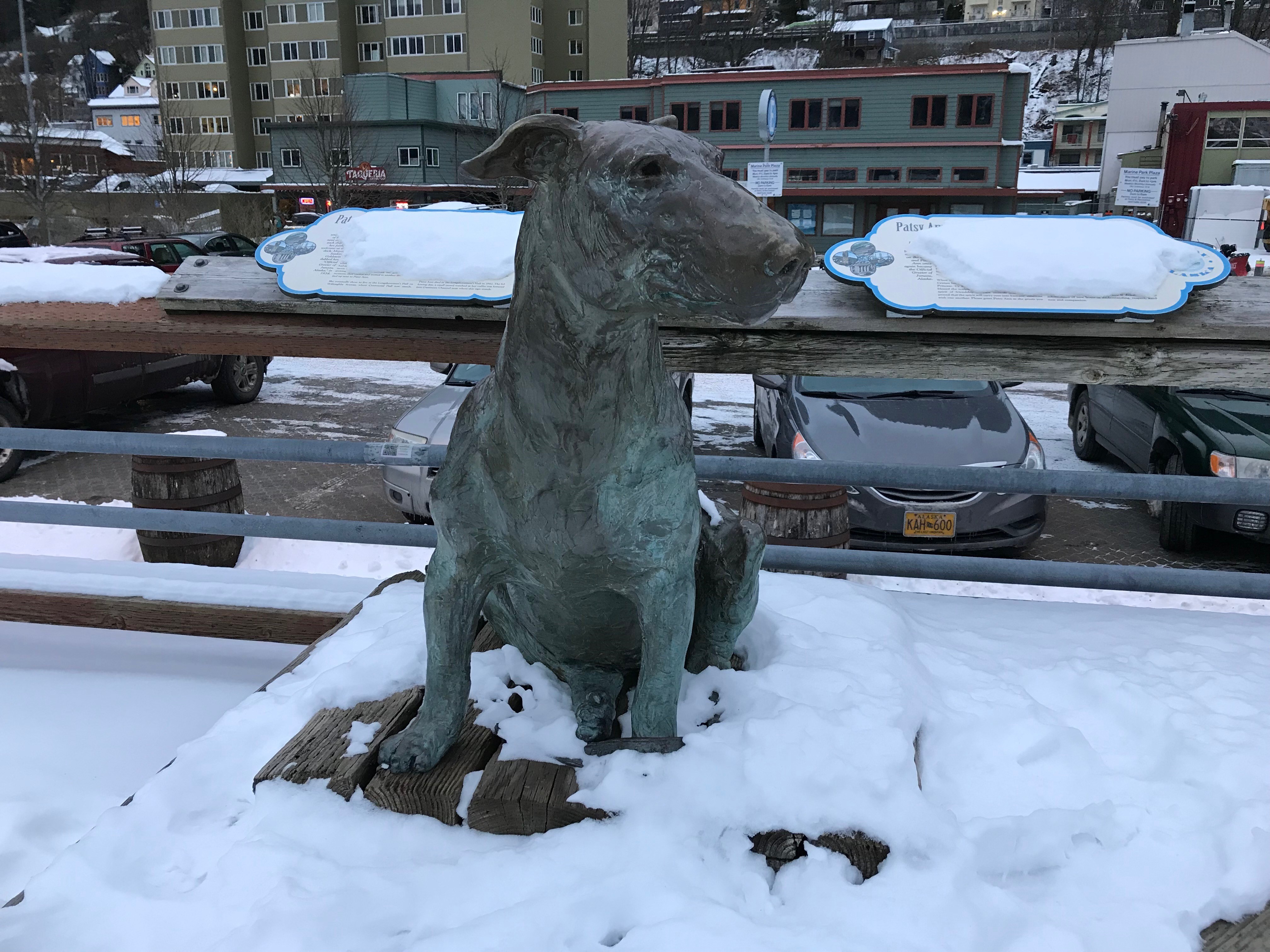
The statue of Patsy Ann, once Juneau's official greeter, watches downtown Juneau's waterfront in December 2017. The Friends of Patsy Ann commissioned the famous bull terrier's statue, which was presented in July 1992. (Photo by Julia Caulfield/KTOO)
The statue of Patsy Ann, once Juneau’s official greeter, watches downtown Juneau’s waterfront in December 2017. The Friends of Patsy Ann commissioned the famous bull terrier’s statue, which was presented in July 1992. (Photo by Julia Caulfield/KTOO)

Brooks Pinney, 7, and his 4-year-old brother Bridger love learning about the bull terrier Patsy Ann. They love listening to their mom, Amy Pinney, read them the children’s book “Patsy Ann of Alaska: the true story of a dog” by Tricia Brown.

“The kids got super into it. They read it over and over and over, and we took a pedi cab around downtown this summer and learned a little bit more about the sculpture and then it just made it even more fascinating,” Pinney said.

On one page the book reads:

“She walked the aisles of the theater while string musicians played Beethoven. She warmed herself by the hotel’s wood stove as gold miners swapped tall tales. She pressed her paw prints in the fresh cement of a new sidewalk.”

Where are those paw prints? Pinney and her kids wanted to know.


Curious Juneau stars you and your questions. Every episode we help you find an answer. Catch up on past episodes, or ask your own question on the Curious Juneau page.

Born in 1929 in Portland, Oregon, Patsy Ann moved to Juneau with her owners as a puppy.

Several authors have written that she hated staying indoors, and often wandered around downtown. She would wait on the docks for the ships to come in.

Despite being deaf, she became famous for knowing exactly when the ships would arrive. By 1934, the mayor named her the “Official Greeter of Juneau.”

So those paw prints would’ve been set about 80 years ago.

“Who knows where they would have been downtown, because downtown was so different when Patsy Ann was alive … so maybe nobody even knows where they are. Other than the author, and maybe the author doesn’t even know,” Pinney wondered.

That seemed like a good place to start. So I called up Tricia Brown, author of “Patsy Ann of Alaska.”

“What I remember is when I read about it, I wish I knew when it was because it didn’t say and that was, you know, it sparked my interest as well, so I’m not surprised it’s also inviting somebody else’s curiosity. I just didn’t, I don’t know,” Brown said.

Brown thought she read about the paw prints in a short book by Carl Burrows published in 1939.

I found it in the Alaska State Library’s historical collections. Burrows’ book is actually a red, 8-page booklet. A sketch of Patsy Ann is on the cover, but there wasn’t a word about paw prints in cement.

But Historical Collection library assistant Jacki Swearingen had a lead.

“It’s the Kinky Bayers collection, and he wrote down a lot of newspaper articles,” she said. “I’m going to look and see if maybe he has specific references to Patsy Ann.”

Swearingen came back with list of dates and brief descriptions of newspaper articles.

At the bottom of the page one description began, “Patsy Ann leaves her footprints for posterity …”

“I think this probably says ‘July 20, 1939’ and maybe that, the seven might mean seventh page of the newspaper,” Swearingen added.

Soon I was scrolling through copies of old Daily Alaska Empires on microfilm.

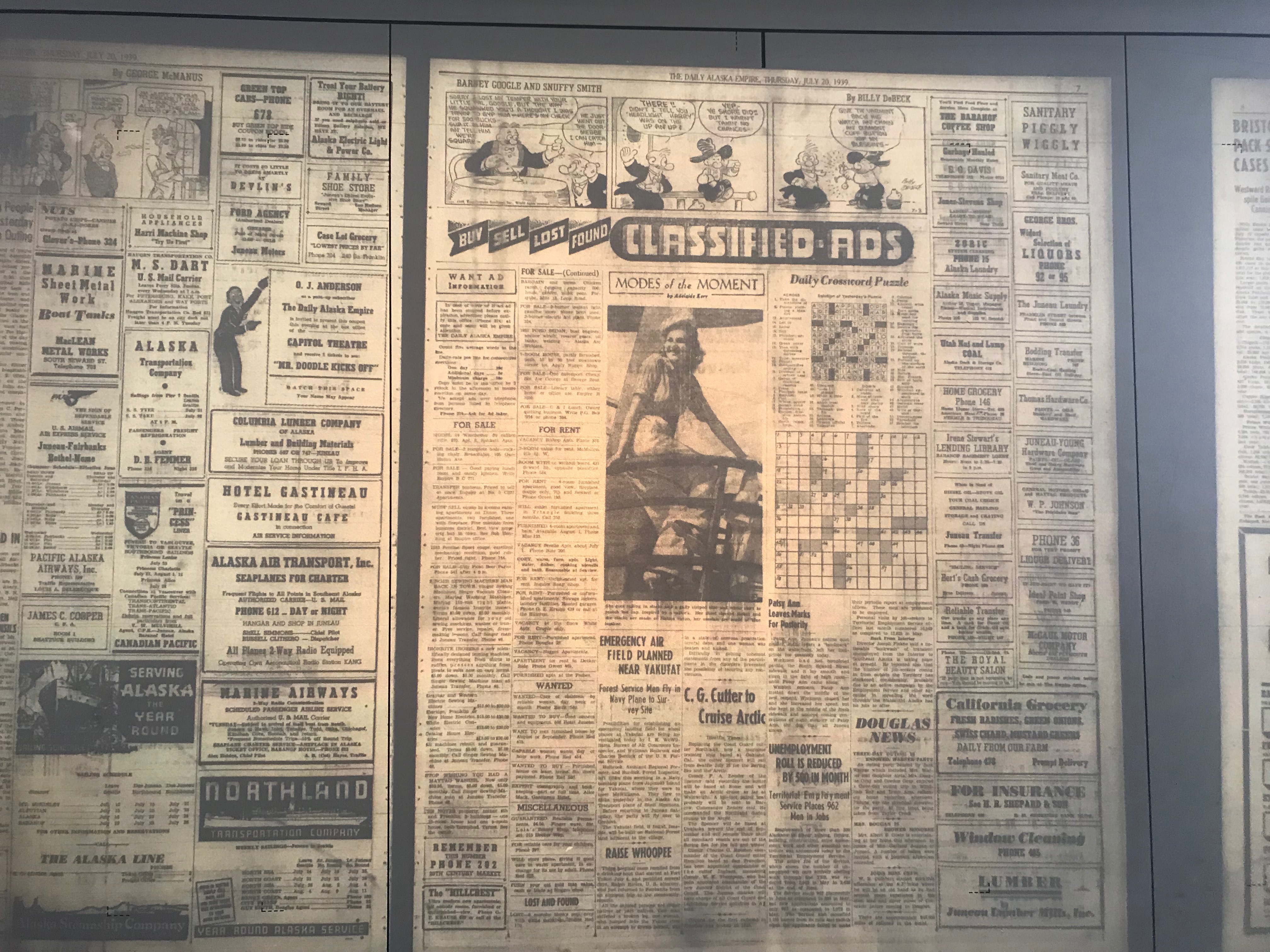
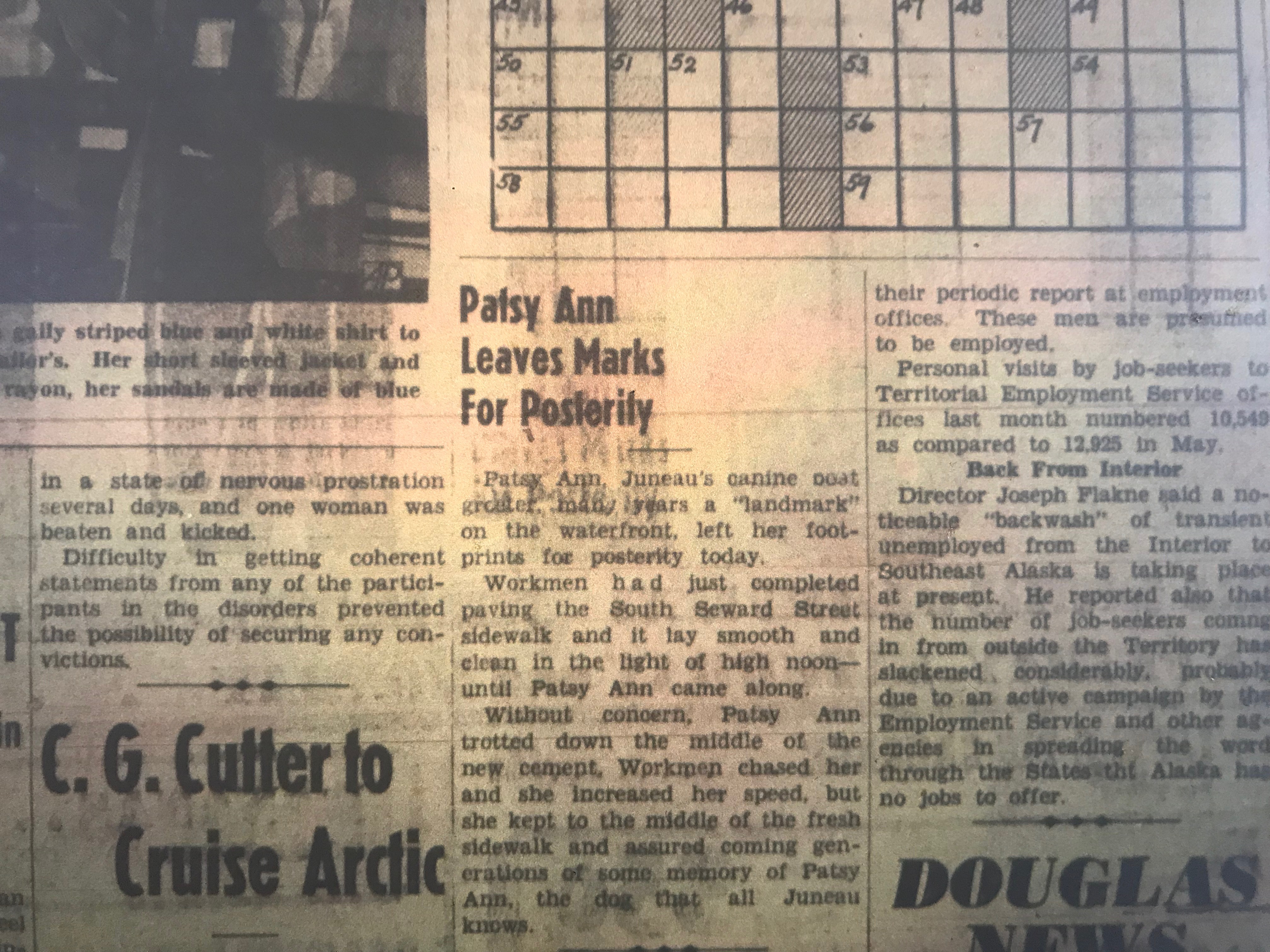
July 20, 1939: Below a crossword puzzle and comic strips, I spotted the article: “Patsy Ann Leaves Marks For Posterity.”

The article reads:

“Patsy Ann, Juneau’s canine boat greeter, many years a ‘landmark’ on the waterfront, left her footprints for posterity today.

“Workmen had just completed paving the South Seward Street sidewalk and it lay smooth and clean in the light of high noon — until Patsy Ann came along.

“Without concert, Patsy Ann trotted down the middle of the new cement. Workmen chased her and she increased her speed, but she kept to the middle of the fresh sidewalk and assured coming generations to some memory of Patsy Ann, the dog that all Juneau knows.”

So that’s that. Patsy Ann left her paw prints on a South Seward Street sidewalk.

Someone from City and Borough of Juneau Public Works told me that the sidewalk had probably been through two to four iterations since then.

I met with Amy Pinney and her kids on a snowy, windy day on South Seward, to share with them what I had found.

But seven-year-old Brooks still had a question.

“Why did they have to rip apart Patsy Ann’s track?” he asked.

His mom chimed in.

“I guess back then when they tore up the first sidewalk they wouldn’t have known what kind of a mascot she would have been for the town,” Pinney said. “But it should have been known since the mayor named her ’official ship greeter’ … and it just seems so romantic. If we get a dog we’ll have to get one just like Patsy Ann.”

Patsy Ann passed away in 1942, but you can still see her statue on the downtown Juneau waterfront. Even though her paw prints are gone, her story is still capturing Juneau kids’ imaginations.

Father of Anchorage 5-year-old who died of self-inflicted gunshot wound approved for house arrest

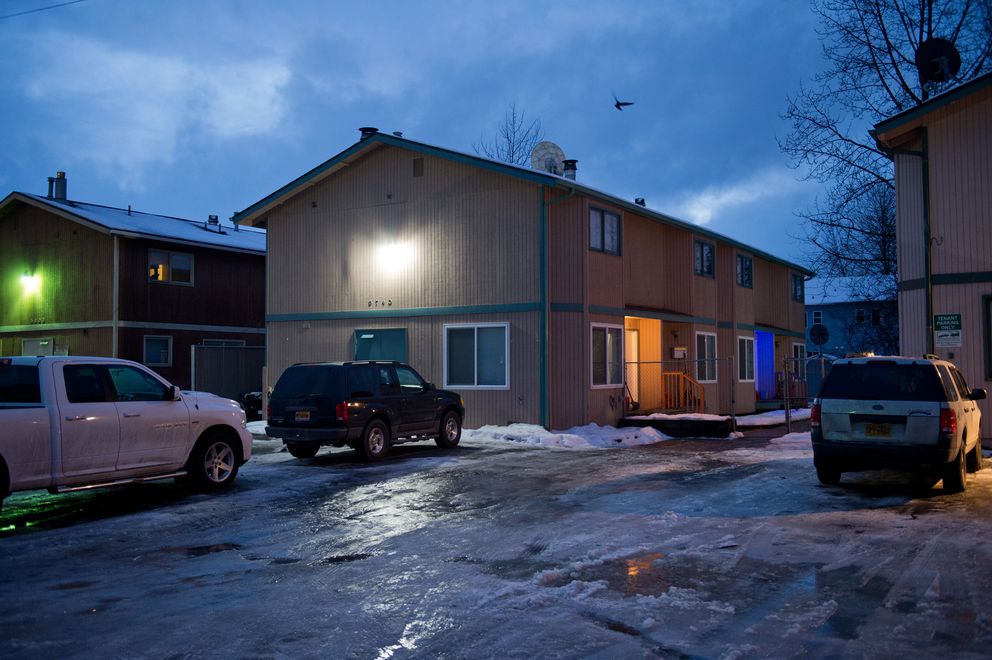
Police say a 5-year-old child died of a self-inflicted gunshot in a multi-unit residential complex on the 5700 block of Rocky Mountain Court in East Anchorage. (Photo by Marc Lester/Anchorage Dispatch News)

The parents of a 5-year-old who accidentally killed himself Tuesday with a gunshot to the head were in federal court Wednesday, composed though signs of tension broke through.

The father, Anthony L. Johnnson, has a record for drug trafficking and wasn’t supposed to have a gun, according to Assistant U.S. Attorney Kimberly Sayers-Fay.

After his son’s death, he was arrested and charged with being a felon in possession of a firearm.

The criminal complaint was filed Tuesday and made public Wednesday.

The main issue before U.S. Magistrate Judge Kevin McCoy was whether to allow Johnnson out on house arrest for now. That would allow him to help with funeral preparations and attend the service, which is planned for Saturday, said defense attorney Gary Colbath.

His fiancee, Jualisa House, took the witness stand for questioning on whether she could keep him under watch as his third-party custodian, and turn him in if he violated the terms.

“We’re putting you in the middle of a very difficult situation,” McCoy told House.

One side of the courtroom was packed with friends and family of the couple. House held someone’s young child for part of it.

About 12:20 a.m. Tuesday, House was preparing food and Johnnson was elsewhere in the home when she heard a shot, according to Anchorage police.

Their son, Christan Johnnson, found a loaded handgun in the master bedroom nightstand, then shot and killed himself with it, according to Anchorage police.

The new charge describes the gun as a .40-caliber semiautomatic pistol.

Police found Christan dead in the master bedroom from a gunshot to the head, the sworn statement filed in federal court says. A pistol was beside him.
Police got a warrant and searched the house.

They seized items that included the pistol, 22 .40-caliber rounds recovered from the kitchen counter, 17 .40-caliber rounds found in a bag in a kitchen cabinet, an automatic rifle-style magazine with more rounds in a cabinet, and 43 9mm rounds recovered from a night stand, according to the sworn statement by Jason Crump with the Bureau of Alcohol, Tobacco, Firearms and Explosives.

The mother, father and child all lived in the East Anchorage apartment on Rocky Mountain Court, the federal court filing says.

Sayers-Fay, the prosecutor, said she wasn’t against allowing Johnnson out on house arrest and tracked by an electronic ankle monitor until after the funeral even though normally the government would fight it.

Yet there are concerns, she said.

Johnnson, who appeared in court in a light orange jailhouse uniform, a month ago had tried to buy a gun in Mississippi, she said. There were other guns in the vehicle that he said he was holding for someone else — a person he could only vaguely identify, the prosecutor said. There’s concern for his mental state, though a jail watch on him has been removed, she said.

As the hearing went on, Johnnson fidgeted, perhaps from cold. He wrapped his arms in the jail shirt.

Mainly, Sayers-Fay didn’t want House — in the midst of a trauma and the longtime romantic partner of Johnnson — as the third-party.

The two have been together 10 years, House said in court.

Did House know that her fiance, as a convicted drug trafficker, wasn’t supposed to have a gun? Sayers-Fay asked.

“We needed it because it was protecting me and my son,” House answered.

She said she didn’t know Johnnson couldn’t legally buy a gun, but it was for her. Anyway, he was done with probation, she said.

As the questioning went on, House said she was now well aware that he couldn’t buy a gun and she wouldn’t want one in the house anymore. After what happened, she said, she doesn’t want a gun for protection or anything else.

Why should he, the judge, trust her? McCoy asked.

She said she knew Johnnson very well and she hoped what happened is eye-opening for him.

He didn’t always listen to her but that should change, she said.

“After all this, he’s going to listen to everything,” House said.

House works for a local bank. Her supervisor said she could take all the time she needs, she told the judge.

McCoy ultimately agreed to allow Johnnson out on house arrest with a GPS-connected ankle monitor. He has to stay under House’s watch around the clock and can only leave the house for pre-approved reasons, the judge said.

Another hearing was set for Monday to address whether Johnnson can remain out of jail.

During Wednesday’s hearing, McCoy also went over the charge — a federal offense that occurs when a felon has a gun or ammunition “which has been shipped or transported in interstate or foreign commerce.”

“What?” Johnnson asked.

There are no gun manufacturers in Alaska, so they are all shipped here, McCoy explained.

The drug case began in 2011 when House was pregnant, she said.

A sworn statement filed in court said federal agents were targeting a man nicknamed Popeye in a Ford Explorer and Johnnson was in the front seat.

After being ordered out, he tossed a baggie under the Ford, the statement said. It contained about a half-ounce of crack, an amount that indicated drug trafficking, the statement said.

He was sentenced in 2012 to serve nine months, which could be in a halfway house, and three years of probation. Most of his time was in Mississippi, where House said she is from. She wants to bury their child there.

A vigil was planned for Wednesday night outside the family’s apartment.

Anchorage police also are investigating the child’s death.

UAS student first in U.S. to receive Tsimshian language credential

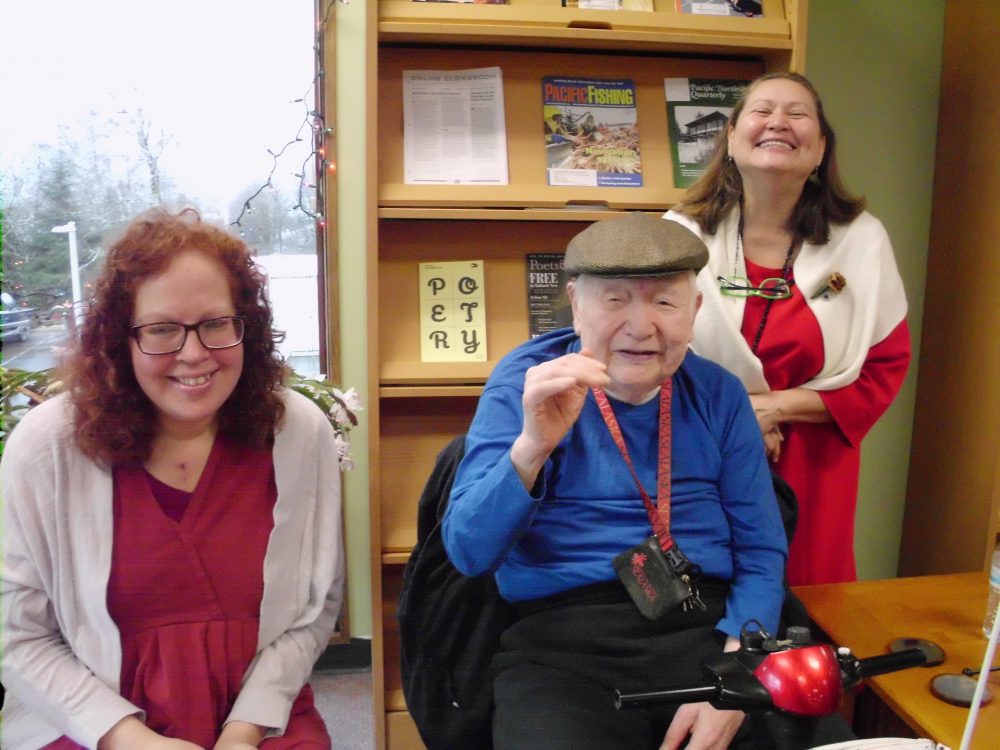
Victoria McKoy, left, John Russell Reese and Terri Burr pose during McCoy’s capstone presentation on Nov. 30 at the University of Alaska Southeast Ketchikan Campus Library. (Photo by Maria Dudzak/KRBD)

A University of Alaska Southeast student will be the first ever to receive credentials in Tsimshian language studies.

Victoria McKoy presented her capstone project Nov. 30 at the UAS Ketchikan Campus Library.

Victoria McKoy’s mother is Haida-Tsimshian, and her father is Haida.

“My Tsimshian name is Ggoadm ˈDeebn. It translates to ‘heart of a sea lion.’ When I was given the name, my brothers and sisters said that I appear shy, but I go straight for my target.”

And one target for McKoy has been learning her Native languages.

It started about five years ago, through classes at Ketchikan Indian Community.

KIC offers immersion classes in X_aad Kíl, the Haida language, and Shmˈalgyack, the Tsimshian language.

Terri Burr, a language apprentice under Tsimshian elder John Russell Reese, and Reese have been teaching Shmˈalgyack for about eight years, but realized more apprentices were needed to keep the language alive.

Burr said McKoy was attending Shmˈalgyack classes regularly, and was offered an apprenticeship last year.

“She’s just continued to come and be a part of the mentor-apprentice sessions, the immersion sessions in John’s house, and helping with documentation and transcription.”

McKoy also helps teach classes, Burr said.

McKoy originally was a psychology major but changed her degree to Alaska Native language studies.

Along with Shmˈalgyack, McKoy studies the Haida and Tlingit languages. She’s on track to graduate in December with a bachelor of liberal arts in Alaska Native language studies, and when she does, she will be the first person to receive the Shmˈalgyack credential in the United States.

Burr said having the Native language arts program in the university system allows others to study the languages more fully and helps with language preservation.

“Students now, after Victoria, can pursue this degree specifically to study Shmˈalgyack.”

Burr said McKoy can also start teaching.

“John and I screen her and assess her speaking ability, and I’ve been teaching her different teaching methods that we use in class,” Burr said. “She’s experienced as a student and instructor with them. So she can begin helping us in our language revitalization efforts. She becomes a member of our team – our revitalization team.”

McKoy first attended language classes with her mother, brothers and sisters.

“It was my mother’s wish that we would all speak Shmˈalgyack. She passed away the day after my son was born. So I continued her wish and I continued to teach my son our Native language.”

McKoy said she taught her 3-year-old son Shmˈalgyack before English, so Shmˈalgyack is his first language. She said he also speaks the Haida language, X_aad Kíl.

McKoy says after she graduates, she plans to continue to teach and learn, and to translate more Tsimshian stories with Reese and Burr.

“I got a job offer to teach beginning Shmˈalgyack with the UAS campus. And I would like to continue on with my master’s degree. I’m applying to Simon Fraser University, and the program starts in July.”

Terri Burr said the key to language revitalization is immersion programs and more teachers. She hopes McKoy’s degree will inspire others to become apprentices and learn Native languages.

For some Native corp shareholders, cultural role outweighs the economic

The mission of Sealaska Corp. is to strengthen people, culture and homelands. It pays its shareholders cash dividends and supports Alaska Native culture through the Sealaska Heritage Institute and other programs. But do Alaska Native corporations like Sealaska help their shareholders climb the economic ladder?

Sasha Ivan Soboleff was 26 when the Alaska Native Claims Settlement Act, or ANCSA, was signed into law on Dec. 18, 1971.

“I was teaching in Kake at the time, and I signed up on Kake Tribal, so I have 100 original shares and I was on the original board of incorporators for Kake Tribal,” he said. “I also belong to Sealaska Corp., because that’s the large regional corporation.”

Sealaska is one of 12 for-profit regional Alaska Native corporations the legislation created. It also created many village corporations, including Kake Tribal. Alaska Natives at the time, like Soboleff, enrolled as original shareholders.

Sitting in his small apartment in the Mendenhall Valley, he said he doesn’t think Native corporations can help with economic mobility.

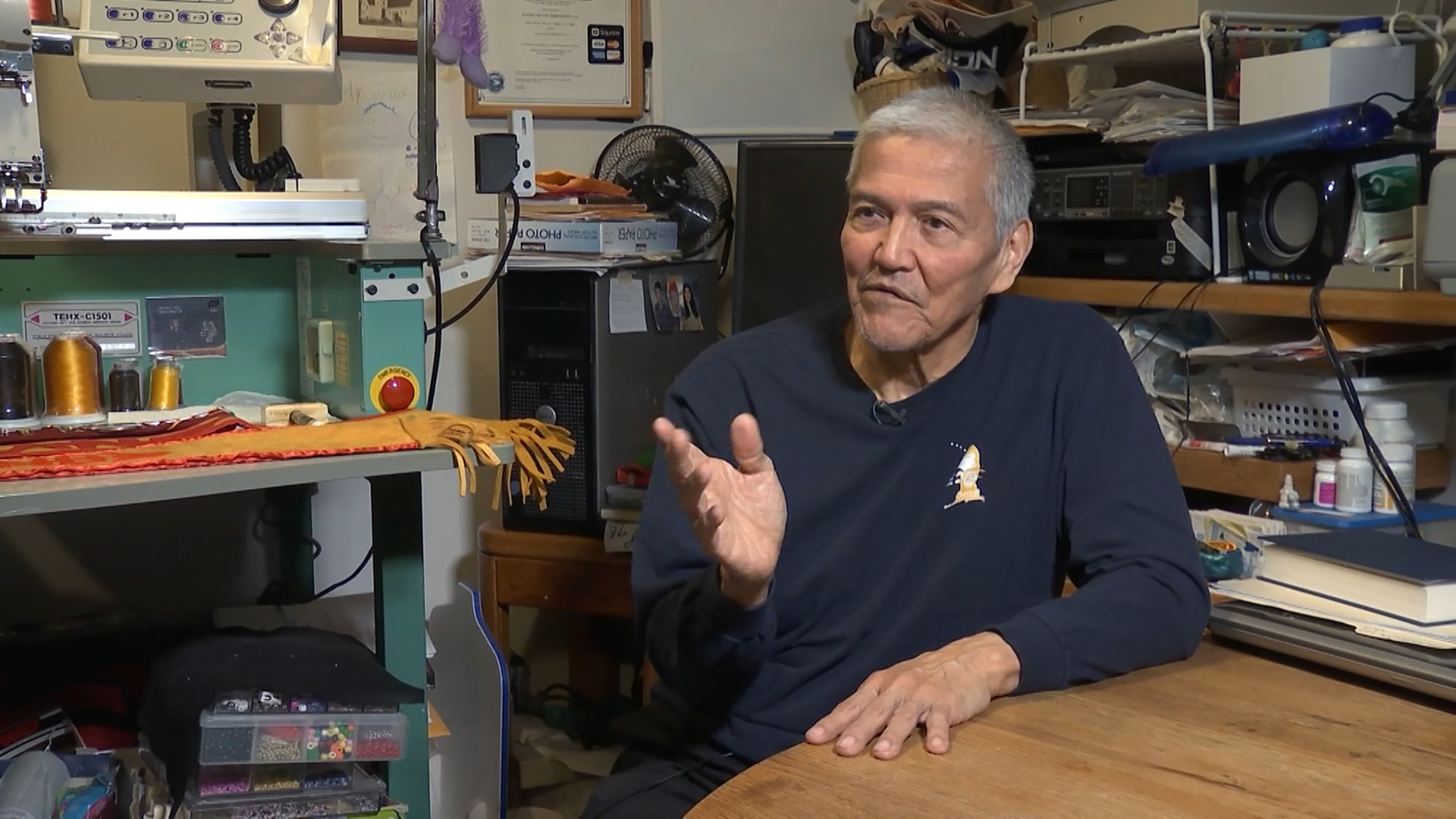
Sasha Soboleff discusses the role of Alaska Native corporations at the his home in the Mendenhall Valley in November. (KTOO video still)

“The business nature of ANCSA corps., which is the formation of an economic vehicle called a profit-making business, is not the way the culture of Southeast Alaska Natives … thinks, or exists,” he said.

Sasha Soboleff was born in Juneau in 1945. That was five years after his parents, Walter and Genevieve Soboleff, moved back to Juneau from the Lower 48. He said his parents instilled in him the value of hard work.

“They came back here and they ran into terrible racism. They weren’t allowed to rent. They weren’t allowed to apply for jobs, but to their persistence, they started making it, and so the Soboleff family has always followed that mold,” he said.

Soboleff is a retired school teacher and principal. He’s the grand president of the Alaska Native Brotherhood.

He said the Native corporations fail to support the culture, and the distributions don’t make up for it.

“I barely even recognize except a couple of times a year when they give out one or $200,” he said. “It doesn’t set the standard for making a culture come alive. … It doesn’t recognize where you live, the lands that your clans and your family has had for years where you pick berries or you go fishing, or where you dry the foods that are going to be due, or you have seaweed. It doesn’t do any of that.”

Rosita Worl disagrees. She is also an original shareholder and recently retired from being a board member of Sealaska Corp. after 30 years. She said the purpose of the corporation is more than just monetary.

“In addition to our economic responsibilities, through employment and dividends, we also have a host of other responsibilities, and things to meet our mission objectives, like scholarships, things to grow, help out shareholders so they could lead a healthy lifestyle.”

Nathan Soboleff, Sasha’s nephew, received one of those college scholarships and an internship with Sealaska. Now he manages grants at Bartlett Regional Hospital in Juneau, where he has his own office.

Nathan Soboleff got a few shares of Sealaska and the village corporation Kootznoowoo from his father. Financially, they’re not worth much.

“I think I received a shareholder check of like $5 before,” he said.

What matters more to him is the connection to the land.

“Not having some kind of ownership to that land is sad, and a lot of people do have strong feelings about having some kind of ownership, even if it’s not in the modern sense of private ownership … but knowing that it’s still Haa Aaní, it’s still our lands, is important,” he said. “And if you don’t have any of that shared ownership in there, there’s something missing.”

Nathan Soboleff has three young children and looks forward to passing some of his shares along to them.

“They are growing up being raised Tlingit-Norwegians, and they culturally know who they are, and where they’re from, and in the near future, you know, within the next six or seven years, I will give them some of my shares,” he said.

Rosita Worl said she’d like to see Sealaska develop that connection to the land further by advocating for more subsistence rights for its shareholders.

“I’m not saying that we have to go back to a hunting and fishing economies, but I want to see us … moving forward in a way that brings us into the 21st centuries but also allows us to sustain our traditional cultures.”

Rosita Worl, and Sasha and Nathan Soboleff are just three voices among tens of thousands of shareholders in more than 200 Alaska Native corporations. Do you have a story about how your corporations affected your family? Share it at ktoo.org/chasingthedream.

This story is part our public media partnership with Chasing the Dream: Poverty and Opportunity in America. Major funding is provided by the JPB Foundation. Additional funding is provided by the Ford Foundation. Support on KTOO comes from thread, advancing the quality of early care and education in Alaska. 

Chasing the Dream

Sitka Tribe of Alaska receives $2M grant to help domestic violence victims

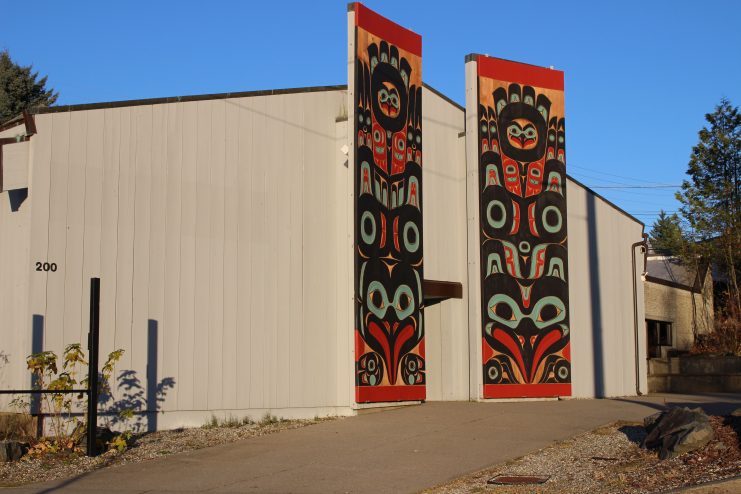
Sitka Tribe of Alaska’s Sheet’ka Kwaan Naa Kahidi building (Photo by KCAW)

The Sitka Tribe of Alaska has landed more than $2 million in federal grant money to aid victims of domestic violence.

The money is being awarded in three separate grants and will create five new positions to support women and children in Sitka.

The first grant puts $600,000 towards facility improvements at Sitkans Against Family Violence, or SAFV, which provides shelter for domestic violence victims.

The money comes the U.S. Department of Housing and Urban Development.

Sitka Tribe works with the Sitkans Against Family Violence frequently, grant administrator Rachel Henderson said. This grant provides direct support for the shelter and the people it serves.

“Sixty-five percent of the people that use the SAFV shelter are Alaska Native. So we thought it was important in that regard to help tribal citizens,” Henderson said. “Also, most of the people that go there have low-to-moderate income, so it’s just helpful to the people in general that SAFV has an expanded or renovated facility.”

The shelter was built in the 1960’s. Sitkans Against Family Violence bought the building in 1995 and made some changes, but no large renovations to the floor plan.

With this money, the organization will expand the facility’s square footage and renovate the existing living space to accommodate more people. Currently, SAFV has space for 24 women and children.

“It’s going to add an area for animals so people who are coming to the shelter can bring their animals with them,” Henderson said. “It’s going to have expand eight bedrooms so they can have four family-size bedrooms. It’s going to improve the bathrooms so that one of the bathrooms is more handicapped accessible.”

Sitka Tribe also received two grants from the US. Department of Justice Office on Violence Against Women.

The first — for just over $899,000 — will be used to fund three positions for the next three years: an advocate for victims’ services at Sitkans Against Family Violence, a transitional housing program manager at Sitka Tribe of Alaska and a domestic violence investigator at the Sitka Police Department.

All three positions will share a common goal of aiding victims of domestic violence and sexual assault.

There was a crucial need to work with Sitka Police and Sitkans Against Family Violence to address the needs of women in the community from multiple angles, said Melanie Boord, Sitka Tribe of Alaska social services director.

“There’s been a desperate need for transitional housing for victims of domestic violence and sexual assault,” Boord said. “There’s definitely a need for a more effective approach to investigating crimes of domestic violence. And also because of the diminished shelter funding, there’s also a need for enhanced victim’s services.”

The second DOJ grant, the Legal Assistance for Victims grant, allocates $599,000 over the next three years to fund two positions.

Naomi Palosaari of Sitka Tribe of Alaska said the money will first pay for a full-time attorney who will work out of Sitka Tribe.

“They will see clients, they will screen them for eligibility, they will represent them in court, they will draw up paperwork,” Palosaari said. “They will be providing all legal services in recovery from domestic violence or assistance with domestic violence issues.”

Sitka Tribe is now advertising for a family law attorney to fill that position. All other grant funded positions took effect on Oct. 1.

Site notifications
Update notification options
Subscribe to notifications