Food

State workers say chronic understaffing caused food stamp backlog

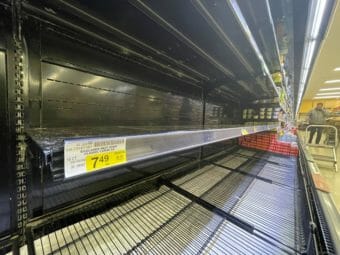
The IGA Foodland grocery store in Juneau on Dec. 20, 2022. (Photo By Paige Sparks/KTOO)

Thousands of Alaskans have been waiting without food stamps for months due to a backlog in the Division of Public Assistance. 

In December, Health Commissioner Heidi Hedberg said the backlog was caused by a 2021 cyberattack and a huge influx of paperwork after the state ended its public health emergency. But sources inside and outside the division say the problem goes back much further. They blame the backlog on chronic understaffing and say deep workforce cuts in 2021 sent the division into chaos.

Many of the thousands of Alaskans who rely on assistance say they’re desperate for relief. State workers say they have been harassed and even threatened with violence, making them feel unsafe at work.

KTOO spoke with two employees within the Division of Public Assistance who say mismanagement and short staffing are behind the months-long backlog for food stamps. They say this is a systemic issue that’s gone unaddressed for years. Their accounts are corroborated by union officials, case managers, and social workers at Providence Medical Center.

KTOO is not using their names because they fear they could lose their jobs for speaking out.

“We’ve been in a backlog for years,” said one state eligibility worker, who agreed to be quoted. Eligibility workers process paperwork for benefits like food stamps and Medicaid for the Division of Public Assistance. “This is not just the COVID thing ending. We have asked for help, and they ignored us.” 

Alaskans are paying for budget cuts

The eligibility employee said workloads got too high after the Dunleavy administration cut more than 100 jobs from the Division of Public Assistance in 2021, leaving offices short-staffed. 

But the state had been warned before that was a bad idea. 

First, in 2018, when the state ombudsman’s office investigated the Division of Public Assistance for similar backlog problems and recommended they increase staff. When the state followed that advice, complaints dropped significantly.

Then, in 2021 budget meetings, the Food Bank of Alaska asked the state to reconsider the cuts because it foresaw this very problem.

Cara Durr with the food bank warned the legislature that pandemic waivers cut down on how much work it takes to get Alaskans their benefits, but that the work would return when those waivers ended.

“We saw a first-hand example of how this played out from September – December last year when we opted not to renew these key waivers, and the result was dramatic increases in application times,” she wrote. 

The state cut the jobs anyway. 

There weren’t layoffs, according to Hedberg, the health commissioner. Instead, the posts were allowed to empty by attrition.

According to union numbers, the division’s workforce has shrunk by more than 60 employees since the beginning of 2021.

“The director said it would be fine, but it doubled my workload. I’ve had to work a hundred hours of overtime a month,” the anonymous eligibility worker said. 

Most recipients didn’t notice right away because the pandemic waivers meant the state didn’t have to re-certify people who received food stamps. That flexibility masked the division’s staffing problems at first, but they came to light when Alaskans had to refile their paperwork after the state’s public health emergency lifted this summer.

“It was the straw that broke the camel’s back,” the eligibility worker said.

Wait times ballooned over the summer, and Alaskans who depend on food stamps began to go months without aid.

The situation has gotten so bad that eligibility workers say Alaskans who need aid have threatened them in grocery stores, found their personal cell phone numbers, and harassed them online. They say they’re fearful for their safety at work.

“They’re desperate,” the eligibility worker said. “They’re crying on the phone because their children are starving. This is the worst I’ve ever seen it.”

Medical insurance also in jeopardy

It’s not just food stamps that are affected by short-staffing. Medicaid recipients are having a hard time getting approved as well.

“Unfortunately, it’s the elderly and the marginalized in our communities that don’t have a voice or don’t have a great representation,” said Heidi Young, who owns Island Health, a care center in Southeast Alaska. She works to get Medicaid for clients across the state.

“I just think that it’s high time that the Feds need to step in and issue emergency orders for Alaskans,” she said, referring to the kind of waivers the state government allowed during the pandemic. “Waiting for months for your Medicaid case, or your food stamp case — it’s just not acceptable.”

Young said some of her clients now have to choose between paying for medication or buying food. She said some people can’t get Medicaid forms approved after a hospital stay, so they get stuck there — without Medicaid approval they cannot be discharged to lower levels of care, like nursing homes. 

“We don’t get a response for 60, 90 days,” Young said. “These are people that can’t come home from the hospital.”

Young said she doesn’t understand why the state doesn’t extend emergency benefits while it gets the backlog under control.

“The legislature has been aware of this, and the Commissioner of Health and Social Services has been made aware of this on multiple occasions, and they keep passing the buck,” Young said, clarifying that she meant both former Commissioner Adam Crum and Health Commissioner Heidi Hedberg. “I just think Alaskans need more support than that.”

State workers are struggling

Eligibility workers and their union described stress in the public assistance offices that’s led to dozens of resignations.

“It’s a revolving door,” one worker said. “We’re dropping like flies. They’re not investing in retaining employees.”

Alaska State Employees Association Local 52 is the union that represents 348 Division of Public Assistance workers. 

“It’s not the employees there that’s created the backlog,”said Interim Executive Director MaryAnn Ganacias. “They’re doing all they can.” 

Ganacias said her members complain that the department is understaffed and they aren’t adequately compensated. But lately her primary concern is for worker safety. 

“Having them being yelled at and harassed by the clients is kind of a normal thing, but it’s escalated,” she said. She said the union asked for guards and bullet-proof glass at public assistance offices as precautions. 

Suzan Hartlieb works for the union and is on a special committee for Division of Public Assistance members. 

“They’re overworked, they’re tired. They’re being denied personal leave. You know, there’s not enough people in the workforce, and they’re just overwhelmed,” she said.

Hartlieb said there was an incident at the Juneau public assistance office last week where a client yelled at eligibility workers and threatened to bring a gun. The state has banned that person from all state offices, according to Commissioner Heidi Hedberg.

Hartlieb also said that back in October, an assault on a worker at the University Center in Anchorage was serious enough to require emergency medical attention.

Commissioner Hedberg said some offices do have security and the state is considering additional safety measures, but Ganacias said the state has not yet fulfilled the union’s requests for safety improvements.

To ease the burden on current employees and get Alaskans their overdue benefits, the state said it’s onboarding about 30 new workers. Ganacias is skeptical that will bring Alaskans the relief they need. She wants to know how the state plans to retain those workers when so many have already quit because of problems she said the state hasn’t fixed.

“Are they going to stick around if they don’t feel safe?” she asked.

Are you waiting for medicaid, burial assistance or heating assistance from the state? KTOO wants to hear from you. Send a message to reporter Claire Stremple using this form: 

Staff contact

With thousands waiting, state says food stamp backlog won’t improve any time soon

IGA Foodland Grocery Store Juneau Alaska, December 20, 2022 (Photo By Paige Sparks/KTOO)

The temperature in Soldotna has been dipping below zero at night, but Jo Lunstedt says she has had to skip paying her electricity bill to feed her family.

“I applied for benefits back on Oct. 27 of 2022. And as of today’s date, I still have not heard anything from them,” she said. “I have to make my food stretch longer. So, we don’t have seconds.”

Lunstedt is one of thousands of Alaskans caught in a backlog for processing food stamp applications, known as Supplemental Nutrition Assistance Benefits, or SNAP.

Alaska Department of Health Commissioner Heidi Hedberg said the problem goes back months, and her staff doesn’t expect it to improve any time soon.

Meanwhile, Alaskans from Anchorage to Nome say they’re choosing between paying bills or buying food. Some are skipping meals so their children have enough to eat.

“We’re working with the tools we have”

Hedberg says the department is hiring more people to process applications, but it will likely be months before hungry households have relief.

“We hear their frustration, we want them to have their benefits. We’re working with the tools we have,” Hedberg said.

It was only after multiple requests for comment from KTOO — and the publication of an initial story — that the department broke its silence about the delay. Applicants were left in the dark, too.

Kabrina Field got so hungry for answers that she called the offices of Gov. Mike Dunleavy and her state senator, Mia Costello. She said after the call to her senator she got a call back from the Department of Public Assistance.

“They were telling me that it will take 90 to 120 days before they even process my recertification. And they said that was the best they could do. And we’ve got to truck through with no food,” she said.

She and her three children haven’t gotten their food stamps since October. She’s been relying on friends, family and food banks.

“I have to keep my bills going,” Field said. “There’s no ifs, ands or buts. But as far as Christmas goes, it’s going to be very small. Very, very, very small.”

Staff shortage and cyber-attack slow benefits

The state usually recertifies families who receive SNAP benefits every six months, but that wasn’t required for the last two years during the COVID-19 pandemic. Alaskans had to refile their paperwork when the public health emergency lifted in June.

Division of Public Assistance Director Shawnda O’Brien says that led to a huge volume of applications at once — 8,000 in August. She noticed her department was falling behind and requested more staff.

“Our staff had to be retrained because many of the staff hadn’t been doing this for the last couple of years,” O’Brien said.

Hedberg says lingering effects from the cyber-attack on the health department in May of 2021 compounded the problem because the department has to rely on more manual paperwork.

The department’s own reporting from November shows that it’s processing only about a third of SNAP recertifications in a timely manner.

“We don’t want to see anyone go without food,” O’Brien said. “We definitely feel the pressure and have been working. Everyone has been working to find solutions.”

The state is in the process of onboarding 33 new staff, and O’Brien has requested 40 more. She said 30 positions are currently vacant.

In the interim, she said the department is devoting more time to processing applications, including a full day each week on Wednesdays. She said staff members who don’t usually process eligibility have been put on the job.

But the division is still processing applications from September. Hedberg says there’s a dedicated team working on those applications, while another team focuses on applications from October. Another team is processing current applicants.

O’Brien estimated the state has 8,000 cases to review, including 1,700 from September and 2,000 from October.

“I’m probably not going to see significant changes until maybe, you know, a couple months from now,” she said.

She recommended that people in immediate need call 211, the number for the United Way, a nonprofit that connects Alaskans with services.

A flood of complaints

There’s another resource if Alaskans feel the state isn’t holding up its part of the social contract: the ombudsman’s office.

It reviews complaints about state agency programs, like SNAP. It’s nonpartisan, independent and objective.

Alaska State Ombudsman Kate Burkhart said her office is investigating the complaints about the Division of Public Assistance.

“This year, today, we have received over 180 complaints related to delays, lack of communication, lack of adequate information, related to public assistance benefits,” she said.

She added that there is a deja vu quality to the complaints — her office investigated the Division of Public Assistance in 2018 related to reports of delays and lack of adequate communication.

Their report found that increasing staff would go a long way to solve the problem. The state did, and complaints dropped significantly for a few years.

“In 2021, we only received 83 complaints,” she said. “We are not quite done with 2022 and it looks like we’re probably going to see three times that.”

More than 80% of the complaints have come in since the state began recertifying SNAP recipients in July. She said in the last two weeks her office has gotten about three complaints a day.

Burkhart said she can’t fix the slowdown, but her office is working with the state. And it might be able to help people who are desperate in the meantime.

“If you have a problem and you have no idea what to do, you can call us,” she said.

The health department also offered some advice to help recertification paperwork go through more smoothly: try to submit the application in the middle of the month, double-check to make sure the application is complete and do not file the same application more than once.

Alaskans will receive retroactive benefits once they are approved, meaning people who sent in paperwork for a September recertification will get all the payments that were due, even if they come several months late.

No response from state officials as some Alaskans go months without food stamps

The IGA Foodlane Grocery Store in Juneau on Dec. 20, 2022 (Photo By Paige Sparks/KTOO)

Nikita Chase is a single mom with two kids at home. She said she hasn’t gotten her food stamps since October.

“You’re supposed to get it on the first [of the month], but you’re not getting anything. And there’s no communication,” she said. “So everybody’s just sitting, waiting, up in the air. And when you call, you get no answers.”

She’s one of an unknown number of Alaskans waiting on food assistance from the state. They’re trying to figure out why a system meant to support them isn’t working.

The state made it easier to get food stamps, also known as the Supplemental Nutrition Assistance Program or SNAP benefits, during the pandemic. Last year, more than 80,000 Alaskans used the program.

But this fall, many Alaskans were asked to refile their paperwork.

Chase said she did that in October — and hasn’t gotten a response.

The first time she reached out to the Alaska Division of Public Assistance for help, she said she was the one-hundred-and-eleventh caller. She never got a call back. The second time she waited on hold for hours.

“Four and a half hours! Just to talk to somebody who then informed me that there were 18,000-plus cases that needed to be worked,” she said. “This is happening to a lot of people, and they’re not getting these SNAP benefits, so they’re gonna have to make a choice between paying their bills or feeding their families.”

Chase said she can’t pay her electric bill this month because she chose to spend the money on food for her family. She says this comes right before a cold snap in the region — and the holidays.

“We won’t be having a big Christmas dinner and things are a lot tighter,” she said. “I’m concerned about when I will get food stamps or food benefits. I don’t know when that’s going to happen. So now instead of having freedom to buy a lot of fresh things at the store, everything’s either frozen or canned.”

Chase lives in Tenakee Springs, a remote town in Southeast Alaska. She sent her paperwork by mail, which can take a long time coming from her community. She’s afraid she’ll be at the end of what sounds like a long line.

“Around Thanksgiving, you know, I call again. I’m asking these people for help, and to find out what’s going on. And they basically told me, there’s nothing that they can do. And that I just have to wait,” she said.

That wait is especially tough in remote places. Chase’s dollars go farther if she shops in Juneau, but there are only two more ferries into town this year. If her food stamps don’t go through before then, she’ll be waiting until March for a ferry out of town. Some smaller towns also lack the food pantries and other resources of urban centers.

“I definitely have heard news of people not getting their food stamps,” said Luke Vroman, who runs Juneau’s homeless shelter, The Glory Hall. “Even just yesterday a client of mine mentioned that she’d been told it could be months for her food stamps to be approved.”

He said The Glory Hall needs to know about any backups in case they need to start preparing more meals.

“They need to come out with a statement because there’s definitely a buzz. People have figured out that it’s not operating as it’s supposed to be,” Vroman said.

Ernie Hard helps people navigate social services for Bartlett Regional Hospital and he’s hearing from clients who aren’t getting food stamps, too. He and his colleagues have tried to call Public Assistance, but they had to wait like Nikita Chase did.

“I’ve seen it with my coworker, they’ll get put on hold and let you know that you’re number 236 and you got a three hour wait line,” he said.

Hard said he works with employees at the Division of Public Assistance a lot, and he’s sympathetic because he thinks the division is understaffed.

“The people there are super nice and helpful,” he said. “But, you know, they’re swamped. Which is tough for everybody. It’s tough for them, and it’s tough for the people that need the service.”

The state’s Division of Public Assistance has not responded to KTOO’s requests for comment over the course of the last week. When KTOO visited the division’s offices, Director Shawnda O’Brien declined an interview. She said the division was still working to decide what information to share with the public.

The division has not said how many people are waiting for their food stamps, how much longer the estimated wait time is, or what is causing the delay. It has not said whether SNAP recipients will receive the money for the months they had to wait.

Are you waiting on SNAP benefits? KTOO wants to hear your story. Send a message to reporter Claire Stremple using this form: 

Staff contact

What we know about the deadliest US bird flu outbreak in history

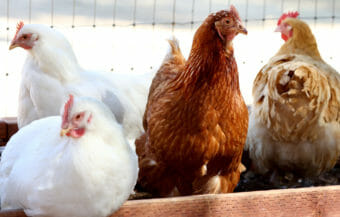
A close-up of our chickens in a coop.
Rescued chickens gather in an aviary at Farm Sanctuary’s Southern California Sanctuary on Oct. 5 in Acton, Calif. A wave of the highly pathogenic H5N1 avian flu has entered Southern California, driven by wild bird migration. (Photo by Mario Tama/Getty Images)

The U.S. is enduring an unprecedented poultry health disaster, with a highly contagious bird flu virus triggering the deaths of some 52.7 million animals.

The culprit is highly pathogenic avian influenza, or HPAI. It has ravaged farm flocks and chicken yards in 46 states since February, when the first cases were reported in commercial flocks.

It’s the worst toll on the poultry industry since 2014-2015, when more than 50 million birds died. That earlier outbreak also started in the winter — but while that ordeal was over by the following June, the current outbreak lasted through the summer and has surged anew.

“I’m hopeful that this is not the new normal for us,” Dr. Richard Webby, director of the World Health Organization’s Collaborating Center for Studies on the the Ecology of Influenza in Animals, tells NPR.

Some birds have died from the disease itself, but the vast majority are being culled through flock “depopulation,” to try to stop the virus from spreading. That includes millions of chickens and turkeys in barns and backyards that had been raised to provide eggs or meat.

Here’s what you need to know about the 2022 outbreak in the U.S.:

52,695,450 million birds have been wiped out

The losses stretch across the U.S., and they’re deepest in the country’s middle: More than 1 million birds have been killed in each of 11 states that stretch from Utah to the Midwest and on to Delaware, according to the U.S. Department of Agriculture.

In Iowa, two massive egg-laying operations had to cull more than 5 million birds in single incidents earlier this year.

Unlike the 2014-15 outbreak, this one is being driven by wild birds, not by farm-to-farm transmission. For commercial and backyard flocks, many early infections centered along the intersection of the Central and Mississippi flyways of migratory wild birds. As those birds traveled, so did the virus.

“We don’t know exactly what it is about it, but it does seem just to be able to grow and transmit better in wild birds,” Webby, who is also a member of the infectious diseases department at St. Jude Children’s Research Hospital in Memphis, tells NPR.

“Wild birds are the perfect mechanism to spread a virus because they, of course, fly everywhere,” he adds.

Influenza viruses are common among wild aquatic birds, which often show no symptoms despite being infected. In January, the dangerous H5N1 flu virus was found in an American wigeon duck in South Carolina — the first U.S. case since 2016, according to the Centers for Disease Control and Prevention. More reports poured in over the following weeks and months, raising alarms as the virus spread to more states.

A highly pathogenic avian influenza virus “can cause disease that affects multiple internal organs with mortality up to 90% to 100% in chickens, often within 48 hours,” the CDC notes. “However, ducks can be infected without any signs of illness.”

Avian flu poses only a low risk to humans

It’s very rare for a human to be infected with the avian virus. The first U.S. case of a person infected with avian influenza A (H5N1) virus was reported in April in Colorado. The patient recovered after experiencing a few days of fatigue.

The virus does not pose a special risk in the nation’s food supply, given proper handling. The CDC states that like any poultry or eggs, heating food to an internal temperature of 165˚F kills any bacteria and viruses present, including HPAI viruses.

The virus is like a kid in a candy store

“The bird populations haven’t seen viruses like this before,” Webby says, “so in terms of their immune response, they’re all immunologically naïve to this” influenza virus.

“Right now, it’s like a kid in a candy store racing around,” infecting bird populations, he says.

U.S. experts had been bracing for an outbreak, watching successful strains of the H5N1 influenza virus proliferate in Europe and elsewhere. Now that the virus is here, it shows no sign of going away.

A key part of the challenge, Webby says, is that like the SARS-CoV-2 virus, the avian flu virus has spun off several variants of concern. And right now, a specific version of the virus — known as clade 2.3.4.4b — is ruling the roost.

“You can think of that like an omicron variant” because of its wide prevalence, Webby says.

Viruses are notoriously quick to mutate. And since its arrival in North America, the avian influenza virus has continued to change.

“When the virus came over into the Americas, it started to interact with the viruses that we have in our wild birds here,” picking up different combinations of other genes, Webby says.

Comparing the current U.S. virus to the one in Europe, Webby says, “From the outside looking in, they look very similar. But when you actually go on the inside and take a look, the viruses we have here are quite different now from what was in Europe.”

It’s possible that wild bird populations will build up an immunity to the virus — but Webby warns that it will take months to understand whether that is happening at a meaningful level.

The outbreak hasn’t raised all poultry costs

If you like to eat chicken, you’re in luck. This version of the influenza virus doesn’t affect “broilers” — chickens raised for meat — as badly it does “layers” — table-egg laying hens — and turkeys.

“For whatever reason, turkeys and layer birds tend to be more susceptible” to the virus, says Amy Hagerman, an assistant professor at Oklahoma State University who specializes in agricultural economics.

“The chicken that most people think of, their chicken tenders, their chicken sandwiches, all of those things haven’t tended to have the same kinds of impact,” she adds.

Hagerman warns that in a time of inflationary pressure and supply-chain snags, it can be hard to directly link a price hike to the virus. But she notes that U.S. egg prices can be affected if just a few farms have to dispose of their flocks.

“Generally speaking, these complexes are over a million birds, easily,” Hagerman says. “It takes fewer egg-laying operations being affected by HPAI to drive up the price of eggs and egg products,” she adds, especially since the majority of U.S. production goes to the domestic market.

The virus has hit many turkey farms — but because those operations tend to be smaller and the cases have been spread out over time and space, producers have mostly been able to absorb the losses, building up stocks of frozen turkey ahead of the end-of-year holidays.

“So, yes, we certainly saw an increase in turkey prices in this holiday season,” Hagerman says, “but not as much as we might have anticipated given the extent of this outbreak.”

What about vaccines?

The presence of the virus in the commercial food chain raises a number of possible trade headaches — but so would using a vaccine to fight it.

“A lot of countries don’t use vaccines for this virus in their poultry,” Webby says.

“One of the big complications is timing on a vaccine,” Hagerman says. “Generally you need two doses of a vaccine and then a length of time to achieve full effectiveness.”

“If you have a bird that has a very short feeding window before it’s ready for harvest, that can be a lot more challenging because you also need to allow the withdrawal period after the vaccine before the bird is harvested,” she adds.

Another central issue is the difficulty of surveillance — of knowing whether a bird is infected with a deadly influenza virus but isn’t showing symptoms because they’ve been vaccinated.

But the calculations might change if the virus is determined to be endemic in wild birds or in a geographic area.

That “certainly seems to be the case in Europe and Africa,” Webby says, adding, “my gut feeling is we’re headed that way in the Americas as well.”

“These are actually discussions that are going on now,” Webby says, describing ideas such as what kind of post-vaccination surveillance would be needed to “make sure your trading partners are happy that the virus is not circulating silently.”

The last outbreak didn’t survive the summer. This one did

Experts say poultry farms should be credited with limiting the virus as much as they have, hailing the success of surveillance and biosecurity programs. But nearly 11 months after the first known wild case in the current outbreak, the deadly influenza virus is still here.

“Generally, when the weather gets hot, influenza goes away for the most part,” Hagerman says.

That was the case in the 2014-2015 outbreak — which came when Hagerman worked at the U.S. Department of Agriculture’s Animal and Plant Health Inspection Service, or APHIS.

“Bright sunshine and heat kills the virus in the environment,” Hagerman says, describing how summer weather helped end the earlier outbreak.

“This time we didn’t see that virus circulation going down to zero in our wild bird population” over the summer, Hagerman says. Instead, the virus sort of simmered through the summer months, she adds, “and then we get into the cooler, wetter months of the fall and we see a resurgence.”

The long outbreak is discouraging, Hagerman says: “If we look at Europe, we can see that they are on two years of HPAI outbreaks.”

Copyright 2022 NPR. To see more, visit https://www.npr.org.

Critic says merger of grocery giants would hurt Alaskans: ‘You can pretty much name your price’

The Midtown Mall in Anchorage. (Photo by Zachariah Hughes/Alaska Public Media)

More than a month after announcing that Kroger and Albertsons grocery stores will merge, the corporations have no explanation for how it will affect Fred Meyer and Safeway customers in Alaska.

The corporations announced the merger agreement Oct. 14, posting online video statements from their CEOs.

“The combination of Kroger and the Albertson companies is a tremendous opportunity to bring together two highly complementary organizations,” said Kroger Chairman and CEO Rodney McMullen, who promised efficiencies and a “world-class shopping experience.”

But Alaskans are worried about jobs and the downsides of such a merger. Kroger runs Alaska’s Fred Meyer stores, and Albertsons runs Carrs Safeway stores.

“And what that means when they say they’re getting more efficient, which is how they sort of sell this, is they mean they’re firing people,” said Graham Downey, a consumer advocate with the Alaska Public Interest Research Group. “It means you had two grocery stores and now you have one. So, you have half as many employees, but all the same customers.”

The two grocers are among Alaska’s largest employers. Currently, Safeway stores are unionized and Fred Meyer stores are not. The United Food & Commercial Workers Union Local 1496 has been negotiating with Fred Meyer but has not commented on that or the merger.

Nationally, Kroger is the nation’s second-largest supermarket chain and Albertsons is the fourth-largest grocer.

Vivek Sankaran, the current CEO of Albertsons, said the new company will upgrade stores and expand the brands they sell.

“Together we’ll be able to create a premier omnichannel retailer and provide even more personalized service to customers across the country,” Sankaran said.

If the deal is allowed, Kroger would buy Albertsons for $24.6 billion. The new company would be as big as Walmart and Amazon, with nearly 5,000 stores serving 85 million households across the U.S.

It would also have a huge database of national consumer behavior data, which some analysts are calling the real prize, because it could be used to generate billions in revenue. Just one grocer would run the companies’ many regional chains, such as Harris Teeter, Ralphs, QFC, King Soopers, Vons, Safeway, Jewel Osco, and Acme.

But in Alaska, where the supply chain is vulnerable, consumers care more about food security.

There are some independent grocers in Alaska, niche stores like the Roaming Root in Fairbanks, IGA stores and the member-owned cooperative in Fairbanks. Smaller chains include the Alaska Commercial Company with 33 stores serving rural communities, and the emerging Three Bears chain with 11 stores. There are also national wholesalers like Costco and Walmart, which has 10 stores in Alaska — not all of which sell groceries.

But the 12 large Fred Meyer and 35 Carrs Safeway stores are the major competitors in the Anchorage, Fairbanks, Juneau, Kenai-Soldotna and Palmer-Wasilla areas. They serve more Alaskans in those population centers than any other retailers.

In many Alaska towns, like Fairbanks, the Safeway and Fred Meyer stores are across the street from each other. Downey said if the merger goes through, one of those stores would close.

“And then you have market power — the power to set the prices,” Downey said. “You don’t have the competitor across the street making sure you don’t have a crazy price on milk or cucumbers. You can pretty much name your price and people are gonna have to pay it.”

Repeated calls and emails to Kroger and Albertsons corporate offices over the last month were not returned.

The merger will take some time and is planned for early 2024. But first, it has to pass antitrust standards. Attorneys general in Washington state, Illinois, California and the District of Columbia have now filed suits to prevent various aspects of the merger, including the fear of an illegal monopoly that will hurt consumers in the long run.

Two Alaska legislators have written a letter to the Federal Trade Commission explaining Alaska’s unique shipping situation, asking the FTC to investigate the potential for price hikes following the Kroger-Albertsons merger.

Downey said the FTC has begun to examine the deeper ramifications of such mergers.

“The federal regulators are starting to look at market power,” he said. “Prices might be less in the short term, but in the long term what kind of economy are we creating here? Are we creating a diversified economy of lots of local businesses that’s keeping money circulating within our state, or are we making a tiny number of shareholders very rich?”

AKPIRG is asking consumers to sign a letter to Alaska’s congressional delegation urging them to oppose the merger.

On the merger website, the corporations say that until the transaction closes, Kroger and Albertsons will remain separate, independent companies.

Move over, pumpkin! This Thanksgiving, try ube pie

A purple pie, seen from above, with a circle of cream covering most of it
For Thanksgiving this year, consider trying an ube pie. Ube is a tuber similar to a sweet potato. (Photo by Julia O’Malley)

I have deep affection for ube, the mild, sweet purple yam that colors pandesal, Filipino breakfast bread, and shows up in the pastry section in Hawaiian grocery stores and lends its hue to the outrageous pastries at Benji’s Bakery. This Thanksgiving, I wanted to bring it to my family in pie form. This recipe is a rich, vibrant “move-over pumpkin pie” for the holiday dessert lineup. Every person I served it to was eating it for the first time. Every one of them said it was delicious. If you like pumpkin or sweet potato pie, this pie is for you.

A few notes. You can use any unbaked pie crust. I used my own salted butter crust but I changed up the method a little to get way more flake. Using the same ingredients, I pulsed the food processor instead of letting it run, and I left the chunks of butter bigger than a pea, some of them even as big as two peas. I added the liquid to the crust, pulsed once, and then dumped it on parchment paper when it was still crumbly. Then, I pressed it together and rolled it out into a rectangle about the size of a novel, then I folded it in half and rolled it back into the same-size rectangle. I folded it again, rounded out the edges so it made a disc, and tossed it in the fridge for a couple minutes. This method kind of laminates the dough, a little like a croissant, and you’ll notice the difference.

This recipe calls for butter and cream. If you’re trying to lighten it up a little, you can use milk with no problem. If you’re going dairy-free, you might try oat milk and vegan butter. You can also reduce the sweetener by a quarter cup. There’s also the treasure hunt for ube, which is a purple yam. You can sometimes find it at New Sagaya Midtown or other Asian markets in the produce section or grated, in the freezer section. You can also use purple sweet potato or Okinawan sweet potato for this recipe, which are both pretty frequently at Fred Meyer and sometimes at Safeway in the sweet potato bin. If you use frozen grated ube, cook by covering it with water in a microwave-safe bowl and then cooking on high for 3 to 4 minutes, so it becomes soft. Don’t forget to drain. About 1 1/2 cups cream, whipped with three tablespoons of powdered sugar and a little vanilla, will give you enough for a healthy dollop of cream on each piece.

Ube pie

Serves 10

Ingredients:

1 pound, skin-on ube/purple yam or purple sweet potato

1 stick salted butter, softened

1/2 cup white sugar

1/2 cup maple syrup

1/2 cup cream

2 eggs

1 teaspoon pumpkin pie spice

1 teaspoon vanilla

1/4 teaspoon sea salt

1 unbaked 9-inch pie crust

Whipped cream and freshly grated nutmeg to serve.

Method: Put sweet potatoes/ube in a pot and cover with water, boil over medium heat for about 45-50 minutes, until very tender. Preheat the oven to 350 degrees.

Remove from the potatoes heat, drain, allow to cool enough to be handled. Peel them or scoop out soft meat. You should have roughly 2 cups of potato/yam.

In a blender or with a mixer, combine potato/yam, soft butter, sweeteners, cream, egg, spice, vanilla and salt. Mix until smooth. Pour into an unbaked pie crust. Bake for 55 minutes, or until set in the middle. It will rise and then fall a bit. Allow to cool completely before dressing with whipped cream. Sprinkle it with freshly grated nutmeg.

This story originally appeared in the Anchorage Daily News and is republished here with permission.

Site notifications
Update notification options
Subscribe to notifications