Mental Health

Juneau police name the officer involved in a shooting in the Mendenhall Valley

Juneau Police Department badge logo
An arm badge for the Juneau Police Department on an officer’s uniform, photographed in 2016. Juneau police on Friday identified the officer who shot at a Juneau resident Tuesday night. (Photo by Jeremy Hsieh/KTOO)

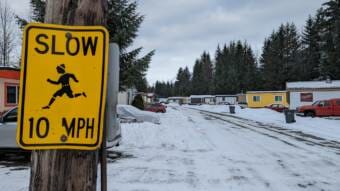
The Juneau Police Department has named the officer who shot at a man and hit two nearby homes in a trailer park in the Mendenhall Valley

Officer Eric Hoffman shot at Juneau resident Art Whitney who said he was feeling suicidal at the time. 

According to a written statement from the police, officers talked to Whitney on the phone before they arrived on scene and he told them that he had a gun and was going to hurt himself.   

Police said they arrived just after 8 p.m., announced themselves as police officers and asked Whitney to walk towards them and show his hands. 

At some point, Hoffman believed a gun was being pointed at him and he fired three shots at Whitney. 

Whitney said that he was on the phone, waiting for officers to arrive and wasn’t doing anything threatening. He said he gave his gun to his roommate before he went outside. 
Juneau police confirmed on Friday that Whitney didn’t have a gun on him during the shooting. 

Hoffman didn’t immediately respond to phone or email requests for comment. He is currently on administrative leave. 

If you’re in a crisis, call the National Suicide Prevention Lifeline at 1-800-273-8255 or Careline Alaska at 1-877-266-HELP.

Juneau community mourns missing and murdered Indigenous people: ‘One of our strengths is our voices’

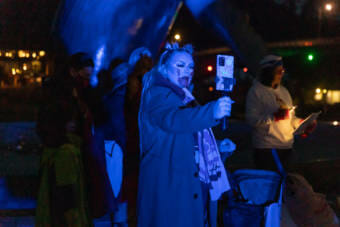
Attendees of a vigil honoring missing and murdered Indigenous persons light lanterns at Overstreet Park on Feb. 14, 2022, in Juneau (Photo by Lyndsey Brollini/KTOO)

Valentine’s Day this year marked three years since Tracy Day went missing.  

Day, who is Lingít, is one of several Alaska Native Juneau residents who disappeared and haven’t been found. About 30 people gathered on Monday night to share their stories and sing to their missing loved ones. 
A row of seven portraits sat propped up near the whale statue in Overstreet Park in Juneau. All were of Alaska Native people who went missing in Juneau or nearby communities. Most have not yet been found or were found dead. 

One of the missing people is Tracy Day.

Tracy Day has been missing since Feb. 14, 2019. (Photo courtesy of Juneau Police Department)

Mike Kanaagoot’ Kinville stood looking at the portraits, then turned to share his story about Day. His family and Day’s family have been close for generations, so he has a lot of them. Like, when Day was 14-years-old, and she ran away from home in Juneau and beelined for his house in Ketchikan.

“She had known that I was a drinker at one time and she came looking to drink with me,” Kinville said. “And I had gotten sober since then, so I was in a position to take her in and started doing foster care for her.”

Kinville said she stayed with the family for nearly three years. He said she had a lot of charisma — that she was joyful and mischievous at the same time — and that she was “kind of a smart aleck.” 

Kinville’s family ended up taking care of Day’s daughters, too. The older one, when Day went away to nursing school; the younger one, after Day went missing. 

“Our families are tied together really close,” Kinville said. My mom and dad took in Tracy’s mom when she was a teenager, too. That’s pretty Lingít too, the generational ties back and forth together,” he said.

Before Day disappeared, Kinville says she had her ups and downs. She struggled with substance use and her mental health. It’s the kind of thing a lot of families experience but don’t usually talk about. 

“You learn to guard your heart to a certain extent with situations as much as you can, but you still get bruised,” he said. “And, in this case, heartbroken. It’s just, the heartbreak can’t heal because we don’t know what happened to her.”

Kinville said that what makes it even harder is that before she disappeared, Day seemed like she was getting some stability in her life. 

“We were hopeful,” he said.

As he looked down the row of photos of Juneau’s missing again and talked about each of the families they left behind, he got choked up. 

“You know, I said heartbroken, but what it feels like is an ache in my soul,” Kinville said. “It’s just so deep, you know, deeper than my bones. This sense of this unresolved pain that goes on and on. It’s really difficult. My heart goes out to the families of these missing people. I imagine I have their sympathy as well. The other part about it that’s difficult is, you know, life goes on for everybody else, and things go back to normal, and that part of us is still missing.”

Jamiann S’eiltin Hasselquist drums at a vigil for Tracy Day and other missing and murdered Indigenous persons at Overstreet Park in Juneau. Hasselquist is part of the Strong Women singing group. (Photo by Lyndsey Brollini/KTOO)

Kinville said he’s hoping the vigil will help people understand what it’s like to love someone and not know what happened to them. It’s a wound that won’t close. 

“It’s important for a community to come together and not give up on the people who are missing and not marginalize these people. What’s common here is race and income bracket, you know. That’s not the society that I want to live in, and I think we can do better than this,” he said.

It’s a common criticism among families in Juneau who’s Alaska Native relatives have gone missing that they just don’t get the attention from the community or law enforcement that other people do. 

The Strong Women group sings at a vigil to honor missing and murdered Indigenous persons in Juneau, Alaska. (Photo by Lyndsey Brollini/KTOO)

Several women sang throughout the night for those who have missing and murdered Indigenous relatives.  They’re called Strong Women, and Rhonda Butler is one of them. Butler is the President of the Alaska Native Sisterhood Camp 2 in Juneau. She said she and the women who joined her sing to bring strength to families who are struggling from these losses. 

“One of our strengths is our voices, and if we don’t use our voices, no one will hear. So we’re here to share a couple songs with everyone here in honoring Tracy Day and all the other missing and murdered Indigenous peoples,” she said.

Candles lit in honor of Tracy Day and other missing and murdered Indigenous persons at a vigil at Overstreet Park in Juneau. (Photo by Lyndsey Brollini/KTOO)

The temperature dropped as the sun went down, but people stuck it out. They lit candles and sheltered the flames from the wind. Then they started lighting flying lanterns. 

Toward the end of the evening, as the snow started to fall more heavily, one woman said she wanted to sing a hymn for Tracy Day. Day’s twin sister Angela jumped up and ran over to join in. 

They huddled together, rocking and shivering as they sang “How Great Thou Art,” as the flickering light from sky lanterns faded off into the distance over Gastineau Channel.

Ombudsman finds persistent problems at the Alaska Psychiatric Institute

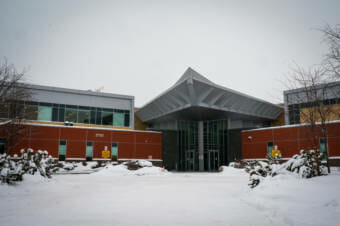
The front of a red building, with snow coming down
The CEO of the Alaska Psychiatric Institute gave false information to investigators on more than one occassion, a recently released report found. (Photo by Matt Faubion/Alaska Public Media)

Alaska’s only public psychiatric hospital failed to meet federal requirements for evaluating patients, didn’t provide adequate treatment and failed to investigate complaints about workplace harassment in 2020, according to a new report from the Alaska Ombudsman.

The report, released on Tuesday, is based on record reviews and interviews with staff at the Alaska Psychiatric Institute. The investigation stems from an anonymous complaint in November 2020 about conditions at the hospital.

The report says the hospital did not provide active treatment to all patients or consistently create and update treatment plans, despite previous commitments to improve its services. In most cases, patients were given the same “cookie cutter” treatment plan of psychiatric nursing and medication when they were admitted, the report says. And, it noted, the hospital didn’t provide any culturally informed treatment in 2020 despite about 40% of patients being Alaska Native.

The state Department of Health and Social Services, which oversees the hospital, wrote in an emailed statement that the report looked at problems in 2020 and didn’t account for progress made since then.

“We do not minimize the concerns raised by the Ombudsman’s office but want to be clear that many of these allegations were raised over two years ago and many changes have happened at the facility since that time,” said the statement from Adam Crum, commissioner of the state health department.

Gov. Mike Dunleavy said in his State of the State address earlier this year that his administration had “turned that situation around.” He pointed out that managers had more than doubled the number of occupied beds at the hospital, from 20 to 55, since he took office.

State Ombudsman Kate Burkhart, who wrote the report, described the investigation process as an “ongoing dialogue” with the state health department. The health department agreed to implement some, but not all of the recommendations made in the report.

Burkhart said, however, that the department had also promised to implement similar changes three years ago after a different ombudsman report that also found major problems.

“In the past, the department has accepted some of those and committed to implement them,” she said in an interview on Wednesdsay. “Turns out, they weren’t all implemented, so we re-recommended them.”

She said some of the problems with the hospital seemed “intractable.”

“Over time, resources have been brought to bear and still no marked improvement,” she said.

On multiple occasions, the hospital’s CEO Scott York provided inaccurate information to investigators, according to the report. For example, York denied that he was aware of complaints about gender and racial harassment and bullying. The ombudsman found that York and others, including the deputy director of the health department, were aware of those complaints, but didn’t take “meaningful action” to fix them, said the report.
In another instance, York told investigators that there were 17 groups providing rehabilitative and social services in one unit. The ombudsman report said that was misleading, since some of the groups weren’t therapeutic. One of the groups York cited involved watching and discussing the courtroom drama “Law & Order” to educate patients about criminal proceedings.

“The evidence showed that, in fact, there were complaints of inappropriate conduct that had been substantiated about members of management. And the evidence showed that, in fact, the level of treatment described was not accurate,” said Burkhart.

Still, Burkhart said, the report didn’t find any evidence that staff had harmed patients, something it found in its 2019 report.

“There are folks that get up every morning to go to work at API to provide the best care they can,” she said. “This is an issue of management decisions and allocation of clinical resources when it comes to treatment planning and access to active treatment.”

Recognized for public service, Juneau police chief reflects on career and changes in policing

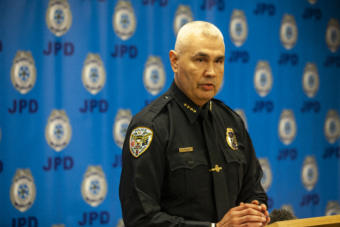
Juneau Police Chief Ed Mercer during a press conference on Sunday, December 29, 2019, at the Juneau Police Department headquarters in Juneau, Alaska. (Photo by Rashah McChesney/KTOO)

Juneau’s police chief was honored with an award for public service at the 2021 Alaska Federation of Natives convention.

Ed Mercer is Lingít of the Raven Coho clan, and he’s the city’s first Alaska Native police chief. He’s been with the Juneau Police Department for more than 20 years and has been the chief since 2017

KTOO’s Lyndsey Brollini talked with Mercer about his career and some of the changes that have happened in policing during his tenure. 

Listen:

This conversation has been edited for length and clarity.

Lyndsey Brollini: So why, why did you get into public service and law enforcement?

Ed Mercer: I’m not, I’m not able to say that, you know, as a young child I dreamed of being a police officer. This is something I think I grew into. And it was a calling and certainly, it worked out great in my career and it’s been enjoyable and rewarding.

Lyndsey Brollini: Why is it important to have Native police officers? 

Ed Mercer: There’s not a lot of minorities in law enforcement. That’s just a fact. Why I think it’s so important, especially in our community is that people who see people in police officers, minority groups, they can relate. And you know, one thing I have never lost is my understanding of my culture and where I came from, and who I am, and how I relate with many of the Alaskan Natives across our region and across our state.

Lyndsey Brollini: Another thing I wanted to get into was how policing changed in your tenure in law enforcement. I think there’s been a lot of change, especially in the past couple of years. 

Ed Mercer: I would say one of the biggest things that I seen the change of, it started when I was actually a field officer, is recording our contacts out in the public. But since then, now we have police officers out there that are wearing body-worn cameras. I don’t, I can’t think of too many other professions or fields where somebody has to wear a camera all the time. But we recognize the importance of that for transparency and trust in what we’re doing out there in serving the public and our contacts, how we’re treating people.

One change, I think, is this more awareness with dealing with people who have addiction and mental health issues. Is there a better way? Back when I worked on the street, we didn’t have as many options and referrals. I think if you committed a crime, an individual who was addicted to drugs, or was suffering from mental illness, and they committed a crime, they’d go to jail. Now, I think we’re trying to find avenues that are better, that will better serve that individual so they don’t continue to go down the road, they’re going down and give them the help they needed. 

Lyndsey Brollini: I just remember going to the vigil for George Floyd here. I saw police officers there attending it. And so I guess did that movement impact JPD at all, that nationwide movement after George Floyd’s murder?

Ed Mercer: I thought it was very important for the Juneau Police Department to attend these events. To go for what you talk about for support and saying that we as a police department, and how we police and how we treat our citizens, we don’t condone excessive use of force. And it speaks volumes when you’re standing up there with the people that are trying to say they don’t condone this type of behavior from their police across the country. You know, being able to stand there with other members of the community and show support is important, so that they feel confident and comfortable within their police department that this can’t and will not happen in our community. So that was a pretty significant event. 

Lyndsey Brollini: You know, what’s something that you’re proud of that you’ve done in your career?

Ed Mercer: One of the things I’m most proud of is that we became accredited again. At one point we were accredited by the Alaska Association chief of police. And that went away back in like 2012 right around that time, and we were the only police agency accredited in the state of Alaska. And because of the lack of interest for accreditation in our state, the decision was made that they’re no longer going to do it. So what we were able to do through Alaska Association Chief of Police was to be endorsed by a partner state, and that was in Oregon, and it’s called the Oregon accreditation alliance that agreed to allow Alaska police agencies to join their accreditation program. And we did, we signed up for it. And it took a lot of work from my staff. And we were ultimately received our accreditation in September of last year. And, you know, I think that’s good for the police department, it’s good for the community, knowing that we have an accredited police agency that serves them. So that has been really rewarding.

And just to be, as chief, you know, you’re only as good as the staff that you have and the people that go out there every day. People see our police officers out there every single day, doing their job, and you have to have great personnel to go out there and serve the community day in and day out, and do a good job. The expectation is to do a good job and serve the community. And I’m proud of this agency and the personnel that work here at the police department that show up. And we have a mission to go out there and make our community, help make our community safer. 

Lyndsey Brollini: Thanks so much for meeting with me and for talking about, you know, career, changes that have happened.

Ed Mercer: Thank you for reaching out.

The Year in KTOO News: COVID’s second year in Juneau

Sophie Griffith, 5, gets a kiss from her dad, Scott Griffith, after getting her COVID-19 vaccine during a pediatric clinic at Riverbend Elementary School in Juneau, Alaska. (Photo by Rashah McChesney/KTOO)

KTOO is looking back at 2021 through the stories that had the widest and strongest impact on the community. 

Right around the winter solstice last year, Dr. Anne Zink used the metaphor of the return of the light to describe the arrival of the COVID-19 vaccine in Alaska. Health care workers started getting vaccinated in Juneau before the ball dropped on 2021, and by mid-January, residents were getting vaccinated by the thousands at city-sponsored mass vaccination clinics. There was live music while people waited, and people dressed up in costumes and formal wear to get their shots. It was the closest thing to a party most people had been to in almost a year.

The vaccine did bring some hope to early 2021, but while the virus was being knocked back a bit, the damage the pandemic brought to society was already done. Kids were out of school. Many parents were working from home alongside them. In March, we hit the one-year anniversary of COVID-19 coming to Alaska and a surge of mental health problems made itself evident. Social restrictions and disruption caused spikes in anxiety, depression, substance use and self-harm — for students, parents and just about everyone.

By May, a lot of Juneau adults were fully vaccinated, and flashing your vaccine card made things possible that hadn’t been for almost a year. Juneau Drag performers hosted their first live in-person stage show in 15 months. Vaccinated attendees could take off their masks at the event at the Red Dog Saloon. Once people got inside, it was like stepping back in time — or into an alternate reality where the COVID-19 pandemic didn’t exist.

Audience members packed in together to cheer on Juneau Drag queens and kings on Saturday, May 22, 2021, in Juneau, Alaska. It was the troupe's first in-person, performance and they required audience members and Red Dog Saloon staff members to provide proof of full vaccination to attend. (Photo by Rashah McChesney/KTOO)
Audience members packed in together to cheer on Juneau Drag queens and kings on Saturday, May 22, 2021, in Juneau, Alaska. It was the troupe’s first in-person, performance and they required audience members and Red Dog Saloon staff members to provide proof of full vaccination to attend. (Photo by Rashah McChesney/KTOO)

By summer, kids 12 years old and older were eligible for the COVID-19 shot and Juneau made quick work of offering youth vaccine clinics. Families made plans for summer vacations and to see grandparents again. And then came the delta variant, and it became clear that many Alaskans’ dreams of a “hot vaxxed summer” were not going to come true. The highly contagious variant of the virus tore through the country, bringing back mask mandates, restrictions on groups gathering and messing up the global supply chain so that it was hard to keep a semblance of normal life.

Right before Alaska’s second wave of the virus peaked, Juneau students went back to school. They were required to wear masks indoors and they spread out as much as possible in the classroom and the lunchroom. Sports and other after-school activities resumed. Juneau had one of the highest vaccine rates for youth in the state in September. Individual classes would quarantine when there were positive cases in the schools.

Students head upstairs during a break between classes at Thunder Mountain High School on Monday, August 16, 2021, in Juneau, Alaska. The school district reported about 300 more students on the first day of classes this year than it had last year. (Photo by Rashah McChesney/KTOO)

August and September were deadly months in Alaska. Hospitals around the state moved to crisis standards of care, hundreds of out-of-state health care workers were recruited, and rural communities struggled to care for their own when they couldn’t medevac patients to the state’s bigger city hospitals. Half of all of Juneau’s deaths from COVID-19 occurred in those two months. 

In the midst of all of this, the leader of Bartlett Regional Hospital abruptly resigned after just six months on the job. The head of the behavioral health unit also left on the same day. 

The increase in COVID-19 cases and deaths in the latter half of the year exacerbated some of the pandemic’s major impacts. One of the mental health impacts is that eating disorders have been on the rise and treatment options are scarce in Alaska. Juneau’s childcare facilities have struggled to keep their doors open and administrative backlogs mean that millions of dollars in federal relief remain unspent

The end of the year has brought a decrease in cases and capacity back to hospitals. The stricter mitigation measures have been lifted locally, but the emergence of a new variant – omicron – leaves a number of large questions marks for 2022. Ahead of the holidays, the City and Borough of Juneau is distributing at-home COVID-19 tests and encouraging people to use them before getting together with family and friends, making another year feel anything but normal.

Here’s what schools are doing to try to address students’ social-emotional needs

Grimsley High School teacher Sierra Hannipole checks in with a student at the Greensboro, N.C., school’s learning hub. According to new federal data, 6 in 10 schools around the U.S., including Grimsley, have given extra training to teachers to support students socially and emotionally this school year. (Photo by Cornell Watson for NPR)

U.S. Surgeon General Vivek Murthy issued an advisory this month saying the youth mental health crisis is getting worse.

“The pandemic era’s unfathomable number of deaths, pervasive sense of fear, economic instability, and forced physical distancing from loved ones, friends, and communities have exacerbated the unprecedented stresses young people already faced,” Murthy wrote. But he also emphasized that mental health conditions are treatable and preventable.

And newly released data from the U.S. Department of Education suggests that schools all over the country are trying to play their part. A federal survey of 170 schools in September found that 97% are taking some steps to support student well-being now that they are back to teaching in person. This includes one or more of the following:

  • 59% are offering specialized professional development to existing staff members so they can support students in turn.
  • 42% have hired new staff, such as counselors and social workers.
  • 26% have added student classes to address topics related to social, emotional or mental well-being.
  • 20% have created community events and partnerships.

Educators at Grimsley High School in Greensboro, N.C., have seen the toll the coronavirus pandemic has taken on students, socially and emotionally.

“A lot of our kids are still struggling with … being acclimated to the reality that a couple of years ago they were in middle school, and then they were just dropped here [in high school]. So there are some struggles there, [as well as] kids who may be going through things emotionally at home,” says Assistant Principal Christopher Burnette.

Guilford County Schools, which includes Grimsley High School, has partnered with outside donors, including the Walton Family Foundation and the Michael & Susan Dell Foundation, to offer “learning hubs” that run after school and in some schools on weekends. (Dell Technologies is a financial supporter of NPR.) The hubs are places to catch up on schoolwork, but they’re also places to check in on students’ states of mind, says Burnette.

“A lot of it is not always about homework or schoolwork — it’s about kind of how you’re doing, how you’re feeling. And if they start to open up, we’ll, you know, pull them to the side and we’ll be able to identify certain things that support them in that particular way as well.”

The hubs have a school counselor on hand, and the school has trained other staff members to handle these kinds of supportive conversations.

Copyright 2021 NPR. To see more, visit https://www.npr.org.

Site notifications
Update notification options
Subscribe to notifications