Mental Health

Support is here for Alaskans who have experienced the loss of an infant or pregnancy

A plate of cookies, lit candles, a card, brightly colored flowers and a photo of a baby are arranged on a table as a shrine in memory of pregnancy loss.
Misty Fitzpatrick created a display in memory of the baby she lost in 2021, Livia Jo Burgess. (Photo courtesy of Misty Fitzpatrick).

It’s impossible to know how many pregnancies end in miscarriage because it can happen before someone even knows they’re pregnant. The March of Dimes has been tracking this issue for generations and estimates it could be as high as 50%. That means that someone you know has probably experienced pregnancy loss.

But until this year, there was no official support group in Juneau for people who had experienced the loss of a pregnancy or an infant. Doctors who had treated patients for miscarriages or stillbirth would reach out to Sara Gress at Bartlett Regional Hospital, looking for help.

“They would often come to us to see if we had any ideas about where to go,” Gress said. “And for many, many years, we came up empty-handed with that.”

Gress teaches birth preparation classes at the hospital and facilitates groups for new parents. And even though she’s really experienced in creating space for people to talk about all aspects of having a baby, she knew the topic of loss and grief was out of her expertise.

So, she teamed up with Teri Forst, a licensed professional counselor and a grief recovery specialist, to help facilitate the group, which supports people who have had recent losses or even losses in years past.

“There’s no timeline on grief,” Forst said. “Grief is a process that does not have a definition of time, and we will accept and support anybody.”

And the group doesn’t distinguish between early term pregnancy loss known as miscarriage or later term loss known as stillbirth. There are also people in the group who have lost infants after birth or even people who have been unable to get pregnant who really wanted to have a baby.

“If that feels to you like it’s a loss —because it is — that’s somebody who’s welcome to attend [the] group as well,” said Gress.

Forst says that we are lacking in rituals for this kind of death.

“When we lose somebody, you know, a parent or a sibling, there’s memorials, there’s funerals, there’s feast and potlucks and obituaries,” she said. “And with pregnancy loss, there’s rarely those things.”

She says she wants to change the taboo around pregnancy loss. And that starts with being willing to talk about it.

“I am trying to think back in 12 years of doing this job [if] I have ever heard anyone say, ‘I don’t want anyone to bring up my loss’,” Forst said. “It’s more of a ‘I just want them to be talked about and remembered and I want my experience to be validated’.”

That brings us to the holidays. It’s a time of joy and getting together with family that can be awkward — or triggering — for people who have experienced loss.

“Everybody typically wants to help and wants to have good intentions, but doesn’t know what to do and is afraid of saying the wrong thing,” Forst said. “So, it can be really helpful to just tell them what you need and want from them.”

She has advice for people who are grieving.

“I always recommend to not have the holiday dinner be at your house so that you can leave early or you can choose not to go at all, if you [don’t] want to. Give yourself some options — some plan B — to be able to remove as much unnecessary stress as possible,” she said.

And for friends and family who are there to support people who are grieving, Forst says be open to listening. And it’s better to say nothing than to let your discomfort lead you to say something insensitive. She says there are some things you should avoid saying.

“We hear some of the most common ones are: ‘Well, at least you have other kids’ or ‘Now you know you can get pregnant, so I’m sure you will, again’ or ‘Luckily, it was just early in the pregnancy.’ Those types of statements that are really not helpful. They’re not validating that this person, that this family, experienced such an enormous loss,” Forst said.

Instead, she says, offer to bring over dinner or babysit the kids so the grieving parents can have some time together.

Heading into the holidays the group has been sharing ideas with each other for ways to honor their loss — things like lighting a candle or setting a place for the baby at Christmas dinner, taking a photo with a pair of baby shoes or writing a poem, which are all ways of acknowledging the loss in a real and tangible way.

The group meets on the last Wednesday of every month at 6 p.m. on Zoom. You don’t have to be in Juneau to participate, but one-time registration is required.

Note: An earlier version of this story had the incorrect meeting time for the group. It meets at 6 p.m. the last Wednesday of the month.

A new crisis team in Fairbanks is responding to mental health calls and freeing up other emergency resources

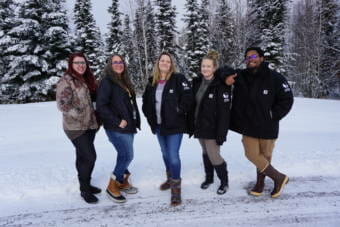
Members of Fairbanks Mobile Crisis Team (left to right) Cassandra Ball, Heather Roberts-Kelley, Mistie Laurence, Jasminne Johnson-Conley, and Troy Jackson. (Anne Hillman/Alaska Public Media)

It was midmorning on a Tuesday in early November when a person in Fairbanks called 911. The dispatchers alerted Heather Roberts-Kelley, a mental health clinician with Alaska Behavioral Health and a member of the city’s new Mobile Crisis Team.

The team consists of a mental health clinician and a peer support navigator. It just started in Fairbanks two months ago, and its role is to provide care and support for mental health issues and crises that law enforcement and fire departments are not trained to deal with.

As Roberts-Kelley prepared to go meet the caller at their home, she read notes about the situation on her phone using a secure app so she had a better idea of what to expect at the scene.

Every situation is different, she said. Sometimes the crisis team stages nearby while police assess the situation. Other times they go on their own.

“It’s nice to know some history before you run out the door, you know?” she said. “What is going on at the moment. And I can read all those notes.”

Roberts-Kelley, who started responding to crisis calls years ago in Colorado, headed out the door wearing winter boots and jeans and hopped into a regular, unmarked SUV. No one would ever know it was an emergency response situation, and that’s the point. Fairbanks’ Mobile Crisis Team is there to calm things down and not draw any attention. On the way to the scene, Roberts-Kelley stopped by a place called The Bridge, a local nonprofit, to pick up a peer support navigator.

Peer support navigators have lived experience with mental health issues and can relate to people in crisis, making them feel more comfortable, said Kerry Phillips, one of the peer navigators who works on the crisis team. They also connect the people the crisis team sees with long-term support during follow-up calls and visits.

“We don’t just see them the one time and say, ‘These are the people that can help you’ and just drop it,” Phillips said. “Because it’s not going to do any good. And I’m sure that’s what people have done to them their entire life when it comes to stuff like this.”

The Mobile Crisis Team members are certified in their fields and go through weeks of additional crisis response training to learn how to de-escalate situations, assess suicide risks and more. The peers also know how to navigate complicated systems to get substance use treatment, housing, and other forms of support.
When they are on the scene, they are having conversations with the people, de-escalating situations, and assessing needs, said Roberts-Kelley.

“It might look like I’m not really doing anything or working,” she said. “I might be making jokes. But I assess the entire time. I’m making a safety plan or I’m gathering information for it the entire time.”

The team takes quick notes on an iPad so that the peers who follow up know the basics of the situation. Roberts-Kelley said meeting people where they are at is a less intimidating way to introduce them to mental health services than asking them to come into an office or a clinic.

The Mobile Crisis Team is very new in Fairbanks. They started taking calls on Oct. 7 and as of Nov. 30 had responded to about 50.

Phillips, a former 911 dispatcher, still spends lots of time explaining to law enforcement officers exactly what the team does. She tells them her number one goal is to help people in crisis find long-term stability.

“And then number two is to help take a load off of you guys cause you aren’t clinicians, you aren’t mental health responders,” she said she tells them. “And you know, as much as I know, that you show up on a scene in uniform with a gun on your hip, that’s going to escalate the scene nine times out of 10. So we want to make it less stressful or less busy or less annoying for 911, for the fire department, for the police department.”

Local governments are creating Mobile Crisis Teams across the nation based on a successful model developed in Arizona. The Substance Abuse and Mental Health Services Administration considers the model Fairbanks is using to be a best practice for mental health response and for keeping people both out of the hospital and out of the criminal justice system.

Deputy Chief Rick Sweet of the Fairbanks Police Department said he knows that law enforcement officers aren’t the right people to respond to most mental health crises.

“Jail is not the place to do mental health work,” he said. “We’re throwing a law enforcement fix to something that needs a doctor level.”

In the past, officers spent hours responding to calls and taking people to the hospital’s emergency department because that was the only place for them to get help, Sweet said. Many people got involved with the justice system when all they really needed was mental health support. The mobile crisis team prevents that from happening and makes it possible for Sweet’s severely understaffed department to focus their resources on problems that do need police response, he said.

The Alaska Mental Health Trust currently funds the Fairbanks Mobile Crisis Team, but the organizations that staff the team will soon be able to bill Medicaid to pay for some of the costs.

After an hour or so, Roberts-Kelley returned from the crisis call. Roberts-Kelley said the police didn’t need to respond.

“The one I just went on, it wasn’t really a crisis, but it was to that person,” she said. The only number the person knew to call in what felt like an emergency was 911, so she did. The crisis team showed up on scene to calm the person down and help them find better, long-term alternatives, said Roberts-Kelley.

Every call is different, sometimes a person needs suicide intervention, or substance use treatment or a connection with in-home care. But Roberts-Kelley said timing is critical.

“If you can get them in the moment, when people are in a crisis, usually around that time they are ready to make a change, too,” she said. “It’s magic.”

The Fairbanks team is still working out the kinks, from technology issues to letting people know that they are available, but they’re hoping their presence will be magic, too.

This story is part of an ongoing solutions journalism project at Alaska Public Media about destigmatizing mental health. The project is funded by a grant from the Alaska Mental Health Trust but is editorially independent.

Alaskans say peer support can make recovery possible: ‘So much hope’

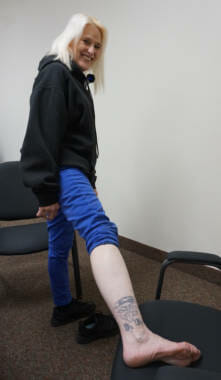
Lysbeth Skelly, a peer support specialist at The Bridge, shows off her tattoo, which honors her strengths, her family and her recovery journey. (Anne Hillman)

Lys Skelly has a lot of things she’s proud of. She has degrees in religious education and in paralegal studies. She was Fairbanks Waitress of the Year in 2012. She recently got married and bought land to build a house. She runs four different recovery groups, mentors and volunteers. Skelly is a superhero, and she has mental health issues.

“All right, I’m bipolar, but I rock it,” Skelly said, laughing. “I’m cool with that. I have a lot to give. I have a lot to give, and I don’t let my mental health issues define me.”

But if you had met her about three years ago, before she started working with a peer mentor, you wouldn’t have seen all that she has to offer.

“I was living in between a broken-down trailer and an abandoned car at the end of the driveway,” she said.

Peer support specialists use their lived experiences with mental health conditions or substance use to help guide others who are dealing with the same issues. States and organizations have offered peer support certifications for decades. Alaska began certifying them earlier this year.

Skelly met her first peer mentor when, in the summer of 2019, she faced going back to prison for a felony DUI or going to the Fairbanks Wellness Court. After 13 years of sobriety, she had started drinking again, then lost her job and her housing. She described a long cascade of problems, from traumatic brain injuries to cancer. All of that was compounded by ignoring her mental health issues. Someone from the Wellness Court introduced her to an organization called The Bridge, where she learned about peers. That new connection changed everything.

“When you are in the midst of pain, when you are in the midst of loneliness, in the midst of shatteredness, only somebody who has been in that can you trust with your pain and your shatteredness,” she said. “It’s hard to trust your pain to somebody who doesn’t understand that pain.”

Skelly’s mentor at The Bridge helped her connect to a recovery house, to mental health supports and to other community members.

Listen to this story:

The Bridge’s peer support program is one of many across the state and the world. The peer support movement began in earnest in the 1970s, and there are multiple international, national and individual state-level certification programs.

In Alaska, peers support everyone from youth to adults who are dealing with houselessness, substance misuse, the justice system and beyond. They don’t take the place of mental health clinicians, but they use their lived experiences to help people navigate complicated systems and support them through challenges.
The state’s Division of Behavioral Health began issuing certifications to peer support specialists in January. So far they’ve certified 43 people, including 12 Indigenous traditional peer support specialists. Certification allows organizations to bill Medicaid for the services the specialists provide and ensures that peers receive consistent training. It also validates the skills that peers possess, said people who worked on the certification program.

Alaska is one of the last states to develop its own certification for peers. It took about three years. The division worked with community members, the Alaska Mental Health Trust Authority and the Alaska Commission for Behavioral Health Certification to develop the process using federally recognized best practices.

Many research studies and controlled trials show that peer support workers are effective. They help others have better self-esteem and self-worth, engage more in self-care, use fewer substances and have fewer psychotic episodes.

“We’re here to normalize all the chaos that comes with recovery,” said peer support trainer Jenifer Galvin. “To humanize the experience of being slightly broken.”

Galvin works at Alaska Behavioral Health in Anchorage and teaches the state’s first 40-hour peer support certification training class, which is currently available for free.

During the training, Galvin teaches about setting healthy boundaries, how to help people process having a diagnosis and how to have conversations around using different coping skills. They go into legal issues and ethics, too. The peers model recovery and offer support, but they don’t tell people what to do, she said.

“Think about how many people coming into recovery have not had control in their situations with the law, dealing with in-patient [treatment], dealing with X, Y, and Z,” she said. “You give them that control back, and you’re like, ‘Nope, this isn’t my job. My job is to be next to you. My job is to support you, but you get to call the shots. You are in control of your journey.’”

Training and certifying peer support specialists can also solve larger problems within the mental health treatment system, such as workforce shortages.

“Peer support specialists are a good way to tackle the workforce issue,” said Eric Boyer, a program officer at the Mental Health Trust who helped develop the certification program. “It enables another portion of the population to support beneficiaries.”

Ruth Shim, a psychiatrist and professor at the University of California, Davis, said peer support specialists can help build a truly inclusive mental health system because peers reflect the demographics of the population they are serving. However, involving peers is not enough to solve all of the systemic racism and prejudice within psychiatry. She said the country still needs more psychiatrists of color and psychiatrists from marginalized backgrounds as well.

For Skelly, the peer support specialists at The Bridge made her realize that people believed in her and that a hopeful future was possible. And now she’s a peer mentor herself. She said she knows she still has problems, but they aren’t barriers.

“I got so much hope,” she said. “If you ain’t got enough today, I got some for you.”

Skelly said that thanks to her peers at The Bridge, she has hope to spare and helping others gives her even more.

This story is part of an ongoing solutions journalism project at Alaska Public Media about destigmatizing mental health. The project is funded by the Alaska Mental Health Trust.

Nikiski paramedics hope visiting patients at home will restore trust in health care system

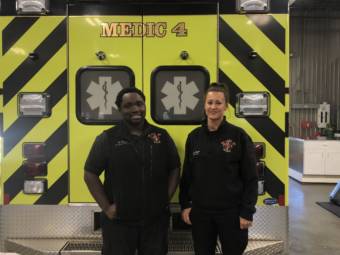
Harrison Deveer and Jessica Smith said they hope the new system will help paramedics preempt emergencies and establish longer term relationships with the Nikiski residents they serve. (Sabine Poux/KDLL)

In an emergency, paramedics in Nikiski might have 30 minutes with a patient before dropping them at the hospital. They likely won’t meet again until that patient has another emergency.

The Nikiski Fire Department is working to change the nature of that relationship. It’s using a grant from the state to build its capacity to address people’s medical needs at home and reach them before — and long after — they’re in crisis.

The immediate goal of Niksiki’s program is to reduce the COVID-19 patient surge at Central Peninsula Hospital. But paramedics hope the program could also be a way to build trust with patients in the service area.

Senior Emergency Medical Services Captain Harrison Deveer said the health care model, called mobile integrated health, is used all over the country.

“We’ve always kind of done something like that, just because of where we live, in a remote place in Alaska,” Deveer said. “Most people don’t have primary care providers. So 911 becomes their primary care provider.”

Normally Niksiki EMS will get a call, take care of the emergency and deliver a patient to Central Peninsula Hospital. But they don’t always follow up with patients after the fact, which is a problem when they’re not regularly seeing a doctor.

“And so then we end up seeing these people over and over again,” he said. “In worse shape.”

Deveer said the mobile integrated health model is a way to preempt hospital visits by helping people before and after they’ve had an emergency.

“We just started this program a week ago, and we’ve already identified multiple people that we’ve got scheduled to go visit,” he said.

The Nikiski Fire Service Area is getting $316,015 from a state grant for the program. The money comes from the latest federal COVID-19 relief act and is distributed by the Alaska State Office of Emergency Medical Services.

The biggest cost is payroll. Deveer said the department is bringing on off-duty paramedics to staff the mobile center.

The primary objective of the grant is to reduce the number of people visiting the hospital for COVID-19 by bringing services like monoclonal antibodies, testing and vaccines to people’s doorsteps.

Earlier this fall, the hospital was often overcapacity due to high numbers of coronavirus patients. But paramedics hope the program could have implications beyond COVID-19.

Paramedic Jessica Smith said she’d like to see them work with patients who are struggling with mental and behavioral health.

“Especially right now, with everything going on, that’s been a huge gap,” Smith said. “And so getting people connected with mental health providers, as well as substance abuse prevention programs, things like that.”

And follow-through, she said, is a big part of the program. Paramedics will stay in touch with patients once they’ve seen them, so they don’t fall through the cracks after that first visit.

Deveer said the program could also help patch a lack of trust in the health care system.

“We’re struggling to get people vaccinated,” he said. “We’ve got something good to help end this pandemic, and people are afraid to do it because they’ve lost significant trust in the health care system. So programs like this help educate people because there’s a lot of misinformation.”

He said educating people and meeting their needs at home could be an avenue to restoring that trust.

“We were at one of our patients’ houses last week who went shopping and bought us chocolate-covered cherries because we are her family,” he said. “Because, unfortunately, not everyone has an extended family that’s there to take care of them. So we become that extended family.”

The lifespan of the grant is in flux. Deveer said he’s hoping for at least six months, with the possibility of continuing the program without the grant into the future.

What happened to the $2M a cruise ship company offered Juneau?

The Sealaska Heritage Institute’s Arts Campus is under construction in downtown Juneau. Sealaska Heritage Institute was one of the local nonprofits that received part of a $2 million donation from Norwegian Cruise Line Holdings. It got $100,000 for the arts campus project.  (Lyndsey Brollini/KTOO)

The $2 million in relief that Norwegian Cruise Line Holdings offered Juneau earlier this year is now reaching local nonprofits’ accounts.

This summer, Norwegian’s initial offer went to the City and Borough of Juneau government. The company said there were no strings attached, but most Juneau Assembly members didn’t like how that would look. Norwegian wants to build a new, downtown cruise ship dock and needs the city’s cooperation to do it.

So instead, Norwegian sent the money out to a bunch of nonprofits in the community. Company officials did not respond to requests for comment. But the organizations on the receiving end did. They were grateful. And, like the original offer to the city, they say there were no strings attached.

Here’s where the money went.

The Juneau Community Foundation got half of it, $1 million. The foundation broke that up into 14 grants to local social service organizations. Among other things, it’s going to help restock the Southeast Alaska Food Bank and fix up housing for people in crisis or experiencing homelessness.

The foundation’s biggest grant is for half a million dollars to the campaign to build the Teal Street Center, which will be a hub for several social service agencies located next to the new Glory Hall building.

Teal Street Center lot by new Glory Hall
Fireweed blooms around a sign marking a lot where the Teal Street Center will be built in Juneau on July 20, 2021. It’s intended to house social service agencies near the new Glory Hall emergency shelter and soup kitchen in the background so its patrons can connect to services easily. (Photo by Jeremy Hsieh/KTOO)

Executive Director Amy Skilbred said the foundation prioritized organizations that serve basic needs: food, shelter and mental and physical health.

“They’re the ones that get the stuff done in our community,” she said.

Specifically:

  • $500,000 for construction of the Teal Street Center. A groundbreaking ceremony is scheduled for Nov. 2.
  • $150,000 to The Glory Hall emergency shelter and soup kitchen for operations.
  • $60,000 to the Tlingit & Haida Regional Housing Authority for repairs to the youth shelter Shéiyi X̱aat Hít, or Spruce Root House.
  • $60,000 to AWARE for building new apartments.
  • $50,000 to St. Vincent de Paul to repair its housing.
  • $45,000 to JAMHI Health & Wellness for workforce development and retention.
  • $30,000 to Capital City Fire & Rescue’s community health program for a vehicle.
  • $25,000 to Bartlett Regional Hospital’s Community Navigator program for a vehicle.
  • $25,000 to the Southeast Alaska Food Bank for food.
  • $12,000 to Bartlett Regional Hospital Foundation for program kits that help school-aged children learn to be safe while home alone or to babysit younger children.
  • $10,000 to the Central Council Tlingit & Haida Indian Tribes of Alaska for its reentry program.
  • $10,000 to Juneau Carbon Offset program for home heating improvements.
  • $10,000 to SAIL for its home improvement program.
  • $8,000 to Juneau Housing First for maintenance and repairs.

Finally, the foundation is keeping $5,000 for administrative overhead.

Two of the foundation’s intended recipients are city government entities: Bartlett Regional Hospital and Capital City Fire/Rescue. In both cases, the money is intended to buy vehicles for programs each one runs that try to reach vulnerable community members physically where they are before unaddressed needs become emergencies.

The hospital’s grant manager said hospital administrators can usually sign off on grants like this without action from its board or the Juneau Assembly. The city’s finance director said the Assembly will likely need to take action to accept the fire department’s grant. So it’s possible the optics issue may come back up.

After those Juneau Community Foundation grants, there’s another million dollars of Norwegian’s donations to account for. The Greater Juneau Chamber of Commerce and Juneau Economic Development Council got $800,000 for local business relief. Board members of the two organizations are working on the particulars of how that will be spent.

The last three donations go toward improving places cruise ship visitors are likely to visit.

Sealaska Heritage Institute got $100,000 for its downtown arts campus project. Chief Operating Officer Lee Kadinger said the main facility will be mostly finished by the beginning of December.

“They’ve just been a great partner in the community and have been wonderful in ensuring their clients come visit Sealaska Heritage,” Kadinger said. “So it’s been a great mutual relationship working with them.”

Other elements, like a covered, outdoor performance area, were delayed because of fundraising concerns amid the pandemic.

Norwegian’s donation “helps complete the bigger vision that we initially had,” Kadinger said.

The Catholic cathedral on Fifth Street downtown is getting $50,000. Father Patrick Casey said it’s going into a campaign to renovate the building to make it wheelchair accessible. Casey also explained that some cruise ship passengers seek out Mass services while they’re in town. The church gives free rides from the docks to its services.

Finally, $50,000 is also going to the New JACC partnership, which wants to replace the Juneau Arts and Culture Center. The current facility was originally a National Guard armory.

Juneau was one of six Alaska port communities that Norwegian Cruise Line Holdings’ ships visit that it donated money to earlier this year. The company committed $10 million total. The other communities were Hoonah, Ketchikan, Sitka, Skagway and Seward.

Vigil held for Juneau man who has been missing for a month

Barbara Charles shares memories of her grandson, Doug Farnsworth, during a vigil for him on Wednesday, Oct. 27, 2021, at Overstreet Park in Juneau, Alaska. Farnsworth has been missing for a month. (Rashah McChesney/KTOO)

Nearly 50 people crowded into a shelter at Overstreet Park at a candlelight vigil for missing Juneau man Doug Farnsworth. Dozens more watched livestreams and left hundreds of comments.

Despite the darkness, rain and biting wind, they spent more than an hour talking about their memories of loving and being loved by Farnsworth. He was last seen more than a month ago walking on a trail near downtown.

No one said it explicitly, but the knowing laughter and the memories people shared with his grandmother on Wednesday evening made it clear that Doug Farnsworth knew how to have a good time.

“I had a lot of crazy times with your grandson,” said one woman who didn’t identify herself. “I won’t say what I did with him — with our friends — but I really appreciate you sharing him with us, cause he was a light.”

Jayme Donahue cries during a vigil for her friend Doug Farnsworth on Oct. 27, 2021, in Juneau. Farnsworth disappeared in late September and has been missing for a month. (Rashah McChesney/KTOO)

Jayme Donahue said it was deeper than just good times.

“You know, I just — I didn’t have like the picture-perfect upbringing, and I was always running from my home,” she said. “His home was always open to me, and he had this kind spirit that I just clung too.”

Donahue said the process of physically searching for his body has been really emotional for her. She said she searched the beach front along Overstreet Park where the group stood overlooking Gastineau Channel. She wiped away tears several times as she asked people at the vigil to remember to reach out to each other. To push past discomfort and social norms and connect with others.

“I just really encourage people to judge less and feel more and be there for those they love,” she said.

She said she didn’t always do that for Doug when he reached out to her, even though they’ve been friends since middle school.

“I would give anything to go back,” she said. “I don’t have our messages, I don’t have our pictures … I’m really ashamed of that, and I’m really broken-hearted over that. I just encourage everybody to not hold back. Tell people you love them, tell people how much they mean to you, how special they are to you. I would give anything to tell Doug how special he is to me. I would give anything to tell him all of the things I love about him, and I can’t.”

About 50 people showed up to a vigil for Juneau man Doug Farnsworth on Oct. 27, 2021, in Juneau. He has been missing for a month. (Rashah McChesney/KTOO)

Farnsworth is a 32-year-old Juneau man whose family reported him missing on Sept. 29. His older sister, Kiersten Farnsworth, says she and other family members believe he is dead. They’re offering a $5,000 reward for anyone who helps them find his body.

Kiersten Farnsworth lives in Arizona and flew up to Juneau to look for him. She has since had to go home. But she has been very active on social media, organizing search efforts and checking in with police and Alaska State Troopers with whatever information she can find. Juneau Police said Thursday that it’s an active case and they’re following up on leads, but they don’t have any updates.

Even though she’s thousands of miles away, she organized the candlelight vigil for her brother. Then she lit a candle of her own and watched from afar, commenting online as each person spoke about him. She said she doesn’t want people to forget that he’s still missing.

Dozens of residents attended a vigil for Juneau man Doug Farnsworth on Oct. 27, 2021, in Juneau. (Rashah McChesney/KTOO)

Barbara Charles, Farnsworth’s grandmother, thanked everyone for coming out and continuing to search for her grandson. She said she misses him running into her home, wrapping his arms around her and telling her she is the most beautiful woman in the world.

Juneau family members carried a large wooden cross and photos to put in the center of the group. They tried to light candles, but the wind didn’t cooperate. Someone else passed around glow sticks for people to hold. There were a lot of hugs and inside jokes.

A woman livestreams a vigil for Juneau man Doug Farnsworth on Oct. 27, 2021, in Juneau. (Rashah McChesney/KTOO)

It’s tricky to piece together exactly where Doug Farnsworth went the night he vanished, but Kiersten Farnsworth has footage of a truck he was driving on Basin Road at around 4:30 a.m. Then someone sent her a screenshot of him walking down the nearby Flume Trail at nearly 7 a.m. She asked that anyone who lives in that area check their game cameras and surveillance videos from Sept. 29 to try and spot him.

Volunteers are trying to organize a group search of the Basin Road area in a Facebook Group called Help Find Doug.

The Farnsworths are Lingít, and they have a lot of extended family in town. As the vigil wound down, one woman stepped forward to tell the crowd that there is no goodbye in the language, only the parting phrase “I will see you again.”

“So tsu yei ikḵwasatéen tsá tsú — until we meet again. That’s how deep that word and phrase is,” she said.

Correction: A previous version of this story misnamed the bridge the crowd gathered near for the vigil, it is the Douglas Bridge. 


Site notifications
Update notification options
Subscribe to notifications