Mental Health

How Alaska schools can help students dealing with trauma

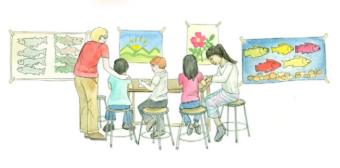
Alaska artist Kristin Link illustrated the Alaska Dept. of Education & Early Development's framework for helping students deal with trauma, released Jan. 28, 2019. (Illustration by Kristin Link, used with permission)
One recommendation from the Alaska Dept. of Education & Early Development’s framework for helping students deal with trauma, released in Jan. 2019, suggests transforming the physical space of a classroom to “promote a sense of emotional and physical safety.” (Illustration by Kristin Link, used with permission)

In January, the state put out a new resource designed to help schools support students who have experienced trauma. “Transforming Schools” recommends practices such as embracing culture in the classroom and teaching students how to calm themselves down when they get upset.

Educators are hoping the resource can help schools can do a better job meeting the needs of Alaskan students.

Two out of three Alaskan adults have experienced childhood trauma. That’s according to the Alaska Division of Public Health. And trauma can get in the way of learning.

“A student can’t walk through the door and forget everything that happened to him before he walked through that door, whether he didn’t have breakfast, mom and dad were fighting, different things like that,” said Sharon Fishel, education specialist at the Alaska Department of Education & Early Development.

Fishel said thinking about trauma in schools is not new in Alaska: “Everybody wanted to do trauma-informed, trauma-sensitive, trauma-engaged schools, but they were all recreating the wheel.”

So, with the Association of Alaska School Boards and half a dozen other partners, Fishel’s department set out to create the wheel: a way that schools can help children who have experienced major life stressors or traumatic events. That includes what students experience firsthand, as well as the ongoing impacts of historic events, like the way colonialism worked through the educational system in Alaska. Damage is still unfolding from practices that include the forced removal of Alaska Native children from their homes, the boarding school system and oppression of Alaska Native languages and culture.

Today, Fishel said engaging with trauma in schools is about shifting the mindset from “what’s wrong with you?” to “what’s happened to you?”
Alaska artist Kristin Link illustrated the Alaska Dept. of Education & Early Development's framework for helping students deal with trauma, released Jan. 28, 2019. (Illustration by Kristin Link, used with permission)
Teaching students respect for the land as a cultural value is one suggestion in the Alaska Dept. of Education & Early Development’s framework for addressing trauma in schools, released in Jan. 2019. (Illustration by Kristin Link, used with permission)

The new resource contains eleven chapters full of stories and best practices, created with input from over 200 teachers, counselors, and community members across the state. Fishel said schools can pick and choose and use them in any order — but there is a logic to starting at the beginning: The first chapter explores the brain science of trauma, drawing on research that shows extreme stress can actually disrupt healthy brain development.

Catherine Mendenhall said she can see that in her classroom. She’s been a teacher in Alaska for 18 years, both on and off the road system.

Mendenhall said schools set lofty goals for their students — and face pressure to meet them — but emotional needs have to come first.

“If we’re wanting students to learn math and science and how to read, and they are stuck in fight-or-flight mode, they’re not going to be able to use all of their mind to learn, because so much of it is tied up in wondering whether they’re safe,” Mendenhall said.

The new state resource emphasizes a team approach to helping students deal with trauma.

Mendenhall said this is already working at her school. Parents, teachers, specialists — even the school principal is involved.

But for a lot of schools, building teams to address students’ emotional needs will mean hiring more people or asking staff to do more with less. And without a major priority shift, Mendenhall is not optimistic about the future of school funding in Alaska. She said we’ll get what we pay for.

“Unless we have more mental health help, more counselors, more people who are  experienced in helping these students through their trauma, schools are not going to succeed, because the students aren’t gonna be able to do the tasks we expect them to do,” Mendenhall said.

Last week, Gov. Michael Dunleavy’s administration proposed doing away with $20 million of public school funding that the Alaska Legislature had agreed to in the last budget. His plan for the state’s next budget — and any future changes to education spending — will be released Feb. 13.

The framework for addressing trauma in schools released by the Alaska Dept. of Education & Early Development in Jan. 2019 emphasizes positive relationship-building as a way to counter the negative impacts of childhood trauma. (Illustration by Kristin Link, used with permission)

Mental health trust will finally sell its downtown Juneau subport lot

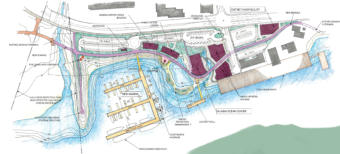
Conceptual plans for a future “Juneau Marina District” would include a yacht marina, berth for small cruise ships and the Alaska Ocean Center on land that includes a 2.9-acre parcel owned by the Alaska Mental Health Trust. (Courtesy of MRV Architects)

The Alaska Mental Health Trust Authority has finally decided it’s time to sell a prominent waterfront lot it owns in downtown Juneau.

The trust was influenced by a report it commissioned from the Urban Land Institute for $50,000. The Seattle-based nonprofit’s report concluded that selling the 2.9-acre subport lot is a financially safer bet than leasing and managing the land long-term.

“We know we have increased interest,” said Wyn Menefee, executive director of the Trust Land Office. “In the trust’s interest, we’re supposed to maximize the revenue so that it benefits the beneficiaries. We see that we think we have a competitive interest here, and so we are going out for a competitive sale.”

In recent years, several parties have pitched purchase, lease and development plans for the site. Some locals wanted to build an ocean science attraction there. The state wanted to lease it for employee parking. Juneau city planners wanted to reserve part of it for a pedestrian seawalk connection between Overstreet Park and the main cruise ship docks. Two summers ago, homeless people camped there.

The lot has been mostly vacant since 2007, when a state building for storing surplus was torn down.

Menefee said marketing will begin this winter leading up to an auction and, if things go to plan, a new owner will be named this summer. The land institute estimates its value at $3 million.

That’s a relief for City Manager Rorie Watt. He said he wishes the trust had sold the property a decade ago, invested, and passed earnings onto mental health trust beneficiaries.

“And we’ve been trying to nudge, poke, prod, cajole, shove (the trust) into action on this parcel,” Watt said. “And it took them a long time to reach the conclusion that sale was the right way forward.”

The Alaska Mental Health Trust Authority is mandated to manage about 1 million acres of state land and a portfolio worth about $560 million to benefit Alaskans’ mental health needs. Its earnings turn into tens of millions of dollars in annual grants for programs like alcohol and drug abuse prevention and treatment, supportive housing and health care training.

Editor’s note: KTOO’s building sits on land leased from the Alaska Mental Health Trust Authority. KTOO has also applied for and received occasional grants for special reporting projects from the authority.

Southeast students explore careers to meet Alaska’s behavioral health needs

Holli Davis came to a behavioral health camp in Juneau the week of of Jan. 28, 2019 hoping to get "more of a clear vision" of a career in social work. (Photo by Zoe Grueskin/KTOO)
Holli Davis came to a behavioral health camp in Juneau the week of of Jan. 28, 2019, hoping to get “more of a clear vision” of a career in social work. (Photo by Zoe Grueskin/KTOO)

High school students from around Southeast Alaska met in Juneau last week to explore careers in behavioral health. The state has a shortage of workers in these fields, and there’s a push to recruit Alaskans to come back after college and do those jobs in their home communities.

Holli Davis is a senior at Petersburg High School. She’s been thinking a lot about what she’d like to do in the future, and right now she’s considering social work. She wants to work with kids.

“Being in Petersburg, you know a lot about kids and their upbringing in life,” she said. “And sometimes you know know they didn’t have a good upbringing, and I kind of just want to help them out.”

Along with 18 other teens from the region, Davis spent a week in Juneau for Behavioral Health Career Connections, a program for students to learn more about careers in behavioral health. The field includes jobs like counselors, psychiatrists, social workers — anyone who works with mental health or addiction.

The students took field trips and got to talk with professionals during their time in the state capital. They also did an eight-hour, hands-on training to get certified in mental health first aid, so they’re now better-equipped to help someone struggling with anything from a panic attack or suicidal thoughts to substance withdrawal. Thanks to a federal grant through the Carl D. Perkins Act, the whole program was free.

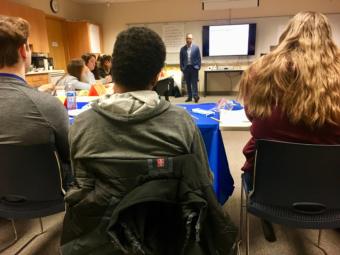
Sahara Kilic hoped the behavioral health camp that began Jan. 28, 2019 in Juneau would help her turn her interest in post traumatic stress disorder into a career plan. (Photo by Zoe Grueskin/KTOO)
Sahara Kilic hoped the behavioral health camp that began Jan. 28, 2019 in Juneau would help her turn her interest in post-traumatic stress disorder into a career plan. (Photo by Zoe Grueskin/KTOO)

Joan Pardes is the director of the Southeast Alaska Area Health Education Center, which organized the week-long event.

“The goal of this program is to really pull back the curtain of behavioral health careers,” said Pardes, adding she hoped it would show students that these are achievable — and often well-paid — career options.

It’s part of a larger mission to support more health care workers in Alaska — especially in rural and underserved areas, where there aren’t enough providers to meet communities’ needs. According to the Alaska Division of Public Health, that’s true in most of the state.

Sahara Kilic has seen it firsthand in Skagway. She plans to attend college out-of-state in the fall, but she said she can see herself coming home.

“You can definitely see the deficit that we have. We barely have any health care workers here in the state,” Kilic said, “and I feel like helping my community is a good thing, so I’d wanna come back and help them.”

Andy Jones, director of the state’s Office of Substance Misuse and Addiction Prevention, said it’s encouraging to see the students so engaged. He talked to the group about the opioid epidemic.

Jones said he loves working with students because they’re not afraid to ask tough questions, like how does someone getting out of prison find a place in a small community? And how should the community respond?

“These are big questions that professionals are asking,” Jones said. “So by them asking that at such a young age, I have a lot of hope for the future.”

The students have a lot of hope, too. But right now, first thing’s first: figuring out college. Both Davis and Kilic came to the program in Juneau with questions about scholarships and what to study.

Davis is also planning to leave Alaska for school. But she said she loves Petersburg, and she has a feeling she’ll be back.

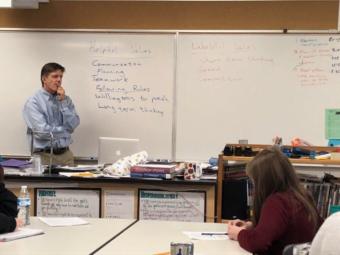
Andy Jones, director of the state of Alaska's office of substance misuse and addiction prevention, talked about the opioid epidemic with teens at a behavioral health camp in Juneau on Jan. 29, 2019. (Photo by Zoe Grueskin/KTOO)
Andy Jones, director of the state of Alaska’s Office of Substance Misuse and Addiction Prevention, talked about the opioid epidemic with teens at a behavioral health camp in Juneau on Jan. 29, 2019. (Photo by Zoe Grueskin/KTOO)

After scathing audit, Alaska Mental Health Trust Authority says fixes are underway

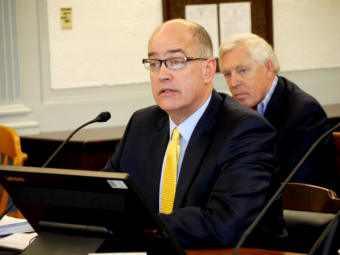
Alaska Mental Health Trust Authority CEO Mike Abbott gives an overview of the organization to the Senate Finance Committee, in Juneau on Jan. 31, 2019. He also fielded questions from senators about criticisms of the trust found in a legislative audit.
Alaska Mental Health Trust Authority CEO Mike Abbott gives an overview of the organization to the Senate Finance Committee, in Juneau on Jan. 31, 2019. He also fielded questions from senators about criticisms of the trust found in a legislative audit. (Photo by Skip Gray/360 North)

Alaska Mental Health Trust Authority CEO Mike Abbott sounded like he was talking about an invasive medical screening when he described being audited.

“You won’t be surprised to hear me say that audit processes are not always enjoyable in the moment, but even if they aren’t enjoyable as you’re experiencing them, (they) can significantly improve the performance of an operating entity like the trust,” Abbott said from the hot seat at a Senate Finance Committee meeting on Thursday.

He took over leadership of the trust as auditors working for the state Legislature were finishing up a scathing report of the trust. It was released last year and flagged years of investment and meeting practices that were likely illegal and concluded the trust was exposed to lawsuits on multiple fronts it would likely lose. Thursday, Abbott was updating state lawmakers on how he’s fixing it.

The auditors found the trust had overreached its investment authority by buying and managing commercial real estate it wasn’t supposed to. Then it mishandled earnings from those properties. And the auditors found that some board members were deliberately obscuring trust business that should have been public.

Abbott said they’ve rewritten bylaws and have held trainings on transparency obligations. They hired a firm to examine their investment policies to comply with state law. The trust will have the firm’s recommendations in February.

“We expect to be completed, substantially complete, with the policy decisions to fully address these issues by June of this year,” Abbott said. “The trustees and myself have agreed that we’re going to use this to improve both our practice and the public’s confidence in our practice, and our work, ultimately, for beneficiaries.”

The trust is also working with the Alaska Permanent Fund Corporation, which is supposed to handle the trust’s investments, on what to do with the handful of commercial real estate properties it still owns. The trust expects that process to be complete by June as well.

Sen. Bert Stedman, R-Sitka, co-chairs the committee Abbott was speaking to. Stedman said he thinks the trust is on track to smooth things out and avoid lawsuits.

“But we just need to keep an eye on them, so we get this situation put to bed,” Stedman said. “I think we’ve got in front of it enough to take care of that, there doesn’t appear to be any loss to the trust beneficiaries.”

The Alaska Mental Health Trust Authority is mandated to manage about 1 million acres of state land and a portfolio worth about $560 million to benefit Alaskans’ mental health needs. Its earnings turn into tens of millions of dollars in annual grants for programs like alcohol and drug abuse prevention and treatment, supportive housing and health care workforce development.

Watch the latest legislative coverage from Gavel Alaska:

Clarification: References to the medical screening-audit comparison have been clarified to avoid suggesting it was the CEO’s. It was the reporter’s. 

In rural communities, jails house psychiatric patients awaiting transport to hospitals

A cell where psychiatric patients are held in the Haines rural jail. (Photo by Henry Leasia/KHNS)

When Alaska residents go through a severe mental health crisis, many rural clinics lack the resources to ensure their safety. Often when patients are at risk of harming themselves or others, it is up to local law enforcement to provide a secure space that can be monitored.

Health providers and law enforcement in Haines question whether a rural jail is appropriate for holding such patients until they can receive treatment.

Haines Borough Police Chief Heath Scott opens the door to a white-walled room with a concrete floor.

“All of our cells are the same, but if you’re a mental health consumer, you’re sitting in here,” Scott says.

There are two cots on either side and a metal toilet at one end. The cell is bathed in a pale light filtered through a barred window.

This is where people in Haines are held after they have been involuntarily committed under the state’s title 47 law. The law allows guardians, spouses, relatives and certified physicians to commit an alcoholic or drug abuser for 30 days if they are likely to harm on someone else.

“Their liberties are suspended for a short period of time. You don’t have the ability to leave this environment. We have to have a clinician review your current status to see are you well enough to leave our facility,” Scott says.

Stephanie Pattison is the director of the Southeast Alaska Regional Health Consortium (SEARHC) clinic in Haines. She says there are a few ways that someone may end up committed through title 47.

“A person in a mental health crisis either comes into the clinic or goes over to Lynn Canal Counseling. They are just not able to make rational decisions. They may be threatening to hurt somebody or hurt themselves,” Pattison says.

After a thorough medical examination, a clinician will determine whether the individual should be held and monitored.

The Haines rural jail is used to temporarily house the individual until the crisis passes or transportation to a larger hospital arrives. The nearest hospital is a plane flight away from Haines, which limits transport options.

“They can’t go commercial and they can’t go medevac,” Pattison says. “A security company that is trained to care for and transport clients or patients—arrangements have to be made for them to come on a charter to collect that individual.”

It takes at least a day or two before patients can be transferred to an adequate health care facility.

Chief Scott says the rural jail is the only available space to hold them while they wait for treatment.

“When we don’t have a hospital bed, so to speak, and a security guard at a hospital, our best solution is putting them in a detention center and watching them here,” Scott says.

The clinic in Haines is not staffed 24 hours a day and lacks a secure room for monitoring.

Medical staff checks up on patients held in the jail on a regular basis to monitor their health. Sometimes their condition improves to the point that they can be released before being sent for treatment elsewhere.

However, Pattison thinks that a jail is a stressful environment for patients.

“If I was in there, I would truly wonder what I had done wrong,” Pattison says. “Unfortunately, it’s not that they’ve done anything wrong, it’s just that they’re ill and it’s the place we can keep them safe. In a perfect world, it would be wonderful to have a facility that would not be the jail. But I’m not sure what that is.”

About 10 patients are held in the Haines rural jail each year due to title 47 committals. Chief Scott says while it isn’t a tremendous number of incidents, he feels uncomfortable detaining people who are unwell.

“They’re not criminals. They’re sick,” Scott says.

Recently, the Haines Borough has been trying to collaborate with SEARHC to build a better safe room for patients. The SEARHC clinic in Haines will undergo a remodel in the near future. Borough manager Debra Schnabel has suggested adding a safe room to the renovation plans.

Pattison says she has worked at hospitals with safe rooms in the past. These spaces, while safer, are not very different from a jail cell.

“It’s a padded room. There is nothing that can be removed by a person in it, with literally a mattress on the floor. Most floors are just linoleum with a drain tile in,” Pattison says.

Pattison is unsure whether it will be possible to add such a room to the clinic in Haines. However, she is willing to work with stakeholders to find a solution.

Why Mount Jumbo won’t be logged anytime soon

Mount Jumbo, also known as Mount Bradley, from the trail. (Photo by Adelyn Baxter/KTOO)
Mount Jumbo, also known as Mount Bradley, seen from the trail. A land exchange between the Alaska Mental Health Trust Authority and the U.S. Forest Service will transfer ownership to the federal government. (Photo by Adelyn Baxter/KTOO)

The Alaska Mental Health Trust Authority board approved its largest land exchange to date Thursday.

Through the deal, up to 40,000 acres of land in and around Southeast communities will change hands between the Trust and the U.S. Forest Service.

The land exchange is the culmination of more than a decade of work by stakeholders and took acts of both Congress and the Alaska Legislature to make it happen.

Once all is said and done, about 18,000 acres of land owned by the Alaska Mental Health Trust Authority will be swapped for roughly 20,000 acres of U.S. Forest Service land.

“We don’t know the exact acreage because it’s based upon equal value, so we’ll see in the end,” said Wyn Menefee, executive director of the Trust Land Office.

The Mental Health Trust owns land all over Alaska, and its goal is to use them to generate money to pay for services for beneficiaries.

Often, that means earning funds through logging and mining. But some of the trust’s lands in Southeast border residential neighborhoods and sites for outdoor recreation.

That includes 2,689 acres around Mount Jumbo, also known as Mount Bradley, a scenic hiking destination in Juneau.

The same goes for Deer Mountain overlooking Ketchikan and similar parcels near Petersburg, Sitka and Wrangell.

Those lands will now be owned and protected by the Forest Service.

“All the lands that we’re receiving are going to be lands that people can access or recreate on,” said Forest Service spokesman Paul Robbins Jr. back in November. “Whether it’s remote recreation or semi-remote recreation, we are supposed to manage these lands for that, including the development and maintenance of recreational trails.”

In exchange, the trust receives federal lands on Prince of Wales Island for logging. They also have a contract with Viking Lumber on Prince of Wales — one of the last working sawmills in Alaska.

With that deal, the trust expects the 10-year sale of old-growth timber to generate up to $15 million for the trust.

But that’s just some of the land involved. Menefee said the entirety of the land they’re getting from the Forest Service will generate millions more in the decades to come.

He said the exchange is a win-win — they gave up lands communities did not want to see logged, and now they can use existing logging infrastructure on Prince of Wales.

“So this puts us in a situation where we can actually make revenues from lands that we get through this exchange, which will help the beneficiaries,” Menefee said.

While residents in those communities may be relieved that nearby lands will be protected, some on Prince of Wales view the exchange as just another instance where they bear the burden of resource development.

Cheryl Fecko has lived in Craig, Alaska, for nearly 40 years. She said she and many of her neighbors are concerned by the impact logging has on species like salmon and deer, which many people rely on for food in the remote community.

“We have over 1,000 miles of road and a patchwork of clear cuts in various stages of regrowth, but honestly I think that’s kind of reason to maybe not go immediately to Prince of Wales instead of always using it as the ‘sacrificial lamb of the Tongass,’” Fecko said.

Menefee said the smaller first phase of the land exchange — which involves two mountains near Ketchikan and timber lands on Prince of Wales — should finalize later this month.

He said Viking could begin processing lumber by February.

Site notifications
Update notification options
Subscribe to notifications