History

Delta, Greely celebrate Alaska Highway’s 75th anniversary, black troops who helped build it

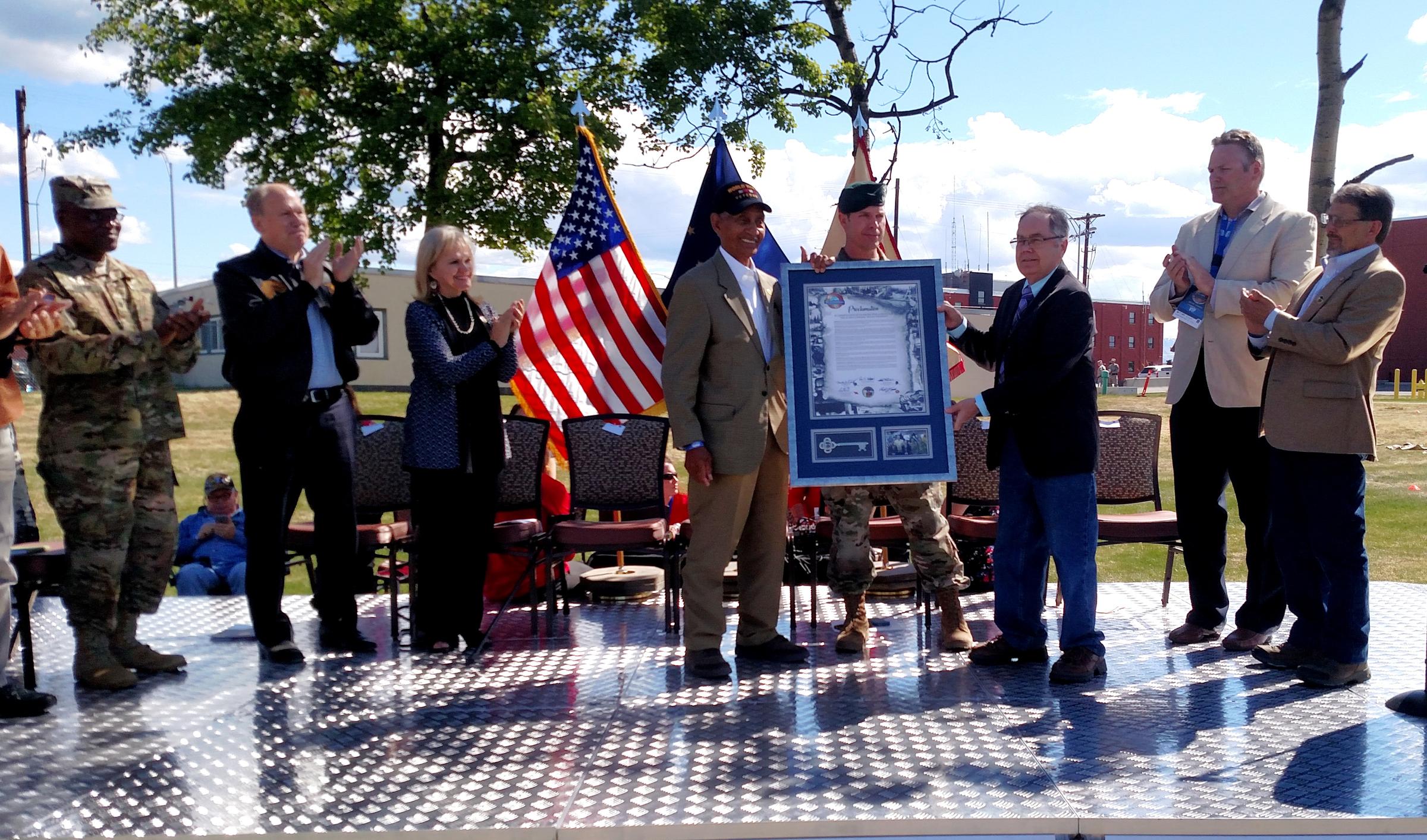
Fort Greely senior officers and invited dignitaries applaud after Leonard Larkins receives a proclamation and key to the city of Delta Junction at the end of Saturday's ceremony on Fort Greely. From left, Chaplain Maj. Ernest Ibanga, Gov. Bill Walker, First Lady Donna Walker, Larkins, Greely Garrison Commander Lt. Col. Michael Foote, Delta Mayor Pete Hallgren, state Sen. Mike Dunleavy and state Rep. George Rauscher. (Photo by Tim Ellis/KUAC)
Fort Greely senior officers and invited dignitaries applaud after Leonard Larkins receives a proclamation and key to the city of Delta Junction at the end of Saturday’s ceremony on Fort Greely. From left, Chaplain Maj. Ernest Ibanga, Gov. Bill Walker, First Lady Donna Walker, Larkins, Greely Garrison Commander Lt. Col. Michael Foote, Delta Mayor Pete Hallgren, state Sen. Mike Dunleavy and state Rep. George Rauscher. (Photo by Tim Ellis/KUAC)

Fort Greely and Delta Junction celebrated the Alaska Highway’s 75th anniversary Saturday – and one of the soldiers who helped build it.

Gov. Bill Walker and other state and local leaders attended a tribute to Leonard Larkins, 96, one of more than 3,000 African-American soldiers who helped build the highway.
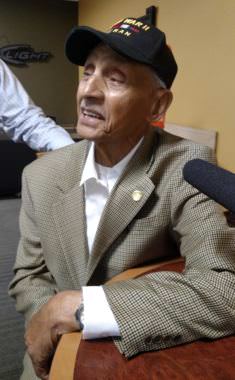
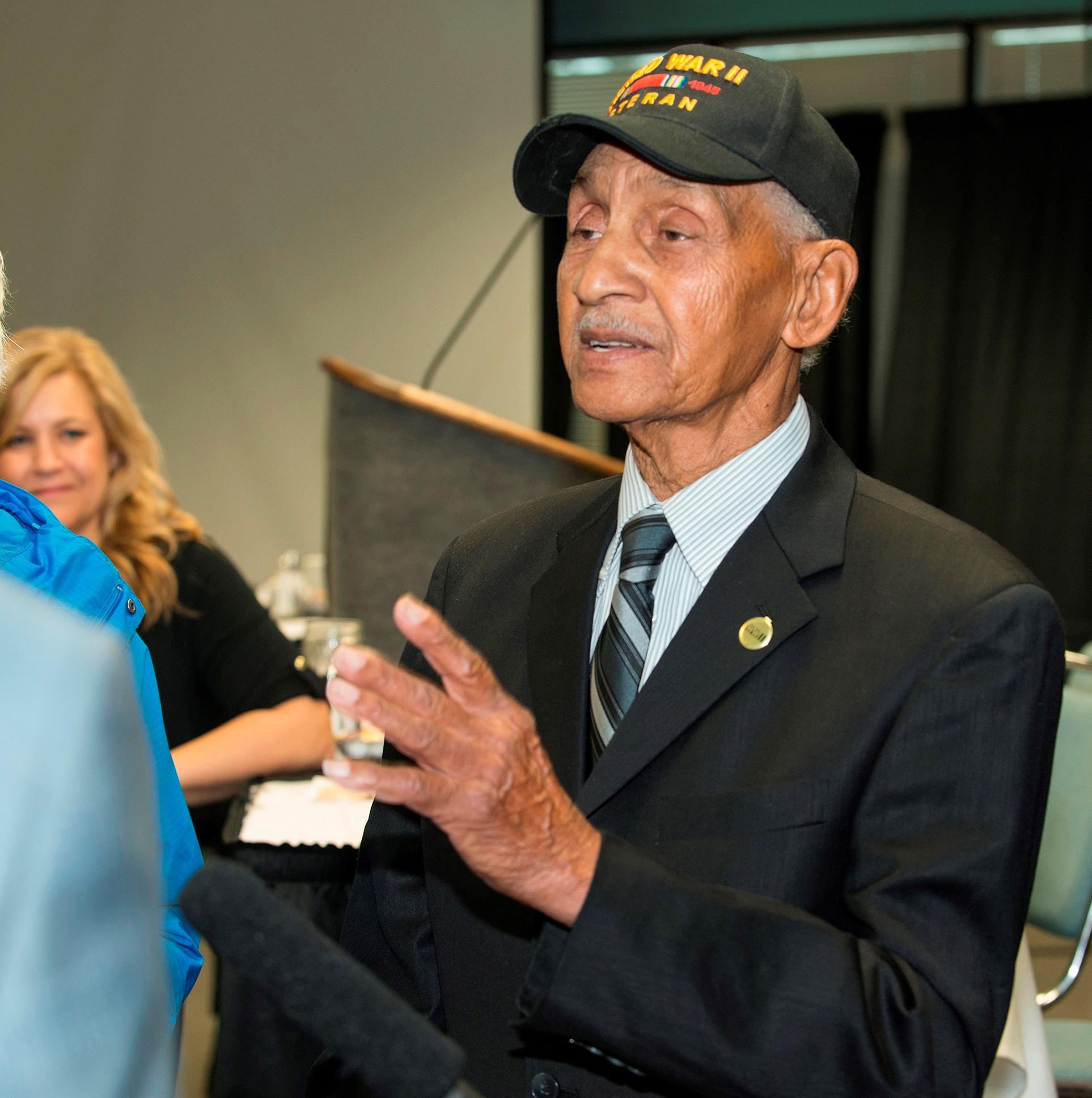
Leonard Larkins says most of his memories from the eight months he spent helping build the Alaska Highway involve clouds of mosquitos, miles of mud and "The cold ... that was the biggest thing, the cold weather." (Photo by Tim Ellis/KUAC)
Leonard Larkins says most of his memories from the eight months he spent helping build the Alaska Highway involve clouds of mosquitos, miles of mud and “The cold … that was the biggest thing, the cold weather.” (Photo by Tim Ellis/KUAC)

Larkins vowed to never return to Alaska 70-some years ago, he said, after serving two grueling tours of duty up here.

“I can’t remember way back when, because I actually tried to put all this behind me at one time, after I left the service,” he said in an interview after Saturday’s ceremony. “It was pretty rough here.”

Rough, because he and 11,000 other soldiers had to carve a 1,500-mile road out of wilderness in just over eight months, to open an overland supply route to deter or repel Japanese invasion.

Even rougher, because Larkins and about 3,500 African-American soldiers serving in segregated units had to build their sections of the road with little support and under hardships like enduring months of winter weather while living in tents.

“The cold – y’know, that was the biggest thing, the cold weather,” he said.

But after a five-day whirlwind tour of Fairbanks and the Delta-Greely area over the past week, Larkins’ son, Bert, said his dad was feeling a lot better about coming back to Alaska.

“The people here in Alaska – I mean, it’s so nice,” Bert Larkins said. “They have been so wonderful here.”
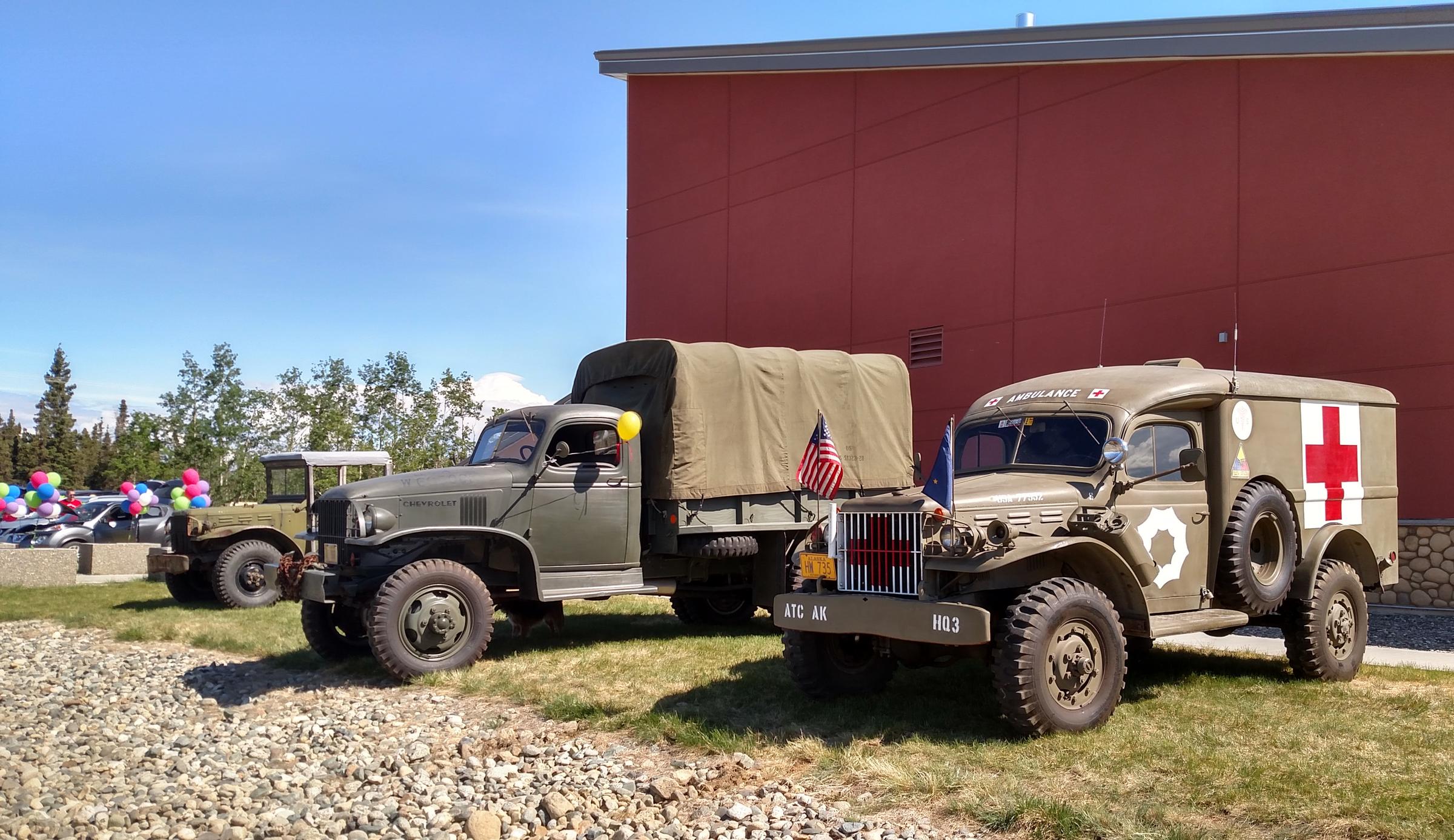
Owners of World War II-era Army trucks from Delta, Fairbanks and Anchorage brought their rigs and parked them in front of Fort Greely's Community Activity Center, where Saturday's ceremony was held, to lend an historically appropriate feel to the event. (Photo by Tim Ellis/KUAC)
Owners of World War II-era Army trucks from Delta, Fairbanks and Anchorage brought their rigs and parked them in front of Fort Greely’s Community Activity Center, where Saturday’s ceremony was held, to lend an historically appropriate feel to the event. (Photo by Tim Ellis/KUAC)

Among those offering tributes to Larkins at Saturday’s ceremony on Fort Greely was Walker, who felt personal connections with him based on his parents having shared related wartime experiences.

“Meeting Mr. Larkins is like meeting a member of my family,” Walker said in his remarks during the ceremony. “My mother came to Alaska to work with the (Army) Corps of Engineers on building the Alcan Highway.”

Alcan is a contraction of Alaska and Canada, through which the highway passes, and it’s the name by which many refer to the Alaska Highway.

Walker said his father also served in the Aleutian Islands during World War II, as did Larkins, who was sent there with his unit after they’d completed work on the highway in October 1942.

“Building the Alcan Highway was not enough for Mr. Larkins,” Walker said. “He stayed in Alaska, went on to the Aleutians, in Attu and Kiska. And my father was in the Aleutian Islands at Attu and Kiska, as part of the Alaskan Scouts, part of Castner’s Cutthroats.”

The Alaskan Scouts, aka Castner’s Cutthroats, were a small covert unit of Army intelligence soldiers whose reconnaissance and guerrilla tactics helped forced the Japanese to retreat from the Aleutians in 1943, a year after they’d invaded and occupied three islands.

Walker said the Alaska Highway promoted development of Big Delta Army Airfield, later re-named Allen Army Airfield, and Fort Greely itself, where Walker went to grade school for several years while his family lived in the area.

“Thank you very much for your service to our country and certainly to this state,” he said, leading the crowd in applause.

Greely garrison commander Lt. Col. Michael Foote said the service rendered by Larkins and his fellow African-American soldiers not only helped win the war; it also helped end segregation in the U.S. military and promoted civil rights nationwide in the years that followed.

“We don’t have African-American regiments, or Mexican-American units, or all-white battalions,” Foote said. “We don’t have those anymore because men like Mr. Larkins served their country and demonstrated the value of every American fighting man.

At the end of the ceremony, Foote and Delta Mayor Pete Hallgren presented Larkins with a key to the city and framed proclamation thanking him for his service.
Survivors look back on the Japanese bombing of Unalaska 75 years ago

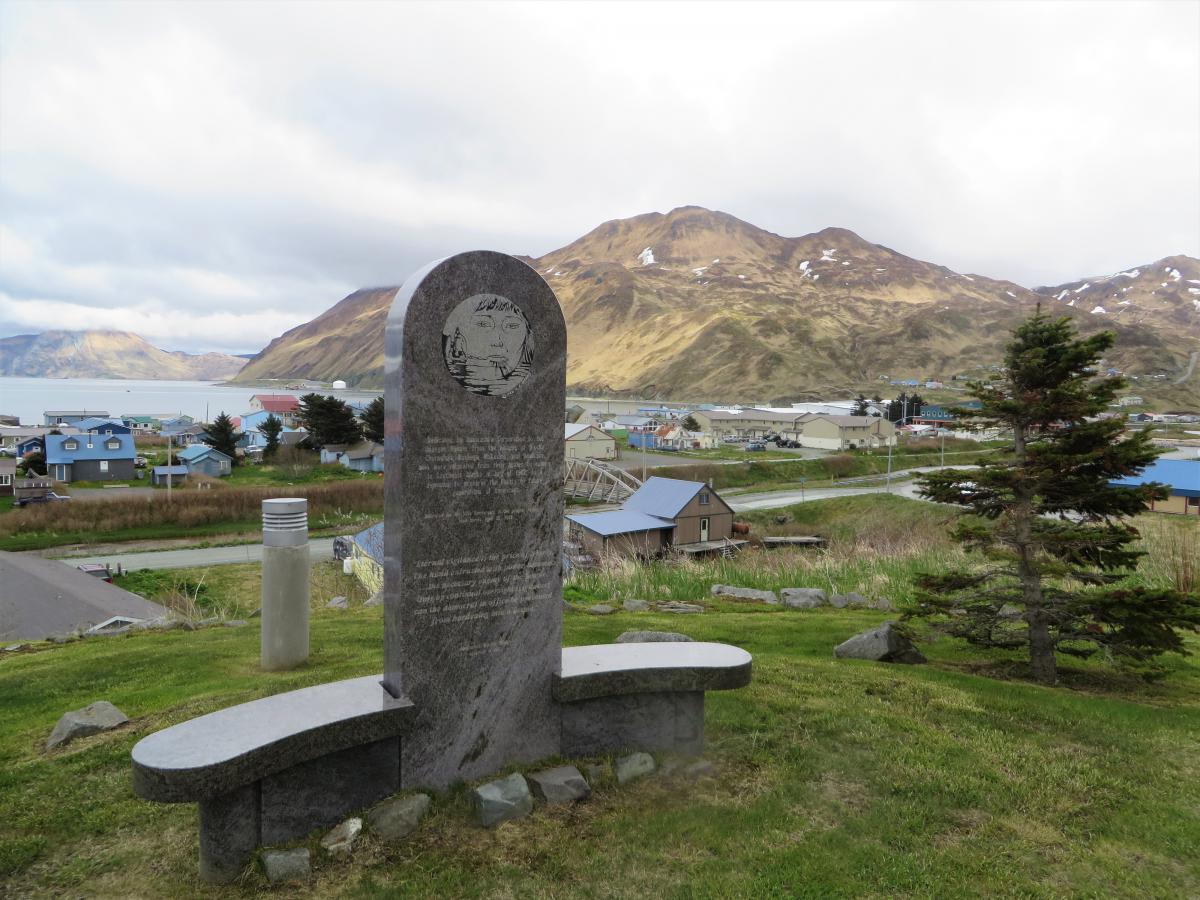
A memorial overlooking downtown Unalaska is dedicated to the Unangax who were forcibly evacuated during WWII and the Aleutian villages that were never resettled. (Photo by Laura Kraegel/KUCB)
A memorial overlooking downtown Unalaska is dedicated to the Unangax who were forcibly evacuated during World War II and the Aleutian villages that were never resettled. (Photo by Laura Kraegel/KUCB)

Japan bombed Unalaska 75 years ago, killing more than 40 Americans and triggering the evacuation of hundreds.

In the aftermath, many Aleutian residents survived. But the number is dwindling as decades pass.

Forty-three veterans and evacuees are gathering in Unalaska this weekend to commemorate the events of World War II.

The attack on Dutch Harbor turned the Aleutian Islands into a war zone.

While the military dug in and fought the Japanese, the region’s Native residents were forcibly evacuated by the U.S. government.

Organizers say they’ve planned a commemoration that honors both halves of that painful history.

Planning committee member Janice Krukoff said the two groups may have had different experiences of World War II, but marking the anniversary is really about one thing.

“Being able to see the veterans and the evacuees come together, it’s a long time in the making,” Krukoff said. “Continue moving forward in a positive way, our story never to be forgotten.”

That story is personal and urgent for Krukoff. Her parents were among the 881 Unangan people taken from their homes and sent to internment camps in Southeast Alaska.

They survived, despite the crowded conditions and meager supplies. But not everyone was so fortunate.

Krukoff said she’s approaching this weekend as a chance to recognize the Unangax who died during the war — and to learn from those still living today.

“The majority of them are elderly now,” Krukoff said. “This may be the last hosting of something of this magnitude.”

Time also is passing quickly for veterans of the Aleutian campaign.

Only eight servicemen are making the trip to Unalaska.

Historian Jeff Dickrell said that’s far fewer than the last major anniversary.

“For the 50th, there were probably 100 veterans,” Dickrell said.

This weekend, Dickrell will tell the story of the Japanese attack in detail, with help from visiting veterans.

Their talk is just one part of a packed agenda that includes storytelling sessions, memorial services and historic flyovers.

Those won’t feature the Japanese fighter planes that flew over Unalaska during the 50th anniversary. Dickrell said that sight was too intense for many who lived through the real thing.

“Everybody just fell silent,” Dickrell said. “We all realized that it was kind of a dichotomy of cool history, but also you’re replicating the deaths of Americans and war.”

This time around, pilots are sticking with North American military aircraft — an amphibious Grumman Goose and a bright yellow T-6 Texan.

The commemoration started Friday and continues all weekend.

Alaska Highway 75th anniversary: A tribute to veterans who helped build ‘road to civil rights’

Alaskans will celebrate the 75th anniversary this year of the Alaska Highway. Organizers of those celebrations plan to include tributes to the African-American soldiers who helped carve the road out of rugged wilderness.

A roomful of people at the Greater Fairbanks Chamber of Commerce meeting got to meet one of the soldiers Tuesday.

Leonard Larkins was sent to Alaska with about 1,200 other black troops in the segregated 93rd Engineer Regiment soon after he joined the Army in 1942. (Photo courtesy of Larkins Collection, Leonard Larkins)
Leonard Larkins was sent to Alaska with about 1,200 other black troops in the segregated 93rd Engineer Regiment soon after he joined the Army in 1942.
(Photo courtesy of Larkins Collection, Leonard Larkins)

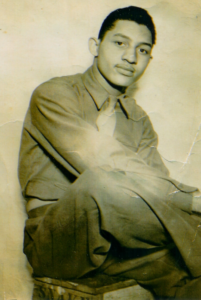
Leonard Larkins was a skinny 21-year-old buck private from Louisiana when he arrived in Skagway in May 1942, along with about 1,200 other black soldiers with the Army’s segregated 93rd  Engineer Regiment.

Those soldiers were part of a force of more than 10,000 U.S. soldiers who hacked their way through wilderness to build a 1,500-mile overland supply route to help defend Alaska from attack by Japan.

The 93rd worked on the road until it was completed in October 1942, and then they had the pleasure of spending the winter in Interior Alaska in tents,” said Meadow Bailey, a state Transportation Department spokeswoman who introduced Larkins in a talk she gave on the Alaska Highway during Tuesday’s chamber meeting at the Carlson Center.

“They worked on the road until it was complete, and then they were sent to the Aleutian Islands because of that threat from the Japanese,” she said. “Leonard remained in the Aleutian Islands for the rest of World War II.”

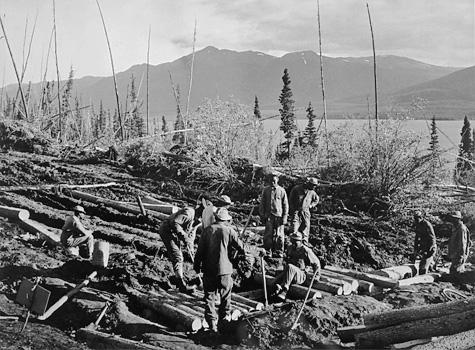
Black soldiers serving in the Army's segregated units often didn't have enough heavy equipment, so they had to work with hand tools and their ingenuity for such tasks as building "corduroy roads" with logs to stabilize the roadway through boggy muskeg areas. (Photo courtesy National Film Board of Canada)
Black soldiers serving in the Army’s segregated units often didn’t have enough heavy equipment, so they had to work with hand tools and their ingenuity for such tasks as building “corduroy roads” with logs to stabilize the roadway through boggy muskeg areas. (Photo courtesy National Film Board of Canada)

Historians say despite harsh treatment and lack of equipment, the 3,500 or so black soldiers in four segregated Army units excelled in their work on the highway, a project some say rivaled the Panama Canal.

“According to historian Douglas Brinkley, the Alaska Highway was not only the greatest engineering feat of the Second World War, it was also a triumph over racism,” Bailey said.

But the black soldiers’ role in the project and its role in desegregating the military remained an historical footnote until recent years, when prominent national leaders such as former Sen. Ted Stevens and former Secretary of State Colin Powell began to insist the soldiers be given their due.

“The achievements of these soldiers set the stage for the desegregation of the armed forces in 1948,” Bailey said, “and thus earned the Alaska Highway that distinguished nickname of being the road to civil rights.”

Leonard Larkins talks with reporters after Tuesday's chamber meeting, as program presenter Meadow Bailey looks on. (Photo courtesy Greg Martin / Greater Fairbanks Chamber of Commerce)
Leonard Larkins talks with reporters after Tuesday’s chamber meeting, as program presenter Meadow Bailey looks on. (Photo courtesy Greg Martin / Greater Fairbanks Chamber of Commerce)

After the meeting, Larkins told reporters he didn’t have any idea that he’d be working on such an historically significant project.

The soft-spoken 97-year-old veteran says he was cutting sugar cane in Louisiana for 5 bucks a ton and enlisted in the Army to get a job that would pay better.

“At that time, about $20 a month,” he said, referring to his soldier’s salary.

Larkins said after he got out of the Army, he worked at a U.S. Public Health Service hospital in New Orleans until he retired.

And like a lot of veterans, he really didn’t talk much about his Army service, according to his son, Kirby, who along with two other brothers accompanied their father on his return trip to Alaska.

“He told me, ‘I didn’t talk to you all much about that because I tried to put that behind me – because it’s was so rough.”

But Kirby Larkins said his dad has been sharing more memories about the highway project over the past year, since he was visited and interviewed by a couple of authors who are writing a book about the project.

The Larkinses will travel to Delta Junction later this week to take part in Alaska Highway 75th anniversary celebration Saturday at Fort Greely. Then they’ll travel to Anchorage next week for more commemorative events to be held there.

Leonard Larkins will be honored in a ceremony to be held Saturday at Fort Greely’s Allen Army Airfield.

The event will include historic displays, music, food and family fun. Gates open at 10 a.m.

Juneau man shares a painful memory from driving trucks in Iraq

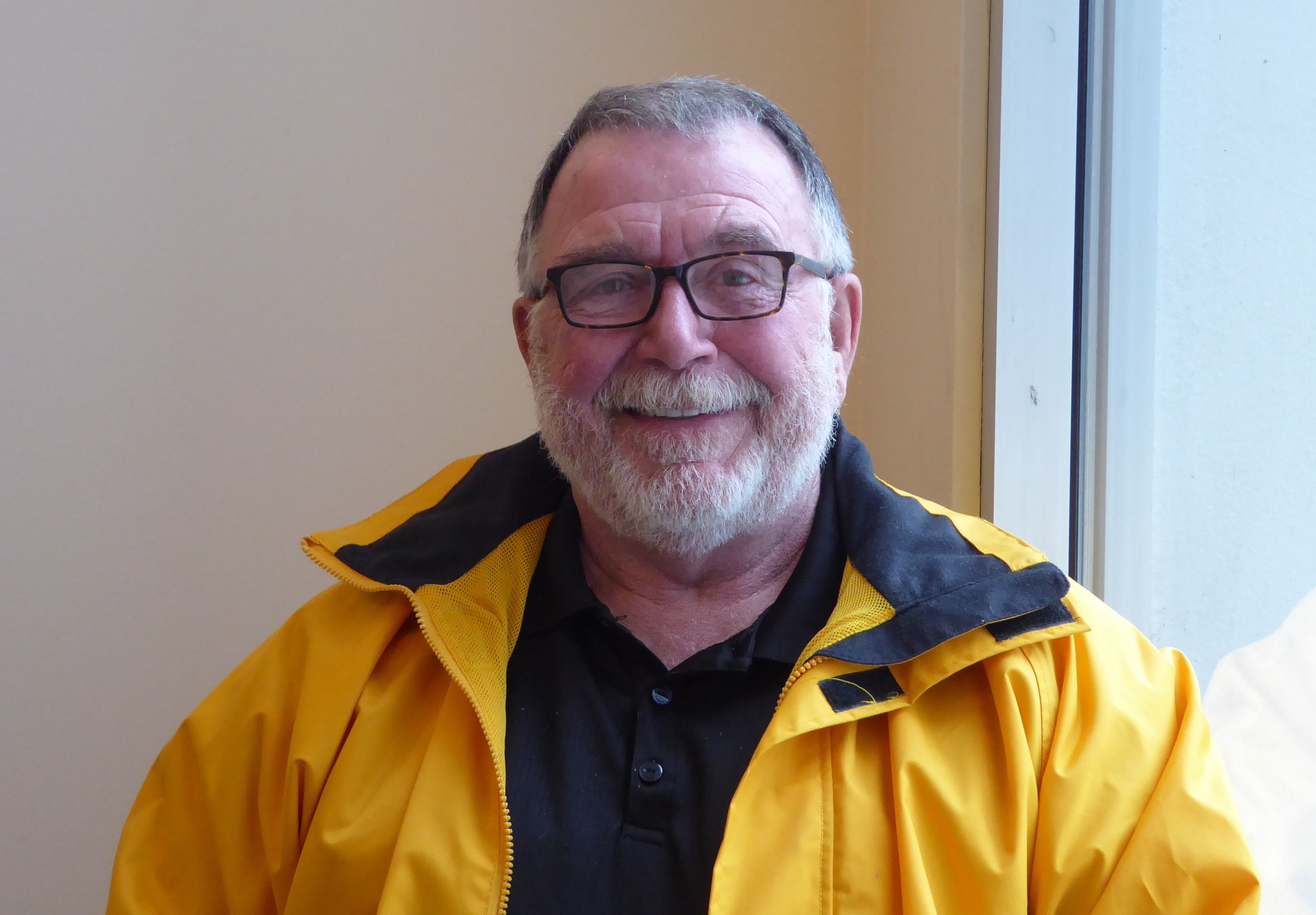
Richard Marshall at KTOO on Friday, May 19, 2017.
Richard Marshall at KTOO on Friday, May 19. (Photo by Quinton Chandler/KTOO)

Richard Marshall is a 66-year-old Vietnam veteran. He’s a Juneau resident and was a civilian contractor for the U.S. military in Iraq. He signed up to drive fuel trucks through combat zones because he wanted to help.

During his first year in Iraq, Marshall drove 96 combat missions. In 2004 on Good Friday, he narrowly avoided a deadly attack. I asked him to share his memory of that day and he explained how it changed his life. This interview has been edited for length and clarity.


“Everyday we would line up and they would hand out keys and according to which key to which truck you got, you would be assigned a convoy commander and you’d form up into a group and leave.

“I was living in a tent with a bunch of guys that I got very close to. So when we would go up to sort of hang around the place where they handed out the keys, we’d routinely walk up together. That morning, they’d awakened us very early in the morning. All of the roads had been shut down for a couple of days. The threat was so high, the danger was so bad, the combat was so furious that they wouldn’t let anybody leave any of the camp. We were (sitting) around waiting for them to line us up and I got up to go get a bottle of water. As I was getting a bottle of water from an area … they called for us to come line up. So we did and it just happened that I ended up a couple of spaces ahead of this group of guys that was behind me. That couple of spaces put me as the last man in the first convoy that day.

“It was just horrible, we got shot at from the minute we left the gate and we got beat up and shot and blown up until we made it to Taji which is halfway to Baghdad. Finally got out of Taji and got south into Baghdad and we were able to supply enough fuel to keep the medevac birds going – that’s about all we could do at that point.

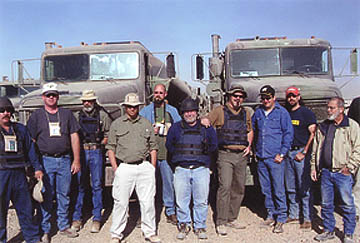
Marshall and his fellow drivers waiting to settle in for the night at Al Taqaddum Air Base in West Central Iraq after unloading a shipment of fuel.
Marshall, middle, and his fellow drivers wait to settle in for the night at Al Taqaddum Air Base in West Central Iraq after unloading a fuel shipment in 2004. (Photo courtesy Richard Marshall)

“The following morning, they allowed that second group to leave. … The group of guys that I lived with were all in that convoy. That was the group that got hit with anti-aircraft guns. They pretty well wiped out the convoy. The convoy commander lost an eye; I think we lost seven — there were seven drivers killed, there were several injured. Three or four soldiers killed that day. Basically everybody … all my friends were killed that day.

“So the fickleness is that even though I had it tough getting out of the gate that day and we had a tough time, had it not been for that bottle of water, that silly bottle of water, I would’ve been with them. So … that’s part of the reason why I stayed.”

Now, do you still feel survivor’s guilt?

“Oh sure, yeah, I don’t think — I don’t think that ever goes away. My response, my way of dealing with it, is to try and feel — feel very lucky every day. It’s tough to talk about, but in truth, I just don’t feel like I have the — I don’t have the right to feel bad about anything.

“I’m sorry. In other words, now when I’m working, when I’m doing anything — I mean my gosh, any of those guys — on my worst, worst day, every one of them would love to have that day. I’m just blessed, that’s all. I’m very blessed.”


Richard Marshall and his wife Teresa on Fish Creek Trail on Douglas in 2015. (Photo courtesy Richard Marshall)

Richard Marshall left Iraq at the end of 2007 and returned in 2010. After a short break, he moved on to work in Afghanistan for two and a half years.

Today he is semi-retired and works for Juneau Docks and Harbors in his spare time. He and his wife Teresa just celebrated their 32nd wedding anniversary and plan to build a retirement home in Haines. Marshall said his biggest regret is spending so many years away from his wife.

Life-without-parole sentences for D.C. Sniper thrown out by judge

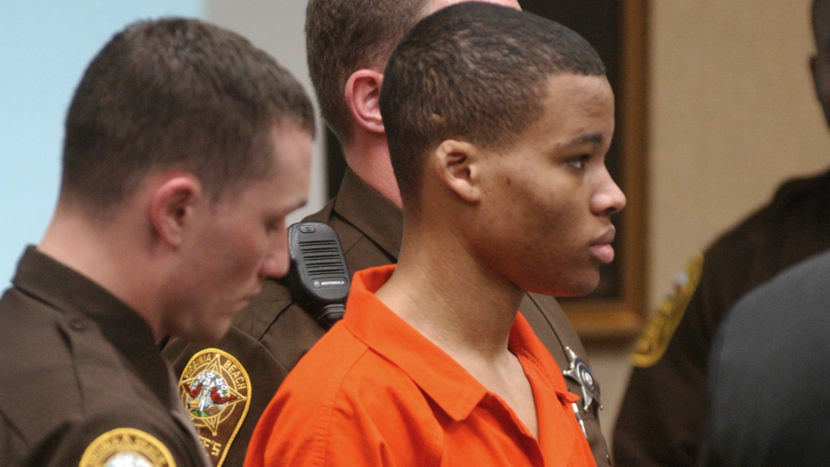
Lee Boyd Malvo attends court proceedings for fellow sniper suspect John Allen Muhammad in 2003. A federal judge has thrown out two sentences of life without parole that Malvo has been serving in Virginia.
MARTIN SMITH-RODDEN/AP

A federal judge has thrown out two life sentences being served by Lee Boyd Malvo, one of two people convicted in the Washington, D.C., sniper killings of 2002.

Judge Raymond Jackson in Norfolk, Va., ruled Friday that because the Supreme Court has found it unconstitutional to sentence juveniles to life without parole, Malvo is entitled to new sentencing hearings.

Malvo was 17 when he was arrested, along with John Allen Muhammad, after a series of mysterious and terrifying shootings in Washington, D.C., Virginia and Maryland that killed 10 people and wounded three.

Malvo said he met Muhammad in Antigua and took to the road with him. In an interview with The Washington Post in 2012 in a Virginia prison, Malvo said Muhammad “picked me because he knew he could mold me. … He knew I could be what he needed me to be. … He could not have chosen a better child.”

As they traveled, Muhammad and Malvo carried out a series of murders across the country, beginning in Washington state. Investigators later said Muhammad intended to kill his ex-wife, who lived in the Washington area. Muhammad was executed in Virginia in 2009.

Copyright 2017 NPR. To see more, visit http://www.npr.org/.

16 Alaska Territorial Guard vets to be honored in Anchorage

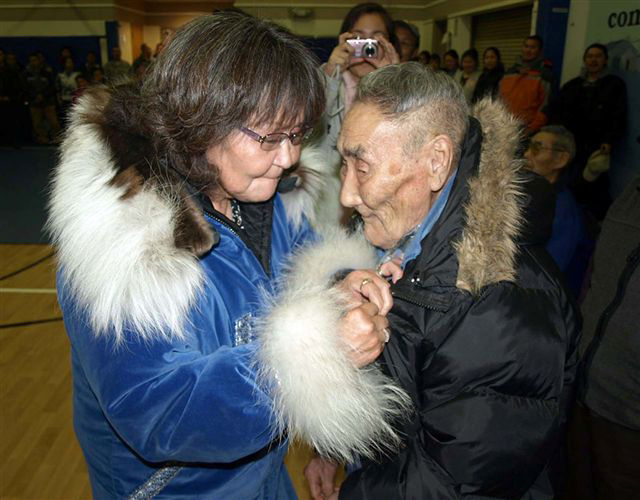
Caroline Hoover proudly pins an Alaska Territorial Guard medal on the front of her father's parka during an official discharge ceremony held Oct. 17 in Kipnuk, Alaska. David Martin is one of three surviving members of the Alaska Territorial Guard's Kipnuk unit. A total of 59 residents of Kipnuk, who volunteered to defend Alaska in the event of a Japanese invasion during World War II, were recognized during the ceremony. Kipnuk residents who served with the Alaska Territorial Guard from 1942-1947 were members of a U.S. Army component organized in response to attacks by the Japanese on Pearl Harbor. (Photo by Jerry Walton, Department of Military and Veterans Affairs cultural resource manager and native liaison/public domain/Wikimedia Commons)
Caroline Hoover proudly pins an Alaska Territorial Guard medal on the
front of her father’s parka during an official discharge ceremony held
Oct. 17 in Kipnuk, Alaska. (Photo by Jerry Walton, Department of Military and Veterans Affairs cultural resource manager and native
liaison/public domain/Wikimedia Commons
)

Sixteen veterans of the Alaska Territorial Guard will be honored at a discharge ceremony today. Four of them are from Western Alaska.

Alaska Gov. Bill Walker and Brig. Gen. Laurie Hummel, from the Alaska National Guard and the Department of Military and Veterans Affairs, will present honorable discharge documents and service medals to the surviving family members of the selected military servicemen.

The 16 Alaska Territorial Guardsmen who will be recognized at the Alaska Native Heritage Center in Anchorage include Pvt. Frederick A. Asicksik from Shaktoolik; Pvt. Ole O. Bahr, Jr. from Nome; Pvt. Nick Beans from Mountain Village; and Steve Otten from St. Michael.

APRN reports that nearly 2,600 discharge papers have been issued since 2004 to Alaska Territorial Guard veterans as militia members or relatives are found or apply for them.

An Alaska Territorial Guard task force is working to make this ceremony an annual event, according to a release from the Department of Military and Veterans Affairs.

Site notifications
Update notification options
Subscribe to notifications