History

Historical markers are everywhere in America. Some get history wrong

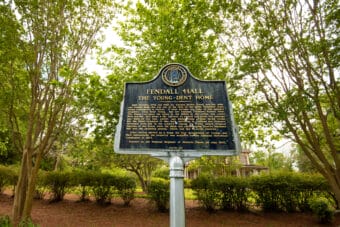
The stately Fendall Hall in Eufaula, Ala., has a historical marker that does not accurately portray how the home’s original owners were cotton brokers and were part of the slave trade in the 1800s. (Andi Rice for NPR)

The sound of the party filters across the mansion’s lawn long before you see it: Dozens of guests spill out onto the front porch of the stately Fendall Hall in Eufaula, Alabama.

It’s an engagement party, and past the people drinking white wine in the main hall is one of the home’s historians, Susan Campbell.

She swings open the door to the expansive backyard.

“They had, like, 5 acres or so,” Campbell says of the former owners, the Young-Dent family. They built the house in the late 1850s.

But you might already know this, because planted in the front yard of this historical home is a large, black-and-gold, square metal historical marker with the seal of the Alabama Historical Commission — and it says so.

Edward Brown Young was a “banker, merchant and entrepreneur,” it says. He “organized the company which built the first bridge” in Eufaula, and his daughter married a Confederate captain in the “War Between the States.”

What the marker doesn’t mention, however, is that Young was a cotton broker, one of the most powerful men in the slave trade. Nor does it mention that he owned nine slaves, according to the federal 1860 census.

The historical marker that omits parts of the Young-Dent family’s past is on the grounds of Fendall Hall in Eufaula. The back side of the marker says Edward Brown Young was a “banker, merchant and entrepreneur.” The back side also says that he “organized the company which built the first bridge” in Eufaula and that his daughter married a Confederate captain in the “War Between the States.” (Andi Rice for NPR)

And while the sign claims the company he organized built the bridge, that bridge, spanning the Chattahoochee River, was actually designed, managed and built by a slave named Horace King, a renowned and gifted engineer, along with a large group of enslaved men.

Campbell says she’d like to see more of this information included.

“But that’s because I’m a Northerner, not a Southerner,” she says. She moved to the South 20 years ago from Michigan. She says most people she knows here wouldn’t agree with her.

“I mean, they know,” she says, glancing over at the revelers on the porch. “They know it. But [they] don’t necessarily want to be reminded.”

That’s the difficult thing about the truth. It’s just not as fun to throw parties in places where terrible things happened.

How the U.S. tells its own story is a debate raging in schools, statehouses and public squares nationwide. It has led to social movements and angry protests. But for more than a century, historical markers have largely escaped that kind of scrutiny.

With more than 180,000 of them scattered across the U.S., it’s easy to see why:

Susan Campbell, a local historian, sits on the front porch of Fendall Hall. She says she’d like to see more information about the Young-Dent family included on the historical marker at the mansion. (Andi Rice for NPR)

Even governments don’t really know what they all say. Many state officials told NPR that they have no idea what signs are in their state, what stories they tell or who owns them.

And while markers often look official, the reality is that anyone can put up a marker — more than 35,000 different groups, societies, organizations, towns, governments and individuals have. It costs a few thousand dollars to order one.

Over the past year, NPR analyzed a database crowdsourced by thousands of hobbyists, looking to uncover the patterns, errors and problems with the country’s markers. The effort revealed a fractured and often confused telling of the American story, where offensive lies live with impunity, history is distorted and errors are sometimes as funny as they are strange.

Three separate states, for example, have markers that claim to be the place where anesthesia was discovered. Two states, Kentucky and Missouri, both claim to be the home of Daniel Boone’s bones. Michigan and Alabama both claim to be the home of the first railroad west of the Allegheny Mountains, while Maryland and New Jersey both claim to have sent the first telegram.

Texas, on the other hand, claims to be the home of the first successful airplane flight — completed by a man who was neither of the Wright brothers.

Meanwhile, dead animals are rampant. Florida marks a dead alligator named Old Joe; California marks a dead horse — also named Old Joe. Arizona put up a marker for a donkey that drank beer. California thought it had a dead mastodon until a marker explained it was actually a dead circus elephant.

Somewhat dead humans are also popular. There are markers memorializing 14 ghosts, two witches, one vampire, a wizard and a couple who, a New Hampshire marker says, may have been abducted by aliens.

But the deeds of men are far more prevalent, even if questionable. Nevada marks a man who killed 11 people in the 1850s, even though it notes he had “few, if any redeeming traits.” Arizona, on the other hand, marks the grave of a man the local town wrongly hanged for stealing a horse in 1882. It says, “He was right. We was wrong. … Now he’s gone.”

There are markers to “world famous” items that few could likely pinpoint: soda water, cantaloupes, roofing slate, mustard, frozen custard, French-style cheese, beef jerky, a Santa Claus school, bourbon ball candy and dozens of others.

These are not to be outdone by the “world’s best” cheddar cheese, hobby garden or seed rice, or even the “world’s greatest” waterfall, harbor, gold mine, battleship, oil field, rodeo clown, roller coaster or chicken, among many others.

While some markers date back centuries, they proliferated in the 20th century, meant to capture the attention of traveling Americans who had hit the road for the first time in their new cars. The markers brought business and tourism to out-of-the-way towns. Today the roadsides and public squares of America are replete with markers that fulfill their most basic purpose, offering a simple, often sterile recounting of an interesting moment in place and time.

But over the past century, many markers have also become symbols of the country’s dark and complicated past, in some cases erected not to commemorate history but to manipulate how it is told, NPR found.

From the Atlantic through the Plains, more than 270 markers describe Native Americans as “savage,” “hostile” or “semi-civilized,” or they use racial slurs.

In the West and Southwest, markers herald the work of missionaries and praise rangers without mentioning the violence and cultural destruction they often inflicted.

Across the South, markers honor notable men and notable houses without mentioning the forced, free labor that made both the homes and the men’s wealth possible. NPR found that nearly 70% of markers that mention plantations do not mention slavery.

A fractured version of history

Particularly distorted is the Civil War, one of the single most marked topics nationwide. NPR’s analysis revealed more than 500 markers that describe the Confederacy in glowing terms, vilify the Union, falsify the reasons for the war or recast Confederate soldiers as the war’s true heroes.

At least 65 markers appear to promote a racist philosophy called the Lost Cause, which claims, among other things, that Black people enjoyed being enslaved.

Many of those Confederate markers weren’t written in error, NPR found. They were part of a plan.

One of them is in Tuskegee, Ala., a city that Council Member Johnny Ford describes as the “citadel of the Civil Rights Movement.”

Standing in the town square, he ticks off aspects of the city’s famous history: home of the Tuskegee Airmen, Tuskegee University, Booker T. Washington’s National Business League. It was also the birthplace of Rosa Parks.

Close to 90% of its residents are Black, he points out.

But in the middle of the square is a stone marker depicting two Confederate flags that says: “Honor the brave. With God as our vindicator. Erected by the Daughters of the Confederacy to the Confederate soldiers of Macon County.”

By Ford’s reading, that marker “reflects the fight to preserve slavery,” he says. “That is not a positive sign for us here in our community.”

Ford and other citizens of Tuskegee have tried for decades to remove the marker, which, like many Confederate stone markers, also has a Confederate soldier on top.

Johnny Ford, former mayor of Tuskegee, Ala., and a current council member, stands near an accurate historical marker that was installed in the town square during his term as mayor. Ford is currently fighting to have a Confederate marker and statue removed from the square. (Andi Rice for NPR)

But they can’t. Because like thousands of markers nationwide, it was put up by a private group — in this case, the United Daughters of the Confederacy, an organization made up almost entirely of white women.

“They said they built it in honor of the Confederate dead, which we respect,” Ford said. “Honor their dead, but not in a public place. Put it in some museum.”

But museum exhibits were not what the United Daughters of the Confederacy was after. While the group’s monument-building efforts are well known, NPR’s analysis found that the United Daughters also helped erect more than 600 historical markers, far surpassing the efforts of any other Civil War heritage group.

These markers congratulate men for fighting for “the cause,” “a sacred cause,” “their righteous cause” and “a lost cause” and for their “patriotic devotion,” “heroism unsurpassed” and “faultless valor” as they fought to break the country apart to keep men, women and children enslaved and preserve what the markers describe as their “glorious heritage.”

A “fairer flag was never furled,” declares one monument in Montgomery, Ala., not of the American flag, but the Confederate flag. In Sherman, Texas, a marker that the United Daughters of the Confederacy rededicated in 1996 claims Confederate soldiers’ actions will “teach future generations … Southern chivalry.”

The group put up at least three markers for and memorials to Nathan Bedford Forrest, the first grand wizard of the Ku Klux Klan. It put up a marker outside Concord, N.C., to the KKK itself, though that one has been removed.

Council Member Johnny Ford and other residents of Tuskegee covered the town square’s Confederate marker and monument with plastic. Ford has been trying to have the marker and statue removed since the 1970s, but the United Daughters of the Confederacy has fought to keep it in place. (Andi Rice for NPR)

Lately, Ford and the United Daughters have been battling in court. But Ford says it’s hard to know whom he’s fighting.

“There are no daughters that live here,” Ford said. “I think they’re mostly dead. They don’t pay any taxes here. Yet they want to dominate our square.”

Jay Hinton, a lawyer an hour away in Montgomery who represents the group in court, told NPR in an interview that the women just want to honor dead Confederate soldiers. He acknowledged that few, if any, United Daughters live in the area.

Tax records show that the group, based in Richmond, Va., has $11 million in assets, with an annual revenue of $1 million to $2 million.

Asked why the United Daughters want to keep a marker in a place they don’t live, in a town that doesn’t want it, for soldiers who died 160 years ago, Hinton said it’s the women’s choice to make. While the 1906 town deed filed in the courthouse across the street gave the land for the marker to the United Daughters to keep as a “park for white people,” Hinton says the group has always let everyone use the park.

“We’re pretty comfortable, and it makes us feel like good citizens to say that we didn’t discriminate, and therefore we shouldn’t be made to [remove the marker],” he said. “We think we get to keep the dirt because we’ve been doing what we ought to be doing from a constitutional perspective.”

Nationwide, markers from Civil War heritage groups like the United Daughters outnumber comparable Union groups’ markers by more than 2-to-1, NPR found. Confederate hospitals and Confederate cemeteries follow a similar pattern.

In all, markers about Confederates or the Confederacy are prolific, with more than 12,000 mentions. But the words “slave” and “slavery” show up only about half as many times.

Members of the United Daughters of the Confederacy stand in front of a monument they commissioned of Confederate Gen. John Hunt Morgan and his men in Lexington, Ky., in 1911. The group has put up more than 600 markers and monuments to the Confederacy nationwide. (R.L. McClure/Library of Congress)

When they do, many tell a racist myth aboutfaithfulslaves or otherwise diminish the reality of slavery. Others markers use racist language or support white supremacy.

As groups like the United Daughters disappeared from Tuskegee and other areas, historical markers gave those organizations and their message lasting and, in many cases, national visibility. The United Daughters put up markers as far away as Arizona, New Mexico and Washington, which weren’t even states at the time of the war.

Officials with the United Daughters did not respond to NPR’s requests for comment. But in a statement on its website, the organization says that its markers “simply represent a memorial to our forefathers who fought bravely” and that its members have “stayed quietly in the background, never engaging in public controversy.”

That’s not the history NPR found.

In November 1914, the United Daughters gathered for the group’s annual convention at the swanky DeSoto hotel in Savannah, Ga., to hear the keynote speaker, the group’s national historian, Mildred Lewis Rutherford.

“Slavery was no disgrace,” Rutherford told the women, according to records from the convention. “The Negro race should give thanks daily. … [Slaves] were the happiest set of people on the face of the globe. …

“In all the history of the world, no peasantry was ever better cared for, more contented or happier,” she said.

As she read these words, there hadn’t been a slaveholder in the U.S. for half a century. But Rutherford’s speech drove toward her final point: Slaveholders needed to be defended.

“These wrongs must be righted and the Southern slaveholder defended as soon as possible,” she said.

Records in state archives show the group began requiring chapters to form “memorial marker committees” and focus their efforts on fundraising.

And they haven’t stopped. While many groups have begun taking down Confederate symbols, the United Daughters of the Confederacy has helped put up 47 more markers over the last two decades.

“Markers are a reflection of the people who erect them”

So it was no surprise that when Bryan Stevenson arrived in Montgomery in the 1980s, long before he gained national acclaim for his work as executive director of the Equal Justice Initiative, and went looking for markers about slavery, he couldn’t find one.

Bryan Stevenson, executive director of the Equal Justice Initiative, stands on the grounds of the National Memorial for Peace and Justice in Montgomery, Alabama.
(Andi Rice for NPR)

He says he counted 59 markers and monuments to the Confederacy back then as he drove around town. “Almost a preoccupation with mid-19th-century history,” he recalls. “But you could not find the word ‘slave,’ ‘slavery’ or ‘enslavement’ anywhere in the city.”

In 2013, Stevenson thought that this should change. He called up the Alabama Historical Association. He says the group sounded supportive.

“They said, ‘Oh, if it’s truthful, just give us the information and we’ll put it up,”’ Stevenson recalls. “We went to them and gave them a 60-page memo documenting the history we had investigated. And we got an email back that said, ‘Yeah, your information is all true and correct, but we can’t put up markers about slavery. That would be too controversial.'”

In that moment, Stevenson says, he understood what the United Daughters and other groups had figured out a century earlier: If you want to own the narrative, write it yourself.

Working with communities, Stevenson and his organization have now privately funded and erected more than a hundred markers telling the stories of lynchings in America.

Duplicates of new markers line the pathway at the National Memorial for Peace and Justice in Montgomery. The Equal Justice Initiative has worked with more than 100 communities to help put up markers telling the stories of lynchings and racial terror. (Andi Rice for NPR)

Many communities have embraced the markers. A few markers have faced hostility. Two were stolen after they went up.

They’re just a small dent in the vast landscape of Confederate markers, but Stevenson says he’s not looking for even numbers.

“If we are effective at telling the truth about our history,” he says, “we will change our relationship to honoring things that are not honorable. We will.”

The association that once turned Stevenson down now has new leadership. Scotty Kirkland took over as chairman of the association’s Historical Marker Committee in 2015, and he agrees with Stevenson.

“Markers are a reflection of the people who erect them,” Kirkland says. “The first markers put out by the association, it looks like they were basically done by fiat. There’s no real racial diversity in these stories. There are no women marked in these early markers.”

Kirkland says the group is now funding a History Revealed initiative for new stories. The association has quietly removed the Confederate flag from several markers over the past couple of years.

Scotty Kirkland stands in front of a new historical marker in Montgomery, where he is chairman of the Alabama Historical Association’s Historical Marker Committee. The committee is trying to move on from Confederate stories through its new History Revealed program. (Andi Rice for NPR)

But changing the narrative can be hard, especially when old markers are rarely rewritten or removed.

Many state officials told NPR that, outside the publicly sourced database or markers they helped sponsor, they have no way to know the entirety of the markers in their states.

Only a few states, including Alabama, Pennsylvania and Minnesota, have undertaken efforts to review existing markers. In Minnesota, officials drove out to 206 markers that the state historical society either paid for or helped put up. Officials told NPR they discovered every single one of them had a problem — from grammar issues to offensive language.

Meanwhile, three states — Georgia, North Carolina and Tennessee — recently passed laws prohibiting the removal of markers on public land, making little allowance for how old, wrong, misguided, confusing or offensive they might be.

In the absence of being able to take markers down, many heritage organizations find it easier to just add new ones. In Alabama, another group, the Alabama Historical Commission — whose director controversially left in 2004, saying pro-Confederate attitudes pushed him out — now says it too is ready to move on from Confederate stories.

On a recent day, historian Theo M. Moore, who until recently was the commission’s African American heritage coordinator, stood in front of one of the group’s newest efforts. It’s a marker to Claudette Colvin, a young Black woman who refused to give up her seat on a segregated bus before Rosa Parks.

Moore says it’s “a reminder that this was a place of importance.”

Theo M. Moore, a historian and a former staff member of the Alabama Historical Commission, says telling the truth about the past is a way the country can move forward. (Andi Rice for NPR)

“We’ve been taught the same history, especially in the South,” he says. “This is how all these stereotypes come about. What is presented all the time is negativity.”

As if on cue, a neighbor, Arthur Sanders, walks across the street to tell Moore how much he likes the new marker.

“Our neighborhood disappeared, man, but that,” he says, pointing to the marker, “that makes a difference because it’s the start of trying to get our neighborhood back.”

Moore smiles. As he gets back in his car, Moore says he knows it’s just a metal sign. Most people don’t even read them. But as he pulls away, he says Sanders is right: how you tell history shapes how you see the future.

And lately, he says, something else has been bothering him.

“We have all these cities named after Creek Native Americans: Wetumpka, Tuskegee, Notasulga, Loachapoka, Opelika, Tuscaloosa. … That’s all Native American, right?” he says, pausing. “Where’s, you know, where’s their markers?”

The Native American story

Across the country, more than 15,000 markers mention Native Americans. But the history written on them often isn’t theirs.

If there are two sides on the American frontier, NPR found the nation’s historical markers come down solidly on the side of white settlers. At least 200 markers tell an eerily similar American tale: Native Americans attacked innocent white settlers for no reason.

Darla Gebhard knows this story well.

A research librarian at the Brown County Historical Society in New Ulm, Minn., she walked through a 170-year-old cemetery there, past rows of gravestones.

Brown County Historical Society researcher Darla Gebhard touches a grave marker at the New Ulm City Cemetery in New Ulm, Minnesota. (Jaida Grey Eagle for NPR)

“I’ll show you what was going through their mind if we come over here,” she says. “You’ll see the gravity of it.”

She stops in front of dozens of graves. Their names have faded with time: John Schneider, Julius Fenske, Ernst Dietrich and many more. But the words carved underneath are clear:

“Killed by Indians, killed by Indians, killed by Indians,” Gebhard says, reading each one. “You have entire families that lost their lives. This is what the reality was for them in 1862.”

Gebhard is right — this was the reality for many people who lived on the Minnesota plains in the 1800s. It wasn’t, however, the reality for all the people who lived here.

Numerous gravestones from the 1800s within the New Ulm City Cemetery read “Killed by Indians.” (Jaida Grey Eagle for NPR)

John Robertson, a member of the Sisseton Wahpeton Oyate tribe and a descendant of Minnesota Dakotas, stood at the edge of an expansive field in southern Minnesota known as Cansa’yapi, homeland of the Lower Sioux Indian Community in an area the federal government calls the Lower Sioux Agency.

“We’re looking out over what would have been in 1862 the tall grass prairie,” he says. “Even today you don’t see any trees, and that’s the way it would have been for 250 miles.”

Three years ago, Minnesota agreed to return 114 acres of the prairie back to the tribe, acknowledging the land had never belonged to the state in the first place.

When tribal members took over the property, they also took over management of 22 state historical signs. As Robertson heads out onto a nearby path, he sums up what many of them said.

John Robertson is a member of the Sisseton Wahpeton tribe and a descendant of Minnesota Dakotas. (Jaida Grey Eagle for NPR)

“You know, this poor settler family was massacred, and they had no defenses — the women were violated and the children were taken,” he says. “I mean, that’s the kind of language that are on these markers.”

Robertson, who is site manager for the property, says tribal members spent a long time considering each one. And then they made a decision: to take them all down.

On a recent day, Robertson heads out on the trails to see how things are going, along with Amber Annis, who is Cheyenne River Lakota and an associate vice president with the Minnesota Historical Society. They’re helping the tribe replace the signs. As a crew bangs new signs into the ground, they toss the old ones into a heap on the grass.

Robertson says it wasn’t just the signs that called tribal members savages or described violent acts that troubled him. It was all the signs they weren’t even on — as if the history of this place hadn’t happened at all.

John Robertson watches as workers install new signs on property that is now managed by tribal members. (Laura Sullivan/NPR)

Annis stops in front of a stone building along the path and reads the old sign. “The [Stone Warehouse] is 43 by 23 feet, 20 feet in height, with a good substantial cellar 8 feet deep,” she says. “The cellar walls are 3 feet. The first-story walls [are] 2 feet, and the second-story walls are 18 inches thick.”

Robertson shakes his head. The sign, including all the dimensions, isn’t wrong, he says. It’s oblivious.

The warehouse was the spark that started the U.S.-Dakota wars. It’s why all those settlers in the cemetery died and an untold number of Dakotas with them.

“This was the flashpoint of the actual war beginning here and the establishment of the conquered status of the Dakota nation,” Robertson explains.

A century-old marker sits in front of the historic Stone Warehouse, which played a critical role in the U.S.-Dakota wars. The Lower Sioux Indian Community is putting up new markers to tell that story and many others on land the tribe now manages. (Laura Sullivan/NPR)

The Dakotas were once one of the most formidable forces in the Americas, known for their brilliant political and military strategy. But after the U.S. government took their land and prohibited them from hunting or farming, the tribe was forced to accept a treaty. One of the things it promised was food payments from the Stone Warehouse.

Except that in the summer of 1862, the government, mired in the Civil War, stopped providing food. According to letters from the time, the federal agent in charge locked the warehouse, and the main trader told the Dakotas they could “eat grass or their own dung.”

Facing starvation after years of broken promises, the Dakotas declared war.

Robertson reads the beginning of the new sign, which will be written in both Dakota and English.

“The warehouse was a central scene during the outbreak of the U.S.-Dakota War in 1862,” the new sign says. “Its contents were burned out during the war but the structure remained.”

John Robertson holds a version of the new signs, which are written in both Dakota and English. (Laura Sullivan/NPR)

As Robertson and Annis continue down the gravel path, the new signs tell the story of the Dakotas: the arrival of the Europeans on their land, the loss of that land, the decimation of the tribe. They are plot points obscured by the old signs.

Robertson stops at one old sign that tells of a boat landing that it says “was perhaps the busiest spot at the agency which brought steamboats, supplies and even tourists here in the 1850s.”

These tourists, it says, enjoyed the “sights and sounds” of the blacksmith shop and sawmill.

But that’s not the whole story. Newspaper advertisements from 1858 show that tour guides promised tourists that they could watch Dakota warriors in traditional dress collect food payments.

Amber Annis, associate vice president of the Minnesota Historical Society, stands inside the Minnesota History Center in St. Paul, Minnesota. The organization is helping the Lower Sioux Indian Community replace old markers and tell their own story. (Jaida Grey Eagle for NPR)

“Being Native, you grow up, wherever you go, you already know it’s going to be something that’s not true,” Annis says. “It’s harmful. I have two daughters. I think about them a lot. When they come to places like this, they will be able to see themselves in different ways.”

Some of the new signs detail the Dakotas’ military successes, including a victory over a company of Fort Ridgely soldiers near the river.

But Robertson and Annis know how the story ends. The federal government marshaled hundreds of soldiers until the Dakotas surrendered and then hanged 38 of them and removed the rest of the tribe from Minnesota. Robertson says he’s not trying to change that history.

He’s trying to explain why it mattered.

“Hopefully when you read it, the sign is going to speak to you in a different and continuing way,” Robertson says. “That’s the goal of the signage. Then you would say, ‘I heard something about that,’ or ‘I want to know more about that.’ And it’s going to be alive for you. I hope.”

John Robertson is the site manager of land known as Cansa’yapi, homeland of the Lower Sioux Indian Community in Morton, Minnesota. (Jaida Grey Eagle for NPR)

Throughout the rest of the state, though, the signs speak the same way they did a hundred years ago.

On a grassy median in a busy New Ulm intersection, one marker describes the “depredations of the savages” who “massacred nearly all the whites.”

Another, using a racial slur, claims Native Americans “had no pity for women or children.” In Morton, a marker praises the “brave, faithful … loyal Indians who saved the lives of white people.” Rarely are Native Americans referred to by name.

On the New Ulm courthouse lawn, a marker congratulates the settlers for creating New Ulm.

“It’s paying homage to the pioneers who founded the territory of Minnesota,” says Gebhard, the Brown County historian.

Asked whether the Dakotas could say they founded the area, Gebhard says, “Oh, absolutely. And so if the Dakotas put up a marker saying this is our homeland, they would be absolutely correct in doing so.”

Darla Gebhard walks through the New Ulm City Cemetery, where many settlers who died in the U.S.-Dakota wars are buried. (Jaida Grey Eagle for NPR)

But this idea of dueling markers — that stories can be told two ways, should be told in two ways — is problematic for historians.

“It doesn’t do justice to the idea that we want to tell a full and complete story,” says Chantel Rodriguez, senior public historian with the Minnesota Historical Society, which is reviewing the state’s markers. “That means weaving together the perspectives. What if you only see one marker and not the other? The reason why we feel the need to have separate markers is because we want to retain the original story.”

The courageous stories of both settler families and Native American families can be told together. But they rarely are.

On the back of the courthouse pioneer marker in New Ulm is the name of every town resident who died in the U.S.-Dakota wars fighting for their families. There’s no marker in the database that lists the names of the Dakotas who died fighting for theirs.

Gebhard said a member of the Dakotas asked her about this once.

“I was doing a downtown tour with a Dakota person, and she asked me, ‘What do people in New Ulm think about the Dakota war?'” Gebhard recalls. “And I said, ‘They don’t.’ And then this person said, ‘Well, why is that?’ And I said, ‘Because we won.'”

On the New Ulm courthouse lawn, a marker congratulates settlers’ founding of the territory of Minnesota. The symbol on the Native person’s clothing was an ancient cultural sign for many Dakota tribes. (Laura Sullivan/NPR)

A murder shrouded in secrecy

When it comes to the nation’s history, though, exactly who “we” is, is no longer clear. Where once markers might have merely entertained travelers, by sheer volume over the course of a century they have become, instead, an entire nation’s history book, its first social media campaign.

They spread hate, and joy. And they have unlocked secrets, even ones from a long-forgotten murder on the edge of a two-lane highway near Gadsden, Alabama.

A local from the area, Jerry Smith, pulled his car onto U.S. 11. Asked what Gadsden is known for, he paused.

“Not a damn thing,” he said.

But that’s not true, at least not anymore. Just up this road is a new historical marker saying otherwise. Smith was just a teenager when it all started in 1963, as he drove down this highway in his green Chevrolet Corvair.

That’s when he saw a strange man walking down the road, with a sign over his body, pulling a wagon. Smith knew he was what Alabama’s then-governor, George Wallace, had warned about.

Civil rights activist William Lewis Moore holds a protest sign in Binghamton, N.Y., in 1963. Moore was shot dead on April 23, 1963, on a highway in Etowah County, Ala., while he was on a one-man crusade to protest segregation. (Press & Sun-Bulletin via AP)

“His favorite term was ‘outside agitators,'” Smith says of Wallace. “If they would leave us alone in Alabama, everything is fine. But these ‘outside agitators’ are fanning racial fire. Well, it was George Wallace that was fanning racial fire. But, you know, early on I might have been a little too dumb to know that.”

As he slowed down to pass the man, Smith was surprised to see that he looked just like any other guy. The two locked eyes. Smith thinks the man may have even smiled a little.

So when, just a couple of hours later, someone shot the man point-blank in the face and throat and left his body on the side of the road, Smith was deeply troubled. And yet, no one dared talk about it.

“There was a lot of people that thought this guy, walking down the road pulling a buggy, we didn’t need him,” Smith remembers. “And there was some people that [said] he’s not fit for being here. We oughta kill him, you know?”

The man was William Lewis Moore, a white postal worker from Baltimore, on a one-man protest march. His murder has never been solved.

For years, it bothered Smith. What bothered him more, though, was the silence.

“The years passed by — other things happened,” Smith says. “This lost significance in the eyes of Alabamians.”

The grocery store that William Lewis Moore stopped in is still standing in Gadsden, Alabama. (Laura Sullivan/NPR)

And then one day, as he was driving, it dawned on Smith what he could do about it.

“I thought, ‘At least we ought to have a plaque,'” he says.

At first, people told him not to do it. Let the past lie, they said. One person even messaged him on Facebook saying that it might be dangerous.

But Smith kept talking about it, calling people. And then one afternoon, he went and made a speech in front of the county commission, and the commissioners voted unanimously to pay for it.

On the day it was unveiled, several dozen people came out in the rain to see it.

“William Lewis Moore … was assassinated at this location during a 400-mile protest march from Chattanooga, Tennessee, to Jackson, Mississippi,” reads the marker, planted in a gravel patch between the road and the train tracks. Someone left flowers at its base.

Then, something strange happened. People in the community started talking openly about the murder. Moore’s death was no longer a community secret. It was history — public history — right there on the side of the road.

Civil rights activist Carver Neblett leads nine Freedom Marchers from Tennessee across the Georgia state line on May 1, 1963. The group retraced the route traveled by postal worker and civil rights activist William Lewis Moore, who was shot in Alabama on April 23, 1963. (Horace Cort/AP)

And now at the diner, the town museum, even the local sheriff’s office, lots of people will tell you details that many people knew: that Moore stopped at a grocery store along the road, that he got into a confrontation with the store manager in the parking lot, that the manager’s name was Floyd Simpson.

“He’s the one everyone thought did it, thinks did it,” says Johnny Grant, the assistant sheriff for Etowah County, who has spent 48 years in law enforcement here, speaking publicly about Simpson for the first time.

Grant hadn’t joined the sheriff’s office yet at the time of the murder, but some of his closest friends were on duty that night. Grant says they all suspected Simpson.

He says he even quietly reinvestigated the case years ago, when he became chief investigator, to see whether more could be done. But Simpson was already dead. He died 26 years ago.

The idea of Simpson as suspect wasn’t too much of a stretch. There was the public confrontation, for one thing. And Grant says police records show Simpson was in the Ku Klux Klan.

Plus, a witness saw what looked like Simpson’s Buick sitting on the side of the road just before the murder. And finally, a state forensic technician said he believed the bullet matched Simpson’s gun.

But the grand jury declined to indict Simpson, and people in the town put the whole thing behind them.

Jerry Smith stands by a historical marker that describes how civil rights activist William Lewis Moore died in 1963. (Laura Sullivan/NPR)

“The evidence, to me, I would have charged him,” Grant says, “and I would have been able to charge him now, however many years later. But they took it to the grand jury, and the grand jury refused to indict him.”

Today, Grant is also an Etowah County commissioner. When Jerry Smith came forward one day asking for marker money, Grant quickly voted yes. He says he wanted the story told.

“That was just hate,” Grant says of the murder.

He calls the marker one of the best things the county has done.

“It will always be a black eye to Etowah County,” Grant says of the killing. “I just hope as law enforcement they did everything they could to solve it.”

Now, that black eye is on the side of the road for everyone to see, part of the American story. Moore’s marker and tens of thousands of others like it are all pieces of that story, staked into the ground to mark a place in time and make it permanent.

But, like the story of William Lewis Moore’s death, how the nation sees its past keeps changing anyway.

Audio for this story was produced by Graham Smith. It was edited by Robert Little. Additional reporting by Tilda Wilson and Tirzah Christopher. Design, development and illustrations by Connie Hanzhang Jin. Graphics editing by Alyson Hurt. Digital project coordination by Desiree F. Hicks. Photo editing by Emily Bogle. Copy editing by Preeti Aroon.

Copyright 2024 NPR. To see more, visit https://www.npr.org.

‘Not in the business of just giving away our entire collections:’ Denver Art Museum denies Lingít claims for repatriation

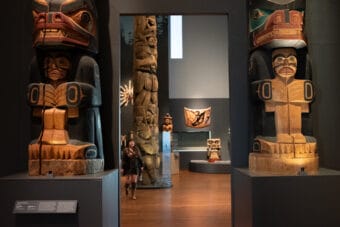
Works on display from the Denver Art Museum’s Northwest Coast and Alaska Native arts collection on April 16, 2024. (Ian Dickson/KTOO)

Earlier this month, the Denver Post reported that Lingít tribal members have been requesting cultural items back from the Denver Art Museum in Colorado for years — to no avail

The museum holds many Lingít items that may qualify to be returned under federal law. 

Investigative reporter Sam Tabachnik says delegates from the Central Council of the Tlingit and Haida Indian Tribes of Alaska sought the return of five items, including a 170-year-old clan house partition featuring the Naanya.aayí clan crest. 

One Tlingit and Haida cultural resource officer told Tabachnik that the Denver Art Museum was “probably the worst museum” they had dealt with. And Tabachnik says the museum has a history of denying repatriation requests.

Listen:

This transcript has been edited lightly for clarity. 

Sam Tabachnik: With the passage of NAGPRA, the Native American Graves Repatriation Act in 1990, American museums were required to compile inventories of all their Native American objects that may be subject to the act. This includes ancestral human remains. It includes associated funerary objects, objects of cultural patrimony, and a few other categories. And so these museums had to go through their collections and try and figure out what might be subject to the law.

The Lingít tribe had sort-of, off-and-on conversations with the Denver Art Museum over the years. They submitted three formal claims for various objects in the early 2000s. But it was really this meeting in 2017 that kind of, I think, really put the relationship between the tribe and the museum into, kind of, stark focus. 

It was a three-day set of meetings here in Denver. There were about a dozen tribal members who came from Alaska to talk with the museum. 

It was on this third day, you know, from talking to people who were in this meeting, that the tone really started to shift. Now, the museum says this shift occurred when museum officials were talking about the necessary process that the tribe would have to go to, in order to comply with NAGPRA, in order to file an official claim that might be accepted by the museum. 

Tribal members told me that they viewed this meeting in particular, as incredibly, uh — Denver officials were incredibly condescending, insensitive, and seemingly intransigent. Unwilling to really budge.  

Yvonne Krumrey: And what has taken place in the last seven years since it’s happened?

Sam Tabachnik: You know, it’s unclear. There has not been a lot of movement here. The museum says the tribe has not submitted formal claims for a couple of the pieces I talked about in the article. And so the museum says, “Hey, you know, we’re just waiting on a formal claim.” 

The tribe says, “Well, the museum has been quite clear in their discussions that even if we submitted a formal claim, that they would not return these objects.” So I think the tribe has sort of taken the impression that this is just not gonna happen.

Yvonne Krumrey: And from your reporting, and speaking with tribal members and the museum officials, what are some of the barriers to the process of submitting these formal claims? Is it fairly straightforward? Or are there, kind of, hoops to jump through to do it?

Sam Tabachnik: There are a number of different qualifications or categories that tribes are supposed to fill out, or they’re supposed to show evidence to check off certain boxes. 

ProPublica published a really impressive project about NAGPRA in the last year called the Repatriation Project, and it essentially showed how museums — 33 years after the lawʼs passage in 1990 — still half of these funerary objects and human remains are still in some of America’s most prestigious universities and museums. 

It is that museums really hold the cards here. They have control of these objects, and they can make it as easy or difficult as they want.

Yvonne Krumrey: And you said that there are still a couple items that there hasn’t been a formal request process for. What has happened with the ones that have been formally requested?

Sam Tabachnik: Yeah, so the museum told me there were three formal claims from the Lingít tribe. Two were rejected for not having enough information — for not checking all the boxes of, you have to prove that a single individual could not give up the rights to an object, that it had to be collective ownership. There are several other categories you have to hit. And the museum said the tribe wasn’t able to prove certain things. And so they rejected them. The third one, they said they didn’t get even enough information from the tribe in the claim. They were unable to initiate a formal evaluation process. So in all essence, they rejected three claims from the tribes.

Yvonne Krumrey: How do Denver Art Museum’s actions compare to other museums that have had this experience or have gone through this process?

Sam Tabachnik: Yeah, so Colorado has generally been viewed as a national leader in complying with NAGPRA, the Denver Museum of Nature and Science has been incredibly proactive. History Colorado has been also cited by some national folks as really leaders in the field. They kind of went above and beyond. A lot of museum folks talk about the difference between complying with the letter of the law and complying with the spirit of the law. And several of these Colorado institutions really wanted to comply with the spirit of the law. And people have spoken about how the Denver Art Museum has not been a part of that. They have not been as proactive as other museums.

Yvonne Krumrey: You’ve reported on Denver art museums ownership of contested items before. Can you tell me a bit about that reporting?

Sam Tabachnik: Sure, I’ve been writing about the Denver Art Museum and repatriation requests or claims for about three years. I spent a long time — wrote a long series about a former now deceased museum consultant and board member named Emma Bunker, who was tied in with the antiquities trafficking and organization essentially. And she helped the museum acquire a host of Southeast Asian antiquities that the Southeast Asian countries — Cambodia, Thailand, Vietnam — said were looted from their ancient temples.

Yvonne Krumrey: In your understanding of this landscape with the Denver Art Museum, how does the story fit into a broader pattern of them holding items that are contested or maybe weren’t acquired in honest means?

Sam Tabachnik: Yeah, what the Lingít tribe reported to me jives with what other countries have told me about the reluctance of the museum to give up objects in their collection. I thought it was telling — the curator of Native American arts who I interviewed I sat down with as part of this latest story said, “We’re not in the business of just giving away our entire collections.” And I thought that quote was an interesting quote and spoke volumes.

State grants will fund two maritime history projects in Bristol Bay

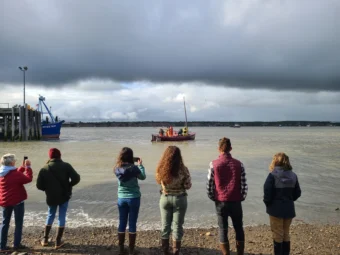
A crowd gathered in Naknek to watch the historic sailboat launch for a morning of fishing. (Corinne Smith/KDLG)

For State Historian and Deputy State Historic Preservation Officer Katie Ringsmuth, Alaska is linked to maritime history – a history dating back thousands of years to when Asia and North America were connected by Beringia.

“So much of Alaska history really is under the umbrella of maritime history,” she said.

The Alaska Maritime Heritage Preservation Program from the state’s Department of Natural Resources is seeking to preserve some of that history. Ringsmuth said the program received federal funds and is now regranting those funds to communities across the state.

“This program helps to preserve maritime resources, whether it’s buildings or whether it’s more educational [activites],” Ringsmuth said. “Really, it’s about helping to remind the rest of the country how important Alaska is in defining its maritime north.”

In total, the program is funding fifteen projects with the grant money. It aims to have most of the projects complete by June of 2025. The program’s website states that these projects were chosen based on grant criteria from the National Park Service.

Axel Widerstrom, cabin boy on Star of France 1919. (National Maritime Museum, San Francisco)

$48,000 will go toward two projects in Bristol Bay. The region has nearly 140 years of commercial fishing history.

The larger of the two grants, totaling $38,000, will support sailing a restored double-ender sailboat from Naknek to Dillingham. This funding is split between the Bristol Bay Heritage Land Trust — a conservation group — and the Bristol Bay Historical Society.
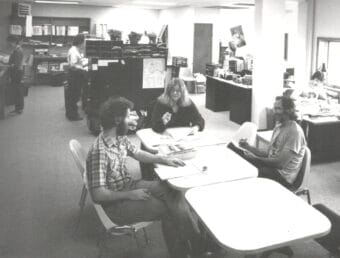
Tim Troll, the Heritage Land Trust’s executive director said the grant funds phase two of the sailboat’s journey. In 2022, the organizations restored the boat and a crew sailed it from Homer to Naknek to commemorate the end of the commercial fishery’s sailboat days. Until 1951, the fishery only allowed sailboats. With the introduction of engine- powered boats however, Troll said that the double enders were quickly retired.

“We’d also like to take [the boat] over to Dillingham which is where the Bristol Bay commercial fishery got started in the Nushagak Bay back in 1884. So that seems appropriate to get the boat over there so people can see it and get in it and sail with it,” he said.

Troll said the aim is to get the boat on its journey to Dillingham by this summer. It takes roughly a day’s journey to sail there, he said, depending on the winds and tides.

The Bristol Bay Heritage Land Trust won the smaller grant, $10,000, as well. The money will fund a project to compile and digitize a historic account from Axel Widerstrom who took photographs as he traveled from San Francisco to Bristol Bay on his father’s ship.

“He was a young man in 1919. His father was the captain of the Star of France, one of the great Star [Fleet] ships [of the Alaska Packers’ Association], and he had a camera with him,” Troll said.

Troll said that Widerstrom completed taped interviews in 1976 that ended up in the National Maritime Museum in San Francisco. The tapes are gone, he said, but the grant money will give the opportunity to travel to California to collect the transcripts and photographs and to digitize them.

Star of India at anchor off Dillingham, circa 1920. (Sam Fox Museum)

Troll said he thinks creating a record is relevant, as many families in the region have ancestors who came up on ships like the Star of France.

State Historian Katie Ringsmuth said she thinks it’s important to keep providing communities with the funds they need to protect their maritime history.

“This allows at least some money to go into communities so they can help preserve those resources, study them and interpret them and share them with the rest of the public,” she said.

She said she hopes the success of this year’s projects will lead to more grants that the program can distribute, so communities can continue to preserve their maritime heritage – from Indigenous technology to historic canneries.

Pioneer of Western Alaska journalism Rosemary ‘Rosie’ Porter dies at 85

Rosie Porter is seen in the offices of The Tundra Drums weekly newspaper with reporters Peter Friend (left) and Richie Goldstein in Bethel sometime in the early 1980s. (James H. Barker/”Bethel: The First 100 Years, 1885-1985″)

Rosemary “Rosie” Porter, remembered as a fierce advocate for the people of the Yukon-Kuskokwim Delta as owner and editor of The Tundra Drums newspaper, died in Anchorage on March 1, 2024 at 85 years old.

Porter moved to Bethel in 1974, where she quickly found work at KYUK developing educational and news programming, as well as editing a weekly KYUK newspaper and program guide called The Tundra Drums.

When KYUK came under fire for violating federal public media guidelines with The Tundra Drums, Porter saw an opportunity. She bought the paper and set up shop in a small space at Leen’s Lodge, a two-story, flood-prone roadhouse on the Bethel riverfront that has since been demolished.

One of Porter’s friends from the time, Robin Barker, recalls the importance of the newspaper in its early days.

“She really started that newspaper from nothing, you know, from a little mimeographed sheet,” Barker said. “And it was a really critical time for news for people in Bethel and in the villages because things were happening fast.”

With Porter at the helm, The Tundra Drums thrived. Porter told the Alaska Dispatch in 2011 that at one point, the paper had as many as 20 employees and put out the largest weekly newspaper in the state: 48 pages or more.

The Dec. 8, 1975 edition of The Tundra Drums newspaper shows coverage of a fire that destroyed Bethel’s power plant and left the city in the dark for three days.

Friends say that Porter had an eye for cultivating talented reporters. Richie Goldstein, who wrote for The Tundra Drums from 1979 to 1984, originally came to Bethel to work as a teacher but was soon working for Porter.

“Rosie said, ‘Well just come to work for me.’ So Friday was my last day at school, and Monday I was the editor of The Tundra Drums,” Goldstein said.

Goldstein said that Porter was generous to a fault.

“In 1980, she took the entire staff and a bunch of other people, maybe 10 or 11 of us, on a two-week trip to England,” Goldstein said.

Porter also spent the money she made flying reporters to villages to cover critical issues across the region. In 1984, she even sent Goldstein to file stories and photos for the 1984 Summer Olympics in Los Angeles.

“I covered Greco-Roman, and Judo, and fencing, and weightlifting,” Goldstein said.

Another reporter who Porter sought out was Bethel resident Beverly Hoffman, who worked part-time for both KYUK and The Tundra Drums in the mid 1970s. Hoffman credits Rosie with showing her the ropes and inspiring her.

“She just covered so much and she wasn’t afraid. My gosh, she would print the salaries of every state employee person and write in those honest stories about what was going on,” Hoffman said. “I thought, ‘Wow, this is one powerful woman dealing with, you know, powerful men and issues way back then.’”

Mary Lenz, who came to Bethel to cover the first running of the Kuskokwim 300 Sled Dog Race in 1980 for the Associated Press, ended up working for Porter on and off for a decade.

“Rosie combined the best of concern for community, a dedicated journalistic experience, and a lot of fun. She made things fun,” Lenz said.

According to her friends, Porter’s editorial style was also fun, if not outright edgy at times. One memorable headline using the Yup’ik word for defecation: “Governor Anaqs on Bethel,” is said to have gotten the attention of then-Gov. Jay Hammond and reversed a decision to veto funding for the Yukon-Kuskokwim (Y-K) region.

Porter did not have a conventional childhood, according to her son, Gregory Porter. She was born Rosemary Brugman in Union City, New Jersey in 1939, the second-oldest of four children. Due to difficult family circumstances, in 1957 she and her three siblings set off across the country by train to San Francisco to find work. Porter was able to land a job at the San Francisco Chronicle, laying a foundation in print media and sparking a long and storied career in journalism.

In San Francisco, Porter and her siblings raised the funds to purchase ship passage to Alaska, arriving in Fairbanks in the summer of 1958. There, alongside opening a modeling and finishing school, Porter worked in a variety of media roles, including as a weather anchor for television stations in both Fairbanks and Anchorage. She married Don Porter in Anchorage in 1962.

In 1990, Porter sold The Tundra Drums to the Calista Corporation, calling it quits after 15 years at the helm to pursue other ventures, including indulging her lifelong love of travel.

Porter is survived by her children, Kendall Larson and Gregory Porter.

‘Now she’s going to teach us’: Southeast Alaska Native leaders welcome historic Chilkat robe home

Sainteen Anna Brown Ehlers wears a 150-year-old Chilkat robe that was recently returned to Southeast Alaska on March 1, 2024. (Photo by Yvonne Krumrey/KTOO)

Southeast Alaska Native leaders and Chilkat weavers welcomed home a very old Chilkat robe on Friday.

A group of donors bought the robe at a Seattle auction and, through the Burke Museum in Washington state, gave it to Sealaska Heritage Institute so weavers could study it. 

Weavers and elders danced into the Shuká Hít clan house at Sealaska Heritage Institute in Juneau, pausing to greet the robe lying on a table at the front of the room. They sang to welcome it back to Lingít Áaní. 

Later, dancers performed a pair of spirit dances to, as the program says, “breathe life into the robe and welcome the ancestors home.”

Weaver Shgendootaan Shgen George wore a shakee.át, a wooden headdress with a formline face carved on it. She knelt for a bit behind the robe, seemingly overcome, before getting up to dance. 

“Honestly when I got behind it with the shakee.át on my head and I knelt down, I just started crying,” she said. “I don’t know how to explain it, just other than it was really moving and unbelievable that Iʼm right there with this amazing piece that has survived for so long and come home.”

The robe is more than 150 years old. It’s woven in bold black lines with blue and yellow details and killer whales facing out from the middle. This is the first time the robe has been used in a ceremony for at least 60 years. 

George has traveled to museums to study old Chilkat robes. She said she’s never seen one of this design, and it has more to tell weavers about the robeʼs history. 

Weaving instructor Wooshkindein Da.áat Lily Hope was eager to learn from it. 

“Thank you to SHI for being a good place to take care of our things to take care of our ancestors so we can flip them over and look at the backside,” Hope said during the ceremony. 

Dancers enter the Walter Soboleff Building in the Shuká Hít clan house during a Chilkat robe homecoming ceremony on Friday, March. 1, 2024. (Clarise Larson/KTOO)

Hope has taught dozens of Southeast Alaska weavers. Together, they’ve doubled the number of robes that have been woven in recent years in the region. But many historic robes are still in private collections or in museums outside Alaska.

“We have been weaving Chilkat dancing robes long before these institutions existed and we will weave them long after we bring our ancestral work home,” she said. 

Lingít language Professor X̱’unei Lance Twitchell said that weaving, like language, belongs in the future of Lingít peoples, too, not just the past. 

“Our culture is forever, our way of life is forever. We see the footprints of our ancestors extending as a trail right in front of  us. We intend to follow that trail,” he said. “The ways and the wisdom and the strength of our ancestors is woven into the things we wear. These things that become at.oo.”

At.oo are sacred, living objects. 

Members of the Eagle and Raven clans breathed life into a Chilkat robe during its homecoming ceremony at the Walter Soboleff Building in the Shuká Hít clan house on Friday, March. 1, 2024. (Clarise Larson/KTOO)

SHI President Ḵaaháni Rosita Worl said the Lingít word for art — at nané — means that an iconic event was visualized on an object. 

“But then when we brought it through our ceremonies, it then became at.oo,” Worl said. “The sacred art that has sustained us for thousands of years.” 

Kus.een Jackie Pata is Jilḵáat Ḵwáan — the first Lingít people to learn to weave the robes. She said the robes tell clan histories. 

“It tells the story of our lineage, it tells the story of part of our migration, and the story of our fishing grounds,” she said. “So these robes that we wear are not just robes because we wear them for ceremony, but they carry within us.” 

Haida weaver Ilskyaalas Delores Churchhill said she imagines the weaver behind the robe — what she experienced in her life in the year or more it took to weave this robe — and the knowledge she is now passing down to future weavers. 

“Our ancestors are going to be teaching us, because she learned from the ancestors, and now sheʼs going to teach us,” Churchill said.

For the exit dance, prolific Chilkat weaver Sainteen Anna Brown Ehlers wore the robe, carefully standing in one place, as Southeast Alaska Native leaders and weavers danced around the room and out the door.

The 2024 Iditarod starts Saturday. Here’s what to know

Ramey Smyth’s team run into Finger Lake during the 2022 Iditarod. (Jeff Chen/Alaska Public Media)

The 2024 Iditarod kicks off Saturday with a ceremonial start in Anchorage followed by an official race start in Willow on Sunday.

From there, 38 mushers and as many as 608 sled dogs will make the 1,000-mile trek to Nome.

Here’s what to know about this year’s race:

When will the Iditarod start?

The Iditarod begins, not so much as a race, but more like a sled dog parade with the 11-mile ceremonial start in Anchorage on Saturday, March 2.

The mushers start getting their teams ready downtown early Saturday. Then, starting at 10 a.m., they set off, one-by-one every couple minutes from Fourth Avenue near D Street. The untimed run through Anchorage takes them down city streets and onto the trail system, ending at Campbell Airstrip.

There are plenty of places to watch from. Those include hotspots like downtown, the hill on Cordova Street near 15th Avenue and the Trailgate party in the Eastchester Park area.

a dog team races down a crowded street
Jason Mackey and his team of dogs mush through Fourth Avenue for the 2023 Iditarod ceremonial start. (Mizelle Mayo/Alaska Public Media)

Next on the agenda: the official race start Sunday in Willow

After the ceremonial start, mushers truck their dog teams north for the official start at 2 p.m. on Willow Lake. Again, they’ll leave in two-minute intervals, beginning their journey to Nome in

The Iditarod says folks driving to Willow to watch the start should look for signs on the Parks Highway in Wasilla and at Houston High School that will have information on available parking. Parking will cost $20 in Willow. The Iditarod is also encouraging people to take a shuttle, instead. There’s a shuttle that leaves from the Lakefront Anchorage Hotel and from Wasilla. More info on prices and timing here.

What’s the trail route this year?

It’s an even year, so the Iditarod is on its northern route. That means when the teams reach the ghost town checkpoint of Ophir about 350 miles into the race, they’ll turn north to get to the Cripple checkpoint and then the village of Ruby on the Yukon River. They stay on the Yukon headed west to Galena and then Kaltag, where the northern and southern routes rejoin. From there, it’s about 350 miles to the finish line in Nome.

A race map
A map of the 2024 Iditarod race route. (Iditarod.com)

How are trail conditions? 

It sounds like a little bit of everything. Race Director Mark Nordman said there is plenty of snow south of the Alaska Range and headed into the Dalzell Gorge from the Rainy Pass checkpoint. But after Rohn, in the Farewell Burn area, there are miles of bare ground, Nordman said.

It’s common to see dirt and rocks on that section of trail, and while the lack of snow coverage means the mushers and their sleds will take a beating, the dogs tend to take advantage of the good footing, he said.

“They are slugging and working away with all their muscles getting over the Alaska Range, and then it’s all of a sudden running on dirt and frozen ground, and so they just take off,” Nordman said. (Check out this video footage of the snow-less stretch of trail between the Rohn and Nikolai checkpoints, posted by veteran musher DeeDee Jonwrowe, who was on a snowmachine.)

Beyond Nikolai, Nordman said, there’s good snow coverage, but there is some question about a section of trail that passes over sea ice on the edge of Norton Bay near Elim, roughly 850 miles into the race. Mid-winter storms have broken up the ice, and the race might need to be rerouted to go overland on an old mail route, he said.

Who’s competing in this year’s race?

There are three champions returning this year, including reigning champ Ryan Redington, five-time champ Dallas Seavey – returning after taking a year off in 2023 – and Pete Kaiser, who’s raced it every year since 2010 and is coming off his eighth Kuskokwim 300 victory. Kaiser and Redington have each won the Iditarod once, while Seavey is looking to break a tie with Rick Swenson for the most Iditarod wins ever.

A musher in a black jacket
Dallas Seavey has won the Iditarod five times so far, his last victory was in 2021. (Jeff Chen/Alaska Public Media)

Other likely contenders for top-10 finishes are Jessie Holmes, Jessie Royer, Matt Hall, Matt Failor, Aaron Burmeister, Nicolas Petit, Mille Porsild, Travis Beals and Paige Drobny.

Nobody in this year’s Iditarod has run it more than Burmeister, with 21 finishes, or Royer, with 20.

There are also 16 Iditarod rookies this year, racing along with 22 veterans.

What happened with the disqualified mushers? 

It’s complicated.

Separate accusations of violence against women derailed the Iditarod dreams of both Eddie Burke Jr., the race’s 2023 Rookie of the Year, and its 2022 champion, Brent Sass.

In Burke’s case, he had been charged with a felony domestic violence assault in 2022. It’s unclear if the Iditarod knew about the charge ahead of the 2023 race, but the case remained unresolved heading into this year’s competition.

The Iditarod announced Feb. 19, it was disqualifying Burke under the race’s Rule 53, which deals with musher conduct. On Feb. 23, the state Department of Law said it was dropping the charges, because the alleged victim in the case had “declined to participate in the prosecution.” That same day, the Iditarod announced Burke had been reinstated. Then, on Feb. 26, Burke said he was withdrawing, because, in the meantime, he had leased dogs from his team to other Iditarod mushers.

The Iditarod disqualified Sass on Feb. 22 amid allegations of sexual assault contained in a letter sent to race officials nearly four months earlier and about a week after reporters with Alaska Public Media, the Anchorage Daily News and ProPublica began asking the race for comment on the letter, as well as allegations made by two women directly to the newsrooms.

Sass has denied the allegations and has not been charged with a crime related to them.

Including Burke, five mushers who had been signed up voluntarily withdrew from this year’s Iditarod.

How many dogs are on a team?

This year, the Iditarod is returning to a rule allowing teams to have as many as 16 dogs. That had been the limit until 2019, when the race announced a limit of 14 dogs per team.

Nordman, the race director, said the 14-dog limit had been instituted based on concerns for dog care, the cost of flying dogs back from the trail and to make it easier for smaller kennels to compete. But Iditarod mushers voted after the 2023 race to return to 16-dog teams, and after the race’s Rules Committee agreed, the Iditarod Trail Committee board gave its approval.

a portrait of a dog
A sled dog on Yuka Honda’s team in McGrath in 2022. (Jeff Chen/Alaska Public Media)

Nordman said five years with the limit at 14 dogs showed no difference in the number of dogs sent home from checkpoints along the trail, which would be an indicator of any difference in a musher’s ability to care for more or fewer dogs, he said.

“Who wouldn’t want to take the biggest string of dogs possible in the biggest sled dog race in the world?” Nordman said.

In the early days of the race, there was no limit on the number of dogs in a team, he said. Then the limit was 20 dogs per team for many years, before the 16-dog rule in the more modern era.

Along with the 16-dog maximum, there’s also a minimum: Race rules say mushers must start the Iditarod with at least 12 dogs.

Where do the dogs go that don’t make it to the finish line?

Mushers with dogs that are injured or otherwise not performing well in the race can “drop” them in checkpoints. Veterinarians in the checkpoints are supposed to take a look at each dropped dog before the race ultimately flies them back to Anchorage or on to Nome.

A team needs to have at least five dogs when arriving at the finish line in Nome.

What do mushers carry in their sleds?

A lot!

There’s some mandatory gear that race officials have to check for at each checkpoint, like a veterinarian notebook, a cooker capable of boiling at least three gallons of water and a pair of snowshoes, among other things.

Some mushers carry extra items that are not mandatory, like a ski pole to help push the sled along. Mushers will also pick up bales of straw and bags with supplies – including dog food – in checkpoints and carry it with them to bed down and feed their teams while taking breaks along the trail.

A mushing sled in green
Ryan Redington sorts through his bags of supplies at the Rainy Pass checkpoint in 2023. Among the items he packed: Gatorade. (Lex Treinen/Alaska Public Media)

When can we expect a winner?

First-place finishers typically arrive in Nome under the famed Burled Arch finish line in about eight days. Based on the Iditarod’s last run on the northern route, in 2022, we can expect this year’s winner to finish sometime Tuesday, March 12, likely early in the morning, but that depends on how fast the trail is overall and whether any storms hit during the race.

Mushers who make fewer mistakes and suffer less damage to their sleds, themselves and their dogs will understandably have faster times.

They’re all looking for a “dream ride,” Nordman said.

“I think all of us that have run dogs have had it,” he said. “You remember that one night when everything just clicked. It’s like you’ve got a steam engine ahead of you, and they’re just busting through the snow and having fun with it the whole time.”

How do I follow along?

Alaska Public Media will have daily coverage online and radio reports on the Alaska Public Radio network every weekday of the race. We’re also sending out our Iditarod Daily email newsletter again this year. It’ll include our latest coverage, race analysis and our “Dog of the Day” feature. Subscribe for free here. The Iditarod itself also has varying levels of coverage through its paid Iditarod Insider subscriptions.

Have a question we missed? Email Alaska Public Media’s Tegan Hanlon and Casey Grove at thanlon@alaskapublic.org and cgrove@alaskapublic.org.

Site notifications
Update notification options
Subscribe to notifications