History

Sidney Huntington remembered for hard work, passion

Interior elder Sidney C. Huntington died Tuesday in Galena. He was 100 years old. He leaves behind not only a long list of accomplishments but an entire philosophy of life.

Sidney’s biography could go on for hours. His story is so intertwined with the story of Alaska over the past century.

His dad came to the territory of Alaska during the Klondike gold rush. He watched the villages of the middle Yukon and lower Koyukuk valleys transition from isolated, subsistence-based settlements to communities with satellite dishes, snowmachines, and multimillion dollar schools.
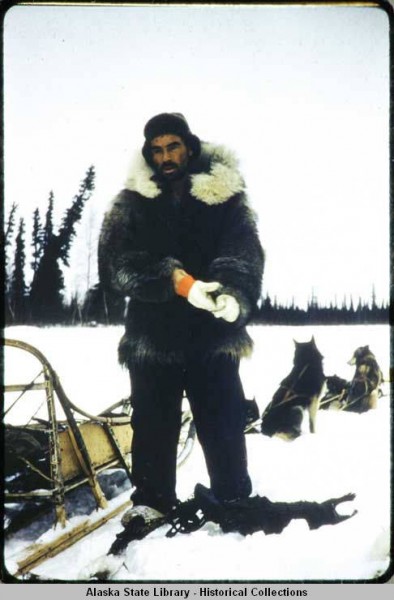
Sidney Huntington on the trapline, 1958. (Photo courtesy of Alaska State Library, Keller Family Photo Collection)

But like the villages themselves, Huntington never abandoned subsistence. As he explained in a 1996 interview for the oral history series “Raven’s Story,” Sidney took pride in living close to the land, even after his trapping days were over.

“The change in life has been dramatic. For me to say that I have changed very much … I imagine I have, to quite a degree to keep up with the times. But my variety of food, and what I do, has not changed very dramatically, only I have adapted myself to the new methods of harvesting wildlife resources. And I have a deep respect, probably a deeper respect for wildlife resources than anybody in the country.”

Never lacking in confidence, Sidney did many different kinds of work during his life: hunting, fishing, trapping, boat building, carpentry, mining, fish processing. He served on the Board of Game for 17 years and helped create predator control programs and controlled-use areas to protect moose populations in the Interior. He had a huge family.

He leaves a legacy in Galena not only in terms of what he did but how he did it.

Sidney insisted on the value of hard work and despised government handouts. He was legendary for starting his work early in the morning, working late into the night, and doing it all again the next day.

Though he only had a third-grade education, he was a strong supporter for public education in rural Alaska. Someone else in his position might say, “You don’t need to go to school. I only went through third grade and look at me now.”

He took the opposite approach. He wanted rural kids to have the formal education that he never had. He loved meeting students at Galena’s boarding school and considered himself a father to all of them. The Galena K-12 school is already named after him and has been for 10 years.

But what I think is the most interesting legacy that Sidney Huntington leaves behind is the new Alaska identity that he forged. He was half Alaska Native, half white, and didn’t consider himself a full member of either of those camps. He drew lessons from books, boarding schools and Native elders alike to build a lifestyle based on practicality, preparation, and respect.

Each of those values is on display in this outtake from “Raven’s Story,” in which he describes his wolf trapping techniques.

“I wouldn’t tell anybody how I trap wolves. That is not the historic way of doing it. They say you give your luck away and you can’t catch them anymore,” Huntington said. “Well, I’m about over the hill anyways so it doesn’t make much difference. I generally trap on glare ice, and wolf trapping I’ve found is a lot of work, a lot of work. Dedicated work. You are trapping a very cautious, wary animal. The only thing that gets him, he’s like you and me, he wants to know what is on the other side of the fence.”

Clever, iconoclastic, and ultimately — practical. That was Sidney Huntington.

And of course, Sidney left us his book, “Shadows on the Koyukuk.” It’s become more a reference book than a biography at my house, and I try to reread every year. It never ceases to be a fascinating look back at how Alaska used to be, but also an inspiration to the challenges that lie ahead of us.

I never managed to have Sidney autograph it. But we have a table he built in our cabin, and that seems good enough.
Canned salmon nerd researches history captured in labels

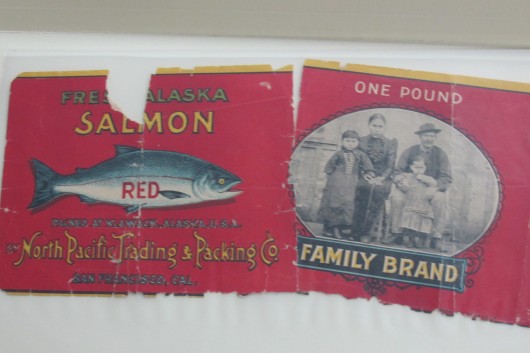
Family Brand canned salmon label featuring Peratroviches
A Family Brand canned salmon label features the Peratroviches of Klawock. (Photo by Maria Dudzak/KRBD)

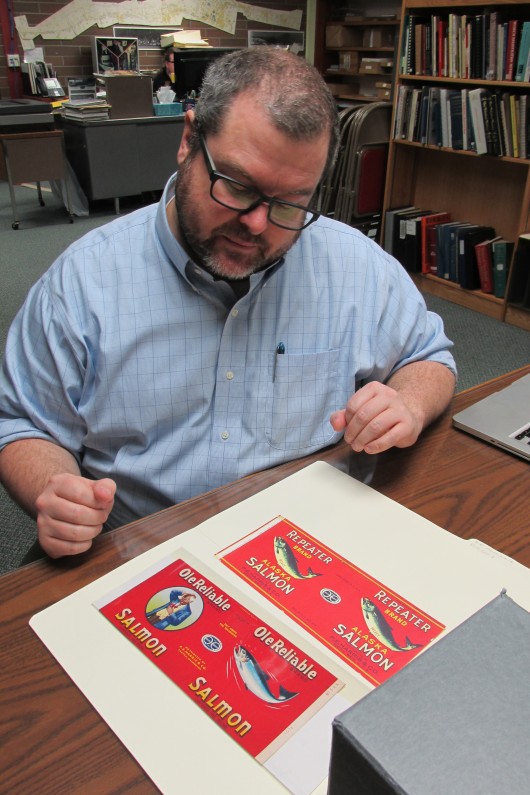
University of Washington doctoral student Ross Coen admits he’s a nerd when it comes to salmon can labels. Coen was at the museum in Ketchikan recently to observe photos, documents and other archival information about the canned salmon industry for his research. He also helped to document and catalog salmon labels in the museum’s collection.

Ross Coen with canned salmon labels
Researcher Ross Coen views some of the labels in the Tongass Historical Museum’s collection. (Photo by Maria Dudzak/KRBD)

Coen said the canned salmon industry was at its height in the early 1900s. At that time, refrigeration wasn’t generally available and canning provided an easy way to transport food throughout the world. Coen said part of his fascination with fish packing labels is that they tell a history of time and place.

“Each label is a snapshot, a moment in time of history that reflects the political circumstances, the cultural conditions and economic conditions that were going on at the time when these labels were produced and the salmon was marketed,” Coen said.

Coen said fish packers often incorporated current events into label designs.

“There’s a William Henry Seward label of canned salmon honoring the secretary of state who purchased Alaska in 1867,” Coen said. “There are labels related to World War I and World War II. Labels that were exported to Great Britain might have an image of Queen Victoria. Each one of these labels has some direct link to the historical events at the time they were created.”

Coen said many of the labels are also works of art. He said most of the labels found in museums come from collectors. He said they are often in pristine condition because they were never placed on a can.

“These labels were the ones that were maybe in an envelope in a file cabinet, never actually used on the market,” Coen said. “They end up in the hands of collectors who then sell, trade or donate them to the museum.”

The Tongass Historical Museum’s collection includes many labels from Alaska but also from canneries in Washington State and other parts of the Pacific Northwest. Coen said some of the earliest canneries were in Southeast Alaska, including those in Metlakatla, Klawock and Ketchikan. The museum has labels from several of those canneries.

In viewing the labels, Coen said one that he found most interesting was one from a family brand packed by the Peratrovich family of Klawock in the late 1800s. Coen described the label:

“This is John Peratrovich, an immigrant from Croatia, with his Native wife and two children. The young boy he is holding in his lap is Roy, who I believe is the father of Frank and Roy Peratrovich who were Native leaders and very active in Native civil rights and the Alaska Native land claims movement in the 20th century. This label is really quite fascinating.”

Lynx Brand canned salmon label
An image on a Lynx Brand canned salmon label. (Photo by Maria Dudzak/KRBD)

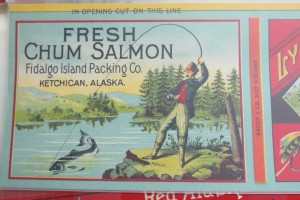
Another label Coen found fascinating was one from the Lynx Brand packed in Ketchikan in the late 1800s or early 1900s which features an image of a fisherman catching salmon in a stream with a fishing pole.

“Now, of course, that’s not how salmon were caught for the commercial packing industry. But this is an example of the packers trying to communicate a sense of nature to the consumer,” Coen said. “If you’re a housewife in Des Moines, Iowa, or something like that, you see this can on the shelf. Seeing this handsome, strapping fisherman catching your salmon conveys that sense of purity and wholesomeness and nature that the packers were trying to communicate.”

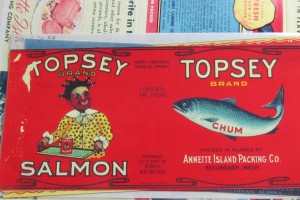
Topsey Salmon, racist label
Some labels featured racist imagery. Cans with such labels were intended for customers in the South in the 1800s. (Photo by Maria Dudzak/KRBD)

Coen said the primary market for Alaska salmon in the early 1900s, especially pink and chum, was the American South. Some of that imagery is highly racialized with Civil War scenes and slaves picking cotton in the fields. He said while these labels were prominent around the turn of the century, racialized imagery faded away, especially given political change and the civil rights movement.

The Tongass Historical Museum has more than 100 canned salmon labels in its collection and the images range from simple to ornate. The labels are kept in the museum’s archives and made available to researchers, such as Coen and may become part of a future museum display.

Using language as a portal to the depths of cultural heritage

What do a person, a dog, a shaman effigy and a crucifix have in common?

To a traditional Dena’ina speaker, all four are in a linguistic classification that categorizes them as sharing a similar essence.

“In Dena’ina thought, what’s common is they are all animate, they are all alive, they all have a soul,” says anthropology professor Alan Boaraas.

The idea doesn’t quite translate to English. It’s a facet of culture embedded in language, as subconscious as the grammatical structure a baby learns as they absorb the dialogue around them,” Boraas says.

“What is it that’s embedded in the grammar of a language, Dena’ina in this case, that conveys a message, a point of view, a feeling, that is difficult put into English? And often is lost, as they say, in translation.”

The problem of “lost in translation” is much more significant than just ordering something you didn’t quite expect in a foreign restaurant.

“The relationship between language and how you organize the world is subconscious as you learn language, and would become what we sometimes call human nature, which is why one culture’s human nature is not another culture’s human nature, because the language is different. You can argue all you want what human language is, but it really has to do with how you understand the grammar of the language as a filter for the world.”

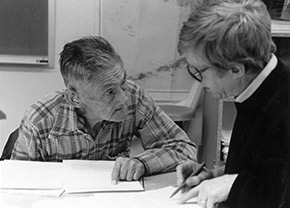
Dena'ina elder Peter Kalifornsky and anthropologist Dr. Alan Boaraas. (Photo courtesy of the University of Alaska Anchorage)
Dena’ina elder Peter Kalifornsky and anthropologist Dr. Alan Boaraas. (Courtesy of the University of Alaska Anchorage)

So for a Native Athabascan of the Cook Inlet region, Dena’ina isn’t just the language of their people, it is a portal to the full depths of their cultural heritage.

And that portal has almost been lost.

According to anthropologists, Dena’ina has been one of the world’s most endangered languages, with just a handful of speakers left by the 1970s. But Boraas and linguist James Kari started working with a few of the remaining fluent elders to preserve the language, making recordings of the speakers, translating stories and turning the oral tradition into a written language.

All that knowledge has coalesced into a curriculum for language classes, such as a beginning Dena’ina class taught this fall at the Kenai Peninsula College. Another class on grammar will be offered this spring.

Petition to allow Syrian refugees in Alaska gets more than 1K Juneau supporters

Refugee at Public Market
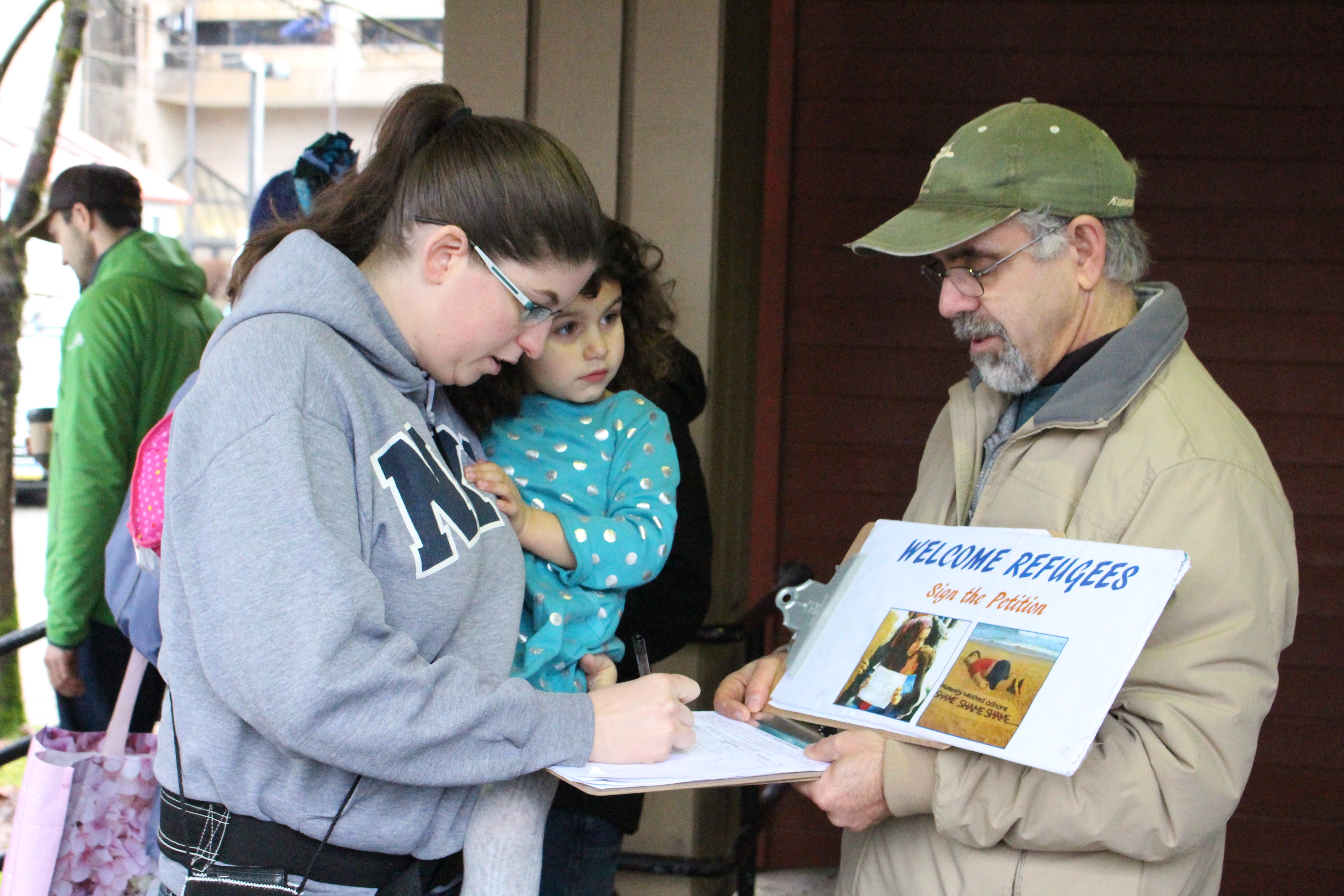
Rich Moniak with Juneau People for Peace and Justice gathers signatures outside Centennial Hall on Sunday. (Photo by Elizabeth Jenkins/KTOO)

More than a thousand people in Juneau signed a petition this weekend to allow Syrian refugees in Alaska.

Volunteers with the groups Veterans for Peace and Juneau People for Peace and Justice stood outside Centennial Hall during the popular Juneau Public Market to gather signatures.

The petition is addressed, “To Alaska’s Elected Officials” and will be sent to the state’s congressional delegation in Washington, D.C. It reads:

“We, the undersigned, will not allow fear-mongering to drown out our compassion for those seeking refuge from war or violent conflict or our humanitarian obligation to ease their circumstances. Therefore, we urge our elected representatives to work toward resettlement of refugees to Alaska in a manner that is inclusive, humane, and expeditious.”

Volunteer Sarah Niecko said gathering signatures means talking to people of all opinions on the issue.

“We’ve had a lot of support which is nice to see and, more importantly, getting the dialogue started for even those people that maybe don’t support it. Just hearing their side, because we have to bring them all to the discussion table if we’re ever going to come up with creative solutions,” Niecko said.

About 120 refugees from around the world settle in Alaska every year. Catholic Social Services, which oversees the state’s refugee resettlement program, says there are no current plans to receive Syrian refugees.

Following the attacks in Paris a few weeks ago, Alaska congressman Don Young and U.S. Senators Lisa Murkowski and Dan Sullivan joined many other political leaders in calling on the president to suspend his plan to admit 10,000 Syrian refugees. Gov. Bill Walker did not take that stance.

Volunteers in Juneau will continue to gather signatures this week. Veterans for Peace and Juneau People for Peace and Justice plan to place an ad in the Juneau Empire that lists as many names of people who signed the petition as can fit.

Forced to flee: Juneau residents recall refugee beginning

Persecuted her whole life as a Bahá’í in Iran, Parisa Elahian came to Juneau as a refugee in 2005. (Photo by Lisa Phu/KTOO)

Alaska receives about 120 refugees from all over the world each year.

About 10,000 Syrian refugees will come to the United States. While none are expected to end up in Alaska, the state still has a significant refugee population based mostly in Anchorage. However, some have made Juneau their home.

As a child in Iran, Parisa Elahian was told by school officials she wasn’t equal with other children.

“They called us dirty, so they had to separate us from the other kids, so I was in the corner of the class,” Elahian said. “Imagine: I was a 7-year-old and going home crying most of the time because other students would say bad words to us.”

Her classmates were scolded for speaking to her. Neighbors told her to stay away from their homes.

Elahian, now 34, is a Bahá’í. In Iran, Bahá’ís have long been persecuted by the government. They aren’t allowed to practice their faith, are denied government jobs and admission to universities, and experience other forms of discrimination. Many have been arbitrarily arrested.

Elahian left her home country when she was 24.

“I had nothing to do professionally, getting higher education, so that’s why I decided, ‘OK, it’s time for me to go,'” Elahian said.

Many Bahá’ís leave Iran as refugees via Turkey. Elahian was there for 10 months while she waited for a visa. She says she had a choice between Texas and Alaska. She chose Alaska and was sponsored in 2005 by a Bahá’í in Juneau. Today, about 20 Iranian Bahá’ís live in the capital city.

Back home, Elahian said she used to worship in people’s homes in groups no bigger than 15. In Juneau, Bahá’ís still practice their faith in houses, “but of course, there is no fear here,” Elahian said. “Back home, even though when we get together in very small group of people, still you would think as soon as you hear the doorbell — you would say, ‘Uh-oh, they could be here to get us.'”

Vũ Schroeder left his home country of Vietnam in 1983. He was 11 and had never gone to school.

“After the war, things got crazy and lots of political issues going on, lots of violence. People kind of get confused and a lot (were) struggling to survive,” Schroeder said.

He witnessed bombings, public beatings and executions.

Like hundreds of thousands of other Southeast Asians of that era, Schroeder escaped Vietnam in the middle of the night by boat.

“When it’s dark, you gotta go,” Schroeder said. “It’s not easy to leave the country because if you get caught, you either end up in jail or you’re gonna get killed.”

Schroeder spent about two weeks going across the South China Sea on a small wooden boat with about 20 others, half of them children.

“There was some rain – we could get rain water – but I didn’t eat for, like, five or six days. I was skinny. And then when we got to the land, we barely could walk because you’re so weak,” Schroeder said.

Vũ Schroeder holds daughter Katelyn. His wife, Myle, stands next to their two sons, Erik and Robbie. They live in Renton, Wash. (Photo courtesy Vũ Schroeder)

Somehow, everyone on his boat survived the journey.

He spent three years in a refugee camp in Indonesia. Schroeder said people were given food once a week and slept in rows on a long wooden bench where you couldn’t move.

Finally, in 1986, Schroeder and some relatives were sponsored by a group in Juneau. He was scared when he arrived, but his sponsor parents – Elaine and Bob Schroeder – were there.

“I remember they took me to the salmon bake and we had some really nice salmon, like the best meal ever,” Schroeder said.

His relatives moved to California within a year of arriving in Juneau. Schroeder, 13 at the time, didn’t want to start over again. The Schroeders let him stay in their home and eventually adopted him. He got a bachelor’s degree from the University of Alaska Southeast and worked for the Alaska Marine Highway system for years.

In 2007, Schroeder moved to the Seattle area. He’s earned his captain’s license and works for the Washington State Ferries. He’s married with three kids.

Parisa Elahian is still in Juneau. She’s married and works for the state. She says if she could have the same rights in Iran as she does in the U.S., she’d go back.

“But I’m so happy here, don’t get me wrong. I am so blessed. I’ve been here for 10 years. I just get emotional thinking about it. Even at the beginning when I didn’t speak English that well and people probably didn’t understand me that well, I never faced any kind of racism toward me,” Elahian said.

When she arrived in Juneau as a refugee, Elahian never wanted to be a burden, and she was never treated as one.

Fox Farming Boom, Bust a Long-Lasting Boon for Kasilof

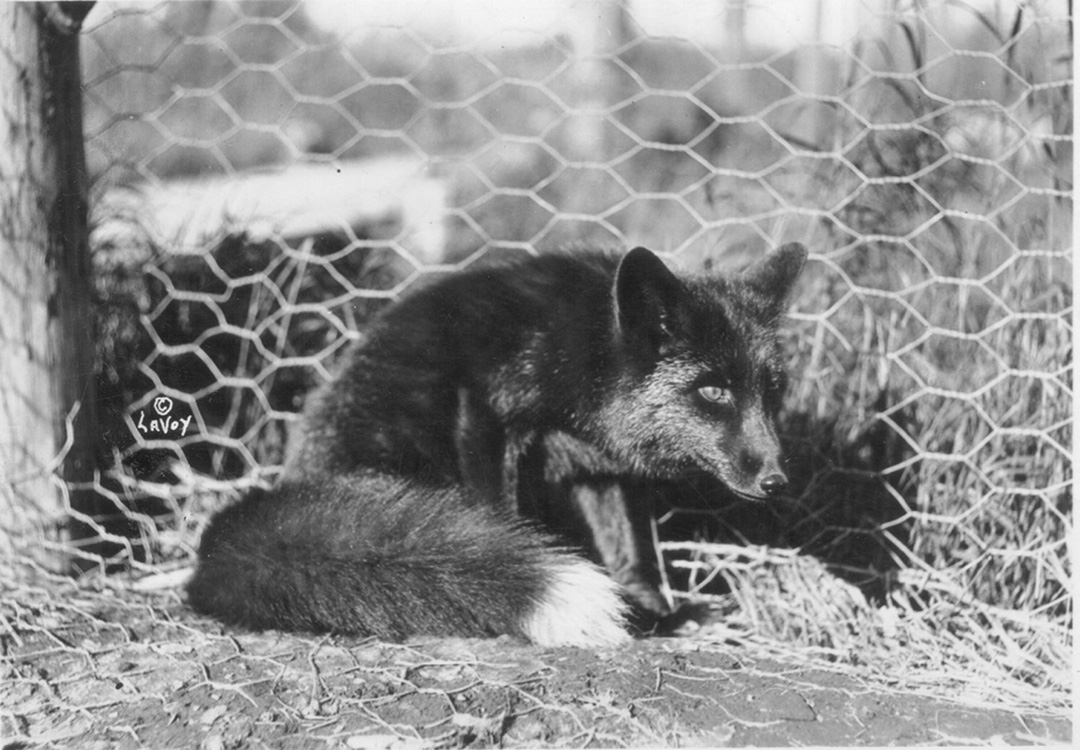
The silver black fox was the money crop for Kasilof fox farmers, as black fox fur was all the rage among high society in the early 1900s. (Photo courtesy of the Kasilof Historical Association)

Kasilof in the 1920s was about as far from high society as you could get, with only a dozen year-round residents living off the land, no road, no grocery store, no bank, no post office and none of the creature comforts to be found in a civilized city of the day. Yet, for a little over 20 years, Kasilof helped supply one of the most haute couture trends of the fashionably elite.

“In the early 1900s there was a high demand for fashion and warmth,” said Catherine Cassidy. “No, they didn’t have any Polypropylene. Furs were warm clothing and fashionable, and the trapping supply couldn’t keep up with the demand and that encouraged the investment here.”

Cassidy spoke at a Kasilof Regional Historical Society meeting earlier this month.

Fox farming existed in Alaska since Russian times. By the 1900s it was happening from the Aleutians to the Alaska Peninsula, Kodiak, Prince William Sound and Southeast. In Kasilof, the silver black fox, a variation of the red fox, was the cash crop.

“Here’s an advertisement for what sort of thing was being done. The wrap is primarially made of ermine, and combined with black fox trim. There you go — that was the fashion.”

Fox farms need large, isolated plots of cleared land, abundant food sources and accessibility to market. With the Homesteading Act, acreage could be obtained in Kasilof for essentially free. And while there was no road at the time, travel was possible up and down the Kasilof River, then by gas-powered boat to Anchorage, by railroad to Seward and by steamship to the rest of the world.

The first fox farmer in Kasilof was Louis Nissen, a Danish immigrant who came to Alaska in 1906. In 1917, he and his partner moved to Kasilof and started Silver Fox Ranch five miles up the Kasilof River.

He writes, in “Once Upon the Kenai, Not many people living here, about six the first few years. Very nice folks always sharing what they had with the neighbors, the way people were all over Alaska in the earlier days.”

Six other large-scale farms followed, and a handful of smaller operations.

By 1927 it was a lucrative endeavor. The average statewide value for a silver fox pelt that year was $111.66 — equivalent to $1,504 in today’s purchasing power.

But it was not easy money. First, the pens had to be built, with individual pens and houses for individual foxes.

“The pens, the sides and tops were chicken wire, and then this is a perimeter fence, with an overhanging fencing going over the inside because they could climb and they were escape artists,” Cassidy said.

Postholes were dug with 8-foot long shovels, a pair of which was recently donated to the Kasilof museum.

“This was the carver. You’d put this down to loosen up the soil,” Cassidy said. “After you loosened up the soil you’d put this one down to pull the dirt up. Look at all those posts! I have to go lie down.”

The pens had to be built in an isolated area away from disturbances, and they required regular attention.

Feeding the foxes was a never-ending challenge. Farmers would catch fish, hunt and trap snowshoe hares and porcupines, and some kept goats to use for meat.

By the 1930s, the fox-farming boom was declining. The average statewide value for a silver fox pelt went from $90 in 1931 to $44 in 1932.

“It’s a big drop, but most the farmers actually continued through the’30s, though they were clearly not making as much money,” Cassidy said.

Archie and Enid McLane kept their fox farm going the longest, until 1943. Some fox farmers turned to commercial fishing for their living, and others sold their land and moved on.

There’s no tidy end to the demise of fox farming in Kasilof. Cassidy thinks it was a combination of dropping fur prices, the continued grind of the hard work required to run a fox farm and the beginning of World War II.

“The war. That put the kibosh on the industry for sure,” she said.

The Kasilof Regional Historical Society meets periodically through the winter. For the next meeting, follow them on Facebook.

Site notifications
Update notification options
Subscribe to notifications