Military

Alaska military bases fall short on climate readiness, federal report says

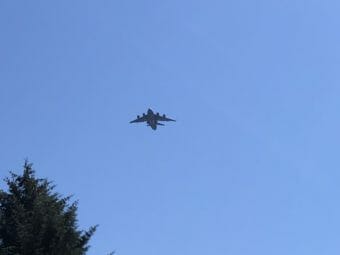
Members of the Alaska Air National Guard board a C-130 plane at Joint Base Elmendorf-Richardson in Anchorage on Dec. 2, 2021. (Jeff Chen/Alaska Public Media)

Five U.S. military bases in Alaska — and one in Greenland — failed to prepare for climate change like they were supposed to. That’s according to federal inspectors from the Department of Defense’s oversight agency. A report released this month said that most base leaders were unaware even of the requirements expected of them to prepare for climate change. The report also said that’s because military leaders at the sub-Arctic bases didn’t have enough training, funding, or guidance from the Defense Department to fulfill them.

Joint Base Elmendorf-Richardson, Clear Space Force Station, Eielson Air Force Base, Fort Wainwright and Fort Greely, and an Arctic base in Greenland were cited in the report.

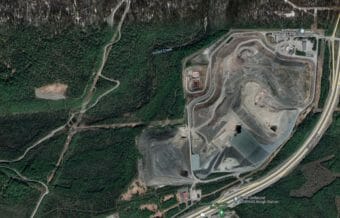
These bases are especially vulnerable to climate impacts like flooding and wildfires. Images released with the report show flooding and damaged infrastructure at Alaska military installations, though the details are classified. Details on specific risks to Alaska bases are censored in the public version of the report.

Alaska’s sub-Arctic military bases are strategically important because of the risk of attack from countries like Russia and China and new shipping opportunities as Arctic sea ice melts.

Federal defense reports identify climate change as a potential threat.  The Department of Defense called the effects of climate change a national security issue. Extreme weather cost the nation hundreds of billions of dollars in damages over the last five years.

Interior Department opens 27 million acres for Alaska Native Vietnam veteran land allotments

A man in a camouflage jacket speaks from behind a lectern
Alaska Native Vietnam War veteran Nelson Angapak speaks at a press conference at the BLM-Alaska offices in Anchorage on April 21, 2022. (Photo by Wesley Early/Alaska Public Media)

The Interior Department announced Thursday that it would open up 27 million acres of federal land for land allotments for Alaska Native Vietnam War veterans.

The allotment issue stretches back to 1906, when Congress passed a law allowing Alaska Natives to claim up to 160 acres of land. The program ended in 1971 when Congress passed the Alaska Native Claims Settlement Act.

Native advocates and Alaska’s congressional delegation have tried for years to re-open the selection process for veterans who missed out on the allotment program before it was repealed.

“Prior to the repeal, there was a concerted effort to notify Alaska veterans, or rather Alaska Natives of their allotment right,” Bureau of Land Management Director Tracy Stone-Manning said Thursday. “However, this outreach happened to take place during the Vietnam War, when so many Alaska Natives were away serving our country.”

In 2019, Alaska’s congressional delegation pushed Congress to pass a law allowing allotments for Vietnam-era Alaska Native veterans and their heirs. It was the second time the selection period was reopened. Congress tried to address the problem in 1998, but the law they passed had restrictions that resulted in few applications. This time, Congress decided that veterans don’t have to show they used or even visited the region of the land they select.

The Trump administration made 1.2 million acres of federal land available for the program.

Interior Secretary Deb Haaland, a daughter of a Vietnam veteran and the nation’s first Indigenous Interior secretary, says the expansion of the program is part of delivering on a promise.

“As I said a year ago, we have a sacred obligation to America’s veterans. I know the sacrifices made by those who serve in our military, and I will not ignore a right owed to our Alaska Native Vietnam-era veterans.”

Veteran Nelson Angapak applauded Haaland for her outreach to the state’s Native Vietnam vets.

“She understood where we were coming from,” Angapak said. “She understands who we are. And we’re grateful that through her efforts and the efforts of the Department of Interior and Bureau of Land Management, the land base for our veterans has expanded.”

Eligible veterans have until December 29, 2025 to select lands for allotments.

At Anchorage conference, ambassadors say they see a more militarized future for the Arctic

Joe Manchin leans over to speak in another man's ear
Joe Manchin and U.S. coordinator for the Arctic region at the State Department James DeHart at the 2022 Arctic Encounters symposium in Anchorage. (Photo by Lex Treinen/Alaska Public Media)

Arctic nations are boosting military spending in response to Russia’s invasion of Ukraine.

That was the message from Arctic nations’ top ambassadors and U.S. senators on Friday at the Arctic Encounters conference in Anchorage.

“What is happening is that instead of dividing us, Putin is unifying us in Europe,” said Tiina Jortikka-Laitinen, Finland’s ambassador.

She said for the first time in the country’s history, the majority of its citizens support membership in NATO, which would guarantee a military response from other members if Finland is attacked.

The Norwegian ambassador speaks into a microphone while Sen. Lisa Murkowski stands behind her.
Norwegian Ambassador Anniken Krutnes told reporters at the Arctic Encounters symposium in Anchorage that she foresees a more militarized Arctic following the Russian invasion of Ukraine in February. “We’re only five and a half million people. Fifty-two F-35 – that’s a big thing for us,” she said. “We are buying a marine surveillance aircraft, P-8s, we’re buying new submarines.” (Photo by Lex Treinen/Alaska Public Media)

The Finland ambassador spoke alongside eight other leaders, including U.S. Sen. Lisa Murkowski, at a 40-minute news conference. Both Jortikka-Laitinen and Norway’s ambassador said their countries are buying more than 50 F-35 fighter jets each in response to Russia’s invasion, and they say they foresee a more militarized future in the Arctic.

“We’re only five and a half million people. Fifty-two F-35 — that’s a big thing for us,” said Norwegian Ambassador Anniken Krutnes. “We are buying a marine surveillance aircraft, P-8s, we’re buying new submarines.”

The two-day Arctic Encounters symposium was held at the Dena’ina Center and featured talks from researchers, government officials and Indigenous leaders from Arctic nations, plus countries with interest in the Arctic like Japan and the United Kingdom. They spoke on topics including Arctic health, resource development and the environment. It’s the first time the annual event was held in Anchorage.

Protestors hold large signs shaped like caribou
Demonstrators opposing oil development in the Arctic Refuge outside of the Dena’ina Center where political, industry and some indigenous leaders met for the 2022 Arctic Encounters symposium. Demonstration leaders decried what they saw as overrepresentation of industry and development interests at the symposium. (Photo by Lex Treinen/Alaska Public Media)

Officials from Russia did not attend. They informed organizers a few days before Russia invaded Ukraine in February that they would not come, according to Arctic Encounters director Rachel Kallander.

“We did learn that there was still interest at a later point, but it was not appropriate at that time,” said Kallander. “And we had a cordial exchange to that regard.”

While Russia has been diplomatically cut off from many other forums and scientific projects around the world, Murkowski said that there is still a cooperative Coast Guard agreement to respond to emergencies in the Bering Sea.

“We certainly hope we don’t have environmental issues that we may have to deal with, but I do think that that speaks to some of what has been put in place, historically, where we don’t have a lot of resources in the Arctic, we need to rely on one another,” she said.

The Arctic Encounters symposium wrapped up Friday evening.

Biden’s Coast Guard pick would become the 1st woman to command a military branch

A formal Coast Guard portrait of Admiral Linda Fagan next to an American flag
Admiral Linda Fagan has been nominated to serve as the next commandant of the U.S. Coast Guard. If confirmed, she would be the first woman to lead a branch of the U.S. military. (U.S. Coast Guard photo)

President Biden has nominated Adm. Linda Fagan to serve as the next commandant of the U.S. Coast Guard, the administration announced Tuesday.

If confirmed, Fagan would be the first woman ever to lead a branch of the U.S. military, lawmakers said.

“Admiral Fagan’s nomination will inspire generations of American women to strive to serve at the highest level in the Armed Forces,” said Sen. Maria Cantwell, D-Wash., chair of the Senate Commerce Committee.

The Senate Commerce Committee has jurisdiction over the Coast Guard and is tasked with approving all promotions of the service’s officers.

“.@POTUS has finally nominated an outstanding leader for @USCG,” the Senate Commerce Committee Republicans said in a tweet. “It is important for the Commerce Committee to proceed efficiently so the Coast Guard is not left without a leader.”

If confirmed, Fagan would replace the current commandant, Adm. Karl Schultz, who is retiring. A change of command ceremony in Washington, D.C., is planned for June 1.

“Admiral Fagan is an exceptional senior Coast Guard officer and nominee, possessing the keen intellect, the depth of operational experience, and the well-honed leadership and managerial acumen to serve with distinction as our Service’s 27th Commandant,” Schultz in a statement.

Fagan, who has served on all seven continents, is currently the Coast Guard’s vice commandant, acting as second-in-command at the branch and executing the commandant’s strategic intent, among other duties.

Copyright 2022 NPR. To see more, visit https://www.npr.org.

Army commander seeks to normalize mental health care amid string of soldier suicides

""
Aerial view of Ft. Wainwright. (U.S. Army photo)

The Army has confirmed that 11 Alaska-based soldiers died by suicide in 2021. Six of the soldiers were based at Ft. Wainwright, and five were at Joint Base Elmendorf Richardson. The deaths of another six Alaska soldiers, five of whom were Ft. Wainwright-based, are under investigation.

That compares to seven deaths by suicide in 2020 and eight in 2019.

Speaking with reporters, U.S. Army Alaska commander Major General Brian Eifler said suicide prevention is his number one priority.

“We’ve got a lot of things going on in the world right now. A lot of things that we’ve got to pay attention to, but this is what’s hurting our soldiers, so we’ve got to figure it out,” he said.

Ft. Wainwright has one of the highest suicide rates among U.S. Army posts. And while military suicides have been climbing nationwide in recent years, Eifler said Alaska’s extreme environment can magnify mental health challenges.

“So maybe a small problem in the Lower 48 would be big problem here,” he said.

Eifler reflected on a 2019 Ft. Wainwright suicide study that gave rise to mental health and quality of life initiatives, including over $200 million in facility upgrades.

“Obviously and tragically we still have long road ahead of us,” he said.

Eifler focused on a list of suicide prevention measures, including a campaign to keep soldiers better connected.

“Leaders connected with the soldiers and soldiers connected with each other. Leaders contact a hundred percent of our soldier’s spouse or next of kin. A hundred percent of our soldiers will get a wellness check from behavioral health or the military family life counselor,” he said.

Eifler said many of the deaths happen during a soldier’s first year in the state. He highlighted a new Army climate that encourages reaching out.

“Every week, every week we have people coming forward and saying hey, first sergeant, I’m really struggling here, and here’s my weapon, take my weapon away from me. I need some help,” he said.

Eifler said the goal is to normalize mental health care within the ranks. He also pointed to a new initiative to identify soldiers who are a good fit for Alaska and to bring and keep them here.

Alaska-based troops have not been deployed in response to Russia invasion, commanders say

A jet taking off from a military base
An F-22 taking off from Joint Base Elmendorf-Richardson during exercises in 2015. (Photo by Zachariah Hughes/Alaska Public Media)

U.S. Defense Secretary Lloyd Austin has ordered another 7,000 troops to Europe Thursday to bolster NATO member nations in response to Russia’s invasion of Ukraine. But Army and Air Force commands based in Alaska aren’t sending military personnel nor equipment to support the U.S. response.

Spokespersons for both U.S. Army Alaska and the Air Force’s Alaskan Command both said Thursday that the Pentagon has not directed their commands to contribute to the U.S. response.

According to the New York Times, the order to deploy the First Brigade of the Army’s Third Infantry Division will increase the number of U.S. troops that’ve moved closer to Ukraine in recent days to 14,000. And they’ll bring the total number of U.S. troops in Europe to about 100,000.

Site notifications
Update notification options
Subscribe to notifications