Nation & World

Why Warnock’s seat means so much to Senate Democrats

""
Thanks to a recent win by incumbent Sen. Raphael Warnock, Democrats now control the Senate by a 51-49 margin — one more vote than they’ve had since 2020. (Chip Somodevilla/Getty Images)

Incumbent Sen. Raphael Warnock’s win in the Georgia Senate runoff could have far-reaching consequences legislatively and politically for Democrats.

“The truth is it’s not a 1% difference,” Senate Democratic leader Chuck Schumer of New York said earlier this week. “It’s a world of difference.”

Warnock’s victory over former NFL and University of Georgia star Herschel Walker came after a shortened four-week runoff following a hotly contested election. Neither candidate got more than 50%, which pushed the race to a runoff.

Between the general election and the runoff, this race was the most expensive of the 2022 election cycle with some $425 million spent between the campaigns and outside groups supporting them.

Even though the result only expands the Democratic majority by one, from 50-50 to 51-49, party leadership and interest groups spent the kind of money they did because they clearly saw it as critically important.

Warnock’s win now gives Democrats firm control of the Senate and makes life easier for them in a number of ways. It gives them a cushion in trying to pass bills, assured committee control and eliminates procedural hurdles to carry on the business of the Senate.

Here’s how else that two-seat majority could make a big difference for Democrats in the Senate:

Avoiding power-sharing negotiations

For Schumer, Warnock’s triumph means he does not have to again negotiate a power-sharing arrangement with Senate Minority Leader Mitch McConnell.

In 2020, Schumer and McConnell settled on an agreement to share power in the evenly split chamber after an early stalemate that stalled the confirmation of President Biden’s cabinet nominees.

At the time, McConnell insisted that Democrats maintain the Senate filibuster requiring 60 members — instead of a simple majority — to end debate on the floor before moving to vote.

McConnell only dropped his demand after moderate Democrats Kyrsten Sinema of Arizona and Joe Manchin of West Virginia said they wouldn’t vote to undercut the filibuster, leaving Schumer short of 51 votes needed to kill the minority party protection.

Without McConnell’s capitulation, the chamber would have been paralyzed, with Senate Democrats unable to take full control despite being in the majority.

No one-senator “veto” power

Democrats now have enough wiggle room to lose one vote in their caucus and still move bills through the chamber without issue.

Not only will Vice President Harris not likely have to be called in for as many tie-breaking votes, the extra seat has also changed how they factor Manchin into their political calculus.

The West Virginia moderate often held his party hostage in the early years of Biden’s term, leveraging Democrats’ narrow majority to trim some of the president’s legislative priorities on votes that needed complete Democratic unity to pass. Manchin often cites not being comfortable voting against the will of his constituents.

“I have always said, ‘If I can’t go back home and explain it, I can’t vote for it,’ ” Manchin wrote in a 2021 statement explaining his opposition to Biden’s Build Back Better Act as it was initially pitched.

Though the bill eventually passed that November, Manchin forced negotiations that reduced its size, scope and cost.

Decisive committee makeup

Because the current power-sharing agreement equally splits the Senate committees, tied votes must undergo an additional vote on the Senate floor to move ahead with bills or nominees.

But Warnock’s win means Democrats will likely have an extra seat on every committee, clearing an open path to passage when senators ubiquitously break on party lines.

“With 51, we can go bolder and quicker — to show Americans what Democrats stand for,” said Schumer.

Still, the next two years in Congress will likely look different than the last two. Republicans have captured the House majority and with it, waned Democrats’ potential to pass major legislation.

As such, the party will likely seek to confirm as many judges as it can before 2024, and a 51st seat makes that easier too. A rules change introduced in 2013 by the former Democratic Majority Leader Harry Reid allows just a simple majority for these confirmations.

Speaking ahead of Warnock’s election, Biden plainly forecasted what a 51st seat would mean for his party. “It’s always better with 51,” he said, mostly weighing the potential for committee compositions.

But the committees aside, Warnock’s win offers Democrats a clear path for action for the final years of Biden’s term.

“It’s just simply better,” the president later continued. “The bigger the numbers, the better.”

And every one of those seats is going to matter if Democrats have any hope of holding onto the Senate beyond 2024. The party faces a difficult landscape to hold onto control of the chamber in two years with incumbent Senate Democrats up for reelection in places like West Virginia, Montana and Ohio, all Republican-leaning states.

Copyright 2022 NPR. To see more, visit https://www.npr.org.

Listen: How American Indian family separation leaves impacts generations later

Illustration by NPR.

Every family has that one story that gets passed around the dinner table when company is over. Maybe it’s how a couple met, or a chance run-in with a beloved celebrity. For my family the chosen lore was the time my dad’s adopted mother, Cleo, met his birth parents.

The story goes that Cleo was working as a nurse in an emergency room in Salt Lake City when a young American Indian couple came in with a beautiful baby boy.

The man was tall and lanky with a big belt buckle – it had hunks of turquoise in it and was too big for his frame. His partner was short and more round, and in her arms was a newborn.

The couple told Cleo they loved the baby very much, but couldn’t keep him. They were the first from their tribes to go to college and they couldn’t afford a child. She gave them the name of her priest to help them figure things out.

They were just one passing couple in a long shift at work. She didn’t think much of it until a few weeks later. She got a call from the same priest saying her prayers had been answered and he had a baby boy for her to adopt.

When my dad got older and started searching for his birth parents he kept the image of the tall boy with the belt buckle and the short, round girl in his brain. He looked for years and years to find his parents – and with them his tribe – to no avail.

And for good reason: the students didn’t exist. Cleo made the whole story up, hoping to give her baby some sense of self in a very white landscape.

When my dad finally found his biological father in 2018, he wasn’t a tribal student from the University of Utah. His name was Phil Martinez and he didn’t even know he was Native American.

Now, at the dinner table, we tell the story of how two families with parallel lives found each other six decades later. And with that reunion came new questions on what shapes identity, and how generations of displacement of American Indians affects that identity.
Listen to this episode of Code Switch:

Copyright 2022 NPR. To see more, visit https://www.npr.org.

Here are the latest vote tallies in Alaska’s first ranked choice general election

Wednesday is the day Alaskans have been waiting for. Ranked choice voting tabulation took place at 4:00 p.m. the Alaska Division of Elections headquarters in Juneau, deciding the outcomes of the U.S. House and Senate races along with numerous state legislative races.

Until now, the counts only included first-choice votes. A candidate won outright if he or she received more than 50% of those. If not, the race went to ranked choice tabulation.

The division aims to certify the election results on Nov. 29.

Loading…

For state legislative results, go to elections.alaska.gov.

What it means that a historic number of LGBTQ candidates won midterm elections

""
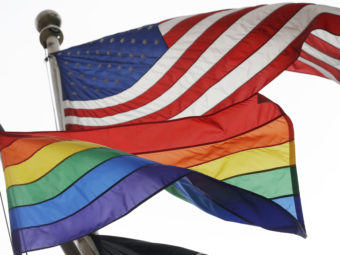
A record number of openly LGBTQ candidates won their midterm races in 2022. (Mark Lennihan/AP)

The 2022 midterm election made history with the most wins for openly LGBTQ candidates. At least 340 candidates have won their races, beating the prior record of 336 in 2020. This year also saw 678 out LGBTQ candidates – the most ever – on the general election ballot.

Since the organization Victory Fund began in 1991, it has supported LGBTQ candidates running for office – from helping train people how to campaign and what to do after winning, to offering a network of fellow LGBTQ elected representatives to learn from.

This election, the fund endorsed more than 500 candidates, Victory’s Vice President of Political Programs Sean Meloy told NPR. The most it had endorsed previously was around 300.

“Normally, when someone gets in [office], they don’t pull the ladder up after,” he said about the LGBTQ community. “They’re going to say, ‘Hey, who’s next? Who’s going to take over for me? Who else can I get to join me?’ I don’t think it’s a coincidence that we have more LGBTQ candidates running than ever at the same time we have the most LGBTQ people in office,” a number which he said is a little over 1,000.

This year saw many candidates running who are underrepresented within the already underrepresented LGBTQ community. “People of color, trans people and non binary people,” he said. “And in places where we need those voices, and the mere fact that an LGBTQ person steps forward to run — and then hopefully win — helps change hearts and minds.”

There were notable firsts in these elections

There were a number of notable firsts in the winners of the midterms. The country elected its first openly lesbian governors, with Maura Healey in Massachusetts and Tina Kotek in Oregon. In Connecticut, Erick Russell has become the first Black LGBTQ person elected to statewide office in U.S. history. New Hampshire’s James Roesener is now the first trans man ever elected to any U.S. state legislature.

Zooey Zephyr, who ran for the Montana House of Representatives, will be the first openly trans person in the state’s legislature. She won with almost 80% of the votes, according to Ballotpedia.org.

“I always hesitate to call an election historic, because the attacks on human rights, education, healthcare, public lands, unions, etc. feel perpetual,” Zephyr told NPR. “Every election requires our attention because there is always something important worth fighting for, and if we fail to fight to our fullest, there are always groups waiting to strip our rights away.”

“I do think given the way in which attacks on lgbtq people have ramped up over the last year has served as a reminder that lgbtq people need to be in the room where the laws are being written,” she continued. “300+ anti-LGBTQ pieces of legislation introduced last year, over half of which targeted trans people specifically.”

Zephyr said that not to be cliché, “but representation matters.” Meloy also described the importance of members of the queer community being in the room where decisions are made.

“Until folks in Montana and so many other places see LGBTQ people in office, they’re gonna keep beating us up, and they’re gonna keep […] attacking us legislatively,” he said. “We’re just going to be an amorphous enemy, as opposed to a smiling face that’s sitting next to them.”

Meloy said their candidates have stepped up because there’s never been an LGBTQ person to directly look in the eye of someone who, for example, might be passing a piece of legislation that cuts support for homeless people, who are disproportionately LGBTQ youth.

Alaska voted in its first three LGBTQ politicians to the state legislature: Ashley Carrick for House District 35, Jennie Armstrong for House District 16, and Andrew Gray for District 20.

Ashley Carrick, a bisexual woman, told NPR that she didn’t run because she’s LGBT, but she is LGBT, and that type of representation is long overdue in Alaska.

“That’s a perspective I carry with me as I look towards a future for our state where we promote the long-term best interests of Alaska and its people,” she said.

“I’m proud that Alaska went from being one of three states that had never elected an out LGBTQ+ state representative to now having three of us elected at once,” Armstrong told NPR. “I feel incredibly encouraged that my fellow Alaskans backed so many candidates that will fight to protect reproductive health care, push back against attacks on LGBTQ+ youth, and support building an inclusive economy where everyone has the opportunity to thrive.”

She also expressed her gratitude for the late state Sen. Johnny Ellis, and honored the sacrifice he made by remaining closeted for decades in the state legislature — a reminder of how acceptance in America has changed.

They’re well qualified to represent their constituents

Members of the LGBTQ community are uniquely qualified to represent their constituents, Meloy said.

“We intersect with every single other community,” he said. “We have millennials, we have scientists, we have union members, we have teachers and we’ve got folks from every age bracket and every demographic.”

He described that LGBTQ people bring a new and unique angle to help make our government look like the people it’s meant to represent, and their belief in the fundamental right to privacy carries through all they pursue.

“They have to know when to, you know, when it’s safe for them to be themselves in so many places,” he said. “I think that that brings an understanding of their community, and I also think it brings a level of empathy for other folks who have been forgotten or actively attacked by the government.”

The road ahead

To reach equitable representation, the U.S. needs to elect more than 35,000 additional out LGBTQ people to office, according to Victory Fund.

Meloy said that Millennials and especially Gen Z are identifying as LGBTQ at levels never seen before. He thinks that fact may mean some of the gap will naturally be filled as younger generations run for office.

When LGBTQ people win elections, more members of the community follow them, Meloy added. He hopes that the election of New Hampshire’s James Roesener, who just became the first trans man ever elected to a state legislature, will inspire other trans men to run for office. He cited the uptick in trans women candidates after Virginia State Delegate Danica Roem won her race in 2017.

“I think it shows that it’s possible, right? And so many underrepresented people in government – women, young people, people of color, LGBTQ people, disabled people – they’re always told, ‘Oh, you can’t do it […] because it hasn’t been done,'” he said. “So breaking that barrier makes that argument – ‘No.’ Which is a huge starting point.”

Evidence that anti-trans platforms often don’t succeed

Erin Reed, a content creator and queer legislature researcher who shares LGBTQ news, noted that not only were many LGBTQ candidates elected, but many voters rejected anti-trans sentiments.

“The loss of anti-transgender candidates from the school board level up to the state level sends a clear message that basing your candidacy on hate does is not a winning strategy,” Reed told NPR. “So many candidates thought they could rely on beating up on transgender people for an easy victory and they left election night disappointed.”

Reed said this won’t stop attacks on transgender people. “I anticipate 2023 will be the worst year for anti-trans legislation ever,” Reed said. “But it does send a clear message that voters are not moved by anti-trans laws.”

Copyright 2022 NPR. To see more, visit https://www.npr.org.

Be patient: This election is probably going to go on a while

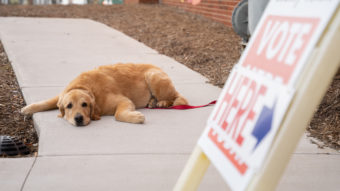
A golden retriever lies flat on a sidewalk by a vote here sign
A dog named Georgia waits for their owner outside a voting location on Saturday in Charlotte, N.C. It was the last day for early voting in the state. (Photo by Sean Rayford/Getty Images)

Election Day is Tuesday, but with early voting, the more accepted use of mail voting and the prospect of razor-thin races, it’s really Election Season.

And Tuesday only marks the beginning of the next phase in that season.

Gird for many of these elections to go on for days, if not weeks. This is all perfectly normal when there are close elections. It doesn’t mean that there is fraud — despite the lies about his 2020 loss that former President Donald Trump has pushed and so many candidates he’s backed have promulgated.

Republicans need a net gain of just five seats to take back the House. They’re in the driver’s seat and widely expected to reach that and then some. But the full extent of a GOP wave, if there is one, or whether Democrats pull off the surprise and hold the House, won’t be known for a while.

Many of these races are expected to be close and will take a while to count all the vote. There are lots of competitive seats in California, for example. California polls don’t close until 11 p.m. ET, so don’t expect many of those to be known on election night. In past years, that’s been the case, and it’s taken a long time to know results — days and weeks.

For the Senate, all eyes are going to be on four states — Pennsylvania and Georgia in the East and Arizona and Nevada in the West. In Georgia, there’s a libertarian on the ballot, who very likely will serve as a place for protest vote — meaning neither the Democrat nor Republican in the race might surpass the 50% threshold required to win the election outright.

If that happens, the election would go to a Dec. 6 runoff, which means control of the Senate quite possibly won’t be known for a month after Election Day.

Election results often require patience. This one is no different.

People stand in line at a polling place
People wait in line to vote Saturday at Bank of America Stadium in Charlotte, N.C. (Photo by Sean Rayford/Getty Images)

Recent years have seen a rise in mail voting, and states have different rules for when those mail ballots are due. States have different procedures for when those ballots can be taken out of their envelopes to be processed and tallied, and this can lengthen the count.

Let’s look at five states, all with crucial Senate races, where there could be delays and confusion:

Pennsylvania is one of the places we’re expecting to see a pretty dramatic shift on Election Night. Vote tallying should be faster this year than in 2020, considering there will be fewer mail-in ballots likely, but those mail ballots will still take longer and will lead to confusion. Beware a “Red Mirage” and a later “Blue Shift.” Lots of mail-in ballots will be reported early, and we know that Democrats have been far more likely to say they will be voting early or by mail. That could initially make it look like a Democratic lead, but then in-person ballot results will come in, likely showing Republicans pulling ahead in a close race. Then the rest of the mail ballot results will trickle in later in the evening because they take longer to tabulate and will likely favor Democrats and shift things even more. And Philadelphia simply takes a very long time to report its results. This is what always happens. It is not nefarious.

Wisconsin doesn’t allow election officials to begin processing mail ballots until polls open on Election Day. Also, if Milwaukee (high concentration of Black voters) and Dane (University of Wisconsin, younger and more liberal voters) take a longer time to report, then you could see another Red Mirage.

Arizona saw a slow trickle in Trump’s favor in 2020 as the hours went on. But others years have seen the opposite. It’s unclear which way the shift will go this year, but there will probably be one. The 2020 presidential was called at almost 3 a.m. ET, but the vote counting continued for days and Biden’s lead, though it held up, continued to shrink. Ultimately, the state was decided by just 0.3 percentage points, and Arizona has recently switched to automatic recounts for any contest that’s separated by 0.5% or less. Arizona has been ground zero for election denialism with counts and recounts and an attempt at putting a fake slate of electors up in favor of Trump. So in addition to the close vote, the challenges and noise that will happen around the legitimacy of the vote could cause even more chaos.

Georgia has seen a huge population shift in Atlanta and the surrounding suburbs that have tilted the political hue bluer in recent years. And those suburbs report their results later than rural counties – so again there could be another Red Mirage here.

Nevada is a similar story to Georgia. It’s a growth state, and most of that boom has been in Las Vegas, which is in Clark County, the largest population center in the state and where almost 70% of all the state’s votes came from in 2020. Clark and Washoe (Reno), which went for Biden in 2020, count more slowly than the more rural counties that will overwhelmingly favor Republicans. Also, post-pandemic, Nevada is one state that has moved toward mail voting. People still have the option to vote in person, but every resident in the state was mailed a ballot unless they chose to opt out of receiving one.

Keep in mind also that election officials first report unofficial results. Certified results come days, if not weeks, later.

Legal challenges and recounts can also lengthen the time before a winner is determined. Expect that this will go on a while, so patience will be needed in this impatient time.

Copyright 2022 NPR. To see more, visit https://www.npr.org.

Election denialism lingers in Alaska’s congressional races

A woman in a white suit stands at a podium in a large crowd dressed in red, white and blue.
Donald Trump briefly stepped aside to let U.S. Senate candidate Kelly Tshibaka address the rally crowd at the Alaska Airlines Center on Saturday. (Kendrick Whiteman/Alaska Public Media)

A group tracking U.S. political extremism has labeled Sarah Palin and Kelly Tshibaka — the two Alaska congressional candidates endorsed by Donald Trump — as election deniers.

Palin, who is running for U.S. House, has been blunt. When asked on a candidate survey, “Do you believe Joe Biden won the presidential election in 2020?” she responded “no.”

Tshibaka, running for U.S. Senate, has offered a mix of statements about the 2020 election.

“Joe Biden is president,” she acknowledged in her survey response, but she went on to list “questions” about the 2020 election. She repeated unfounded allegations brought by Trump and his allies, none of which produced evidence of widespread fraud that held up in court.

In the days after the 2020 election, Tshibaka “went even more extreme” in a post for a right-wing blog, said Mike Ongstad, a spokesman for the Renew America Foundation, which tracks election denialism and other threats to democracy. In that post, Tshibaka called for unity but embraced a longer string of unfounded allegations.

Tshibaka, Ongstad said, was “talking about conspiracy theories about glitches in computer programs, and some of the more radical and thoroughly debunked conspiracy theories about elections in other states.”

He said she is mirroring a lot of Republican candidates elsewhere who espoused more overt election denialism before their primaries, to appeal to the Trump-supporting base.

“Now she’s tried to shift to a more palatable position on this election denialism that allows her some level of deniability, but it’s still rooted in those same core conspiracies,” Ongstad said. “And it’s still having the same detrimental effect on our democracy, by undermining confidence and stoking fear and anger about the outcome of our elections.”

The Tshibaka campaign did not respond to inquiries for this story. But she said recently that she’s inclined to accept the results of her own election, even if she loses.

“If we think that the election was done in a way where we don’t believe that there was something that went super-wrong, absolutely,” she said. “If Alaskans pick somebody else, then that’s what Alaskans pick.”

Tshibaka is challenging incumbent Sen. Lisa Murkowski. Murkowski lost the support of the state Republican party in part because she voted to convict Trump at his second impeachment, a case rooted in Trump’s refusal to accept his election defeat.

Murkowski answered “yes” to the survey question about Biden’s election. So did Democratic Senate candidate Pat Chesbro.

In the U.S. House race, Republican Nick Begich acknowledged Joe Biden is the president. He went on to list factors that shake confidence in elections — from the hanging chads of 2000 to the changes in state election law 20 years later. Begich did not include refusal to accept election results on his list of concerns.

Site notifications
Update notification options
Subscribe to notifications