Archives for:

"Government Shutdown"

‘All hands on deck’ to help Coast Guard members during shutdown

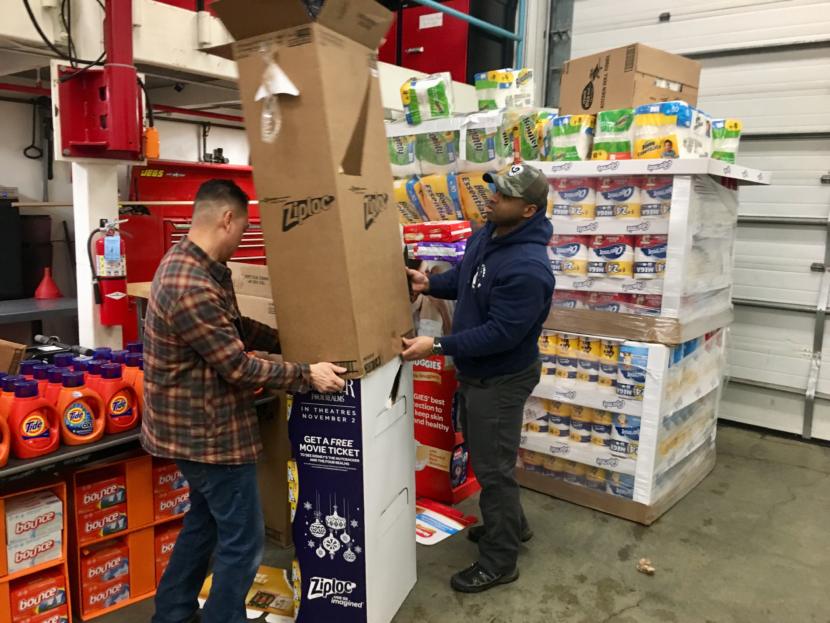
Quy Nguyen (left) and Mahire A'Giza unpack donations at the consumables pantry on Jan. 22, 2019. (Photo by Zoe Grueskin/KTOO)
Quy Nguyen (left) and Mahire A’Giza unpack donations at the consumables pantry on Jan. 22, 2019. (Photo by Zoe Grueskin/KTOO)

Update (Jan. 30, 4:40 p.m.)

Wednesday, Jan. 30, is the final day the Coast Guard’s consumables pantry in Juneau will be open. It will likely re-open in the event of another shutdown after Feb. 15.

Original story

The Coast Guard is the only branch of the U.S. military not receiving pay during the partial government shutdown. A new pantry for household supplies has popped up in Juneau to help service members make ends meet until their next paycheck.

The boat bay at U.S. Coast Guard Station Juneau looks like a small auto shop. Same high ceilings, same polished concrete floor. But there are no cars inside — or boats.

Instead, there’s a towering pile of paper towels, tables loaded with diapers and dog food, and about a dozen men and women in dark blue uniforms or Coast Guard hoodies, hauling boxes and arranging goods.

“It’s kind of all hands on deck here,” said Quy Nguyen.

Nguyen is the Coast Guard’s property officer for all of Alaska, Coast Guard District 17. He’s also the president of the Juneau chapter of the U.S. Coast Guard Chief Petty Officers Association, a nonprofit that supports Coast Guard families.

Right now, Nguyen said, a lot of Coast Guard families are hurting because of the shutdown. The Department of Defense is fully funded through this September, but the Coast Guard falls under a different department: Homeland Security. Most Coast Guard civilian employees are on furlough, and active duty members are working without pay. They received their last paychecks on Dec. 31.

Nguyen’s organization recognized that Juneau already has plenty of food pantries.

“And we thought, ‘What else could we help members with?’ And we came up with consumable items,” said Nguyen, which he explained means “day-to-day use items” like laundry detergent, Ziploc bags and toiletries.
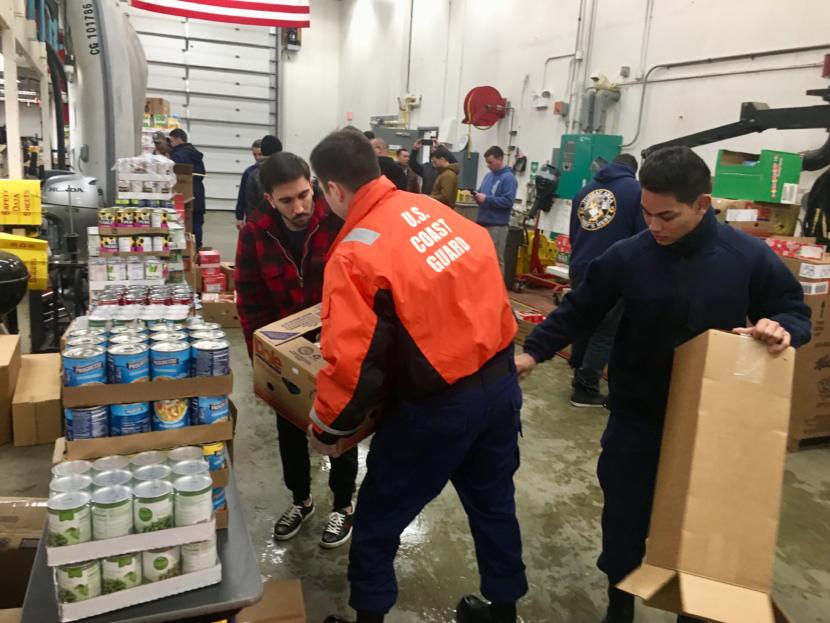
Coast Guard members unpack donations to the consumables pantry on Jan. 22, 2019. (Photo by Zoe Grueskin/KTOO)

So the boat bay became a pop-up consumables pantry. Donations have come from Fred Meyers and Rainbow Foods, and Nguyen is hoping for more. In addition, financial donations will help them buy specific items requested by service members.

Earlier this week, the Coast Guard’s top official, Adm. Karl Schultz, released a video on Facebook. In it, he thanks his “shipmates” for their continued service. But, he said, members of the armed forces “should not be expected to shoulder this burden.”

“I remain heartened by assistance available to you within the lifelines and by the outpouring of support from local communities across the nation. But ultimately, I find it unacceptable that Coast Guard men and women have to rely on food pantries and donations to get through day-to-day life as service members,” he said in the video.

Nguyen’s organization shared the video on their Facebook page. They may agree it’s unacceptable, but still they see the need in Juneau. So for as long as they have anything to give, and as long as the government stays closed, the pantry will be open.

The consumables pantry will be open at Coast Guard Station Juneau on Mondays, Wednesdays and Fridays from 3-5 p.m. for all active duty military and their dependents, Coast Guard civilian employees, and Coast Guard retirees.
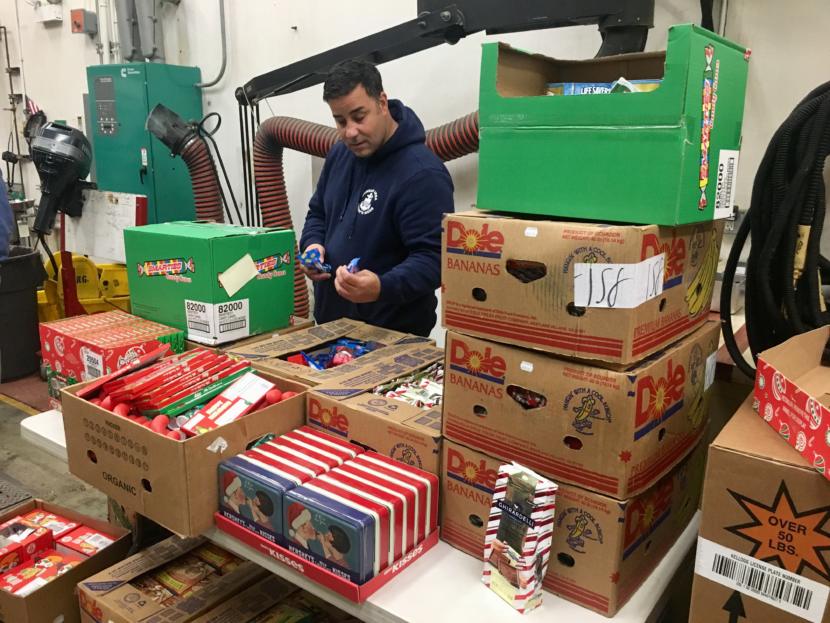

The pantry is focusing on household supplies, but food has also been donated, including leftover Christmas candy from Fred Meyers on Jan. 22, 2019. (Photo by Zoe Grueskin/KTOO)
The pantry is focusing on household supplies, but food has also been donated, including leftover Christmas candy from Fred Meyers. Jan. 22, 2019. (Photo by Zoe Grueskin/KTOO)

Alaska’s U.S. senators veer apart on shutdown votes

Protesters calling for an end to the partial government shutdown chanted outside the Juneau offices of Alaska’s U.S. senators on Jan. 24, 2019.
Protesters calling for an end to the partial government shutdown chanted outside the Juneau offices of Alaska’s U.S. senators on Jan. 24, 2019. (Photo by Zoe Grueskin/KTOO)

In the U.S. Senate Thursday, two bills that would have ended the partial government shutdown failed to get enough votes to advance. Alaska’s senators took different tacks.

Sen. Lisa Murkowski struck a moderate position. She said she disliked aspects of each bill, but she voted for both of them.

“I’m trying to figure out a way to get the government open,” she said.

The first vote was on a Republican bill that included money for the border wall President Donald Trump has been promising. Fifty senators voted for it, including one Democrat.

The next vote was for a Democratic proposal to fund the closed departments for two weeks to allow time to negotiate a border security proposal. Murkowski was one of six Republicans who crossed the aisle to vote for it. It got 52 votes.

Both measures failed to get the 60 votes needed to advance.

“I understand the president’s priorities,” Murkowski said, speaking of border security. “But don’t confuse it with the priority that we have to ensure that those men and women who are protecting us, who are working for us, have a right to get paid.”

Murkowski said she’s hearing from proud Coast Guard spouses who are angry to find themselves having to visit food banks because they don’t know when they’ll get paid again.

“What kind of a message is that? That you don’t matter? That we expect you to work but we’re not going to pay you?” Murkowski asked. “I’m sorry. I’m going off on a little bit of a rant.”

Sen. Dan Sullivan stood with the president and the Senate’s Republican leadership. He voted for the Republican bill and against the Democratic measure. He says, in a written statement, the president would’ve vetoed the Democratic bill, so that would’ve only continued the gridlock.

Right after the votes, Murkowski led a bipartisan call from the Senate floor for a temporary measure to re-open government.

At the same time, a small knot of protesters gathered outside the senators’ offices in Juneau.

“End the shutdown!” they chanted.

They carried protest signs and also a giant chicken balloon with a swoop of orange hair to lampoon the president.

Shutdown not stopping review of Alaska’s Roadless Rule

A fire left its mark on this Tongass National Forest tree trunk, as seen in 2008.
The Tongass National Forest. (Creative Commons photo by Xa’at)

The bulk of federal employees will miss two paychecks by Friday, Jan. 25, as the partial government shutdown continues. But the U.S. Forest Service is dedicating paid staff to a controversial initiative in Alaska.

The agency released an update on its website earlier this week, saying it’s still working on “high-priority projects,” such as reviewing how the Roadless Rule applies to Alaska. The rule is a federal regulation most states have to follow, which makes it difficult to build new roads on wilder parts of national lands. Alaska has asked for an exemption to the rule.

It’s been a decades-long battle in the state — centered mostly on the timber industry and energy development in the Tongass National Forest.

In August, the Forest Service said it would review the state’s ask and deliver a draft environmental impact statement by the summer of 2019. Now, despite limited staffing, the agency is still working to meet that deadline.

The Forest Service is using leftover federal funds from last year to pay its employees.

Recently, conservation groups in Alaska criticized the agency for planning a timber sale during the shutdown and for a lack of transparency.

Federal court employees to work without pay if shutdown extends to February

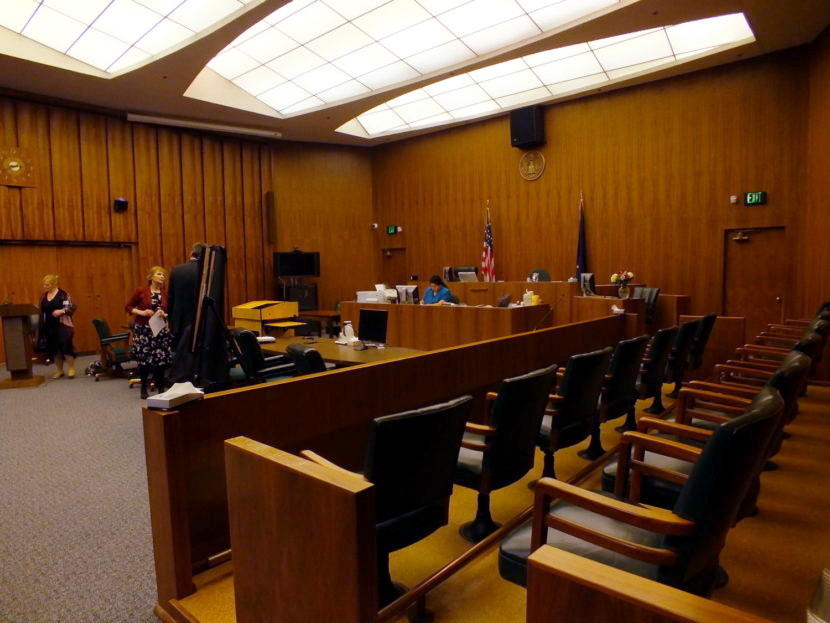
View from near jury box of the courtroom that is part of the Robert Boochever U.S. Courthouse located on the ninth floor of the Hurff Ackerman Saunders Federal Building in Juneau.
View from near jury box of the courtroom that is part of the Robert Boochever U.S. Courthouse located on the ninth floor of the Hurff Ackerman Saunders Federal Building in Juneau. (Photo by Matt Miller/KTOO)

The partial government shutdown is already affecting federal court proceedings in Alaska.

Nationwide, the federal court system will run out of money on Jan. 31, on what would be the shutdown’s 41st day. But some court cases have already been postponed or suspended.

U.S. Courts say they have enough money saved up to continue operating for a few more days. But, after Jan. 31, those funds will run out and employees will be working without pay.

Stephanie Lawley, the chief deputy clerk for the U.S. District Court in Alaska, said most Alaskans may not notice anything.

“Throughout the District of Alaska, court operations will continue on a daily basis as they traditionally do,” Lawley said. “You would not be seeing any change in court operations. We will remain open for business as usual.”

That may be true, but with one big exception. U.S. District Court Chief Judge Timothy Burgess, the top federal judge in Alaska, has already ordered suspension of civil cases in which the federal government is a party.

Hearings in a few criminal cases were cancelled earlier this month, then rescheduled as U.S. Courts recently extended available funding to Jan. 31.

In Alaska, there are two judges and three magistrate judges, plus four senior judges who continue working and hearing cases even though they’re past the typical retirement age.

There are also employees working in various other capacities at five federal courthouses in Anchorage, Fairbanks, Juneau, Ketchikan and Nome.

Federal public defenders are a lot like their counterparts in the state court system. They are assigned to represent clients who cannot afford to pay for their own attorney.

But federal defenders’ salaries are paid by U.S. Courts. At least until end of the month, anyway.

Assistant Federal Defender Darrel Gardner said they’ll be billed for portions of their health insurance if the shutdown drags on past two months.

“So if we want, for instance, dental insurance to continue, we will have to pay that out of our own pockets as opposed to having, obviously, being deducted from our pay, because we won’t be getting paid,” Gardner said.

Gardner is based in Anchorage, but he frequently helps clients around the state.

“We’re government workers. We are not in private practice,” Gardner said. “We’re dedicated to the administration of justice more than necessarily making a bunch of money in private practice.”

Gardner said a total of 18 staffers work in the Anchorage office. He said another attorney in his office has two children to support and just bought a house.

Correction: A previous version of this story misspelled Darrel Gardner’s name. The story also provided an incorrect count of the number of employees at the Federal Defender’s office for the District of Alaska.

Shutdown puts strain on some Alaska Native tribes and tribal organizations

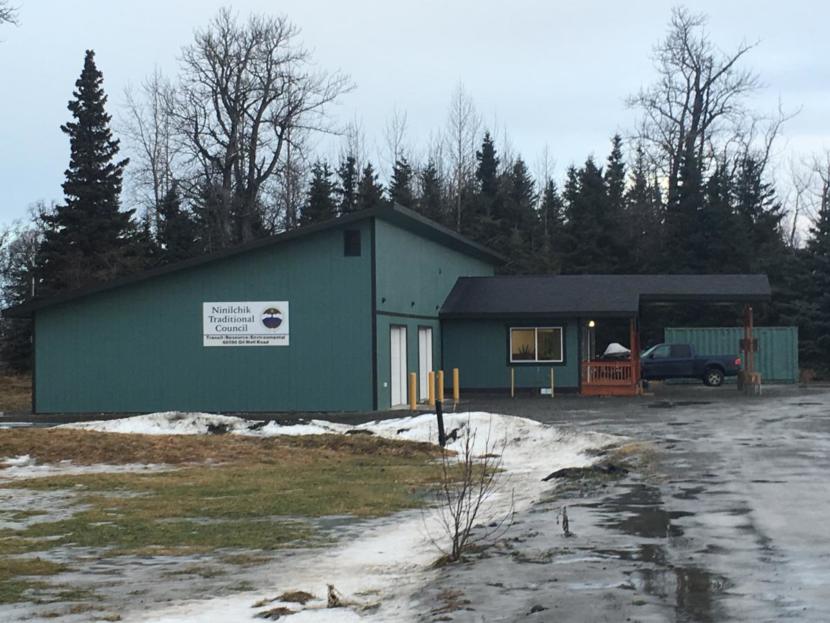
Ninilchik Traditional Council's transit building.
Ninilchik Traditional Council’s transit building. (Photo by Daysha Eaton/KBBI)

The partial federal shutdown is putting strain on some Alaska Native tribes and tribal organizations. Some are dipping into reserves in order to pay for services that the federal government usually covers.

Federally-recognized tribes in Alaska are missing some payments from the federal government during the partial shutdown.

Tribes are eligible for funding through federal agencies either directly or through contracts, grants or other agreements.

The Indian Health Service, or IHS, funds hospitals and various clinics throughout Alaska. The agency isn’t giving out any funding until the government passes an appropriation.

The Ninilchik Traditional Council on the Kenai Peninsula has missed payments from IHS, according to Ivan Encelewski, the tribe’s executive director.

“We’re definitely owed money from the Indian Health Services for a contract, and that is one of the ones that is affected by the shutdown,” he said.

Most of the tribe’s operations are related to health care. The tribe runs a clinic, behavioral health service programs and a health and wellness club, among other services. Encelewski said the tribe is still able to bill insurances, including Medicare and Medicaid, but it still needs to use its own money to fill in gaps in funding. He said last week that money won’t last for long.

“I would estimate around another month,” he said.

At that point, they will need to decide which services to cut and possibly furlough employees.

The Alaska Native Tribal Health Consortium, which provides medical care and telehealth services statewide, declined to say whether it missed a payment from IHS. Spokesperson Shirley Young said it’s operating normally.

“The Alaska Native Medical Center, ANMC, which is ANTHC’s largest division, is open and providing all usual services during the shutdown,” she said. “We have 25 specialty clinics, and they’re all operating as normal.”

Still, the shutdown is having an impact.

“Of ANTHC’s approximately 3,000 employees, about 180 of them are federal employees,” she said.

Those employees were working without pay, but the consortium decided a little over a week ago that it will use their own funds to compensate them. The nonprofit declined to say how long it could afford to pay those employees’ salaries.

It’s not just the tribal health system that may struggling during the shutdown. Tribes such as the small community of Beaver Village are missing out on funding for other services.

The village is located north of Fairbanks, and Chief Rhonda Pitka said the tribe is unable to access grant funding from the Bureau of Indian Affairs and the Environmental Protection Agency.

“The people that would approve it aren’t at work,” she said.

She said the tribe relies on those funds for critical services such as fuel deliveries, electricity and internet.

“We’ve been having to put off paying bills for a little bit,” she said. “Talk with our creditors, talk with the people that we owe money to, to make sure that we can still get fuel deliveries and just the basics.”

The tribe also relies on federal money to fund environmental programs, general tribal operations and scholarships for its higher education students. Pitka said they won’t be able to administer those scholarships during the shutdown.

Pitka said the tribe has roughly a month left — if that — before it will run out of reserves.

“Right now, there’s a lot of worry, a lot of concern,” she said. “The needs are large, and we don’t have a large amount of money.”

Just how long Beaver Village and others may have to go without federal funding is unclear. The U.S. Senate is due to vote on competing bills aimed at ending the shutdown this week, but stark disagreements between Democrats and Republicans may sink those bills’ chances of passing.

Online ‘trolls’ spark support for Juneau’s furloughed federal workers

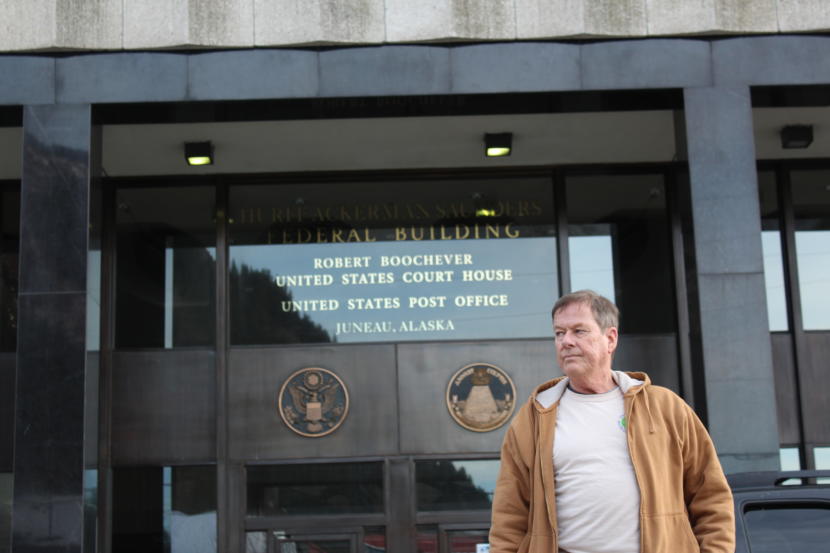
Eric Adam, a U.S. Forest Service employee, stands outside the federal building in Juneau where he works, on Jan. 19, 2019. He has been on furlough since the partial federal government shutdown began on Dec. 22, 2018. (Photo by Zoe Grueskin/KTOO)

From the outside it might look nice to be a furloughed federal employee, but the longest government shutdown in U.S. history isn’t a vacation. Many federal workers are having a hard time paying bills. In addition, they’ve been taking heat online from people who don’t understand.

“Well at first I was just hoping it would be over soon, so I was just cleaning house and visiting friends. But then money started getting a little short,” said U.S. Forest Service employee Eric Adam.

Adam is an Air Force veteran and has worked for the federal government for over 20 years. For the last three years, he’s been with the Forest Service in Juneau.

He’s an administrator, supporting the agency’s work in many ways.

“You do all kinds of things. Could be anything from changing a cartridge in the copy machine or, I know it just sounds mundane, but there’s really a lot of work that needs to be done to make sure things go on schedule. Because if they don’t it costs money.”

Except now, everything’s off schedule. Adam works in the federal building with about 90 other Forest Service employees — and nearly all of them have had to stay home since the shutdown began.

Adam said the shutdown is already hurting federal workers. He’s had to make partial payments on his rent and electric bill, and the worst part for him: He wasn’t able to make his child support payment this month. That comes out of his paycheck automatically, but his last paycheck didn’t come at all.

He said his situation is not unique.

“Everyone is going through the same thing, only their own situations aren’t being taken care of,” Adam said. “You know, it could be their pets, it could be whatever. Their children, their grandchildren, a sick parent.”

Adam said he’s received some support from friends and others in Juneau, but he’s also heard a lot of criticism directed toward federal workers who’ve spoken out about what they’re dealing with.

“You know, ‘They’re whiners and they’re all on paid vacation,'” Adam said, naming an example of what he’s heard. “And that just irked me so much. We’re real people, and we’re not just a bunch of whiners, either. We’re here to serve them, you know, the folks who have the wrong impression of us. We’re here to serve them as well.”

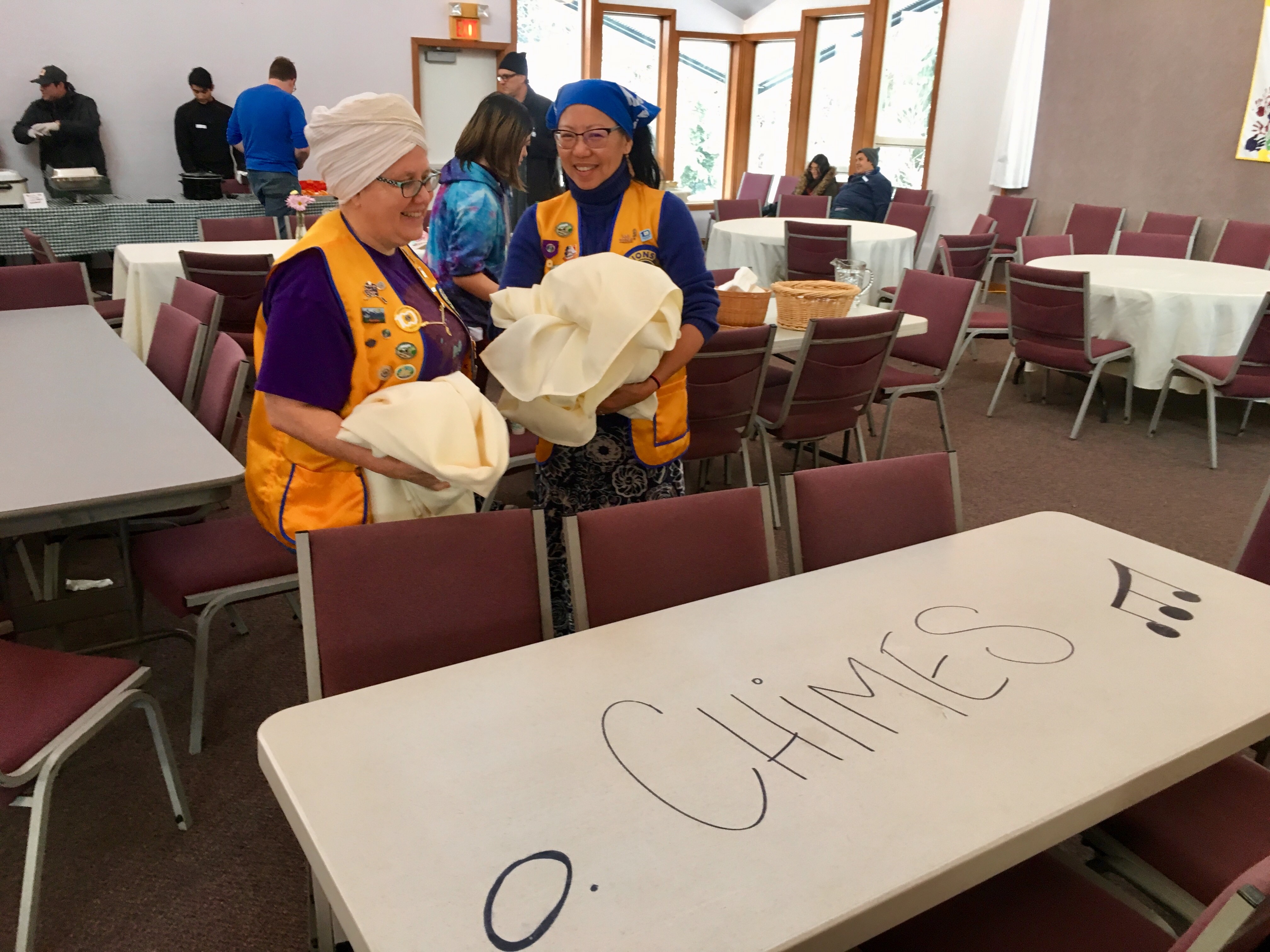
Adam isn’t the only one who’s been bothered by the negativity. Bunti Reed was at a church potluck when friends told her about a Facebook post they’d seen, written by a federal worker.

“Somebody had posted a thank you to somebody that had bought them a cup of coffee, and they just were being appreciative of it. And instead of that standing, it sort of went, ‘You should have saved money, blah blah blah.’ Just this awful, judgmental group of trolls that started coming in and saying terrible things,” said Reed.

With her family the next morning, an idea was born over eggs and ham for a fundraiser breakfast.

Reed called her pastor at Aldersgate United Methodist Church about using the space, and the rest fell into place. All the food and supplies were donated.

Reed estimates about 40 people showed up last Saturday to volunteer at the fundraiser, and almost 100 came to eat. They raised over $2,500. Reed wants to distribute that money to as many federal workers as possible, although she said they’re still sorting out the logistics.

Adam, who volunteered at the event, said he appreciates the support.

“I tell you what, we federal employees are so grateful for the community’s help to us right now,” he said, “and I guarantee they’ll get it a hundredfold back.”

The way they’ll give back, Adam said, is by doing their jobs.

“We want to start up again, man, we’re just wanting to go. You know? I’m tired of this. I want to go to work,” he said.

Juneau Economic Development Council estimates there are around 670 federal workers in Juneau, not counting the Coast Guard. Altogether, the wages they missed out on last payday total about $2.3 million. If the shutdown continues through this Friday, they’ll miss that much again.

A community event to share resources available to furloughed federal workers is planned for Friday, Jan. 25, from 4-6 p.m. at the Juneau Arts & Culture Center.

Site notifications
Update notification options
Subscribe to notifications