Ed Schoenfeld, CoastAlaska

Tribal conference considers climate change impacts

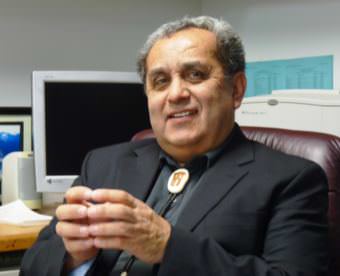
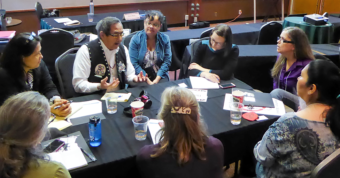
John Morris of the Douglas Indian Association speaks during a workshop at the 2016 Southeast Environmental Conference in Ketchikan. This year's conference is Sept. 5-8 in Wrangell. (Photo courtesy Central Council of Tlingit and Haida Indian Tribes of Alaska)
John Morris of the Douglas Indian Association speaks during a workshop at the 2016 Southeast Environmental Conference in Ketchikan. This year’s conference is Sept. 5-8 in Wrangell. (Photo courtesy Central Council of Tlingit and Haida Indian Tribes of Alaska)

A group of Southeast Native organizations is planning for the impacts of climate change.

Representatives of the region’s tribal governments will discuss global warming and other topics at their annual environmental conference Sept. 5-8 in Wrangell.

Conference organizer Raymond Paddock is environmental coordinator for the Central Council of the Tlingit and Haida Indian Tribes of Alaska.

He said the work starts with identifying tribal resources that have been or will be affected by warming temperatures.

“That looks like cedar, berries and other things that tribes use in the forest,” he said. “The other one being fish and how that’s affecting streams. Another one being ocean acidification and we also wrote harmful algal blooms in there as well.”

Anthony Christiansen, standing, right, speaks during the 2016 Southeast Environmental Conference in Ketchikan. (Photo courtesy Central Council of Tlingit and Haida Indian Tribes of Alaska)

Member tribes already are working together to monitor those blooms.

Toxins from the algae accumulate when ingested by clams and crabs. Consumption by people or animals can lead to paralytic shellfish poisoning.

But Paddock said the tribes want to do more than list climate change’s problems.

“We hope after we could get this plan developed, we want to go after a mitigation plan. We don’t know what that looks like just yet,” he said. “But as we’re moving forward, I think that’s our next logical step.”

Paddock said money is tight.

Tribal representatives are taking up a new effort that fits their goals and could bring in more funding.

Six tribes have come together to form the Southeast Alaska Tribal Conservation District.

Paddock expects more to join, under a U.S. Department of Agriculture program called the Natural Resources Conservation Service.

Paddock said one possibility ties into regional food security efforts.

“We can create greenhouses where we can grow vegetables and hopefully sell to our local grocery stores, so we get fresh vegetables going,” he said. “The funding opportunity is there to make this a continuing project.”

Paddock expects at least 50 to 60 people to attend the tribal environmental conference.

The event has been held for a number of years, rotating among Southeast communities.

“We wanted to put together these conferences to address these environmental issues and see how we can work together to pool our resources and partner,” he said.

This event is at Wrangell’s Nolan Center, with a water-quality-sampling field trip up the Stikine River, and it’s sponsored by Tlingit and Haida and the Wrangell Cooperative Association.

Transportation Department names new regional director

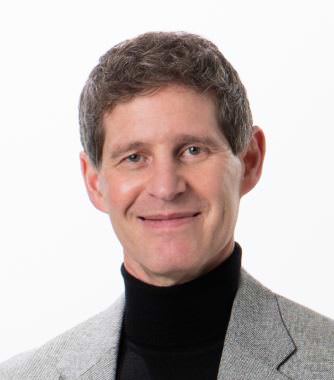
Lance Mearig is the state Department of Transportation's new Southcoast Region director. He takes over from Mike Coffey, who just retired. (Photo courtesy Department of Transportation)
Lance Mearig is the state Department of Transportation’s new Southcoast Region director. He takes over from Mike Coffey, who just retired. (Photo courtesy Department of Transportation)

A longtime Southeast resident is taking over one of the Department of Transportation and Public Facilities’ regional offices.

Commissioner Marc Luiken on Aug. 31 named Lance Mearig as the department’s Southcoast Region director. The region includes all of Southeast, plus Kodiak Island, the Alaska Peninsula and the Aleutians.

Spokeswoman Aurah Landau said Mearig has 35 years of transportation experience under his belt.

“He started working for DOT back in 1982 and then spent 25 years working in private industry, often working on projects around the Southcoast region. And (he) has a lot of experience and long-standing relationships that he’ll be bringing to the communities he’ll be serving around the Southcoast region,” Landau said.

Mearig has most recently been the Department of Transportation’s director for statewide design and engineering.

He takes over from Mike Coffey, who retired after 35 years in a variety of department positions.

Mearig is a longtime Juneau resident who grew up in Sitka, Ketchikan and Petersburg. He has a bachelor’s degree in civil engineering from the University of Alaska Fairbanks. He also has a master’s degree in the same specialty from Arizona State University.

He will oversee state roads, highways and airports throughout the region. Alaska Marine Highway General Manager John Falvey is in charge of the state ferry system.

Southeast gets a lot of rain, but it doesn’t compare to what Harvey brought

Ruined furniture and other trash pile up on the curb in Houston's Braeburn Glen neighborhood, where Sophi Zimmerman and her family live. Flooding destroyed furnishings, floors and household items. "Here's how it looks in front of every house on our block," Zimmerman said. (Photo courtesy Sophi Zimmerman)
Ruined furniture, carpets and other trash pile up on the curb in Houston’s Braeburn Glen neighborhood, where Sophi Zimmerman and her family live. All were damaged or destroyed by Hurricane Harvey’s flooding. “Here’s how it looks in front of every house on our block,” Zimmerman said. (Photo courtesy Sophi Zimmerman)

Southeast Alaska sees an incredible amount of rain each year. Ketchikan gets close to 13 feet, Juneau about 7.5, and Sitka closer to 7.

How’s that compare with what’s been happening in Texas? Here’s one perspective from a former Southeast resident hit by the storm.

Sophi Zimmerman spent 15 years in Juneau, working for the state and later, the local bowling alley’s café.

And the weather? She got used to it.

“It was just part of your day, kind of like turning on the radio or getting up and making coffee. The rain was there every day, almost,” she said.

But eventually, she headed back to her home state of Texas with her husband, Whatley Langham, and son, Josh. They settled in Houston.

“Here, we don’t get very much rain. Mostly, we have drought conditions,” she said.

They’ve seen some storms before and even had a little flooding in the lower part of their house. But it was nothing like Hurricane Harvey brought.

Sophie Zimmerman poses with a student in 2016. The former Juneau resident is a Montessori teacher. (Photo courtesy Sophi Zimmerman)
Sophie Zimmerman poses with a student in 2016. The former Juneau resident is a Montessori teacher in Houston. (Photo courtesy Sophi Zimmerman)

“I was expecting to get water up to our baseboards, but I wasn’t expecting to get 13.25 inches of water in our house,” she said.

What were her thoughts when she realized flooding was going to be significant?

“Actually, by that time it was resignation. But really (it was) thinking about how we were going to clean up the mess,” she said.

To be clear, Zimmerman knows she and her husband came out pretty well, compared with what many other Texans and Louisianans face.

They’ll have to replace flooring and wallboard, plus things they couldn’t get high enough above the floor in time. But they’ve got their house and their family is safe.

Plus, they stocked up on canned food before the storm so they wouldn’t go hungry.

Still, it was distressing.

“This amount of rain in this short a period of time was a phenomenon because you just don’t expect it,” she said.

So, was there any point where she thought, “Gee, I wish I was back in Alaska where it doesn’t rain as much?”

“There were many times when I wished I was back in Alaska. Because of the fact that in a community like Juneau, when something like a catastrophe happens, when we had severe snowstorms and people would walk down the path to our house to see if we were OK, to see if we needed firewood, to see if we needed milk or eggs,” she said.

Zimmerman knows a lot of people in Houston and other affected communities are helping their neighbors and anyone else who needs it. She said folks are checking in with each other via social media. But it’s just not the same.

Southeast Alaska’s heavy rain can cause mudslides and rockfalls and other dangerous events. A particularly heavy recent Ketchikan storm caused flooding and locals spotted salmon swimming across a road.

Zimmerman said she and her neighbors get some more dangerous flood visitors.

“Little colonies of fire ants that float around in the water. And then critters also that usually are in the bayou. It can be gators and snakes. And we had possums running along our fence all night. They were not happy campers,” she said.

As floodwaters begin to recede, Houston is mourning its dead and looking for housing, food and other assistance.

Zimmerman knows she and her husband are lucky to still have a home, as well as jobs. She’s a public Montessori school teacher and Whatley is a postal service letter carrier. They may just have to wait a few days before they can get back to work.

State transportation expert retiring after 35 years

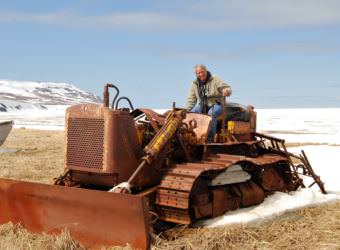
Mike Coffey poses on an old bulldozer in the Bethel area in 2009. He's retiring from his job as Department of Transportation Southcoast Region director. (Photo courtesy Department of Transportation)
Mike Coffey poses on an old bulldozer in the Bethel area in 2009. He’s retiring at the end of August from his job as Department of Transportation Southcoast Region director. (Photo courtesy Department of Transportation)

Mike Coffey oversees state transportation systems in Southeast and Southwest Alaska. But he’ll leave that job at the end of this month.

His 35 years with the state gives him a longtime perspective on Alaska roads, highways and airports.

Mike Coffey’s spent most of his adult life in transportation.

He’s been an airport manager, maintenance superintendent, design engineer and chief of statewide maintenance and operations.  He’s lived in Juneau, Anchorage, Homer and Fairbanks.

About two years ago, he was named to a new post, director of the Department of Transportation and Public Facilities’ Southcoast Region. It was the old Southeast region, with Kodiak Island, the Alaska Peninsula and the Aleutians added in.

He doesn’t oversee the ferry system. But his part of the agency spends tens of millions of dollars a year on roads, highways and airports. And more are on their way.

The state Transportation Department has three regions. Southcoast is shown in green. (Map courtesy Department of Transportation)

“We still have projects going out that are adding capacity, adding lane miles, adding new facilities, which in today’s budget situation is not ideal,” he said.

And that’s the challenge. As oil revenues have crashed, the state’s been struggling to pay for what it already has. Federal funds cover much of the cost of new projects. But it can take a decade or more to get them ready to build.

Coffey said that lag time is causing problems.

“The region is more in a transition from adding capacity to the system to where we’re preserving what we actually have,” he said.

Coffey, who’s based in Juneau, said it’s a juggling act his successor will inherit.

Department of Transportation spokeswoman Aurah Landau said Coffey brought a lot to the job.

“He’s put in many, many years. He’s an expert in best practices for winter maintenance and has been an incredible leader for Southcoast,” she said.

Coffey wants to share the credit.

He said he’s been proud to lead staffers who build and maintain key facilities most people use every day. One example: Earlier this summer, a traffic signal stopped working at a well-used capital city intersection.

“This was the day before the Fourth of July parade, when thousands and thousands of people were going to be heading into downtown Juneau,” he said. “This is something the public never knew about, but we had our Juneau station foreman, Casey Walker, out at that traffic signal all night long trying to get that to work, so that we did not impact the Fourth of July festivities.”

Coffey’s last day is Aug. 31. His resignation was announced Aug. 17.

He said he’s looking forward to some time off. But he’s not retiring for good.

“I don’t know what I’ll do a year or two from now, but it’s hard to imagine not being part of this industry that I absolutely love,” he said.

Department of Transportation Commissioner Marc Luiken hasn’t named a replacement yet.

Landau said if the job isn’t filled quickly, he’ll name an acting regional director.

Former senator, longtime Native leader Kookesh fighting cancer

Albert Kookesh discusses regional issues in his legislative office in 2012, when he was a state senator. (Photo by Ed Schoenfeld/Coastalaska)

A longtime Alaska political and business leader is fighting prostate cancer.

Former state Sen. Albert Kookesh, an Angoon Democrat, spent 16 years in the Alaska Legislature. As a senator, he represented the state’s largest electoral district, which ran from southern Southeast through the Interior and most of the way to the Bering Sea.

Kookesh also served as co-chairman of the Alaska Federation of Natives and president of the Sealaska regional Native corporation’s board of directors.

The Tlingit leader also is a subsistence activist who’s played leadership roles in the Alaska Native Brotherhood and other organizations.

Central Council of Tlingit and Haida Indian Tribes of Alaska President Richard Peterson said Kookesh has been a mentor to many tribal and community leaders.

“I was a 19-year-old mayor in Kasaan. And as our representative and then senator he was always there to offer advice, point us in the right direction, and really make sure that we knew how to advocate for our community,” said Peterson, now in his early 40s.

Kookesh is being recognized at a medical fundraiser and appreciation dinner from 5-8 p.m. Aug. 25 at the Elizabeth Peratrovich Hall in downtown Juneau.

The Central Council is a sponsor, along with Sealaska Corp. and Sealaska Heritage Institute.

Peterson said the event is more about recognition of decades of work than raising money for treatment.

“Albert’s not asking for this. This is really our community coming together and saying, ‘Hey, we want to hold he and (his wife) Sally up, their children up, while they go through this fight,'” he said.

Kookesh couldn’t be reached for immediate comment.

The Angoon resident spent eight years in the House and the same number in the Senate, representing mostly rural communities.

He lost a re-election bid in 2012 after reapportionment pitted him against Sen. Bert Stedman, a Sitka Republican. The new district included more of Stedman’s constituents than those of Kookesh.

Kookesh spent 14 years chairing Sealaska’s governing panel. He stepped down in 2014 after a heart attack, though he remains on the board, where he’s served for 40 years.

He also chose not to run for re-election as AFN co-chairman that year, a position he held for 14 years.

Kookesh has a law degree, was a commercial fisherman and owned a lodge and store in Angoon.

Sidelined ferry bid deadline delayed – again

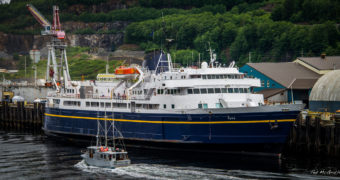
Ferry Taku. (Creative Commons photo by Ted McGrath)
The Alaska Marine Highway System’s ferry Taku is for sale. The bid deadline has been extended to allow a potential buyer more time to examine the ship. (Creative Commons photo by Ted McGrath)

The state has pushed back the bid deadline for the ferry Taku until Sept. 15. That’s because a potential buyer wants more time.

It’s the fourth extension since the Alaska Marine Highway System began advertising the ship back in March.

Spokeswoman Aurah Landau said the reason is simple. A potential, yet-to-be-named buyer hasn’t decided yet.

The ferry Taku loads up at the Prince Rupert, B.C., ferry terminal July 24, 2014. (Ed Schoenfeld/CoastAlaska News)
The ferry Taku loads up at the Prince Rupert, B.C., ferry terminal July 24, 2014. Rupert officials are in Juneau, lobbying for continued ferry service. (Ed Schoenfeld/CoastAlaska News)

“They’ve looked it over once and they’re coming back. It’s like going to the house you’re going to buy a second time just because you want to make sure it’s got the exact things you want on it,” she said.

She said the state doesn’t expect any more bid deadline delays.

Officials are not releasing the asking price, though it’s below $750,000, the most recently advertised minimum.

The state wants to get rid of the Taku because it’s old and new vessels are being built. The 54-year-old ship was taken out of service in June 2015 as a budget-cutting measure.

But it was already being targeted for retirement.

While the focus is on one interested buyer, Landau said the bid extension is for all parties.

“Anybody who puts in a bid that is near the reserve price is one that the state will consider very seriously,” she said.

The Taku was built for long sailings, with room for about 350 passengers and 50 vehicles. It has 40 staterooms, a cafeteria, observation lounges and a covered solarium. It’s in long-term storage at Ketchikan’s Ward Cove.

The two ships under construction are smaller and meant for shorter sailings. They’re scheduled to come into service within the next two years, connecting Juneau, Haines and Skagway.

Site notifications
Update notification options
Subscribe to notifications