Jacob Resneck, CoastAlaska

Jacob Resneck is CoastAlaska's regional news director based in Juneau. CoastAlaska is our partner in Southeast Alaska. KTOO collaborates with partners across the state to cover important news and to share stories with our audiences.
CARES Act data reveals disparities in payouts to Native corporations

Sealaska Plaza, headquarters of the Southeast regional Native corporation, in Juneau. (Photo by Ed Schoenfeld/CoastAlaska News)
Sealaska Plaza, headquarters of the Southeast regional Native corporation, in Juneau. (Photo by Ed Schoenfeld/CoastAlaska)

Congress set aside $8 billion for tribal entities across the country as part of the CARES Act but it took a U.S. Supreme Court ruling in June to free up some of those pandemic relief funds for Alaska Native Corporations.

Some of the village corporations got large payouts while Juneau-based Sealaska, the corporation with the most shareholders, got the least of the dozen regional corporations. Corporation executives say they’re still trying to understand the wide disparities in disbursements.

The Supreme Court ruling freed up nearly $450 million in federal pandemic relief. Corporations large and small had applied — some expecting to be able to offer some direct relief to shareholders.

Don Bremner, president of Yak-Tat Kwaan, Inc., said their allocation was around $164,000.

So we thought, ‘My gosh, did we did we fill out the forms wrong? Maybe we missed something,’” he said from Yakutat where the village corporation serves around 500 shareholders.

Divvying up the federal aid would work out to about $300 each.

So it wasn’t something to get excited about,” Bremner said. “That’s pretty much chump change.”

It was a similar story in Angoon. Melissa Kookesh chairs the board of Kootznoowoo, Inc. which has about 1,100 shareholders with ties to the Southeast village on Admiralty Island.

Our corporation only received $168,625,” she said. “And it’s disturbing, especially when an urban corporation, just up the way from us receives over $11 million.”

She’s referring to Juneau’s Goldbelt, Inc. It received about $11.1 million allowing its board to distribute the cash to its 4,000-odd shareholders.

Sitka’s Shee Atiká, Inc. received about $277,000 in August 2021 from a pool of nearly $445 million allocated to Alaska Native corporations through the CARES Act. It has (KCAW file photo)

“We’re trying to push out as much as possible to shareholders to get their relief to get that money in their hands as quickly as possible,” said Goldbelt CEO McHugh Pierre.

The Juneau corporation is offering its shareholders up to $2,600 in direct assistance through the end of September. Then it’ll decide what to do with the rest of the cash.

“There’s enough for everybody,” Pierre added. “This isn’t a needs based system where you income qualify: If you can certify you had expenses and you’re a Goldbelt shareholder, we have enough money for everybody to receive relief.”

Juneau’s urban Native corporation has about four times as many shareholders as Angoon’s, yet it received more than 60 times as much federal pandemic relief.

federal database that shows CARES Act payouts to Alaska Native Corporations suggests these disparities were common.

Staff at a number of  Native corporations said they didn’t understand exactly how the formula worked. But corporations with more shareholders didn’t necessarily get more money.

Village corporations have been seeking an explanation from the Treasury Department.

But Nathan McCowan, chair of the Alaska Native Village Corporation Association, said they haven’t gotten a satisfying answer.

“They were translucent, but not transparent,” he said.

According to the Treasury one of the factors would be the number of employees the corporation and its subsidiaries have. McCowan said that seems to have affected many of the payouts.

“There does seem to be a strong correlation, in that the larger the operating base, the larger the number of employees, the greater amount of money that the corporation received,” McCowan said.

That might explain the case of Afognak Native Corporation. It received $19.2 million, or nearly $20,000 for each of its thousand-odd shareholders.  It’s a relatively small village corporation with ancestral ties to the Kodiak Archipelago. But its revenues are more than $600 million dollars a year.

According to a statement from Afognak Native Corporation, executives don’t fully understand the formula used by the U.S. Treasury but are “very pleased to have received such a generous grant from the federal government to provide relief and response to the significant impacts of COVID on all of our stakeholders and community.”

It also helps explain why Juneau’s Goldbelt — which boasts more than two dozen subsidiaries — received more than twice as much of this federal relief as Sealaska, the ANCSA corporation with the most number shareholders overall.

In a statement directed at its 23,000 shareholders, Sealaska says it’s received questions from shareholders on how the disbursement was calculated.

“Sealaska is working out the details of how the $4.2 million allocation will be distributed to benefit our shareholders. We know this has been a difficult 18 months and that many are still struggling,” according to the statement. It also said corporations that provide housing-related services through a federal program were also given a leg up.

In contrast, Tatitlek Corporation, a village corporation with roots in  Prince William Sound, received nearly $5 million — more than Sealaska — despite having fewer than 500 shareholders. No one from the corporation returned calls for comment.

The Native corporation to receive far and away the most CARES Act funds for tribal entities was CIRI, the regional corporation serving the Cook Inlet region including Anchorage, Kenai and the Mat-Su. It took in more than $111 million or roughly $12,000 per shareholder.

I don’t know how Treasury made their calculations to determine the allocation,” said CIRI spokesperson Ethan Tyler.

But he said the regional corporation serves the most populous part of the state. It runs Southcentral Foundation which serves some 60,000 Alaska Natives and Native Americans which will allow it to put the funds to use beyond its direct shareholders, he added.

The three factors that Treasury seems to have taken into account, Tyler said, were tribal population, employment and increased expenditures of the corporation.

“But we were not provided a basis for the amount of funding that the Treasury allocated to anyone,” he said.

This CARES Act funds have strings attached. It has to be spent on pandemic-related expenses. And under current deadlines, CIRI has to spend its $111 million by the end of the year.

And we’re actively seeking to extend that deadline,” Tyler said.

This month CIRI announced its shareholders can apply for assistance of up to $1,500 plus more for those with dependents.

That’s not something many other corporations will be able to offer their shareholders especially in rural Southeast Alaska.

“It’s just really challenging,” Kootznoowoo’s Melissa Kookesh said.

She said, if divided up, its disbursement would be less than $150 per shareholder.

“And that can’t even get you a plane ticket to Angoon,” she added.

Angoon doesn’t have an airport. All air service comes via seaplane that land on the water. That’s another project her village corporation is working on — trying to develop an airstrip for the island community.

Alaska Public Media’s Liz Ruskin in Anchorage contributed to this article.

Editor’s note: This story has been updated to correct a transcription error. The previous version included the term “income quality.” This has been changed to “income qualify.” The story has also been updated to reflect that there are now only 12 regional Native corporations, not 13.

Kodiak’s ‘ghost ship’ Saint Patrick remains pollution hazard decades later

Responders put about 800-feet of boom around a sheen from the sunken ship in Kodiak’s Womens Bay on Aug. 14, 2021. (Photo courtesy of Global Diving and Salvage via Alaska DEC)

Efforts to contain pollution from a sunken scallop boat that sank off Kodiak Island more than 30 years ago have cost more than $3 million in less than a month. The wreckage of the Saint Patrick is a testament to one of Alaska’s deadliest fishing disasters, and it remains an environmental hazard today.
The Saint Patrick lay nearly forgotten at the bottom of Womens Bay until Aug. 3, when an alert passerby noticed an oily sheen on the water’s surface. Divers traced the leaks to several pinholes in the vessel’s hull, where the heads of rivets had corroded away over the past decades, state officials reported this week.

The state’s Spill Prevention and Response Division has been coordinating divers and boom deployment since oil sheens appeared in early August in Womens Bay. Responders say around 10,000 gallons of water mixed with petroleum have been removed.

We’re making really good progress on removing fuels and this oily water from the vessel so that we can make sure that it doesn’t continue sheening,” Jade Gamble, who has been leading on-scene response, told CoastAlaska on Tuesday. “And we intend to get this vessel as clean as possible so that we don’t have to come back.”

Records are spotty on how the derelict Saint Patrick ended up on the seafloor. Officials only know it went down some time in 1989 after being moored nearby for several years.

“I’m not even for sure the date that it actually sunk,” she added.

But the story goes back several years earlier. And for many in Kodiak’s commercial fishing community, the vessel’s pollution has dragged up memories of one of Alaska’s most devastating fishing disasters, which claimed nine lives in 1981.

“It was a mismanaged boat to begin with,” recalled Bill Harrington, a retired commercial scallop fisherman in Kodiak. You know that it was over 200 tons, so it’s supposed to have a licensed master mate and engineer. And then I know when it sank, the captain took the trip off and put this guy in charge that didn’t have a license.”

Owners paid out to survivors, victims in multi-million suit

Kodiak maritime attorney Jerry Markham represented one of the two survivors and several families of victims. He says just before the tragedy, the Coast Guard had let the 138-foot ship off with a verbal warning over the licensing issue.

But the owners ordered the Saint Patrick to fish for scallops anyway in late November.

“And the mate went out in a very serious storm and got side to the seas, and the boat rolled so far over that it took water into the air intakes and flooded the engine,” he said, “and that’s what caused the crew to panic.”

The fishing vessel Saint Patrick under tow in 1981 shortly after nine of the 11 crew perished after abandoning ship in rough weather. (Photo courtesy of Kodiak Maritime Museum via Alaska DEC)

The batteries had become waterlogged and someone in the crew became convinced they could explode. Which was unfounded. But that was the fear among the crew — most of whom had little experience on the water.

“They hired these kids out of Homer. A couple of them were under 20, as I recall, and they were for shuckers — that’s all their job was, was to shuck scallops. They didn’t know anything about maritime,” he said.

They were 13 miles offshore, when the order was given to abandon ship for a life raft. But it blew out of reach. Three of the crew members didn’t have survival suits, which in the frigid waters, gave them only minutes to live.

“The boys in survival suits, of course, they lasted 10 hours and watched each one of them slowly die until the last two got cast on different parts of the shore because they were separated,” he said.

Only two of the 11 crew survived after washing ashore on nearby Marmot Island. The disabled Saint Patrick rolled in the rough seas but never foundered.

“It’s just it’s such a tragedy because of the nature of the accident. If the boys that only stayed with the boat,” Marham said of the victims — eight of whom were men, one was a young woman.

The ship was salvaged a few days later and towed back to Womens Bay, where it remains today in about 58 feet of water.

As legal battle moved onshore, fishing vessel left to rust

Markham spent the next decade in litigation against the four principal owners of the Saint Patrick’s holding company.

“The court found the corporation was a shell and what we call piercing the corporate veil and held them all responsible for the accident,” he said.

It went to federal appeals twice before the court awarded a final payout of nearly $8 million to the two survivors and the estates of nine crew members lost in 1981. That wasn’t until the late 1980s. And during all that time, the abandoned Saint Patrick sat in Womens Bay.

“I wasn’t really concerned with the vessel. We were just looking at the situation, collecting something for the people,” he said.

Apparently nobody was. And the 200-odd ton ship rusted on its moorings while legal battles were fought onshore in federal court.

The salver, I don’t know if he ever got anything out of it. But for this boat that nobody wanted to touch because it was, quote, a ghost ship,” Markham added.

Bill Harrington, who fished scallops all through the 1980s, remembers the empty Saint Patrick as a fixture on Womens Bay. It was visible from the road until one day in 1989, it wasn’t.

“It was kind of a reminder of the disaster that happened,” Harrington said. You know, any boat isn’t going to stay afloat if no one’s taking care of it. And no one was taking care of that one, either. So that’s probably why it sank.”

Coast Guard, harbor officials say circumstances of 1989 sinking unclear

Kodiak’s harbor officials say there are no records explaining exactly when or why the ship went down.

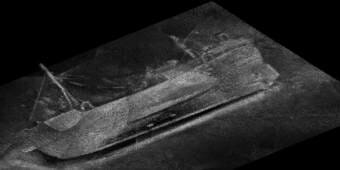
Multi-beam sonar image of the bow aspect of the sunken vessel F/V Saint Patrick on Aug. 17, 2021. (Photo by eTrac Inc. via Alaska DEC)

Harbormaster Mike Sarnowski says he’s been calling around looking for answers and reading articles online.

“And nobody really has any information,” he said Wednesday. “So it’s a difficult story to find, but we’ll keep on trying to see if we can figure out if somebody here knows what actually caused the sinking in 1989 and Women’s Bay.”

Meanwhile, first responders are moving into their second month trying to contain any pollution from the sunken ship. The Coast Guard has tapped into federal cleanup funds with about $3 million in public money spent so far.

Efforts to track down those who could be held liable have been fruitless, says Jade Gamble, the on-scene coordinator.

“Many of the businesses that owned or were involved with this vessel in the ’80s are now out of business. And so there’s not been a responsible party identified as of yet,” she said.

Derelict vessels a problem across coastal Alaska

It’s a familiar type of story. Abandoned vessels are a challenge across Alaska with state lawmakers in recent years mandating titles to track ownership and using those fees to establish a fund to deal with derelict ships that are a hazard to navigation and the environment.

Jerry Markham, the maritime lawyer, says he thought the Saint Patrick was a tragedy from another era. But he’s still answering questions about it.

“It’s crazy that they’re still having these problems with it,” he said. “But modern times have changed. Like I said, they’re much more concerned about the pollution these days.”

The ghost ship that claimed nine souls still casts a shadow of sorts over the waters of Womens Bay.

Hundreds of feet of boom encircle the area to keep the oily waste from reaching the shoreline. But this wrecked scallop boat that sank more than 30 years ago still isn’t completely at rest.

United Fishermen of Alaska director leaving to start lobbying firm

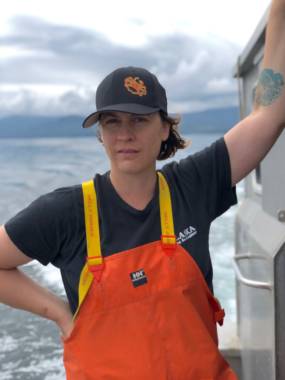
Courtesy of Frances Leach

The head of United Fishermen of Alaska — the state’s broadest fishing industry group — is stepping down at the end of the year to become a full-time Juneau lobbyist.

Frances Leach says she’ll be starting her own firm named Capitol Compass, so she can take on more clients than the fishing industry group she’d represented in the state Capitol over the past four years.

I’m really excited to continue lobbying for an industry that I really have a lot of respect for,” she said Wednesday. “But then also be able to lobby for other things that I care about greatly like environmental issues, and nonprofits.”

UFA is one of Alaska’s largest commercial fishing industry groups. It’s a big tent organization that includes a variety of gear groups and vessel types.

Leach says commercial fishermen needed more advocates they could call upon to represent them in state government.

“After having a presence up at the legislature, I recognized that the commercial fishing industry needed some other voices, helping them out up there,” she said.

Leach has worked as UFA’s executive director since 2018. Before that she worked for the Alaska Department of Fish & Game’s as a staffer to the Board of Fisheries.

As executive director, Leach was outspoken against the proposed Pebble Mine near Bristol Bay and threats posed to Southeast Alaska’s salmon runs from Canadian mines.
UFA has posted a job ad on its website seeking a new executive director, with an application deadline for Sept. 24. Lobbying records show her most recent UFA salary was $95,000.

As Juneau’s power company tests disaster plan, some ask why Salmon Creek Dam safety documents are kept secret

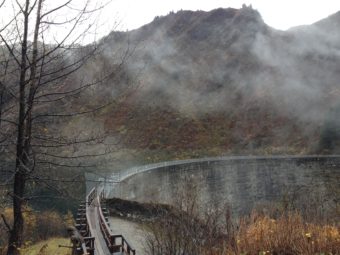
The Salmon Creek Dam, pictured here in July 2010, was built in 1914. It was the first of its kind in the world and still generates electricity for Juneau.
The Salmon Creek Dam, pictured here in July 2010, was built in 1914. It was the first of its kind in the world and still generates electricity for Juneau. (Creative Commons photo by Nvvchar)

On Sept. 2, an area north of downtown Juneau will hear a loud, discordant siren. Juneau’s power company will be testing a disaster plan for a scenario where the 168-foot Salmon Creek hydroelectric dam fails and floods a largely commercial district near the regional hospital. 

We do the siren test every year, but this is the big one,” Alaska Electric Light & Power Company executive Debbie Driscoll said. She’s in charge of community affairs for the utility company. She said the 2021 test is part of a five-year drill involving federal, state and local authorities.

“This provides a complete test of the emergency action plan to determine if the plan is adequate to deal with an emergency arising from a failure of the dam,” she said.

Salmon Creek Dam, under construction, 1913. Photo courtesy Alaska Electric Light and Power Company Photograph Collection/ Alaska State Library)
Salmon Creek Dam, under construction, 1913. (Photo courtesy Alaska Electric Light and Power Company Photograph Collection/ Alaska State Library)

The Salmon Creek Dam was finished in 1914 by the Alaska-Gastineau Mining Company. At the time it was the tallest in the world, and it’s been in operation since. It generates about 6% of the community’s power, and Juneau’s City Manager Rorie Watt said the dam’s reservoir produces about a third of the community’s drinking water.

Modeling of what would happen in the event of a major earthquake or other disaster shows a flood zone of mostly commercial buildings about 3 miles north of downtown. 

“Although Bartlett Regional Hospital itself is above the floodplain, the traffic to and from the hospital passes through the floodplain,” Driscoll said. 

Bartlett Regional Hospital 2018 12 01
Bartlett Regional Hospital, pictured here on Dec. 1, 2018, is located at 3260 Hospital Drive in Juneau. (Jeremy Hsieh/KTOO)

The hospital only has one road in and one road out. That’s led Juneau resident Randy Sutak — who used to own a barbecue joint in the flood zone — to write to regulators seeking answers about the dam’s condition.

“I have a wife that works in the hospital area. And I started wondering one day, ‘what would happen if?’ So I started writing emails and not getting answers,” Sutak told Bartlett’s Board of Directors earlier this year. 

“If an earthquake takes out the dam, then an earthquake is also going to do a lot of damage to other buildings, we have to guess. If we can’t get those people to the hospital, then shame on us because we have forewarning,” he said. “We have the ability to do something about it now.”

Juneau city officials say they rely on federal regulators to ensure the dam is maintained properly and doesn’t put the community at risk.

And AEL&P’s Driscoll said the utility keeps the reservoir’s water level at 35 feet below the dam’s crest to reduce pressure on the concrete structure.

“The dam, which is 47 feet thick at the base and six feet thick at the top, is in very good condition,” she said. “It’s a solid dam.”

The concrete was last rehabilitated in 1967. Core samples were taken that year to inspect its condition. The next time core samples were drilled out was in 2011. Consultants recommended new samples be drilled every 10 years. So this year, Salmon Creek Dam would be due for more tests. 

But it’s not clear if that will actually happen. 

Federal regulators didn’t answer questions about this. But AEL&P released an excerpt from a 2017 report from a different consultant who said new concrete samples could wait until 2037. 

In the meantime, the private utility is updating its modeling for extreme rainfall and other weather events to keep its federal license current.

The Salmon Creek Dam, designed by Lars Jorgensen, chief engineer Harry L. Wallenerg, was the first true constant-angle arch dam. It is 168 feet high and 648 feet across. Completed in 1914. Alaska Electric Light and Power Company acquired the Alaska - Juneau Gold Mining Company properties. Photo courtesy Caroline Jensen and the Alaska State Library)
The Salmon Creek Dam, completed in 1914, pictured here in 1949. (Photo courtesy Caroline Jensen/ Alaska State Library)

The Federal Energy Regulatory Commission says the century-old Salmon Creek Dam is safe, but the agency releases very little information to prove it. 

“The commission’s dam safety engineering staff thoroughly reviews all documents and studies to ensure the dams we regulate are safely maintained and operated,” Mary O’Driscoll, a FERC spokeswoman in Washington D.C. said via email.

In response to questions, the agency released a letter that its regional engineer wrote to Sutak, dismissing his concerns. It did not address specific questions.

And many details — in fact, most of the reports dealing with inspections, safety and emergency planning — aren’t freely available to the public. 
There’s a federal rule that exempts critical energy infrastructure from disclosure. FERC says the rules date from the aftermath of the Sept. 11, 2001 attacks. But veteran journalists say the reluctance by regulators to share information goes back even further.

“The argument that I’ve heard from dam security people is that, well, the terrorists are out there night-and-day hunting for the things in our infrastructure that would cause the most damage and harm,” said Society of Environmental Journalists editor Joseph Davis. 

The Maryland-based journalist has written about the federal rules that shield dams, pipelines and other energy infrastructure from scrutiny as far back as the 1990s.

“But it’s also true that there have been virtually no terrorist attacks on dams in this country in the last century of dam building,” Davis said. “There have been many fatal dam failures from bad engineering, bad maintenance and bad weather.”

The most recent high-profile dam incident was near Oroville, California in 2017. Nobody was hurt, but nearly 190,000 people were evacuated when that dam’s spillway failed in an area north of Sacramento.

Regulators insisted up to that point that the dam was sound, and the incident caused some soul searching about how it happened. 

A Congressional report the following year recommended that the federal regulator do a better job of analyzing risks to its approximately 2,500 licensed dams.

I think, in general, there has been a reluctance — somewhat human, natural reluctance — to want to share information about unsatisfactory performance,” said Stanford University’s National Performance of Dams Program Director Martin McCann. He said utilities unfortunately aren’t like airlines. When a plane crashes, there is public scrutiny and transparent reporting of lessons learned. 

“Slowly the industry has begun to see the value of this. But it’s been slow. And there is not an awful lot of — I’ll call it engineering detail — that’s available for enough of these incidents that we can fully leverage that information,” McCann said. 

FERC is willing to open its files, but only if people sign non-disclosure agreements that carry legal consequences if the contents are shared. 

Davis, the environmental journalist, said for watchdogs and safety advocates, that’s not workable.

“It defeats the purpose of journalism, which is to inform the public about public safety issues. So it doesn’t make sense. And I would just add gratuitously it’s also really, against most journalists’ codes of ethics,” Davis said. 

Freedom of Information Act requests filed by CoastAlaska for the dam’s safety and inspection reports over the past several years are pending.

State publishes Alaska winter ferry schedule

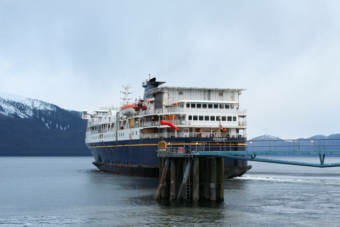
The M/V Kennicott leaving Wrangell on Jan. 8, 2021 (Sage Smiley/KSTK)

Booking is now open for winter ferry service on the Alaska Marine Highway System. The state Department of Transportation released its seven-month schedule on Thursday. It runs from Oct. 1 through the first week in May.
At most there will be five vessels running, and with upcoming maintenance scheduled, some communities will see long gaps between ferries — especially in January and February, when both the LeConte and Kennicott will be overhauled.

Transportation officials said they tweaked the final schedule following public comment received in July.

Now the schedule aligns with two regional basketball tournaments, and a once-monthly trip between Juneau and Kake was added in October and November while the mainliner Matanuska is being overhauled, AMHS spokesman Sam Dapcevich said via email.

Sitka also will receive an additional northbound sailing each month, he added.

Neither of the $60 million Alaska class ferries will be running.

The Tazlina remains tied up at Juneau’s Auke Bay terminal. Its sister ship Hubbard has yet to enter service. It’s being fitted with space for crew quarters later this year. That’ll allow it to sail for longer than 12 hours between ports extending its range and flexibility. The fleet’s largest ship, the Columbia, will also remain tied up as a cost-savings measure.

But that could change under a draft summer schedule recently released. It says state officials are also seeking to resume links with Prince Rupert, British Columbia, if outstanding issues with U.S. customs can be resolved.

Written comments are being accepted through Aug. 31 via email at dot.amhs.comments@alaska.gov.  A public teleconference to hear testimony about proposed sailings and suggestions for adjustments is scheduled for 10 a.m. on Sept. 2 for Southeast routes and at 1:30 p.m. for Southwest and Southcentral routes.

The toll-free number for joining both teleconferences is: 1-515-604-9000, access code 279613.

For those wishing to attend in person, the meetings will take place at the AMHS central office at 7559 North Tongass Highway in Ketchikan.

LISTEN: California wildfire claims former Juneau radio reporter’s hometown

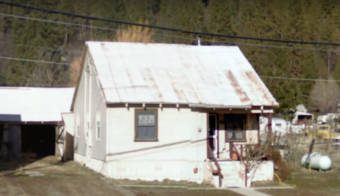
Greg Knight’s former childhood home in Crescent Mills, California. It was destroyed this month in the Dixie Fire which has become the largest in state history. (Photo courtesy of Greg Knight)

The largest wildfire in California’s history is burning a destructive swathe that, as of Monday, is nearly 900 square miles. Some historic communities, like Greenville, have been devastated. Former Juneau radio reporter Greg Knight grew up in the Sierra Nevada mountain community, and he recently learned his childhood home was among the buildings consumed by the blaze. He spoke with CoastAlaska’s Jacob Resneck about the Dixie fire’s rampant destruction and his own personal loss.

Jacob Resneck: Greg, take us to Plumas County. We’ve seen some awful images there of literally entire downtown blocks razed by fire. How bad is it from what you’re hearing?

Greg Knight: Greenville is home to about 1,000 people, and it was a gold rush town. And most of the buildings date into the 1860s and 1870s in downtown not counting the new developments. But you’ve got families that raise cattle and raise horses there for over 100 years. And so there’s this certain sense of community that — it’s kind of gone now.

Jacob Resneck: There’s little rain this time of year, and the terrain down there is really remote and mountainous. So it seems like Greg, these wildfires in California and elsewhere in the Pacific Northwest seem to be happening with more and more regularity.

Greg Knight: That’s true. It seems like as we get more and more in the climate change. A couple of years ago, we had the fire down in Paradise, which totally devastated that town. And luckily, it avoided Plumas County. But this year, I guess it was our turn.

Jacob Resneck:  Wildfires are also becoming more common in Alaska. The Southeast is a rainforest and we have had pretty bad droughts. A few years ago, it got pretty extreme in 2019. But here in Juneau, it’s easy to forget how dry much of the rest of the Pacific Northwest is. How did it happen? How did it come to happen in California?

Greg Knight: Well, the drought actually took off in a wild, wild way in the last two years. So three years ago, we had a record snowball, and it filled Lake Oroville, to the point where the hydroelectric dam was actually producing power again. And then, you know, in the last two years, there’s been [little] snowfall. There’s been [little] rainfall, there’s been [almost] nothing. And you know, Lake Oroville has been reduced to a creek. And so there’s no water left. I mean, so what they do is they bring in these water tender airplanes to try to put out fires. And if they can’t suck the water out of the lake, they’ve got nothing. And so really, in reality, today, we’ve got [almost] no water in Northern California.

Jacob Resneck: So Greg, I have to ask you, so what do you do now? Do you try and rebuild?

Greg Knight: My home is gone I have like an 80-by-100 foot flat of property that’s just a cement slab and I’ve got nothing left. And so really, my plan now is to try to get home in the next month or two and grab my boots, grab a pickaxe and tear down what can’t be saved and then rebuild what we can.

Site notifications
Update notification options
Subscribe to notifications