KBBI - Homer

KBBI is our partner station in Homer. KTOO collaborates with partners across the state to cover important news and to share stories with our audiences.
As part of Dunleavy administration directive, ADF&G considered selling its hatcheries

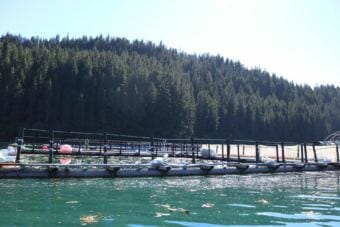
Net pens at Cook Inlet Aquaculture's Tutka Bay Lagoon Hatchery. (Photo by Aaron Bolton/KBBI)
Net pens at the state-owned Tutka Bay Lagoon Hatchery, which is operated by Cook Inlet Aquaculture Association. (Photo by Aaron Bolton/KBBI)

When Gov. Mike Dunleavy unveiled his budget proposal back in February, he also issued a directive asking departments to seek out state-owned properties that could be sold in an effort to save money.

The Alaska Department of Fish and Game considered selling state-owned hatchery facilities to the aquaculture groups that operate them, but received no interest in the idea.

As part of a larger directive from the Dunleavy administration, Fish and Game considered selling off the 33 salmon hatcheries it leases out to private nonprofit aquaculture groups in the Southcentral and Southeast regions of the state.

“They run them at no cost to the state. It’s on a long-term lease sort of arrangement,” Flip Pryor, Fish and Game’s aquaculture section chief, said.

While hatchery organizations that currently run state-owned facilities are responsible for all maintenance and operating costs, they lease the properties for next to nothing — typically $1 for 50-to-90-year leases.

Pryor said a number of state-owned hatchery facilities also come with significant liabilities, making the idea of owning one uneconomical for hatchery nonprofits.

“In a lot of cases, those hatcheries come with liability for cleanup. They’re on (U.S.) Forest Service land and such that there’s requirements that you have to clean the land up to its previous condition if the hatchery were to go away,” he explained. “The cost to do away with the hatcheries is way more than to continue to have them operate.”

Shutting down a hatchery can cost millions of dollars. Cook Inlet Aquaculture Association runs two state-owned facilities on the Kenai Peninsula. CIAA Executive Director Dean Day said that this idea has come up in the past, adding that there are more issues than just liabilities.

“From our perspective as an organization, we could not see any benefit of doing that,” he said. “The primary reason was because of the complexity of interagency land management agreements that are currently in place with ADF&G, multiple agencies, for example (Department of Natural Resources) and (Department of Transportation and Public Facilities), at a number of different locations.”

Fish and Game has received no interest from groups who want to buy state-owned hatcheries, and it’s unclear if the department is contemplating selling other properties.

Dunleavy’s press secretary Matt Shuckerow said Fish and Game and other departments are due to submit reports to the governor’s office on June 1, recommending state-owned properties that could be sold.

“So we look forward to receiving that information from departments, looking and exploring specific facilities, maybe areas that are underutilized, explanation for benefits on why the state maybe should no longer be in ownership or should relinquish properties,” he added.

Shuckerow said the administration will craft a report consolidating all the recommendations by mid-summer.

To stay or to go? Anchor Point parents and teachers grapple with potential school closure.

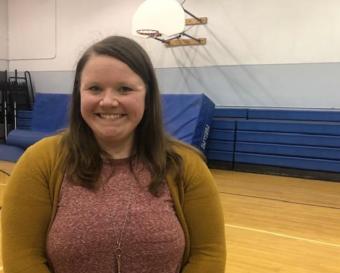
Chapman School second grade teacher Vanessa Wilcox. (Photo by Renee Gross/KBBI)

Students, parents and faculty on the Kenai Peninsula are coming to grips with the reality that state cuts to education may force school closures.
Chapman School in Anchor Point is among a half-dozen schools in the area that could be shuttered. As education funding is hashed out locally and in Juneau, parents and teachers are deciding whether to wait out the process or move out of town.

Shortly after Gov. Mike Dunleavy unveiled his proposed budget in February, the Kenai Peninsula Borough School District put out a list of six schools it may shut down. That list has been growing.

Chapman School, with 18 faculty and 134 students, is among them.

“I won’t know if I will have a job here until May or June or maybe even July,” said Vanessa Wilcox, a second grade teacher at Chapman. “And at that point, most of the teaching jobs in the Lower 48 will have already been filled.”

Wilcox said she’s not applying for jobs — not yet. She’s reluctant to uproot her life from Anchor Point on the southern Kenai Peninsula.

“We have two daughters. Four months ago, I had another baby, and so just that uncertainty has been hard for us. And our choice to have a second daughter may have been different if we knew that this was going to happen,” Wilcox explained as she started to tear up.

Summer Bertsch’s 8-year-old son Sabastian is in Wilcox’s class. He had speech issues when he started school at Chapman. Bertsch attributes the small class sizes for helping him get the remedial help he needed.

“He went from no one being able to understand a word he said to, now, he talks to everyone all day long about Pokémon. So I’m sure they’re really regretting that choice,” Bertsch laughed.

She’s worried that teachers like Wilcox will leave due to uncertainty over the school’s future, and that could mean larger class sizes.

Bertsch’s fears aren’t unfounded. Chapman School Principal Conrad Woodhead said some of his teachers are already looking for jobs in the Lower 48, and they won’t be easy to replace.

“Homer is beautiful. It’s a postcard community. That’s what they think of when they think of the southern pen(insula),” he explained. “So sometimes it is harder to get folks that want to live in Anchor Point, and so that’s why my current staff is so important, because a lot of them are local. A lot of them want to be here.”

It’s not just teachers who are grappling with whether to stay.

Dustin Poindexter’s 5-year-old and 7-year-old both attend Chapman, just down the road from their home. Poindexter and his wife said they’re wondering whether they’ll even stay in Alaska. They want to live in a state where education is a priority, a phrase you’ll hear from many Chapman parents in the same situation.

They’re considering putting their two-bedroom house on the market.

“If it comes down to it and they say, ‘Yep, this is the budget. We’re cutting everything.’ At that point, we might have a hard time selling the house, especially our location,” Poindexter said. “We’re pretty near the local school, so it’s nice for a family to have.”

Not everyone can just pick up and leave. Bertsch said it’s not an option for her family, but they’re willing to sacrifice a full PFD or pay income tax to support schools. She moved here from Ohio, a state where she said public schools faced the same funding problems.

“Every year it seemed like the school districts were trying to pass another levy to get more money for funding for education, and it’s like, you have to scrape by every year and try and convince people to take care of our kids,” she added. “That wasn’t something I wanted to do.”

The Alaska Legislature is still working out the final details of the budget. But Dunleavy has made a point of threatening to wield a line-item veto to cut the budget. A lot could happen between now and then.

But for many parents and teachers in Anchor Point, waiting is the hardest part.

Army Corps begins hearings on draft EIS for proposed Pebble Mine

The proposed Pebble Mine site, pictured in 2014.
The proposed Pebble Mine site, pictured in 2014. (Photo by Jason Sear/ KDLG)

The U.S. Army Corps of Engineers continued its series of public hearings on the proposed Pebble Mine and the project’s draft environmental review this week.

Nondalton is the closest community to the proposed Pebble Mine site, sitting about 17 miles east.

More than 30 people attended a hearing Monday on the Army Corps’ draft environmental review of the project.  A handful of residents voiced concern about how the mine would affect fishing and hunting, as well as its proximity to Lake Clark National Park. Few spoke in favor of the project and several, like life-long resident June Tracey remained neutral on the project.

But Tracey said that residents needed an economic boost in the area as the state grapples with its fiscal crisis.

“We get all of our machines,” she said. “We have our Hondas, our boats, chainsaws, that we need gas for. We don’t have any more dog teams. We have a lot of little mutts out there. But that’s not going to help us. And with the state and the federal cuts, we’re going to be hurting.”

Another hearing was held the next day in Dillingham, the largest Bristol Bay community. Its long-standing opposition to the project was apparent.

Many of the roughly 60 people that testified during the five-and-a-half-hour meeting voiced familiar concerns about potential changes to their way of life and the environment. At times, testimony was deeply emotional.

J.J. Larson is a commercial fisherman and third chief of the Curyung Tribal Council.

“Having that up there – the mental effect that has on our people, knowing that someday that dam is going to go, and we’re going to lose our lifestyle,” he said. “It might not happen in my generation. It might not happen in my son’s lifetime or his son’s lifetime.  But it’s like living with a loaded gun pointed to the back of your head and not knowing when the trigger is going to be pulled.”

Several testifiers traveled to Dillingham from other communities. A few of them supported the project, citing the need for jobs.

The Army Corps’ Lieutenant Colonel Penny Bloedel began the closing remarks.

“Thank you for your heartfelt comments,” she said. “We do have – I’m not supposed to be emotional, but we are committed to open and transparent communication and inclusive and collaborative report…”

Later in the week, outside of Homer High School, over 100 people demonstrated against the proposed mine, chanting “Fish Forever, Pebble Never!”

Roughly the same amount of people testified inside, mostly against the project, calling the draft EIS bad science.

Those like Cook Inletkeeper science director Sue Mauger argued the Army Corps underplayed the potential impacts of the mine. Mauger focused on salmon.

“No efforts to link the impacts across life-history stages,” she said. “No consideration of local adaption to thermal conditions, unsupported assumptions about thermal effects on the aquatic invertebrates that make up a salmon’s diet. This document is incomplete and reflects a sad disregard for the very real concerns Alaskans have about this proposed project on Bristol Bay salmon resources.”

Others opposed to Pebble, like Mike Bryeli, expressed frustration and exhaustion while talking about the EIS process.

“You’ve heard it a thousand times over and over for years and years,” he said. “I mean, how many times do we have to do this? Just let this thing die, please. Let it go.”

The Corps maintains that the draft EIS was completed within the constraints of the federal permitting process. The comment period on the draft closes May 30.

What happened to Kachemak Bay shellfish?

King crab caught on the NOAA ship Miller Freeman in 1967.
King crab caught on the NOAA ship Miller Freeman in 1967. (Public domain photo by Steve Nicklas, NGS/RSD)

Kachemak Bay was once abundant with crab, shrimp and other shellfish species. But by the early 1990s, populations hit rock bottom. Now a scientist and a college student are hoping to find out more about what happened. But they’re not looking for clues in the water. They want to hear from fishers and those who were in the fishing industry at that time.

Homer resident Mike DeVaney flipped through a photo album from the 1980s and pointed to a picture of someone holding a large king crab.

“There’s a nice-looking king crab, and the king crab there was primarily the biggest money we made,” he said. “Dungeness was second.”

DeVaney said fishing in Kachemak Bay was good up until the 1990s, when stocks completely crashed. But he said the fishers could see signs that shellfish populations were on the decline long before then.

“In the mid-80s, you could definitely see that there was not as many. But you got to remember every year we were having more and more fishermen get into the fisheries,” he said. “But the mid-80s, you knew it was dropping.”

Mike DeVaney's photo from the 1980s of someone holding a king crab.
Mike DeVaney’s photo from the 1980s of someone holding a king crab. (Photo courtesy Mike DeVaney)

There are a ton of theories about why shellfish have mostly disappeared from Kachemak Bay, ranging from the rise of salmon hatcheries to ecological changes. For DeVaney, he thinks that fishers were part of the problem.

“Some of us didn’t follow the rules the right way,” he said. “In other words, we might have had too many pots, more than we were allowed. And so the combination of our greediness is what hurt us the most.”

Asked if he thought that he might be overfishing at the time, he said, “Oh, yes. Oh, absolutely. We got too doggone good at it, and we knew it was going down.”

Former Alaska Department of Fish and Game biologist Bill Bechtol agreed that overfishing likely played a part, but he said there were other reasons for shellfish declines, including management of the fisheries and the increase of ground fish species like cod that utilize similar habitat.

“Well it’s obviously a combination of factors,” he said. “You can’t find one smoking gun pointing to the crash of all the populations. We had this temperature going on, the temperature change, the regime shifts of the population. The whole ecosystem is changing.”

These are the type of stories that Kris Holderied wants to hear. She’s the director of the National Oceanic and Atmospheric Administration’s Kasitsna Bay Laboratory based in Kachemak Bay. Holderied and a Kachemak Bay college student, Jill Burnham, plan to host small group conversations with fishers and those who worked in and around Kachemak Bay shellfish fisheries.  They may eventually invite community members to join in on the conversations and may kick off a future discussion with a live storytelling event.

Holderied said those conversations could help scientists and fishery managers.

“Just kind of share both what’s known, what’s not known and then hopefully get this sense of what are the things that we can do together to help either conserve the things that we have, or maybe bring back some of the things that we would like to have,” she said.

Holderied said there are signs that small comebacks for some species are possible. Tanner crab populations have increased in recent years, giving birth to a small, recreational fishery for that species. And she said people want to know whether other species, like shrimp or Dungeness crab, could also return to the area.

Those like Bechtol believe the community meetings will be an opportunity to learn from the past. He said it will be interesting in hindsight to see what people would have done differently.

As for DeVaney, he said he did his best to prevent the decline of crab by advocating for smaller quotas and for shutting down a fishery earlier.

“I’m not saying fishermen are right, don’t get me wrong,” he said. “We’re bullheaded. We don’t like changes. But even a lot of us realized that there had to have been a change made.”

He said he’d love to fish again for crab, but he isn’t holding his breath for shellfish populations to grow enough to become commercially viable once again.

If you’re interested in a participating in a conversation about the decline of shellfish, you can email Jill Burnham at JillBurnham@gmail.com.

Hilcorp delays seismic exploration in lower Cook Inlet

Cook Inlet oil rig
An oil rig in Cook Inlet, Feb. 22, 2009. (Creative Commons photo by hig314)

Hilcorp said it’s holding off on plans to conduct seismic exploration for oil and gas in lower Cook Inlet because of potential conflicts with halibut and salmon fishermen. The company also lacks a crucial permit to conduct the work, and it’s unclear when it may get the green light to move forward.
In Hilcorp’s permit application to the Bureau of Ocean Energy Management, the company said it wants to update 40-year-old seismic data in a 370-square mile lease site offshore from Homer and Anchor Point.

Seismic data helps companies like Hilcorp locate untapped oil and gas deposits. But the sound waves used to capture the data can harm marine mammals and fish.

Hilcorp hoped to start its survey in lower Cook Inlet in late March, which concerned halibut charters like Mike Flores who fish in the area.

“In their own words, when they fire those air cannons off, there would be nothing within a couple miles of those air cannons going off,” he said. “They say everything would migrate to shallower waters. Wherever that thing would be working on a day-to-day basis, there would be no halibut.”

Commercial salmon fishermen have also raised concerns about the timing of the survey. Roland Maw of the Upper Cook Inlet Drift Association said returning and outgoing Cook Inlet salmon stocks generally pass through the area April through June.

“Those sound waves can actually be lethal to the fish, both adults and to the outgoing smolt, especially the outgoing smolt,” Maw added.

In an emailed statement, a Hilcorp spokesperson said the company was forced to start its 45-to-60-day survey in late March because of permitting delays caused by the recent federal government shutdown. The company said it’s now delaying the survey until after “the height of fishing and tourist season,” due to concerns raised by fishermen like Maw and Flores.

However, Hilcorp requested to begin the survey this spring when it filed for its permit with BOEM in October, long before the shutdown began in December and the approval of the permit is still pending.

The company canceled a community meeting in Homer this week and said it will update area residents once it has more information about the survey’s timeline.

Environmental advocates like Cook Inletkeeper’s Bob Shavelson want Hilcorp to hold a meeting before it begins work.

“From our perspective, it’s much better if Hilcorp sits down with fishermen and other user groups and talks about what’s the best timing,” he said, “what’s your local knowledge, what are the impacts going to be and how do we do this in a way that’s going to work collaborative with your groups and your interest?”

Still, the company will have to wait until BOEM approves its permit. That timeline is also unknown. However, under Hilcorp’s request, it could conduct the survey until Oct. 31.

For Kachemak City residents, DIY roadwork beats higher taxes

Bruce Street is one of many roads in Kachemak City maintained with funding from local road grants. (Photo by Renee Gross/KBBI)

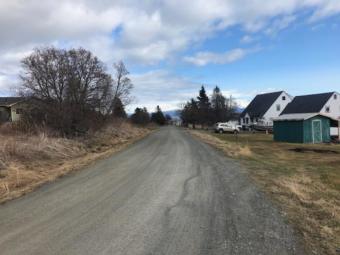
It’s easy to complain about potholes and poorly maintained roads. But one community has been taking road repair into its own hands. Kachemak City sits on the southern Kenai Peninsula and it offers grants to residents to fix roads. Some residents say DIY roadwork beats higher taxes.

Taz Tally used a run-of-the-mill garden rake to smooth out some ruts on his neighborhood road in Kachemak City this week.

Tally has learned quite a lot about road maintenance in recent years.

“Well, if someone had ever told me that I’d be a road boss, I would have said you’re crazy,” he said.

Tally has been filling potholes and doing other road work on Bruce Street for about 10 years because the alternative is paying the city via taxes.

In the past, Kachemak City said it would raise property taxes to do so.

“Well some of us sat down and did the math on a mill and a half on a $400,000 house and said, whoa, that’s a lot of money every year, year in and year out, regardless of what’s done to the roads or not,” he said. “So we kind of all banded together and defeated the motion, but still the roads needed to be maintained.”

The city chose to stick with its road grant system, which has been around in various forms for over 30 years. Now, groups of up to five properties can apply for grants of about $1,400 to help maintain their section of road, but in order to get that money, residents need to have skin in the game. They need to spend about $700 of their own money.

Tally said most residents use the grants from the city to hire professional contractors.

“We put our heads together to find out what do you think we can do this year and put it out to bid and we get the quotes in and make up the grant request to Kachemak City,” he said.

Tally said the program allowed him and his neighbors to pay for everything from sanding and plowing to fixing culverts. But some of the work, Tally said they’ll do on their own.

“Like this year, we’re going to have one of the contractors dump a truck load of D1, road-grade high quality gravel, down at the end of our road,” he said. “And then when the potholes form, we shovel a few boxes full of dirt in the back of the pickup truck and go out and tamp it down in the road.”

While this blend of private-public partnerships is saving money, the city is only able to give out roughly $50,000 each year. Kachemak City Mayor Bill Overway said that money comes from the state.

“We’re given that money to operate the city,” he said. “And each year, its whatever the legislature determines that they’re going to give to various cities, and then at that point we can determine how many grants we can allow for each of the applicants.”

Tally is far from the only one applying for these grants.

Nick Varney, Kachemak City resident of 36 years, said the grant money has been a godsend. In the past, he would use more of his own money to pay for road maintenance.

“We had to do it before,” he said.  “I was loading up a pickup with rock and sand and stuff and going out and shoveling in potholes on my old road. But once we could get the financial help and stuff like that, then we just kind of took over the management of getting the contracts done and let professionals do it.”

Back at Tally’s house, he said he’s not sure if he’d prefer for Kachemak City to take over the work.

“The answer is yes, and no,” he said. “Yes, I’d love for Kachemak City to do it and I wish they do it for the cost that we pay for it, which they can’t of course. And the reason why we’re doing this is not because we love to do our own road maintenance, but the cost differential is enormous.”

Besides, he says, he and his neighbor, former House Rep. Paul Seaton, are compelled to do it.

“Paul and I really can’t help ourselves,” he said. “We walk around the neighborhood with our shovels and our rakes and we do this, that and the other thing.”

However, the money that allows these residents to take road maintenance into their own hands comes from the state, and the city says the state’s fiscal crisis could affect the program in the future.

This year’s grant applications for road maintenance are due Monday.

Site notifications
Update notification options
Subscribe to notifications