Nat Herz, Alaska Public Media

Opponents of citizens initiative to boost oil taxes have formed a bipartisan coalition

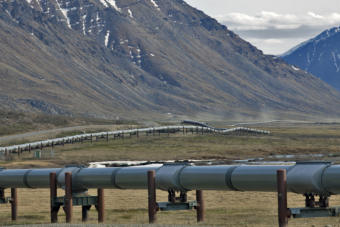
An above-ground section of the Trans-Alaska Pipeline System near the Toolik Lake Research Station in the North Slope Borough. (Photo by Rashah McChesney/Alaska's Energy Desk)
An above-ground section of the Trans-Alaska Pipeline System near the Toolik Field Station in the North Slope Borough. (Photo by Rashah McChesney/Alaska’s Energy Desk)

bipartisan group has formed to fight a citizens initiative that, if passed, would boost taxes on some of Alaska’s North Slope oil fields.

The group, OneAlaska, does not appear to include any oil industry leaders, though several of its members work for companies or organizations with ties to the industry. It’s chaired by Chantal Walsh, a Democrat who’s a former director of the state’s Division of Oil and Gas.

Its co-chairs include former state Rep. Jason Grenn, an independent, and Republican Nicholas Begich III, a nephew of Democratic former U.S. Sen. Mark Begich.

“The ballot measure is a mistake and should be rejected by voters,” Grenn said in a prepared statement announcing the group’s formation. “It contains provisions that would jeopardize new development and make it harder for companies to invest here.”

Other co-chairs include Crawford Patkotak, the chair of the Alaska Native corporation Arctic Slope Regional Corp., former state forester John Sturgeon and Bill Popp, head of the Anchorage Economic Development Corp.

Popp, in a phone interview Thursday, said both he and his organization believe that the oil tax initiative is “complex legislation that should not be done at the ballot box.”

Mark Begich, frustrated by rural Alaska’s exorbitant prices, is opening a grocery store in Utqiaġvik

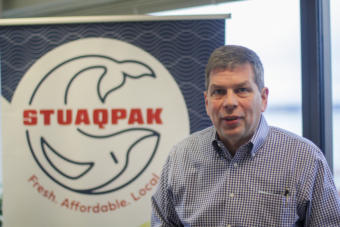
Mark Begich poses for a photo in his Anchorage office last week. Begich, the former U.S. senator, is working with a company that’s taking over management of Utqiaġvik’s big grocery store. (Photo by Nat Herz/Alaska Public Media)

When Mark Begich was a U.S. senator, he took visiting dignitaries on trips to rural Alaska. Every time, he said, he’d drag them into the village store, to show just how much residents had to pay for laundry detergent or a gallon of milk.

“Universally, among all of them: shock. They would look at a head of lettuce that might be seven, eight, nine dollars and they’re looking at you, like, ‘What?’” Begich said. “They’re trying to understand: How does that happen?”

A year after losing his campaign for governor, Begich is working in the private sector, where he’s now trying to solve that same problem. This week, a company he runs is assuming management of the big grocery store in Utqiaġvik, the North Slope hub town of 4,500 people.

In an interview in his Anchorage office last week, Begich said his company, Stuaqpak Inc., will offer lower prices and better products, and be more accountable to residents than the North West Co., the publicly traded Canadian corporation whose subsidiary ran the store previously.

“We think we are doing something that is transformational to rural Alaska on a basic issue, which is survival on a food product that can be affordable,” Begich said.

But Begich’s business is launching an untested model, and it will still face competition from North West, whose subsidiary, Alaska Commercial Co., has already reopened in a different spot.

AC welcomes the competition, said Walt Pickett, the company’s general manager.

“If there’s any learnings that come out of this, I’m excited about that,” Pickett said. “If they found a better mousetrap, let’s figure out that mousetrap and replicate it.”

To some degree, expensive groceries in rural Alaska are inescapable: Dozens of villages across the state are disconnected from the road system, meaning that goods have to be boated or flown in.

But there’s also a persistent sense that AC takes advantage of the lack of competition in Bush communities like Utqiaġvik, said Elise Patkotak, a longtime resident who now lives in Anchorage.

Sometimes, she said, those frustrations are justified.

“And other times it is just a matter of, you’re so tired of how much they’re making you pay,” she said. “It’s just kind of a way of life — you have no other alternative, so all you can do is bitch.”

AC has 33 locations in Alaska, from the North Slope to Southeast, and nearly all of them have competition, Pickett said. That includes Utqiaġvik, where there were two other grocery stores before Begich’s company arrived.

“We do everything in our power to minimize costs,” Pickett said. “We are pretty good experts at what we do. And at the end of the day it’s just an expensive effort to move product into these remote communities.”

AC was originally formed in the 18th century as the Russian American Trading Company, then purchased and renamed in 1867 by a pair of San Francisco merchants. The North West Company acquired it in 1992.

The company has 950 employees in Alaska, with revenues of some $240 million a year — roughly $20 million of which come from Utqiaġvik, according to Pickett. It occupied its most recent building since the late 1990s, he said.

AC’s landlord in that location was Ukpeaġvik Inupiat Corp., the Alaska Native village corporation for Utqiaġvik. When AC’s lease came up for renewal, UIC put out a request for proposals and picked Begich’s group out of the three respondents, said Nagruk Harcharek, a UIC official.

“I think we’re all excited at the opportunity to hopefully make the cost of living for this community a little bit more affordable,” Harcharek said.

Begich is president of the company, Stuaqpak, that’s taking over the Utqiaġvik store; other investors include Begich’s nephew Nicholas Begich III and Jason Evans, an Iñupiat businessman. Stuaqpak is also working with a separate consulting firm run by Begich, Northern Compass Group.

Stuaqpak took possession of the store late Thursday, and Begich and others are now in Utqiaġvik preparing to reopen it as soon as this week, with what he describes as several improvements.

First, Stuaqpak is working with a wholesaler, JB Gottstein, that Begich said will allow the store to sell basic goods at lower prices. Second, he says his Alaska-owned company will be more responsive to feedback than AC and its parent corporation, North West, which is based in Canada. When people in Utqiaġvik have complaints, “I’ll get the message, I guarantee you,” Begich said.

Third, Begich’s group is making physical changes to the store, in an effort to turn it into more of a gathering place. It’s planning to redo an area that Alaska Native artists sell their work on consignment, and it’s also bringing in what Begich calls a “high-quality Alaskan coffee roaster” — he won’t say which, but think Steamdot or Kaladi Bros.

“Our goal is, at the end of the day, it’s a place that people can see as a destination,” Begich said.

Patkotak, the longtime Utqiaġvik resident, said her friends in town are taking a “wait-and-see” approach. Begich isn’t the first businessman to come to the community with big promises about groceries, she said — she remembers similar hype around the opening of the store under AC’s management two decades ago.

“There was a big brouhaha about how everything was going to be more wonderful,” Patkotak said. “And eventually it just settles back into, you know, you can buy this avocado for $20 and hope to God it ripens before it rottens.”

If Begich’s model works, it could expand to other communities in rural Alaska, he said.

AC isn’t going away, though. It was expecting to renew its lease for the Utqiaġvik building and planned to make its own improvements there, said Pickett, the general manager. “It was a shock” when Begich’s company won the bid, he added.

AC spent the past six weeks remodeling the new building it purchased, but the company sees the space as a short-term solution, Pickett said. Ultimately, AC expects to have a bigger footprint in Utqiaġvik, whether that’s through an addition, a different space or a second store, he said.

“We want to continue to provide for the people in that market on the North Slope,” Pickett said. He added: “We’re looking at all options.”

The Trump administration wanted an Arctic Refuge lease sale this year. But it’s out of time.

Caribou graze on the coastal plain of the Arctic National Wildlife Refuge, with the Brooks Range as a backdrop in October 2010. (Public domain photo by U.S. Fish and Wildlife Service)

Top Trump administration officials have said that they plan to hold an oil and gas lease sale in the Arctic National Wildlife Refuge before the end of the year. But that goal now appears out of reach because of two procedural steps still necessary before a sale can take place.

Each of those steps comes with a 30-day waiting period, said Brook Brisson, an attorney for Trustees for Alaska, the Anchorage-based environmental law firm that works with organizations fighting to block drilling.

“If they follow the procedures that are set out in statute and regulations, it does look as though the lease sale would get pushed into early next year,” Brisson said.

A U.S. Interior Department spokesperson did not dispute that the lease sale would be pushed back, but declined to comment further.

The delay is a setback for the Trump administration’s push to open the refuge to oil and gas development. But it’s likely a sign that the administration is trying to ensure the completeness of its environmental reviews and planning in light of an inevitable legal challenge, said Andy Mack, a former Alaska commissioner of natural resources who has pushed to open the refuge.

“A couple of extra months is probably a prudent move so that you get it right,” Mack said. “You’re setting the record and making sure that you’ve done everything to mitigate impacts, while also having a successful lease sale.”

Elected officials debated the idea of oil development in the refuge’s coastal plain for decades before U.S. Congress voted to allow drilling in 2017, in a section of the Republican tax overhaul. The legislation requires the first lease sale to take place within four years of its enactment, but Trump administration officials had pushed to hold the first sale before the end of 2019.

Opponents say development will spoil one of the nation’s last pristine areas and harm species that live there like caribou, polar bears and migratory birds. Supporters note that the coastal plain represents some 8 percent of the refuge’s total area and that the tax bill limits surface development to three square miles.

In the tax legislation, Congress directed the Interior Department secretary to manage the refuge’s leasing program “in a manner similar to” lease sales held under a 1976 law governing federal petroleum reserves, including the National Petroleum Reserve in Alaska, or NPR-A.

Before NPR-A lease sales can take place, federal regulations adopted under the 1976 law require the Interior Department to first issue a “call for nominations,” where companies or other interested entities can suggest specific areas to be leased, or identify those that deserve special concern or analysis.

Pond on ANWR coastal plain. (Photo courtesy of U.S. Fish and Wildlife Service)
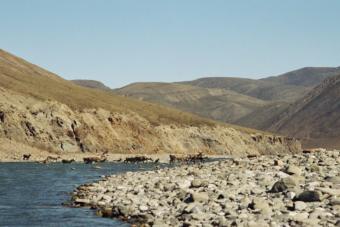
A Pond on Arctic National Wildlife Refuge coastal plain. Geologists have limited data about how much oil might lie beneath this part of the ANWR. (Photo courtesy of U.S. Fish and Wildlife Service)

That requirement doesn’t come with a specific timeline or waiting period. But the Interior Department has typically allowed 30 days for comments or nominations.

After the call for nominations, another regulation requires the Interior Department to publish a “notice of sale.” And that regulation explicitly requires the notice to be published at least 30 days before a sale.

The department released its final environmental review of its broader refuge leasing program in mid-September, but it still hasn’t issued its “record of decision,” the last step in approving the document.

In spite of the delay in the lease sale, drilling opponents have criticized the Trump administration and threatened legal action over what they describe as a rushed process toward developing the refuge.

“Attempts to drill will be challenged in court,” a coalition of opponents wrote in a recent half-page ad in the print edition of the Wall Street Journal. “We stand ready to challenge any company foolish enough to invite this opposition, uncertainty, and reputational risk.”

Brisson, the Anchorage attorney, said a relatively short delay in scheduling a lease sale should not obscure what opponents see as a larger issue.

“The lack of the agency’s detailed analysis, the shortcuts of public participation, the faults with the process overall and the incredibly impactful program that they’re proposing to adopt is the problem,” she said.

Alaska politicians, at business forum, forecast tensions ahead for the governor and the Legislature

Alaska House Speaker Bryce Edgmon and Senate President Cathy Giessel appeared at a forum with Ben Stevens, Gov. Mike Dunleavy’s chief of staff, at the Alaska Chamber’s fall meeting in Girdwood on Tuesday, Oct. 29, 2019. (Photo by Nat Herz/Alaska Public Media)

The next session of the Alaska Legislature is less than three months away. And after a drawn-out fight in Juneau this year, there are still widely differing visions of the state’s future between legislative leaders and Gov. Mike Dunleavy.

At a forum Tuesday at the Alaska Chamber’s fall gathering in Girdwood, Alaska business leaders got a preview of the upcoming session from the House speaker, Senate president and Dunleavy’s chief of staff — and the three speakers sounded eager to work together, though still not ready to put their differences aside.

Last year’s session of the Legislature did not exactly go smoothly. Lawmakers passed a budget, Dunleavy vetoed huge chunks of it, so then the Legislature passed another budget bill, and the governor vetoed big chunks of that, too.

Before the forum got going, the moderator, political consultant Willis Lyford, set the stage with a clip from the movie “The Perfect Storm,” saying the scene of a boat being pummeled by waves accurately summarized the way things went in Juneau earlier this year.

After a few chuckles, the forum, at the fall convention of the Alaska Chamber, quickly got back to business, starting with Lyford asking what could have been done better this year.

Ben Stevens, Dunleavy’s new chief of staff, said the governor could have improved his communication by simply talking more with legislators and constituents.

“More of an open-door policy, I think, is what could have been done better,” Stevens said. “I think he admits that. The governor has taken responsibility for, as he says, his position and his contribution or his part of the dysfunction that occurred.”

Ben Stevens, Alaska Gov. Mike Dunleavy’s chief of staff, spoke at the forum. (Photo by Nat Herz/Alaska Public Media)

Both Edgmon, the House speaker, and Giessel, the Senate president, said they’re encouraged by the appointment of Stevens, a former Senate president who has relationships with lawmakers. The two said they barely interacted with Stevens’ predecessor, Tuckerman Babcock, who previously chaired the Alaska Republican Party.

“We virtually, in the House, had little-to-no relationship with the governor,” Edgmon said. “I never talked once with his chief of staff; I never met his (Office of Management and Budget) director, other than on the street.”

Stevens, the chief of staff, said Dunleavy is in a “cooperative mood” to try to work with the Legislature in the upcoming session.

But Edgmon and Giessel were not shy about the fact that lawmakers still are likely to have very different ideas about major issues — on the permanent fund dividend, for example, and also on the idea of a spending cap, which is something the chamber has pushed for.

“The legislative branch should not simply rubber stamp what the governor sends to us,” Giessel said. “There should be significant review, and changes made, because we are 60 people representing all of you and very diverse opinions of Alaskans.”

A key question was about the likelihood of an oil-tax bill making it through the Legislature this year, which could have the effect of keeping a separate oil-tax initiative off of the ballot. The participants agreed that it’s pretty unlikely — Dunleavy’s administration is not going to advance anything like that, Stevens said, and it’s probably too big of a project for lawmakers to take on this year, according to Edgmon and Giessel.

Alaska House Speaker Bryce Edgmon chided Alaska Chamber members at the end of the forum. (Photo by Nat Herz/Alaska Public Media)

One tense moment came at the end when Edgmon took a shot at the chamber’s audience. He said he had some chamber members lobbying him in support of Dunleavy’s proposed deep budget cuts earlier this year — when what would be more helpful is for the group to get behind the Legislature’s plan to use some of the permanent fund’s earnings on state government, not just to pay residents dividends.

“My ask of you as an organization is not only to, respectfully, be more informed,” he said. “Do what you can to help us pivot. Because we need help.”

After the forum was over, the chamber President Kati Capozzi said Edgmon had mischaracterized and that the chamber supports reducing spending to “sustainable levels.” A prepared statement released by the chamber last year applauded Dunleavy for proposing a budget that matches revenues, and said the chamber “agrees that it’s time for Alaska to live within its means.”

Alaska’s top environmental watchdog: State is tackling global warming, but ‘it’s not an emergency’

Alaska Commissioner of Environmental Conservation Jason Brune stands in his downtown Anchorage office last week. He says the state is addressing climate change at the department level, but adds that global warming is “not an emergency” for the state. (Photo by Nat Herz/Alaska’s Energy Desk)

Earlier this year, not long after being sworn in, Alaska Gov. Mike Dunleavy disbanded the state’s climate change response team. And his administration now lacks a coordinated group or policy that guides the government’s response to climate change threats.

Stepping in to fill what it sees as a void is the Alaska Federation of Natives — the state’s most influential Native advocacy group. Earlier this month, at its annual convention, it approved a resolution declaring a climate change state of emergency and convening its own task force.

Native activists say they’d like to see more action from Dunleavy’s administration, citing the fact that climate change is disproportionately affecting Alaska: The state is warming twice as fast as the global average. But Dunleavy’s top environmental regulator, Jason Brune, said that the administration isn’t ignoring the issue.

“I don’t think it is an emergency right now,” Brune, the commissioner of environmental conservation, said in an interview last week. “I think we’re addressing the issues that we’re seeing, and we’ll continue to follow the issue closely.”

He added: “We’re focusing on actions, rather than incessant talk and big reports.”

Brune says he takes his job protecting the environment seriously. At the same time, he’s not shy about his enthusiasm for natural resource extraction, like mining and oil production — he keeps a miniature sandbox in his office that’s set up like an open-pit mine.

Brune used to run an industry group called the Resource Development Council, and he also worked for a company that was pushing the contentious proposal to build the Pebble mine.

Brune said he wasn’t involved with the administration’s decision to abolish the state’s climate policy and response team. But, he added, even just by debating the idea of a tax on carbon emissions — none was ever formally proposed — the team’s existence was sending a bad message to the oil industry, which powers Alaska’s economy.

“That’s something that we don’t even want to consider,” Brune said. “It’s going to economically disadvantage the projects in Alaska. And we need to be doing everything we can to show Alaska’s open for business.”

At AFN’s convention earlier this month, some participants made similar arguments to Brune’s in the debate on the climate resolution. One Native corporation leader, Crawford Patkotak, pushed to make the resolution more industry-friendly, arguing that development can coexist with conservation.

Arctic Slope Regional Corporation chairman Crawford Patkotak at the Alaska Federation of Natives convention earlier this month. (Photo by Loren Holmes/Anchorage Daily News)

“Let’s approach this very carefully, with the right balance,” said Patkotak, the chair of Arctic Slope Regional Corp., which does business in the oil and gas industry. “Before we tie our hands up, before we start to say, ‘You know what, we agree with all the environmentalists to keep our oil in the ground and we’re going to suffer economically,’ let’s be very careful.”

The young participants who sponsored the resolution said that they’re worried about too much of a focus on economic growth.

“Because I’m sure you guys all have grandchildren, or nieces or nephews,” Fairbanks teenager Nanieezh Peter told participants. “And it’s their futures, and it’s all of our futures and it’s all of our traditions and rights and cultures to keep this land healthy.”

Peter, in an interview, said she thinks participants at AFN’s convention may see climate change as a more urgent issue because it affects them more directly.

The rural villages threatened by coastal erosion are largely Alaska Native, she said. Community members have fallen through weak ice and drowned. And warming is threatening species that are important subsistence foods for many of Alaska’s indigenous residents.

For Alaska Natives, Peter said, “it’s more intense.”

“Because our people have been here for so long,” she said. “And it’s heartbreaking, to have to see all these devastating effects of climate change right now, and knowing that if we keep going at this rate of pollution into our environment, then it’ll get warmer, and more devastation will come from it.”

Nanieezh Peter, 15, and Quannah Chasing Horse Potts, 17, speak in support of their climate change resolution at the AFN convention earlier this month. (Photo by Loren Holmes/Anchorage Daily News)

Peter is also part of another advocacy group, Alaska Youth for Environmental Action, that she said is pushing Dunleavy’s administration to reinstate the climate response team.

“Our governor and our government, right now, need to be taking more responsibility on this,” she said.

While Dunleavy’s administration has avoided much direct engagement on climate change, the state Legislature may be getting closer to taking up the issue, said House Speaker Bryce Edgmon, I-Dillingham.

House Speaker Bryce Edgmon, I-Dillingham, talks to reporters at the Capitol earlier this year. (Photo by Skip Gray/360 North)

Edgmon, who’s Alaska Native, said there are rural villages in his district that don’t have fire trucks and were threatened by wildfires amid unprecedented heat and drought last summer; many depend on commercial fishing and subsistence.

“Alaska, for years, has basically just sort of shunted the issue, set it aside. And I think we’re at the point where we can’t do that any more,” Edgmon said in a phone interview. “And if we get extraordinarily dry conditions like we did in 2019 — if we get a repeat of that in 2020, that’s pretty serious stuff. And so the Legislature needs to have that discussion.”

Brune, the environmental conservation commissioner, said he’s excited that young Alaska Natives have organized around the issue. And he said the Dunleavy administration is “absolutely” open to talking about how to deal with climate change’s impacts.

Dunleavy’s administration is looking at how to help relocate communities threatened by coastal erosion, at how to deal with impacts to infrastructure from thawing permafrost and at combating the spread of invasive species, Brune said.

“We’re seeing increased fires, we’re seeing permafrost melting, glaciers are melting,” Brune said. “So, absolutely, we are having impacts from a changing climate in Alaska, more so probably than anywhere else on earth.”

Brune would not say what, exactly, it would take for the administration to deem the issue a statewide emergency.

A month into Utqiaġvik’s whaling season, none have been landed

Three bowhead whales swim in the Beaufort Sea in July 2019. (Photo courtesy of Kate Pagan/National Marine Fisheries Service)

Each fall, captains from Alaska’s northernmost community, Utqiaġvik, drive their powerboats 10 to 20 miles offshore to hunt whales. And usually, by this point in the season, successful crews have towed dead bowheads back to town, divided up the meat and shared it with friends and family, who eat it through the winter until the whales return on their spring migration.

But this year, a month into the fall hunt in Utqiaġvik, the bowheads still haven’t shown up.

Whaling crews have not landed a single one, which some residents say is unprecedented for a town that last fall captured nearly 20. And federal scientists say their airborne surveys have shown bowheads much farther offshore than their usual range.

Also unprecedented are this year’s temperatures: It was the warmest May through September on record in Utqiaġvik, and there’s never been less ice offshore in the combined Chukchi and Beaufort seas at this point in the year, according to Rick Thoman, a climatologist with the Alaska Center for Climate Assessment and Policy. And some in the village think the environmental changes are connected to the whales’ behavior.

https://twitter.com/AlaskaWx/status/1185948991776706560

“This is a very important food source to us, and we have nothing to date,” said Eugene Brower, a retired whaling captain with a son who’s been hunting bowheads “constantly,” without success.

“We’re being heavily impacted up this way,” Brower said. “This is the first time we ever encountered a season with no whales being sighted.”

Last fall, Utqiaġvik’s whalers landed 19 bowheads by Oct. 23; this year’s fall harvest opened Sept. 21, and none have been captured since then.

Crews were still on the water Thursday, though, and some experts said there’s still time left in the season.

“It is not unusual for Barrow whalers to be hunting into the month of November,” Arnold Brower, executive director of the Alaska Eskimo Whaling Commission, said in an email, using the old name for the town before it was changed in 2016. He added: “Patience is usually the best strategy.”

Utqiaġvik whalers stand on the ice during this year’s spring hunt, which still uses many traditional tools, including the sealskin boat, or umiak. (Photo by Ravenna Koenig/Alaska’s Energy Desk)

The bowhead whale hunt is an essential cultural and subsistence tradition for the Iñupiat of Alaska’s North Slope. It dates back at least 1,500 years, and annual harvests can supply families with hundreds of pounds of meat. There are several dozen crews in Utqiaġvik.

Other North Slope villages have had successful hunts this fall, east of Utqiaġvik in Kaktovik and Nuiqsut. But whalers haven’t even been spotting bowheads near Utqiaġvik, said Brower, a former president of the Barrow Whaling Captains Association.

“It is the way of our life, and it’s why we are who we are,” said Deano Olemaun, a top official at the North Slope Borough.

“They spotted some gray whales out there,” he said. “But no bowhead.”

The whalers’ experiences align with those of federal scientists, who flew in small planes this summer and fall doing aerial surveys of the Chukchi and Beaufort seas.

Megan Ferguson, a National Marine Fisheries Service research biologist, spent up to five hours at a time in the air, plotting whale sightings on a chart, as the plane flew in long lines about 20 miles apart, as far as 150 miles offshore.

Near Kaktovik, where whalers were successful, bowheads were observed farther offshore than in typical years. But there were also still “a good number of whales,” close to shore, Ferguson said.

But as the flights started moving west of Kaktovik, toward Utqiaġvik, “everything was shocking,” she said. The whales were far offshore compared to where scientists usually see them.

A chart from Ferguson’s research shows how bowhead spottings during surveys this October (the green squares) were farther offshore than most of the other bowhead spottings from October surveys dating back to 1982 (the purple circles). (Graphic courtesy NOAA/BOEM)

“Having the map right in front of me, it was pretty striking,” Ferguson said. She added: “We don’t have anything close to shore.”

The change comes as the region experiences “unprecedented” environmental conditions, said Thoman, the climatologist.

“There’s no doubt that the ocean climate has never been like this, that we know of,” he said.

This year, Utqiaġvik had its longest-ever recorded stretch, 85 days, with temperatures staying above freezing. Water temperatures north of the village are the warmest on record for this time of year, Thoman said.

https://www.facebook.com/NWSFairbanks/posts/566418880853816

But up until this fall, the bowheads’ migration past Utqiaġvik had been relatively steady in spite of the dramatic environmental changes happening in the area, said Craig George, a longtime North Slope Borough wildlife biologist. The spring migration has been trending earlier, but the fall harvest has been relatively stable until this year, he said.

“It’s pretty abrupt,” he said.

Whalers and scientists both said the bowheads’ location might have to do with where they’re finding their food, plankton. Whalers also said the winds have kicked up waves that have made bowheads more difficult to spot.

Another hypothesis is that the water closer to shore is warmer than the whales can tolerate, so they’ve moved farther offshore.

George, the borough biologist, said he’s perplexed and concerned by the change. But he also said it appears that this year was a strong one for bowhead calves, which is generally a good indicator of the species’ overall health.

One thing that’s clear to Brower, the retired whaler, is that unless things turn around, there won’t be a lot of whale meat stored away in Utqiaġvik this winter.

“Whatever muktuk you’ve got, whale meat, that’s going to be scarce,” he said. “It’s going to be a commodity that’s going to be hard to get.”

Site notifications
Update notification options
Subscribe to notifications