Quinton Chandler, KTOO

AWARE increases presence at university campus

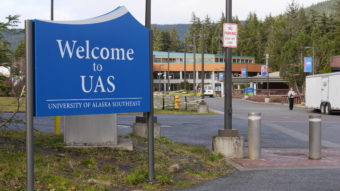
University of Alaska Southeast Campus on Tuesday, Nov. 15.
University of Alaska Southeast campus on Nov. 15. (Photo by Quinton Chandler/KTOO)

One out of every eight University of Alaska Southeast students said they experienced some form of sexual misconduct or sexual assault between 2015 and 2016. That’s according to the Alaska Justice Statistical Analysis Center at the University of Alaska Anchorage.

Lori Klein tracks reports of sexual discrimination for UAS as its Title IX coordinator.

“Dating violence, domestic violence, gender-based discrimination, sexual assault, sexual harassment, the whole gamut. This year so far, and with five months into the academic year, we’re at 17 reports,” Klein said.

She said there were 10 reports from students and employees last academic year. The reports are for all three campuses in Juneau, Ketchikan and Sitka.

Lori Klein is the UAS Title IX coordinator.
Lori Klein is the UAS Title IX coordinator. (Photo by Quinton Chandler/KTOO)

It’s Klein’s job to respond to those reports and to otherwise make sure the university complies with the federal law that prohibits sexual discrimination in any federally funded program or activity.

The University of Alaska Southeast wants to give its students and employees more options and information when they experience sexual discrimination. UAS is expanding two community partnerships in Juneau to better protect students and employees. To improve the university’s options for students and employees, Klein said they’re leaning on pre-existing partnerships with the Juneau Police Department and the advocacy group AWARE: Aiding Women in Abuse and Rape Emergencies.

“They serve us just like they serve anyone in the community and we engage with them on any number of issues,” Klein said. “But what we’ve done is we’ve formalized some of these partnerships.”

Mandy Cole is the deputy director of AWARE. Starting near the end of January, her group plans to give students access to an advocate for at least two hours a week inside the JPD substation on the UAS campus in Juneau.

“Maybe they were sexually assaulted,” Cole said. “Maybe they had an uncomfortable experience they’re not sure how to process and they want to talk to someone about it without triggering the response from the university.”

She said when someone talks to an AWARE advocate, everything is confidential.

Mandy Cole is the deputy director of AWARE.
Mandy Cole is the deputy director of AWARE. (Photo by Quinton Chandler/KTOO)

“A student can make a choice about what path she wants to start with. She may change her mind either way in either of the paths, but it gives her an opportunity to talk to someone who is just here to listen to what she’s thinking and what she’s feeling and figure out what’s the next best step for her,” Cole said.

Klein said, by law, students and staff can get that same confidentiality from university counselors and health care providers. She and Cole said AWARE will just give people one more option other than filing a report with the Title IX office, which may start a formal investigation.

UAS and JPD also have a new agreement to improve their coordination on cases of discrimination. Klein said that’s important because university employees and students who are victims of crime have rights under the law, and they have administrative rights granted through the university.

“Our opportunity with JPD is for me to provide some training to them about what those administrative rights are, for them to help me understand what (the) legal rights are, so that if a student comes and speaks with me, I can better explain what it would mean if they made a call to JPD,” Klein explained.

Klein said she is only required to tell police about crimes students and faculty report to her if it involves sexual assault and a minor. Otherwise, she said she gives the victim the option to call the police.

“In addition, should there be a report that comes to me and to them; we’ve put into this agreement just a higher level of collaboration with the two investigations running in a parallel manner,” Klein said.

A JPD spokesman said the police and the university have had a “robust” relationship for a long time and this new agreement is a logical next step.

Cole said she thinks UAS is thinking outside the box when it comes to sexual assault and other forms of sexual discrimination. She hopes by giving the university community a wealth of options, they are giving power back to the people they’re trying to help.

Correction: An earlier version of this story overstated how much time AWARE’s advocate plans to spend on the UAS campus. The advocate plans to be there at least two hours a week, not two hours a day. Additionally, parts of the story have been clarified regarding how Title IX reports are handled and which reports the university is obligated to inform law enforcement about.

Satellite tags offer rare glimpse into seal life

For wildlife biologists, understanding the basics about an animal species is key. How long does it live? How many babies does it have? When it comes to marine mammals, collecting even this basic information can be a challenge.

But researchers at the Alaska SeaLife Center in Seward have developed new way to track these elusive underwater creatures.

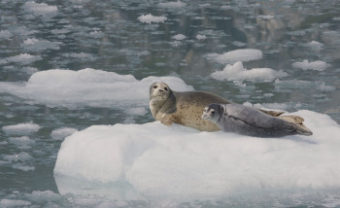
As the Science Director at the Alaska SeaLife Center, Markus Horning spends a lot of time thinking about harbor seals. In fact, he’s spent years trying to understand these animals.

There’s a lot we don’t know about harbor seals.

“We need data on survival, reproduction, the age at which female seals first breed and then how many offspring they have throughout their lives,” says Horning.

Because harbor seals spend so much time underwater and live in remote locations, he realized he would need to develop a special way to study them.

So, he created a tag, but not just any kind of tag. It’s a lightweight pill-shaped device about the size of a C-battery. And it’s filled with sensors: temperature, motion and light.

Horning surgically implants these tags into seals. Despite its small size, the tag collects mountains of data. It has a little transmitter, so it can send all of the data back to a satellite. But here’s the kicker: the tag can’t “talk” to the satellite when it’s inside the animal.

“To be able to reach a satellite at an elevation or 400 miles up in the sky, we need a very strong signal. Inside of the body, the signal is so weakened that we could never reach a satellite. So while the tag inside of the body, while the animal is alive, we can never hear from the tag. We don’t get any data,” he says.

The lightweight tag is filled with microscopic hollow glass balls to help it float. Once an animal dies, the tag eventually floats up to the water surface and transmits its information to a satellite.

“I would describe it as an electronic black box that is like a black box in an airplane. It stores information about the state of the airplane and in this case the state of the seal, but it’s doesn’t really transmit that until after something bad happens. In this case, it doesn’t transmit until after an animal has died,” Horing says.

All those years of information the tags collect can be a real gold mine for researchers like Horning. Not only can the tags tell how long an animal lived, they can also give us a good idea how it died.

“When we have a very abrupt temperature drop to ambient temperatures and when we have an immediate sensing of light and air, that’s when we assume the tag came out of the animal. Really the only way this could have happened is if the animal was dismembered by a predator,” he says.

This summer, Horning’s lab implanted tags in 10 harbor seals and released them near the Aleutian Islands. So far, they’re feeling hopeful. Based on pilot tests with Stellar sea lions, they have a 98 percent chance of receiving data once an animal dies.

They’re just not sure how long it’s going to take.

Juneau schools superintendent reports highest graduation rates ever

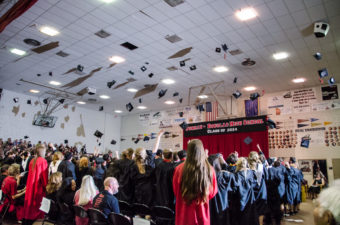
Graduates throw their caps into the air after receiving their diplomas. Rap music played as the students left the gym. (Photo by Heather Bryant/KTOO)
The JDHS class of 2014. (Photo by Heather Bryant/KTOO)

Graduation rates have reached a new high in Juneau. Superintendent Mark Miller told the Juneau School Board on Tuesday that last school year, the district’s high school graduation rate increased to just about 85 percent.

Miller didn’t give the board his opinion on why the rate was higher. According to school district budget documents, the graduation rate for the prior school year was 78 percent.

Superintendent Mark Miller expects the next budget cycle to be just as rough as this year, if not rougher. (Photo by Lisa Phu/KTOO)
Superintendent Mark Miller. (Photo by Lisa Phu/KTOO)

Miller told the board that it was the highest graduation rate in the district’s history. He gave special recognition to Thunder Mountain High School’s Alaska Native students and the school’s students from lower income homes.

Miller said both group’s graduation rates reached about 100 percent last school year.
He said in the past, both groups have had trouble performing at the same level as other students. He said a decade ago the odds of an Alaska Native male graduating were less than a 50 percent chance of graduating.

Miller said he is proud of the graduates. He added that the district should take a moment to celebrate these results but they also need to continue trying to make progress for the future.

Instead of handcuffs, Juneau police bring services to Bergmann Hotel

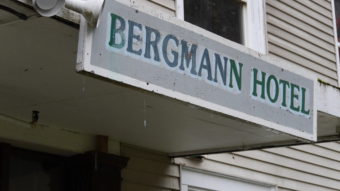
Brianna McCourt works the front desk at the Bergmann Hotel. Friday, Nov. 4. (Photo by Quinton Chandler/KTOO)
Brianna McCourt works the front desk at the Bergmann Hotel on Friday, Nov. 4. (Photo by Quinton Chandler/KTOO)

Brianna McCourt had a bad feeling when she walked outside the Bergmann Hotel and saw state troopers and police with their mobile command center at her doorstep.

“The mobile command center showed up and we’re like, ‘What’s really going on here,’” said McCourt, who works security at the Bergmann for a company called CPR Services that recently took over building management.

McCourt said when she got word the police were heading to the building, she thought the worst.

“It’s the Bergmann. I mean it’s been known for its riffraff and its drugs,” McCourt said.

Juneau police descended on the downtown housing development last Friday, but they didn’t come to make arrests. They wanted to help.

It’s not unusual for the police to be called to the hotel, but this time was different.

McCourt said the police weren’t alone.

“They came with the Department of Health and Social Services,” she said. “I believe that they had Front Street Clinic, and drug and alcohol treatment (officials to) speak with the residents that lived here.”

Residents got information on programs that could help them find work and opportunities to get counseling for substance abuse and mental health.

Service providers passed out sharps containers for safe disposal of used needles, and they gave her McCourts of Narcan – a medication that reverses the effects of an opioid overdose.

“Having sharp boxes in the bathroom and knowing that we have stuff to help people if we do run into an overdose is very helpful,” she said.

Boxes of Narcan given to employees of the Bergmann Hotel during a Juneau Police Department outreach effort.
Boxes of Narcan given to employees of the Bergmann Hotel during a Juneau Police Department outreach effort on Friday, Nov. 4. (Photo by Quinton Chandler/KTOO)

Lt. Kris Sell with Juneau Police Department said their outreach to the hotel was part of a strategy to, once a month, give special attention to issues they’re especially worried about in Juneau.

“Part of the chief’s instruction for me is once a month he wants to know, ‘OK, what can we go do that’s a focused approach to some area or some problem?’” Sell explained.

The department has gotten a lot of complaints from people in the Bergmann’s neighborhood, Sell said.

“People that lived up there and people that worked up there were unhappy with noise and finding needles in the area,” Sell said.

She said not all of these problems were tied directly to the hotel, but it was the place people most often associated their complaints with.

Lt. Kris Sell, Juneau Police Department
Lt. Kris Sell of the Juneau Police Department speaks on A Juneau Afternoon, April 1, 2016. (Photo by Jeremy Hsieh/KTOO)

So Sell said JPD had a choice. They could have focused on one option: finding lawbreakers and arresting them, but they didn’t want to.

“Really, modern policing is also about, ‘How do you apply positive pressure so that you can work with the people that are having challenges and get them on a more law-abiding path so they can get along with their neighbors?’” Sell explained.

She said most of the residents were suspicious at first.

When they offered one guy help, he hesitated but eventually said he wanted a job.

“He probably asked two or three times before we introduced him with the gentleman from the job service if we were tricking him or if this was some sort of trap,” Sell said.

Some people turned them down flat, but most were receptive after they got over their surprise.

Brianna McCourt said it goes a long way when people from the community show up and say, “We want to help you.”

“I do sympathize with what the police and the community did today, with the outreach program,” she said. “It kind of shows people that there is help out there if you ask for it. A lot of problems a lot of times with being a recovering addict is you’re afraid to ask for that help.”

McCourt knows what she’s talking about.

She is in recovery right now for the second time.

She was sober for eight years before she relapsed. She said her drug of choice was methamphetamine.

She didn’t decide to get clean until she had a near fatal car accident this summer.

“I didn’t want to ask for help. I didn’t want to admit that it was indeed a problem,” McCourt said.

She admitted that it can be hard to help other people, especially addicts because they need to want to help themselves first.

But she said people shouldn’t turn anyone away if they do make the decision to help themselves.

Cars, planes and mines: the path to modern-day Juneau

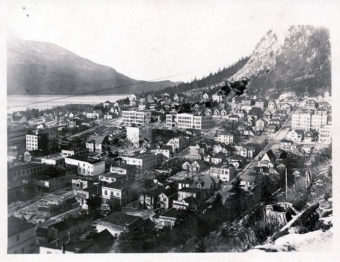
Aerial photo of Juneau taken sometime between 1939 and 1959.
An aerial photo of Juneau taken sometime between 1939 and 1959. (Photo by John S. Hellenthal/Courtesy Alaska State Library – Historical Collections)

Juneau’s Lands and Resources Manager Greg Chaney said before technology made life in Juneau more feasible, transportation-wise it wasn’t a very nice place to live.

He was one of four city officials who shed some light on how Juneau became the city it is today during a presentation at the Juneau-Douglas City Museum last Thursday. The building was packed with 79 residents eager to hear how Juneau became Juneau.

Chaney said things started looking up with the use of steamships.

“That happened to correspond with when gold was discovered in Juneau in the 1880s,” Chaney said. “We became a great place to have the state capital because Sitka was on the outer coast and they used sail boats to get there. Sail boats are not very good on the Inside Passage, but steamships aren’t very good on the outside coast.”

Juneau residents listen to presentation at Juneau-Douglas City Museum, Thursday, Nov. 3. (Photo by Quinton Chandler/KTOO)

Like many other cities, Chaney said cars were a huge factor in evolving the town’s layout.

“So our communities were laid out close together and they were all walkable, and then over time we added more and more cars to the town, and the community spread out to the Mendenhall Valley for example,” Chaney said.

If cars hadn’t taken off in Juneau, Chaney said people probably would’ve kept building homes along the hillsides which were close to their jobs in the mines. That would’ve made the town more compact and city services, such as water and sewer access, would’ve been cheaper.

“It may (have been) a bit easier, but I don’t know about finding places on mountainsides to live,” Chaney joked.

Patty Wahto spoke about the history of the airport Thursday at Juneau-Douglas City Museum.
Patty Wahto spoke about the history of the airport Thursday at Juneau-Douglas City Museum. (Photo by Quinton Chandler/KTOO)

Patty Wahto, the manager of Juneau International Airport, and the deputy manager Marc Cheatham built on Chaney’s point about technology by explaining how the airport shaped Juneau’s growth.

“The mining, the mail, war … there are so many things that developed,” Wahto said.

She said the airport has been huge for Juneau because flying is one of only two options for getting in or out of town. She said aviation used to link parts of town that didn’t have a road connecting them, like Auke Bay and downtown.

A Navy biplane flies over Juneau in 1926. (Photo by U.S. Navy Alaska Aerial Survey Expedition/Courtesy Alaska State Library - Historical Collections)
A Navy biplane flies over Juneau in 1926. (Photo by U.S. Navy Alaska Aerial Survey Expedition/Courtesy Alaska State Library – Historical Collections)

“I think … there are other things that were developed around aviation and aviation developed around it, so it’s a symbiotic relationship that the city had with the airport,” she said.

Wahto said Juneau’s first airfield was built in 1935 and in 1979 the airport became an international airport.

Juneau’s City Manager, Rorie Watt ended the evening by explaining how industry and geology influenced the decisions that created modern day Juneau.

He said, “Well if you think about Juneau, we’re a small town on the side of the mountain and we’re always questing after flat land and the AJ Mine had low-quality ore, which means there’s a lot of rock left over.”

Miners dug up the low-quality ore and dumped it into tidewater near downtown Juneau to make flat land so the town could be expanded, Watt said.

“Men pulled the non-quartz rocks off and we filled large areas in 1910 to 1945 roughly,” he said. “The original shoreline was about in the middle of Franklin Street, Front Street, hugged Telephone Hill, hugged Willoughby, back along the ANB Hall. Lots of what we see downtown today was tidelands back in the day.”

The AJ Mine in 1958.
The AJ Mine and Sawmill in 1958. (Photo by Caroline Jensen/Courtesy Alaska State Library – Historical Collections)

Watt said he thinks a lot about the individual decisions that shaped Juneau’s economy and community. He said Juneau went from a frontier town to a mining company town, to a government town, to a tourist town.

“Now I think we’re a tourist town, and a government town, and a fishing town,” he said. “We’re a bit more diversified. I think it’s good to take the long view and think about small decisions that can deflect your path.”

Watt believes remembering Juneau’s history can help determine the next step in the city’s development.

Chaney and Wahto encourage anyone with more information about how the past influenced present-day Juneau to come forward and share what they’ve learned.

(From left) Marc Cheatham, Patty Wahto, Rorie Watt and Greg Chaney. (Photo by Quinton Chandler)
From left to right: Marc Cheatham, Patty Wahto, Rorie Watt and Greg Chaney. (Photo by Quinton Chandler/KTOO)

Correction: A caption on a crowd photo misidentified one of the people pictured. The man with his hands on his chin is not City Manager Rorie Watt. 

Police search for suspect in planned robbery of Douglas Breeze In

Update | 9:58 a.m. Monday

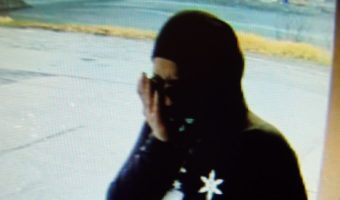
The distinctive logos on the woman’s clothes appear to identify it as an Airblaster Ninja Suit, a base layer marketed to snowboarders.

Original story | 5:11 p.m. Sunday

Juneau police are searching for a woman who appeared to be planning an armed robbery but ran away before threatening anyone Sunday morning.

According to a Juneau Police Department press release, surveillance video shows the woman standing outside of the Douglas Breeze In with a handgun.

The video stills show the suspect wearing sunglasses, a dark hooded sweatshirt with the hood up, and she her lower face covered with a dark cloth.

She was seen leaving in a van driven by an unknown person.

Later, police found the van used in the incident. They believe the vehicle is owned by a fishing charter and it had the name “Chum Fun” printed on its side. Police weren’t able to contact the vehicle’s owner by the time of the release.

The Juneau Police Department has posted pictures of the woman to its Facebook page and officers are asking anyone with information about the incident to contact them.

Site notifications
Update notification options
Subscribe to notifications