Interior

Denali East Fork wolf pack status currently unknown

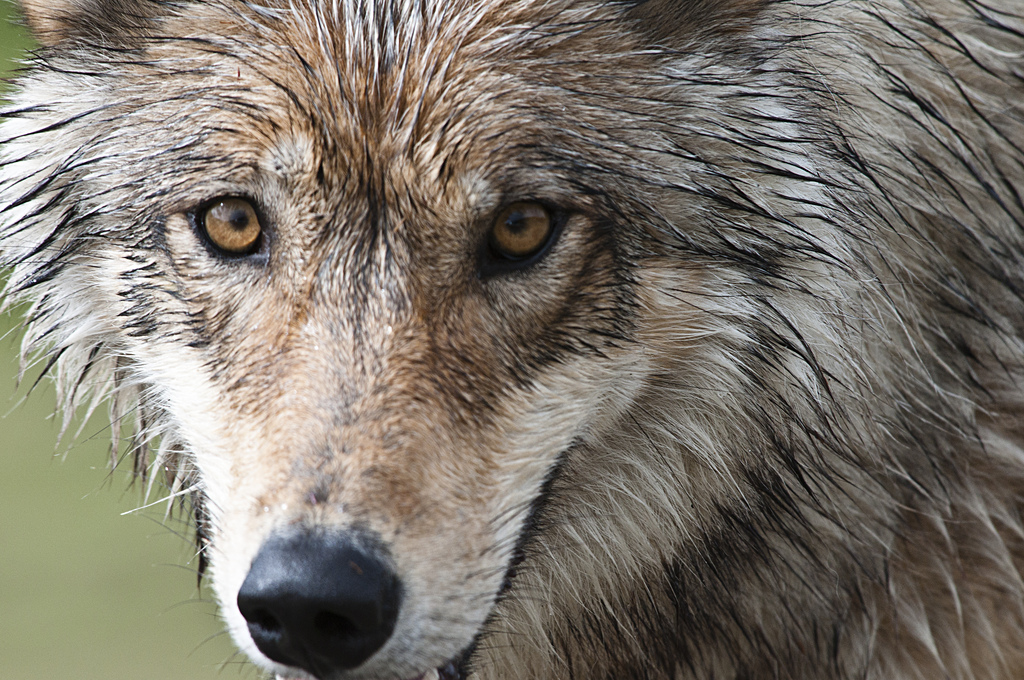
Denali wolf. (NPS Photo/ Tim Rains)
The status of a Denali wolf pack is unknown after several members of the group have been killed on state land. (Tim Rains, National Park Service)

Denali National Park’s long studied and once popularly viewed East Fork wolf pack is likely no longer. Several members of the park entrance area wolf group have been killed on state land, and the famed pack’s status is unknown.

Denali’s East Fork wolf pack declined to just one known female and two pups earlier this summer.

The pack’s last other member, a radio-collared male, was spotted dead at a hunting camp on state land off the Stampede Trail in May.

Park Service wildlife biologist Bridget Borg said it’s impossible to know for sure if the mother wolf and her pups survived after her mate’s death, but there’s been no recent sign of the animals and their den appears empty.

”We investigated a den site after,” Borg said. “There was clear evidence it was not being used as evidenced by vegetation that was growing around the entrance to the den site.”

The apparent demise of the East Fork pack comes amidst a broader steep decline of Park-based wolves to about 50 animals. The low point is attributed to more than human harvest outside the park, but it appears to be a significant mortality factor for entrance area wolves. Borg points to the human caused deaths of three of four East Fork Pack radio-collared animals in the last year.

”If we just look at the collared wolf mortalities for this past 75 percent died as a result of snaring or being shot,” Borg said. “So this is really high compared to our previously published rate of less than 20 percent.”

“They’re allowing a handful of people to gun them down or trap them,” said Sean McGuire, who is with the small Fairbanks based advocacy group Alaskans for Wildlife. “We feel it’s a scandal.”

The loss of Denali’s East Fork Pack takes with it valuable opportunity for Park entrance area wolf viewing, as well as a lot of history, he said.

“This wolf pack has been probably the most viewed wolf pack in world history. It’s been studied continuously for 70 years. This was the pack that Adolph Murie originally wrote the classic ‘Wolves of Mt. McKinley.’”

Borg agreed it’s unfortunate to lose track of the long tenured and well followed East Fork group.

“But we should note that the potential loss of this pack doesn’t really mean the loss of the lineage of these wolves,” Borg said. “For example, the Riley Creek pack was actually founded by an East Fork female. In the summer one of her pups has dispersed and apparently found a mate and seems to be seeking out a territory along the park road corridor between Toklat and Wonder Lake.”

State wildlife officials point to robust wolf populations outside Denali.

Alaska Department of Fish and Game Regional Supervisor Darren Brunning said the agency has no confirmation of the May East Fork wolf kill, as its radio collar has not been turned in. Brunning said with no other conclusive information about the pack’s status, there’s no reason for action.

“Hunting and trapping along the Northeast boundary of the National Park and the Stampede trail area is the purview of the Alaska Board of Game,” Brunning said. “The Department of Fish and Game would take no action unless directed by the Board of Game.”

The Game Board agreed earlier this year to shorten the spring wolf hunt along Denali’s northeast edge, and will consider proposals to re-instate a former no wolf kill area there at a spring 2017 meeting. McGuire said he has no faith in the board and wants the governor to step in and close the Stamped area to wolf harvest.

U.S., Canadian soldiers train in interior Alaska

ANCHORAGE — Soldiers from the U.S. and Canada have spent the last few weeks participating in war games in expansive interior Alaska, with about 800 Iowa National Guard personnel playing the role of the enemy.

About 5,000 soldiers and support personnel have just concluded the exercise, called Arctic Anvil. It was coordinated by the Hawaii-based Joint Pacific Multinational Readiness Capability from the 196th Infantry Brigade.

It was the largest training exercise held in Alaska in the last 15 years.

It tested the soldiers against two kinds of opponents, insurgents similar to what the forces faced in Iraq and Afghanistan and more traditional foes that have the same military might, like tanks and aircraft.

Groups announce intent to sue over polluted Fairbanks air

ANCHORAGE — Three environmental groups are turning up legal pressure on a federal agency to require a cleanup of polluted Fairbanks air.

The groups in June sued the Environmental Protection Agency to force an agency decision on whether to accept a state plan to reduce unhealthy fine particulate produced by wood stoves and other sources.

The groups Wednesday sent a letter to the EPA announcing their intent to sue again because the agency has missed a deadline to require the Fairbanks North Star Borough to address pollution controls.

A letter giving 60-day notice is required before a lawsuit can be filed.

Earthjustice is representing the groups. Attorney Kenta Tsuda says federal law requires the EPA to designate the Fairbanks borough as a “serious non-attainment area” that would trigger additional pollution controls.

Artifacts removed from historic building threatened by erosion

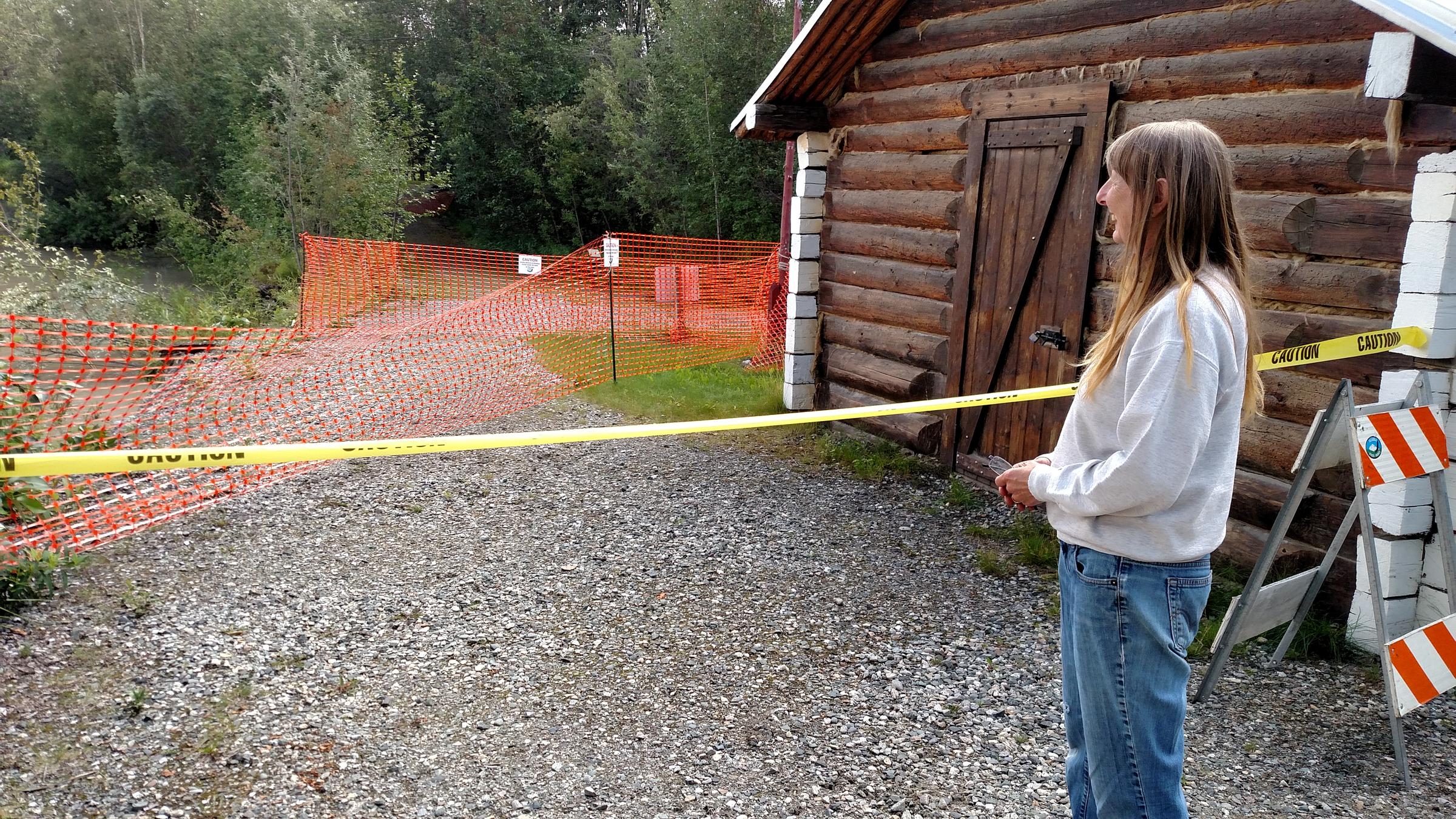
Delta Historical Society President Maureen Gardner says members of the organization and State Parks officials agreed to remove artifacts from the old Telegraph Station living quarters because the Tanana River continues to wash away at the riverbank, threatening the cabin and nearby trails. (Photo by Tim Ellis/KUAC)
Delta Historical Society President Maureen Gardner watches the Tanana River, which is eroding its bank and threatening the old Telegraph Station living quarters. (Photo by Tim Ellis/KUAC)

Volunteers with Alaska State Parks and the Delta Historical Society have removed artifacts from a 110-year-old building at Big Delta State Historical Park. The agencies had planned to wait, to see if the Tanana River washed away more of the riverbank on which the building sits. But Sunday’s move was prompted by concerns over erosion accelerated by recent rains.

Delta Historical Society President Maureen Gardner said the group decided late last week to not wait for the erosion to cut to within 5 feet of the old structure that served as a living quarters for Signal soldiers a century ago. She said they decided instead to remove artifacts from the cabin-like structure as a precaution, before the rapidly eroding riverbank that’s now about 13 feet away creeps even closer.

“We got to the point where we just decided it was just best to take it, and get it out here right now,” Gardner said.

“We were highly concerned about how close the river is getting to the building, and how much erosion has occurred,” she added.

Gardner said before they moved the artifacts, volunteers photographed how they were arranged so they can rebuild the displays that depict the everyday life of the soldiers who operated the Washington-Alaska Military Cable and Telegraph System, or WAMCATS, from 1907 to 1926.

“The membership of the Delta Historical Society, at our meeting on Thursday, decided to get it out right now, and not have to worry about having an emergency situation and jeopardize the integrity of all the historical artifacts,” Gardner said.

Gardner said society members will now inventory the artifacts that are stored on the second floor of Rika’s Roadhouse, the main attraction at the park about eight miles north of Delta Junction. She said the erosion also threatens a stretch of trail that runs along the river. State Parks has barricaded about 300 feet of the trail, and Gardner said a local Parks worker had to close a bit more over the weekend.

The Prospector’s Trail was used by gold miners around the turn of the previous century to access claims up the Goodpaster River.

“The Shushanna Gold Rush, in 1913 I believe that was – this is the trail that they used,” Gardner said.

The Prospector’s Trail intersects with the larger Fairbanks-to-Valdez Trail, the basic route along which the Richardson Highway was built.

State Parks has applied for a $700,000 federal transportation grant that would pay for erosion-proofing the bank along which the trail runs. That also would protect the historic structure. State Parks Superintendent Brooks Ludwig said he’ll know by the end of the month whether the feds will award the grant.

Ludwig said the grant will require a $140,000 local match. He said the agency can’t afford that, because of Alaska’s budget crisis, so he’s planning to launch a 30-day online crowdfunding drive on Aug. 23. He said the agency will soon begin promoting the fund-raiser.

“We’re going to have it on our Facebook page,” Ludwig said, “we’ll have it on our website, we’ll have it on our Twitter account.”

Ludwig said if State Parks doesn’t get the grant, the agency will use proceeds from the crowdfunding to pay for stopgap erosion-proofing on the riverbank and, if needed, for moving the historic structure farther away from the river.

Could the Marine Corps be coming to Alaska?

A celebratory cake was set out during the U.S. Marine Corps commandant’s visit to an Anchorage VFW post. (Photo by Ben Matheson/ for Alaska Public Media)
A celebratory cake was set out during the U.S. Marine Corps commandant’s visit to an Anchorage VFW post. (Photo by Ben Matheson/for Alaska Public Media)

The head of the U.S. Marine Corps stopped in Anchorage and the interior this weekend to evaluate new opportunities for training. But some see it as a potential first step in building a permanent presence.

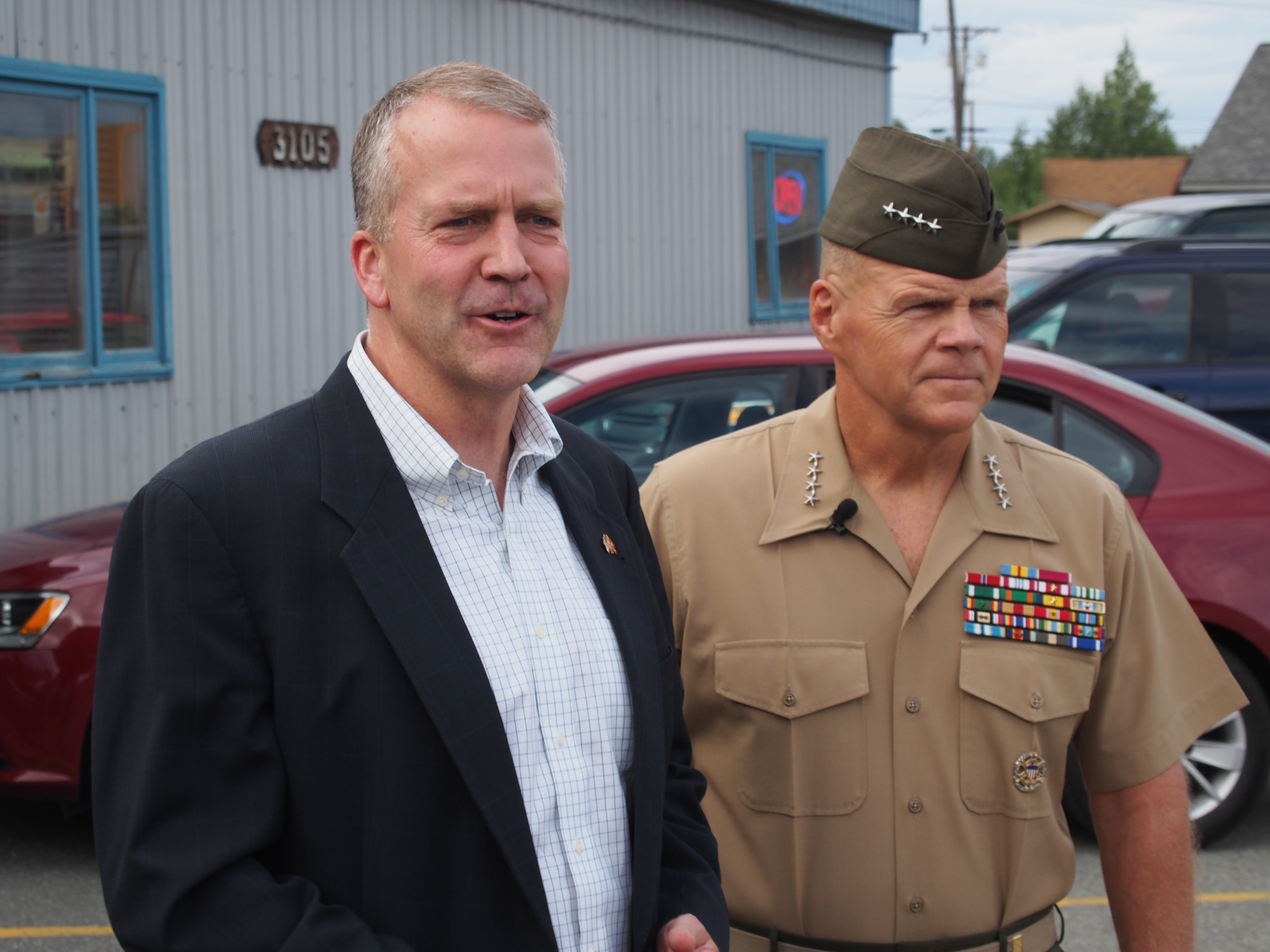
Wearing scuffed combat boots in the parking lot just outside the Mountain View VFW hall in Anchorage, Republican Senator Dan Sullivan sounded delighted as he introduced the country’s top marine.

“It’s my distinct honor as a marine myself to have the commandant of the marine corps in Alaska,” Sullivan said during brief remarks to the press.

“One of the things we’ve been trying to do is get our leadership — our military leadership — up to Alaska to see this great state, all this training that we have,” he added.

Since taking office, Sullivan has made a priority of advocating for a strong military presence in Alaska. But so far that’s been largely speaking up about the state’s main branches, the Army and Air Force. In fact, one rarely hears anything at all about marines in the 49th state.

But that may change.

The trip is General Robert Neller’s first visit to Alaska. And he says the reason is primarily to see with his own eyes the facilities available.

“We’re always looking for places to train,” Neller told reporters, adding that the marines are working with new weapons systems like the F-35 fighter jets that have expanded capabilities. “The air space up here and the instrumental ranges up here provide great opportunities.”

Sen. Dan Sullivan and Gen. Robert Neller talking with reporters before an event at a VFW post in Mountain View. (Photo by Ben Matheson/for Alaska Public Media)
Sen. Dan Sullivan and Gen. Robert Neller talk with reporters before an event at a VFW post in Mountain View. (Photo by Ben Matheson/for Alaska Public Media)

Though Alaska doesn’t have a significant force of active duty marines, the status of USMC units stationed in the Pacific is changing, with several thousand service-members and dependents shifting off a base in Okinawa, Japan over the next few years. And after fifteen years of wars in the Middle East, Neller said, the branch is beginning to re-build it’s capabilities to operate in colder climates.

However, Neller said there are no current plans to permanently base a sizable contingent of marines in Alaska.

After taking a few questions, Neller and Sullivan headed in to the VFW hall, which was filled with the full spectrum of military boosters, from older vets in suits seated next to their wives, all the way to young guys in motorcycle vests and bandannas.

Neller wandered between tables as he spoke to the crowd, giving a general update on the Marine Corps itself before dipping into his impression of Alaska so far, which he plans to take back to the Joint Chiefs of Staff in Washington, DC.“Just look at this place tonight. It’s packed,” Sullivan said before the audience. “Standing room only.”

“The environment, the climate, the space–particularly air space in Alaska, is very, very interesting to me as far as opportunities for us to train Marine Air-Ground Task Forces,” Neller said.

Part of the reason for a high level commander to take two hours engaging a crowd in this way is to get a sense of how members of the community feel toward the military. Sullivan hammered home that Alaska and its veteran community are the kind of place that greets service-members and their families with open arms.

“We sell Alaska,” the senator said several times.

Standing near a vending machine, two tough-looking guys in biker vests agreed with that overall assessment.

Tom Roar is in the Air Force, and a member of the Combat Vets Motorcycle Association. As people throughout the room lined up for food and photos with the commandant, Roar explained he thinks this kind of event helps to show off Alaska to senior officials scoping it out.

“(It) tends to be pretty laid back,” Roar said of military and veteran community around Anchorage. “We get real formal when we have to and everyone’ll be up in uniform, but I think this is fabulous. You get all the old veterans out here that can come out and it’s just a relaxed atmosphere.”


T

Next to Roar was Todd Boren, who retired from the Air Force after 21 years, and describes the community in Alaska as one big tent.

“We poke at each other and give each other a hard time, but we’re all on the same team,” Boren said.

Not everyone at the event is convinced the commandant’s interest is just in occasional training exercises. Some see an opportunity for Alaska’s military bases to pull in a new tenant.

John E. Beasley was 19-years-old when his marine unit was caught up in the Battle of Chosin Reservoir, one of the decisive conflicts in the Korean War. He keeps a close eye on military affairs in Alaska, and thinks even if firm plans aren’t in place right now, there’s the potential for a significant number of marines to eventually be brought here.

“The Commandant doesn’t travel places just for drill,” Beasley said. He cautions that his read on the situation is “based on scuttlebutt,” but believes there’s import to Neller’s rare visit.

“I think he’s taking a look at us from the standpoint of establishing a marine contingent up here,” Beasley explained. “Again, that man doesn’t go places without a reason.”

This is first time Beasley knows of a marine commandant visiting Alaska since he moved to the state in 1968.

Lower costs for heating oil to slow natural gas conversion

natural gas stove flame blue
(Public Domain photo)

A newly released report shows that about a third of households in interior Alaska won’t make the switch to natural gas once it’s more widely available because of low heating oil prices.

The Fairbanks Daily News-Miner reports the Interior Energy Project’s study says about 1,000 homes will convert to natural gas in 2018, the year it’s expected to start being distributed. By 2023, officials are anticipating nearly 11,000 natural gas customers.

The report is an updated version of a study released last year. The project’s initial estimates for demand have changed now that the price of heating oil has dropped to about $2 per gallon.

The project had initially aimed to offer natural gas equivalent to $2 per gallon of heating fuel when heating fuel was around $4 per gallon.

Site notifications
Update notification options
Subscribe to notifications