Oceans

Why seabirds love to gobble plastic floating in the ocean

Imagine you’re passing a fast-food restaurant and you smell hamburger on the grill. You’re hungry, so you pull in and eat one … and the foam box it comes in.

That’s apparently what’s happening with some oceanic birds. And now scientists think they know why.

The fact that sea animals and birds eat floating plastic has long puzzled biologists. Their best guess was that it looks like food. But the new evidence suggests that for a lot of birds, plastic actually smells like food.

It all comes down to a common kind of algae floating in the ocean. The algae is food for tiny animals such as krill — otherwise known as zooplankton. When the krill gobble up the algae, the algae emit a chemical called dimethyl sulfide.

Biologist Matthew Savoca says it stinks up the place. It’s actually a chemical scream. As he describes it, “The algae are sort of crying out, saying ‘Oh my gosh, we’re being eaten and can someone please help me.'”

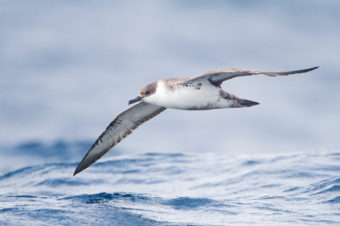
That might sound ridiculous but, in fact, help does come — in the form of birds. When seabirds like shearwaters smell that chemical, they know it means tasty krill are in the water. “Think of it as like a dinner bell,” Savoca says. “So if we heard a dinner bell ringing, the dinner bell would signify where we could find food.”

Savoca and his team at the University of California, Davis, wondered if birds were accidentally eating plastic because there was stinky algae living on it. So they put plastic out to float around in the ocean. Then they took it to the university’s food and wine laboratories — this is Northern California, after all. They got some weird looks when they stuffed plastic into equipment designed to track chemicals in fine wine. But they did get their answer.

“Sure enough,” Savoca says, “all this plastic reeked of that sulfur compound, likely due to the algae that coated it when it was out at sea.”

So the algae cling to the plastic, and when the krill eat them, the algae scream — chemically, that is. The birds smell it and that’s their “foraging cue.” They scoop up the krill and the plastic.

The team’s research appears in the journal Science Advances.

Marine ecologist Chelsea Rochman at the University of Toronto says that, obviously, eating plastic isn’t good for the birds — it’s made with some harmful chemicals that aren’t meant to be eaten. But the plastic also picks up other chemicals in the ocean that make it even nastier.

“Plastic is a sponge for a lot of the chemicals that are in oil and the chemicals that are washing off from different sources, like pesticides and flame retardants and other industrial pollutants,” Rochman says.

Poisoning birds is a problem. But Rochman and Savoca say biologists suspect that other marine animals, such as fish, also could be eating the plastic for the same reason — and that could have consequences not just for fish, but for people who eat them, as well.

Copyright 2016 NPR. To see more, visit http://www.npr.org/.

Nations Agree To Establish World’s Largest Marine Reserve In Antarctica

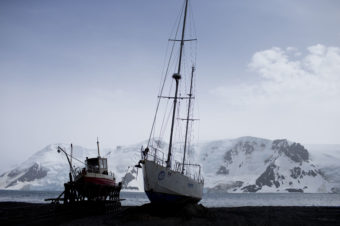
Boats sit on the beach at Bahia Almirantazgo in Antarctica. An agreement was reached on Friday to create the world's largest marine protected area in the ocean next to the frozen continent. Natacha Pisarenko/AP
Boats sit on the beach at Bahia Almirantazgo in Antarctica. An agreement was reached on Friday to create the world’s largest marine protected area in the ocean next to the frozen continent.
Natacha Pisarenko/AP

After years of negotiations, nations have reached an agreement to establish the world’s largest marine sanctuary in Antarctica’s Ross Sea.

Twenty-four countries and the European Union reached the unanimous deal at an international meeting of the Commission for the Conservation of Antarctic Marine Living Resources in Hobart, Australia on Friday.

“The Ross Sea is widely considered to be the last great wilderness area on Earth and known as the polar ‘Garden of Eden’,” according to a statement from the United Nations Environment Programme. The area is home to “50 percent of ecotype-C killer whales (also known as the Ross Sea orca), 40 percent of Adélie penguins, and 25 percent of emperor penguins.”

At 600,000 square miles, the sanctuary covers an area twice the size of Texas, as reporter Stuart Cohen tells our Newscast unit.

“The U.S. and New Zealand have been pushing for the reserve for years,” Cohen adds. “But the area is also popular among commercial fishermen. And countries including China and Russia have been holding out, until today.”

The agreement is “remarkable” at a time of “strained political relations,” as U.N. Environment’s Patron of the Oceans Lewis Pugh says in a statement.

“In 1959 at the height of the Cold War, Antarctica was set aside as a place for peace and science,” Pugh says. “Today’s announcement shows that Antarctica continues to be a place for peace and bridge building, a place where we can find common ground. My hope is that what has been achieved here, can be used to foster dialog and cooperation in other parts of the world.”

U.S. Secretary of State John Kerry calls this agreement “extraordinary progress” that “didn’t happen by accident.” Here’s more:

“It happened thanks to many years of persistent scientific and policy review, intense negotiations, and principled diplomacy. It happened because our nations understood the responsibility we share to protect this unique place for future generations.”

Individual countries have established protected areas in their own waters. For example, President Obama recently expanded a marine national monument off the coast of Hawaii to a size nearly as large as this one.

But the Ross Sea sanctuary is only the second-ever marine protected area on the high seas, according to the CCAMLR. The first was established in the South Orkney Islands in 2009 and covered 58,000 square miles in the south Atlantic.

The agreement will come into force in December. Seventy-two percent of the sanctuary “will be a ‘no-take zone, which forbids all fishing, while other sections will permit some harvesting of fish and krill for scientific research,” the CCAMLR says.

Scientists will be able to compare the impact of areas closed to fishing with other areas where fishing is allowed, according to the CCAMLR. “This enables scientists to research the relative impacts of fishing and other changes, such as those arising from climate change,” and “can help our understanding of the range of variables affecting the overall status and health of marine ecosystems.”

Pieces of thawing ice are scattered along the beachshore at Punta Hanna, Livingston Island, Antarctica. Natacha Pisarenko/AP
Pieces of thawing ice are scattered along the beachshore at Punta Hanna, Livingston Island, Antarctica.
Natacha Pisarenko/AP

Copyright 2016 NPR. To see more, visit http://www.npr.org/.

Dutch Harbor remains nation’s top fishing port

Workers inspect fish unloaded at Unalaska's UniSea plant. (Sarah Hansen/KUCB)
Workers inspect fish unloaded at Unalaska’s UniSea processing plant. (Sarah Hansen/KUCB)

On dinner tables across the country, Americans are eating more fish. The United States is responsible for more fish consumption than all other countries, except for China.

An annual National Oceanic and Atmospheric Administration report shows Americans added almost one pound of fish to their diets in 2015.

For the 19th consecutive year, the port of Dutch Harbor is America’s largest fishing port, hauling in 787 million pounds of seafood. That’s the most seafood ever brought into one port — and more than 250 million pounds above the next port, Kodiak.

(Courtesy NOAA Fisheries)

The $218 million haul is mostly thanks to the large volume of pollock from the Bering Sea, as well as crab and other groundfish.

Frank Kelty was the fisheries analyst for the City of Unalaska, and he says fishing is the community’s main economic engine.

“We have no other main industry,” said Kelty. “Everything feeds off how the fisheries do, and it works its way down through all sectors of the community.”

Although it’s more money than last year, Dutch Harbor’s haul is still behind the nation’s most profitable port, New Bedford, Massachusetts.

As a state, Alaska led the country in volume and value of fish landings — bringing in three times the money and more than five times the amount of seafood as the next largest state.

Glacial fjords home to surprise coral — but maybe not for long

Bob Stone holds a 50 year old red tree coral. (Photo by Elizabeth Jenkins/KTOO)

You might not expect coral to thrive in Southeast Alaska. But it exists in the silty waters of glacial fjords. Now scientists are wondering if the coral, which serves as important fish habitat, could be in danger from an invisible threat — ocean acidification. 

Inside a lab at the National Oceanic and Atmospheric Administration’s Juneau headquarters, Bob Stone is showing me a red tree coral plucked from the bottom of Tracy Arm fjord. This one is dried, the color of ramen noodles.

“If you feel it, it feels like popcorn,” Stone said.

But in the wild, he says it’s an intense red, like the color of salmon roe.

Stone is a fisheries research biologist at NOAA. And — until fairly recently — he didn’t know that coral could exist here.

“Until 2003 nobody did. Or if they did, they weren’t telling.”

Around 2004, someone did tell. Stone was giving a seminar and a person from the audience came up to him. They said they had seen this type of coral in a glacial fjord in Southeast Alaska.

“And I said, ‘no you didn’t’ … and they showed me the specimen and it was indeed that.”

The next year, NOAA received the funding to go see for themselves. Stone had his doubts because red tree coral typically lives far below the ocean’s surface —  in places like the Gulf of Alaska and Bering Sea, at depths of more than 2,000 feet.

Glacial fjords, on the other hand, can be shallow. But its unique landscape replicates the environment of deeper water, so the coral can thrive. For Stone and the other scientists, that was a huge surprise.

“The first time I saw one, I was amazed. I didn’t know what I was looking at,” Stone said. “They’re almost more of an orange color but they’re just a huge reddish orange tree under water. To me, they’re one of the more beautiful animals I’ve ever seen.”

It also serves a very important function. Stone says scientists call the thickets of red tree coral “little forts” because they’re hideout for small species, like fish and crab.

Red tree corals are a focal point of the Deepwater Exploration of Glacier Bay National Park Expedition. These corals have been shown to be the foundation of diverse deepwater communities in Alaska. And can occur as shallow as 6 meters. Here several fish and urchins congregate around a large red tree coral. Image courtesy of NOAA- Alaska Fisheries Science Center and Deep- Sea Coral Research and Technology Program.
Image courtesy of NOAA Alaska Fisheries Science Center and Deep- Sea Coral Research and Technology Program.

But around the same time scientists were discovering just how versatile this coral could be, they were also becoming increasingly concerned about changes in the ocean.

“By the early 2000s, we had recognized the ocean was actually increasing in carbon dioxide level. That ocean acidification was happening,” said Tom Hurst.

He studies the effects of climate change on marine life at a NOAA lab in Oregon. And his primary focus is commercial fisheries in Alaska.

Hurst says, in part, the reason our oceans are becoming more acidic has to do with us.

“Primarily from the burning of fossil fuels,” Hurst said. “So, you’re taking all this carbon that was stored underground in the form of coal and oil. And as we burn it we’re releasing all that carbon into the atmosphere.”

And that becomes carbon dioxide which gets absorbed into the water. Now you’ve got a cocktail for ocean acidification. Still, Hurst says a big piece of the puzzle that’s missing for scientists is what that could mean for marine life.

“We don’t really yet have a good handle on which of those things are going to be affected, how much they’re going to be affected and how those changes are going to ripple through the food web,” Hurst said.

Already, in Washington state, ocean acidification has been linked to oysters not being able to fully develop their shells. As far as we know, that hasn’t happened in Alaska yet.

But scientists have named places like Southeast Alaska and the Aleutian Chain as potentially threatened spots. Hurst says what’s next is figuring out how — not if — ocean acidification will impact different forms of sea life.

Back at the NOAA lab in Juneau, Bob Stone is showing me a baby pollock suspended in a bottle. Typically, the coral helps shield the baby fish from predators.

“This one right here, I actually collected in the coral by hand,” Stone said.

Discovering the red tree coral in the glacial fjords has an added bonus. It makes it easier for scientists to retrieve since it’s in shallow water.  

Now Stone is conducting an experiment to see how much ocean acidification could hurt the coral down the line. It has an easily dissolvable skeleton. And scientists are wondering if the added chemicals in the water could make it harder for the coral to reproduce.

But ocean acidification may not be its only threat. The glacial fjords that are home to this surprise coral are also changing.

“Well, yeah. We now realize that, say for example, in Tracy Arm, that the two main glaciers that are there go up into the alpine, up into the valleys rather, that system will shut off,” Stone said.

When the glaciers disappear, the shallow water coral will, too.

Antarctica’s ice sheets are melting faster — and from beneath

This image taken in 2012 shows part of the Crosson Ice Shelf (center left) and Mount Murphy (foreground) on the western edge of Antarctica. Thwaites Ice Shelf lies beyond the highly fractured expanse of ice (center). (Photo by John Sonntag/Nature)

Antarctica’s ice has been melting, most likely because of a warming climate. Now, newly published research shows the rate of melting appears to be accelerating.

Antarctica is bigger than the U.S. and Mexico combined, and it’s covered in deep ice — more than a mile deep in some places. Most of the ice sits on bedrock, but it slowly flows off the continent’s edges. Along the western edge, giant glaciers creep down toward the sea. Where they meet the ocean, they form ice shelves.

The shelves are the specialty of Ala Khazendar, a geophysicist and polar expert at NASA’s Jet Propulsion Laboratory in Pasadena, Calif.

“You have this floating plate of ice being fed by the glaciers flowing from the interior of the continent,” he says, “while having ocean water underneath it.” He calls the shelves “the gates of Antarctica.”

Although the shelves float, they’re still connected to the mainland. The point at which the ice shelf is no longer supported by bedrock is called the “grounding line.”

A team from JPL has been studying that grounding line in several places along the edge of the West Antarctic ice sheet. They used radar to look beneath the ice. In particular, overflights have targeted ice shelves along the West Antarctic ice sheet known as the Amundsen Sea Embayment.

They’ve found that the ice is melting faster than they’ve ever seen. The researchers believe the cause is warm water circulating beneath the ice shelf. The melting was most pronounced from 2002 to 2009. (The influx of warmer water to the region stalled recently, and the rate of melting seems to have slowed somewhat.)

Khazendar says the more the bottom of the shelves melt, the more ice is exposed to warm water. “It becomes a runaway process,” he explains, “which makes it unstable.”

Where’s the warmer water coming from? The team, whose findings appear in the journal Nature Communications, points to global warming that’s heating up the oceans. There’s been a spate of research lately showing that Antarctic ice is melting faster than previously thought — and raising global sea levels.

Khazendar says the melting process appears to be irreversible. Polar scientists fear that at some point, the shelves will collapse and Antarctica’s glaciers will flow into the sea. As to whether and when that might happen?

“The simple answer is we don’t know. And that’s the scary part,” Khazendar says.

Copyright 2016 NPR. To see more, visit http://www.npr.org/.

No El Niño, but sparse sea ice, warm ocean water could mean near-normal 2016-17 winter

A year ago, National Weather Service meteorologist Rick Thoman and many other forecasters and climate researchers knew the winter of 2015-16 was going to be a warm one.

“We had warm sea-surface temperatures all around Alaska in the late fall,” Thoman said. “We had below-normal sea ice. And we had a strong El Niño.”

So, prognostications of the warm Arctic winter to come last year may be in hindsight as close to a no-brainer as it gets for the complex science of weather forecasting. And sure enough, the winter was the warmest on record, warmer than the previous record-setting winter and the unusually warm 2013 season.

A graphic of sea-surface temperatures, or SSTs, around Alaska shows some cooling over the past month in the Gulf of Alaska, but not so much in the Bering Sea. The scale at right shows the temperature-difference anomalies, compared with the norm, in Celsius.
(Public Domain image courtesy of the National Weather Service)

“Last year was pretty easy,” he said. “The climate dice were all loaded toward warm for Alaska.”

But not so this year, Thoman says, largely because the warm-weather-inducing El Niño has faded away and been replaced by a quirky La Nina.

“This year,” he said, “I’m going to have to work for my forecast.”

Thoman says La Niñas generally portend a cooler winter for Alaska, south of the Brook Range, and more precipitation for areas along and near the coasts. But he says that tendency is going to be somewhat moderated this winter, because a couple of factors left over from last year.

“We have continued warm sea-surface temperatures near Alaska, both in the Gulf of Alaska and in the Bering Sea,” Thoman said. He added the seawater isn’t quite as warm as last fall, especially in the Gulf of Alaska. But as for the other factor …

“We have even less sea ice near Alaska than we had last year, at this time.”

Sea-ice extent is one of several factors that climate scientists consider when formulating forecasts. There's less sea ice around Alaska than there was a year ago, but Thoman predicts the winter of 2016-17 will be cooler overall than last winter, largely due to the influence of a La Niña phase that's replaced the El Niño that helped make last winter the warmest on record in the Arctic.
Sea-ice extent is one of several factors that climate scientists consider when formulating forecasts. There’s less sea ice around Alaska than there was a year ago, but Thoman predicts the winter of 2016-17 will be cooler overall than last winter, largely due to the influence of a La Niña phase that’s replaced the El Niño that helped make last winter the warmest on record in the Arctic. (Public Domain image courtesy of the National Weather Service)

For those reasons, Thoman predicts the coming winter in the Arctic will be a bit warmer than normal – both here in Alaska and elsewhere around the region. But he concedes that forecast is mainly based on data from the past few decades when the circumpolar north began to warm at an extraordinary rate.

“Because conditions now are so different than they were, say, in the 1950s and ’60s, we don’t include those older (data), and start, say, in the mid-70s” for a more relevant set of data.

Next week: The challenges of Arctic weather forecasting in a warming climate.

Editor’s note: More information about climate change impact on Alaska is available through the Alaska Center for Climate Assessment and Policy.


Site notifications
Update notification options
Subscribe to notifications