Alaska Native Government & Policy

Banishment of Kipnuk principal followed allegations of disrespect, poor communication and COVID safety fears

""
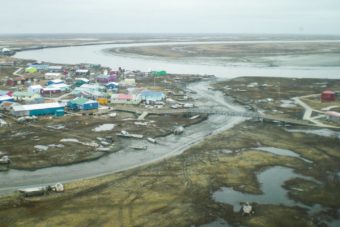
Kipnuk in 2012. (ADN archive)

Leaders in the Western Alaska community of Kipnuk say the principal of nearly a decade there bullied Native school staff members, put residents in jeopardy by ignoring COVID-19 restrictions and oversaw a decline in education quality. That’s why in October, according to documents obtained through a public records request, they voted to banish her.

School officials and tribal leaders involved in the banishment order and subsequent search by tribal police officers at the Chief Paul Memorial School at the end of last month have largely declined to comment on what happened beyond brief written statements. But in documents submitted to the Alaska Department of Public Safety and obtained by the Anchorage Daily News, new details emerged about longstanding tensions between community members and principal LaDorothy Lightfoot, who began work in Kipnuk in 2013.

Lightfoot did not responded to multiple emails and phone messages seeking comment.

“We are kindly encouraging you to leave your position as Kipnuk Site-Administrator at Chief Paul Memorial School. We, the Native Village of Kipnuk, have received many calls from the local Kipnuk Tribal members about you,” said the banishment order, signed in early October. “You have neglected important parts of being a leader in Kipnuk. The relationship with (a) variety of people was not positive.”

According to the document, tribal leaders voted 6-0 on Oct. 4 to permanently expel Lightfoot from the community of around 700 mostly Yup’ik residents near the mouth of the Kuskokwim River on the Bering Sea coast.

[Earlier coverage: Alaska village school shut down after principal banished and teachers flown out]

After the vote, the problems escalated, with a formal resolution to keep kids out of school. It came to a head in the weekend before Halloween, when tribal officials signed a document authorizing a search of school buildings and homes. By Saturday, Alaska State Troopers were on the ground in Kipnuk, and the principal, along with more school employees, were flown to Bethel on planes chartered by the Lower Kuskokwim School District.

Now, instruction for the school’s roughly 200 students is happening online for the foreseeable future, with teachers staying temporarily in Bethel while conducting lessons online for students almost a hundred miles away back in Kipnuk.

Banishment has long been a way for Alaska Native communities to protect collective well-being in places where state and federal law enforcement barely exist, sending away tribal members and outsiders whom local leaders deem to pose significant threat.

On Friday, Tribal Administrator Nick Slim said the Kipnuk Traditional Council was not ready to comment on the situation.

Along with its banishment order, the traditional council included a list of problems during Lightfoot’s tenure. Many of the complaints relate to how the school was run, including claims that in her leadership role she neglected traditional language instruction and values, communicated poorly with local leaders, violated COVID-19 health measures, showed disrespect toward indigenous school staff, and mishandled extracurricular programming.

“More of the Kipnuk language is being lost since she arrived here,” the council wrote.

According to the complaint, more local students were opting to leave the community for better educational opportunities elsewhere.

“The school and leadership is not promoting and supporting student performance and school effectiveness,” according to the Kipnuk Traditional Council.

“Communication between KTC and LaDorothy is nil. For close to 10 years, LaDorothy (has) refused to meet with Kipnuk Traditional Council,” the council wrote. “School administration does not truly listen. Kipnuk Traditional Council in the past shaped the school vision and mission together.”

The banishment order mentions disrespectful treatment of residents, including those working at the school, though does not go into detail on specific instances.

“Treatment of Native faculty and staff by LaDorothy is very poor. She loves to humiliate Native staff,” according to the complaint.

“She is known to bully people in the past,” said another document from the council included along with the banishment order.

Tribal leaders also faulted Lightfoot for a decline in educational outcomes and fewer options for extracurricular programs like Native Youth Olympics, academic competitions, shop and music classes.

Another major flashpoint related to COVID. The Kipnuk Elders Committee sent a letter to legislators, state education officials and the Yukon-Kuskokwim Health Corp. in September 2021, angry that students were brought back to school in-person to take standardized tests at a time when lockdown measures and firm prohibitions on gathering were in place to prevent illness.

“The duty of safety and health of all students was ignored,” the elders wrote, noting that the local lockdown order barred gatherings at school, church or stores.

The letter notes that Kipnuk, like many communities across Alaska that fall, was seeing a surge in COVID cases driven by the Delta variant. Households do not have piped water or adequate sewage infrastructure, and already “families are having (a) hard time with it.”

“In total we lost seven local members since January 2021,” the elders wrote of the coronavirus. “The school authorities should know that COVID-19 spreads easily, and guidelines shouldn’t be ignored, especially for a village that doesn’t have running water and disinfectants available in their homes. The welfare of Kipnuk is more important than taking a test.”

“There is clearly (an) imbalance between the school and local authorities,” the letter said.

A week after the banishment order was signed, the traditional council held a public meeting on Oct. 12 with parents of students that culminated in a resolution ordering pupils “not to attend school until further notice,” with the exception of participating in athletic programs. According to a copy of Resolution 22-52, 32 parents supported the measure, none opposed.

“Despite this resolution, approximately 80% of students continued to attend school at CPMS,” said the Lower Kuskokwim School District in a press release issued last week. “Unfortunately, on October 28, 2022, a large group of people purportedly representing KTC entered and occupied the school building and refused to leave, greatly disrupting the educational environment in the school. Thereafter, tribal police attempted to enter LKSD teacher housing units.”

The next day, state law enforcement officers arrived in Kipnuk to find the boardwalk from the airport into town blocked.

“Alaska State Troopers were able to deescalate the situation and travel to the school,” the Department of Public Safety wrote in a dispatch on Halloween. “Troopers met with the principal and school staff to determine what was happening. Troopers were able to determine that no crimes had been committed and worked with the school district to facilitate assisting those that wanted to leave the village in doing so. The principal along with other school staff chose to leave and were flown out of the village on two aircraft chartered by the school district. No threats were made towards Troopers or school district staff.”

The Lower Kuskokwim School District did not respond to detailed questions regarding the incident, allegations against Lightfoot, or when educators might go back to Kipnuk. Instead, Superintendent Kimberly Hankins pointed to the previously issued press release and offered a brief statement.

“The safety, health, and wellbeing of our students and staff is and always will be our primary priority. LKSD takes seriously and investigates specific community member complaints as thoroughly and expeditiously as possible. We have done so in all circumstances related to this school and staff, and all prior allegations have been reviewed and addressed,” Hankins wrote. “We are committed to maintaining an open line of communication with KTC to work together and towards a resolution.”

Hankins could not comment on whether Lightfoot would be returning to her position in Kipnuk, as the district is “not able to provide additional information about confidential personnel matters.”

No charges have been filed against anyone in connection with last weekend’s incident.

This story originally appeared in the Anchorage Daily News and is republished here with permission.

Alaska could see effects of Indian Child Welfare Act challenge heard by Supreme Court

Jennifer Quinto with her family in the 1980s. (Photo courtesy of Jennifer Quinto)

The U.S. Supreme Court heard a case Wednesday that presents a major challenge to the Indian Child Welfare Act.

ICWA, as it is known, is a federal law that allows tribes to make adoption decisions for Native children, to keep them connected to their culture and to keep Native families intact.

The plaintiffs taking their case to the Supreme Court say that’s unconstitutional and racial discrimination.

Community reporting fellow Chen Chen with KTOO has been following the case — called Haaland v. Brackeen — and reporting on what ICWA means to Alaska.

And because Native children represent about 55% of all children in state custody, Chen says overturning ICWA would have huge implications for Alaska. At the same time, Native people only make up a little over 20% of the population, so there’s a disparity, she says, and a feeling that the state hasn’t done enough to implement ICWA to begin with.

Listen:

Editor’s noteThis interview was recorded prior to the Supreme Court hearing Haaland v. Brackeen.

The following transcript has been lightly edited for clarity.

Chen Chen: Yeah, so for my second story on ICWA, I interviewed a tribal court judge. And it seems that from what I’ve spoken to her about, perhaps compared to other states that have better implementation of ICWA, Alaska just hasn’t really been putting in a lot of resources to combat those figures. Not to say that there aren’t obviously many people in the system who are working to change things. But I think it’s especially tough in Alaska, because of shortages and staff and shortages and resources. So here’s how judge Debra O’Gara puts it:

Debra O’Gara: Some states are a little bit better than other states. But right now, Alaska, I would say is not doing so well. Alaska has not followed the spirit or the letter of the law. If it did, there would not be that disproportionality.

Judge Debra O’Gara pictured in 2020. She has spent over a decade working on Indian child welfare cases and directing trainings on ICWA for guardians, case workers and lawyers, in the state and Tribal court systems. (Photo courtesy of Debra O’Gara)

Chen Chen: So one of the things that Judge O’Gara really highlights is that ICWA mandates placement preferences so that resources are put in to keep families together. And then the second choice is to keep kids within their communities. And because a lot of that isn’t happening, Judge O’Gara has these criticisms for the state of ICWA right now.

Casey Grove: Yeah, let’s break that down just a little bit more, too, because there’s a preference to keep kids that are in a — you know, maybe a bad situation, or at least a perceived bad situation by Office of Children’s Services workers or whatever — there’s a preference that if they are going to be removed from a home for their own protection that they’d be then placed with another Native family or even somebody within the same family, right?

Chen Chen: Yes, there’s definitely a preference for placing the children as close to their family as possible, while their parents get time to kind of rehabilitate or figure out their problems. So one of the main things that ICWA tries to do is to help reunite families. So when kids are put into foster care, there’s resources also, that should be put in for the parents, and for the families like grandparents, to be able to take care of the child and improve their abilities as a parent and get help for the different mental and physical things that they need help for.

Casey Grove: Gotcha. Yeah. Obviously, for the children that are in the middle of ongoing cases, their identities are protected, and rightfully so. That’s confidential. But you did speak with somebody who’s a former adoptee, right? And what did she have to say about this?

Chen Chen: Yeah, I spoke to a former adoptee who was adopted in the year that ICWA was passed in 1978. So I think that was a very interesting perspective from someone, because I think a lot of those perspectives are lost when we talk about ICWA. And we talk about it as a theoretical thing, when, for many adoptees, it means a lot, and it’s a very real law for them. Jennifer Quinto was adopted from an Athabaskan family into a multicultural, Tlingit household in Juneau.

Jennifer Quinto: For me and my adoption, it was a big gamble. That law wasn’t in place, and I could have very easily been placed with another family. And how many children are there that didn’t have that protection? And like I said, there were so many adoptees that I met, that I could feel the intensity of the hurt and the anger. And all of that came from the fact that they were, you know, being raised with families that just didn’t understand the complexities.

Various indigenous groups march and dance during a parade Saturday, June 9, 2018, in downtown Juneau, Alaska. (Photo by Tripp J Crouse/KTOO)
Jennifer Quinto marches with various Indigenous groups during a parade at Celebration 2018 on Saturday, June 9, 2018, in downtown Juneau, Alaska. (Photo by Tripp J Crouse/KTOO)

Casey Grove: So she seems to be very much in favor of ICWA, at least the intentions of ICWA, right?

Chen Chen: Yeah, so ICWA has a lot of different actual ways it’s implemented in each state. But I think that from speaking to Jennifer, it seems like no matter what ICWA actually looks like in each state, just having that exist is already saying to her, like, you matter. Adoptees like you matter and your identity matters.

Jennifer Quinto: Who could ever believe that that would be taken away? You know, that’s one of the last things that is keeping our community together in the way that it has. So imagining a world where that doesn’t exist is just too, too painful.

Casey Grove: That’s definitely all interesting. And it’s good to kind of know where ICWA has come from and what the intentions of it are. But we’re here to talk about a very particular lawsuit that you’ve been following, a court case. Tell me about that. Who’s the plaintiff there? Who’s the defendant? What is the change that they’re seeking?

Chen Chen: The U.S. Supreme Court will hear a case called Haaland vs. Brackeen. And the case is trying to say the plaintiffs — including Brackeen and various other states and different parents who are trying to adopt Native children — they’re all kind of getting at how they think that it was not constitutional, because it gives preference to Native families and tribes for Native children over all other kinds of people. And in the lawsuit, they classify that as racial discrimination and violating the Equal Protection Clause. And what’s happening in the Brackeen case is that these parents from Texas who are white, adopted a child who was from a tribe while they were fostering him. And then they got into a lawsuit because they wanted to adopt that kid’s brother. And the problem was the tribe didn’t want to let that child be adopted out of the tribe. And that child’s aunt was very willing and wanted to adopt the kid. And in the end, the Brackeens did get both children but were still not happy with the terms of the lawsuit, which included that the kid had to, you know, visit their grandparents every summer. So basically, they’re the main family that’s involved, are the Brackeens.

Casey Grove: So the U.S. Supreme Court’s about to hear this case, and I guess a decision would be, you know, somewhere down the road from that, but are the people that you’re talking to, do they have guesses about how the Supreme Court might rule on this?

Chen Chen: So the two people that I mainly spoke to both don’t think it’s going to be overturned, because it’s almost too far out of, like, reality for a lot of Alaska Native (people) for ICWA to be overturned. And I think the other thing is that from other articles I’ve read about ICWA, from various perspectives outside of Alaska, it also seems that ICWA would have very far-reaching implications if it’s overturned, because that is saying that tribal sovereignty is just not a thing. Because if they rule that being Alaska Native or being Native American is a racial classification rather than a political classification, that’s a direct threat to tribal sovereignty.

Slot machines are illegal in Alaska. So how is Klawock’s casino in business?

Customers play on electronic bingo machines at the Klawock Casino on Oct. 14, 2022. (Photo by Raegan Miller/KRBD).

Rhonda Ren drove from Craig to Klawock two days in a row to play the machines at the Klawock Casino.

“I had lots of luck yesterday,” Ren said while sitting in front of a machine. “I did great.”

Nearby, Robert Baza was coming away from his machine with $300. He had heard that the Klawock Cooperative Association opened the casino early last month, and wanted to try it out.

“Oh, it’s pretty good,” he said. “It’s paid off.”

Gaming isn’t new to Klawock — before COVID-19 came to the island, the Tribe hosted regular bingo games and pull tabs. But now, they’ve added more than 20 bingo machines to the casino, which shares space with the mini-mart and smoke shop in the heart of town.

The machines look nearly identical to slot machines. But technically, they’re electronic bingo machines. And in most places in Alaska, they’re illegal under state law — even under an exception that allows nonprofits to run raffles and bingo games.

But here in Klawock, there’s a twist. The casino sits on land held by the federal government in a trust. It predates the landmark Alaska Native Claims Settlement Act.

“I mean, this is land held in trust for the benefit of the tribe,” said attorney Lloyd Miller with the firm Sonosky Chambers based in Anchorage.

The Tribe’s operation is legal under the Indian Gaming Regulatory Act. The law provides a framework for what kinds of gaming is legal in areas defined as Indian Country.

Miller said that’s what makes it different from a recent case with some striking similarities: In 2018, the Native Village of Eklutna tried to open a similar slot-like electronic bingo hall in Chugiak. But they were shot down by state authorities and a federal court. Miller’s firm was involved in that case.

It’s a little complicated, but Miller said it all comes down to land. The key problem was that Eklutna wanted to open the casino on a Native allotment — land that belonged to Tribal members, not the Tribe itself.

“And when you’re talking about allotment, instead of trust land use, you then get into a secondary question … that asks whether the Tribe has jurisdiction –territorial jurisdiction — over the allotment,” he said.

And to qualify, the land needs to be under full jurisdiction of the Tribe.

“It was an allotment awarded to individuals, a former chief, I mean, this goes way back in time. … It was not a parcel of land taken into trust for the Tribe for the benefit of the Tribe and held in trust for the benefit of the Tribe,” Miller explained. “That’s a big difference.”

But Klawock does have jurisdiction over the casino parcel. The Tribe also has the appropriate Class II license from the National Indian Gaming Commission to go with it.

A Class II license covers things like pull tabs and bingo, including the slot-style electronic machines. It’s a step behind a Class III license that would allow for Vegas-style games with big jackpots. Class II licenses do come with conditions — if a Tribe wants to have pull tabs, they have to host regular bingo games. The machines in the Klawock Casino count as bingo, according to the Commission.

That’s why, equipped with the right kind of land and the right kind of license, Klawock’s casino is in business. Miller said there are other small parcels of trust land like Klawock’s — like in Angoon.

Back at the casino, Tribal administrator Lawrence Armour says revenue from the casino helps the federally recognized Tribe support its members and the community.

“(It’s) just starting another enterprise,” Armour said. “I mean, this, the smoke shop is what we pay a lot of our Tribal employee salaries with if they’re not covered by a grant. And we just need another revenue source. So it was just one of the ideas that we started discussing. And the opportunity kind of fell in our laps.”

Armour said he’s seen Klawock residents come to test their luck, but also plenty of unfamiliar faces, too.

Klawock’s casino is the only one on Prince of Wales Island. But Armour said that may not be for long.

“I think there are some Tribes that were looking into it,” he said. “So we [Klawock Cooperative Association] were really trying to keep it under wraps, as far as progress and who our contacts were — to try to get this thing off and beat them to the punch, basically.”

Armour said business has been steady. He said he thinks the machines will usher in a new interest in tribal gaming — and even push out old standbys like pull tabs.

An Alaska Tribal court judge breaks down ICWA’s past, present and future

Judge Debra O’Gara pictured in 2020. She has spent over a decade working on Indian child welfare cases and directing trainings on ICWA for guardians, case workers and lawyers, in the state and Tribal court systems.  (Photo courtesy of Debra O’Gara)

On November 9th, the U.S. Supreme Court will hear Haaland v. Brackeen, a case that challenges the constitutionality and the future of the Indian Child Welfare Act (ICWA).

ICWA was established in 1978 “to protect the best interest of Indian Children” by creating federal standards for removing Native children from their families and making sure Native children were placed in homes that would reflect their culture. 

Judge Debra O’Gara has spent over a decade working on Indian child welfare cases and directing trainings on ICWA for guardians, case workers and lawyers, in the state and Tribal court systems. 

O’Gara, who is Lingít, Yupik and Irish, lives in Petersburg. She and her siblings were raised by a single mom who worked nights as a cocktail waitress.

“In one of the suburban, predominantly white neighborhoods that we lived in, there was twice in my childhood where [Child Protective Services] was called in and an investigation was conducted,” she said. “There were assumptions that we weren’t taken care of because my mom wasn’t home at night. In fact, we actually were taken care of and had somebody staying there with us. We were doing just fine.”

This was before ICWA, and these childhood experiences led O’Gara to carve out a career protecting Native families from unnecessary separation. 

The state of ICWA in Alaska

O’Gara says that some states are better than others at adhering to ICWA. 

“But right now, Alaska, I would say, is not doing so well,” she said. “The state of Alaska has not followed the spirit or the letter of the law.”

More than 20% of Alaskans are Alaska Native or Native American, but about 55% of children in state custody are Alaska Native.

Presiding Judge Debra O'Gara stands in the Juneau courtroom of the Central Council of Tlingit and Haida Indian Tribes of Alaska. (Photo by Ed Schoenfeld/CoastAlaska News)
O’Gara in the Juneau courtroom of the Central Council of Tlingit and Haida Indian Tribes of Alaska in 2017. (Photo by Ed Schoenfeld/CoastAlaska)

O’Gara said that many of these children are eventually adopted by non-Native families and often even removed from Alaska, despite the passage of ICWA.

“So what happens there is the Tribe loses their children,” she said. “And the children lose their connection to their Tribal affiliation. For those of us here in Southeast that grow up in a clan, they lose their identity as a clan, what clan they belong to, what house they belong to, what their Lingít name is or how to name who their relatives are, and that whole belonging and knowing who they are.”

O’Gara pointed to multiple factors that lead to this high percentage of Alaska Native children being removed from their homes. Some of it, she attributes to a lack of training and consistent, skilled staff in the state’s system leading to a backlog of cases in the courts. 

“Training needs to be consistent with every new staff that comes in,” she said.

Without that, she says, staff bias figures into the equation. For instance, part of many Native cultures is having many relatives living under one roof. But for the state, a house with three or four times more people living in it than if it was a non-Native or white house is considered overcrowded. 

In Southeast Alaska, clan members are considered family. 

“And that’s as that’s actually as strong as a blood relation, sometimes stronger,” O’Gara said.

To her, these multi-generational families meant that there were lots more mentoring, opportunities for teaching and sharing childcare responsibilities. 

But, because these familial structures are less common in the U.S., she says, the system often gets concerned about who is taking care of the children in these households. 

“There’s prejudices and assumptions that are made that then lead to the children being removed when they shouldn’t have been removed in the first place,” O’Gara said. “And then once you get into that system, it’s really hard to prove that there’s nothing going on.”

Where ICWA began

Before ICWA, one way Native children were systematically removed from their families was by declaring they were neglected or abused by their parents. Another way is perceived “poverty and lack of parenting by Western standards” says O’Gara.

“There was a great outcry in the 60s and 70s about the continued removal of children,” O’Gara said. “At the same time that this was happening, there were also children being removed from their communities and forced to go into boarding schools, which we in the Native community all know about.”

She added that this was especially devastating to the Native community because much of the culture is based on the land they live on and the ceremonies that are performed with their families.

“The removal of the Native children was just one of the ways to completely annihilate and disappear Native people,” she said.

When ICWA was finally passed in 1978, O’Gara says it recognized that children have the right to know who they are.  

“It also recognized that the Tribe had a legal interest in protecting the Tribe’s children,” she said.

The future of ICWA

Today, ICWA is often considered the “gold standard” for all children by child welfare experts.  

“The other thing that ICWA did is to mandate placement preferences,” O’Gara said. “And the placement preferences, I have always argued, should be universally applied to not just Native children, but to all children who find themselves in the child welfare system.” 

These placement preferences she outlined mean that children removed from their parents would first be placed with family. The next option after biological family is clan family or psychological family, which includes community members and long term friends, she said. 

“Lastly, when all of those [options] have been exhausted, and there’s no placement found, then with an appropriate non-Native family,” she said. “Often in the current child welfare system in Alaska, those first three get skipped over. And there’s efforts to continue to have those systems be improved, so that the first that the preferences can be placed.”

O’Gara believes that parents who are being accused of neglect or abuse of a child need time to seek treatment or help, but in the meantime, children shouldn’t lose their connected to their community or their family. 

The plaintiffs in the Brackeen v. Haaland case say that giving additional support to Native parents and prioritizing Native homes for Native children violates the equal protection clause.

“So one argument I’ve heard is that Native [people] should not be given special treatment,” O’Gara said. “Well, my answer to that is the guidelines should be applied to everybody equally… Because all children also have the right to know who they are, who their family is, where they belong, and some of their family history.”

She thinks that providing active efforts and services for parents and children—like those outlined in ICWA—would “benefit every child in the child welfare system.”

“We’re not just a minority like any group,” she said. “We have a special relationship with the federal government, in that we are sovereign nations.”

There have been many attempts to change or weaken ICWA in various state courts, but she also sees this as an opportunity for states to go in and strengthen ICWA. Washington state, where O’Gara grew up, has extra provisions that protect Indian children more than the federal ICWA does.

“And certainly Alaska is able to do that,” she said. “Ever since ICWA has passed, there’s been political forces that have attempted to eliminate it, and they have not yet been successful. It doesn’t mean that it’s not as strong as it was when we first passed. And at some point, we will be able to turn that tide and get back to strengthening it.”

Seal hunting regulations on St. Paul Island show a new path for federal marine mammal protection

Seal pups on St. Paul Island. (Photo courtesy of Justine Kibbe)

This October marks the 50th anniversary of the Marine Mammal Protection Act, the conservation law that prohibits the killing of marine mammals. It does have an exception for Alaska Native people, and the federal government now works with Tribes to co-manage animals for subsistence use.

On St. Paul Island there’s a model for how this kind of partnership might guide Alaska’s marine mammals – and the people who depend on them – through dramatic climate shifts.

The Aleut Community of St. Paul Island Tribal Government has a partnership with federal scientists at NOAA Fisheries to manage Steller sea lion and fur seal populations.

“It’s actually just gotten better as the years go,” said Aaron Lestenkof, a local hunter who works for the Tribe. “And we have weekly meetings with them. And, you know, try to keep up to date on things happening here.”

Lestenkof is an Island Sentinel—a Tribal member who monitors hunting and stranded marine mammals on the island, among other duties. Federal biologists work only seasonally on the island, but Sentinels are there year round.

Lestenkoff says the changing climate has made fur seals more available over the last decade. They used to leave St. Paul in winter, but he says now some of them stay on the island over winter due to climate change. The Tribe worked with the federal government to update local regulations so hunters could take advantage of the longer seal season. That’s important because the changing climate means a decrease or even a crash in other subsistence foods, like halibut and crabs, respectively.

Lauren Divine is the director of the ecosystem office for the Tribal government on St. Paul. She says the federal regulation change was a milestone. Now the Tribe runs a research project on northern fur seals.

“We’re leading as a Tribal government, rather than kind of supplementing something that NOAA is doing,” she said. “This is something that addresses our Tribal member concerns, and is led and funded by our Tribal government.”

She says federal management needs to do more to keep up with climate change, but recent co-management decisions have given her hope for the future.

AFN delegates say lack of veterinary care is an ‘ongoing public health crisis’

""
Donald Charlie of Nenana is a former musher and former chief of the Nenana Native Village Council, where he first pitched the idea for a resolution calling for the federal authorities to recognize veterinary services as health care. (Photo by Jeremy Hsieh/Alaska Public Media)

The Alaska Federation of Natives wants federal officials to recognize that a lack of veterinary care in Native communities is a public health issue.

At its convention in Anchorage on Saturday, delegates to the state’s biggest Native organization adopted a resolution that calls on federal authorities to make a declaration that could lead to veterinary services through the Indian Health Service. The resolution describes the lack of access to veterinary care as “an ongoing public health crisis” that is severely impacting residents’ quality of life.

“We really do support this resolution and view veterinarian services as essential, especially with the rabies problem that we see,” said Saagulik Elizabeth Hensley of Kotzebue. She was representing NANA, a regional Alaska Native corporation for the northwest Arctic.

Caroline Ketzler, first chief of the Nenana Native Village Council. (Photo by Jeremy Hsieh/Alaska Public Media)

The resolution says residents in western and northern Alaska communities “live under constant threat of rabies.” Alaska Native children have the highest hospitalization rates from dog bites in the IHS system, it says.

Donald Charlie is from Nenana in the Interior. He’s a former musher, and former chief of the Nenana Native Village Council. He initially brought forward the resolution idea.

He said that when basic services like neutering and vaccinations are accessible, that helps control stray populations, disease and potential harm to people.

“Almost everybody owns dogs, whether they’re pet dogs, working dogs, race dogs or whatever,” Charlie said.

Caroline Ketzler, First Chief of the Nenana council, said there’s huge demand, even in her community on the road system.

“The last veterinary services we received in Nenana, the entire tribal hall was packed,” she said. “And they were doing spays, neuters, vaccines as well as dental checkups.”

She said that was years ago.

The resolution is specifically addressed to the Congress and the Department of Health and Human Services.

Jodi Mitchell (far right) moderates the Consideration of 2022 AFN Convention Resolutions at the Dena’ina Center in Anchorage. (Photo by Elyssa Loughlin/Alaska Public Media)

The veterinary services resolution was one of 25 that delegates took up and adopted on Saturday, the last day of the AFN convention. Others included political endorsements to re-elect Mary Peltola to the U.S. House of Representatives and Lisa Murkowski to the U.S. Senate, and opposing the ballot question to hold a Constitutional Convention.

The most divisive resolutions urge action to reduce fishing to address the crash in king and chum salmon in Western Alaska and the Interior. Delegates from the Aleutian Islands region vehemently opposed the resolutions but couldn’t sway enough delegates to address the issue through other means.

Site notifications
Update notification options
Subscribe to notifications