Alcohol & Substance Abuse

Scientists still seek a reliable DUI test for marijuana

This spring, 16 state patrol officers from Colorado and Wyoming took a couple days off their usual work schedule to do something special. They assembled in a hotel conference room in Denver. As instructed, they wore street clothes for their first assignment: going shopping at nearby marijuana dispensaries.

“It’s a brave new world,” said instructor Chris Halsor, referring to the years since Colorado legalized recreational marijuana.

There are now more marijuana dispensaries in Colorado than there are Starbucks shops, said Halsor, a Denver lawyer and former prosecutor. And though consuming cannabis is legal across the state, driving under its influence is not.

The cops in that conference room, with their buzz cuts and Mountain Dew, are all part of the force charged with keeping the roads safe. But first, they needed a formal pot education — to learn how to identify various marijuana products and paraphernalia when they pull over a driver they suspect is under the influence.

Here’s the rub: Despite the increasingly legal use of cannabis in many states, cops still don’t have the equivalent of a reliable alcohol breathalyzer or blood test — a chemically based way of estimating what the drug is doing in the brain. Though a blood test exists that can detect some of marijuana’s components, there is no widely accepted, standardized amount in the breath or blood that gives police or courts or anyone else a good sense of who is impaired.
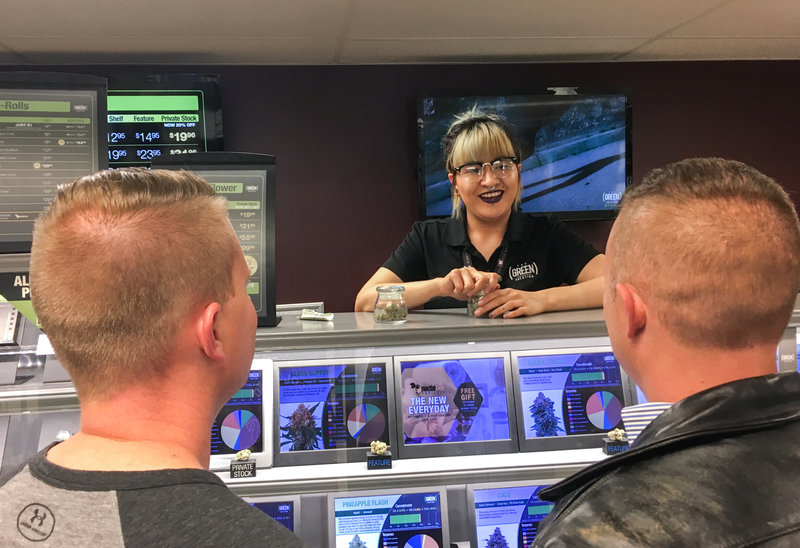
Yessenia Hinojos, a budtender at a Denver cannabis dispensary called The Green Solution, describes marijuana strains to A.J. Tarantino (left) and Philip Gurley. Both men are officers with Colorado State Patrol.
Rae Ellen Bichell/NPR

A number of scientists nationally are working hard to create just such a chemical test and standard — something to replace the behavioral indicators that cops have to base their judgments on now.

“We like to know the human error and the limitations of the human opinion,” said Tara Lovestead, a chemical engineer at the National Institute of Standards and Technology in Boulder, Colo., who is working on setting standards for what a marijuana detection test might require.

It’s actually really hard for Lovestead to do this kind of research because she works in a federal lab; federally, cannabis is considered a Schedule 1 substance, “a drug with no currently accepted medical use and a high potential for abuse.” So even though Lovestead is in Colorado, getting hold of a sample for research purposes is just as hard as getting hold of heroin.

“We cannot use the stuff down the street,” she said.

Aside from being a bureaucratic mess, coming up with a standardized blood or breath test is also a really tricky chemistry problem because of the properties of the main psychoactive chemical in cannabis: delta9-tetrahydrocannabinol, or THC.

In states like Colorado, there is a THC blood test that law enforcement can use to show “presumed” impairment. If a person has more than 5 nanograms of delta-9-THC per milliliter of blood, it can be “presumed” that they are impaired, according to Colorado law.

But Lovestead and others maintain that scientifically speaking, that cutoff doesn’t actually mean anything.

“We just don’t know whether or not that means they’re still intoxicated or impaired or not,” she said. “There’s no quantitative measure that could stand up in a court of law.”

Turns out it can be a lot harder to chemically determine from a blood or breath test that someone is high than to determine from such a test that they’re drunk.

Ethanol, the chemical in alcoholic drinks that dulls thinking and reflexes is small and dissolves in water. Because humans are mostly water, it gets distributed fairly quickly and easily throughout the body and is usually cleared within a matter of hours. But THC, the main chemical in cannabis that produces some of the same symptoms, dissolves in fat. That means the length of time it lingers in the body can differ from person to person even more than alcohol — influenced by things like gender, amount of body fat, frequency of use, and the method and type of cannabis product consumed.

In one study, researchers had 30 frequent marijuana users stay at a research facility for a month without any access to drugs of any sort and repeatedly tested their blood for evidence of cannabis.

“And it shocked everyone, including ourselves, that we could measure, in some of these individuals, THC in the blood for 30 days,” says Marilyn Huestis, a toxicologist with the University of Maryland School of Medicine who recently retired from leading a lab at the National Institute on Drug Abuse.

The participants’ bodies had built up stores of THC that were continuing to slowly leech out, even though they had abstained from using marijuana for a full month. In some of those who regularly smoked large amounts of pot, researchers could measure blood THC above the 5-nanogram level for several days after they had stopped smoking.

Conversely, another study showed that people who weren’t regular consumers could smoke a joint right in front of researchers and yet show no evidence of cannabis in their blood.

So, in addition to being invasive and cumbersome, the blood test can be misleading and a poor indicator of whatever is happening in the brain.

Recently, some scientists have turned their attention to breath, in hopes of creating something useful.

A number of companies, like Cannabix Technologies and Hound Labs, are in the process of developing breath detection devices. Tara Lovestead is providing the data that will help relate the concentration of THC detected in the breath to what’s in the blood. Even though blood provides an incomplete and indirect inkling of what’s happening in the brain, it’s the measure law enforcement turns to as a benchmark.

That, too, is a chemist’s nightmare. THC and other cannabinoids — the chemicals that cause a high — are really squirrelly. They degrade quickly and appear only in very tiny amounts in the breath.

Luckily, Lovestead’s specialty is detecting tiny amounts of chemicals in the air. She and her colleagues have worked on methods to use tiny air samples to detect evidence of arson, buried bodies and hidden explosives. Marijuana is the next challenge.

In the future, she said, an accurate breath test would likely involve looking at a lot more than just THC — probably a whole combination of chemicals.

“One thing to look for would be metabolites — something that comes out of the breath that shows it actually went through your system,” she said. Such a test would greatly reduce the possibility that someone might test positive from inhaling secondhand smoke, she said.

In the meantime, it’s up to law enforcement officers like the ones in Chris Halsor’s class to make the call, based on circumstantial evidence and their best guess.

“The whole point of this class is to get the officers to make correct decisions,” said Halsor.

Many officers in his courses have never used marijuana — or haven’t since some exploratory puffs in high school. These officers need training, he said, to boost their confidence — “confidence that they’re making the right arrest decision and confidence that they’re letting people go who really aren’t impaired.”

The cops attending his seminar in the spring paged through Dope Magazine chuckled at a photo of an edible called “reef jerky” and watched a video together on how to dab — heating concentrated marijuana and inhaling the vapors. In their visit to a local marijuana dispensary, they examined gold-plated blunts — hollowed-out cigars filled with marijuana.

But the real test of these officers’ ability to identify the signs of cannabis impairment faced them outside the hotel, in a parked RV that was plastered with bumper stickers.
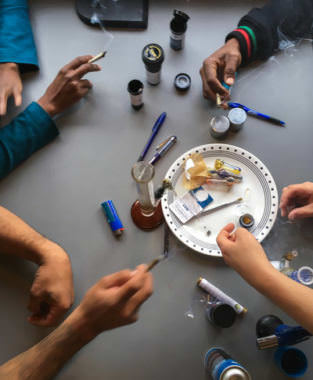
A chemical test that reliably detects cannabis use — let alone intoxication — has been elusive.
Rae Ellen Bichell/NPR

Four volunteers for the project were inside the RV, legally getting as high as they wanted to, from a big plastic tub full of pot products.

“Good music, good company, good weed. It all goes together,” said Eugene Butler, one of the four volunteers.

Butler and the three others had never met before. They had volunteered to get high and then interact with cops to help the officers learn the signs of cannabis impairment.

“We’re going to willfully smell like pot around a bunch of cops,” said Sharica Clark, laughing.

Inside the hotel, the officers practiced roadside sobriety tests on the four volunteers — determining each time if, in real life, they would have arrested these people for a DUI.

All the volunteers had smoked a lot of pot inside the RV. But in the sobriety tests, they performed differently.

A volunteer named Christine, for example, did well on math, quickly calculating how many quarters are in $1.75. But she didn’t do well on other things, like balancing, remembering instructions and estimating time. (She was concerned about recrimination at work, and NPR agreed to use only her first name).

Christine, the officers all decided, would be a danger behind the wheel. In real life, they would have arrested her.

“Yeah, she’d be going to jail,” said Rich Armstrong, an officer with Colorado State Patrol.

But things weren’t so clear with the other volunteers. A lot of the officers had decided they wouldn’t arrest Eugene Butler or a volunteer named John (who also asked that we not use his last name); both men aced the same roadside tests Christine flunked, even though they, too, had just smoked a lot in the RV.

And when it came to Sharica Clark, the officers decided it was essentially a toss-up as to whether they would have arrested her, based on her performance on the roadside tests. Yes, her pupils were huge, and she had a tough time touching her finger to the tip of her nose while her eyes were closed. But her balance, counting and recitation of the alphabet were, as Colorado State Patrol Officer Philip Gurley put it, “spot on.”

“It was a tough one,” said Tom Davis, another officer with Colorado State Patrol.
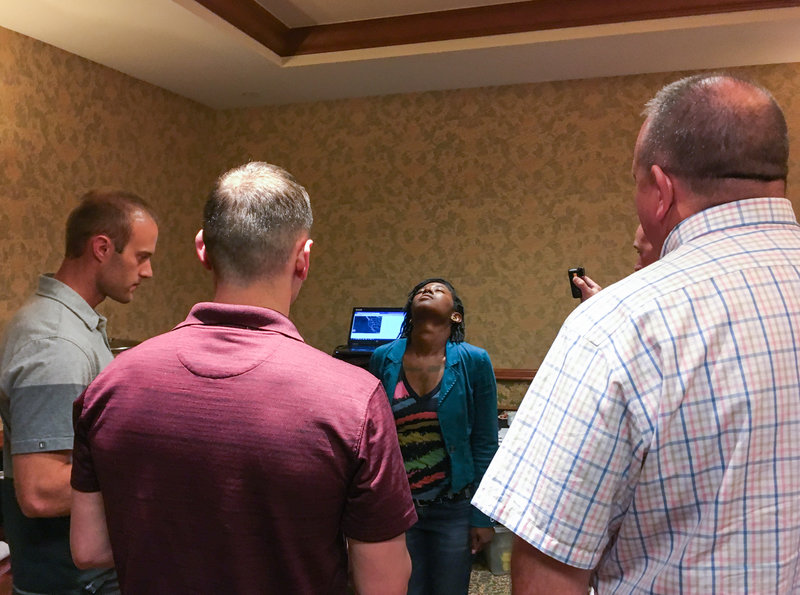
Volunteer Sharica Clark counts 30 seconds with her eyes closed, as officers with Colorado State Patrol check her balance and counting skills after using cannabis. It was part of a simulated roadside sobriety test in the officers' training seminar.
Volunteer Sharica Clark counts 30 seconds with her eyes closed, as officers with Colorado State Patrol check her balance and counting skills after using cannabis. It was part of a simulated roadside sobriety test in the officers’ training seminar.
Rae Ellen Bichell/NPR

Right now, these officer’s opinions loom large. If they decide you’re driving high, you’re going to jail. But at the end of the day, they’re just making educated guesses. Two different officers could watch the same person doing the same sobriety test and make different decisions on whether to arrest. In previous courses, officers had decided that a volunteer was impaired when in fact the volunteer hadn’t smoked at all.

So, just like the THC blood test, the judgments officers make can also yield false positives and negatives.

“This is one of those subjective areas,” said Armstrong.

“It’s too subjective,” said Lovestead.

She recently published a paper in the journal Forensic Chemistry where she found the vapor pressure of THC — one of its fundamental physical properties. Lovestead believes finding and standardizing that measurement is a small but significant step toward a more objective route for evaluating intoxicated drivers.

In the meantime, courses like Halsor’s are the best resource for officers. And at least now the class participants know what pot strains like Skunk Dawg, Hippie Chicken and Chunky Diesel actually smell like.

“Yeah,” said Gurley. “It smells like the bottom side of a rock.”

Copyright 2017 NPR. To see more, visit http://www.npr.org/.

FDA proposes reducing nicotine in cigarettes

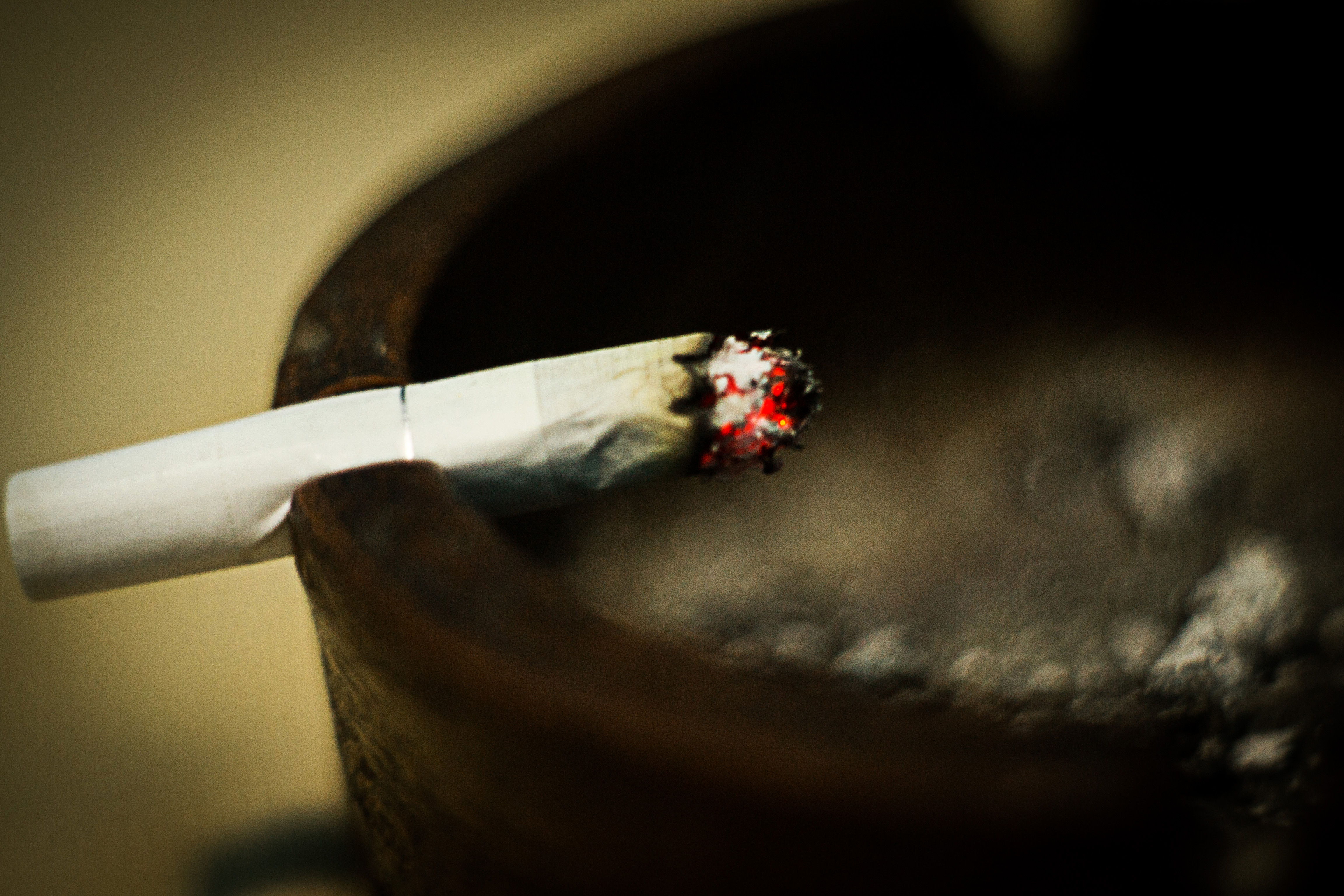
Cigarette burning over an ash tray.
(Flickr photo by Ron Cruz)

Nicotine will now be at the center of the Food and Drug Administration’s effort to regulate tobacco, the agency said, announcing that it will aim to lower the amount of nicotine in cigarettes to a level that will help curb addiction.

It would be the first time in the agency’s history that it has sought to regulate the amount of nicotine in cigarettes.

“The overwhelming amount of death and disease attributable to tobacco is caused by addiction to cigarettes — the only legal consumer product that, when used as intended, will kill half of all long-term users,” FDA Commissioner Scott Gottlieb said Friday. “Unless we change course, 5.6 million young people alive today will die prematurely later in life from tobacco use.”

The plan had an immediate effect on the stock market.

“It’s a real blow to big tobacco, there’s no question about that,” NPR’s Rob Stein said on Morning Edition, “and tobacco stocks have already started to fall” after Friday’s announcement.

As for newer nicotine-delivery systems such as vaping and electronic cigarettes, the FDA says that makers of those and other newly regulated products will be given more time to submit them for review.

Under the new timeline, the FDA said, makes of cigars, pipe tobacco and hookah tobacco would have until Aug. 8, 2021, to submit applications.

The agency said it also will hold public comment sessions on how to regulate “kid-appealing flavors” that are often added to e-cigarettes and cigars.

“Tobacco use remains the leading cause of preventable disease and death in the United States, causing more than 480,000 deaths every single year,” the FDA said in announcing the plan. The agency added that the toll also has a monetary cost, with “direct health care and lost productivity costs totaling nearly $300 billion a year.”

Copyright 2017 NPR. To see more, visit http://www.npr.org/.

Ketchikan substance abuse specialists talk treatment options

Like the rest of the nation, Ketchikan has seen an increase in people abusing opioids. But, some local experts say it doesn’t mean there are that many more addicts overall – it’s just a change in what they’re addicted to.

For this special report, we talked with three local substance abuse treatment specialists about the problem and treatment options available in Alaska’s First City.

Opioids is a term for a variety of drugs, some available legally if prescribed by a doctor, like oxycodone; others illegal in any form, such as heroin.

All are addictive, even the prescriptions. And, many people who become addicted start with a prescription.

Throughout the United States, including Ketchikan, opioid addiction has increased in recent years.

And yes, says Akeela Gateway Clinical Program Director Ruth Bullock, opioid addiction is a problem.

“I also think meth is a problem,” she said. “And alcohol is certainly a problem.”

Steve Parker, a substance abuse counselor at Gateway, says national and local addiction levels haven’t changed much overall. It has been about 20 percent of the population historically, and it’s still about 20 percent.

What changes, he says, is what people are abusing.

“I don’t see the opiate epidemic as anything but a switch from one drug to another drug that will probably switch to another drug and then back to the other drug, leaving the population that’s addicted at 20 percent,” he said.

He and Bullock agree that alcohol is, and always has been, a much bigger problem in Ketchikan than any other substance.

“But, because it’s the drug of choice of ‘normal’ people, there’s never an epidemic of it,” he said. “At the KAR House right now – which is the treatment facility – we have probably around…”

“You said about four times the number of alcoholics as the number of opioid addicts right now,” Bullock said.

Parker says Gateway treats addiction as addiction, no matter the substance used. Detox is different, though, because that process for certain substances — alcohol, especially — can be deadly.

There is no designated detox facility in Ketchikan. Some people have to leave town for that kind of service.

Gateway offers intensive outpatient – which is lots of group and individual therapy – and less intensive follow-up outpatient services. They also have a small residential program at the KAR House.

Gateway is looking into adding medically assisted treatment for opioid addiction. Bullock says it’s in the exploration phase, to see if it’s something that can work for the center.

Right now, there’s only one physician in Ketchikan who provides medically assisted treatment, prescribing low-level opioids to help people get off the hard stuff.

Dr. Wynelle Snow is a psychiatrist who has been working in addiction treatment for decades, starting on the East Coast.

“There wasn’t a lot of options then for detoxification,” she said. “We had a lot of methadone clinics in Connecticut.”

But, Snow says, people had to visit a certified methadone clinic daily to get their dose.

Other treatments were inpatient only, such as buprenorphine injections.

“The buprenorphine itself is an opiate, and it’s not a full stimulator at the opiate receptors, it’s a partial stimulator,” she said.

So, it fills in those opiate receptors and dulls withdrawal symptoms.

Buprenorphine later was developed into an outpatient medication commonly called Suboxone. That’s what Snow prescribes to her patients for detox and maintenance.

“A number of other doctors in town thought I should strictly use it to just detoxify people from opiates,” she said. “However, if you read all the studies, the people who were detoxified with Suboxone had a better chance of maintaining abstinence if they were on it as a maintenance medication for at least a year.”

And sometimes longer.

Snow says she used to believe that complete abstinence was the only way to go, but she’s since come to think that some people who are addicted to opioids need to be on maintenance for many years.

Snow explains that we all have opioid receptors because our bodies make opioids. They’re called endorphins – feel-good hormones. We make those when we exercise, eat chocolate, have an orgasm.

When people abuse opioids, she says, they overstimulate those receptors and their bodies stop making endorphins.

“Your body, through its feedback mechanisms decides: ‘There’s no reason for us to be making endorphins anymore. We have all this stimulation coming our way, anyway,’” she said.

For some of those people, their bodies completely forget – maybe forever – how to make natural endorphins. So, exercise, etc., won’t help.

Snow agrees that opioid addiction has grown in recent years. When she first arrived in Ketchikan in the late-1990s, it was more cocaine; later it was methamphetamine. But then prescription opioids started making inroads. Drug manufacturers have since changed the formula for those prescriptions so they couldn’t be abused as easily, Snow says.

“I remember the drug rep from Purdue came by my office and said, ‘Oh, I’ve got great news. We’ve changed the formulation for Oxycontin so it can’t be abused anymore,’” she said. “And my thought was, ‘That’s not great news. People will just start using heroin now.’”

And, she says, that’s what happened.

A third treatment provider in town is Ketchikan Indian Community’s clinic. Craig Ward is the substance abuse prevention coordinator there. He agrees that what people are addicted to has changed in recent years. And, he says, opioids hit a different segment of the population.

“There are plenty of people who say, ‘I’m not that person you see at the bus stop that’s inebriated. I’m not that person,’” he said.

KIC’s substance treatment program is outpatient only, and focuses on people who need a lower level of support – such as those who have already gone through detox and intensive therapy.

And often, they see the same people come back. The success rate for addiction treatment is low nationwide, and even those who are successful often need to go through treatment multiple times.

Because they get some state funding, KIC offers group and individual therapy to all residents, Ward says, not just tribal members. He says they saw 133 people in the past year.

“Our most common substance is alcohol, no doubt about it,” he said. “Our second most common substance is opiates. Then cannabis. Then methamphetamine.”

Alcohol always has been and probably will continue to be the biggest substance abuse problem in Ketchikan. But, Ward says, their number of alcohol-addicted clients has dropped over the past two years.

Why is that?

“Why alcohol is not as big of a problem? Because law enforcement is busy with opiate problems,” he said.

Which means people aren’t getting arrested as often, and sent to them as often. So, the problem is still there.

That’s the thing about substance abuse. The problem is always still there.

Gov. Walker signs opioid addiction prevention bill

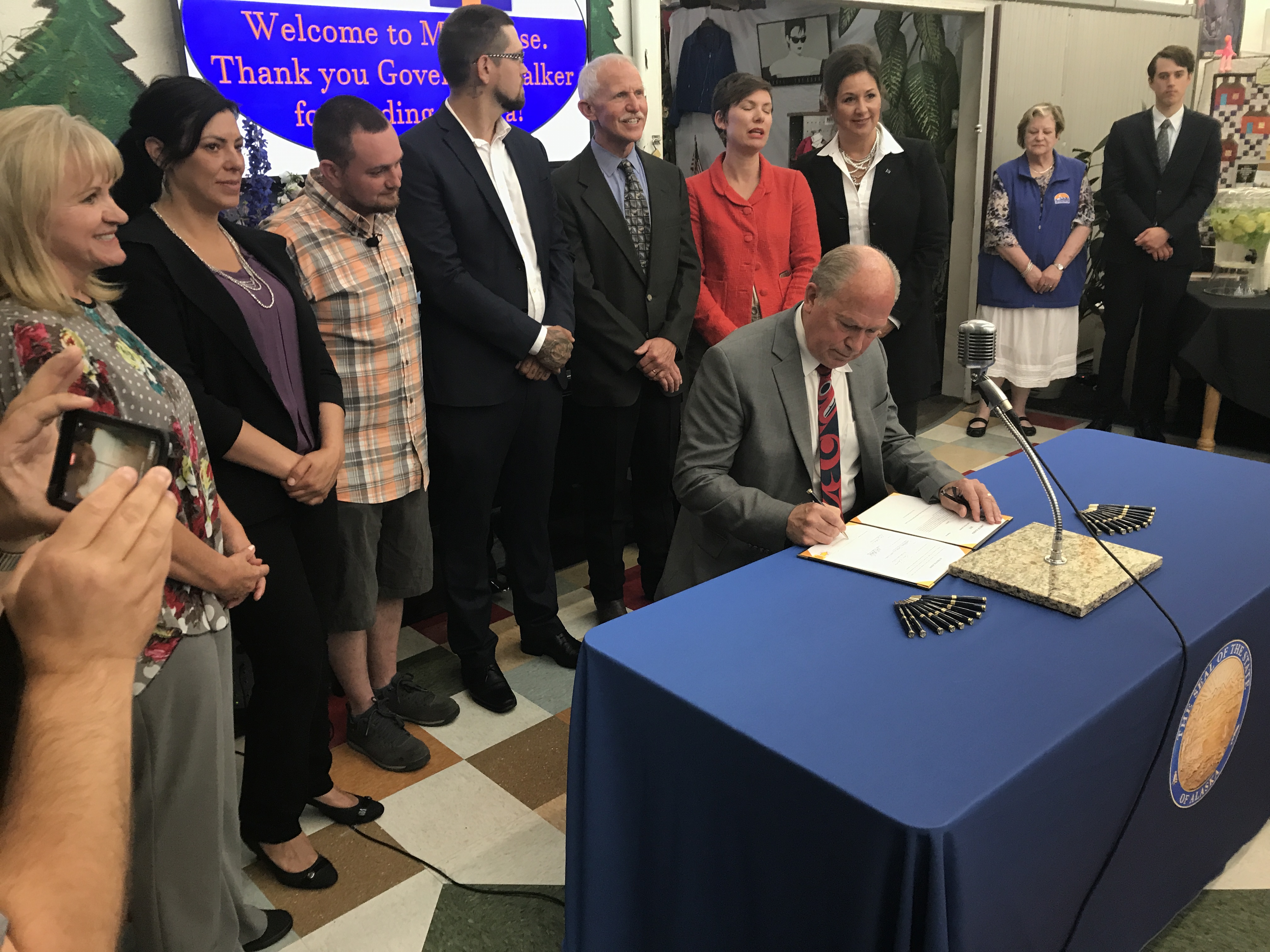
Gov. Bill Walker on Tuesday signed into law House Bill 159, which aims to help prevent opioid addiction before it starts. (Photo by Casey Grove/Alaska Public Media)

Alaska Gov. Bill Walker on Tuesday signed into law House Bill 159, which aims to help prevent opioid addiction before it starts.

The law puts new limits on opioids like capping new prescriptions at seven days-worth of pills, and requires training about abuse for medical practitioners.

Walker issued a disaster declaration for Alaska’s ongoing opioid epidemic in February.

On Tuesday, the governor was at a homeless youth center in Wasilla for the bill signing.

He said the the multi-pronged legislation is a good first step.

“The most important step is the next step, whatever that is,” he said. “This is something that, to get on top of the situation, you have to have an action plan and each day take a step you didn’t take the day before.”

Walker said more needs to be done, adding that at least 70 people have died in Alaska from overdoses attributed to prescription painkillers and heroin so far this year.

The state’s ongoing effort to prevent opioid addiction and overdoses falls under the purview of a team Walker assembled.

State Public Health Director Jay Butler leads that team and says prescriptions are only one part of the problem.

“Things that we still need to do address access to treatment for people with addiction, undoing some of the stigma that is associated with a variety of addictions, and then also getting into the more fundamental questions, such as how do we mitigate and prevent adverse childhood experiences, which we know is one of the drivers that puts people at risk for substance abuse and addiction,” Butler said.

When asked about the U.S. Senate’s vote on health care Tuesday, Walker responded by saying that repealing the Affordable Care Act without legislation to replace it would likely make it harder for Alaskans to get access to substance abuse treatment.

Walker said he will not support any move that will hurt Alaskans and is staying in close contact with the state’s congressional delegation.

“I don’t have a rear view mirror,” Walker said. “Today is the vote it is, but I want to continue to stay in close contact with them, which they’ve been very good about keeping in contact with my office, with me personally, about the legislation, because, you know, at the end of the day, the states are going to have to deal with this.”

Asked about how Alaska’s senators split on the vote and what his message is for the congressional delegation, Walker said he hopes to learn about what will be included in any upcoming health care legislation through his reports from the delegation.

Ekwok recovery program teaches subsistence skills to fight addiction

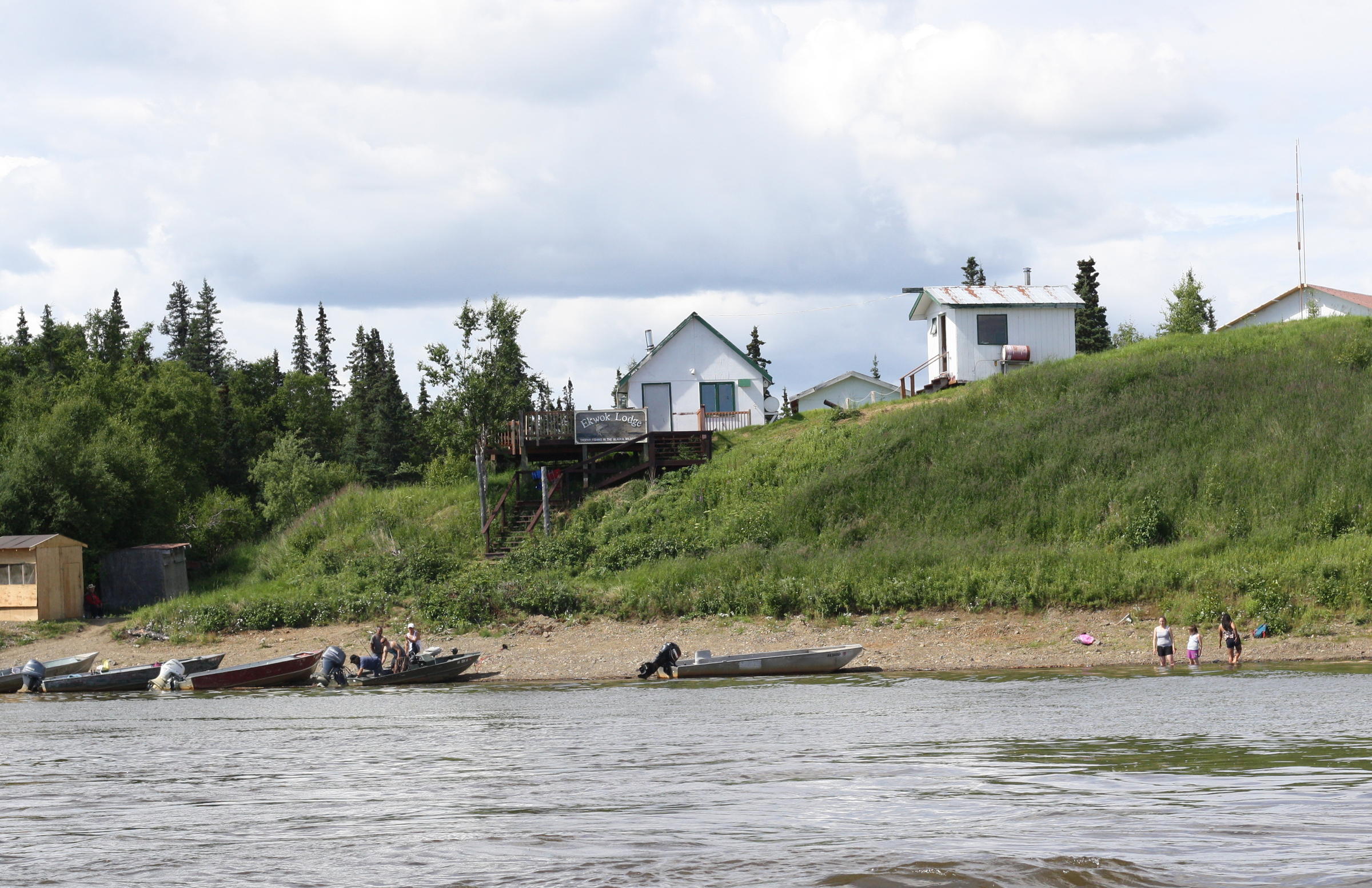
The Ekwok community arrives for a wellness camp graduation ceremony Friday. Ekwok Lodge, hosted the 30-day camp, where participants fought alcohol and drug addition with fishing and berry picking. (Photo by Avery Lill/KDLG)

Behind the Ekwok Lodge, the smell of soured salmon and pig muck hang in the air.

Despite the odor, Ben smiles shyly as he points out the nails in wooden boards that surround the pen, which stick out to deter bears.

“We feed them fish and other leftover foods. You hear their squeals because they’re being picked on,” he said as one pig lets out a shrill squeak when a bigger pig muscles it out of the way.

For the past month, this 22-year-old who grew up between Ekwok, Dillingham, Togiak and Anchorage participated in a substance use disorder recovery program.

The vision of the program was to teach subsistence skills as a part of the regimen. All the graduates are Alaska Native, and the idea is that cultural activities can be integral to recovery.

While raising pigs might not be a traditional subsistence activity in rural Alaska, these nine smelly animals gave the clients ample opportunity to practice one that is — fishing.

The program participants set nets every day to bring in enough fish to feed the pigs.

For two men, including Ben, this was their first time to be involved in subsistence fishing.

The three men graduating from the program helped daily with construction and maintenance on the lodge, which has been out of use.

They chopped wood and carried water up to the lodge from the river. They fished for salmon to feed to the pigs and to cut and smoke for themselves. They took a maqii every night, cleaning themselves in the steam bath.

“It’s fun picking berries, making akutaq from the berries that you picked, and taking a load off with cutting up fish. It was nice labor,” Ben said. “I’m slowly, slowly getting used to being clean and sober and looking forward to keeping it that way.”

The men in the program caught and smoked fish to take home with them after graduation. (Photo by Avery Lill/KDLG)

Friday was graduation day.

More than two dozen people, family members, the local priest and members of the Ekwok community gathered to celebrate the month the graduates have spent in recovery.

The mood was relaxed and celebratory in the main building of Ekwok Lodge.

It is a big room with large windows and wooden walls decorated with trophy fish. Children ran along the sides and between couches and wooden chairs as the graduates stood up to receive their diplomas.

The program’s leaders and community members congratulated and affirmed each one individually.

Several coordinators spoke of their own recovery from addiction. The graduates themselves spoke warmly about the program and about their commitment to sobriety.

Ekwok Natives Limited masterminded the program and put up the funds, which were substantial. ENL board president Jimmy Hurley Sr. estimates that the village corporation spent about $100,000 to cover the costs for all participants and to bring in Tutan Recovery Services, a private business from Anchorage, to run the program.

“Everybody used to put up fish, but the subsistence part, it brings pride in the people,” said Hurley, explaining ENL’s investment in the program. “If you’re a Native and you don’t know how to put away salmon, I think there’s a lot of embarrassment. That should be a part of every recovery, bringing culture into it.”

Getting this program off the ground was not without obstacles.

The power and water both went out to the lodge at points during the camp, and at least one person enrolled did not complete the program.

Overall, however, word from coordinators and the graduates was positive.

“At the end, they’re able to take some of their product home with them, and this will help sustain them when they’re looking for jobs,” Hurley said. “They’ll remember the camp, the sobriety they had here. They’ve got enough confidence in themselves right now that they could really go and take on a feat.”

This is Tutan Recovery Service’s first time operating outside Anchorage or incorporating subsistence as a component of their recovery program.

At a time when the governor has declared the epidemic of opioid use in Alaska a crisis, many are looking for more effective means of combating addiction. Relapse always is a concern in programs that address substance use disorder.

Tutan Recover Service program director Eydie Flygare anticipates that the subsistence component will be a help as the clients return home.

“When you find out where you came from and then you start doing some things you did when you were a kid. You’re just like, ‘Okay, yeah! I got it!’ The fact that a few of them are going back to do subsistence again, and that includes the spiritual aspect, I think absolutely it helps,” Flygare said.

As for Ekwok Natives Limited, Hurley said that the corporation board has been supportive of this year’s pilot run of the program.

However, the price tag is too large to continue without grants or outside funding. In the coming months, they will explore their options for continuing the wellness camp.

The graduates have all flown back to their homes in Anchorage and in Bristol Bay hopefully to continue their journey with sobriety.

They left with smoked fish in their bags for this winter and the skills to do it again next summer.

Dillingham man sentenced to 5 years after sixth DUI conviction

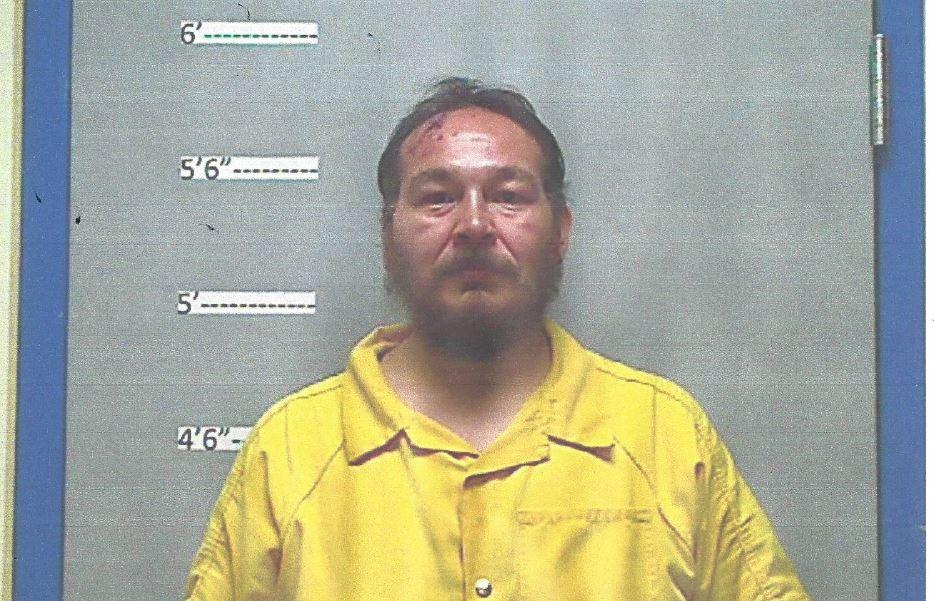
Basil Backford, 44, of Dillingham was sentenced to five years in prison Thursday for his repeated drinking and driving violations. (Photo courtesy Dillingham Police Department)
Basil Backford, 44, of Dillingham was convicted of his sixth DUI and sentenced to five years in prison. (Photo courtesy Dillingham Police Department)

A Dillingham man was sentenced to five years in prison Thursday for his repeated drinking and driving violations.

Basil Backford, 44, was ordered to begin serving his time immediately after the hearing at the Dillingham courthouse.

After a jury trial in March, Backford was found guilty of a DUI from September 2015 at Ekuk.  This was his sixth DUI conviction, three of which have been felonies for repeat offenses.

Anchorage District Attorney Clint Campion, who represented the state at the sentencing Thursday morning, emphasized the seriousness of the crime of DUI and the danger it presents to the community.

“I would note that Mr. Backford has not, as far as we have before us, has not hurt anyone but himself through his conduct,” he said. “It’s really lucky for him and for the communities that he’s lived in that he hasn’t hurt someone more severely.”

Campion used the risk posed by Backford’s repeated offenses as justification for his recommendation of a sentence of five years.

Defense attorney Duke Circle, formerly an ADA in the Dillingham office, represented Backford in the case.

He requested a sentence of three to four years based on his client’s improvement since the previous DUI convictions, the last of which was in 2004.

“He has maintained sobriety during periods of time. And as the state noted, as he’s gotten older: those periods of time have grown greater and greater,” Circle said. “His last offense before the one he is being sentenced on today was 11 years prior. Prior to that, within an eight year period, all the other offenses occurred.”

After hearing the arguments, Judge Tina Reigh sentenced Backford to five years flat and recommended that he be enrolled in the substance abuse treatment program while in prison. She also designated Backford as a “worst offender.”

In making her decision she said she considered the defendant’s past and whether or not probation was likely to help.

“There have been many many opportunities for treatment and rehabilitation,” Reigh said. “As far as I can tell, four of which, you successfully completed treatment, which is a really big deal, which is something to be commended. Maybe that’s one of the reasons you went so long, but we’re in the situation that we’re in right now.”

Reigh went on to say the sentence is meant to support isolation, deterrence, and community condemnation.

Backford was arrested in September 2015 after he drove recklessly and crashed his truck into a ditch in Ekuk.

After the wreck, he told a state trooper that he had had “seven or eight or maybe 12 Pabst Blue Ribbon beers” before driving and crashing the truck.

He was tried and convicted in March of this year.

Backford was in violation of probation when he committed the most recent offense and his driver’s license had been permanently revoked.

Earlier this summer, after his conviction but prior to sentencing, Reigh granted Backford release from custody so he could fish the season.

He violated the conditions of his release less than a week later by skipping out on his third-party custodian.

Site notifications
Update notification options
Subscribe to notifications