Family

Mat-Su homeschool program offers families variety in education options

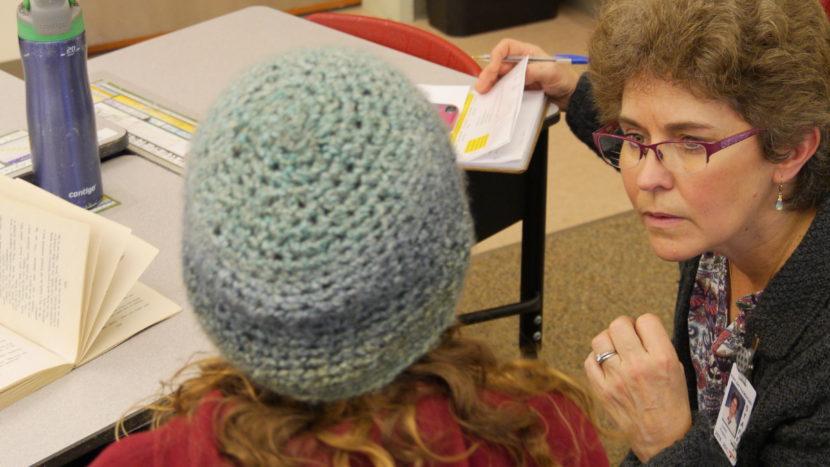
Shelby Whitecar, a Mat-Su Central School student, works on her assignment.
Shelby Whitecar, a Mat-Su Central School student, works on her assignment. (Photo courtesy of Debbie Whitecar)

The Mat-Su Borough School District has made diversity of education options for it students a high priority in recent years. One aspect of that diversity is helping homeschool parents integrate their students with options only available to students in brick and mortar schools in other areas.

Mat-Su Central is the homeschool program for the Mat-Su Borough School District and has just over 1600 students this year. Homeschooling offers another choice in education that many Upper Valley families prefer.

After speaking with a few Talkeetna families about why they have chosen homeschooling, the common response is that they want to spend more time together as a family.

Debbie Whitecar, who has one child at Talkeetna Elementary School and the other at home, likes the one-on-one teaching ratio.

“The homeschool takes a lot less time obviously because you are sitting there with one child and the one on one goes a lot quicker.”

Becky Moren is the North Valley Specialist for Mat-Su Central Homeschool Program. She says that flexibility of curriculum is another reason some parents choose to homeschool.

“The highlights of homeschooling are that you can dial into your individual child’s needs, whether that’s going ahead of maybe his or her grade level or maybe its needing to slow down and hit certain concepts in certain areas…you can really individual and personalize their curriculum based on what they need.”

She says that the curriculum is as wide and vast as you want it. While there are fundamental curriculum requirements and standardized testing for both types of education, the potential for electives for homeschoolers is limitless.

“Homeschoolers can personalize their child’s education whether that’s those who are fluent in German, they are taking foreign language, kiddos who delve into equine studies because they have horses, maybe another kiddo over here is delving into his gymnastic skills and maybe someone else might be exploring moving up in belts in martial arts.”

Sometimes parents may have to do their own homework on how to be better teachers for their children’s needs.

Debbie Whitecar says, “Now that my child is a getting a little bit older and maybe that’s the personality between the two, it’s definitely more challenging.

We like to stick to the lesson plans that Becky suggests and that has worked very well for us.”

Mat-Su Central students also have the option to take a few classes at Talkeetna Elementary or Su Valley High. That allows them to interact and socialize with their peers.

Debbie Whitecar’s daughter, Shelby goes to Talkeetna Elementary for special electives.

“She goes twice a week and she likes art, music, STEM and sports, PE.”

Becky Moren plays a diverse role for Mat-Su Central. She is the Science, Technology, Engineering and Math, or STEM, teacher at Talkeetna Elementary. She also serves as an advisor.

“But as the kids get older, my roles changes more into that of a counselor in preparing them for earning their credits towards that graduation diploma but as well as planning for life after high school, whether that’s a career tech path or a college or university path and making sure that their transcript is mapped.”

Some families choose to homeschool for only part of the year. The Burnside family values traveling with their kids as an education in geography and history. Once they return, the parents are putting the kids back on the school bus for Talkeetna Elementary for the second half of the year.

Third-grader Aliana Burnside isn’t too troubled by the transition.

“Well, I love literature. I love every special and all of the teachers are really nice. I am really happy that all of my friends are there and I like that I have more playdates.”

Between the traditional school environment and Mat-Su Central, there is no shortage of educational options for Upper Valley students and their families.


Alaska Pioneer Homes escape state budget cuts, for now

"The Prospector" statue stands in front of the Sitka Pioneers Home entrance, which was under repair Sept. 20, 2016. The homes reduced admissions as budgets were cut. (Photo by Ed Schoenfeld/CoastAlaska News)
“The Prospector” statue stands in front of the Sitka Pioneers Home entrance, which was under repair Sept. 20, 2016. The homes reduced admissions as budgets were cut. (Photo by Ed Schoenfeld/CoastAlaska News)

When the Alaska Legislature convenes later this month, it will consider a budget that makes no further cuts to Alaska’s Pioneer Homes. Final decisions are months away.

But Gov. Bill Walker’s spending plan would help level the senior-care program’s funding after several years of reductions.

Juneau Sen. Dennis Egan’s heard a lot from his constituents about cutbacks at Alaska Pioneer Homes. And he understands their importance, from personal experience.

“My mother was a tenant for over five years. And I know the good that Pioneer Homes do,” he said.

His mom, former Alaska First Lady Neva Egan, was a lot like many in the six homes, in Southeast and the Railbelt.

“She had dementia and she was always very confused. And the folks here at the Juneau Pioneer Home facility were just incredible folks,” he said.

Juneau Sen. Dennis Egan addresses a conference in 2014 in Juneau. (Photo by Ed Schoenfeld/CoastAlaska News)

Egan, a Democrat representing about half of Southeast, is happy to see the governor plans no more cuts.

Walker’s operating plan calls for spending about $51 million in state money during the fiscal year beginning in July. That’s a slight increase over the current budget year, which itself was a small boost from the previous one.

Pioneer Homes Division Director Vickie Wilson said they lost capacity because of  budget reductions.

“No program wanted to be cut, but we all felt that we were doing our share. But it did result in having a lower number of beds available that we could provide care in,” she said.

Learn about assisted living at Alaska Pioneer Homes.

One way to look at it is the total number of residents. That dropped close to 10 percent over most of the past three years, ending in the fall.

Another way is how quickly beds are filled when residents die or move.

In the 2015 fiscal year, about 97 percent had new occupants. But the following year, it was only about 83 percent.

Wilson said that’s because Pioneer Homes spend about 80 percent of their budget on staff who tend to residents’ medical needs and provide them with meals and other essentials.

“Many positions, we had no funding for. So we’ve lost many of our staff through the cuts that we had,” she said.

Staff losses, many through attrition, have slowed admissions at the homes, in Ketchikan, Sitka, Juneau, Anchorage, Palmer and Fairbanks.

The active waiting list, for those ready to enter any of the facilities, is more than 650. An inactive, placeholder list is eight times as long. Wilson estimates about three-quarters of those on the active list need the highest level of care, which requires more staff.

Learn about life at the Sitka Pioneer Home.

She said open positions are being filled, just not as fast as they used to.

“They are being held longer. But that could be a month to six weeks,” she said. “Not turning around and hiring tomorrow. And it allows us to be able to manage.”

There’s no guarantee the governor’s Pioneer Homes budget will remain untouched as it works its way through the Legislature.

Sen. Egan said he’ll be among those pushing for the funding.

“I hope the heck it does. I hope it makes it,” he said.

And has Egan signed up and added his name to the waiting list?

“Oh, absolutely. I signed up on my 65th birthday,” he said, admitting his wife, Linda, took care of the paperwork. He added he hopes he doesn’t need go to into a home.

Nome-based non-profit hopes to revitalize Inupiaq with ‘language nest’

Marjorie Tahbone, the new vice chair of Inuusiq, Inc., teaching an Inupiaq class at the Nome high school in 2014. Inuusiq, a new non-profit, is creating a language nest in Shishmaref to revitalize Inupiaq culture and language. (File photo by KNOM)

Coming to the region at the start of the new year is a “nest” project focused on Inupiaq language revitalization.

A Nome-based non-profit organization called Inuusiq Inc., which started up this year, is spearheading the project.

“So, Inuusiq Inc. was created by four young Inuit women,” Innusiq chair Iviilik, or Hattie Keller said. “We started this non-profit because we felt like we’re lost, there’s a piece of us that is missing. We felt disconnected as Native people from our culture.”

For those who don’t speak Inupiaq, the word inuusiq means “Life, or our way of life in Inupiaq,” Keller said. “Its sole purpose is to reclaim what we feel is lost, and that’s our language, our culture, our values, our practices.”

Many Native Alaskans’ sense of loss of culture or language started generations ago.

It had a lot to do with the trauma Native people experienced while in school, according to Keller.

“I visited Shishmaref in April,” Keller said. “I spoke to an elder, and I asked her: how did you go to school and how was it, and she told me when she went to school they only were able to speak English. They were hit on the hand, or put outside and made to stand outside all day if they spoke any Inupiaq. So, this is two to three generations before me.”

Keller said it takes about three generations of people to integrate a spoken language into a family, so that’s how many generations this language nest will use at one time.

“In 2017, it’ll be tangible,” Keller said. “We’ll have an Inupiaq linguist and a teacher or child care provider that will help the linguist. In turn, the child-care provider/teacher will learn from the linguist while teaching our children, because most likely, our Inupiaq linguist will be an elder. So that’s three generations: the linguist, the next generation is a teacher, and then, the new generation is our children, (ages) zero to 3.”

Keller said for now, this language nest will be based in Shishmaref and will focus on children that are up to 3 years old, kind of like a day care facility but with some differences.

“What makes it a language nest instead of just a day care is that it’s going to provide the parents and the grandparents with learning materials,” Keller said. “Right now, we are renting a building from the city of Shishmaref; it’s the old Northwest campus building. And in future locations, we would like to go throughout the region; progressively, we’ll move to the children as they grow older in different grades. Hopefully, we’ll go to preschool next and then, after preschool, Headstart.”

Ultimately, Keller’s vision for Inuusiq’s role in language and cultural revitalization in the region is much bigger.

She said with enthusiasm, “So, my overall goal in, let’s say, the next 50 years, is that we speak four languages. We speak English, we speak Inupiaq, we speak St. Lawrence Island Yupik, and Yupik.”

Inuusiq has already started hiring employees for 2017, including teachers and linguists, to begin working at the new language nest located in Shishmaref.


Ikea to pay $50 million over 3 toddler deaths from dresser tip-overs

Ikea has reached a $50 million settlement with the families of three toddlers who died after unsecured Ikea dressers tipped over, according to lawyers for the families. The furniture giant confirms a settlement has been reached, but describes it as “tentative.”

The money will be divided evenly between the families, the lawyers say. The settlement also calls for Ikea to meet voluntary safety standards for dressers, donate $150,000 to children’s hospitals and $100,000 to a children’s safety organization, and to invest more money in its “Secure It” program raising awareness about tip-over risk.

The settlement comes after three toddlers died in the past three years from tip-over incidents involving unsecured MALM dressers. Curren Collas and Camden Ellis died in 2014, prompting Ikea to launch the “Secure It” program and offer free wall-mounting kits to consumers.

Then Ted McGee died the same way in February. All three children were about 2 years old when they died.

Ikea issued a voluntary recall of 29 million chests and drawers a few months later.

The families brought a wrongful death lawsuit against the company, alleging that Ikea “had consistently refused to meet voluntary national safety standards” and “refused to re-design its furniture products to be more stable and tip-resistant,” according to the family’s lawyers.

Ikea confirmed with NPR that a “tentative settlement has been reached” in the case, but said it would not comment further because the deal had not been approved by the court.

Curren Collas’ mother, Jackie Collas, told the Philadelphia Inquirer it’s a relief the case is over, but that the settlement doesn’t bring closure.

“Your life, it will always be cut in half,” Collas told the newspaper. “Even if I live until 100, it’s going to be before Curren and after Curren.”

As NPR reported this summer, tip-overs have caused dozens of accidents, in addition to the three deaths in this case:

“The dressers and chests in question can be pulled over by a child if they aren’t securely attached to a wall. When multiple drawers are opened, or if a child opens drawers and attempts to climb on them, even dressers that seem too heavy for a child to move can become vulnerable to tipping. (Seemingly stable televisions can pose a similar hazard.) …

” ‘The products are not designed to be freestanding; they are designed to be attached to the wall,’ Ikea U.S. President Lars Petersson tells NPR.”

The Inquirer has reported extensively on the issue of tip-over hazards; you can find much more information on the accidents in its 2015 investigative piece.

Copyright 2016 NPR. To see more, visit http://www.npr.org/.

Are there head lice in Juneau schools? Yes, but …

Nurse Luann Powers tries to check a student's blood sugar in a classroom of Auke Bay Elementary, Thursday.
Luann Powers tries to check a student’s blood sugar in a classroom at Auke Bay Elementary School on Thursday. (Photo by Quinton Chandler/KTOO)

Luann Powers is the school nurse at Auke Bay Elementary School. She’s in a class checking on a student whose blood sugar is too low – which can be dangerous, unlike head lice.

Luann Powers is a nurse at Auke Bay Elementary School.
Luann Powers is a nurse at Auke Bay Elementary School. (Photo by Quinton Chandler/KTOO)

“Well, I guess when you think about bugs in your head, it’ll creep anybody out,” Powers said. “People are embarrassed when they have head lice, and it can take away — because of the time it takes for treatment — it can take away from a student’s time in the school.”

Head lice are an ongoing problem for Juneau schools and Powers said this is a common time of year to find them. She said lice are mostly a social problem.

“Head lice are a little creature that is spread through contact … close contact of, it could be hats, combs, any kind of headgear, clothing, bedding,” Powers said.

Female human head louse, Pediculus humanus capitis. (Creative Commons photo by Gilles San Martin)

The creepy crawlers don’t mean an automatic ticket home. Only live lice can keep a kid out of school and Powers said when they’re found, usually the host student can stay through the end of the day.

“Because if they’ve had them in the morning, they’ve probably had them for a few weeks anyway once they’re noticeable,” Powers said.

Parents are asked to get rid of the lice when they get home and then the student will be checked when they return the next day. If there are still live lice, the kid goes back home until they’re gone.

“They are a nuisance,” Powers said. “They’re not a health hazard. They can create discomfort because they need to feed off a human blood supply to survive. They can create a lot of itching, but not always.”

Scratching can lead to infection if the kid’s fingernails are dirty. She said it’s especially important to educate parents and explained how to get rid of lice using special hair products.

“Over the counter products that families use, such as Nix or RID and LiceMD is another product in the community,” Powers said. “It’s a cream rinse or a type of shampoo that they are supposed to leave in the hair for a certain period of time and then rinse it out, and then it’s a matter of combing out the nits.

Special combs and products made to remove lice and lice eggs from hair.
Special combs and cleaner made to remove lice and lice eggs. (Photo by Quinton Chandler/KTOO)

Nits are lice eggs. Powers said nits aren’t enough to force kids out of school, but they aren’t welcome either. Powers said some products claim to remove them, but she still advises parents to literally nitpick their kids using special combs to take them out. This can take as long as two hours.

Powers said people who catch head lice are often considered dirty, but that’s not accurate. She said lice can be caught by anyone and kids tend to catch them outside of school.

“As a matter of fact, I used to work for a pediatrician a few years ago and he said, ‘Gosh, if you haven’t had head lice, you haven’t had friends,’” Powers said.

Powers said when she finds lice, she tries to be discreet and downplays the situation for the kids’ self-esteem. But she said in her experience, it’s usually the adults who overreact.

ACLU sues Alaska over abortion restrictions

Blind Lady Justice with scales
(Creative Commons photo by Marc Treble)

The ACLU of Alaska Wednesday filed suit against the state challenging restrictions on second trimester abortions. Planned Parenthood Votes of the Great Northwest and Hawaii and the Center for Reproductive Rights joined ACLU as plaintiffs.

Joshua Decker, ACLU Alaska executive director, said three ’70s-era restrictions are obstacles to women’s reproductive health, because they ban second trimester abortions in out-patient clinics and force some women to seek abortions out of state.

“The reason we are doing this is because abortion is incredibly important,” Decker said. “One out of every three women will have an abortion in her lifetime. The number one reason in terms of women’s ability to fully and equally participate in lives of Americans in terms of economic prospects, in terms of jobs, in terms of education. It is the ability to decide by themselves and in consultation with their physicians, when and if to have a pregnancy be carried to term, when and if to have a child, when and if to become a parent.”

The restrictions require Alaska abortion providers to get a second opinion, to have blood and plasma supplies on hand at the clinic, and to have an operating room immediately available.

Tara Rich, legal and policy director for ACLU Alaska, says the suit challenges the constitutionality of the restrictions under Alaska Constitution provisions for privacy, equal protection and due process.

“So the Alaska Supreme Court is a much stronger test than the federal constitution,” Rich said. “Which is that an infringement on a women’s right to abortion cannot present an undue burden to that woman’s right. So we are challenging these regulations under the Alaska Constitution, not the federal constitution.”

Jessica Cler, public relations manager for Planned Parenthood Votes Northwest and Hawaii, said Planned Parenthood sends about 30 women a year out of state to its clinics in Idaho and Washington state for second trimester abortions.

State Department of Health and Social Services public information officer Rebecca Lynch said the department is not issuing a statement on the legal challenge at this time.

ACLU Alaska joined with ACLU in Missouri and North Carolina in filing lawsuits against abortion restrictions in those states on Wednesday.

Site notifications
Update notification options
Subscribe to notifications