Mental Health

Gov. Dunleavyʼs bill is unlikely to pass but still could hurt Alaska’s LGBTQ students

Students head upstairs during a break between classes at Thunder Mountain High School on Monday, August 16, 2021, in Juneau, Alaska. (Photo by Rashah McChesney/KTOO)

On Tuesday, Gov. Mike Dunleavy announced a bill that would restrict LGBTQ students’ ability to live in accordance with their gender identities in Alaska schools. 

The bill — which would require parents to sign off on name and pronoun changes and would ban transgender students from using bathrooms that align with their gender identity — is not likely to pass. Senate President Gary Stevens, R-Kodiak, says he doesn’t see a lot of support for it. 

“It takes 11 members to pass something on the floor,” Stevens said. “I don’t want to waste a lot of time on a bill that has no chance of passing the floor.”

But Amelia Hanrahan, a Juneau mental health clinician who works with queer and trans youth, says that even a failed bill could affect the way trans students are treated by their peers. 

“I think just announcing this and validating this type of rhetoric against the queer and trans community is dangerous,” she said. “I can draw pretty straight lines from increases of this stuff in the media to bullying happening in our hallways here in the schools.”

Hanrahan, who is queer and trans herself, says there’s no scientific basis for the proposal.

“It was really conspicuous that the governor doesn’t cite any professional organizations that support this idea because there are no legitimate professional organizations that support this idea,” Hanrahan said. 

Hanrahan said that the American Psychological Association, as well as its counseling and psychiatric counterparts, support youth receiving gender-affirming care and support.

Stevens said Dunleavy’s bill will get heard, but the Senate majority is prioritizing bills that are more in line with the middle of the political spectrum.

The unseen driver of Alaska’s record jail deaths: Suicide

Mike Cox looks through family photographs of his brother, James Rider, whose death by suicide was discovered at Mat-Su Pretrial Facility in September. (Marc Lester / ADN)

Last summer, it seemed like James Rider was turning a corner.

The 31-year-old from Wasilla had spent years struggling with drug addiction, accumulating a low-level criminal record and derailing a career in construction.

He’d finally started taking steps to address his substance abuse problem, and his family sensed change might be coming.

Then, in August, he was booked into the Palmer jail on charges that included trespassing and removing his ankle monitor. Ten days later, he was dead.

Rider’s older brother, Mike Cox, is still trying to piece together what happened. When Rider got to Mat-Su Pretrial Facility, he voiced feelings of hopelessness and was placed on suicide precautions. His brother says he was stripped and put in an anti-suicide smock in a padded cell.

In a jailhouse phone call, Rider told his brother he found the experience humiliating. He vowed to never mention feeling suicidal to jail staff again.

James Rider, jail death
Mat-Su Pretrial Facility in Palmer, photographed on Feb. 15, 2023. (Marc Lester / ADN)

A few days later, Rider was taken off suicide precautions and — for reasons his family still doesn’t understand — placed alone in a cell. He hanged himself.

In 2022, a record 18 people died while in custody of the Alaska Department of Corrections.

Seven of those deaths, or about 40%, were suicides, according to the department. That’s also a record.

Until now, little has been publicly known about the circumstances of these deaths and the events that preceded them.

Corrections department officials have consistently said they can’t release details about individual deaths because of medical privacy laws.

But an analysis by the Anchorage Daily News sheds new light on in-custody deaths in Alaska. The Daily News obtained and reviewed Alaska State Troopers investigation reports and medical examiner records, and spoke with families, advocates and prison officials.

The analysis of in-custody deaths shows that of the seven suicides:

• Two occurred in housing units where inmates with mental health concerns are placed for heightened monitoring.

• Two people killed themselves while in solitary confinement in “segregation” or “special management” units.

• In one case, a young woman’s suicide went undetected by guards for more than three hours, despite seven “wellness checks” to her cell. She was being held in a unit meant to provide a hospital level of psychiatric care.

• Two men who’d recently been on suicide watch were moved to cells alone, a scenario the department’s own chief of mental health says is not recommended. One of the men had just been cleared from suicide watch by a psychiatrist.

The trooper investigation reports also reveal the circumstances of some of the deaths classified as “natural.” Those include five deaths due to terminal illness, a man who died from pneumonia related to COVID-19 and a man who died from a seizure disorder. The Alaska Department of Public Safety did not release six incident reports for cases that had not been finalized.

The suicides unfolded at a startling pace: In June alone, four people took their own lives in four different prisons, from Nome to Seward to Eagle River to Anchorage. One death per week. All of the suicides involved people who were on pretrial status in jail, accused of crimes for which they had not yet been convicted.

The sheer number of deaths is alarming, said A.E. Daniel, a Missouri-based forensic psychiatrist who has written several books on prevention of suicide in correctional facilities. “It should enable the administrators to take a look at their program and see where they went wrong.”

Officials with the Department of Corrections say they are reviewing Alaska’s policies on suicide prevention. But the review hasn’t identified a unifying issue, said Adam Rutherford, acting director of the Division of Health and Rehabilitation Services.

“I wish I could say that there was,” he said. “Because … then you could just fix that issue and prevent it from occurring again.”

The Department of Corrections had an independent investigative unit that made inquiries into deaths, including suicides, from 2016 to 2018. The newly appointed commissioner, Nancy Dahlstrom, eliminated the unit early in her tenure after the election of Gov. Mike Dunleavy, citing cost savings.

National increase in suicides at correctional facilities

Experts agree that prisons have a legal, medical and ethical duty to provide physical and mental health care for incarcerated people, including preventing suicides.

Yet suicide in correctional facilities is a mounting national crisis.

Self-inflicted deaths are the leading cause of death in jails nationally, according to a study by Florida Atlantic University, with a rate three times higher than among the general public.

Moreover, such deaths among incarcerated people have been rising over the past two decades, and have increased sharply around the country, according to data from the Bureau of Justice Statistics. Suicide rates among incarcerated people rose during the pandemic.

The reasons aren’t clear, said Daniel.

“One of the reasons could be the pandemic, which caused significant isolation” in jails and prisons, with quarantine rules limiting contact, visits and the kinds of classes and therapy available, he said.

The stretched labor market also led to staffing shortages for correctional employees that monitor inmates.

Correctional systems can — and must — prevent suicides through policies and training, Daniel said. The most common mistakes that corrections departments make come down to failures of screening and identification of a suicide risk, and of inadequate monitoring.

First, Daniel said, it’s important to have mental health professionals screen prisoners for suicidal risk — especially during the first few days in jail. People who are intoxicated or coming off drugs are at especially high risk.

Most of Alaska’s in-custody suicide deaths of 2022 were people who had only been incarcerated a relatively short time while awaiting trials. Some were detoxing from drugs or had a history of addiction, according to Megan Edge of the ACLU of Alaska, who has talked with families of some of those who died. And about 65% of all of Alaska’s inmate population has a diagnosable mental illness, according to corrections officials.

“Those are really complicated issues for somebody to have and go into such a traumatic setting, when they’re not going to get the resources that they need,” Edge said.

James Rider

Rider was a “typical Valley kid” who grew up in a rambling Houston home with two siblings, his brother said. His family also spent time living in King Salmon and Naknek, where they commercial fished in Bristol Bay. As an adult, he found work painting barges, cleaning boats, doing construction and working on motors. He liked to hunt, fish and ride four-wheelers. He had three kids, and a fiancee.

James Rider, jail death
A box contains the ashes of James Rider, whose death by suicide was discovered in September at Mat-Su Pretrial Facility. It’s held by, from left, Rider’s fiancee Heather Fisher, his mother Theresa Martin and his brother Mike Cox on Feb. 15, 2023. (Marc Lester / ADN)

He was the baby of the family, a people-pleasing joker who loved attention, his brother said.

“He was so damn funny,” Cox said. “He made any situation something to laugh about.”

On Aug. 30, Rider was arrested by troopers for trespassing, cutting off his ankle monitor and violating the terms of his release in another case. Cox said Rider knew he had an outstanding warrant and cut off his ankle monitor on purpose, knowing he’d go to jail.

“He wanted to get in and start serving his time for his warrant,” Cox said.

He’d spent short stints in jail before, for low-level property crimes. But once he was at Mat-Su Pretrial, he learned he was facing serious felony charges that could lead to years in prison. Bereft, he told jail officials he was feeling suicidal and found himself on strict precautions.

“He said it was completely humiliating to be stripped down naked and put into a padded room,” Cox said. “He told me on the phone, he would never say s–t to these correctional officers about being suicidal again after the way he was treated.”

Off precautions, he was moved to a cell with roommates. Then on Sept. 5, Rider was transferred to a cell in the “Charlie Dorm,” where he was left alone. His brother isn’t sure why — the Palmer jail is notoriously overcrowded. Charlie Mod is a “segregation unit,” but it’s not clear if Rider was in punitive solitary confinement or he had asked to be placed in a cell alone.

James Rider, jail death
James Rider, who died while in custody at Mat-Su Pretrial Facility. (Family photo)

That day, at 6:28 p.m. guards were alerted to a “possible suicide,” according to a State Medical Examiner’s Office investigator narrative shared by Cox. Rider had hanged himself from his bunk bed with a bedsheet. The narrative is the only documentation Cox has been able to get about the circumstances of his brother’s death. Rider was taken to Mat-Su Regional Medical Center.

Cox remembers the night well: The family had just gone to the Alaska State Fair.

“Troopers came out early in the morning and told us that there had been an accident at the jail,” he said. “James was in the hospital. By the time we got to the hospital, they told us that he committed suicide.”

At the hospital, his family found him with brain damage and no chance of recovery. They started the process to donate his organs.

As Rider was wheeled into the operating room, “the whole hospital lined up on both sides to pay their respects to him,” a tradition when an organ donation happens, Cox said. “The only good thing that came out of that whole thing was that one moment: James being the star again, making other people feel good with his donation.”

Lawsuits

Alaska’s corrections department has a history of failing to prevent suicides.

The most high-profile case: Israel Keyes, the federal inmate charged in the death of an Anchorage teenager and suspected of being a serial killer. Investigators with the FBI were in a monthlong process of interrogating Keyes in December 2012 when he was able to kill himself in a maximum-security cell at the Anchorage Correctional Complex.

The state paid hundreds of thousands of dollars in a lawsuit settlement and damages to the family of Mark Bolus, who died by suicide in the department’s custody.

Bolus hanged himself in solitary confinement at the Anchorage jail in 2014.

Maria Rathbun, Mark Bolus
Maria Rathbun holds a picture of her son, Mark Bolus, in her lawyer’s office Friday, Dec. 1, 2017. Rathbun sued the state after her son, a paranoid schizophrenic, completed suicide while incarcerated at the Anchorage Correctional Center in 2014. A jury ruled on Nov. 22, 2017, finding that the state’s negligence led to his death. (Loren Holmes / ADN)

His family had thought Bolus, who had schizophrenia, would be safer in jail than anywhere else. Bolus’ mother, Maria Rathbun, sued. A jury found that the department was negligent, and that Bolus’ was impaired by mental illness and “not capable of exercising due care” for himself.

Rathbun was awarded $650,000 in the case.

The department currently faces at least two current lawsuits on behalf of women who attempted or died by suicide while incarcerated in 2020. Both suits allege that the department failed to take adequate precautions.

Gabby Chipps was arrested for the first time on Aug. 23, 2020, in Homer, according to a lawsuit filed by her family. Despite being on suicide precautions and classified as “mentally unsound,” she was placed in solitary confinement, sometimes called “administrative segregation,” at Wildwood Correctional Facility in Kenai, the lawsuit says.

A correctional officer found her hanging from a bedsheet. It took more than five minutes for other workers to respond and cut her down. By that time she had suffered brain damage.

The lawsuit lays out her disabilities in stark detail: “Gabby has impaired vision and cannot see, Gabby cannot read, Gabby cannot speak, Gabby cannot feed herself, Gabby cannot walk, Gabby cannot bathe herself, Gabby requires a full-time caregiver for the rest of her life.”

The 21-year-old is now cared for by family members.

In December 2020, Natalie Andreaknoff had been in jail for less than a day when she took her own life at Hiland Mountain Correctional Center, according to a lawsuit on her behalf. She was placed in a cell beyond the range of surveillance cameras, the lawsuit alleges.

The corrections department “knew or should have known that placing Ms. Andreaknoff in inadequately monitored confinement would exacerbate her mental illness, drug withdrawal symptoms and risk for suicide.”

Both lawsuits assert that the women were misclassified by the department, and housed under conditions that made it easy and foreseeable they would attempt suicide.

The Alaska Department of Law said both cases are “active litigation.” The department didn’t offer a further response to the allegations in the lawsuits, saying it would answer in court.

Trooper investigations

Trooper investigations of the in-custody deaths that occurred last year obtained by the Daily News describe instances in which inmates were not monitored to the department’s policy of irregular 15-minute wellness checks, or when those checks didn’t reveal what was really happening in a cell — such as in the case of Kitty Douglas.

Hiland, Hiland Mountain, Hiland Mountain Correctional Center, Prison, Prisoners, Women’s Prison, Womens Prison
Hiland Mountain Correctional Center. (Loren Holmes / ADN archive)

In March, Douglas, who was 20, was in Hiland Mountain Correctional Center’s acute mental health unit — one of two units statewide that’s supposed to offer a level of care comparable to the Alaska Psychiatric Institute.

Douglas, originally from White Mountain, had been in jail for six days on a misdemeanor criminal mischief charge. She was accused of breaking the windshield of a van in the Sullivan Arena parking lot. Her bail had been set at $100.

Video of Douglas’ cell showed her lying down in her bunk bed just before 4 p.m., according to the trooper report. Her last movements were captured about 10 minutes later, the report said. Over the next hours, correctional officers made seven “wellness checks” on the cell.

But no one realized she was dead for three hours, until 7:18 p.m., when a correctional officer came by to distribute snacks.

The Alaska State Troopers report says the suicide was missed in wellness checks because correctional officers thought Douglas was sleeping under sheets.

A note found in her cell said she wanted to be buried in White Mountain.

William Ben Hensley III was in a cell alone at Goose Creek’s high-security “special management unit” in October when a guard checked on him at 1:37 a.m., then returned to his office to do paperwork, according to a trooper investigation into his death.

The next check didn’t happen until 2:20 a.m. — some 43 minutes later. Hensley III had placed a sheet up to block the view before killing himself.

Every Alaska in-custody suicide death in 2022 involved a ligature used for hanging or asphyxiation. Nationally, about 90% of self-inflicted deaths in jails are due to hanging and self-strangulation, according to the Bureau of Justice Statistics.

The corrections department has taken steps to remove risks in the design of housing units, Rutherford said. Suicide precautions can also involve use of a “suicide prevention sleep system” and “suicide smock,” both made from tear-resistant fabric.

But the department probably can’t completely eliminate ligature risks, said Rutherford.

“Someone can harm themselves with their clothing,” he said. “You can’t go to the extreme of taking everything away.”

Change

Earlier this month, Department of Corrections Commissioner Jen Winkelman testified about the deaths to the Alaska Legislature in Juneau.

The 18 deaths are too many, she said. “They are somebody’s brother, somebody’s sister, they are somebody’s family member,” she said.

Edge, of the ACLU, heard reason for hope in Winkelman’s answers.

“She acknowledged that there were too many,” Edge said. “And she said they are investigating them.”

The ACLU wants to see the department return to having its own independent internal affairs unit. When the department had one, from roughly 2016-2018, deaths were viewed critically as a chance to improve procedures, in a way Edge says doesn’t happen today.

“When things like suicide happened, it wasn’t, ‘Well, that was a suicide. So there’s nothing we can do about it.’ They were investigating what happened to allow that to happen.”

“Like, what could have saved that person’s life?”

For their part, people responsible for health care in Alaska’s corrections facilities say they urgently want to find ways to prevent suicide.

The department has joined a national effort by the American Foundation for Suicide Prevention to decrease suicides by 20% by the year 2025 and training more staff in “mental health first aid.”

Rutherford also wants people to speak more openly about suicidal thoughts.

“Within a correctional facility there’s a myth that if you talk about (suicide) it will happen,” he said. “It’s actually just the exact opposite.”

Corrections officials also say they wish people on the outside could see more than they do: Only what goes catastrophically wrong inside a prison makes the news, said Dr. Robert Lawrence, the chief medical officer for the department. Not the routine health care that inmates get, not the suicide attempts thwarted.

Mike Cox says his brother’s death has made an unlikely activist out of him.

He still has questions. Basic ones, about what exactly happened to Rider and why. And broader ones, about what the Alaska Department of Corrections will do to prevent deaths of despair within its facilities.

“I think even if I got the answers I would still be angry,” he said.

“It’s beyond my brother now.”

This story originally appeared in the Anchorage Daily News and is republished here with permission.

Juneau organization will expand amid youth mental health crisis

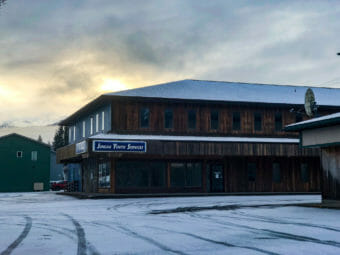
The former Juneau Youth Services building is slated to be renovated for JAMHI’s new facility. (Photo by Yvonne Krumrey/KTOO)

JAMHI Health & Wellness will have a new facility thanks to $870,000 that Sen. Lisa Murkowski earmarked for the project in the federal omnibus spending bill.
The organization says the project will help them serve more youth amid a growing mental health crisis that’s led to a waitlist for services.

Rachel Gearhart leads operations at JAMHI, which provides care for people with severe mental health needs. She says the need is urgent. 

“If you are asking for services, you’re not asking for services a week, three weeks, a month down the road. You want services now,” Gearhart said. “So once you’re ready to do that, you want to be able to strike while the iron is hot.”

In December, the Department of Justice released findings that Alaska is failing to provide behavioral health services to youth “in settings appropriate to their needs” — leading to children being institutionalized who don’t have to be. Gearhart agrees that when patients can’t get the treatment they need in town, they may have to go to Anchorage or the Lower 48 for inpatient care. 

The new facility — which will be in the former Juneau Youth Services building on Jordan Avenue — should help with that. There will be more offices where providers can see patents individually, and larger rooms for group therapy and play therapy like yoga. JAMHI will continue to use its current location on Glacier Avenue for administrative offices.

Gearhart says the organization is focused on making sure they won’t outgrow the new building, too.

“We’re spending the time right now to work with the architect and the providers and leadership at JAMHI to really decide, what does this building need to look like?” she said.

Gearhart said she doesn’t know when the money will land at JAMHI’s door, but the renovations will hopefully be completed by summer. 

Correction: This story has been updated with the current name for JAMHI Health & Wellness. 

Alaska children are being institutionalized when they don’t have to be, Justice Department says

""
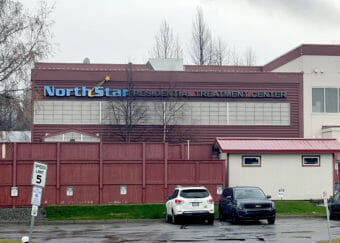
North Star Residential Treatment Center on DeBarr Road in Anchorage. (Casey Grove/Alaska Public Media)

The U.S. Department of Justice has released the findings of an investigation into the lack of adequate mental health services available to children in Alaska. The investigation found that youth in the state were forced to endure unnecessary and unduly long institutionalization in locked facilities because no alternatives exist.

Michelle Theriault Boots is an investigative reporter with Anchorage Daily News and wrote about the DOJ report.

Listen:

The following transcript has been lightly edited for clarity.

Lori Townsend: Department of Justice investigators traveled to Alaska twice. They toured facilities here and interviewed families, children and staff. What did they find?

Michelle Theriault Boots: The investigators, in their report, describe finding a lot of children and teenagers who are in facilities like North Star and other residential treatment facilities living away from their homes and families and communities who probably could and should be living at home. And that’s because the investigators found there aren’t enough supports in communities in Alaska to give them the help with mental health and psychiatric problems they need at home.

Lori Townsend: Michelle, you’ve reported on trouble at Anchorage’s North Star psychiatric hospital and children being sent outside of the state. Give us some context here of when you started reporting on the lack of service for children, and what you found or how that relates to this particular investigation.

Michelle Theriault Boots: So for many, many years – decades really – Alaska has lacked kind of a middle layer of care for kids who are suffering from mental illness. So for a long time, kids whose behaviors or who are just acutely in mental crisis, have been sent to facilities outside of the state of Alaska for care. The only facility in Alaska that can treat kids 12 and under is North Star hospital at the hospital level, and there’s a very, very limited number of beds at the Alaska Psychiatric Institute. But beyond that, and in other parts of the state, there’s really very, very little. So the problem we’ve had for a really long time in Alaska is that if a kid is having a problem at all, they kind of automatically get sent to this high-level locked psychiatric hospital, which for a lot of kids is really not appropriate, and is really damaging because it takes them away from their home, their school, their family, their community, their tribe and puts them behind locked doors, sometimes for months and even years.

Lori Townsend: Yes, there are clearly some egregious examples cited in the DOJ report – a girl from Bethel who at 12 was feeling sad and irritable, acting aggressively toward younger siblings, something that doesn’t sound tremendously unusual at that age. But she was sent to North Star and has been there for the majority of four years. The report says she’s more adjusted to institutionalized life than life at home, so such a terrible statement. This sounds like a multi-level failure. What were the recommended alternatives to this type of lockup?

Michelle Theriault Boots: A lot of the kids who end up in these institutions in Alaska and outside are in foster care. They’re in the custody of the state of Alaska. And it’s often the state Office of Children’s Services that places them in North Star or another institution. One alternative to that would be therapeutic foster homes, where people who are trained foster parents, who have special knowledge and training of helping kids with trauma, can take over and the kids can live in homes – that function like a home, not an institution – but also get a high level of therapeutic care. There’s also crisis intervention strategies that exist other places where, say, a kid is going into crisis, their parent is afraid of them or feels like they can’t be at home, well a crisis team would kind of swoop in and maybe they hold the kid for one day or two days or three days. But it’s not a long-term thing. It’s just enough time to stabilize the kid. But then the kid can go back home.

Lori Townsend: The state acknowledged that it’s cheaper to treat children while keeping them with their families than to send them to far away psychiatric facilities. But how did they respond overall to the Department of Justice findings?

Michelle Theriault Boots: You know, it’s interesting, I asked for a response and got different responses from three different agencies. I got a response from the Department of Law, who would be kind of on the other end of any kind of legal action toward the state and they said, “We’re reviewing this; we want to work with the DOJ, we may not agree with all of the findings.” And I also got responses from the now-separate Department of Health and the Department of Family Services. And they both said, “We are willing to work on this, we are willing to work with the DOJ, and you know, here’s even some things that we are doing to move in this direction already.” And I think that there is an acknowledgment that – yes, like, nobody really wants kids to be locked up in institutions, right? We want this to work. It’s just how to implement it on a scale and with Alaska’s unique challenges, with many very small rural communities who are off the road system. How do you deliver the care that kids need, wherever they are?

Lori Townsend: This report, Michelle, was just released. But have you talked with families about how these separations have affected them?

Michelle Theriault Boots: Yeah, I’ve talked to many families and many of the kids themselves, and it’s devastating. You know, there’s certainly kids out there who will say that they needed help in an institution, and that it overall was a good thing for them. But there are many who say that they felt locked away and forgotten, that they didn’t get the help they need. And for parents, it’s also really, really scary and hard to have your kid kind of go behind the doors and not necessarily have access to them, sometimes for a long period of time, and I think it’s often presented to parents as this is your only option. And we’re talking about kids that, you know, for the most part are adolescents or even younger. So kids as young as 5 and 6 are in institutions in Alaska and Outside.

Lori Townsend: Michelle, the Justice Department gave the state recommendations that there are resources available to use expanded Medicaid funds, grants and income from the state and federal sources and also income from the Alaska Mental Health Trust to help kids before they get sent away. Is the state following or has the state followed this guidance?

Michelle Theriault Boots: In 2019, Alaska had a Medicaid waiver expansion, which basically paid for a new menu of services. And so that’s an exciting thing, and that was progress. But what this report says is that that really hasn’t reached its full potential yet. You know, really, a relatively small number of children in Alaska have gotten to use these services, sometimes only in the dozens. The DOJ kind of says, “Well, Alaska has had this opportunity, but really hasn’t fully implemented it yet.”

Lori Townsend: Michelle, thanks so much for coming in and clarifying this really important issue for Alaskans through your reporting.

Michelle Theriault Boots: I appreciate you having me, Lori. Thank you.

In Juneau, Haa Tóoch Lichéesh solstice celebration offers a chance to heal

Solstice eve in Juneau, Alaska on Dec. 20, 2022 (Photo by Paige Sparks/KTOO)

Wednesday is the winter solstice, the shortest day of the year.

For some in Juneau, it’s an opportunity to work toward healing from the colonial legacy of the Christian holiday season. 

Haa Tóoch Lichéesh Coalition, a violence prevention organization, will celebrate the solstice Wednesday afternoon with a potluck, gift-making, singing and dancing at Generations Southeast. 

“It’s like a way to decolonize the holiday a little bit and get into spirituality, set intention and come together in community to do some traditional-based healing projects,” said organizer Jamiann S’eiltin Hasselquist.

She said that for Indigenous people, forced conversion to Christianity during the boarding school era has caused continued harm. A holiday that is not linked to Christianity creates space for healing.

Ati Nasiah, also with Haa Tóoch Lichéesh, said the solstice is a time to be intentional about the coming year. 

“We’re asking what those seasonal shifts have to teach us about how to live values-aligned lives, where we’re in reciprocal and healthy relationship with ourselves, with the land, and really working with the seasons in which we find ourselves,” she said.

Attendees can make cottonwood salves, rose rollers and medicinal tea for loved ones.

Juneau will see six hours and 23 minutes of sunlight on the solstice. On Thursday, Juneau will slowly start getting more and more daylight again.

Bartenders in Juneau say unpleasant — even violent — interactions with patrons are on the rise

David Elrod at the Crystal Saloon. Dec. 5, 2022. (Photo by Tasha Elizarde/KTOO)

David Elrod is a software engineer, but several nights a week you’ll find him at the Crystal Saloon in Juneau, where he enjoys fixing the vintage pinball machines in the upstairs game room.

He’s been tending bar for 16 years, but he says an incident earlier this month was the first time anyone threw a glass at his head.

A group of four men he hadn’t seen before came up one night to rent a pool table. They gave their IDs in return for a set of pool balls, but left them on the counter and started using a table that was in use already. The person who was playing at that table — a regular, Elrod said — was outside smoking.

When asked to use one that wasn’t already occupied, the men got angry. Elrod told them to leave and turned around to grab their IDs.

“And right then, I just felt the glass just whizz past my head,” he said.

What happened to Elrod may be part of a broader trend in harassment toward service workers that may have started early in the pandemic. 

“I can tell you that there’s been an uptick in bad behavior, almost anywhere I go,” Elrod said.

Elrod grew up in Juneau but has lived out of town since high school. He moved back to Juneau from San Francisco last year. He worked in bars there too. 

“I didn’t sign up to get glasses thrown at my head,” Elrod said. “But I know I signed up to deal with people who aren’t always in their best state of mind. I don’t know how much consolation that’s supposed to give me.” 

While harassment may be increasing for bartenders, Elrod said the women who work behind Juneau’s bars see it more often. 

Morgan Gaither has been bartending for more than a decade – a lot of that time in Juneau. She works at Squirez in Auke Bay and manages the Alaskan Hotel and Bar. 

She has a no-nonsense demeanor and says she feels like that protects her a bit, but she hears about harassment from the women she works with. 

“So one thing I don’t enjoy is when my female bartenders, who are smaller, sweeter or quieter than I am, have feedback for me, like ‘Oh, this guy said this to me,’ or ‘someone did this to me.’ Like, pick on someone your own size,” she said. 

These days, Gaither said, people don’t seem to be as afraid of consequences as they were a few years ago. 

“Sometimes lately, it seems like people are very out of line,” she said. “And then they’re not sorry for it later, or sober.”

When people are violent, she kicks them out and, depending on how bad the behavior is, it could be just for the night, or forever. 

She said she doesn’t like being the one to enforce bans or kick people out.

“It is a balance in a small town. You don’t want people to feel excluded or shamed,” Gaither said. “If they’re just having a hard time or you know, have a mental illness or something. But at the same time, everybody else has to be safe.”

Gaither said she has often worried about retaliation. Juneau police advised her to report any verbal abuse she receives in the bar or on the streets.

Juneau police responded to the attack at Crystal Saloon, and the person who threw the glass has been charged with assault and property damage, according to the court files. A court order says he’s not allowed to go to the Crystal Saloon, be near Elrod or even drink alcohol or go anywhere that sells alcohol. 

Lt. Krag Campbell with the Juneau Police Department said they don’t have long-term data ready to analyze from the past couple of years to say if there’s any trend in violence like this, but service workers in Juneau don’t need a report to feel like things have changed.

Elrod said heʼs been more nervous about going to work since he was attacked.

Gaither said her staff recently organized a private Facebook group for the bartenders in Juneau to post about problematic patrons. She hopes this will help everyone who works in the industry stay safe.  

Site notifications
Update notification options
Subscribe to notifications