Mental Health

‘I watched it rapidly turn into absolute chaos’: Inside the deepening dysfunction at North Star psychiatric hospital

The entrance to North Star Hospital on a snowy day.
North Star Hospital on Thursday, Nov. 3, 2022. (Photo by Bill Roth/ADN)

Nick Petito saw a lot in the six months he worked at North Star hospital in Anchorage.

Petito wasn’t a therapist. He wasn’t a social worker. He was the maintenance manager, charged with fixing what was physically broken at Alaska’s only psychiatric hospital for children.

It was a job that put him in all parts of North Star’s campus in East Anchorage, sometimes working 10-hour days fixing holes in drywall, resetting pulled fire alarms and rekeying doors.

As the days stretched into months, Petito said, “I watched it rapidly turn to absolute chaos.”

“It got to the point where we were having multiple riots every week,” he said of escalating destruction during his time at the hospital. “And I mean riots, all out. We did the maintenance: They would rip the walls apart and then tear apart the rooms.”

Petito is one of several former employees who describe long-standing issues at North Star that seemed to worsen in recent months, as understaffing and decisions by management pushed the hospital to the brink of disaster.

Public records illustrate the rising chaos: In the six months Petito worked at North Star, from April to September 2022, Anchorage police were called to the hospital campus 71 different times, responding to reports that included assaults and escapes. During the same period the year earlier, police were called only about half that often, 34 times in total.

Three different layers of regulators — federal, state and the organization that accredits hospitals for quality and safety — have all warned North Star of unacceptable conditions this year. Most recently, in early November, the powerful Joint Commission handed down a “preliminary denial of accreditation” to the hospital, pointing to an unnamed “condition which … poses a threat to patients.” Hospitals that lose such accreditation face serious repercussions, including eventually not being able to accept Medicare and Medicaid. Hospitals can appeal. North Star is working to resolve the issues, said North Star’s CEO Anne Marie Lynch in an email.

[Federal inspectors fault assaults, escapes, improper use of locked seclusion at North Star youth psychiatric hospital]

Three former employees — a psychiatric aide who worked directly with patients, a therapist, and Petito, the former maintenance manager — were willing to speak with the Daily News about their experiences working at North Star. Two other former employees corroborated details but were not willing to be identified publicly by name because they were worried about professional repercussions.

All of them said the same thing: The hospital failed to hire, train and retain staff to safely manage a volatile group of patients. One worker said Anchorage School District teachers who were supposed to deliver lessons to patients refused to enter the hospital because of dangerous conditions. Another said faulty fire alarm protocols combined with understaffing led to regular escapes by at-risk kids.

North Star disputed some, but not all, of the assertions of the former employees, saying patient privacy rules bar them from discussing specific cases and patients. The hospital is staffed “to regulations as well as for safety needs” and is actively recruiting new workers, wrote Lynch. The idea that there are multiple riots every week is “simply false,” Lynch wrote in response to the former employee’s assertions.

Lynch also shared a statement taken almost word-for-word from marketing materials on an “About North Star Behavioral Health” page on the company’s website.

""
North Star Hospital after a recent snowfall in Anchorage on Wednesday, Oct. 26, 2022. (Photo by Bill Roth/ADN)

“Our dedication is demonstrated every day as we help young people and families deal with difficult problems,” the statement read. “Our commitment shows in the professional guidance, counseling and support for children, and caring responsiveness that we offer to parents and families.”

Lynch also pointed to patient satisfaction data published by North Star that shows patients agreed with statements such as “I knew my treatment plan goals,” “I understand the importance of following my discharge plan” and “I feel better now than when I was admitted.”

North Star’s patients — some as young as 4 years old — are among the most vulnerable children in Alaska, sent to live in a locked facility away from family, with the promise that hospitalization will relieve acute psychiatric and behavioral problems.

Trouble with regulators

Three regulators — the federal Centers for Medicare and Medicaid, the state Alaska Division of Behavioral Health, and the nonprofit safety and quality accrediting organization The Joint Commission have all documented urgent problems at North Star this year.

First, during inspections in April and June, federal investigators with the Centers for Medicare and Medicaid Services documented problems at the hospital, including “immediate jeopardy” situations at the time that put the health and safety of patients at risk. Hospitals that don’t fix such problems risk losing the ability to bill federal insurance. The hospital resolved the issues and was no longer under a “plan of correction” from the agency by September, Lynch said.

[Alaska families say their children were sexually abused at North Star psychiatric hospital]

The Alaska State Division of Behavioral Health, too, found trouble during an on-site review of the hospital system’s program for adolescent girls in August. Clinicians at the hospital told state regulators understaffing “was an area of ethical and professional concern” for them. The state reviewers also uncovered incomplete and conflicting medical notes for patients that contradicted themselves, suggesting that crucial 15-minute safety checks weren’t being done.

The state reviewers implored North Star to “hire additional staff to ensure services are being rendered safely and with quality of care.” It would be “of the utmost importance” for the hospital to hire, train and retain more workers, the state regulator wrote.

The hospital is cooperating with the state and is implementing a “plan of correction,” said Lynch.

Then, on Nov. 2, the Joint Commission handed down a “preliminary denial of accreditation” to North Star, a serious consequence. North Star had previously earned accreditation in every survey for at least the past seven years, according to Joint Commission data.

The Joint Commission cited conditions that posed a “threat to patients” and named 11 different areas where inspectors found “performance issues” at North Star. Among them: “the patient has the right to be free from neglect; exploitation; and verbal, mental, physical, and sexual abuse” and “the hospital provides care, treatment, services, and an environment that pose no risk of an ‘Immediate Threat to Health or Safety.’”

Lynch, the CEO, said the hospital was providing “full cooperation during all compliance surveys by regulatory entities.”

“When an opportunity for improvement in facility operations is identified, we promptly implement appropriate plans to address,” she wrote.

The only game in town

North Star is owned by Universal Health Services, a publicly traded, for-profit corporation that owns 335 inpatient behavioral health facilities globally. Universal Health Services reported annual revenues of about $11 billion in 2020. The public funds much of the treatment kids are supposed to get at North Star: Over the past five years, the State of Alaska paid $122 million in Denali KidCare reimbursements to North Star, according to data provided by the Alaska Department of Health.

North Star has been around since the early 1980s, when it was called Charter North and served adults as well as children. Around 2000, the State of Alaska considered buying the DeBarr Road building and relocating the Alaska Psychiatric Institute there, but the plan fell through. Universal Health Services purchased the hospital in a deal that was finalized in 2003. When the hospital expanded with a new, 60-bed facility in 2006, it was seen as an opportunity to bring kids sent Outside for psychiatric treatment home, the Daily News reported at the time.

Even then, advocates questioned the way North Star operated.

“Advocates also have raised concerns about staffing, medication and restraint practices at North Star’s existing treatment centers and psychiatric hospital,” the Daily News reported in 2006.

At the time, the hospital was the only place children under the age of 13 could be hospitalized for psychiatric conditions in the state. Twenty years later, that’s still true.

Kids find many paths to North Star, but a typical one is a child who has a combination of a mood disorder such as depression and a behavioral disorder and does something alarming — such as threatening suicide or to hurt someone else, said Dr. Curt Wengel, a child psychiatrist in private practice in Anchorage and the medical director of Alaska Behavioral Health, an Anchorage nonprofit that used to be called Anchorage Community Mental Health Services.

Family — or legal guardians if the child is in foster care — might take the child to an emergency room where an assessment would be done to determine whether they should be hospitalized or not, Wengel said.

If a child’s parents are so worried about safety that they are staying awake in shifts, that probably calls for a hospitalization, Wengel said.

The idea is to use time in a hospital to de-escalate the situation to “not an emergency,” he said. But that treatment doesn’t necessarily solve the deeper, long-term problems. In some situations, that work would be done through outpatient therapy, where a child would meet with a clinician once a week or more. In other parts of the United States, children spend relatively brief stays in psychiatric hospitals — maybe a week to 10 days at most, Wengel said. Not at North Star.

“When I first came here to Alaska, and they said the average length of stay at North Star was right around 30 days, my jaw hit the floor,” Wengel said.

Part of the justification: Alaska historically has only been able to offer children extremes — a full-on locked psychiatric ward or a therapist that might see a kid once or twice a month, Wengel said. And there are lots of kids who don’t need the full hospitalization but need more than the occasional hour with a clinician.

“There is limited availability and sometimes no infrastructure below inpatient and above outpatient,” Wengel said. In an effort to begin filling that gap, his organization recently launched a “partial hospitalization” program for kids and adolescents, where kids spend 9 a.m.-3 p.m. in a therapeutic environment but go home to their families at night.

That lack of options for kids to leave the hospital but still get support frequently is used as a justification to keep them hospitalized for months. Psychiatric medicine is a risk-averse business, Wengel said: Hospitals are reluctant to discharge a child if there’s still considerable risk.

“In medical practice, it’s common for someone to say if the level of care that’s required doesn’t exist, then the next higher level of care is the most appropriate level,” he said.

Lynch, the CEO of North Star, agreed.

“If the patient no longer meets the criteria for our program they may stay longer than necessary due to lack of access to other programming within our system or in the Alaskan behavioral healthcare system,” she wrote.

When kids do leave, unless they are ready for the outpatient therapist-appointment scenario, “residential treatment” — also long term, usually a minimum of six months — is the usual recommendation, Wengel said.

About a quarter of the Outside residential treatment placements Alaska state Medicaid will pay for are owned by Universal Health Services.

Fixing broken things

A man in a Carhartt vest and a plaid shirt stands in the woods.
Former North Star Hospital maintenance manager Nick Petito photographed on Thursday, Oct. 27, 2022. (Photo by Bill Roth/ADN)

Nick Petito was hired as North Star’s maintenance manager in April 2022. The job entailed repairs around the hospital’s three buildings, two on DeBarr Road and one in Palmer. When things got out of control, he and his crew were called in to clean up the mess.

Part of Petito’s job was to make keys for new employees. He said the sky-high employee turnover rate, especially for lower-level workers, could be measured in new keys: He’d make 10 or 15 new sets of keys and within a few shifts get 8 or 10 back — the new employees had quit, he said.

“People would work for two days and be like, ‘Nope, I’m not doing that,’” he said.

Lynch, the North Star CEO, says that’s not true and that Petito wasn’t in charge of key cards.

“We dispute the statement, as it is inaccurate,” she wrote. Petito maintains key cards were part of his job.

Petito said there was a bright spot: Sometimes he’d be sent to North Star’s Palmer facility on Clark-Wolverine Road. The facility had a completely different feel from the Anchorage campuses, which are larger.

“An amazing setup,” Petito said. “I mean, it’s impressive. (The manager) has those kids out playing all day. They’re doing yoga. They’re doing art. I’ve gone out and they’re all playing instruments.”

It struck Petito as markedly different from North Star, where he says patients on the units where he worked seemed to have little structure to their days, and nowhere to go.

“I’ve worked 10-hour days where you’re just watching the kids pace up and down the hallway,” Petito said. “That’s all they do. They just pace up and down the hallway.”

Petito felt that the lack of structure was directly feeding the destructive outbursts he would end up repairing. Once, he said, patients completely ripped a door “clean out of its frame.”

“With the kids sitting inside all day — kids stew. They get bored,” he said.

In the state’s review of the girls’ adolescent program, a parent reported a similar concern about boredom: “They used to play games, puzzles and crochet,” the parent said. “They only watch TV every day and watch the same movie.”

Petito also became concerned about the way fire drills were handled. Because of high turnover, workers weren’t getting trained on the proper way to manage a fire alarm in the hospital, he said.

And so, repeatedly, he said, patients would figure out a vulnerability in the system that unlocked the doors whenever an alarm was pulled. That led to multiple instances in which kids — in theory, hospitalized because they were a danger to themselves or others — would escape to the streets of Anchorage, he said.

“They were all directly on the fire drills,” he said.

Lynch, the North Star CEO, said the facility has “made modifications to our fire pulls.”

‘Obviously you get to start feeling depressed’

A photo portrait of a man in a black hoodie.
Anthony Irvin is a former employees at North Star Hospital. Photographed on Wednesday, Oct. 26, 2022. (Photo by Bill Roth/ADN)

Anthony Irvin was one of those employees that Petito came across whose keycard didn’t get much use at the hospital: He only worked there about six weeks.

Irvin, who says he’s also studying for a master’s degree in social work, was hired as a “Mental Health Specialist II” in mid-August.

Mental health specialists are charged with doing much of the hands-on, nonmedical care for patients — things like making sure patients got up, brushed their teeth, and got breakfast. Entry level mental health specialists were paid about $16 an hour to start, with a bonus of up to $10,000 if they stay on for two years, another former worker in the role said.

Irvin was placed in a unit housing adolescent girls. The girls were on “unit restriction” — meaning they weren’t allowed to even take the elevator down to the cafeteria to eat, with trays of food delivered instead. Irvin says he asked managers why the girls couldn’t leave the unit.

“But I knew what the answer was: There’s really no staff to watch them,” he said.

North Star didn’t respond directly to Irvin’s assertion, but said its rules are for safety.

“To ensure patient and staff safety, we rigorously and continuously review and update protocols,” Lynch, the CEO, wrote.

To him, the unit restriction seemed to be making the moods and behavior of the girls worse.

“If you’re just stuck on one hallway, at one level, obviously you start feeling depressed,” Irvin said.

The Alaska Division of Behavioral Health’s August review of the hospital found some of the same issues.

Soon after Irvin started, four of his coworkers quit. That left him doing a job meant for five people, and it wasn’t enough, Irvin said. The bare-bones staffing meant that kids, who were supposed to get instruction from Anchorage School District teachers who come into the hospital to deliver lessons, at times didn’t receive it, according to Irvin.

The school district says it served 350 students at North Star during the 2021-2022 school year, from preschool to 12th grade, according to the district. The district has a “memorandum of agreement” with the hospital but no financial contract.

The memorandum requires North Star to supply at least one “designated behavioral health associate” to stay in the classroom while a teacher is instructing. “Such associates will be provided at sufficient adult to student ratio to ensure the safety of all students and ASD personnel,” the agreement says.

Some days there were so few staff on hand that teachers wouldn’t come for safety reasons, according to Irvin. It happened once a week or so, he said.

“If there’s not enough support and help there, they (ASD teachers) don’t come,” he said. “That’s going to be an indicator right there (of inadequate staffing).”

The Anchorage School District did not answer a question about whether teachers would not enter North Star due to safety concerns. “Our main focus is the safety of staff and students,” district spokesperson Lisa Miller said.

The lack of workers also led to escapes because there were simply not enough people to supervise kids, Irvin said.

A few weeks into his employment, Irvin says he was moving some laundry when a girl rushed by him, letting a group into an area that was off-limits. He said he didn’t want to put hands on the patient, who was being aggressive, so he walked away.

Irvin said he was later fired because of how he handled the incident.

Admissions

Photo portrait of a man with short hair and a full beard.
Former North Star Hospital counselor Jason Fedeli on Thursday, Oct. 27, 2022. (Photo by Bill Roth/ADN)

Jason Fedeli worked as an intake coordinator at North Star starting in 2016, and later as a counselor. He left North Star in 2020 and is now in private practice in Anchorage.

As an intake coordinator, he was responsible for interviewing potential patients to see if they met the requirements to be admitted to the hospital. At times, it seemed to come down to what kind of insurance they had, he said: Accepting patients on private insurance meant the hospital could expect reimbursements of up to three times more, per night, than the hospital would receive to fill beds with kids on public Denali KidCare insurance.

For Denali KidCare, those nightly reimbursement rates hovered somewhere around $900, and private insurers would pay closer to $2,500-$2,800 range.

Sometimes, Fedeli said, that meant kids who really did need a bed didn’t get one.

“There was one kid … from the villages who actually tried (violently attempting suicide) and had been in the emergency room for several weeks,” Fedeli said. “(Intake) got another young man, who had double private insurance, got called back to his administrator’s office and (the administrator) said well, we need to bring in the kid with double private insurance.”

In some circumstances, based on how many beds were filled, admissions seemed to go the other direction, he said, offered to kids who arguably didn’t require full hospitalization and shouldn’t have been there.

Particularly when kids were in state Office of Children’s Services custody: “A lot of times, (OCS) had no other place,” Fedeli said.

North Star said its admissions are strictly based on medical judgment.

“All patients are assessed by clinical professionals and admitted by the psychiatrist,” Lynch wrote. If the patient does not meet medical necessity for the level of care, they are referred to the appropriate level of care,” Lynch wrote.

Understaffing was a chronic problem, Fedeli said, even in the pre-pandemic years he worked at the hospital. Some kids were supposed to be on “one-to-one,” meaning they were supervised constantly by a staff member but that didn’t always happen, he said. Once, when staff members were distracted watching a basketball game on TV, a patient who was supposed to be on one-to-one broke open a battery and ingested some of the contents, causing internal chemical burns, Fedeli said.

Lost in the conversation about the hospital’s problems, Fedeli said, is that North Star does have dedicated, longtime staff members.

“They really love those kids. They try to stand up to the administration. They spend their own money (on things for patients), they really try to help these kids.”

And some children do find the help they need at North Star, and leave better for their time hospitalized. “This is not because of the administration, but because of the staff and some doctors there that also really care,” he said.

Still, when in his practice, Fedeli sees kids who spent time in North Star, many say the same thing: “They’re pretty adamant about the fact that it was probably one of the worst things they could have done,” he said. “More harm than good.”

This story originally appeared in the Anchorage Daily News and is republished here with permission.

Carrying out executions took a secret toll on workers — then changed their politics

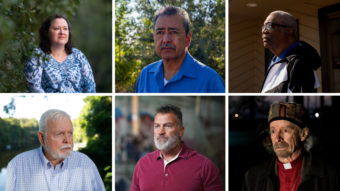
A photo mosaic of portraits of six people
Clockwise from upper left: Holly Sox, Catarino Escobar, Frank Thompson, Bill Breeden, Craig Baxley and Ron McAndrew have all been affected by work related to executions. (Sean Rayford, Emily Najera, Celeste Noche, Scott Langley and Octavio Jones for NPR)

Pretending to die isn’t typically part of a correctional officer’s job. But when the court issues a death warrant, there’s often a team that has to rehearse the execution of the prisoner. In Nevada, one of the people they practiced on was officer Catarino Escobar.

Escobar wasn’t nervous when his colleagues handcuffed him and escorted him out of the holding cell. But then the officers took him into the gas chamber. About the size of a bathroom stall, the room is framed with large bay windows so people can watch from outside as prisoners take their last breaths. It was inside that space that something strange started to happen to him.

As the officers strapped Escobar down to the gurney, his vision narrowed. He yearned for his mother, then his brother. Escobar wanted his family with him, he said, because for what felt like 20 minutes, he was absolutely certain his life was over.

“I wasn’t acting or playing,” said Escobar. “I believed that I was being executed.”

During the past 50 years, more than 1,550 death sentences have been carried out across the U.S. Hundreds of people like Escobar played a role in each of those executions, and again, hundreds of others are getting to work. Five states scheduled seven executions over the last two months of 2022 alone.

There are legal restrictions to revealing the identities of many of the workers while they’re employed, and a culture of secrecy tends to keep them quiet long after they leave their posts. But NPR’s investigations team spoke with 26 current and former workers who were collectively involved with more than 200 executions across 17 states and the federal death chamber. They were executioners, lawyers, correctional officers, prison spokespeople, wardens, corrections leaders, a researcher, a doctor, an engineer, a journalist and a nurse. Many are sharing their names and stories publicly for the first time.

“Nobody talked about it,” said Escobar, who has never even told his family about what he did in the death chamber. “We all knew to keep it silent.”

The answers the workers gave about how their jobs affected them weren’t all the same — and neither were their circumstances. A few said they volunteered for the task and that it didn’t bother them much. Many more of the people NPR spoke with had little choice in their involvement. Execution work was often a required part of their jobs, and it took a toll.

Most of the workers NPR interviewed reported suffering serious mental and physical repercussions. But only one person said they received any psychological support from the government to help them cope. The experience was enough to shift many of their perspectives on capital punishment. No one who NPR spoke with whose work required them to witness executions in Virginia, Nevada, Florida, California, Ohio, South Carolina, Arizona, Nebraska, Texas, Alabama, Oregon, South Dakota or Indiana expressed support for the death penalty afterward, NPR found.

It wasn’t always because the workers felt the process was unfair to the prisoner. It was often because they realized it was too hard on them.

“There was more than one casualty,” said Perrin Damon, a spokeswoman who helped coordinate two executions for the Oregon Department of Corrections. “More people are involved than anyone understands.”

A cot with white sheets and leather straps across it
White sheets remain on the lethal injection gurney that Catarino Escobar was strapped down to at Nevada State Prison, a former penitentiary in Carson City, Nev. (Photo by Emily Najera for NPR)

Out of sight, not mind

Ten of the people NPR interviewed never saw prisoners die in the chamber. Some didn’t work behind bars at all. They were still closely involved with capital punishment.

As a public defender who advocates for people charged with murder in Florida, Allison Miller is constantly thinking about the death penalty. It looms over her and her clients as their worst case scenario. When that scenario came true last year for a man named Markeith Loyd, Miller couldn’t stop blaming herself. To this day, she can’t forget how her toddler wished her luck before she left home to speak with his jury.

“She said, ‘I hope you save Mr. Markeith,'” Miller recalled, her voice breaking. “And then I just remember thinking, I didn’t. I failed him. I failed her. I failed in this godly task that I was given.”

Loyd probably won’t be executed anytime soon. He was sentenced to death in March, and it typically takes people around 20 years to exhaust all their appeals and face the death chamber. But Miller is already seeing her own consequences. She recounted a range of symptoms that she attributes to trying cases like Loyd’s: hair loss, insomnia, irritability, anxiety and dissociation from the world around her.

“I cannot underscore what it feels like to stand there and ask 12 people to not kill somebody,” Miller said. “It broke me a lot.”

Laura Briggs’ job started further down the execution timeline. As a law clerk on a federal death penalty case, she had to monitor documents filed just weeks before a man was scheduled to die in Indiana. If evidence had been submitted that could have paused the process, it was her job to tell the prison in time to save his life.

During the last few days before the execution, Briggs didn’t do anything that could distract her. She barely slept. She rarely ate. She didn’t devote a single thought to anything but worrying that she was going to miss something, she said.

“It was just beyond acute anxiety,” Briggs remembered. “It felt like being suspended in burning oil.”

The anxiety was so extreme that she sensed her blood pressure rising and heard a constant, high pitched noise in her head. Before doing the work, Briggs didn’t have a strong opinion about capital punishment. Now, she’s firmly against it.

“It creates a situation where someone innocent could be executed,” Briggs said. “There’s no chance for peace with that.”

Behind bars — macabre meetings and revelations

Inside the prison, workers experienced a different set of stressors as they got ready for execution day.

“People think that it would be so easy to go up and execute someone who had committed such heinous acts,” said Jeanne Woodford, a warden who oversaw four executions in California’s San Quentin State Prison. “But the truth is, killing a human being is hard. It should be hard.”

Woodford had to speak with the person slated to die, then talk with his family to receive instructions for what to later do with his body. Afterward, she had to speak with the other family involved, too — the family of the victim.

“You just don’t know what to say to people who are in so much pain,” Woodford said. “And no one is sensitive to the fact that you as the warden are sitting there thinking, in 30 days, I’m going to have to go in and give the order to carry out an execution of a human being.”

With that on her mind, Woodford still had to brief security personnel to prepare for protests, select officers to carry out the execution and process permissions for outsiders who wanted to attend. Then, at around midnight on the date of the execution, she gave the signal for the executioner to go ahead.

Woodford felt the effect inside her brain. She tried to be present with her family and rarely missed her children’s sports games. But the memories of what she had done kept her distant and caused persistent insomnia.

“You’re there, but you’re not really there,” she said. “You realize that you’re suffering from post-traumatic stress.”

Farther north, in Oregon, Corrections Superintendent Frank Thompson watched staff suffer similar consequences as the state prepared to carry out its first two executions in more than 30 years.

Shortly after the U.S. Supreme Court banned the death penalty across the country in 1972, the court changed its mind. In 1976, it decided to leave it up to the states to decide whether and when they’d bring capital punishment back. Some states never did. Others, like Oregon, waited decades to do it. That meant many workers who started their jobs in prison when executions were off the table suddenly found themselves required to perform tasks they never expected.

It also meant employees in Oregon had to make much of what they needed to execute someone from scratch. They sourced the cart the gurney rolled on from a hospital and the arm and leg straps they attached to it from another state. Then they tried to anticipate every edge case of what could go wrong. Damon, the spokeswoman, said she even flew above the prison in a plane to spot security vulnerabilities from a bird’s eye view.

The pressure of trying to ensure there would be no mistakes despite the staff’s inexperience affected the psyches of everyone involved, Thompson remembered. Those at the highest levels of power — like the governor, who later issued a moratorium forbidding more executions during his term — were not exempt.

“We had to get the ‘OK’ directly from him before I gave the instruction to proceed with the execution, so he’s very much a part of it,” the superintendent said. “All of us had negative results.”

Like the law clerk, that changed his opinion on the death penalty. Thompson grew up in the segregated South and remembers when two white men tortured and lynched 14-year-old Emmett Till in Mississippi. He used to believe that people who did things like that could deserve to die. But after seeing how preparing to carry out executions took a toll on staff, Thompson came to believe the workers didn’t deserve to have to be the ones to do it.

“All of that was on our shoulders,” he said. “My shoulders.”

All of that, and the workers still hadn’t seen the execution itself. Those that did told NPR their jobs were just as challenging.

Inside the death chamber

Nobody in the death chamber had expected Pedro Medina’s head to catch fire. Like the electrician at Florida State Prison had done dozens of times before, on that day in 1997, he had soaked a sponge with saline before applying it to the top of Medina’s scalp, to help conduct electricity and avoid a spark. But after the flames started rising around Medina’s face, something had to be decided. Behind the secret curtain that hid the staff from view, the electrician looked to the warden, Ron McAndrew, for instruction: Should he stop the machine of the electric chair, or not?

“Once the smoke and the fire came out of the helmet, of course, there was no turning back,” McAndrew said. “It was awful.”

McAndrew said the stress of witnessing that execution and seven others caused his fingers and heels to crack and drove him to drink a bottle of scotch a day. It’s been 25 years since the death chamber filled with the smell of a man burning. Though he couldn’t stop Medina’s execution after it started, he still feels responsible for what happened.

Bill Breeden felt a similar kind of guilt. In 2021, Breeden traveled to the federal chamber in Indiana to pray before Corey Johnson’s execution, as his religious minister. Seven minutes after Johnson was injected with the drug that was supposed to kill him, the minister heard Johnson speak up from the gurney.

“He said, ‘I feel my mouth and my hands are on fire,'” Breeden said. The prisoner was still alive.

For months afterward, Breeden became claustrophobic and would start crying randomly in the middle of conversations. He was haunted by nightmares that took him back to the moment when he heard Johnson’s voice. Breeden didn’t work for the government, but he still felt complicit in the death he hadn’t been able to prevent.

“You kind of get this feeling of ‘well, I’m validating this process,'” he said.

For Craig Baxley, that feeling was inescapable. Baxley executed 10 people for the state of South Carolina. Although at least two executioners were supposed to share the task of pushing the drugs into people’s veins, because of frequent staffing shortages, he was often the only one left with the job, he said. Until recently, he thought about suicide.

“Every single one of the death certificates says state-assisted homicide,” Baxley said. “And the state was me.”

Dr. Joseph Currier is a psychology professor at the University of South Alabama who studies military trauma. He said that having to take someone else’s life is the highest predictor of most mental health problems among veterans.

“They think about it again and again and again, and then over time there’s this profound sense of shame or guilt that begins to emerge for people,” he said.

But there’s a difference between servicemen who kill for the government in warzones and execution workers who do it at home. Veterans have access to free, lifelong health care through the Department of Veterans Affairs. Execution workers have no comparable support system. Although his job and his suffering were serious, Baxley never received counseling to discuss what he was going through while he was executing people for the state of South Carolina. He wasn’t alone. Only one of the 26 people NPR interviewed across the country said they received psychological support from the government to help them through the process of working on executions.

Dr. Caterina Spinaris, a psychologist whose practice in Colorado focuses on correctional officers, believes that’s dangerous. The kind of trauma that can result from taking another human being’s life is an occupational hazard that can cause serious damage if workers aren’t protected, she said.

“Think of radiation,” Spinaris said. “You wouldn’t send people to deal with radiation without the appropriate suits on.”

But of the five states that scheduled executions before the end of 2022 — Alabama, Oklahoma, Arizona, Missouri and Texas — none have the kind of support system in place that psychologists and former workers recommend, NPR found.

Quick fixes for long-term problems

What each of the states confirmed they do have are basic Employee Assistance Programs, or EAPs. Those programs provide workers with a handful of free counseling sessions before referring people to pay out of pocket if they want more.

They serve a need, Spinaris indicated, just not this one. Because they’re only available to staff, the EAPs do not provide help to execution workers who aren’t state employees, like religious ministers. And they’re not designed to treat complex problems such as the trauma involved with execution work, she said.

“If somebody has a serious issue like post-traumatic issues, they say, yep, doesn’t cover that because EAP cannot fix it,” Spinaris said. “They don’t run very deep.”

Representatives from Missouri, Texas and Arizona said their corrections departments also have trained teams of counselors that can help workers during some crises in prisons, like riots or hostage situations. But when NPR asked whether the team in Texas attends to staff during executions, a spokeswoman for the Department of Criminal Justice confirmed it does not. And like the EAP programs, the services are mostly optional.

That’s part of the problem, former execution workers said. Because any assistance offered to them while they were working on executions was also overwhelmingly optional, many of them avoided asking for it so as not to seem weak. Not much seems to have changed. A current execution worker in Missouri told NPR that though he knows about the trauma-trained team there, he’s choosing not to seek the help.

Spinaris recommended that basic support be mandatory for everyone involved with executions. At the very least, workers should be prepared in advance for the tasks ahead, provided with immediate assistance following the execution itself and then required to attend counseling for some time afterward, she said. Currier, the psychologist from Alabama who studies veterans, agreed that execution work could be considered an occupational hazard and that the government has a responsibility to make sure that workers who participate are cared for.

But like others NPR spoke with, Holly Sox believes the right solution is to do away with the death penalty. Sox understands why people support the policy. She used to be one of its advocates too, until her father, a prison nurse, worked on his first execution in South Carolina.

That night, after the electric chair was turned on, it was he who had to place his stethoscope over his patient’s heart and listen until it stopped beating. Afterward, it was Sox’s mother who struggled to communicate with him when he grew withdrawn and unrecognizable at home. And it was Sox and her sister who could only watch as their father chose to do the job again and again during the state’s next executions, in order to protect another employee from also having to suffer, he told them.

The idea of capital punishment looks good on paper, Sox said, but in practice, the damage it causes families like hers isn’t worth it.

“Nobody stops to think, somebody has to carry it out,” she said. “Somebody has to be the one.”

The audio for this story was produced by Meg Anderson and Monika Evstatieva; edited by Barrie Hardymon and Robert Little; photo editing by Emily Bogle; and graphic editing by Nick Underwood.


Were you involved in any way with preparing for executions scheduled this year, like those in Arizona, Alabama, Texas or Oklahoma? Are you involved with any executions soon to happen, like those in Missouri or Idaho, or know anyone who might be? We want to hear about your experience. Your name will not be used without your consent, and you can remain anonymous. Please consider reaching out to NPR by clicking this link.

Copyright 2022 NPR. To see more, visit https://www.npr.org.

Transcript :

AILSA CHANG, HOST:

Arizona executed a prisoner today. Texas is set to execute another this evening. Meanwhile, Missouri, Alabama and Oklahoma plan to execute more people before the end of the year.

ARI SHAPIRO, HOST:

Though hundreds of workers will carry these executions out, few know who they are or what their jobs require. There are laws that forbid many of their names from being revealed.

CHANG: But NPR investigative reporter Chiara Eisner found dozens of current and former workers who were willing to talk. They say their health suffered and that they had little support from the government to cope with the consequences of their unusual jobs.

SHAPIRO: And we’ll warn you, this report includes a description of how an execution is carried out, which may disturb some listeners.

CHIARA EISNER, BYLINE: Pretending to die isn’t typically part of a correctional officer’s job, but when the court issues a death warrant, there’s often a team that has to rehearse how they’ll execute the prisoner. In Nevada, one of the people they practiced on was Officer Catarino Escobar. At first, he was handling it fine.

CATARINO ESCOBAR: The team that was in charge of bringing the inmate handcuffed me, and I’m just playing along.

EISNER: But then the other officers took him into the same gas chamber where 23 people had been killed. Imagine a room the size of a bathroom stall framed with huge windows on the sides. When the team began to strap Escobar down to the gurney inside that tiny space, he says something strange started to happen.

ESCOBAR: It was so real that the environment within the gas chamber changed. I believed that I was being executed. I wasn’t acting or playing no longer.

EISNER: Sixteen years later, he still thinks about how it changed him.

ESCOBAR: It doesn’t matter how you look at it. You participated in taking a human being’s life. And that is not to be taken lightly.

EISNER: Over the course of four months, NPR’s spoke with 26 people who worked on more than 200 executions across 17 states. Most changed their minds about the death penalty after being involved. It wasn’t always because they felt capital punishment was unfair to the prisoner. Often it was because they realized how hard it was on them. Workers said they were left with serious physical and mental consequences from participating in executions.

BILL BREEDEN: For several months there, I was pretty fragile.

FRANK THOMPSON: Staff have gone to alcoholism, drug addiction, considered suicide.

ALLISON MILLER: Weight loss and weight gain, hair loss, irritability for sure.

JEANNE WOODFORD: I went through this really long period of having insomnia. You realize that you’re suffering from post-traumatic stress.

EISNER: That was Jeanne Woodford, a warden from California; Allison Miller, a Florida public defender; Corrections Superintendent Frank Thompson from Oregon; and Bill Breeden, a religious minister. Breeden volunteered to be inside the chamber. But for most of the others NPR spoke with, execution work was a required and sometimes unexpected part of their jobs. There were a few who said their execution tasks didn’t bother them much then and still don’t bother them now. But many more told NPR that the time they spent on executions was not only the most stressful part of their work, but the most difficult part of their lives.

JOSEPH CURRIER: They think about it again and again and again. And then over time, there’s this profound sense of shame or guilt that begins to emerge for people.

EISNER: Joseph Currier is a psychology professor at the University of South Alabama who studies people in the military. He says having to kill takes a toll on them.

CURRIER: If you were to compare and contrast which events really haunt people the most after their warzone service, taking someone else’s life is the highest predictor of most mental health problems.

EISNER: That veterans suffer from mental health issues like PTSD is well known. Since the September 11 attacks, more servicemen have died from suicide than combat. But although execution workers are also tasked with killing, there’s a key difference between the two. Veterans receive lifelong free health care through Veterans Affairs. Execution workers have no comparable support system. Craig Baxley understands the consequences of that.

CRAIG BAXLEY: OK. These are some of the oldest graves that are in the cemetery. These are some of the ones who have been executed.

EISNER: We’re in the graveyard of the state penitentiary in Columbia, S.C. The few rusty metal posts that stick out of the grass don’t even have names on them, just the five numbers that were assigned to the inmates when they were alive. Baxley used to lead a team that responded to emergencies in the prison that sent its dead here. But to get that role, he says he had to agree to be one of the state’s executioners.

BAXLEY: If you don’t do this, you won’t get the job. So most of us are not making that much money in South Carolina. So most of us are going to say, OK, you know, I’ll try it. And then you try it, and it’s too late.

EISNER: With no medical training and no counseling beforehand, Baxley started executing people, most by lethal injection.

BAXLEY: I just basically said a prayer. And I went in there. And I had to do a couple of them all by myself and push all seven plungers.

EISNER: That plunger is the tool he used to send the drugs into people’s veins. Baxley served in the Marines, but he says the two kinds of jobs weren’t the same.

BAXLEY: There’s a difference in the killing of a person like this than shooting in a war because they’re firing at you and you’re firing back. Here, every single one of the death certificates says state-assisted homicide. And the state was me.

EISNER: Right away, it tore him apart.

BAXLEY: My stomach just felt so bad. It was just twisted in knots. I felt like I had cancer.

EISNER: He pretended he was fine, but until recently, he considered suicide.

BAXLEY: I’ve also thought many times of killing myself, but I – you know, I’ve got grandkids now.

EISNER: I met Baxley last year when I first started reporting on executions, and I thought I wouldn’t find anyone as marked by the work as him. What I expected was that the more people’s jobs removed them from handling the plungers, the physical tools of executions, the better off they’d be. But that’s not what the workers told me. I spoke with wardens, religious ministers, journalists, public defenders and the family of a nurse who also witnessed executions. They weren’t the executioner, but they had similar consequences. Ron McAndrew was the warden in Florida who told the electrician to keep the machine going after the head of a man on the electric chair caught fire.

RON MCANDREW: The witnesses were aghast. They could not believe they were watching the burning of a human being like that.

EISNER: He said the stress from coordinating that execution and seven others like it was so intense it made his fingers and heels crack. He drank a bottle of scotch a day and was later diagnosed with PTSD. It’s been 25 years since he watched that man burn. He still hasn’t fully recovered.

Did you feel responsible in that moment?

MCANDREW: Of course. I still do.

EISNER: Bill Breeden, the minister, wasn’t on the prison’s payroll like McAndrew, but he also felt complicit. He was in the federal death chamber in Indiana during Corey Johnson’s execution last year.

BREEDEN: So I prayed for Corey and for all of us. And I ended the prayer by saying, I believe Corey, if he could, would say the same that Jesus said – Father, forgive them for they know not what they do.

EISNER: Johnson was then injected with a drug that was supposed to kill him. But minutes later, Breeden heard the prisoner speak up from the gurney. He was still alive.

BREEDEN: He said, I feel like my mouth and my hands are on fire. He said that.

EISNER: For months afterwards, Breeden became claustrophobic and would start sobbing in the middle of conversations. He still can’t escape the execution, even in his sleep.

BREEDEN: Sometimes I wake up in the death chamber in a sense. All of a sudden, you can see it again. You can feel it again. And you can’t do anything to stop it. And so, in a sense, you kind of get to feel, well, I’m validating this process. And to be standing there totally incapable of doing anything while this man is murdered was just the most painful thing I’ve ever had in my life.

EISNER: Execution work affected even those who didn’t have to see people die. I spoke with the son of an engineer who designed gas chambers, a radiologist who took MRI and CT scans of an executed body and lawyers like Allison Miller. Miller represents people charged with murder in Florida’s courtrooms.

MILLER: I cannot underscore what it feels like to stand there and ask 12 people to not kill somebody.

EISNER: Only once has a jury sentenced a client of hers to be executed. That was a man named Markeith Lloyd. Miller still can’t forget how her toddler wished her luck when she left for work that day.

MILLER: She said, I hope you save Mr. Markeith. And then I just remember thinking, I didn’t. I failed him. I failed her. I failed in this godly task that I was given. It broke me a little – broke me lot.

EISNER: Caterina Spinaris is a psychologist who focuses on correctional officers. She says you can get full-blown PTSD from repeated or extreme indirect exposure to traumatic events. So for an occupational hazard as serious as taking a life, even remotely involved workers should be counseled in advance. Afterwards, everyone should have months of support, she says.

CATERINA SPINARIS: Think of radiation, you know? Like, you wouldn’t send people to deal with radiation without appropriate suits on.

EISNER: But only one of the dozens of people I spoke with who worked on executions before said they received counseling from the government. Five states are planning to execute people before the end of 2022 – Texas, Arizona, Oklahoma, Alabama and Missouri. None of those states offer workers the kind of long-term support Spinaris recommended.

AMANDA HERNANDEZ: If you’re specifically referring to those that work executions, then EAP is what we have available.

EISNER: That’s Amanda Hernandez from the Texas Department of Criminal Justice. The short-term counseling service she’s talking about there is the same EAP, or employee assistance program, available to other state employees. That means, from what they told us, Texas doesn’t give any more support to its executioners than it does its tax auditors. Hernandez says the state does offer extra help after some high-stress moments in its prisons.

HERNANDEZ: But that’s not execution related.

EISNER: So execution would not be considered that kind of crisis?

HERNANDEZ: Not in the sense of providing those services.

EISNER: The other four states planning executions also have basic EAP programs. None help any of the many execution workers who aren’t state employees, and all of them are optional. A spokeswoman from Missouri said officers there can also use peer support groups and see trauma specialists. But I talked to a current member of Missouri’s execution team. Because none of that was mandatory, he’s never sought it out. Frank Thompson, the superintendent who oversaw executions in Oregon, says that’s part of the problem.

THOMPSON: You have to understand – correctional officers want to be viewed as not being weak.

EISNER: Some workers think it would help if the government offered more counseling and required everyone to go, but Thompson thinks they would still suffer too much.

THOMPSON: To continue conducting executions expands the number of victims, i.e. the staff people and their families. That bothered me to the extent that I changed my position on the death penalty.

EISNER: All but two of the people NPR spoke with who used to support executions changed their minds after they had to help carry them out. Today, Thompson’s on the board of Death Penalty Action. The nonprofit organized a protest at the steps of the U.S. Supreme Court in June.

(SOUNDBITE OF ARCHIVED RECORDING)

UNIDENTIFIED PROTESTER: What do we want?

UNIDENTIFIED PROTESTERS: No death penalty.

UNIDENTIFIED PROTESTER: When do we want it?

UNIDENTIFIED PROTESTERS: Now.

EISNER: With the white columns of the court right behind them, dozens of activists from around the country held hands and grabbed each other’s shoulders as they began to sing.

(SOUNDBITE OF ARCHIVED RECORDING)

UNIDENTIFIED PROTESTERS: (Singing) Keep your eyes on the prize, oh…

EISNER: The prize they had their eyes on was an end to executions, a goal now shared by many who used to carry them out. Chiara Eisner, NPR News.

SHAPIRO: If you or someone you know is in crisis, call or text the 988 Suicide and Crisis Lifeline; just those three digits – 9-8-8.

(SOUNDBITE OF MUSIC) Transcript provided by NPR, Copyright NPR.

Alaska volunteers want to know: What happened to the ‘Lost Alaskans’ sent to this Portland mental hospital?

A black and white illustration of a sanitarium campus
Morningside Hospital near Portland, Oregon, circa 1925. (morningsidehospital.com)

Before Alaska became a state, there were no formal services for treating people suffering from behavioral disorders or developmental disabilities, and mental illness was treated like a crime.

If an Alaskan was convicted of being “really and truly insane,” as it was known at the time, they were sent to an asylum in Portland, Oregon called Morningside Hospital, which opened in 1904 and operated into the ’60s.

At least 3,500 Alaskans went to Morningside, including a lot of Alaska Native people. Many of their families never saw them again. In some cases, similar to the federal government’s dark history of sending Native children to boarding schools, it’s unclear where they’re buried.

Much of what we do know about Morningside is thanks to a small group of volunteers working on The Lost Alaskans: The Morningside Hospital History Project. Among them is retired Alaska Superior Court Judge Niesje Steinkruger.

Steinkruger says some of the criteria for sending someone to Morningside would seem, well, crazy by today’s standards.

Listen:

The following transcript has been lightly edited for clarity.

Niesje Steinkruger: Things like suicidal, head injuries. A lot of head injuries. Drugs, drug addiction, mostly cocaine and heroin. Alcoholism, dementia, epilepsy. And after 1922, about a third of the patients were children, and so those were birth defects, disabilities by names that we now call Down syndrome and hydrocephalic. There were diagnoses of people unable to speak or unable to hear. Senility, or my own personal favorite, “senior exhaustion,” which I understand. Diagnosis of confused, delusional hallucinations. Paranoia. Lots of syphilis that, you know, then had entered the neurological system. And imbecile.

So those are the kind of diagnoses that we saw the most, with people going there. And of course, you’ve got to remember, we didn’t know anything about mental illness during those years. It really wasn’t until the ’50s, when we started getting more treatment ideas from Europe that things started to change.

Casey Grove: My understanding is, of course, back then, the treatment for these kinds of disabilities could be pretty rough, or they used things that we don’t use anymore like electro-shock therapy. And then some folks stayed there their entire lives and then died there. What happened to those folks that died there? Where were they buried? Do we even know?

Niesje Steinkruger: People died at Morningside. Lots of accidents or injuries. Certainly, people died based on treatment. And there was an autopsy room, actually at the hospital. A large number of autopsies were done, and we recently figured out that a lot of those were being, quote, “observed” by medical students from the University of Oregon, but they were probably using the patients as an anatomy class after they died.  You know, they didn’t have to get anybody’s permission.

And then they were sent to a mortuary, and they were buried in one of four cemeteries in Portland. Sometimes they’d wait till they had four or five and bury them all in one plot. We’ve found one area where there’s, it’s a ravine that’s gone back to its natural habitat, where there are probably 350 graves. They’re generally unmarked.

But of course, things have happened, like cemeteries have remapped and renumbered their plots. One cemetery, the records were flooded, and we don’t have them. None of the volunteers, we have never been able to find that the state kept a list of what Alaskans were sent to Morningside, no patient list. And so that’s how all of this got started, when we couldn’t find a list.

Casey Grove: Gotcha. Yeah. And I mean, there are similarities here with the boarding schools that a lot of Alaskan Native people were taken away to and never came home from. I guess, also similar to that, there are families here in Alaska that are trying to figure out what happened to their relatives that were sent to Morningside, right?

Niesje Steinkruger: Yes, yes. Many of the stories are, you know, “I remember my grandmother telling me that the federal marshals came and took this baby girl, and we don’t know whatever happened to her.” Or “my mother went to Morningside, and nobody knows what happened.” Or “my uncle got sent to Morningside, and we don’t know whatever happened to him.”

And that’s kind of what really got us started. And our real goal has been to identify who the patients are so that the family can know that, yes, this is where your family member went, and then what happened to them.

Juneau hospital event raises awareness of the challenges of childbirth and pregnancy

""
Bartlett Regional Hospital, on Aug. 7, 2022. (Photo By Paige Sparks/KTOO)

This Saturday, Bartlett Regional Hospital is hosting a walk/run event to raise awareness for mental health and trauma related to pregnancy and motherhood.

Bartlett’s obstetrics education team began offering monthly support groups for mothers in February of 2021. They call the program “Real Talk.”

Sara Gress, a nurse and educator at Bartlett, said the groups are “dedicated to having some real honest conversation about some of the parts of motherhood that are more challenging and not always discussed in some of the other spaces.”

The support groups are also offered through Zoom, so people outside of Juneau can participate. 

“Even if folks didn’t deliver with us, we’re happy to have them participate and access these resources from their communities,” Gress said. 

According to the Cleveland Clinic, 1 in 7 new parents experience postpartum depression. The National Library of Medicine estimates that up to 25% of known pregnancies end in miscarriage.

For Saturday’s race, Gress said that the race bibs will have a space to show who participants are running or walking in support of.

Juneau’s Shéiyi X̱aat Hít Youth Shelter has helped dozens in its first year

Shelter Supervisor Forrest Clough, Youth Services Manager Jorden Nigro, and Youth Action Board Member Tiana at Shéiyi X̱aat Hít Youth Shelter. Oct. 14, 2022. (Photo by Yvonne Krumrey/KTOO)

For two long years, there was no dedicated shelter for young people in Juneau who needed a safe place to sleep. But last July, Shéiyi X̱aat Hít, or Spruce Root House, opened. In partnership with Tlingit and Haida Regional Housing Authority, the city designed the shelter with input from youth who had direct experience with homelessness.

In the fifteen months since the shelter opened, Jorden Nigro says dozens of individuals have been helped. If you multiply the number of individuals by the number of nights spent at Shéiyi X̱aat Hít, it’s around 1,600.

Nigro is the youth services manager for Juneau Parks and Recreation, and she runs the Zach Gordon Youth Center and Shéiyi X̱aat Hít Youth Shelter.

“I’ve known kids who have traded, you know, sexual favors for places to stay, who have been exposed to things that they really should not have been exposed to, in order to have a place to stay,” Nigro said. “So yeah, there’s some real sad stuff that will happen when there aren’t places like this for kids to go.”

The kids use the shelter for a few different reasons, Nigro said.

“For the most part, our youth who are coming into the shelter have either run away from home or threatened to run away from home, or they are living at home in an unsafe situation,” she said. “And they come in because of abuse or neglect.”

The average time spent per youth at the shelter is about 13 days.

A large part of the role of the staff of Shéiyi X̱aat Hít is to work on family mediation, Nigro said. So far, more than 90% of the youth who have used the shelter have gone on to a safe and stable place.

“And we do these exit surveys when kids leave and ask them a bunch of questions, but one of the things is like, ‘Would you recommend this to a friend?’” she said. “And 100% of the youth have said ‘yes.’”

Before Shéiyi X̱aat Hít opened, Tiana struggled to find a safe place to stay, when her family home wasn’t safe. KTOO isn’t using her last name due to the stigma attached to homelessness.

She’s 19 now and has her own apartment. She joined the city’s Youth Action Board in 2020, where she has been sharing her ideas about what would help kids who are in situations similar to hers growing up.

The board meets weekly and is open to any youth who want to give input.

One thing that was important to her when designing the youth shelter was that each person should have their own room.

“Maybe if I was in this situation, which I was,” Tiana said. “I wouldn’t want to do that with somebody else, I would want to have the privacy of being able to be alone and sit in my room.”

Another project she pushed for on the Youth Action Board was a place for people aged 18 to 20. So the shelter also hosts transitional housing, a four-room apartment, which is currently rent-free.

Eleven people have used the apartment since the shelter opened. Usually, people stay there for about two or three months, says Nigro.

Shéiyi X̱aat Hít Youth Shelter is more than a place to stay for a while. Nigro said the staff work to foster community with youth by cooking and eating together, encouraging “normal” daily routines, and having downtime when youth can watch TV and play games together.

Nigro said about half of the youth at Shéiyi X̱aat Hít are LGBTQ+ identifying, and a quarter of them are transgender.

This is consistent with national trends: 28% of LGBTQ+ youth experience housing insecurity or homelessness. But having at least one supportive adult in their life decreases their chance of attempting suicide by 40%.

Tiana says that the adults at Shéiyi X̱aat Hít and Zach Gorden were a lifesaver for her, too.

“I know there’s a lot of kids out there who grew up, or is growing up right now that don’t have a safe place to go and don’t have people to turn to. And that was me,” Tiana said. “And these people are the people that I learned how to turn to, so being involved in this has changed my life for the better.”

Nigro says she wants more people to know about Shéiyi X̱aat Hít, so any youth who find themselves in an unstable housing situation know where they can go.

Correction: An earlier version of this story gave an incorrect age range for people eligible to stay in the apartment. It serves ages 18-20.

Chugach peaks get Dena’ina names: ‘A huge statement to all that we value life’

A pair of steep, treeless Chugach peaks, smeared with snow.
North (left) and South Yuyanq’ Ch’ex. (Dave Bass)

A pair of peaks in Chugach State Park are getting a name change, with help from a local Dena’ina elder.

North and South Yuyanq’ Ch’ex peaks, as they’ll be known from here on out, tower 5,000 feet above Turnagain Arm and are popular spots for Southcentral hikers.

For decades, those mountains have been called North and South Suicide — names that are said to have come from railroad workers who were remarking on the steepness of the slopes. The names were codified by the U.S. Geological Survey in 1951.

Soldotna Sen. Peter Micciche, who served on the Statewide Suicide Prevention Council, said he’s happy to see those names go away. He said it’s important to be respectful to the many Alaskans who have been impacted by suicide.

“It’s painful, particularly in our state,” he said Friday. “We’re number two in the U.S. We had 204 suicide fatalities in 2020 — that’s 27.5 per 100,000.

The Alaska Legislature sent a letter to the U.S. Geological Survey’s Board on Geographic Names in support of the name change earlier this week.

But the two-year push has largely come from William Pagaran, a Palmer man who runs faith-based non–profit called Carry the Cure, aimed at curtailing teen suicide in Alaska.

Pagaran could not be reached in time for this story. But in an online petition from 2020, he said the name change “makes a huge statement to all that we value life.” That same year, Pagaran led a hike up the south peak in the name of suicide awareness.

Pagaran’s initial renaming proposal was denied by the Alaska Historical Commission. That was as the commission was considering naming and renaming several other Alaska landmarks by their Indigenous names.

It wasn’t until this week that the U.S. Board on Geographic Names gave the change a green light.

Yuyanq’ Ch’ex — pronounced “you-yonk check” — means “Heaven’s Breath” in Dena’ina. Pagaran tapped Kenaitze elder Helen Dick, of Kenai, one of the few Dena’ina speakers who learned the language as a child, for help finding a new name.

Micciche credits Pagaran and Homer Republican Rep. Sarah Vance for leading the charge to find a better fit.

“And it’s a little step,” Micciche said. “We’ve taken many other steps in our state. But ‘Heaven’s Breath’ is a better name.”

Separately, the U.S. Board on Geographic Names will also consider a recommendation from the Alaska Legislature to name another mountain on Turnagain Arm after Gail Phillips, an legislator who represented the southern Kenai Peninsula for many years. Phillips died in 2021.

Site notifications
Update notification options
Subscribe to notifications