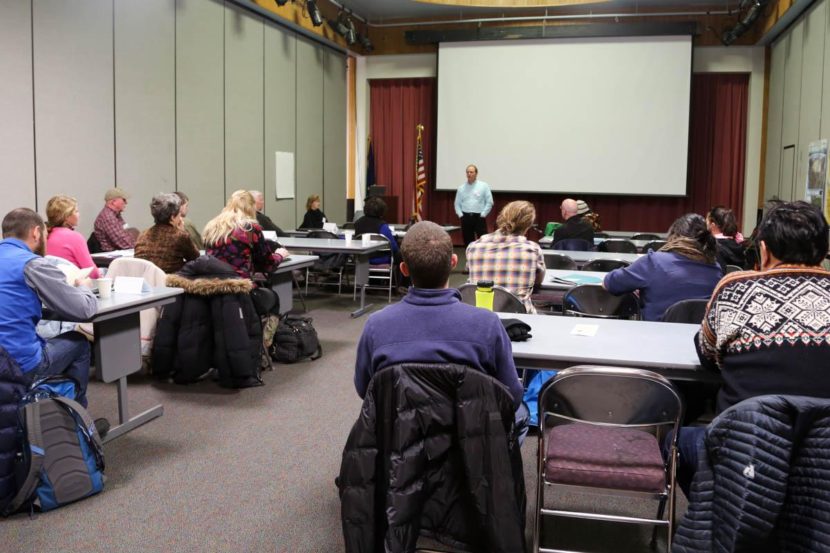
Richard Darden, USACE Project Manager on Donlin Gold, addresses stakeholders at a Bethel meeting on how Donlin Gold will be legally required to treat historical sites if permitted. Nov. 21, 2016. (Photo by Celina Angaiak/KYUK)
What’s going to happen if the Donlin Gold mine is green-lighted and historical sites become disrupted? That’s another part of the Donlin saga that the U.S. Army Corps of Engineers is deciding as the federal agency chooses whether or not to recommend permitting the project.
The Corps is drafting a legally binding document for Donlin to follow if the project gets the go-ahead. The document, called a programmatic agreement, describes how Donlin will treat known and yet-to-be-discovered historical sites it encounters during the large mining project’s development. The Corps plans to release a draft of the document in early 2017 and then collect comments from federal, state, tribal, and municipal groups before issuing a final agreement.
Only three of the 14 groups invited attended the Bethel event: AVCP Inc., the City of Georgetown, and Kwethluk Inc. None raised public concerns during the gathering.
Richard Darden, USACE Project Manager on Donlin Gold. (Photo by Celina Angaiak/KYUK)
Richard Darden is the Donlin Project Manager for the Corps and led the discussion. He says for those who couldn’t attend the meeting, there’s still time to get involved.
“The folks who weren’t able to come today can still participate in the remainder of the process very effectively,” he said, “because we’ll provide comprehensive information when we distribute materials and a draft programmatic agreement. And we can be in touch with those folks on a more individual basis between now and then.”
Since 2004, 70 historical sites have been discovered at the project sites, which include the mining area, pipeline corridor, and transportation points like runways, ports, and roads. The sites range from artifact clusters to cabins to caves.
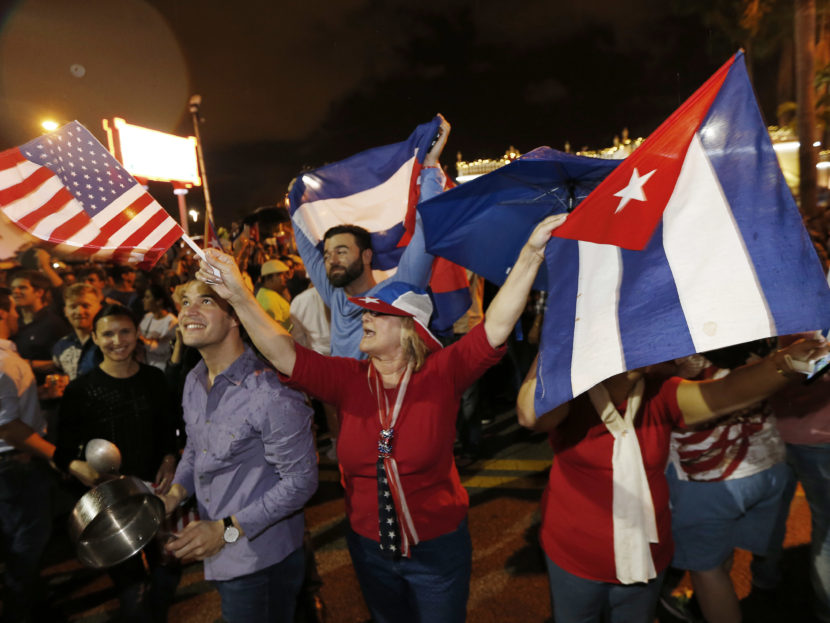
Cuban-Americans celebrate upon hearing about the death of longtime Cuban leader Fidel Castro in the Little Havana neighborhood of Miami, Fla., on Saturday. AFP/AFP/Getty Images
Fidel Castro, the controversial ruler who took power during the Cuban revolution in 1959 and led his country for nearly half a century, died in Havana, Cuba, at age 90.
Castro lived through 10 U.S. presidents who were determined to overthrow him, as NPR’s Tom Gjelten reported, in addition to surviving the collapse of the communist alliance that bolstered his success.
The former president has suffered ill health since undergoing emergency intestinal surgery in July 2006, when he ceded power to his younger brother, Raúl, who formally assumed the presidency in 2008.
In a short, televised message, an emotional President Raul Castro announced that his brother had passed at 10:29 p.m. late Friday night, as NPR’s Carrie Kahn translates:
“With profound pain I share with our people and the friends of America and the world that today, on the 25th of November at 10:29 p.m., the head commander of the Cuban Revolution, the comrade Fidel Castro Ruz died. In following the wishes expressed by Fidel, his remains will be cremated.
“In the early hours of tomorrow, Saturday the 26th, the funeral organizing commission will provide the people detailed information about the organization of a posthumous tribute to the founder of the Cuban Revolution. Towards victory forever.”
Castro’s rule was marked by his relationship with two global powers: the Soviet Union as his ally, the U.S. as his adversary, Tom tells our newscast.
“The Eisenhower Administration initially welcomed Castro to power; but as a nationalist he was determined to assert Cuba’s independence from the United States, and by early 1960, Castro was reaching out to the Soviet Union for support. Before long, the U.S. government was helping Cuban exiles who wanted to overthrow Castro or even have him assassinated.
“The Soviet Union meanwhile gave Castro billions of dollars per year — enough to support health and education programs that won Cuba praise around the world. Castro lost that help when the Soviet Union collapsed; Cuba soon became impoverished.
“Relations with the U.S. never really improved during the time he was in charge, and Fidel Castro will be remembered as much for what he survived as for what he achieved.”
The death of the polarizing former president has set off both mourning and celebration worldwide.
Silence has swept much of Cuba. The Cuban government announced Saturday morning that Castro’s ashes will be interred on December 4, following nine days of national mourning, which officially began at 6 a.m. on Saturday.
As CNN notes, citing the state-run outlet, Granma, “During this time, all activities and public performances will stop, and the flag will be flown at half-staff in public and military establishments. Radio and television will broadcast patriotic and historical programming.”
Fidel Castro was one of the most iconic personalities of the 20th century. India mourns the loss of a great friend.
Foreign allies are paying tributes and expressing sorrow on Twitter, including Indian Prime Minister Narendra Modi and Mexican President Enrique Pena Nieto, who said Castro “was a friend” of Mexico.
Venezuela’s socialist President Nicolas Maduro said “revolutionaries of the world must follow his legacy.”
President Obama released a statement acknowledging the United States’ fraught history with Cuba under Castro’s regime and the two countries’ renewed diplomatic relationship. He also said:
We know that this moment fills Cubans – in Cuba and in the United States – with powerful emotions, recalling the countless ways in which Fidel Castro altered the course of individual lives, families, and of the Cuban nation. History will record and judge the enormous impact of this singular figure on the people and world around him.
Obama’s statement concluded: “Today, we offer condolences to Fidel Castro’s family, and our thoughts and prayers are with the Cuban people. In the days ahead, they will recall the past and also look to the future. As they do, the Cuban people must know that they have a friend and partner in the United States of America.”
On Saturday morning, President-elect Donald Trump tweeted: “Fidel Castro is dead!”
Trump later released a longer statement saying his “administration will do all it can to ensure the Cuban people can finally begin their journey toward prosperity and liberty.”
Meanwhile, just some 200 miles from Havana, the Cuban exile community in Miami, Florida’s Little Havana, are spilling into the streets in jubilation, waving Cuban flags, cheering and dancing.
Cuban-Americans in Congress also reacted to the news of Castro’s death. Democratic Sen. Bob Menendez of New Jersey released a statement that read, in part:
Since he took power over half a century ago, Fidel Castro proved to be a brutal dictator who must always be remembered by his gross abuses of human rights, systemic exploitation of Cubans, unrelenting repression, and stifling censorship upon his own people.
Fidel’s oppressive legacy will haunt the Cuban regime and our hemisphere forever.
In a statement, Republican Sen. Ted Cruz of Texas said:
Fidel Castro’s death cannot bring back his thousands of victims, nor can it bring comfort to their families. Today we remember them and honor the brave souls who fought the lonely fight against the brutal Communist dictatorship he imposed on Cuba.
Republican Sen. Marco Rubio of Florida echoed these sentiments in his statement, adding:
The dictator has died, but the dictatorship has not. And one thing is clear, history will not absolve Fidel Castro; it will remember him as an evil, murderous dictator who inflicted misery and suffering on his own people.
And Republican congresswoman Ileana Ros-Lehtinen of Florida’s 27th district celebrated Castro’s death on Twitter.
The U.S. is home to roughly 2 million Cuban-Americans because they, or the generations before them, fled the island during Castro’s rule. The majority live in Florida, NPR’s Greg Allen reports to our newscast, where the U.S. government once launched failed attempts at overthrowing the young Castro regime:
“As Castro tightened his grip on Cuba, large numbers of people began fleeing the island. There were firing squads and property seizures. …
The first wave of exiles were mostly from Cuba’s elite, businessmen and professionals. They came to Miami where many began working on an urgent goal—to oust Fidel Castro and take back their homeland.
In Miami, a group of Cubans formed a paramilitary group, Brigade 2506. They worked with the CIA on a plan to retake Cuba after landing on a beach in the Bay of Pigs. The invasion was a disaster. More than 120 members of the invading force were killed. 1,200 were captured by Castro’s military. Most of those captured were released a year later.”
This post has been updated to include reactions to Castro’s death.
Copyright 2016 NPR. To see more, visit http://www.npr.org/.
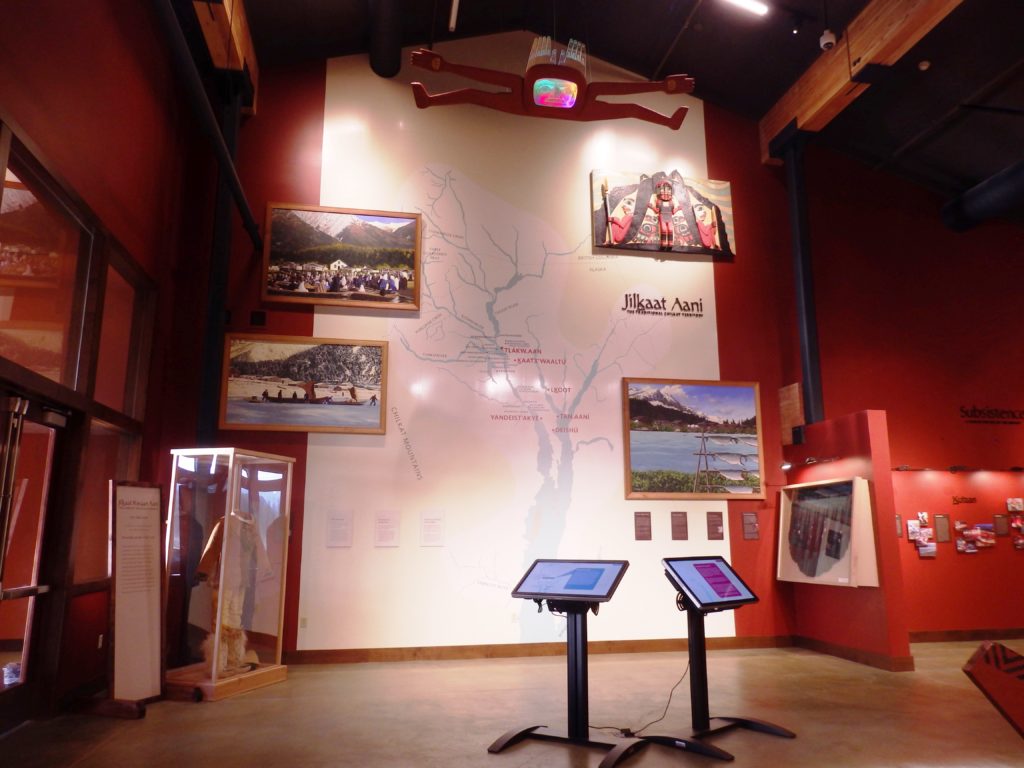
The Chilkat Cultural Landscape Map, the introductory exhibit in the heritage center. (Photo by Emily Files/KHNS)
It was a historic year for the Chilkat Indian village of Klukwan. After more than a decade of work, the Jilkaat Kwaan Cultural Heritage Center opened its doors in May.
The center tells the still-evolving story of the Chilkat people and also houses some of the world’s most admired works of Northwest Coast Art, the Whale House Collection.
“The first thing that you see when you walk into our exhibit gallery is the Chilkat cultural landscape map,” said Lani Hotch, the executive director of the heritage center. “And we see the interpretive panel here, Jilkaat Kwaan Aani, the land of the Chilkat people.”
“And there’s a quote there, Aan Yatku Saani. It’s a formal way to address a group of people,” she said. It means “honorable people of the land.”
“I thought that was so appropriate because whether you live in a little house along the Chilkat River or a skyscraper in Manhattan, we’re all dependent on the land.”
Hotch is one of the Klukwan residents who led the enormous effort to build this cultural center. Klukwan is a village of about 100 people, and the cost of the center is close to $8 million.
The idea for a cultural center has been around for almost a century. But the effort that finally led to success began with a strategic planning session about 15 years ago.
“We went through this visioning process, what we wanted Klukwan to look like in five years, 10 years, 20 years. This is a huge part of that vision,” she said. “So it’s really cool to see it come to pass.”
Hotch said they talked about Klukwan’s strongest assets: a rich cultural heritage and a beautiful landscape.
“The idea behind this building is not so much museum, but a culture center, where people can still carry their culture forward.”
You can see the emphasis on the living culture throughout the center. One example is a weaving exhibit that honors the past and present.
“Klukwan is well-known for our legacy of weaving here,” Hotch said. “Chilkat weaving didn’t originate with the Chilkat people, it originated with the Tsimshian people, but our people became so talented and prolific that the art form became known as Chilkat weaving.”
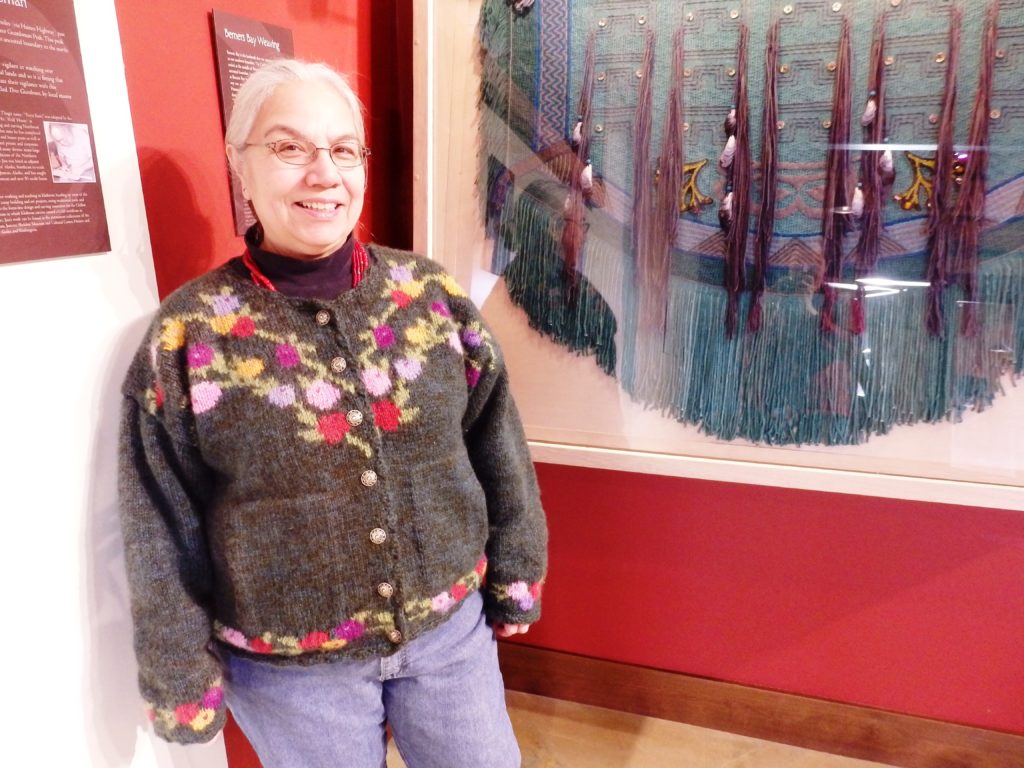
Lani Hotch, executive director of the Jilkaat Kwaan Heritage Center, stands next to her contemporary weaving that represents Berners Bay. (Photo by Emily Files/KHNS)
Hotch herself is a master weaver skilled at creating Chilkat blankets. She made a contemporary weaving representing Berners Bay for the center’s cultural landscape map.
Just outside of Juneau, Berners Bay is the southern boundary of the Chilkat people’s ancestral homeland.
Hotch’s weaving is a bright aqua color with patterns and shapes that make it totally distinct from Chilkat weaving. She says some people frowned on this.
“They wanted to see me weaving Chilkat because that’s our legacy here, but I’m of the opinion that each generation has a right to impact their culture,” she said. “A right, if not a duty.”
The contemporary weaving isn’t the only piece of the exhibit that stirred some controversy.
The heart of the cultural center is a collection of masterful artworks that are between 200 and 300 years old.
The Whale House rain screen and house posts are arranged to create a functioning clan house within the center. (Note: KHNS was not permitted to take photos of the Whale House artifacts.)
“I don’t think anyone could ever duplicate what we’re looking at,” said Jones Hotch Jr., the Gaanaxteidi clan leader and caretaker of the Whale House. He also is Lani Hotch’s husband. “What the four house posts and rain screen, what I say is, that’s our birth certificate. It tells us where we’re from.”
During the planning of the cultural center, the Gaanaxteidi clan agreed to house the objects here, even though putting them in a public place is a break from tradition.
One reason to keep them here is for protection. Over the last century or so, there have been multiple attempts to remove the Whale House artifacts and display them outside of Klukwan.
“So many of our at.oow, our objects are in different museums. And it’s like they’re not home,” Jones Hotch said. “This is, what we’re standing on, this is their homeland.”
The day the Whale House objects were returned to Klukwan, it was raining, he said.
“I said it’s the elders are crying, they’re happy they’re getting back to Klukwan.”
Lani Hotch said the most gratifying thing about the center opening is seeing young people getting involved.
Her hope is that the cultural center will bring back people who haven’t been able to find employment in Klukwan before.
“This is their future, and that’s why we did it.”
She can already see that happening.
The center employed about 25 people during the summer.
In a village of about 100, it’s a big impact. Hotch says that makes the enormous effort it took to bring the center to life worth it.
The Jilkaat Kwaan center will host workshops and classes periodically throughout the winter.
The cookies are actually free. It’s the well-used and invaluable reference books that Dee Longenbaugh prefers not to sell. (Photo by Matt Miller/KTOO)
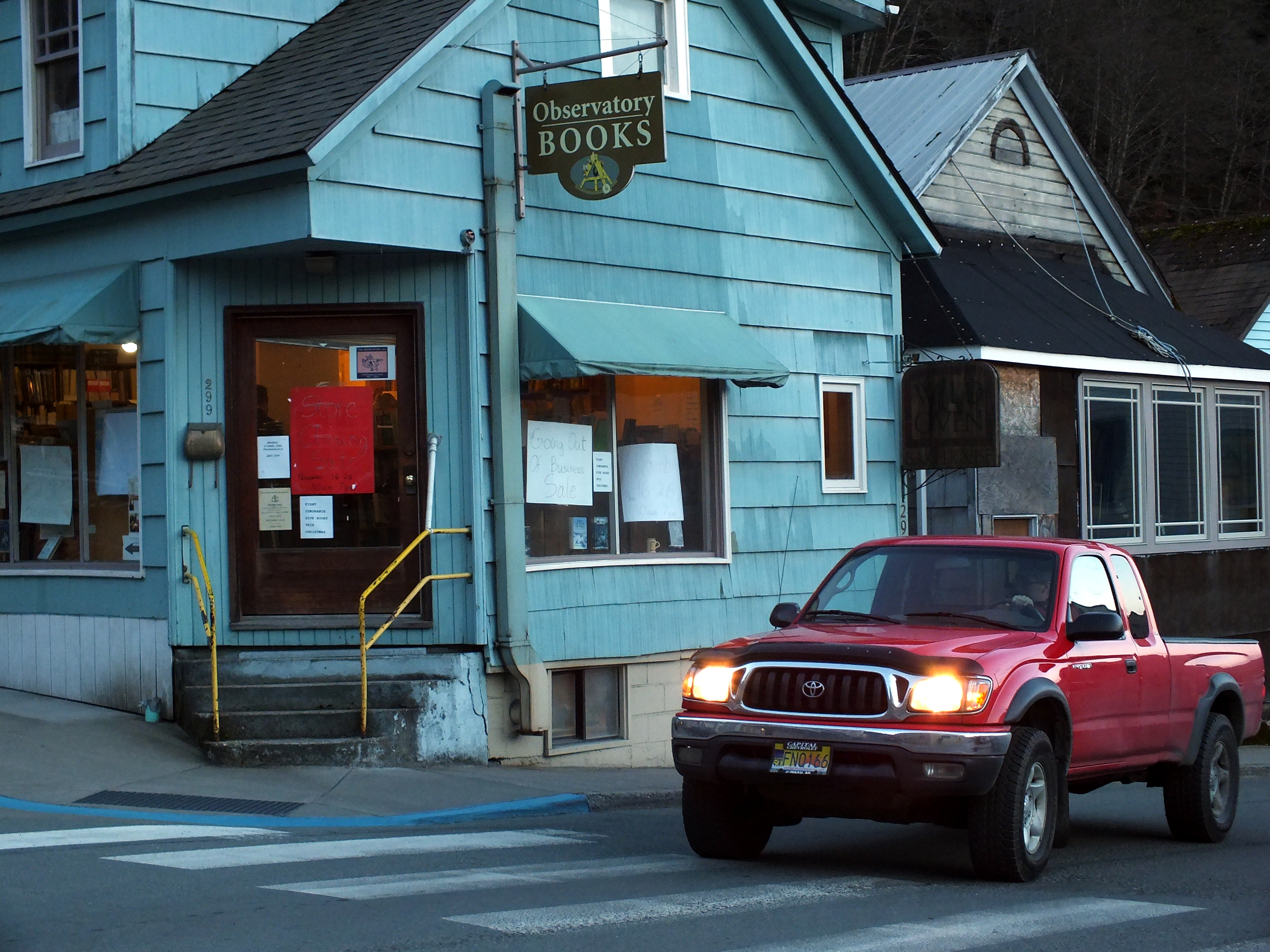
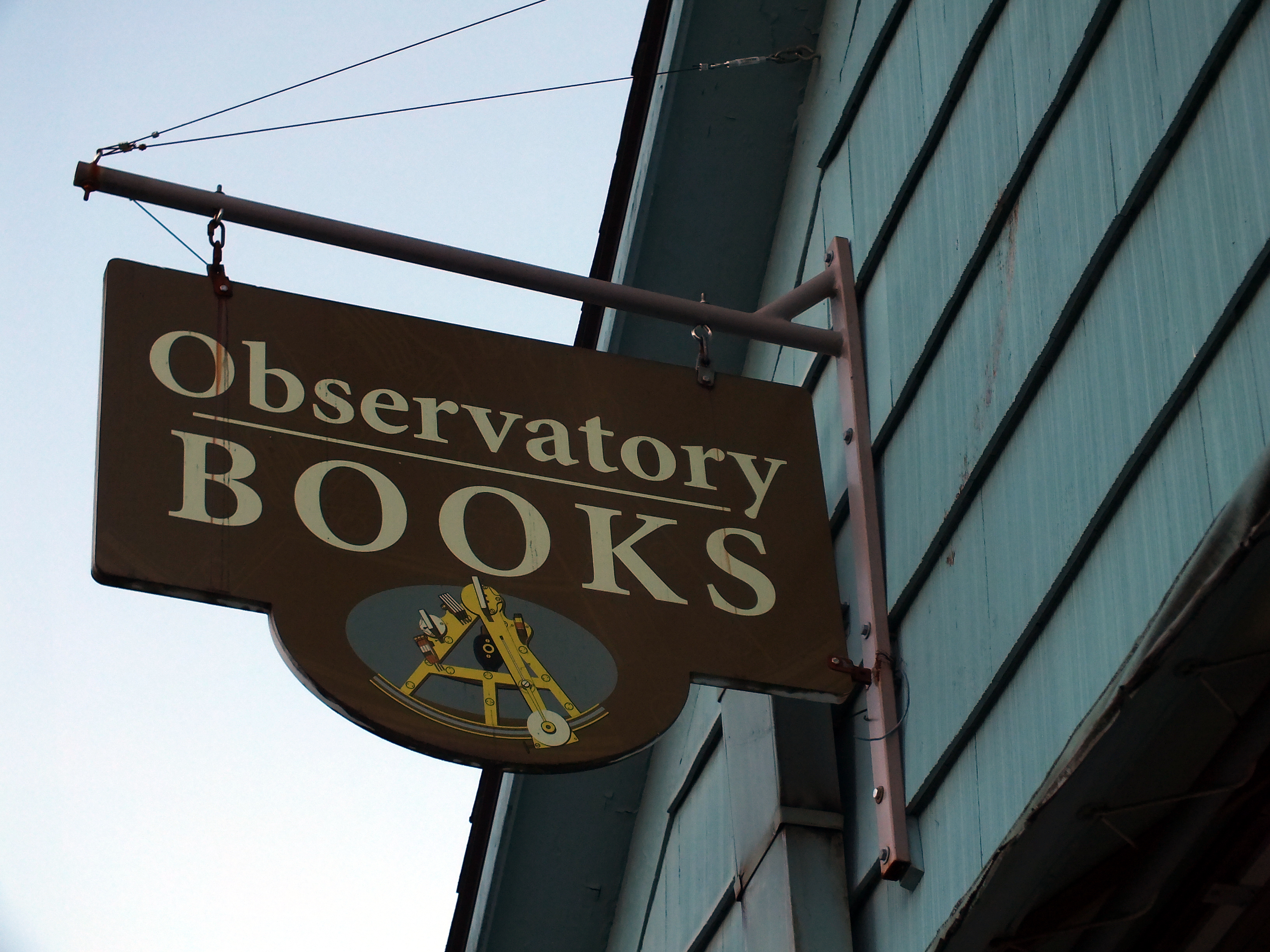
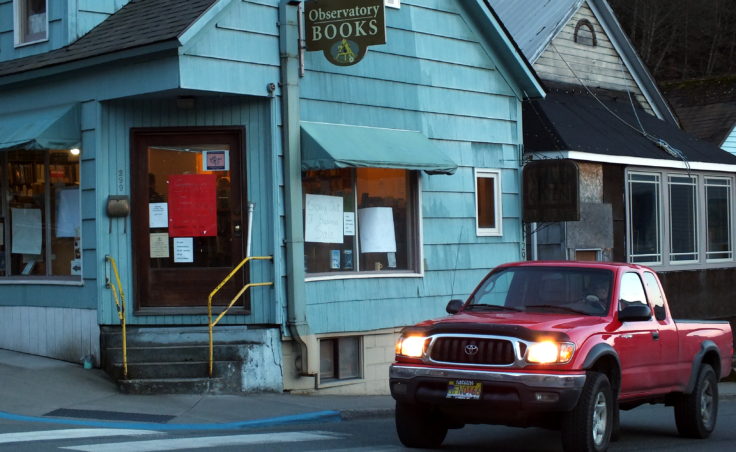
Saturday marks the last day of business for Observatory Books, a long-operating independent shop featuring used and rare books, and antique maps featuring Alaska and the polar regions.
The downtown shop’s longtime proprietor, Dee Longenbaugh, 82, fell ill in April, forcing the business to close. Maps and other items were also taken during a recent burglary.
Longenbaugh’s son and daughters are helping her with a going-out-of-business sale. Store hours are 10 a.m. through 7 p.m. through Nov. 26, except for Thanksgiving.
Observatory Books is located at Franklin and Third streets in downtown Juneau. (Photo by Matt Miller/KTOO)
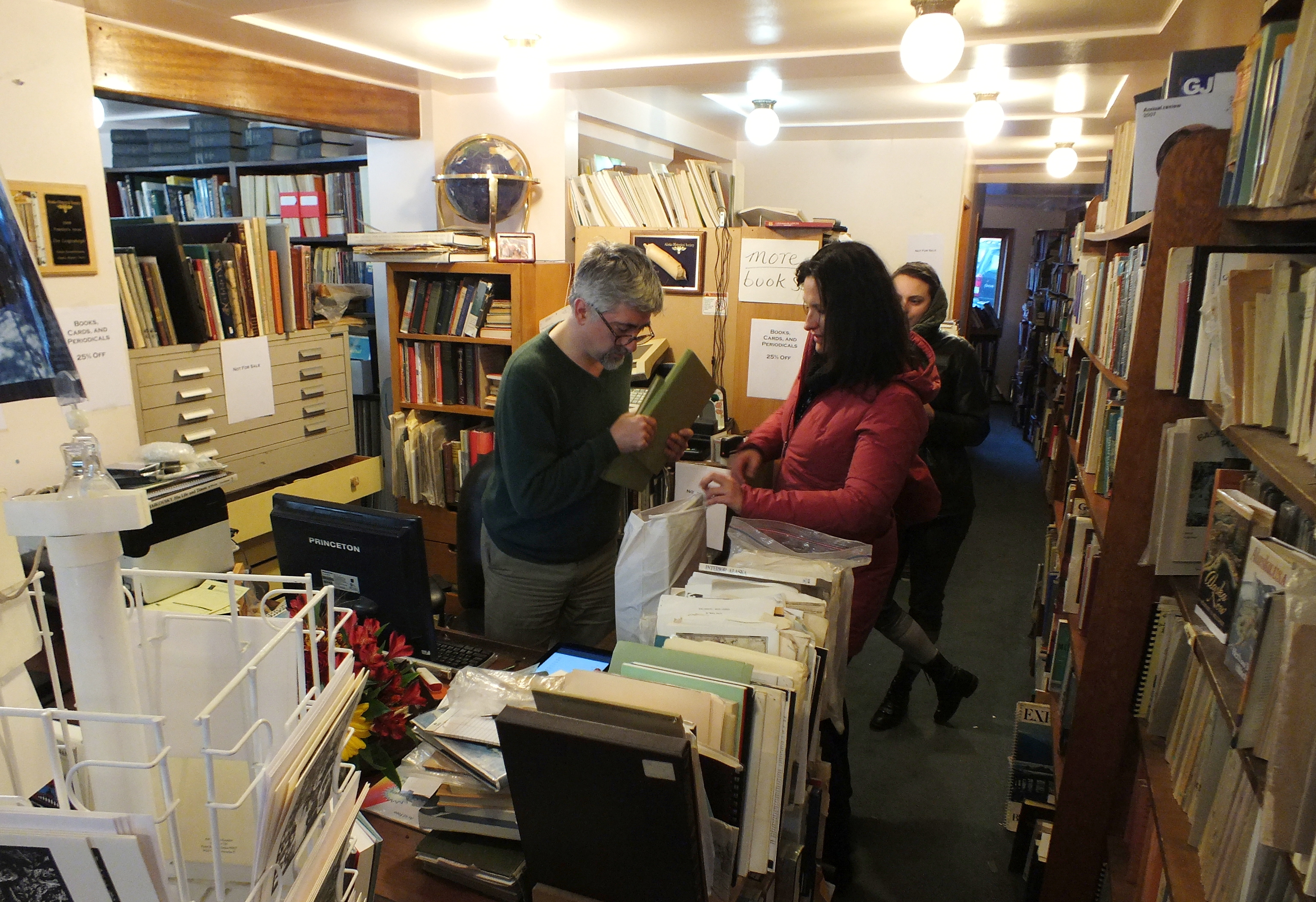
John Longenbaugh helps a customer with her purchase. (Photo by Matt Miller/KTOO)
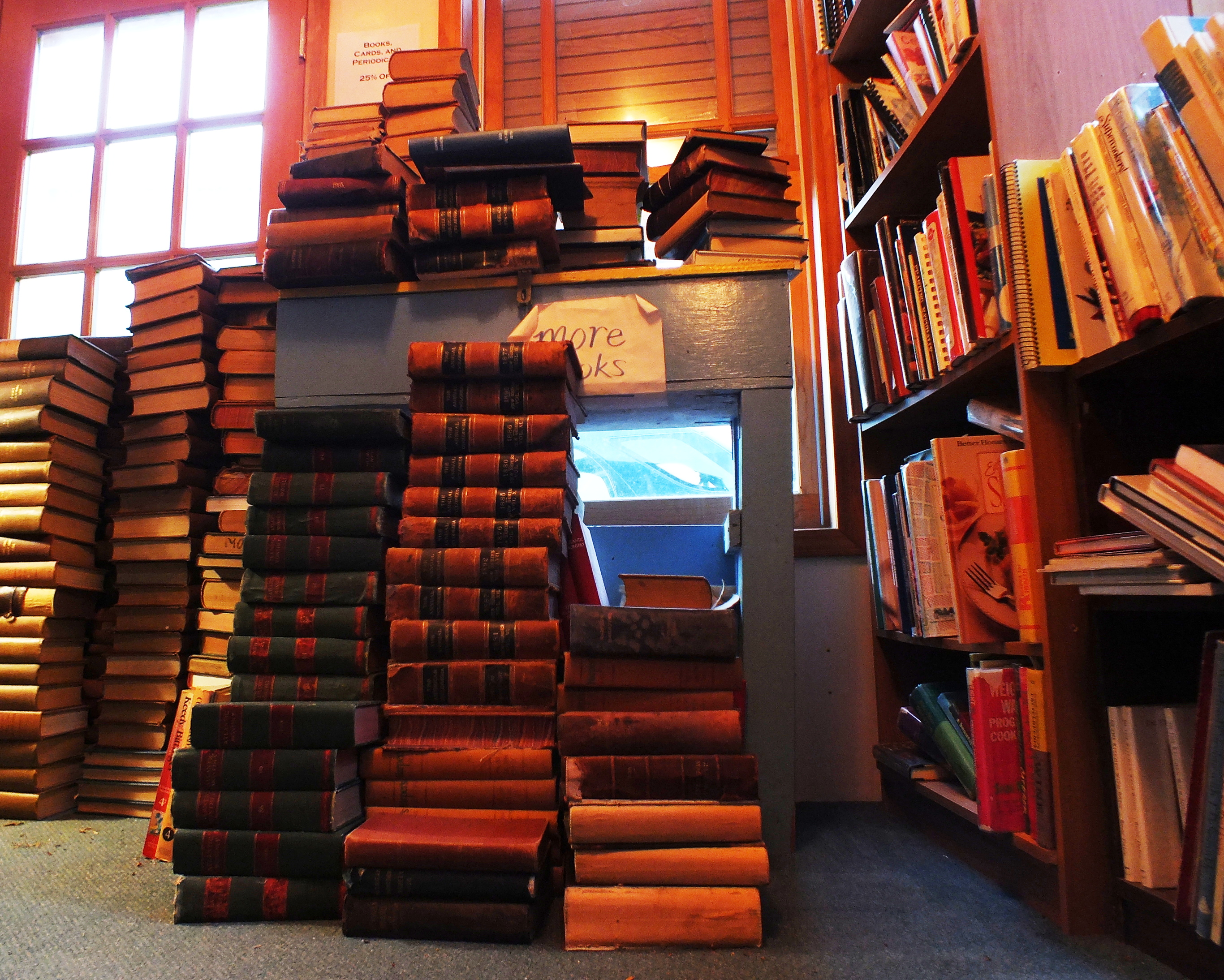
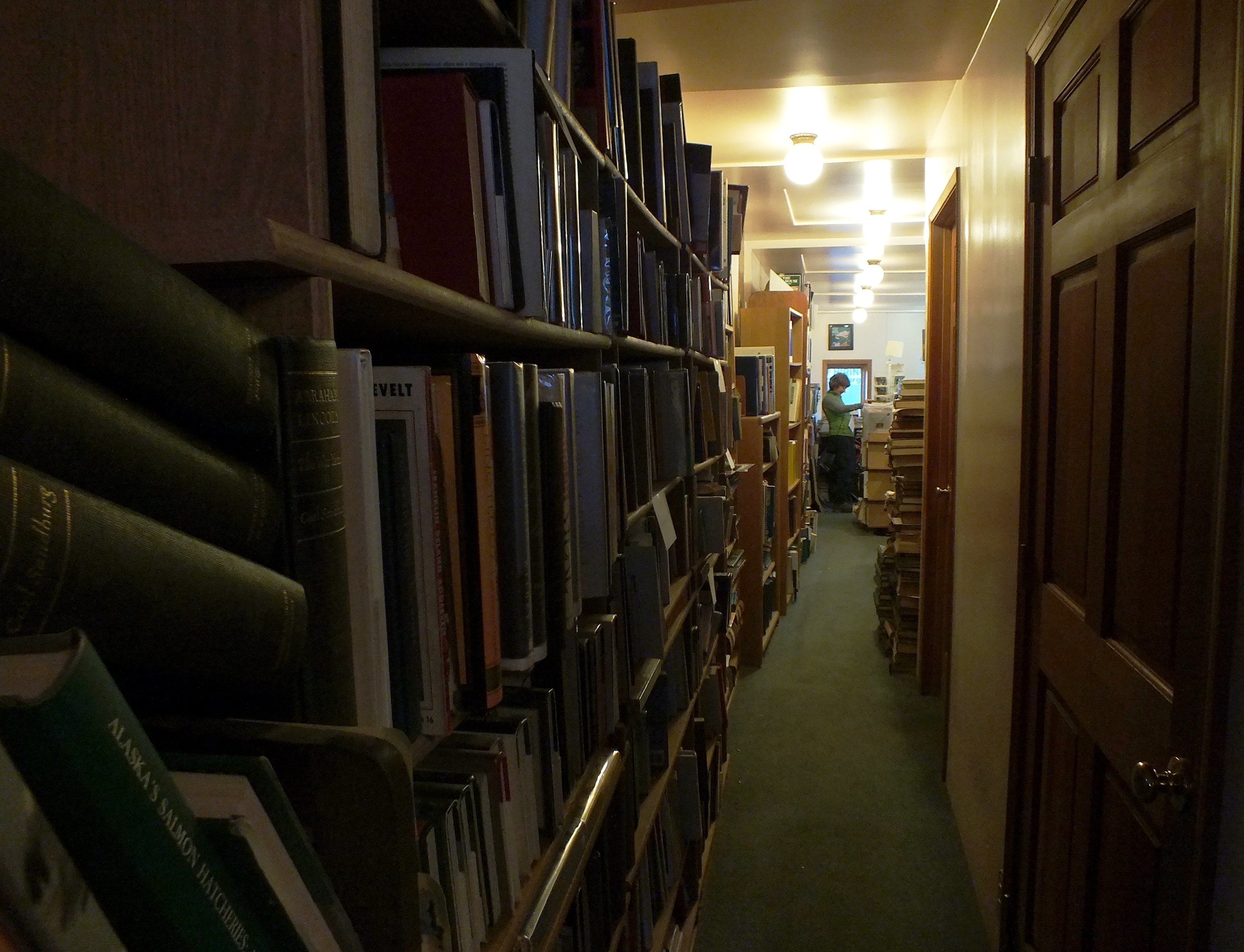
Books, books and more books. (Photo by Matt Miller/KTOO)
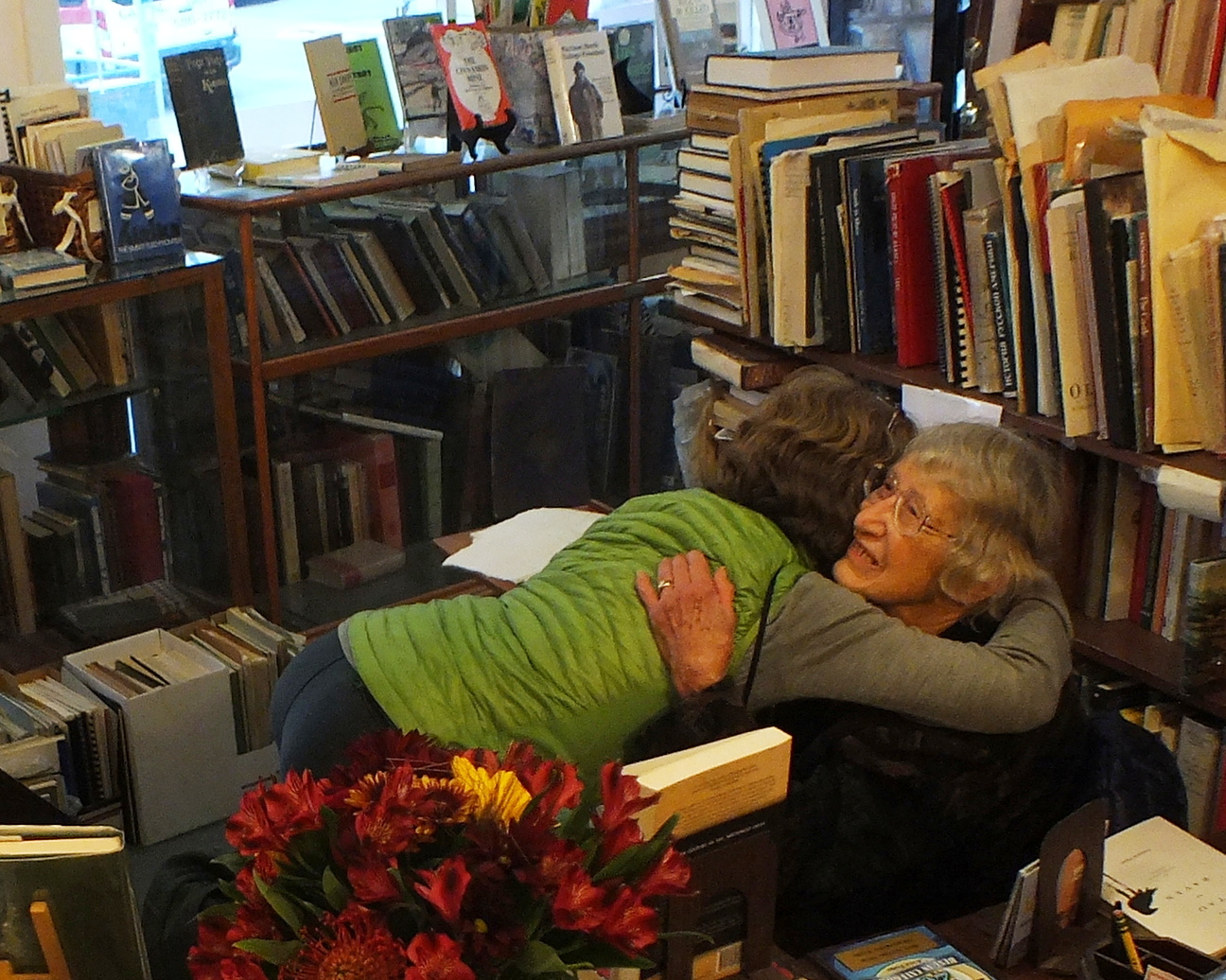
A long-time friend and customer greets Dee Longenbaugh during her going out-of-business sale. (Photo by Matt Miller/KTOO)
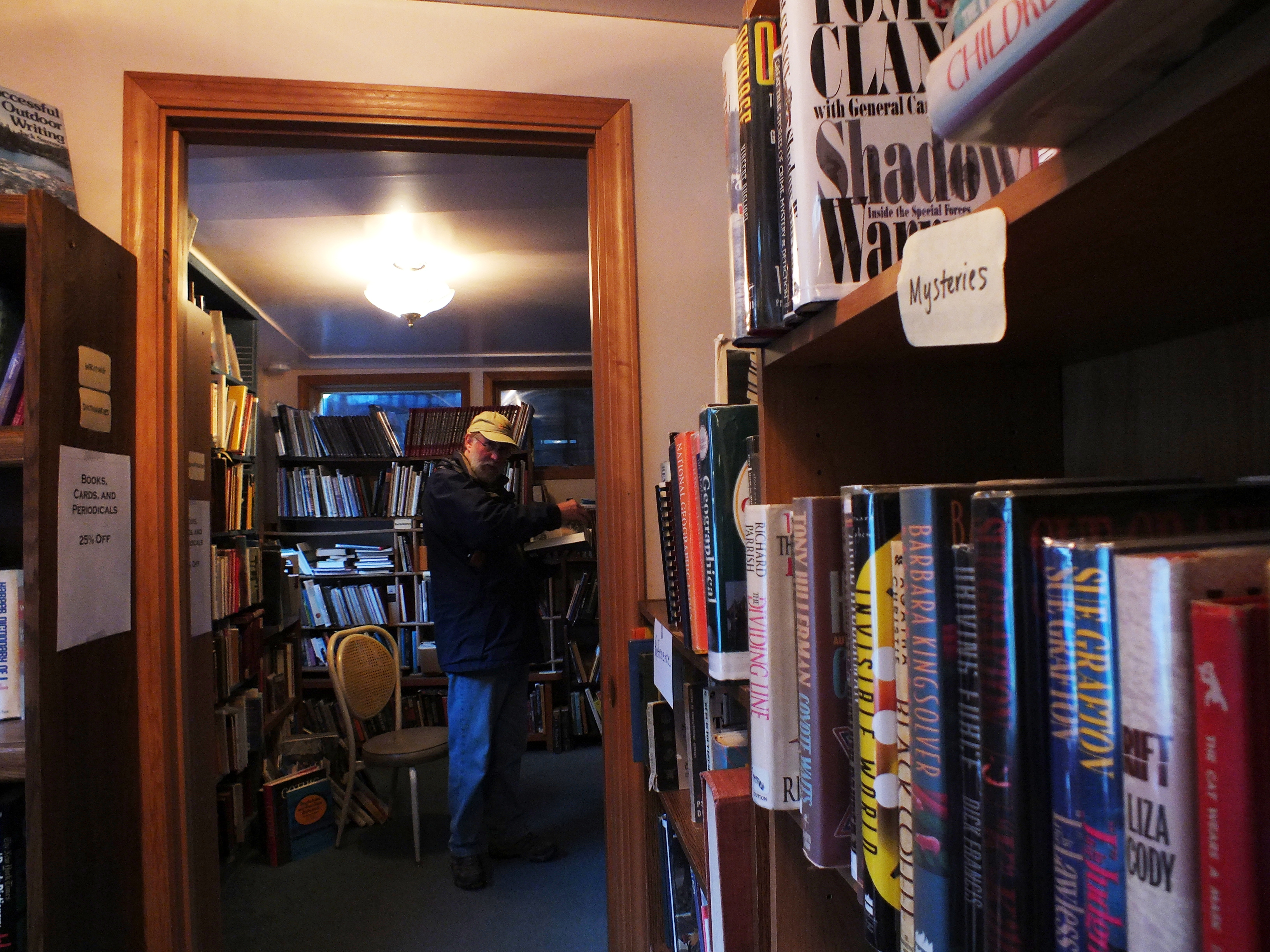
Rare and popular volumes of fiction, nonfiction and reference books line the shelves at Observatory Books. (Photo by Matt Miller/KTOO)
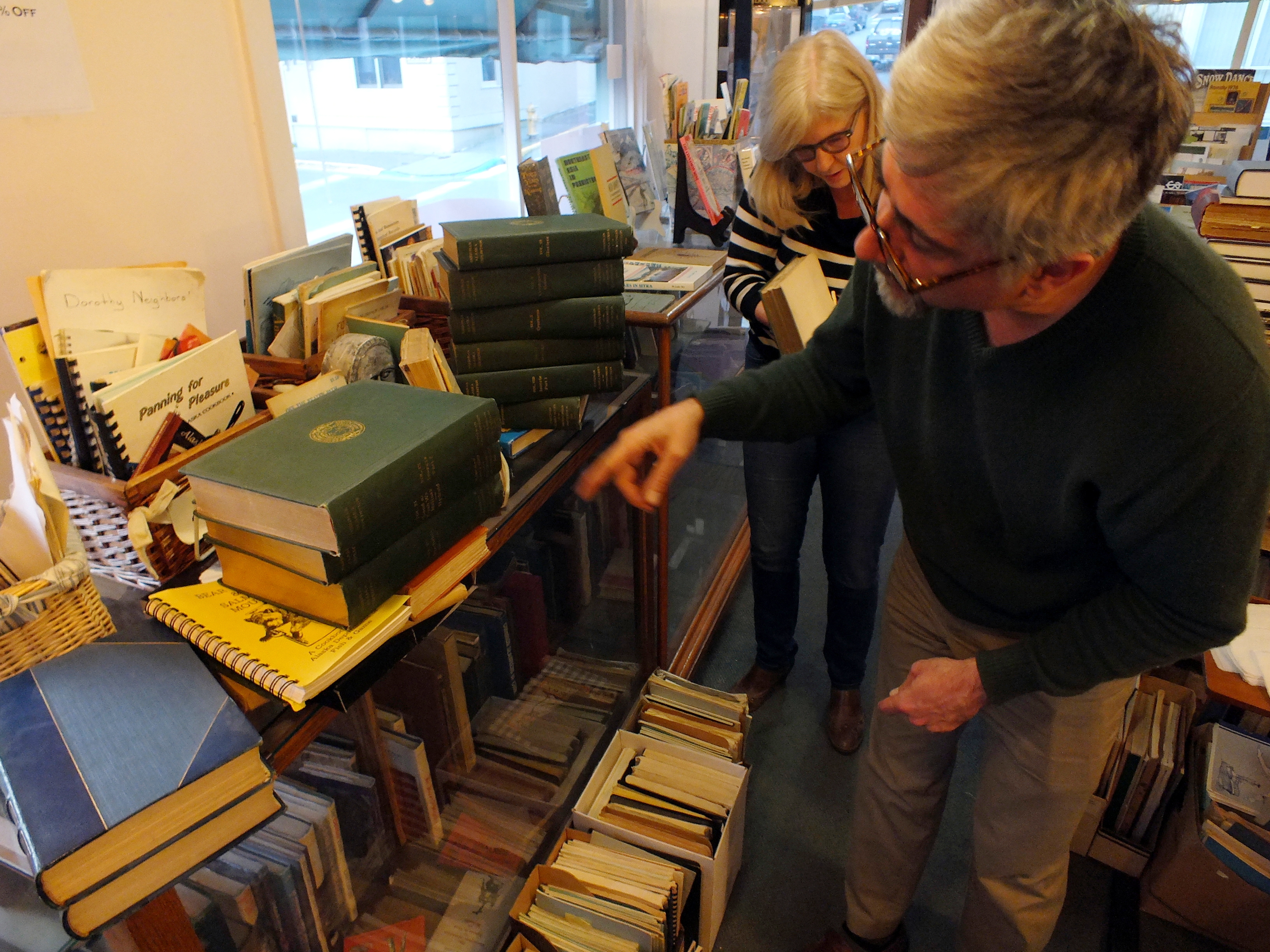
Leslie Longenbaugh and John Longenbaugh survey a set of books for a customer at Observatory Books. (Photo by Matt Miller/KTOO)
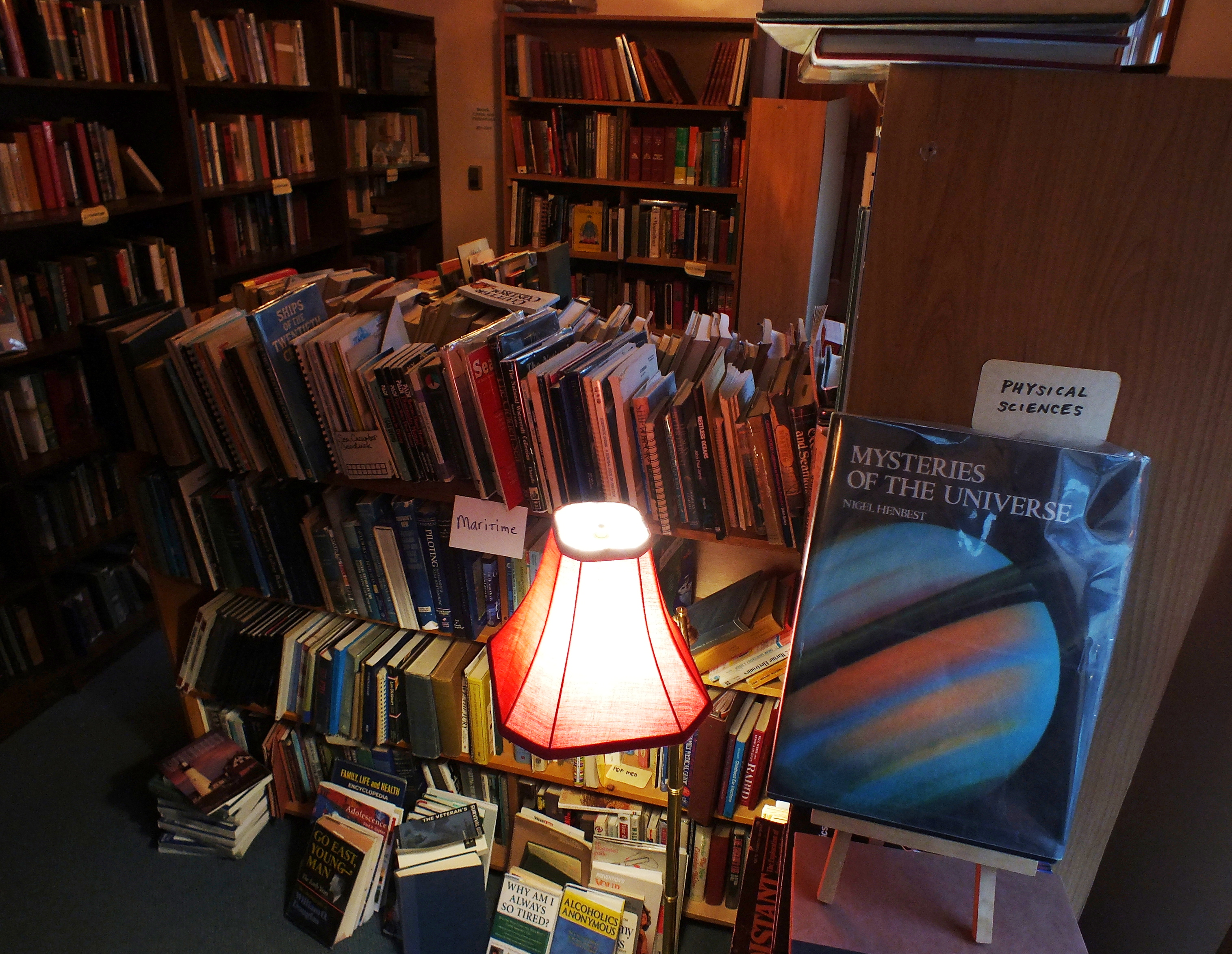
You can even find answers to mysteries of the universe at Observatory Books. All you have to do is look. (Photo by Matt Miller/KTOO)
Books on everything from Alaska history to zoology can be found at Observatory Books. (Photo by Matt Miller/KTOO)
The last day of business for Observatory Books is Nov. 26, 2016. (Photo by Matt Miller/KTOO)
Longenbaugh started operating a book store in Sitka in 1977.
“I was bored,” Longenbaugh said. “I couldn’t think of any thing else to do, and I was trying to think of what would be a fun occupation. I thought books, of course. I loved books. I’d accumulated books. Why not accumulate more and start a little store?”
After ten years, she moved to do the same thing in Santa Fe, New Mexico. But that only lasted two years. She said she missed Southeast Alaska and her daughters, and returned to set up shop in Juneau.
Longenbaugh said she was always intrigued with maps and the stories they could tell.
“The more you fool with maps, the more fascinating (they are),” Longenbaugh said. “Who first was there? And how did they know what they were looking at? And who made the maps? It’s just all so fascinating.”
Longenbaugh said she picked up a lot of used books from people deciding to sell off books they had owned or books they had inherited.
“Usually, that’d be a member of the family they didn’t really like that much,” Longenbaugh said with laugh as she took on the voice of a potential seller. “‘There was my uncle and he collected all these books, and he never really talked about it. He wasn’t a nice guy.’ Oh, really? Would you like to sell them?”
Listen to this excerpt of an interview with Dee Longenbaugh about the story of maps and how old books are valued:
During World War II, the U.S. armed forces utilized Native languages as a way to transmit indecipherable messages in the Pacific Theater.
It was a code the Japanese were never able to break, and it’s credited with saving the lives of thousands of troops.
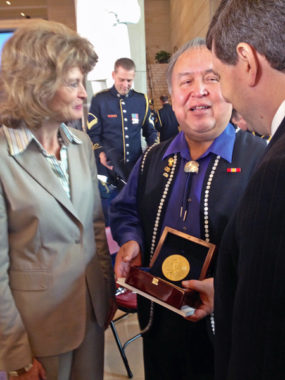
Ozzie Sheakley hold the Congressional Gold Medal awarded to the Tlingit Tribe for code talking service during World War II. He speaks to Sens. Lisa Murkowski and Mark Begich after the ceremony. (Photo by Liz Ruskin/APRN)
The Sealaska Heritage Institute is hosting a series of noon lectures honoring Native warriors — past and present.
Tuesday’s lecture is about code talkers, a group of Native soldiers who helped transmit coded messages during World War II.
Rosita Worl is president of the Sealaska Heritage Institute.
“Of course, everybody’s heard about the Navajo code talkers. And I think we were all proud of them,” Worl said. “Whatever Native American group you were, I think, we were all very proud to know that the Navajo code talkers helped, you know, helped the United States and helped us to achieve victory.”
“They were not aware, I guess, when that requirement was lifted, so they went to their graves without telling us,” Worl said.
In 2013, the Congressional Gold Medal was awarded to the Central Council of the Tlingit and Haida Indian Tribes of Alaska at an event honoring more than 200 code talkers and their families.
Congress posthumously awarded five Tlingit men Congressional Silver Medals for their service as code talkers in World War II.
The honor came as a surprise to many, including the family of the code talkers.
“But for us it was people we knew. We grew up around these individuals but people will tell you that not once, not once did we ever hear that they talked, that they were code talkers,” Worl said.
Ozzie Sheakley is the commander of Southeast Alaska Native Veterans. He will speak about the Tlingit code talkers during a lecture sponsored by the Sealaska Heritage Institute. It’s part of a series honoring Native veterans during Native American Heritage Month.
The lecture will also feature Judith Avila, who wrote “Code Talker: The First and Only Memoir by One of the Original Navajo Code Talkers of WWII.”
The lecture is noon Tuesday in the Walter Soboleff Building in downtown Juneau.
Correction: A previous version incorrectly identified the number of non-Navajo tribes honored for the service of Native code talkers. This version has been updated to correct the actual number.
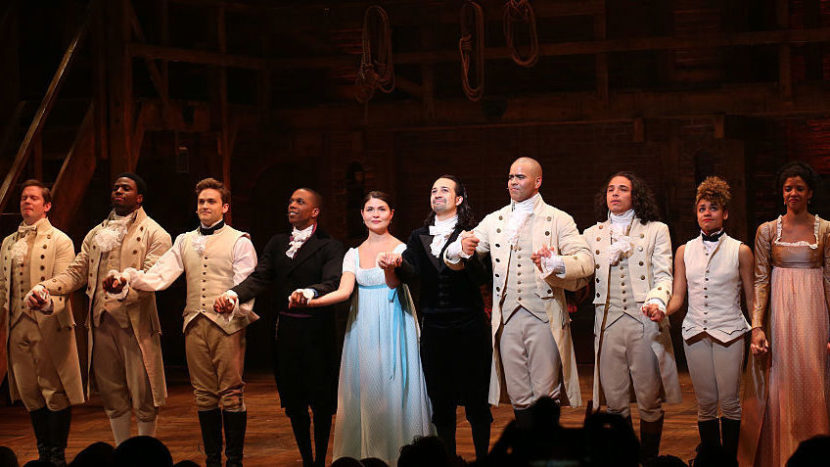
Leslie Odom Jr., Phillipa Soo and Ariana DeBose with Lin-Manuel Miranda with the cast during their final performance curtain call of “Hamilton” in July. Walter McBride/WireImage
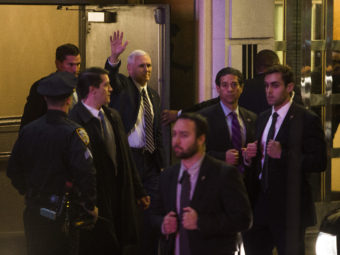
Vice President-elect Mike Pence was presumably seeking a quiet night out at the theater, enjoying one of Broadway’s hottest tickets with a Friday night performance of Hamilton: An American Musical.
What he got instead was a welcome of boos and cheers from the crowd and a pointed plea from the diverse cast and crew afterwards about what they believe really makes America great.
At the curtain call, actor Brandon Victor Dixon — who plays former Vice President Aaron Burr, who infamously shot and killed Hamilton in a duel — read a statement from the cast, which is made up of largely black and Latino actors who play the white Founding Fathers.
“There’s nothing to boo here, ladies and gentlemen, nothing to boo,” Dixon said, quieting the crowd who had met Pence with a mix of jeers and cheers when he entered the theater before the show. Pence was on his way out, but Dixon urged him to pause and hear their thoughts. Dixon thanked Pence for attending and said he was welcome there.
“We, sir, we are the diverse America who are alarmed and anxious that your new administration will not protect us, our planet, our children, our parents, or defend us and uphold our inalienable rights, sir,” Dixon said. “But we truly hope that this show has inspired you to uphold our American values and to work on behalf all of us.”
As Indiana governor, Pence signed into law a controversial so-called religious freedom law, which sparked backlash from LGBT groups; he later signed an amendment to clarify some of its protections.
In the past, Pence has supported publicly-funded gay “conversion therapy,” as well as calling for an “audit to ensure that federal dollars were no longer being given to organizations that celebrate and encourage the types of behaviors that facilitate the spreading of the HIV virus.” Several of the show’s actors, including Javier Munoz who plays the titular character, are openly gay. Munoz is also HIV positive.
Vice President-elect Mike Pence, top center, leaves the Richard Rodgers Theatre after a performance of “Hamilton” on Friday. Andres Kudacki/AP
The New York Times reported that the statement was written by the show’s creator and former star, Lin-Manuel Miranda, director Thomas Kail and lead producer Jeffrey Seller, with input from cast members.
According to NPR’s Peter Overby, who happened to be watching the show in New York City Friday evening with his family, Pence’s presence seemed to punctuate some of the lines in the Tony award-winning musical about founding father Alexander Hamilton, who rose from being a bastard, orphan immigrant to America’s first Treasury secretary.
“His presence also seemed to provoke an especially strong ovation at the line ‘Immigrants, we get the job done,'” Overby noted of the exchange between Hamilton and the Marquis de Lafayette at the beginning of the song “Yorktown,” about the final major battle of the American Revolution.
Overby also reported that the song “What Comes Next,” sung by King George III postulating about the challenges America faces after an unlikely victory, also provoked cheers and applause that stopped the show during the lines “It’s much harder when it’s all your call” and “When your people say they hate you, don’t come crawling back to me.”
The acclaimed politically-themed musical has been used as fodder for much of the campaign, with politicians and celebrities regularly attending. Democratic nominee Hillary Clinton saw the show several times and the cast also performed the show as a fundraiser for her campaign. Miranda also performed at a Broadway fundraiser for Clinton’s campaign just weeks before the election. President Obama and first lady Michelle Obama are huge fans of the rap and hip-hop inspired musical as well; they introduced it at this past summer’s Tony Awards, where it won 11 awards, and also had the cast at the White House to perform for high school students.
President-elect Donald Trump was less than impressed with the reaction from the crowd and the cast of Hamilton toward his running mate, claiming that the vice president-elect had been “harass[ed]” and demanded that Pence get an apology. Several times throughout the campaign, when Trump offended the gold star Khan family and a disabled reporter, he never apologized.
The Theater must always be a safe and special place.The cast of Hamilton was very rude last night to a very good man, Mike Pence. Apologize!


9(MDEwMjQ0ODM1MDEzNDk4MTEzNjU3NTRhYg004))




9(MDEwMjQ0ODM1MDEzNDk4MTEzNjU3NTRhYg004))