History

Will paperwork kill traditional tattooing?

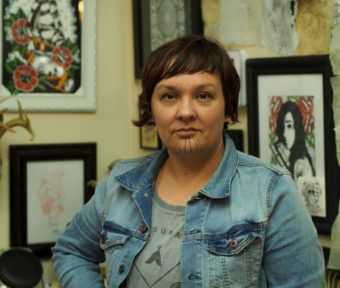
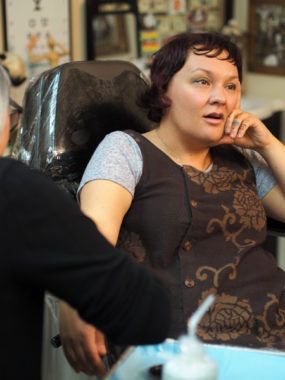
Holly Mititquq Nordlum at Above The Rest tattoo shop in Anchorage, where she’s working to meet the state’s official requirements to be eligible for a tattoo license.
Holly Mititquq Nordlum at Above The Rest tattoo shop in Anchorage, where she’s working to meet the state’s official requirements to be eligible for a tattoo license. (Photo by Zachariah Hughes/Alaska Public Media)

Inside the cramped back room of an Anchorage tattoo parlor filled with colorful masks and sketches, tattoo guns steadily buzzed as artist Holly Mititquq Nordlum scrubbed down a sink.

“I’m doing a little bit of cleaning, just to make sure the space we’re working with is very safe,” she explained.

Nordlum has been at the forefront of the indigenous tattoo revival in Alaska, receiving recognition and support from major cultural institutions, including the Anchorage Museum and the Sundance Institute.

But her work has gone well beyond the boundaries of fine arts: Nordlum turned herself into a piece last year, when Greenlandic tattooist and collaborator Maya Sialuk Jacobsen tattooed her before a public audience in this same shop, stitching a design into her forearm with a needle and thread. Days later, in private, Jacobsen poked six lines down Nordlum’s chin, a design drawn from her home in Kotzebue.

More recently, she’s been preparing a month-long workshop for three Alaska Native women in every aspect of traditional tattooing, from state regulations to the history of designs and practicing on human skin.

The course should set the women up to apply for an official state license. Part of the state’s requirements for licensing tattooists is 150 hours of “practical operations” in a tattoo shop. Nordlum, who is not certified to tattoo, has started putting in that work already. And even though she’s an established artist, she’s by no means exempt from menial chores – hence the scrubbing.

“It counts towards the hours that then count toward your license for the state requirements,” she said, unfazed. “It’s just part of the process.”

Within the international community of indigenous artists and advocates working to revitalize tattooing, seeking official approval is controversial.

Some people reject that governments have any right to regulate indigenous practices that go back thousands of years. But Nordlum is of the mind that in today’s world, getting an official license is just another box to check off to facilitate the larger goal of reviving traditional tattooing as a vibrant cultural process.

“As somebody organizing the program, I feel like I should do everything in my power to be as qualified as I can be,” Norldum said. Though she thinks safety and sanitation standards are a given for serious practitioners, she thinks it builds credibility if she has the state’s seal of approval.
Holly Mititquq Nordlum sits for a tattoo along her wrist from Greenlandic artist Maya Sialuk Jacobsen during a live demonstration of traditional tattooing techniques in 2015.
Holly Mititquq Nordlum sits for a tattoo along her wrist from Greenlandic artist Maya Sialuk Jacobsen during a live demonstration of traditional tattooing techniques in 2015. (Photo by Zachariah Hughes/Alaska Public Media)

In spite of these aims, Nordlum was recently admonished by the State of Alaska. In a “non-disciplinary letter of advisement,” a state investigator informed her that last year’s tattoo demonstration violated state statutes; visiting artist Jacobsen’s request for a courtesy license to tattoo in Alaska was deemed incomplete.

Angela Birt, an investigator for the Department of Commerce, Community, and Economic Development, said the letter is not an official sanction. But if the same rule is broken again, Nordlum or Jacobsen could face more serious consequences.

For Nordlum, getting the letter felt like an insult. She said she’d repeatedly asked for clarity on how to meet regulatory requirements, only to be either stonewalled or shrugged off.

“All I’ve been asking for two years is someone to talk to me and work with me, because there’s obviously things that aren’t going to mesh, and there is no response,” Nordlum said.

Missionaries and colonization nearly extinguished the indigenous practice of tattooing among Alaska Natives and Inuit across the circumpolar north. Now, modern advocates and artists see the beginning of a widespread revival.

But revitalization efforts are being threatened by an unanticipated barrier: state bureaucracy.

“I’m really trying to work with the State of Alaska,” she added. “It’s my state, I live here, and I’m being roadblocked every step of the way,” Nordlum said.

But regulators with the state don’t see it that way.

Sara Chambers is with the Division of Corporations, Business, and Professional Licensing, and oversees the 43 different boards that set standards for various industries. Among them is the Board of Barbers and Hairdressers, which includes under its purview body modification and tattooing. According to Chambers, that board has clearly defined protocols to allow traditional tattooing.

The problem was not the process, Chambers said, it was the execution: Nordlum’s application for a courtesy license for Jacobsen last year likely would have been approved, but it wasn’t submitted in time.

Chambers said the division is accustomed to handling nuanced license applications given the unique challenges raised by conditions across much of rural Alaska, and she denied that regulatory requirements for traditional tattooing are unworkable. Even amid a growing number of applications over the last few years, Chambers said the division has enough staff on hand to work through issues with residents.

The state’s rules over tattoos are intended to protect Alaskans from serious risks of blood-borne pathogens and diseases, Chambers said, adding that a successful licensing process depends on applicants being well-informed about regulations.

“The casual hobbyist sometimes has to ask themselves whether they plan to meet the standards required by the legislature,” Chambers said.
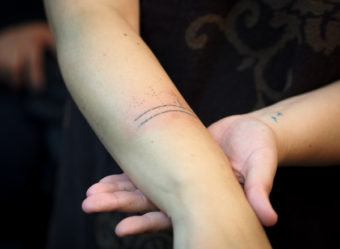
Holly Mititquq Nordlum shows off her partially complete tattoo during a live demonstration at Anchorage’s Above The Rest studio. Each horizontal line is 40 individual stitch marks through the first layer of skin. Before starting the stitches, Jacobsen poked the basic design of three bird feet rising from the lines. Nordlum’s Inupiaq name, Mititquq, means ‘a place where birds land,’ and she celebrates big life goals with bird feet tattoos, like the two on her opposite wrist, done with a tattoo gun. (Photo by Zachariah Hughes/ KSKA)
Holly Mititquq Nordlum shows off her partially complete tattoo during a live demonstration at Anchorage’s Above The Rest studio. Each horizontal line is 40 individual stitch marks through the first layer of skin. Before starting the stitches, Jacobsen poked the basic design of three bird feet rising from the lines. Nordlum’s Inupiaq name, Mititquq, means ‘a place where birds land,’ and she celebrates big life goals with bird feet tattoos, like the two on her opposite wrist, done with a tattoo gun. (Photo by Zachariah Hughes/Alaska Public Media)

But cultural practices like traditional tattooing are fundamentally different from occupational standards governing, for example, barbers and hairdressers. That’s according to a body of international law that is focused on cases like these, and puts the onus on governments to be flexible in guaranteeing access to cultural rights.

“Unfortunately, this is par for the course,” said Dalee Sambo Dorough, an associate professor of political science at the University of Alaska Anchorage, and an expert member of the United Nation’s Permanent Forum on Indigenous Issues.

According to Dorough, there are numerous provisions under the UN’s Declaration on the Rights of Indigenous Peoples — a non-binding document the U.S. has supported since 2010 — that bolster Nordlum’s position that the state has been unreasonably rigid.

Article 31 spells out that indigenous peoples have a right to “maintain, control, (and) protect” “traditional cultural expressions,” which explicitly includes design and visual arts. Article 36 specifies that indigenous groups separated by international borders, which could include Inuit of the Circumpolar North, have a right to convene for cultural practices. Not only that, but state governments are obligated to help implement this right.

“There should be some openness and willingness on the part of the state government to find a way to work with them, rather than requiring that they conform to the imposed regulatory scheme,” Dorough said by phone from her Anchorage office. In her interpretation, international conventions trump the regulatory requirements laid out by the barbers and hairdressers.

But that conclusion might not be enough for Nordlum, who is still scrambling to finalize logistics, funding, and travel ahead of the upcoming workshop, which begins in October.

She didn’t bother submitting paperwork to the state this time around, because calls to the relevant regulatory bodies didn’t shed any new light on the application process. She said she was curtly directed to get a courtesy license for Jacobsen, just like last year. After spending dozens of hours and hundreds of dollars in 2015, Nordlum said it felt like a pointless waste of time and money.

Nordlum hopes a solution will come from lawmakers or the governor’s office. In the meantime, she doesn’t understand why the state is making it so difficult to bring in a teacher like Jacobsen to share skills that Alaskans are desperate to learn.

“She’s a culture bearer,” Nordlum said. “This is a cultural practice.”
 

Museum of the Aleutians reopens after yearlong closure

The Museum of the Aleutians has officially reopened after a scandal closed the space for nearly a year.

Last week, new Executive Director Neal Hitch announced the museum has set regular hours for the first time since last fall, when the former director resigned after items from the collection were found in her home.

In his first month on the job, Hitch has reopened the museum gradually — allowing visitors during cruise ship and ferry stops, even though the building’s technically been closed.

So far, he said the museum has had more than 1,500 visitors.

“In the first six weeks of this fiscal year, we’re going to eclipse our visitation numbers for the entire last year,” he said.

The museum has hired two part-time employees to staff the front desk, and Hitch said he’s looking for a full-time collections manager. He’s also applying for grants to fund future exhibits.

The Museum of the Aleutians is now open Tuesday through Friday from 11 a.m. to 3 p.m. and on Saturday from 10 a.m. to 4 p.m.

‘We Will Never Forget’: Nationwide Ceremonies Mark 15 Years Since Sept. 11

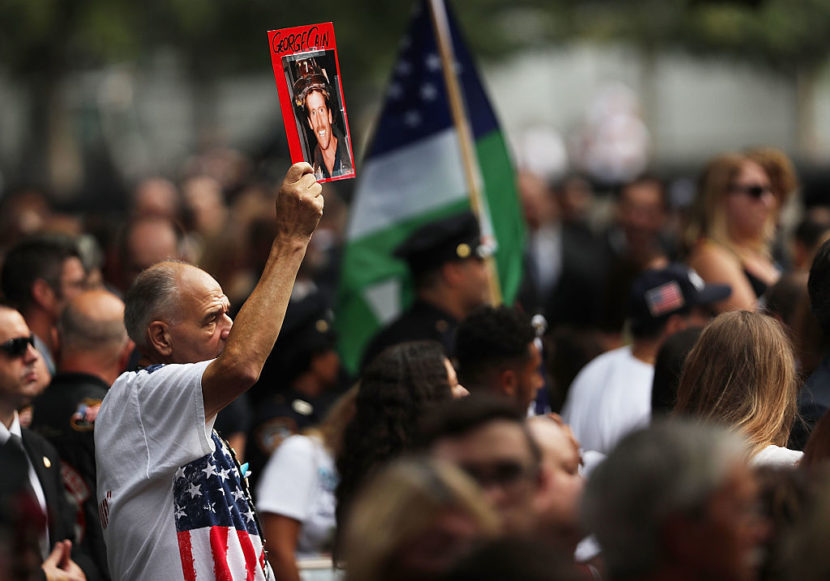
A commemoration ceremony is held for the victims of the Sept. 11 terrorist attacks on Sunday at the National September 11 Memorial and Museum in New York City. Spencer Platt /Getty Images
A commemoration ceremony is held for the victims of the Sept. 11 terrorist attacks on Sunday at the National September 11 Memorial and Museum in New York City.
Spencer Platt /Getty Images

The names of each of the nearly 3,000 victims of the Sept. 11 attacks were read at a ceremony at the Sept. 11 memorial plaza, at the World Trade Center site in New York City. This marks the 15th anniversary of the attacks.

Family members came forward to name and honor their relatives who died at the World Trade Center, the Pentagon and on Flight 93. The event also commemorated the victims of the 1993 World Trade Center bombings.

As WNYC’s Stephen Nessen told our Newscast unit, family members often included an anecdote or update as well. “I heard one young man say, ‘Dad, I’m starting college this fall.’ One woman said ‘Not a day goes by that I don’t miss you. I want you to know your grandchild was born on your birthday.’ ”

He described the scene: “Some people are holding pictures of their loved ones. Many of them bring these signs out every single year, sort of collage photos. Many people make their own t-shirts to remember the loved one from their family that died.”

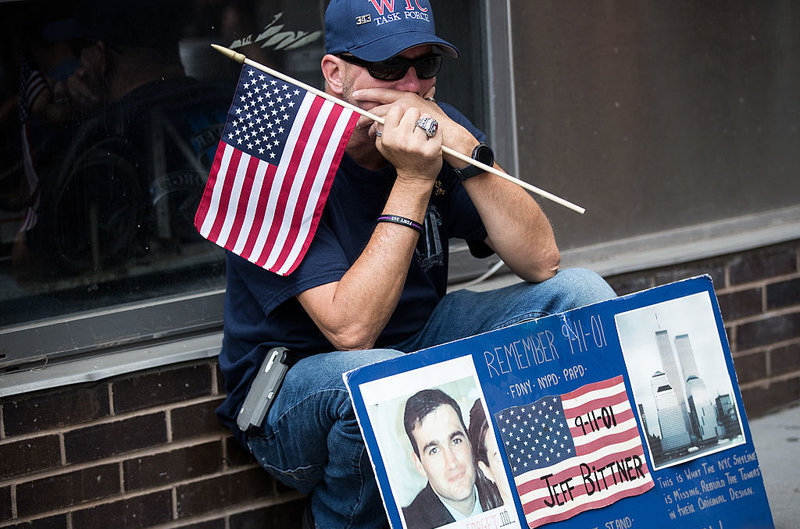
A man pauses near the Sept. 11 Memorial site in New York City. Drew Angerer/Getty Images
A man pauses near the Sept. 11 Memorial site in New York City.
Drew Angerer/Getty Images

The ceremony included six moments of silence — to mark the times that the four planes hit the World Trade Center towers, the Pentagon and crashed near Shanksville, Penn., and to observe the time that each tower fell.

Donald Trump and Hillary Clinton both attended the event.

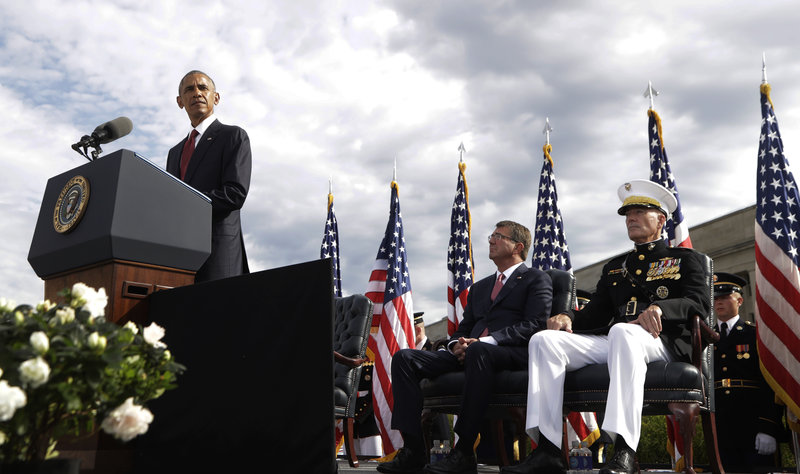
Commemoration events are happening across the country, including at the Pentagon, where President Obama spoke:

“We remember, and we will never forget, the nearly 3,000 lives taken from us so cruelly, including 184 men, women and children here — the youngest just three years old. We honor the courage of those who put themselves in harm’s way to save people they never knew. We come together in prayer, and in gratitude for the strength that has fortified us across these 15 years.”

During his comments, Obama reflected on the changing nature of the fight against extremists. “We stay true to the spirit of this day by defending not only our country, but also our ideals,” he said. “Fifteen years into this fight, the threat has evolved. With our stronger defenses, terrorists often attempt attacks on a smaller, but still deadly scale. Hateful ideologies urge people in their own countries to commit unspeakable violence.”

President Barack Obama speaks at a memorial observance ceremony at the Pentagon on Sunday. Manuel Balce/AP
President Barack Obama speaks at a memorial observance ceremony at the Pentagon on Sunday.
Manuel Balce/AP

And that’s why, he said, “it is so important today that we reaffirm our character as a nation of people drawn from every corner of the world, every color, every religion, every background, bound by a creed as old as our founding — E Pluribus Unum — out of many, we are one.”

He added: “In the end, the most enduring memorial to those we lost is ensuring the America that we continue to be. That we stay true to ourselves, that we stay true to what’s best in us. That we do not let others divide us.”

Watch his remarks here:

A ceremony was also held in Shanksville, Pa., where United Airlines Flight 93 crashed into a field after passengers and crew members fought off the attackers.

WITF’s Katie Meyer described the commemoration for our Newscast unit:

“The mood is somber today, the ceremony which is held every year just began. A reading of the names just finished, family members read out the names of those who were lost on the flight, accompanied by the sounding of bells. Behind me you can hear U.S. Secretary of the Interior, Sally Jewell, starting her address to the people here. There’s going to be speeches from a lot of people in the next hour — many from public officials. … It’s cool today, windy and cloud. Now and then the sun breaks through.”

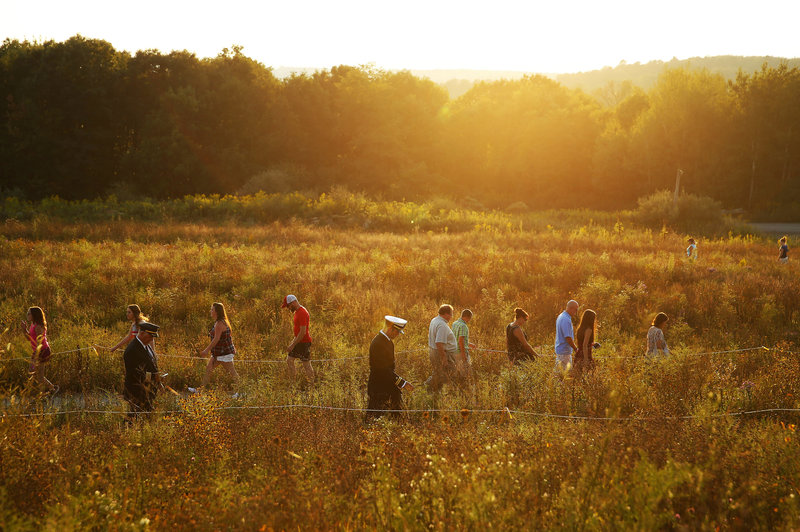
Visitors make their way through the Flight 93 National Memorial before lit candles are carried to the Wall of Names in memory of the passengers and crew of Flight 93, at the Flight 93 National Memorial in Shanksville, Pa. Jared Wickerham/AP
Visitors make their way through the Flight 93 National Memorial before lit candles are carried to the Wall of Names in memory of the passengers and crew of Flight 93, at the Flight 93 National Memorial in Shanksville, Pa.
Jared Wickerham/AP

Copyright 2016 NPR. To see more, visit http://www.npr.org/.

Sept. 11 Families Face ‘Strange, Empty Void’ Without Victims’ Remains

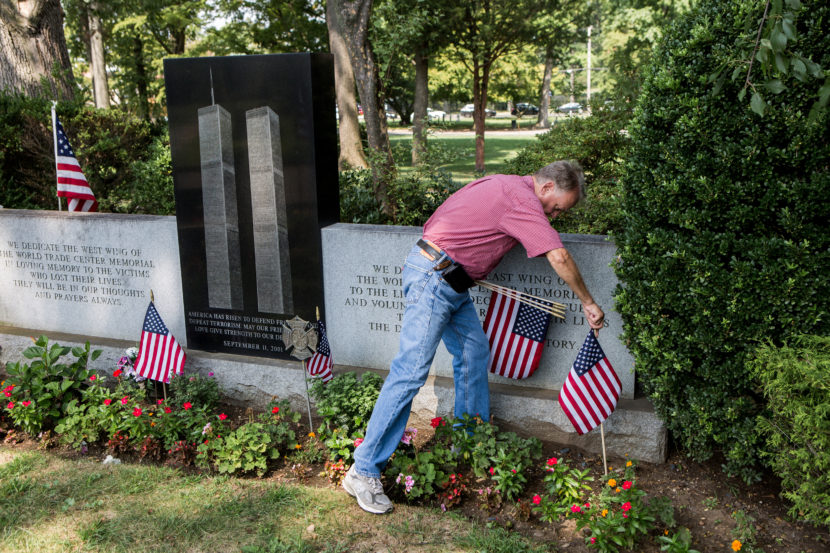
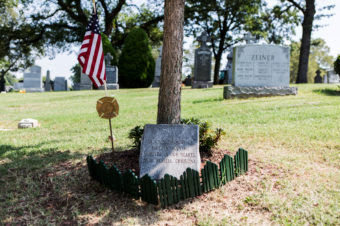
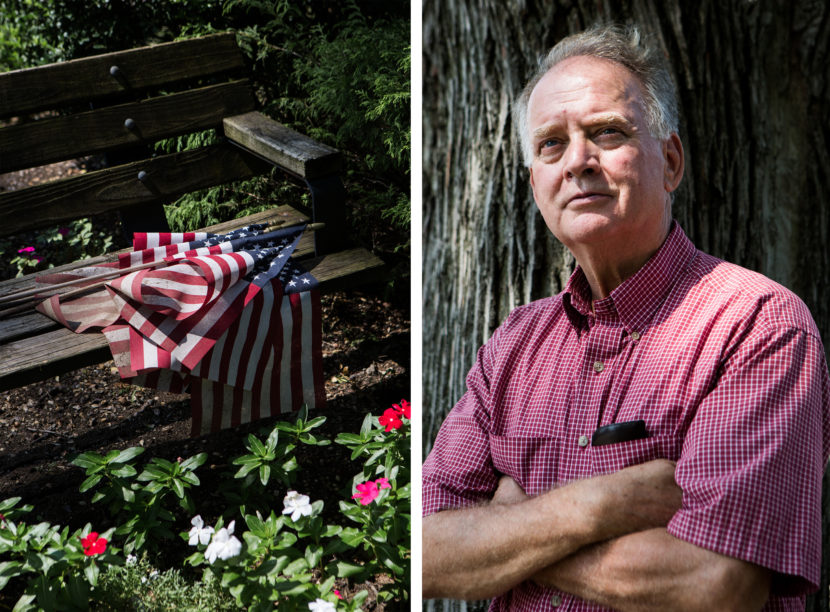
Russell Mercer replaces old U.S. flags with new ones at the Flushing World Trade Center Memorial at Flushing Cemetery in New York City. His stepson, Scott Kopytko, was killed on Sept. 11. Alex Welsh for NPR
Russell Mercer replaces old U.S. flags with new ones at the Flushing World Trade Center Memorial at Flushing Cemetery in New York City. His stepson, Scott Kopytko, was killed on Sept. 11.
Alex Welsh for NPR

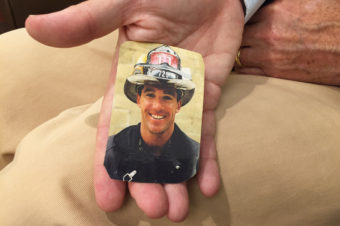
Before Scott Kopytko joined the New York City Fire Department, he worked as a commodities broker in the South Tower at the World Trade Center. On Sept. 11, he rushed up the stairs of his old office building, trying to save lives with his fellow firefighters before the towers fell.

Scott Kopytko's parents regularly visit a stone memorial at Mount St. Mary's Cemetery in Flushing, Queens. Alex Welsh for NPR
Scott Kopytko’s parents regularly visit a stone memorial at Mount St. Mary’s Cemetery in Flushing, Queens.
Alex Welsh for NPR

“He went to work, and he never came back,” says his stepfather, Russell Mercer.

Almost every morning, Mercer and Kopytko’s mother take turns visiting the cemetery across from their son’s old high school in the Queens borough of New York City. Under a young oak tree next to fading tombstones, they water pink flowers behind a small, square stone engraved for Kopytko.

“It’s a place where we can go, me and my family, to talk to Scott. But there’s nothing there,” Mercer says. “We need some kind of DNA, some human remains, where you can go to and say, ‘This is where Scott is.’ ”

Fifteen years after the attacks, families of 40 percent of the World Trade Center victims have not received any remains of their loved ones.

Russell Mercer donates old U.S. flags from Sept. 11 memorials to a post of Veterans of Foreign Wars. He is still waiting to recover remains of his stepson, who was one of the New York City firefighters killed at the World Trade Center. Alex Welsh for NPR
Russell Mercer donates old U.S. flags from Sept. 11 memorials to a post of Veterans of Foreign Wars. He is still waiting to recover remains of his stepson, who was one of the New York City firefighters killed at the World Trade Center.
Alex Welsh for NPR

Death certificates have been issued for these 1,113 victims. That number does include some of the immigrants who were in the U.S. illegally and working in the twin towers during the attacks. An estimated 60 immigrants, mainly from Mexico and Central America, are still missing, according to Joel Magallán, executive director of Asociación Tepeyac de New York, which coordinated support for victims’ families.

‘You Feel That It’s Not Real’

Many families are still waiting for the New York City Office of Chief Medical Examiner to identify remains collected after the attacks. They’re mostly bone fragments, some small enough to fit inside a test tube.

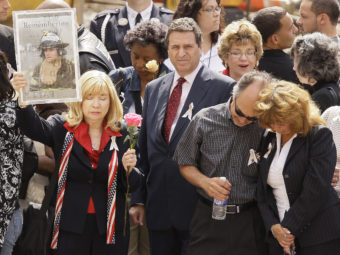
Sally Regenhard (left) holds a photo of her son, Christian, during a commemoration ceremony for Sept. 11 victims in New York City in 2008. Julie Jacobson/AP
Sally Regenhard (left) holds a photo of her son, Christian, during a commemoration ceremony for Sept. 11 victims in New York City in 2008.
Julie Jacobson/AP

“You feel that it’s not real. Your mind can’t accept the fact that this person died because there’s no evidence of it,” says Sally Regenhard, whose son, Christian, was a firefighter who died at the twin towers.

She remembers how search and rescue efforts eventually shifted toward a recovery mission for body parts at ground zero and the Fresh Kills Landfill on Staten Island, N.Y., where debris collected from the World Trade Center was sifted and stored.

“It was like, you know, being in the rain, in the misty rain, and then slowly, slowly as time went by, you realize it was less and less likely your loved one would be identified,” says Regenhard, who keeps a statue of St. Anthony, the patron saint of lost things, by the front door of her home.

‘As Long As It Takes’

Many of the remains were degraded by jet fuel from the hijacked planes and other chemicals released from the collapsed buildings.

“There was heat from the fires, water being poured upon them, rain, wind — the worst conditions that you can imagine for the preservation of DNA,” explains New York City’s Chief Medical Examiner Barbara Sampson.

But the medical examiner’s office was determined.

“We made a commitment to the families to do whatever it takes for as long as it takes,” she says.

That’s involved pushing DNA technology to its limits, with 10 scientists still dedicated to testing and re-testing the remains to find matches to DNA samples from the victims or their relatives.

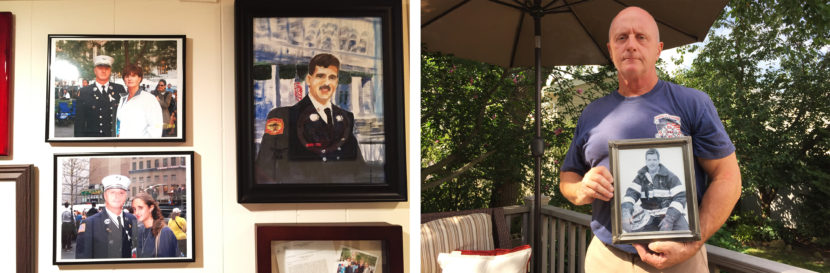
(Left) A sister of FDNY Battalion Chief Orio Palmer, who was killed on Sept. 11, keeps drawings of Palmer along with family photos in her basement. (Right) Retired FDNY Lt. Jim McCaffrey holds a portrait of Palmer, his late brother-in-law. Hansi Lo Wang/NPR
(Left) A sister of FDNY Battalion Chief Orio Palmer, who was killed on Sept. 11, keeps drawings of Palmer along with family photos in her basement. (Right) Retired FDNY Lt. Jim McCaffrey holds a portrait of Palmer, his late brother-in-law.
Hansi Lo Wang/NPR

Family members learn about new identification through phone calls from the medical examiner’s office. In recent years though, most notifications are to relatives who have already received partial remains. In August, 12 remains were matched with previously-identified victims.

“It’s not like we’re sitting by the phone anymore like we were years ago,” says Jim McCaffrey, a retired New York City fire lieutenant who is still waiting for the remains of his brother-in-law, FDNY Battalion Chief Orio Palmer.

Palmer’s family have buried a vial of blood he donated before Sept. 11, but McCaffrey says there is still a “strange, empty void” to not have remains.

“Every now and then, you’ll hear about some family getting a call. Hopefully that will happen for everyone,” he says.

‘Never … Put To Rest’

The last new identification was announced in 2015. But progress on other remains may be held back for years or more because current technology cannot make reliable matches with tiny DNA fragments.

Michael Burke keeps in his wallet a photo of his brother, FDNY Captain William Burke Jr., who was one of the first responders killed at the World Trade Center. Hansi Lo Wang/NPR
Michael Burke keeps in his wallet a photo of his brother, FDNY Captain William Burke Jr., who was one of the first responders killed at the World Trade Center.
Hansi Lo Wang/NPR

“The event itself can never really be put to rest because there will always be remains that can’t be identified,” says Jay Aronson, author of Who Owns The Dead?: The Science and Politics of Death at Ground Zero. “There’s almost this sort of a very American belief that technology will eventually solve all of our problems.”

Aronson says this raises complicated questions like, where should the unidentified remains be stored?

They’re currently sealed in plastic bags inside a repository next to the National September 11 Memorial & Museum, seven stories below ground — a location some families have been protesting against.

‘You Have To Have It’

There’s also the question of how long to wait for remains to be identified.

Michael Burke says he’s made peace with the possibility of never recovering any remains of his older brother, FDNY Capt. William Burke Jr., who stayed in the stairwell of the North Tower to help office workers trapped inside.

“You don’t believe that he just vanished, that he’s just pulverized into dust,” Burke says. “You believe in what he did that day. You believe that the soul of man is immortal and imperishable.”

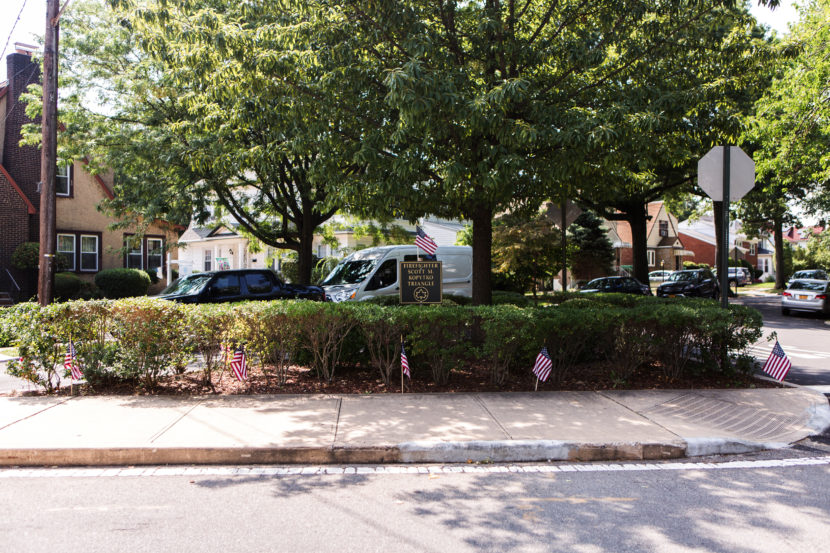
Scott Kopytko's parents plant flags and flowers at the Firefighter Scott M. Kopytko Triangle in Flushing, Queens. Alex Welsh for NPR
Scott Kopytko’s parents plant flags and flowers at the Firefighter Scott M. Kopytko Triangle in Flushing, Queens.
Alex Welsh for NPR

Families of other victims like Kopytko are holding onto hope.

“You have to have it. Once you give up, it’s all over,” says Mercer, who turned 69 in August.

If he can’t attend a funeral for his stepson’s remains in his lifetime, then he hopes his daughter or his 2-year-old granddaughter will get the chance.

“Somebody,” he says, “will get something.”

Copyright 2016 NPR. To see more, visit http://www.npr.org/.

After Facebook Censored Iconic Photo, Norwegian Newspaper Pushed Back

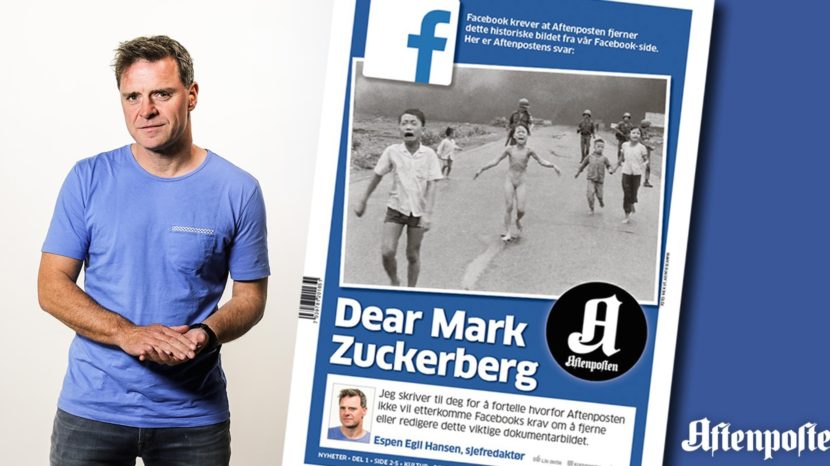
Espen Egil Hansen, the editor-in-chief of Norway's Aftenposten newspaper, addressed Facebook CEO Mark Zuckerberg in a front-page open letter on Friday. Aftenposten
Espen Egil Hansen, the editor-in-chief of Norway’s Aftenposten newspaper, addressed Facebook CEO Mark Zuckerberg in a front-page open letter on Friday.
Aftenposten

Updated at 2:15 p.m. ET

To Norwegian author Tom Egeland, it was one of the most significant war photos ever taken.

To Facebook, it was a “display of nudity.”

The social media site’s removal of the image sparked an uproar — and, on Friday, the company announced it was reversing course and would be reinstating the image.

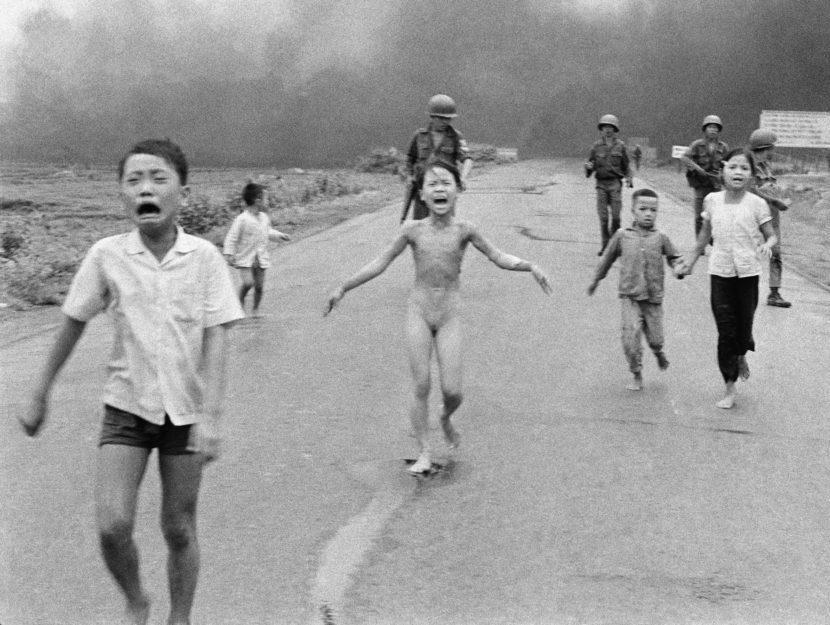
Last month, Egeland used the platform to post the iconic photo of a girl, screaming and naked, fleeing napalm bombs during the Vietnam War. The photo, taken by Associated Press photographer Nick Ut, was part of a collection of photos that Egeland said changed the history of warfare, the Norwegian newspaper Aftenposten reports.

Facebook took it down and banned Egeland from posting anything for 24 hours. And Norwegians swiftly responded, posting the Pulitzer Prize-winning “napalm girl” photo on their own accounts in protest, The Associated Press reports.

Photo after photo was removed by Facebook, and fury grew. (Disclosure: Facebook pays NPR, and other leading news organizations, to produce live video streams that run on the site.)

Kim Phuc, the girl in the photo, is now 53 and runs an organization that provides treatment to child victims of war. As the protests were spreading, a spokeswoman for the organization told Norwegian paper Dagsavisen that Kim Phuc “is saddened by those who would focus on the nudity in the historic picture rather than the powerful message it conveys.”

The AP, which owns the photo, also chimed in. The director of media relations, on behalf of the organization, expressed pride in the photo and recognition of its historical impact … and noted that “we reserve our rights to this powerful image.”

South Vietnamese forces follow terrified children, including 9-year-old Kim Phuc (center), as they run down Route 1 near Trang Bang after an aerial napalm attack on suspected Viet Cong hiding places, June 8, 1972. Nick Ut/AP
South Vietnamese forces follow terrified children, including 9-year-old Kim Phuc (center), as they run down Route 1 near Trang Bang after an aerial napalm attack on suspected Viet Cong hiding places, June 8, 1972.
Nick Ut/AP

On Friday, Aftenposten — Norway’s largest newspaper — ran a front-page letter directly addressed to Facebook CEO Mark Zuckerberg.

The newspaper had published the image on its Facebook page until it, too, was removed.

“I am upset, disappointed — well, in fact even afraid — of what you are about to do to a mainstay of our democratic society,” Aftenposten‘s editor-in-chief, Espen Egil Hansen, wrote in the letter. He pointed out that on top of deleting the image again and again, Facebook was blocking Egeland from making posts about the dispute.

“Listen, Mark, this is serious,” Hansen wrote. “First you create rules that don’t distinguish between child pornography and famous war photographs. Then you practice these rules without allowing space for good judgement. Finally you even censor criticism against and a discussion about the decision — and you punish the person who dares to voice criticism.”

He argues that the photo itself illustrates the significance of the dispute:

“The napalm-girl is by far the most iconic documentary photography from the Vietnam war. The media played a decisive role in reporting different stories about the war than the men in charge wanted them to publish. They brought about a change of attitude which played a role in ending the war. They contributed to a more open, more critical debate. This is how a democracy must function.

“The free and independent media have an important task in bringing information, even including pictures, which sometimes may be unpleasant, and which the ruling elite and maybe even ordinary citizens cannot bear to see or hear, but which might be important precisely for that reason. …

“The media have a responsibility to consider publication in every single case. This may be a heavy responsibility. Each editor must weigh the pros and cons.

“This right and duty, which all editors in the world have, should not be undermined by algorithms encoded in your office in California.”

Hansen called Zuckerberg “the world’s most powerful editor” and wrote that Facebook’s prominence as a platform opens up possibilities — and risks.

“If you will not distinguish between child pornography and documentary photographs from a war, this will simply promote stupidity and fail to bring human beings closer to each other,” he warned.

Norwegian Prime Minister Erna Solberg joined in the protest on Friday. After Facebook removed the Kim Phuc photo, she reposted it with a censoring black rectangle — and gave several other historic images the same treatment.

Later on Friday, Facebook said in a statement that it would be reversing course on the image, given “its status as an iconic image of historical importance”:

“After hearing from our community, we looked again at how our Community Standards were applied in this case. An image of a naked child would normally be presumed to violate our Community Standards, and in some countries might even qualify as child pornography. In this case, we recognize the history and global importance of this image in documenting a particular moment in time.”

The company said it would reinstate the photo in places where it knew it had been removed — which might take a few days — and will adjust its “review mechanisms” so it can be shared on the site moving forward.

The social media giant did not apologize for the earlier decision to remove the photo.

Copyright 2016 NPR. To see more, visit http://www.npr.org/.

Honoring The Other Fallen Of Sept. 11: Sickened Ground Zero Volunteers

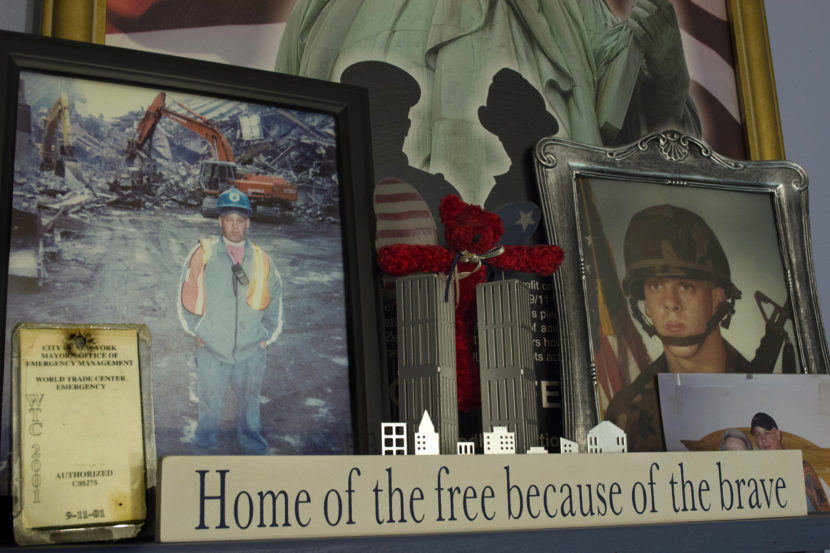
Framed photographs of John Feal (left) working as a first responder in the days before his injury at the World Trade Center, and during his time serving in the 101st Airborne Division. Christopher Cameron /WSHU
Framed photographs of John Feal (left) working as a first responder in the days before his injury at the World Trade Center, and during his time serving in the 101st Airborne Division.
Christopher Cameron /WSHU

A stack of folders with the names of construction workers, police and firefighters, and volunteers rests at John Feal’s feet. In his tidy home office in Nesconset, N.Y., Feal checks their spelling before he can send names to the engraver, who will put them on his memorial wall.

One of Feal’s feet was crushed by 8,000 pounds of steel as he dug through the rubble of the World Trade Center. He considers himself blessed to have months in the hospital while other Sept. 11 responders inhaled toxic dust on the job.

Now, Feal devotes himself to keeping up what’s thought to be the only memorial for people who died of illnesses tied to work at ground zero.

“So now I’m working on the fatalities list, those who are going on the wall,” he says.

Feal spends 10 hours a day vetting responders for inclusion on the wall. He reads obituaries and talks to families of those who died.

“It’s like walking on glass barefoot,” he says. “For not getting a salary and for not getting paid, my job sucks, you know? Because I got some tough questions to ask.”

Questions, such as, can the family prove that the responder died of a disease linked to Sept. 11?

“I’m not the Baseball Hall of Fame,” he says. “We’re not trying to keep people out. We only care that they were at ground zero. They were being treated for a [Sept. 11]-related illness that was certified, and that they had a [Sept. 11 Victims Compensation Fund] claim.”

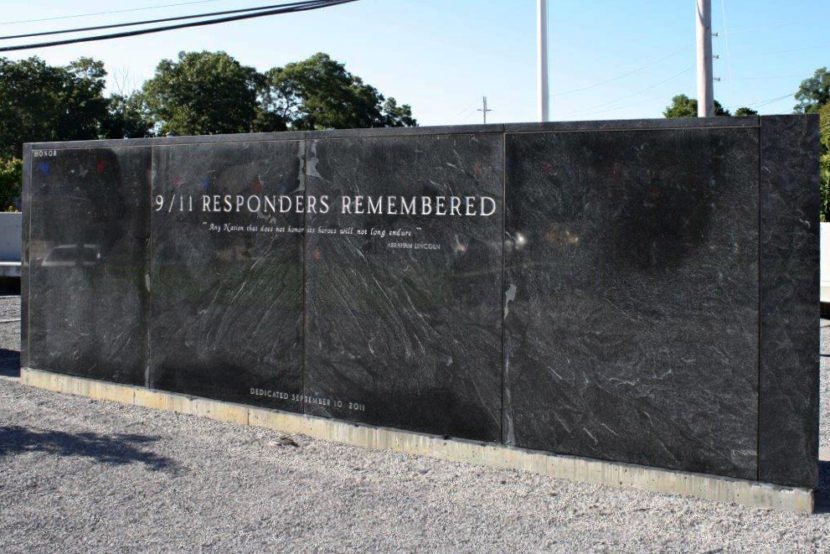
The 9/11 Responders Remembered Memorial in Nesconset, N.Y. John Feal spends 10 hours a day vetting responders for inclusion on the memorial. Courtesy of FealGood Foundation
The 9/11 Responders Remembered Memorial in Nesconset, N.Y. John Feal spends 10 hours a day vetting responders for inclusion on the memorial.
Courtesy of FealGood Foundation

Federal claims help responders treat nearly 70 cancers linked to exposure to ground zero. The World Trade Center Health Program has diagnosed 40,000 so far. Feal says getting injured at the site early on may have saved him.

“If I never got hurt, I would have worked the whole 10 months down there,” he says. “And, who knows, maybe I woulda got sick. I’m lucky. I’m blessed. I pale in comparison. I am so minute and so small to these men and women. Hence why I do what I do.”

He feels a duty to care for the Sept. 11 community when federal programs fall short. So Feal helps organize golf fundraisers to support families left to cover medical bills, funerals, and the loss of livelihood.

Before tee off at a recent fundraiser, Feal meets with his friend Michael Barasch, whose law office represents more than 2,500 sick responders with their claims.

“This is a real epidemic now,” Barasch says. “It’s heartbreaking to hear stories of people who have passed away. Friends of mine.”

Barasch and Feal fought Congress for more federal funding when the Victim’s Compensation Fund couldn’t accept any more applications. The VCF paid 9,000 claims to the first group of claimants and is processing about 5,000 applications for the second.

“Our frustration is based on seeing people get sicker and die waiting for the help that was supposed to come from the federal government,” Feal says.

Jennifer McNamara is still waiting for a wrongful death claim on behalf of her husband, who worked at the New York Fire Department. He died seven years ago, before the VCF was started.

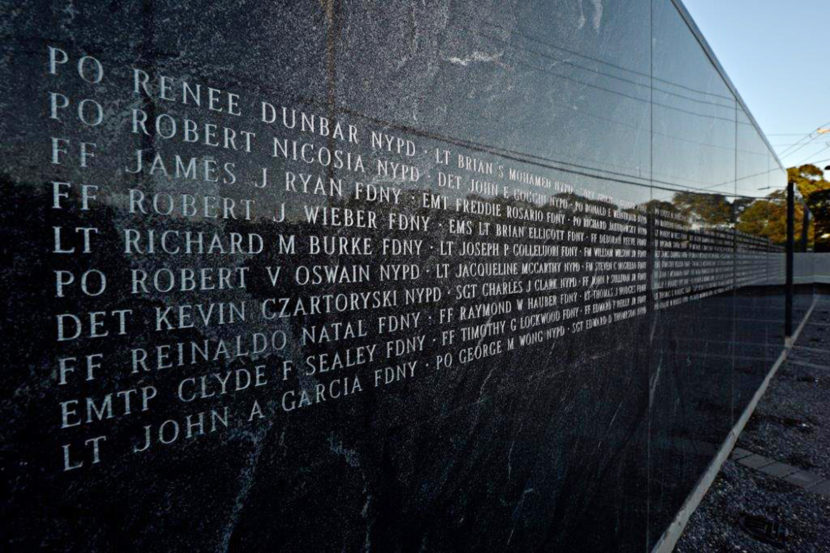
McNamara and others like her find some closure at the 9/11 Responders Remembered Memorial Park in Nesconset, N.Y. At a busy intersection, rows of shrubs and American flags separate a sushi restaurant from the memorial. Three polished granite walls named Courage, Honor and Sacrifice stand engraved with the names of more than 700 responders. McNamara visits the name of her late husband, John.

The 9/11 Responders Remembered Memorial in Nesconset, Long Island, N.Y. John Feal, a first responder at the World Trade Center, created the memorial for people who died of illnesses tied to work at ground zero. Courtesy of FealGood Foundation
The 9/11 Responders Remembered Memorial in Nesconset, Long Island, N.Y. John Feal, a first responder at the World Trade Center, created the memorial for people who died of illnesses tied to work at ground zero.
Courtesy of FealGood Foundation

“When you look at this wall and when you look at the, unfortunately, the ever growing number of names, you realize how much you’re not alone,” she says.

McNamara says this memorial brings together a larger Sept. 11 community.

“I see the names of so many widows, that I have become friends with as a result of this, and you realize that … we’ve all fought this battle,” she says.

John Feal says the Sept. 11 community will continue helping Jennifer McNamara and the families of other responders who died — long after their names appear on the memorial.

Copyright 2016 WSHU Public Radio Group. To see more, visit WSHU Public Radio Group.
Site notifications
Update notification options
Subscribe to notifications