A group of Japanese kayakers are traversing the Aleutian Chain without the use of GPS, satellite phones or rescue radio. (Photo courtesy of Takao Araiba)
Cold Bay to Unalaska is nearly 200 miles. By plane, it takes about an hour. By kayak, it’s nearly a month. Akio Shinya made the trip — with three others — in 24 days.
“I am an old man — 69 years old,” Akio Shinya said. “So very hard, but now I am happy.”
Over the past 16 years, he has taken six kayak trips to the Aleutian Islands. A place he considers special.
“Kayak was born here,” Shinya said. “Aleutian Island chain. They have big history, so I am interested in the ancient people and Aleutians.”
Shinya lives on Japan’s northern island — Hokkaido — in the village of Niseko where he runs a ski lodge. In the summers, he operates a kayak tour business and occasionally he takes people on expeditions to the Aleutians.
The kayakers are completely self-sufficient. They carry all their own food and camping supplies. They paddle collapsible kayaks designed to be easily transported and assembled without tools. The Japanese prefer these boats because they have an outer skin stretched over an aluminum frame similar to the skin-on-frame kayaks designed and used in the Aleutians for thousands of years. Shinya and his co-leader, Takao Araiba, even use traditional Aleut paddles made by a friend in Japan.
“Every time, always, I use Aleut paddles in Japan and here,” Shinya said. “This paddle is good for Aleutians. Paddling is very smooth.”
They’re wooden with a narrow bridge. Shinya calls himself a student of ancient people. On his trips, he does not use a GPS, satellite phone, or rescue radio because ancient people did not have them.
Although this trip is over, he hopes one day to return to the Aleutians.
“I know, I old man,” Shinya said. “If possible more paddling. My experience of Aleutian is very small”
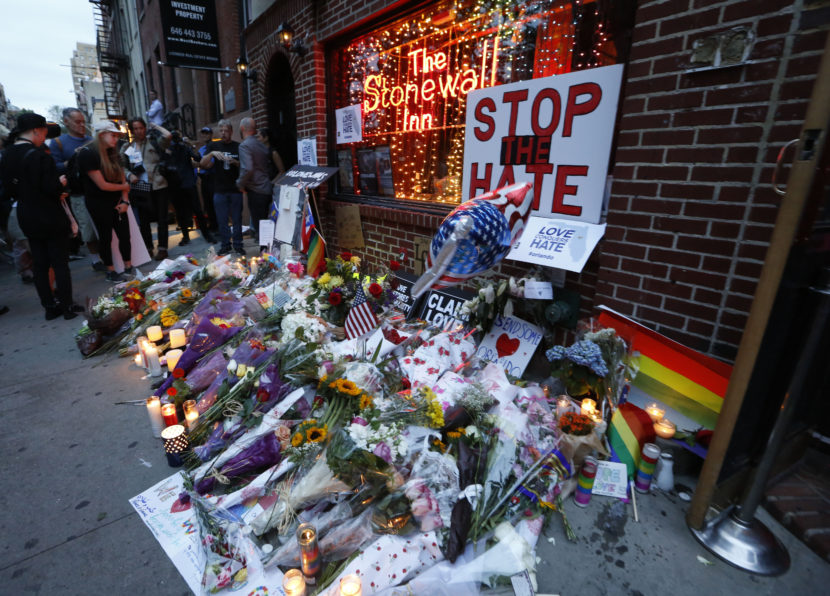
People gather to look at a makeshift memorial for victims of the Orlando nightclub shootings in front of the historic Stonewall Inn, a gay bar in the West Village, on June 13, in New York. Kathy Willens/AP
President Obama is designating a new national monument around the Stonewall Inn, the birthplace of the modern gay rights movement.
The Stonewall National Monument in New York City will be the first addition to the National Park System specifically highlighting the history of the LGBT community.
The monument covers nearly 8 acres in New York’s Greenwich Village including a landmark gay bar, the Stonewall Inn. In June of 1969, patrons at the bar fought back against police persecution — an event that’s widely seen as a watershed in the campaign for LGBT rights.
“Raids like these were nothing new, but this time the patrons had had enough,” Obama said in a White House video announcing the new monument. “So they stood up and spoke out. The riots became protests. The protests became a movement. The movement ultimately became an integral part of America.”
Obama had previously highlighted the significance of Stonewall in his second inaugural address, weaving the battle for gay rights into a larger tapestry of civil rights for women and African-Americans.
“That all of us are created equal is the star that guides us still, just as it guided our forebears through Seneca Falls and Selma and Stonewall,” Obama told a cheering crowd on the National Mall in January 2013.
Designation of the Stonewall monument comes just days before the first anniversary of the 2015 Supreme Court ruling that legalized same-sex marriage in all 50 states. It also follows less than two weeks after 49 patrons at a gay bar in Orlando, Fla., were killed in a mass shooting.
Creation of the national monument, which also includes Christopher Park and the surrounding area, required some complex land swaps. It had the backing of state and local officials in New York.
“Stonewall is finally taking its rightful place in American history,” said Rep. Jerrold Nadler, D-N.Y., who helped lead the effort. “We are faced with painful reminders daily of how much further we must go to achieve true equality and tolerance for the LGBT community, but honoring and preserving the stories of all of the diverse participants in Stonewall in our National Park System is a clear symbol of how far we have come.”
Copyright 2016 NPR. To see more, visit http://www.npr.org/.
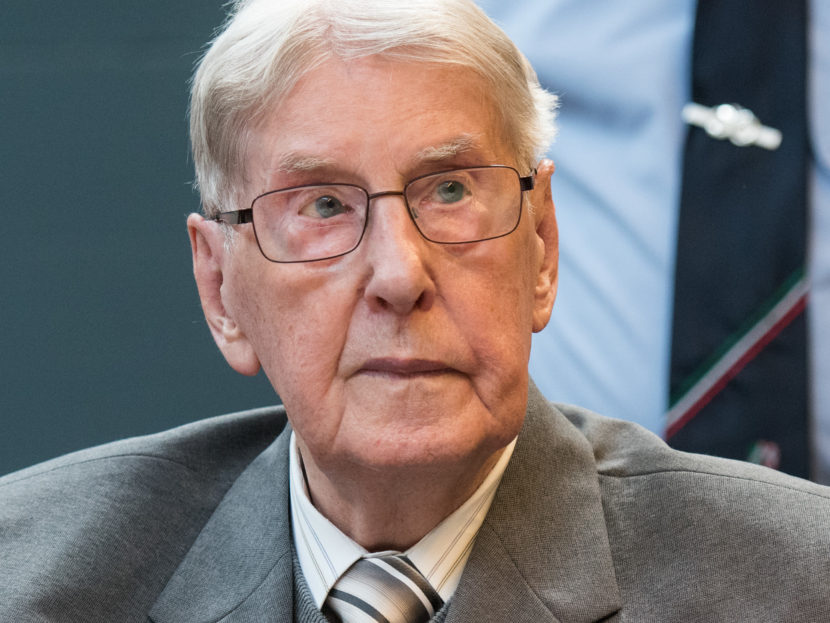
Former Auschwitz guard Reinhold Hanning on the last day of his trial for being an accessory to the murder of 170,000 people at the camp in Nazi-occupied Poland. The 94-year-old was found guilty. Bernd Thissen/AFP/Getty Images
A German court sentenced 94-year-old Reinhold Hanning to five years in prison for being an accessory to the murder of 170,000 people between January 1942 and June 1944, when he served as an SS guard at the Auschwitz death camp in Nazi-occupied Poland.
More than 1 million people were systematically murdered at the camp during World War II. Almost all of them were Jewish.
Hanning, who served in a unit that handled newly arrived prisoners and assisted in determining who would be enslaved and who would be sent to die, was charged in connection with the slaughter of Hungarian Jews at Auschwitz. The number of murders in which Hanning was found to be complicit, 170,000, was determined by matching Hanning’s service records with transportation logs for Hungarian Jews.
Many survivors took the witness stand to testify about what they experienced at the camp. “It was just like Dante’s Inferno,” Leon Schwarzbaum told a packed courtroom in Detmold, Germany, according to The Guardian. His time as a prisoner at the camp overlapped with the time Hanning was a guard there.
“The older I get, the more time I have to think about what happened,” Schwarzbaum said. “I am nearly 95 years old and still I often have nightmares about this.”
The Guardian described the scene in the courtroom during Schwarzbaum’s testimony:
“His hands trembling and his voice shaking, Schwarzbaum looked directly at Hanning and delivered an emotional plea: ‘Mr Hanning, we are virtually the same age and soon we will face our final judge. I would like to ask you to tell the historical truth here, just as I am. Tell the truth about what you and your colleagues did.’ “
Initially, Hanning refused to speak. But in April, as the trial entered its fourth, and final, month, Hanning broke his silence. The New York Times reports that according to German public broadcaster WDR, Hanning said he “deeply regretted” having been part of a criminal organization that murdered millions of people.
“I am ashamed that I witnessed injustice and allowed it to continue without taking any actions against it,” Hanning said from his wheelchair, according to the newspaper. “I am sincerely sorry.”
When she handed down the verdict, Judge Anke Grudda said, “This trial is the very least that society can do to give … at least a semblance of justice, even 70 years after and even with a 94-year-old defendant,” according to AFP. She added:
“The entire complex Auschwitz was like a factory designed to kill people at an industrial level. You [Hanning] were one of those cogs.”
Hanning’s defense team had sought an acquittal in the case on the grounds that he had not personally “killed, hit or abused” anyone, AFP reports. The plaintiffs said in a statement that the trial was “a big, even though a late, step towards a just examination of the mass murders in Auschwitz,” because it focused on the division of labor at the camp.
Copyright 2016 NPR. To see more, visit http://www.npr.org/.
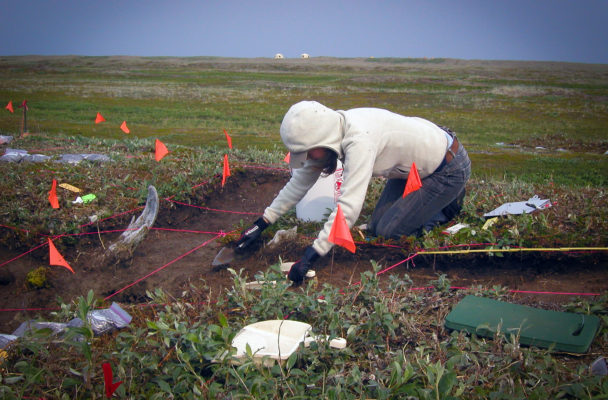
An excavator works at what was once an ancient settlement at Cape Espenberg. (Photo courtesy of Bering Land Bridge National Preserve)
There’s new evidence that metal goods from central Asia made their way to Alaska long before contact with Europeans.
That’s according to a study published this month in the Journal of Archaeological Science, but there’s still a lot unknown about one artifact in particular.
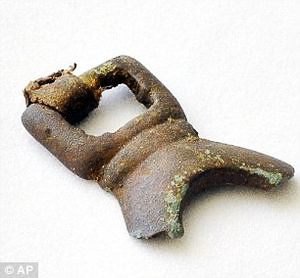
“The buckle is about three centimeters in length and maybe two to three centimeters wide,” explained Kory Cooper, an archeologist at Purdue University and one of the authors of the study. He’s been working for the past few years with Owen Mason, who was there when the buckle was discovered.
“Near the end of the season, as it always is, one of our excavators came across (a) metal object,” Mason explained.
Mason spends almost every summer at Cape Espenberg in northwest Alaska—one of the oldest inhabited settlements in North America. Mason’s team, also led by archaeologist John Hoffecker, has found a handful of other metal artifacts over the years, but he said he knew right away the buckle was unique.
he metal buckle found at Cape Espenberg. (Photo courtesy of the University of Colorado, Boulder)
“Cast bronze, which is a very elaborate type of technology, had really never been seen before, so immediately, this piece stood out.”
To cast or to mold metal requires very high temperatures, and, according to Mason, there’s never been any evidence of that in Alaska’s prehistoric settlements.
To be sure, Mason sent the buckle down to Kory Cooper’s lab in Indiana, where Cooper used x-ray technology to confirm traces of tin and lead in the buckle.
“So this is the first time that anybody has found this kind of object that is definitely something that was made by metal-producing cultures,” Cooper said, “most likely somewhere in Eurasia.”
Cooper was also able to confirm the buckle dates back to at least 800 A.D. when Cape Espenberg was still a village, but Owen Mason says a lot of questions remain unanswered.
“There’s still a lot of mystery here,” Mason said. “How did something get manufactured in Manchuria or Korea, and how long did it take to make its way to Alaska?”
Mason and his colleagues are still working on those answers. Their efforts are part of a larger project funded by the National Science Foundation’s Office of Polar Programs.
Mason said archeological work at ancient sites like Cape Espenberg is more urgent than ever.
“With the thawing of permafrost, with global change, with climate change, the sites are being subject to thawing and degradation,” Mason explained.
Mason is on his way back up to Cape Espenberg for what he hopes will be another groundbreaker season in the field.
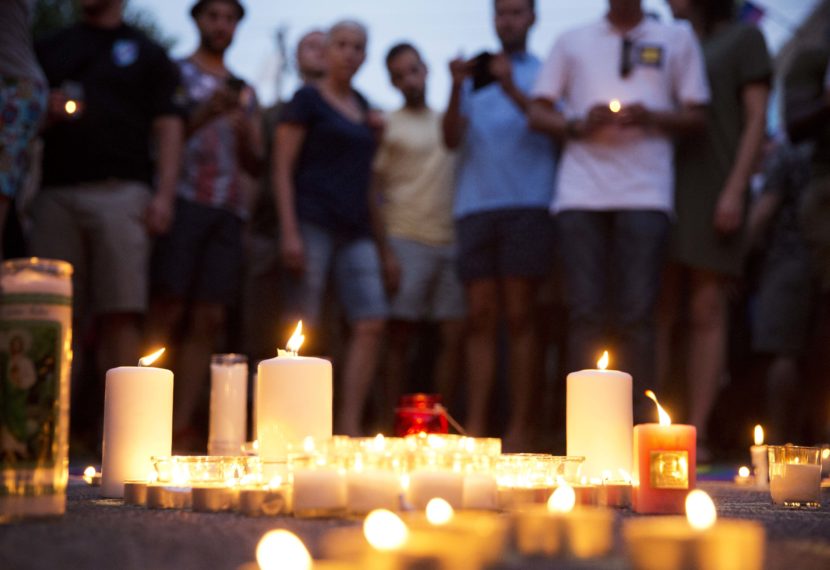
Mourners gather around candles lit during a vigil after a fatal shooting at the Pulse Orlando nightclub on Sunday. David Goldman/AP
When we tried to put the killing of 49 people at an Orlando nightclub on Sunday morning in context, we said and wrote that it was the “deadliest mass shooting in U.S. history.”
Almost immediately, our readers and listeners said we were whitewashing history.
What about the Wounded Knee Massacre? Or Mountain Meadows Massacre in 1857? Or the Tulsa Massacre in 1921, a reader on Twitter asked.
The Wounded Knee Massacre was devastating — about 250 Native Americans were killed by American troops in the late 1800s. Only one man faced prosecution for the Mountain Meadows Massacre, but it was actually a Mormon militia that killed 120 men, women and children. The Tulsa Massacre ended with about 300 people killed by mobs of white people.
This is something we discussed in the newsroom. It felt like the shootings — in Orlando, in Sandy Hook, at the Luby’s Cafeteria in Killeen — were different enough that we could say “deadliest mass shooting in the U.S.” and still be respectful of all that previous history.
I called Grant Duwe, the director of research and evaluation at the Minnesota Department of Corrections, for a second opinion. Duwe wrote one of the most exhaustive histories of mass murder in the United States.
He said the phrase we use is serviceable.
He says he sees two distinctions between mass murders that occurred before and after the 20th Century. Before 1900, most mass murders were perpetrated by the “haves” against the “have nots.” After 1900, mass murders began being perpetrated by the “have nots” against the “haves.” Another difference is that before the 20th Century few mass murders were perpetrated by a single person.
A gunman opening fire on a public space is what “mass shooting” has come to mean these days, Duwe said. We don’t tend to put massacres involving military or quasi-military actors and those perpetrated by a group in that category.
By that definition — a shooting that takes place in a public space and does not involve another crime like robbery — what happened in Orlando is the deadliest of the 178 public mass shootings Duwe has counted since the early 1900s.
Duwe does caution that we should always add a time element to our characterization. When he wrote his book, he thought he had uncovered all mass murders. After it was published, however, he was contacted by a man who kept his own list. He realized that some cases on that list fit his own definition and he had missed them.
“Our understanding of this topic, even though it is better than it was 10, 15, 20 years ago, is still imperfect,” Duwe warned.
Therefore, in service of precision, history and what we may not know, what happened in Orlando on Sunday was the deadliest mass public shooting in modern U.S. history.
Copyright 2016 NPR. To see more, visit http://www.npr.org/.
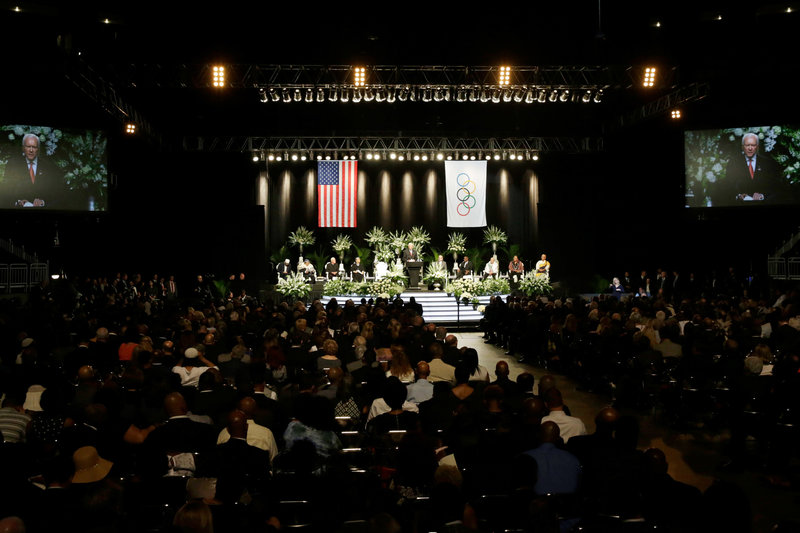
Sen. Orrin Hatch speaks during Muhammad Ali’s memorial service in Louisville, Ky. Hatch said they became friends after the boxer came to visit him on Capitol Hill and that their friendship likely puzzled observers. David Goldman/AP
A hometown hero is being laid to rest in Louisville, Ky., as Muhammad Ali, the boxer and humanitarian, is buried Friday. Fans came to the city from far and wide to pay their respects as Ali’s body passed by on its way to a private burial.
Ali died one week ago, at age 74; at a memorial service in the KFC Yum Center in downtown Louisville, the friends he’d chosen to speak — including Billy Crystal, Bryant Gumbel and Sen. Orrin Hatch — discussed Ali’s talents and, more especially, his expansive humanity and his navigation of a troubled era in America’s history.
You can hear the event as part of an NPR special hosted by Melissa Block (see link above). The memorial also featured eulogies from Ali’s wife, Lonnie, and Louisville restaurateur John Ramsey. Religious and cultural leaders also spoke. The final eulogy was delivered by former President Bill Clinton.
Update at 5:55 p.m. ET: Bill Clinton
Clinton begins his remarks by picturing what Ali might say: “Well, I thought I should be eulogized by at least one president.”
He then tells Lonnie Ali, “I thank you for making the second half of his life greater than the first.”
Clinton says he hopes every young person present will do what Ali did: “write his own story.”
He recalls being a kid thinking about how smart Ali was. Despite being a “universal solider for our common humanity,” Clinton says that he always thought of Ali as a “truly free man of faith.”
He later adds that the second half of Ali’s life was the most important, in part because he refused to be imprisoned by Parkinson’s disease.
As part of his recollections about Ali, Clinton says the former boxer once broke up a serious speech the former president was giving by putting two fingers up behind Clinton’s head as he spoke.
Near the end of his speech, Clinton recalls watching Ali light the Olympic flame in Atlanta back in 1996 – and in a rousing moment, he says he was convinced beyond a doubt that Ali, hands and legs trembling, would light the torch and start the competition for hundreds of the world’s best athletes.
Update at 5:45 p.m. ET: Bryant Gumbel
After saying that Ali’s legacy will include how he made people feel, Gumbel says that for young black men who were struggling to make the most of their lives, Ali “gave us levels of strength and courage we didn’t even know we had.”
Gumbel praises Ali for taking on – and overcoming — difficult struggles without changing his nature or become anything other than what he was.
Then he quotes musician Lauryn Hill: “Consequence is no coincidence.”
Update at 5:30 p.m. ET: Billy Crystal
“Thank you ladies and gentlemen – we’re at the halfway point,” Crystal says, drawing a laugh from the crowd that’s now been in the arena for hours.
He then says that when Ali died, “the world stopped,” and Crystal thought back to when they first met in 1974.
At the time, Crystal says, he was a young comedian whose act included an imitation of Ali and legendary broadcaster Howard Cosell.
Crystal also recalls Ali’s strong stance against the Vietnam War — a conflict that was sending America’s young men like him off to war.
“It was Ali who stood up for us,” Crystal said, “by standing up for himself.”
Crystal then recreates the Cosell-Ali bit that centered on the bout with George Foreman in Zaire.
“When I was done, he gave me this big bear hug,” Crystal says, “and he whispered in my ear, ‘You’re my little brother.'”
It became what Ali always called Crystal.
Ali’s message, Crystal says, was that “Life is best when you build bridges between people — not walls.”
“He is gone, but he will never die; he was my big brother,” Crystal says.
Update at 5:20 p.m. ET: John Ramsey Of Louisville’s Ringside Cafe
Praising his ties to Louisville, Ramsey breaks into an Ali impression to say, “How can we lose, with the stuff we use?”
He then talks about “the Ali magic” — the boxer’s ability to connect with people.
Ramsey recalls how he visited the 2000 Olympics with Ali — and how after a boxing match, as cameras caught Ali posing with the winner of the fight, Ali insisted they go visit the loser.
Describing the scene of a bloodied athlete who’d been left alone, Ramsey says the young man immediately brightened when Ali walked in.
“I saw what you did out there, you looked good,” the Champ told the kid, according to Ramsey.
When Ramsey later praised Ali’s courtesy and thoughtfulness by saying, “Muhammad, you’re the greatest,” the boxing legend’s answer was simple: “Man, tell me something I don’t already know.”
Ramsey, you might be able to tell, has a knack for telling stories.
Update at 4:55 p.m. ET: Lonnie Ali
After taking the podium to a loud welcome, Ali’s widow, wearing a broad black hat that obscures her eyes, Lonnie Ali thanks everyone who has come to honor and say farewell to her husband. And she thanks people from around the world who’ve sent prayers via social media.
Recounting the story of how a police officer named Joe Martin helped a 12-year-old Cassius Clay get interested in boxing, Lonnie says it’s a reminder that, “When a cop and an inner-city kid talk to each other, then miracles can happen.”
She then goes on to recount the times Ali faced, from the death of Emmett Till, Malcolm X, and Martin Luther King Jr. to the reign of apartheid in South Africa.
The message, she says, is that “adversity can make you stronger” — that it shouldn’t “rob you of your dreams.”
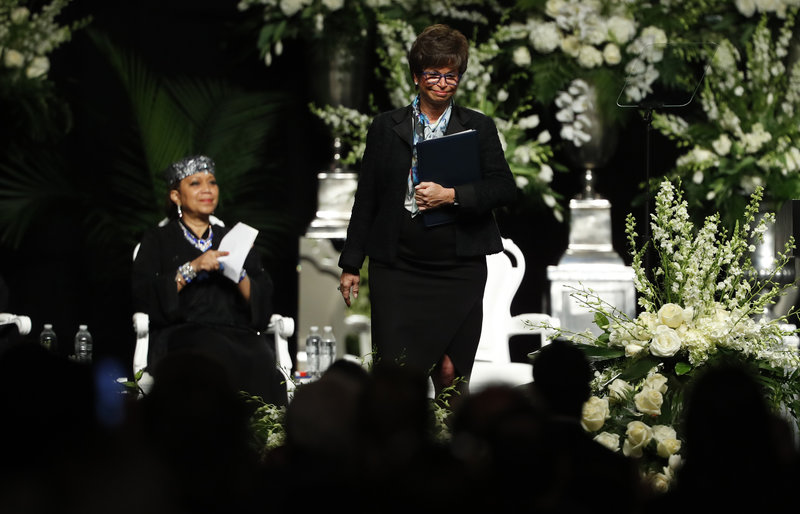
Update at 4:45 p.m. ET: Valerie Jarrett
White House special advisor Valerie Jarrett, who will read a statement from President Obama, notes that her family has a connection to Ali, via her uncle.
She then reads a letter from Obama that recalls 1980, when Ali was set on one last comeback, against Larry Holmes.
Valerie Jarrett, speaking on behalf of President Obama during the memorial service, noted the love people had for the champ, saying, “You couldn’t have made him up — and yes, he was pretty, too.” (Photo by Aaron P. Bernstein/Getty Images)
In the letter, Obama notes that at 4 a.m., after Ali had lost the fight an attendant at the boxing ring told a reporter that he had bet on Ali, despite the long odds against him. When asked why, the man said, “I owe the man for giving me my dignity.”
Continuing to read the president’s message about Ali, Jarrett notes the love people had for the champ, and says, “You couldn’t have made him up — and yes, he was pretty, too.”
Jarrett later adds that Ali was a brash and loud voice “in a Jim Crow world.”
Noting Ali’s anti-war stance in the 1960s, Jarrett says Ali was intent on helping others who were struggling, rather than leave the country on his own to escape being stripped of his boxing career.
The message from Obama then notes how Ali lended his dignity to many in America — and helped inspire Obama to believe he could be president.
Update at 4:40 p.m. ET: Attallah Shabazz
Attallah Shabazz, the daughter of Malcolm X, discusses Ali’s relationship with her father.
“As the last of the fraternity reaches the heavens,” Shabazz says she pines for a “tribe” of people with purpose and confidence and glory.
Citing her father’s familiar farewell — “May we meet again in the light of understanding” — Shabazz says she hopes that can happen, “by any means necessary.’
Update at 4:10 p.m. ET: Chief Sidney Hill and Chief Oren Lyons
Chief Sidney Hill, Tadodaho of Onondaga Indian Nation, speaks next, along with Chief Oren Lyons, the Faithkeeper of the Turtle Clan of the Onondaga Nation.
Lyons says they’ve come to honor Ali’s work, “and for the rights and dignity of people of color and the common man.”
He adds that Ali always supported indigenous people’s rights in the U.S.
“We know what he was up against,” Lyons says of Ali, “because we’ve had 524 years of survival training, ourselves.”
Update at 4 p.m. ET: Rabbi Michael Lerner
Rabbi Michael Lerner recounts how both he and Ali were indicted on federal charges for their stances on the Vietnam War. He then says Ali’s stature grew beyond boxing because of his moral integrity, his willingness to risk everything.
“How do we honor Muhammad Ali?” Lerner asked.
“The way to honor Muhammad Ali is to be Muhammad Ali”, Lerner says — something he says includes speaking truth to power.
Lerner then receives rounds of applause as he reels off a list of social issues that need to be addressed — from wealth redistribution to fair sentencing to banning corporate and private money from politics.
Update at 3:45 p.m. ET: Muslim Scholar Speaks
Serving Muhammad Ali, Muslim scholar Dr. Timothy Gianotti says, was “one of the greatest privileges of my life.”
The initial group of eight speakers includes Sen. Orrin Hatch, R-Utah. He began by recounting Ali’s words after beating Sonny Liston: “I am the greatest.”
Hatch then says, “In the world of boxing, he truly was the greatest.”
He then adds that he became a personal friend of Ali’s after the boxer came to visit him on Capitol Hill. And he acknowledges that their friendship likely puzzled observers.
“We were both devoted to our families, and devoted to our faiths,” Hatch says.
“Our differences fortified our friendship,” he adds, “they did not define it.”
Our original post continues:
The official program highlights this quote from Ali:
“Service to others is the rent you pay for your room here on Earth.”
Ali will be buried at the Cave Hill Cemetery, in a private ceremony. But today is a celebration of a man who fought battles in and outside the ring. It was the boxer’s own wish for his funeral to offer a chance for his legions of fans to say farewell.
Thousands of well-wishers got a chance to see the black Cadillac bearing Ali’s body today; spectators tossed flowers onto the hood and windshield of the car. The hearse drove past Ali’s boyhood home and onto the street that was named for him.
One person held a sign reading, “Thanks for all the memories.”


9(MDEwMjQ0ODM1MDEzNDk4MTEzNjU3NTRhYg004))
9(MDEwMjQ0ODM1MDEzNDk4MTEzNjU3NTRhYg004))
9(MDEwMjQ0ODM1MDEzNDk4MTEzNjU3NTRhYg004))