Archives for:

"Willow project"

15 years after VECO scandal, Stevens’ new oil job renews old ethics questions

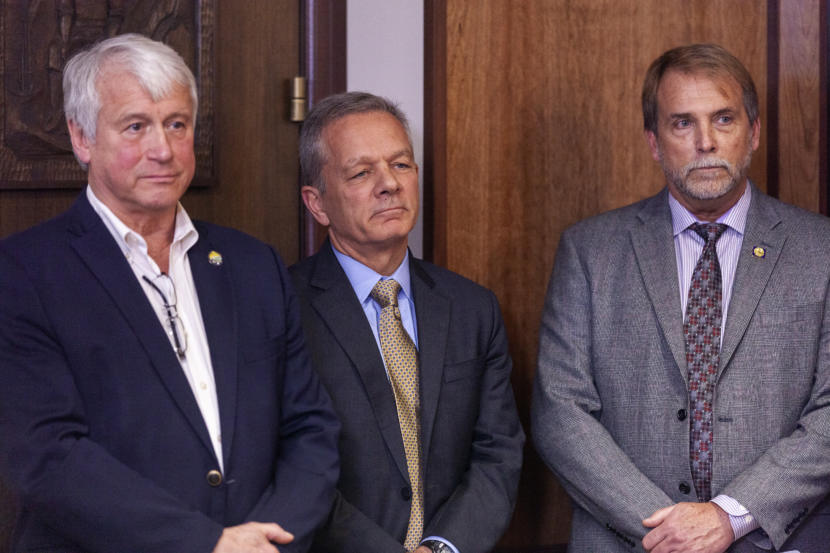
Department of Transportation and Public Facilities Commissioner John MacKinnon, Gov. Mike Dunleavy's Chief of Staff Ben Stevens, and Senior Policy Advisor Brett Huber watch a press conference unveiling Dunleavy's budget proposal on Wednesday, December 11, 2019, at the Capitol in Juneau, Alaska. (Photo by Rashah McChesney/KTOO)
Department of Transportation and Public Facilities Commissioner John MacKinnon, Gov. Mike Dunleavy’s Chief of Staff Ben Stevens, and Senior Policy Advisor Brett Huber watch a press conference unveiling Dunleavy’s budget proposal on Dec. 11, 2019, at the Capitol in Juneau. (Rashah McChesney/KTOO)

In 2007, Alaska Republican Gov. Sarah Palin signed sweeping ethics reforms into law, in what she touted as a necessary response to the VECO corruption scandal that ensnared several state lawmakers.

Among the lawmakers investigated in that scandal was then-Senate president Ben Stevens, son of the late U.S. Sen. Ted Stevens. Ben Stevens’ Senate office was twice searched by the FBI, and two oil industry executives said they had paid him bribes. Stevens always denied wrongdoing and was never charged with a crime.

More than a decade later, Stevens is now renewing questions about those very same ethics laws in his new job as an executive at oil company ConocoPhillips — a position he started March 1, just three days after leaving one of the most powerful jobs in state government: Chief of staff to Gov. Mike Dunleavy.

Stevens, in a phone interview Monday, said he’s carefully followed state ethics laws in his job transition. And last month, Dunleavy quietly signed an ethics waiver allowing Stevens to work on a Conoco project that was the subject of discussions in the governor’s administration while Stevens was still chief of staff.

Senate District Q candidate Jesse Kiehl, a Democrat, talks to a supporter on Election Day, Tuesday, November 6, 2018, in Juneau, Alaska. (Photo by Rashah McChesney/Alaska’s Energy Desk)
Senate District Q candidate Jesse Kiehl, a Democrat, talks to a supporter on Election Day, Nov. 6, 2018, in Juneau. ( Rashah McChesney/Alaska’s Energy Desk)

But Stevens also acknowledged the Dunleavy administration has opened an ethics investigation into his job change in response to a formal request by an advocacy group. Some lawmakers are now asking whether the 2007 ethics reforms need to be updated again to more effectively guard against conflicts of interest.

“Despite whatever technical detail you could read if you squint your eyes and hold your head sideways, I don’t think anyone should be allowed to go from one of the three most powerful jobs in the state of Alaska, where inevitably oil tax policy comes through, to go be an oil lobbyist without so much as two weeks in between — let alone the two years that the law calls for,” said Juneau Democratic Sen. Jesse Kiehl.

“Not the decision maker”

Alaska’s ethics laws bar public officials from working for private companies on matters that were under consideration by their agency for two years after leaving their state job, if the official participated “personally and substantially through the exercise of official action.” Those matters could include cases, contracts, regulations or legislative bills, the law says.

But the ethics laws also allow top executive branch officials to waive those requirements if they find it’s not “adverse to the public interest.”

Conoco had previously said that Stevens would not seek an ethics waiver in his new job because, as the company’s vice president for external affairs and transportation, he would not work on any issues that might present a conflict.

But less than two weeks later, Stevens sent Dunleavy’s administration a waiver request.

In a letter to Attorney General Treg Taylor dated March 12, Stevens asked that Dunleavy’s administration waive the requirements of the ethics law for his advocacy on Conoco’s behalf for its multi-billion-dollar Willow project, which is planned on federal land on Alaska’s North Slope.

Environmental groups have filed lawsuits challenging federal authorizations for the Willow development. On April 15, Dunleavy’s administration filed a motion to intervene in the litigation in the project’s defense.

Stevens, in his chief of staff job, was “aware of discussions” about the state’s possible intervention in the case, Dunleavy and Taylor wrote in the waiver they ultimately granted. But, the waiver argues, the actual decision to join the litigation was only under consideration by the Department of Law, the attorney general and the governor — not by Stevens.

In an interview, Stevens argued that as chief of staff he did not “personally or substantially” participate in any decisions at all, let alone any specific to Conoco, saying he served instead as a “conduit of information” to Dunleavy.

Gov. Mike Dunleavy’s Chief of Staff Ben Stevens talks to Senate Majority Leader Lyman Hoffman, D-Bethel, after Dunleavy's State of the State address on Monday, January 27, 2020 in Juneau, Alaska. (Photo by Rashah McChesney/KTOO)
Gov. Mike Dunleavy’s Chief of Staff Ben Stevens talks to Senate Majority Leader Lyman Hoffman, D-Bethel, after Dunleavy’s State of the State address on Jan. 27, 2020 in Juneau. (Rashah McChesney/KTOO)

“A chief of staff is a facilitator of a decision,” Stevens said. “Not the decision maker.”

In his request, Stevens wrote that he viewed a waiver as unnecessary but was asking for one “out of an abundance of caution, and given the degree of public misunderstanding” of state ethics law.

Dunleavy and Attorney General Treg Taylor both signed off on the waiver a few weeks later, in early April. They wrote that Stevens did not need the approval but granted it nonetheless, justifying it by writing that his work for Conoco — recruiting local boroughs’ legal and political support for the project — is in the public interest.

Public outreach and education about the benefits of resource development, mitigation of environmental impacts and local tax revenue is “aligned and consistent with the public interest of the state of Alaska,” they wrote.

“The state of Alaska also benefits from the development of the Willow project,” they added.

Ethics laws “you could drive an oil tanker through”

Both Stevens’ request and the waiver itself were only recently released in response to a public records request by the Alaska Public Interest Research Group, the advocacy organization which asked Dunleavy’s administration to conduct a formal investigation into the legality of Stevens’ new job.

Stevens said he’s aware that the state is investigating the group’s allegations. But he referenced his previous experiences, arguing that he’s well-aware of his legal and ethical obligations and is upholding them.

“Nobody in this state alive has been investigated for alleged wrongdoing more than me,” Stevens said. “The allegations against me (are) by political opposition — it’s been that way forever. It’s not going to change. I’m not going to change. I’m not going to violate the law — I follow the rules. I know what the rules are.”

He added that he has not spoken to Dunleavy since leaving the chief of staff job in February.

In interviews Monday, Kiehl and another Democratic senator both questioned the legal argument that Stevens did not need a waiver.

“My immediate reaction when I heard he was going to take that job was, ‘He can’t do that,’” said Anchorage Sen. Bill Wielechowski. “I would find it hard to believe that the chief of staff did not participate, personally and substantially, in the exercise of trying to have Willow approved for federal permits, or to have local support.”
Sen. Bill Wielechowski speaks on the floor of the Alaska Senate, Feb. 10, 2014. (Skip Gray/Gavel Alaska)

Other observers were similarly skeptical the law allowed Stevens’ move, though they also argued the law should be tightened.

“We have ethics statutes in the state that you could drive an oil tanker through, and we’ve been driving them through for years,” said Ray Metcalfe, a former state legislator and longtime Stevens critic. “The laws leave a lot to be desired, and the Legislature doesn’t want to fix it.”

Kiehl, the Juneau Democratic senator, said the waiver’s approval has also called into question his support for Taylor, the attorney general, whose confirmation vote is scheduled for Tuesday.

At one of his confirmation hearings, in early April, Kiehl asked Taylor whether he or the Department of Law had counseled Stevens on his legal obligations in his new post at Conoco, and on when he would need a waiver.

At that point, Dunleavy had already signed Stevens’ waiver two days earlier, and Taylor would sign it a day later, according to the dates on their signatures on the document.

Alaska Gov. Mike Dunleavy follows Deputy Attorney General Treg Taylor into a news conference at the governor's Anchorage office on Friday, Sept. 27, 2019.
Treg Taylor, then the deputy attorney general, walks into a news conference trailed by Gov. Mike Dunleavy in 2019. (Nat Herz/Alaska Public Media)

But Taylor, in his response to Kiehl, made no reference to Stevens’ waiver request, nor the pending waiver itself, saying instead that “as issues arise in Mr. Stevens’ work, he will approach the Department of Law and ask for advice.”

Kiehl, in a phone interview Monday, said that Taylor’s response indicated “that this was still a hypothetical thing, off in the future.”

“He didn’t make any false statements in his testimony,” Kiehl said. “But he definitely left that impression.”

A spokeswoman for the Department of Law, Charlotte Rand, said state law barred Taylor from publicly discussing Stevens’ request for the waiver until after it was issued. She cited a section of the statute that makes requests for ethics advice confidential.

“This also serves the public policy behind this portion of the Ethics Act, by allowing current and former employees to make candid requests to avoid violating the law in the first place, instead of having to address or remedy issues after the fact,” Rand said.
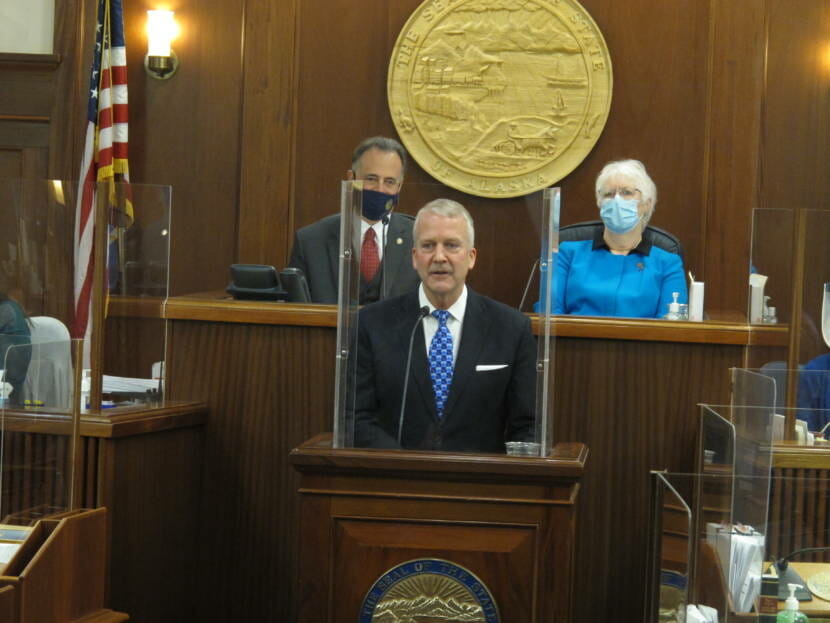
US Sen. Sullivan tells lawmakers that Biden decisions harm Alaska economy, asks for help with large oil project

Alaska Republican U.S. Sen. Dan Sullivan, center, speaks to a joint session of the Alaska Legislature on Monday, May 3, 2021, in Juneau, Alaska. Pictured behind Sullivan are, from left, Senate President Peter Micciche and House Speaker Louise Stutes. (AP Photo/Becky Bohrer, Pool)

U.S. Sen. Dan Sullivan told Alaska’s legislators on Monday that President Biden’s administration is at war with Alaska over developing resources. 

In an address to a joint session in the Legislature, Sullivan said Alaska’s economy benefited from a series of decisions by former President Trump’s administration. These decisions included on oil development for the Willow Project in the National Petroleum Reserve-Alaska and the development of a road between King Cove and Cold Bay that will run through a national wildlife refuge. He says those decisions are under attack.

“This is not surprising,” Sullivan said. “We knew this anti-Alaska agenda was coming if the national Democratic Party took control of the White House, the Senate and the House. Alaska is always the gift that national Democratic administrations give their extreme, radical environmental supporters.”

This year is the first time Sullivan, a Republican, has been in the minority caucus in the U.S. Senate. And with Democrats controlling both Congress and the White House, he said he will be strategic.

“We need to look for ways to gain ground when we can, even if we feel that we’re in retreat right now,” he said.

He said support in Alaska for developing projects like the oil discovery at Willow hasn’t been partisan. 

“But we need all of your help, especially our Democratic friends in the Legislature,” he said. “You all have powerful voices. Please, underscore the importance of Willow in any and all conversations you have with any Biden administration officials. We need to turn Willow into a victory for Alaska and America.”

He said the Biden administration’s proposals are part of a long-term battle facing the country.  

“They’re tempting America with cradle-to-grave, European-style socialism,” he said. “They’re cutting the ties between work and income, and in so doing, undermining the notion of earned success and the dignity and importance of work.”

But he did say there were some early successes for the state with the new administration, including the decision to build a dock, pier and office in Ketchikan, to serve as the home port for a National Oceanic and Atmospheric Administration research vessel.

It was the Legislature’s first joint session in the House chamber since the pandemic arrived in Alaska. The Legislature has been easing some of its COVID-19 safety rules, including no longer requiring fully vaccinated people who work in the Capitol to frequently be tested for the coronavirus. 


Indigenous leaders hopeful Interior nominee Rep. Deb Haaland will protect Yup’ik ways of life

C-SPAN

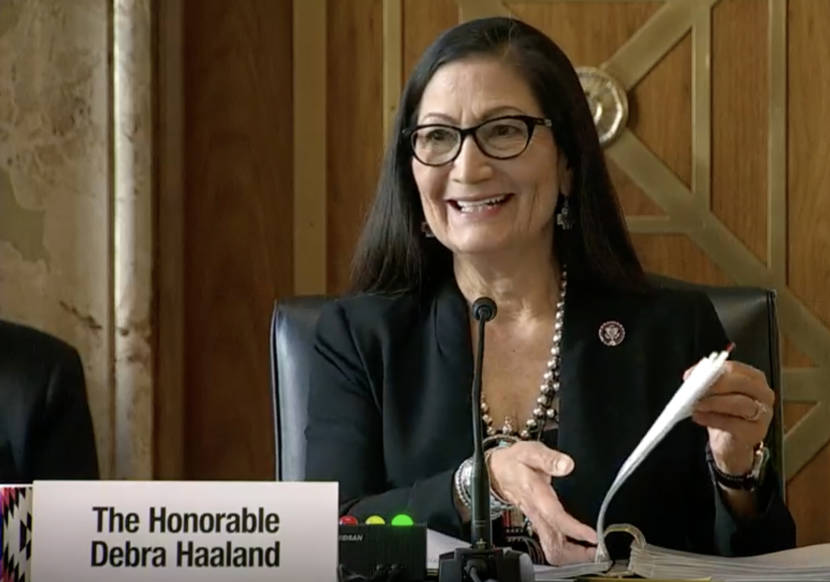
Interior secretary-nominee U.S. Rep. Debra Haaland finished a two-day confirmation hearing in the U.S. Senate on Feb. 24. Oil-state senators on the Senate Energy Committee challenged her on anti-development positions she took as a U.S. Congresswoman, but Sen. Lisa Murkowski seemed more intent on educating the nominee about Alaska’s unique circumstances.

If confirmed, Haaland will be the first Indigenous person to be the Secretary of the Interior, a cabinet position with massive oversight of Indian affairs. Haaland first addressed the committee in her Indigenous language, Keres, and then thanked them. She also made sure to show her gratitude to those who came before her. The “generations of ancestors who have sacrificed so much,” is how Haaland referred to them.

Murkowski, who sits on the committee, used her allotted hearing time to tell Haaland about Alaska’s history, the role of Alaska Native corporations and the huge volume of Alaska land under the Interior Department’s control. Murkowski also made a pitch for the Willow project in the National Petroleum Reserve-Alaska. It would be the westernmost oilfield on the North Slope.

“What I need to know is, is if you’re confirmed, will you commit to allowing the Willow project to proceed without additional changes or environmental review?” asked Murkowski.

As a congresswoman representing central New Mexico, Haaland signed a letter last year asking the U.S. Department of the Interior to stop all work on Willow. Haaland said that if confirmed, she would work to execute President Biden’s vision for natural resources, even if it differed from her own. “I think being a Secretary is far different from being a member of Congress. And so I do take that role very seriously,” responded Haaland.

Some Native corporations and organizations in Alaska have chosen not to opine on Haaland’s nomination, but the Alaska Federation of Natives publicly supports her. Support for Haaland is also widespread in the Yukon-Kuskokwim Delta Region, where many prominent female leaders have backed Haaland.

“I think my initial reaction was, it’s about time,” said Y-K Delta representative Tiffany Zulkosky. Zulkosky also said that as the only sitting Native woman in the Alaska House of Representatives, she feels a sense of solidarity with Haaland. She says that because Haaland understands what life is like for Native people, she actually has a chance at protecting Yup’ik ways of life.

One of the policies in particular that Zulkosky is hoping to work on with Haaland is about missing and murdered Indigenous women. And she expects that under Haaland, the Department of the Interior will engage more with Alaska’s state and tribal governments.

“I’m really hopeful that the new administration under Deb Haaland’s leadership will continue to develop and strengthen the relationship the federal government has with tribes,” said Zulkosky.

Former Y-K Delta representative Mary Peltola had a similar take: “I think what’s even more surprising is that it’s taken this long to have a Native American appointed to be the Secretary of the Department of Interior.”

Peltola currently serves as the executive director for the Kuskokwim River Inter-Tribal Fish Commission. Her role as a local manager of fish resources means that she works closely with the Department of Interior, which has some jurisdiction over subsistence fish and game management on federal lands and in federal waters. Working with a Department leader who can more closely understand Indigenous lifeways and values is crucial, said Peltola.

“The person who is Secretary of the Interior is important because they have so much discretion over regulation and laws that directly impact us in terms of things like hunting and fishing,” said Peltola. Peltola’s husband, Gene Peltola Jr., is the Alaska director of the Bureau of Indian Affairs, which is part of the Department of the Interior.

Vivian Korthuis, the CEO of the Association of Village Council Presidents, a non-profit consortium of tribes in the Yukon-Kuskokwim Delta, said that there’s a lot of hard work ahead for Alaska Natives, and it can finally begin at a federal level under Haaland.

“We are lacking housing, we are lacking safe and reliable transportation infrastructure and the general need for economic opportunities in our rural parts of the state. And in the Y-K Delta, I’m ready to work with her to implement all the solutions in rural Alaska,” said Korthuis.

Korthuis said that she’s looking forward to working with Haaland.

The Senate Energy Committee hasn’t yet scheduled a vote on whether to forward the nomination to the full Senate for confirmation. After the hearing ended, Murkowski told a reporter at the Capitol that she planned to meet with Haaland again.

Judges block work at ConocoPhillips’ huge Alaska project, casting cloud over ‘North Slope renaissance’

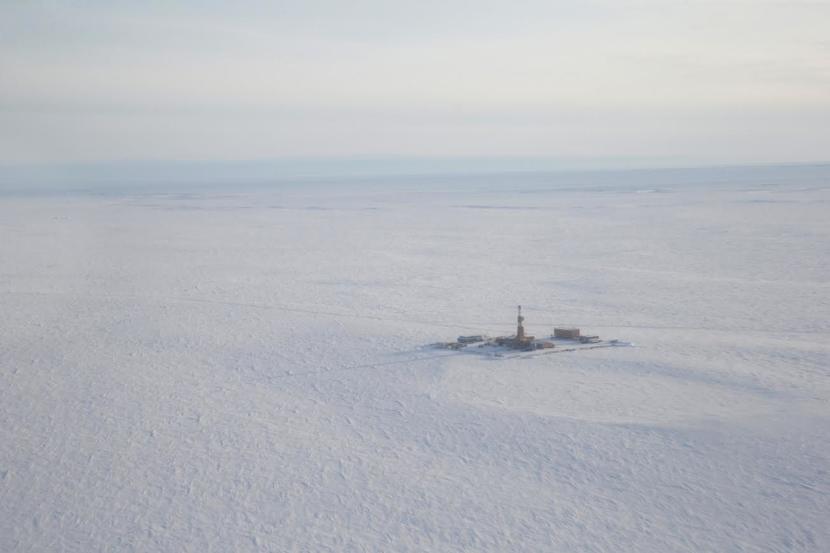
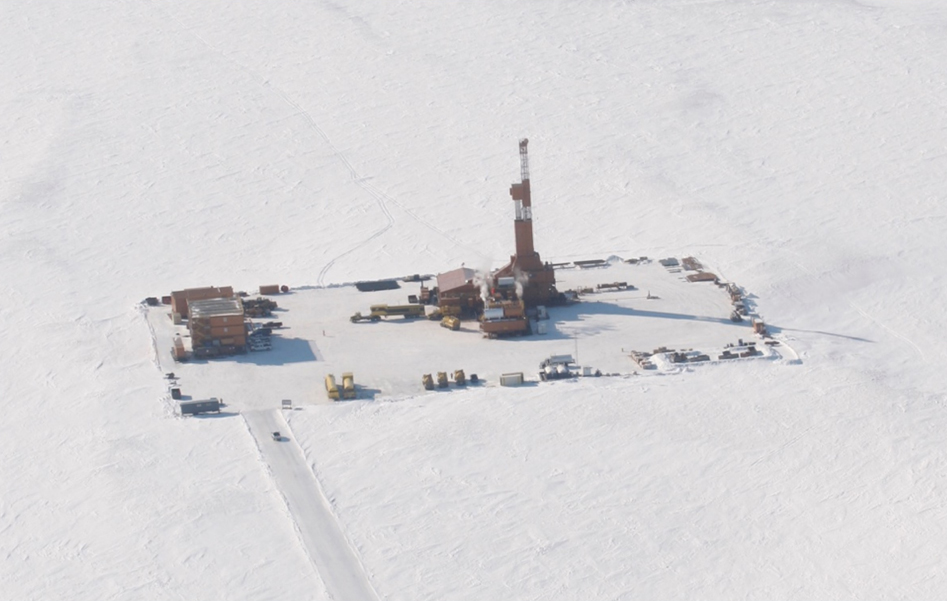
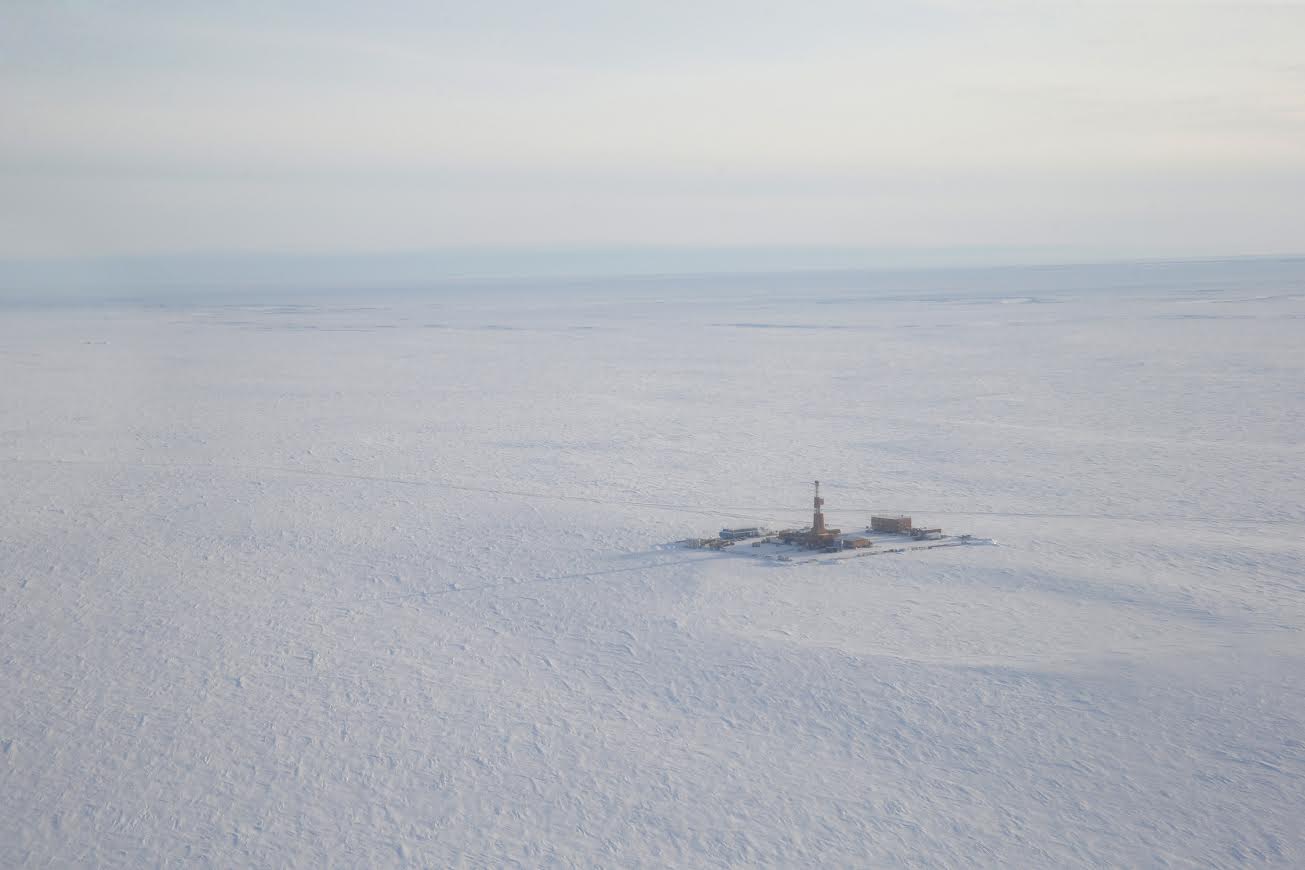
An aerial view of one of the exploration pads and wells that ConocoPhillips drilled during the 2018 exploration season at its Willow prospect. (Judy Patrick Photography / ConocoPhillips Alaska)

A federal appeals panel has halted work at one of Alaska’s biggest proposed North Slope oil fields, putting dozens of contractors out of work and costing ConocoPhillips, the project’s developer, millions of dollars.

The two-judge panel, from the Ninth Circuit Court of Appeals, issued its emergency order late Saturday.

It comes a week after a pair of Alaska Native-owned corporations hired by Conoco started building ice roads over frozen tundra to access the site of a proposed gravel mine to support construction of the oil company’s massive Willow project, according to court documents. And given the short length of the North Slope’s winter construction season, project opponents say the ruling appears to thwart Conoco’s development plans until next January.

The Willow development is one of the largest proposed projects in years on the North Slope, where total oil production has leveled off around 500,000 barrels a day after decades of decline.

At its peak, Willow, located in the National Petroleum Reserve in Alaska, could add another 150,000 barrels a day to that figure — if Conoco ultimately decides to invest the $2 billion or more needed to build it. But the court’s ruling Saturday is an indication of the new legal and political obstacles standing in the project’s way.

Just two years ago, industry boosters — including Conoco’s top Alaska executive — were hailing Willow as one of multiple promising projects in what they called a “North Slope renaissance,” buoyed by the Trump administration’s “energy dominance” agenda.

Today, Alaska’s oil industry is contending with a new presidential administration that’s pledging decisive action on carbon emissions and has already issued a temporary moratorium on all activity around leasing in the Arctic National Wildlife Refuge. And a pressure campaign by opponents of oil development in the refuge has convinced an array of banks and other financial institutions to rule out financing of drilling projects anywhere in the Arctic.

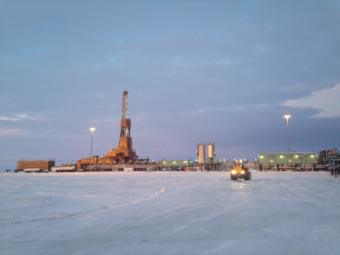
ConocoPhillips’ CD5 drill site in January 2017 (Photo by Elizabeth Harball/Alaska’s Energy Desk)

Now, Conoco’s Willow project faces new headwinds. In issuing its Saturday injunction temporarily halting work on the gravel mine and a related three-mile road extension, the Ninth Circuit judges noted that the project’s opponents, who requested the order, also have a good chance of winning their underlying lawsuit challenging the Trump administration’s environmental review of the full Willow project.

Project opponents hope that the judges’ decision Saturday will prompt the Biden administration to re-evaluate the costs and benefits of development in the petroleum reserve, according to Bridget Psarianos, an attorney with the environmental law firm Trustees for Alaska.

“It does come at a moment where it seems like we might have an administration that might question that business as usual approach,” said Psarianos, who’s working on the case. “I’m hoping that this gives us a lot of time to think clearly about the future of this case and the future of this project.”

A Conoco spokeswoman, Natalie Lowman, said the company is reviewing its options and will have more to add in the next few days.

Reserve’s future in question

The legal dispute over Willow marks an escalation in the fight over the future of the Indiana-sized petroleum reserve, which is still mostly undeveloped except its easternmost corner.

Environmental organizations, tourism interests and certain Indigenous groups are opposed to expanded development, citing impacts on the neighboring village of Nuiqsut, risks to fish and wildlife and the global push to reduce fossil fuel consumption.

They also note that while the reserve is named for its oil potential, it contains critically important habitat for caribou and birds, and the legislation that governs its management directs the Interior Department to keep environmental and scenic values in mind.

Oil companies, meanwhile, have pushed to advance development further west. And those efforts got a boost from the Trump administration, which approved major projects and also rewrote the overarching land use plan for the entire reserve to open more areas to drilling.

While Iñupiat-led corporations and political leaders have supported continued oil development balanced with mitigation measures, Conoco’s original plans for Willow provoked opposition among Nuiqsut residents and North Slope elected officials. And the company ultimately made major changes to its proposal in response to the initial backlash.

After the Trump administration approved the project in October, opponents sued in federal court. They claimed the decision violated several bedrock environmental laws, from the National Environmental Policy Act to the Clean Water Act.

A month later, the opponents asked U.S. District Court Judge Sharon Gleason to block Conoco’s work at Willow while the lawsuit played out.

Gleason initially rejected the request, saying the opponents had failed to file their lawsuit within a required 60-day window after the Trump administration’s approval of the project. But she then granted the request for two weeks to allow opponents to appeal to the Ninth Circuit.

The Ninth Circuit’s emergency ruling could ultimately be lifted. But opponents say the court’s briefing schedule will push a decision too late into April to allow construction to resume this year.

Conoco’s project manager, James Brodie, said in a sworn statement that any construction left unfinished by mid-April will have to wait at least until January 2022.

The company already had roughly 60 workers involved in Willow-related ice road construction and support, and it planned to employ double that number at the project’s peak this winter, Brodie said.

Conoco also had already started moving culverts from Fairbanks to the North Slope, and will have “wasted” nearly $4 million on contracts if its winter work is canceled, Brodie said.

Brodie downplayed the impacts of this winter’s plans at Willow, saying that the work was a “small portion” of construction in the petroleum reserve and noting that more than 500 people are working at a separate Conoco project nearby called GMT2.

“This GMT2 work will continue and maintain an industrial presence in the area regardless of whether the Willow gravel construction is allowed to proceed this winter,” Brodie said.

Conoco still has not made a final decision to build the Willow project, and this winter’s plans amounted to preliminary work, the company said.

But the project’s opponents argued that Conoco’s planned gravel mining and road extension would still cause “irreparable harm” to the reserve’s fish and wildlife, and to their members’ interests in subsistence hunting and fishing, tourism and research.

In a sworn statement, Nuiqsut resident and environmental advocate Rosemary Ahtuangaruak said she was concerned about the new infrastructure blocking subsistence wildlife, like caribou, from getting to the village’s hunting grounds.

“We won’t have the migration come to us,” Ahtuangaruak said. “There may be [a] smattering of animals that get through the infrastructure, but they will be unhealthy and highly stressed.”

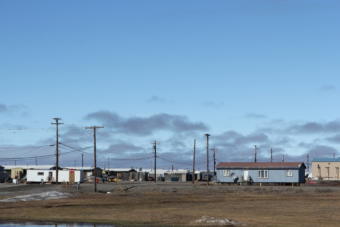
Nuiqsut in June 2018. The village is near a growing number of oil developments in the western Arctic.
Nuiqsut in June 2018. The village is near a growing number of oil developments in the western Arctic. (Photo by Elizabeth Harball/Alaska’s Energy Desk)

Irreparable harm is one of several legal standards that must be met in order for courts to issue an injunction. In its ruling, the Ninth Circuit judges said they agreed with Willow’s opponents on that point — and also with their argument that they were likely to win their underlying case challenging the whole project, which is another requirement for an injunction.

The two judges cited a point made by Gleason, the lower court judge who initially rejected opponents’ request to block Conoco’s work at Willow based on the two-month time limit.

The project’s opponents argue that Gleason was wrong about the time limit. And if that’s the case, Gleason wrote in one of her orders, the opponents “could well be likely to succeed” in one of their underlying claims challenging the Trump administration’s environmental review of Willow.

Specifically, Gleason cited opponents’ argument that the Trump administration review violated the National Environmental Policy Act by inaccurately estimating Willow’s potential greenhouse gas emissions.

The Ninth Circuit’s ruling, handed down late Saturday, made a big splash on both sides; Psarianos, the attorney for Willow’s opponents, called it a “really big deal.”

But she also noted the broader context of many other legal disputes still playing out on the North Slope.

In addition to the lawsuit challenging Willow, drilling opponents have sued over the Trump administration’s new, less-restrictive management plan for the petroleum reserve, and over the Congressionally-created oil leasing program in the Arctic National Wildlife Refuge.

“We’re looking forward to continuing to work on this case, and just keep fighting it,” Psarianos said. “This is one battle in a long war.”

Judge says Conoco can’t start gravel construction or mining at Willow oil project for up to 2 weeks

ConocoPhillips’ undeveloped Willow prospect. (Photo courtesy ConocoPhillips)

A federal judge said Saturday that ConocoPhillips can’t start opening a gravel mine or building gravel roads at its Willow oil project for up to two weeks.

U.S. District Court Judge Sharon Gleason’s order comes after conservation groups appealed her decision last week to allow the work at Willow.

Willow is the name of Conoco’s massive oil project in the National Petroleum Reserve-Alaska, on the western North Slope.

Supporters say the project will lead to hundreds of jobs and help keep oil flowing down the trans-Alaska pipeline for decades. But conservation groups say it will cause too much harm — adversely impacting wildlife, the land and those who live in the nearby village of Nuiqsut.

Conoco has said it could start producing oil at Willow in about five years.

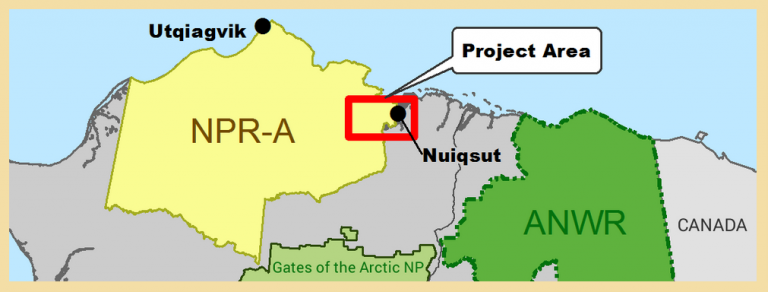
Conoco’s Willow oil and gas prospect is located in the northeastern corner of the National Petroleum Reserve-Alaska. (Image credit Bureau of Land Management)

This winter, it wants to build ice and gravel roads in the area, plus a mine site, about seven miles from Nuiqsut.

But conservation groups are suing, and want the project stopped.

Sovereign Iñupiat for a Living Arctic, the Center for Biological Diversity and about a half-dozen other conservation groups sued the Trump administration in late 2020, arguing the government violated environmental laws when it OK’d the Willow project.

The groups want work halted on the project until the lawsuits are resolved.

They’ve recently taken their requests to the U.S. Ninth Circuit Court of Appeals.

Gleason ruled Saturday that Conoco can continue construction on its seasonal ice roads, but it must not blast the gravel mine or build gravel roads until Feb. 20 or until the Ninth Circuit rules on the groups’ requests — whichever happens first.

Conoco had planned to break ground at the mine site on Feb. 12, according to Gleason’s 11-page order.

She described the mandatory pause as a “brief and limited injunction.”

She said while she remains confident in last week’s decision to allow the work at Willow, the Ninth Circuit may disagree with her. There’s a “strong likelihood of irreparable environmental consequences” once the blasting operations at the mine site start, she said.

The conservation groups behind the lawsuits celebrated Gleason’s decision.

“We must protect the Arctic, not exploit it,” said a statement Sunday from Kristen Monsell, senior attorney with the Center for Biological Diversity.

Asked how Gleason’s order impacted Conoco’s plans for Willow, a company spokesperson Rebecca Boys said in an emailed response that it does not prevent the ongoing construction of ice roads. She said she could not comment further on the active litigation.

Editor’s note: This story has been updated with a response from ConocoPhillips spokesperson Rebecca Boys.

Judge denies requests to halt work at Conoco’s Willow project

An aerial view of one of the exploration pads and wells that ConocoPhillips drilled during the 2018 exploration season at its Willow prospect. (Judy Patrick Photography / ConocoPhillips Alaska)

A federal judge has denied requests by conservation groups that she block ConocoPhillips from starting construction work this winter on its massive oil discovery, called Willow.

Sovereign Iñupiat for a Living Arctic, the Center for Biological Diversity and about a half-dozen other groups sued the Trump administration in late 2020, arguing it violated environmental laws when it approved the Willow project in the National Petroleum Reserve-Alaska on the western North Slope.

The groups also asked U.S. District Court Judge Sharon Gleason to block Conoco from starting construction on Willow this winter until the lawsuits are resolved.

Gleason denied those requests on Monday.

In a 28-page order, her reasons for the denial included that the groups, she said, didn’t demonstrate that polar bears would likely suffer “irreparable injury” if the construction work was allowed while she considered the lawsuits.

The conservation groups have appealed Gleason’s decision, and the broader lawsuits will also continue.

“We are hopeful that the court will put us back on the right path and stop the Trump administration’s last-minute effort to allow work on this environmentally reckless project to begin,” said a statement Friday from Earthjustice attorney Jeremy Lieb.

Meanwhile, Conoco said this week that it will begin laying gravel for the Willow project soon.

According to court documents, the company’s work this winter includes the construction of gravel and ice roads, as well as the opening of a gravel mine.

The company will have about 120 employees working on the projects, said Rebecca Boys, a company spokeswoman.

Conoco has said it expects oil production to start around 2026.

Willow would be the North Slope’s westernmost oil field, and Conoco said it could produce more than 100,000 barrels of oil a day at its peak.

Site notifications
Update notification options
Subscribe to notifications