Alaska's Energy Desk

Interest in kelp farming is on the rise in Alaska, but the infrastructure is still catching up

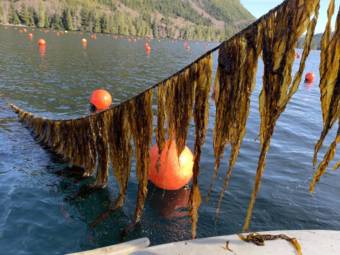
Employees check a line ribbon kelp, or Alaria marginata, in March at Seagrove Kelp’s Doyle Bay Farm, six miles outside of Craig, Alaska. State regulations require kelp farmers to gather seed from at least 50 wild kelp species within 50 km of the farm to help protect wild kelp stocks. The farm grows ribbon, sugar and bull kelp. (Photo by Nick Jones/Seagrove Kelp)

For years, Bret Bradford has lived the seasonal rhythm of a commercial fisherman. He spends summers gillnetting salmon out of Cordova, and in the winter, he looks for odd jobs around town.

When a friend asked if wanted to spend the winters growing kelp instead, he saw an opportunity for stable, year-round work.

“I thought, man, how hard could it be to grow kelp?” he said.

Bradford already has a boat and knowledge of the water. And the timing is perfect: kelp farmers plant seeds in the fall and harvest them in the spring, just before fishing season.

And he’s not the only one jumping on the kelp bandwagon. Interest in kelp farming has been building in Alaska since the state’s first commercial harvest in 2017. Bradford is one of more than 40 aspiring kelp farmers that have submitted applications to the state since.

But there’s still only a handful of farms producing a commercial crop. Mariculture advocates say that it’s not easy building an industry from scratch, or a market for it. Jumping into an industry still in its infancy isn’t without its challenges.

“For me personally, the biggest challenge of anything that I undertake is dealing with the bureaucracy,” Bradford said.

Bret Bradford on his fishing boat in Prince William Sound. Bradford is a commercial fisherman in the summer and is hoping to add kelp farming to his operation in the winter. (Photo provided by Bret Bradford/Blue Wave Futures)

Before they can put lines in the water, kelp farmers have to apply for state and federal permits, which include opportunities for public comment. The whole process can take up to two years, and a lot of money, time and expertise that fishermen like Bradford may not have.

Which is why he joined a collective of aspiring kelp farmers in Prince William Sound called Blue Wave Futures. Lawyer and fisherman Joe Arvidson handled the permitting process for all seven farms.

“And I had no idea what to do and neither did they. And so, I just jumped right into it,” Arvidson said.

In many ways, Blue Wave Futures is still just an idea. Only about half the farms are permitted, and none of them have kelp in the water for a commercial harvest.

But they are trying to lay the groundwork for a stable industry in the region, answering questions like where they’ll get seed, where kelp grows best, and, most importantly, who will buy their harvest.

“We don’t want to grow a bunch of kelp that we can’t sell, that we don’t have markets for, that we don’t have product development for, or even pilot projects that we can use it for to work on,” Arvidson said.

A 40-foot container van holds a mobile seed nursery in Seward, Alaska. With support from the Alutiiq Pride Shellfish Hatchery, the Nature Conservancy, and a Denali Commission grant, Blue Wave Futures built the nursery, where it grew kelp seed for seven different research sites in Prince William Sound. The collective plans to move the nursery to Cordova this summer. (Photo provided by Joe Arvidson/Blue Wave Futures)

Since the state government established a mariculture task force in 2016, the group has been working to grow a shellfish and seaweed farming industry that makes 100 million dollars a year. But that goal is still a long ways off: aquaculture sales totaled just $1.4 million in 2019, according to NOAA.

The interest in kelp farming is there. Lease applications nearly doubled last year, and a recent training by the Alaska Fisheries Development Foundation and other partners attracted hundreds of participants. The foundation’s executive director, Julie Decker, said they’ve had interest from a diverse group of people, including commercial fisherman, subsistence users, tribes, Native corporations and people interested in making kelp-based products.

But the infrastructure is still being built.

“It’s not simple, and so people that are interested should be prepared for challenges,” Decker said. “You know, whenever you’re doing something new, it’s not necessarily all outlined and cookie cutter off the shelf. “

Decker said one big hurdle is finding buyers for kelp. Blue Wave Futures wants to sell much of their harvest to Mat-Su farmers for fertilizer. Alaska researchers along with other partners are also looking at using kelp in biofuel, and Decker said they’re even hoping to attract a plant to the state to manufacture kelp-based plastics.

“It could really open up the demand for farmed seaweed,” she said,  “which would allow for a lot more people to get involved with the industry and know for sure that they had a market.”

Seagrove Kelp off Southeast Alaska’s Prince of Wales Island is one of just four farms that produced a commercial harvest in the state in 2019. The numbers for 2020 are confidential until all kelp farms report numbers to the state.

Founder Markos Scheer said some of their product that aren’t for human consumption, like pet food and fertilizer. But they also sell to companies like Juneau’s Barnacle Foods, which makes a line of trendy kelp-based products like hot sauces and pickles.

This is the farm’s second year growing commercially, and they have faced their share of challenges. Last year, herring spawned on some of their kelp, which delayed harvesting and reduced its quality.

“You know, you come in with an expectation, if we do this, it’s gonna work this way,” Scheer said. “And then most often, we’re not entirely right. And we’ve got to change that, and we say well this worked and this didn’t, and there’s a bit of trial and error in the process.”

Seagrove Kelp employees Melyssa Nagamine and Nick Whicker pull a line of ribbon kelp out of the water. (Photo by Nick Jones/Seagrove Kelp)

But overall, business is going well. They’ve put in applications to add new sites to the 100-acre farm. Scheer hopes expanding will help reach new markets.

“This is the kind of industry that could be a really significant leg on the economic stool for coastal Alaskans because you can do it in so many different places and do it viably,” Scheer said. “You know if we get the industry to a size that it needs to be, it’s gonna be a pillar of the economy for the next 100 years.”

Scheer, like other seaweed enthusiasts, sees kelp as an answer to problems both economic and environmental. It soaks up excess carbon dioxide from the oceans and doesn’t require fertilizers or chemicals once it’s in the water. It could provide an alternative for fishermen during low salmon years in Southeast and other regions.

But whether it will in fact fuel a billion dollar mariculture industry in Alaska is still unknown.

Hilcorp seeks permit for offshore survey

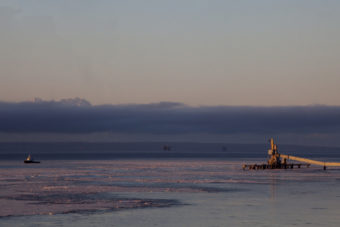
Cook Inlet oil platforms are visible from shore on Dec. 13, 2016 near Kenai, Alaska.
Cook Inlet oil platforms are visible from shore on Dec. 13, 2016 near Kenai, Alaska. (Photo by Rashah McChesney/Alaska’s Energy Desk)

Hilcorp purchased several blocks of federal leases in Cook Inlet in 2017.

Before it can even think about exploring for oil and gas there, the company has to do a geohazard survey to gauge potential geological hazards in the area.
The company planned to survey four lease blocks last year but was delayed because of the pandemic. It estimates the survey will take about a month and will happen during fishing season in Lower Cook Inlet.

Hilcorp bought several federal leases in a 2017 sale. The company’s now seeking a permit to conduct geohazard surveys on some of those leases. (Bureau of Ocean Energy Management)

Currently, the federal Bureau of Ocean Energy Management is asking for input on an environmental assessment of Hilcorp’s survey plan, and is taking comment until March 22. It wants to hear from fishermen and others who might be affected by the survey.

The agency estimates the federal waters of Cook Inlet, which stretch down to the southern tip of Kodiak, contain 1 billion barrels of oil and 1.2 trillion cubic feet of gas. With 14 tracts, Hilcorp is the sole owner of federal leases in the inlet.

There has never been a production well drilled in Cook Inlet’s federal waters. All the platforms in the inlet are in state waters, within three miles of shore.

Earlier this year, the federal government planned to hold another lease sale in Cook Inlet, but that sale was put on pause when President Joe Biden indefinitely halted all new leases. Earlier federal lease sales in the inlet have been canceled due to lack of industry interest.

Ambler Metals will get back some of its $35M investment on access road, if project gets built

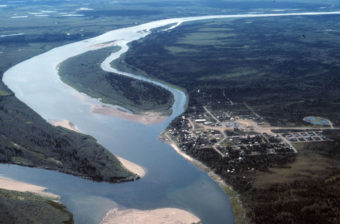
The Kobuk River runs through the Ambler Mining District, where a new road would be built to connect the Northwest Arctic with the Dalton Highway to Fairbanks. (Berett Wilber/Alaska Public Media)

Last month, the state of Alaska’s investment authority agreed to put $35 million towards pre-development work on the Ambler Road project.

The private access Ambler Road would run roughly 211 miles from the Dalton Highway to the Ambler Mining District in the Northwest Arctic Borough.

The funding from the Alaska Industrial Development and Export Authority, or AIDEA, was matched by Ambler Metals, the company that hopes to use the road to access mineral deposits in the Ambler Mining District. The company’s most promising deposit is referred to as the Arctic project.
Ambler Metals will not be an operator of the road. That falls solely with AIDEA.

AIDEA executive director Alan Weitzner said that as part of the contract with Ambler Metals, the company wanted an opportunity to get some of their investment back.

“For their contribution of that $35 million, what they’ve requested is that they get a credit against what would be toll or use volume charges for activity on the road,” Weitzner said. “And we have agreed to that.”

Basically, Ambler Metals would get a credit towards any fees for using the road. They would only get that credit if the road actually gets built. Weitzner said AIDEA hasn’t officially decided to invest in the construction of the road yet. That’s still a few years away.

“We are currently in feasibility and permitting activity,” Weitzner said. “We look to complete this, by latest, by the end of 2024.”

Weitzner said while the financing is still up in the air, it’s not totally clear how much Ambler Metals stands to get back in toll fees, but he said it’s very unlikely that it’ll get the entire $35 million investment back.

“[I] don’t believe that would be the case because of the capital costs of the road itself,” Weitzner said.

Throughout the Ambler Road’s development, AIDEA has drawn a lot of comparisons between this project and the Delong Mountain Terminal. That’s a roughly 52-mile road that leads from the port site near Kivalina to the Red Dog Mine. The zinc and lead mine is owned by the NANA Regional Native corporation and operated by Teck Alaska, formerly known as Cominco.

Weitzner said that Teck and NANA worked together on the pre-development work for the access road, and that ended up lowering the amount of money that the mine needed to make to break even. He said the investment from Ambler Metals for work on the Ambler Road is similar.

“They’re the initial party, the initial user we believe with the Arctic Mine development,” Weitzner said. “And they’re contributing to the final feasibility permitting activities that gets us to the construction of that road as our partner in that case. And ultimately they’re lowering the amount of capital that needs to be financed.”

The Ambler Road has been a lightning rod for controversy for years, with environmentalists concerned over potential impacts to caribou migration from the road’s construction. They also are concerned that the road goes through the Gates of the Arctic National Park and Preserve.

Weitzner sees investment in the project as a benefit to the state economically. He pointed to Red Dog Mine again, which provides a massive percentage of the Northwest Arctic Borough’s revenues.

“What I would highlight is that there’ve been, through three generations, 500 people working at the Red Dog Mine, generating revenues within their communities,” Weitzner said. “It’s that example which is what we’re looking to develop across multiple mines in the Ambler Mining District.”

Weitzner said Ambler Metals will likely be the first commercial user of the road, considering its financial contributions and existing deposits in the Ambler Mining District. However, he said the road will be open to other commercial interests who want to access the mining district, and they will have to pay full fees to use the road.

Editor’s note: A previous version of this story said that Red Dog is a zinc and cobalt mine. It’s a zinc and lead mine. The story has been corrected.

Alaska Fish and Game is selling raffle tickets for big game permits to boost its budget

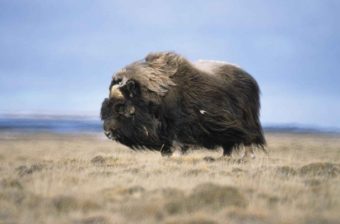
Musk ox near Nome (Neal Herbert/National Park Service)

Tickets are already on sale for what’s called “Alaska’s Super Seven Big Game Raffle.” If it sounds kind of like buying a lottery ticket for musk ox — or another one of the seven most sought after species in the state, like a brown bear or a caribou — it is.

Alaska’s Department of Fish and Game is raffling off permits for some of the state’s most desirable hunts. Officials hope the earnings will help make up for a decrease in hunting license sales during the pandemic.

“We saw close to $2 million revenue loss in the wildlife division this last year because of COVID, primarily because of the significant or steep decline in nonresident license sales this last year,” said Tony Kavalok, the assistant director of Fish and Game’s Division of Wildlife Conservation.

Kavalok said COVID-19 travel restrictions and the closure of the spring brown bear hunt meant nonresident hunting license sales were way down this year.

He said another reason the division wants to raise money is to be able to match some federal money. States get cash from a tax on firearms and ammunition sales and firearms and ammunition sales are trending way up. But states only get the money if they can match one dollar for every three federal dollars.

“So it’s a very important situation right now because with license revenue flat or declining and our federal match dollars going up, it’s gonna be really important to have that additional funding,” Kavalok said.

The raffle is the first of its kind in Alaska. But other states like Arizona and Wyoming have similar systems. In Wyoming, the raffle raised more than a million dollars this year.
The Alaska raffle is open to residents and nonresidents. Avid sportsmen said these are once-in-a-lifetime hunts.

“If you’re really looking for a really, really nice animal for that species, these areas are the premium areas in the state to have,” said Louis Cusack, a lifelong hunter who lives in Chugiak.

Cusack is the executive director of the Alaska chapter of Safari Club International. It’s one of the nonprofits that’s partnered with the state to run the raffle. It donated a tag and will sell tickets — most of the money goes back to Fish and Game, but Safari Club International can spend 30 percent on a conservation project of its choice.

For most of these hunts, only a tiny percentage of the hunters who usually put in for a tag get one. And those tags often show up on auction for big money. But a raffle ticket is only twenty bucks. That’s important to Cusak.

“You don’t have to own a Learjet, you know, have to be able to afford to spend 1000s of dollars,” he said.

Raffle tickets are on sale through mid-April. Winners will be announced May 1. Hunters age 10 and older are eligible.

Invasive mollusks hitch ride to Alaska on aquarium algae

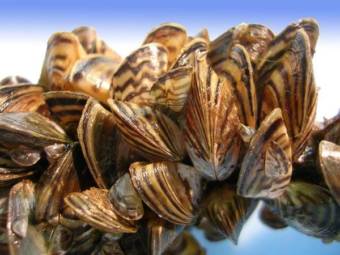
Invasive species managers consider zebra mussels to be one of the most detrimental invasive species in North America. (Alaska Department of Fish and Game)

There’s a new species on Alaska’s most wanted list.

Invasive Zebra mussels have made their way up north from the Lower 48, hitching rides on aquarium moss balls to pet stores.

Biologists in Alaska and more than 30 other states are concerned. For a creature the size of a fingernail, zebra mussels pack a lot of punch.

Maura Schumacher is the invasive species specialist for the Kenai Watershed Forum. She said zebra mussels, named for their striped shells, can thrive in both rivers and lakes.

“They are filter feeders, so basically they pull in water through their systems and they pull out nutrients,” she said. “And the waste that they are producing is highly acidic and drops the oxygen levels in water systems.”

That creates an inhospitable environment for the other plants and animals living there.

Zebra mussels are native to Eastern Europe and likely came over to the U.S. on ships in the 1980s. They infested all five Great Lakes and traveled to connected freshwater systems through canals.

It’s still a mystery how they glommed onto moss balls — small clumps of green algae that help filter water in household aquariums. But that’s allowed them to spread across the country.

“Because these moss balls are being sold by these major pet suppliers, they’re getting shipped to places like Alaska,” Schumacher said. “Which normally — it’s not impossible, but it’s very difficult for a zebra mussel to travel from the Great Lakes region to Alaska.”

The mussels could infiltrate local ecosystems if people dump their aquariums into lakes and rivers. They can wreak havoc on personal property, too.
“Some of the other impacts that they have is that they reproduce so quickly, they can clog storm drains,” she said. “They can cause incredible damage to boats and other recreational equipment. They just clog up any space available.”

State and federal agencies are coordinating to warn people who may have purchased moss balls. Major pet stores like Petco have also put out advisories asking customers to toss their moss balls.

“If you have recently purchased these moss balls, destroy them immediately,” Schumacher said.

She said acting on the defensive is important. Alaska has previously been able to intercept boats carrying zebra mussels.

“And when you’re on the offensive, like they are in the midwest and the Great Lakes region, it’s costing those states and economies millions and millions of dollars on a yearly basis,” she said.

The U.S. Fish and Wildlife Service is asking people to destroy their moss balls. They’ve released official guidelines for doing so.

Moss balls can either be freezed, boiled or bleached and then tossed in the trash in a sealed plastic bag. Aquariums that contained moss balls should be drained and cleaned.

The agency is also asking people to report zebra mussels they find. You can do that here.

Alaska Gov. Dunleavy’s administration says it’s ensuring ‘ethical transition’ of chief of staff to ConocoPhillips job

Gov. Mike Dunleavy’s Chief of Staff Ben Stevens talks to Senate Majority Leader Lyman Hoffman, D-Bethel, after Dunleavy's State of the State address on Monday, January 27, 2020 in Juneau, Alaska. (Photo by Rashah McChesney/KTOO)
Gov. Mike Dunleavy’s Chief of Staff Ben Stevens talks to Senate Majority Leader Lyman Hoffman, D-Bethel, after Dunleavy’s State of the State address on Jan. 27, 2020 in Juneau. Stevens served as Dunleavy’s chief of staff until recently, when he took an executive job at ConocoPhillips, Alaska’s largest oil producer. (Photo by Rashah McChesney/KTOO)

The oil company that hired Alaska GOP Gov. Mike Dunleavy’s chief of staff for an executive job is pledging to uphold state ethics laws that bar him from working on issues that were under consideration in the governor’s office — and Dunleavy’s administration also says it’s working to ensure an “ethical transition.”

Ben Stevens’ last day in the governor’s office was Friday, Feb. 26, and he started work as vice president of external affairs and transportation at ConocoPhillips the following Monday.

The company is Alaska’s largest oil producer and holds an array of state oil leases.

The Alaska Executive Branch Ethics Act bars public officials from working on matters under consideration by their agency for two years after leaving their state job. It also bars high-ranking officials from lobbying for a year after leaving the government.

After Stevens’ hiring by ConocoPhillips was announced last month, some of the Dunleavy administration’s critics questioned whether his new job would meet those standards. They also noted his longstanding ties to the oil industry — including during the VECO scandal more than a decade ago, when he was a state senator accused of taking bribes by two former oil industry executives.

Stevens didn’t respond to a request for comment. But a ConocoPhillips spokeswoman, Natalie Lowman, said the company is mindful of the ethics restrictions.

“We are fully aware of state prohibitions against lobbying and advocating on issues that Mr. Stevens may have worked on as the governor’s chief of staff,” Lowman wrote in an email. “We will, of course, comply with all applicable laws, and Mr. Stevens will not be working on or involved in any matter that might present a conflict of interest.”

A spokeswoman for the Alaska Department of Law, Maria Bahr, also wrote in an email that Stevens is “fully aware of his responsibilities under the ethics act” and has been working with her agency “to ensure an ethical transition to his new role.”

For his part, Dunleavy said he’s not concerned about Stevens’ move — nor about critics’ allegations that he’s trading in his public service for a private sector job.

“I don’t believe that’s going to be the case any more than if he left and worked for a union or if he left and worked for a hospital association,” Dunleavy said in an interview Friday.

Stevens’ predecessor at ConocoPhillips, Scott Jepsen, was not a registered lobbyist with the state, and Bahr said that Stevens would not be working as a lobbyist for the company.

But Jepsen’s job description did include working on government affairs for the company, and he’s been a vocal player in legislative and public debates around whether to raise oil taxes.

When Stevens’ hiring by ConocoPhillips was announced last month, the Alaska Public Interest Research Group questioned whether the state had issued a waiver under the ethics act that would allow Stevens to work on issues that had been under consideration by the governor’s office. Such a waiver is only allowed under the ethics act if it’s determined to be “not adverse to the public interest.”

But Lowman, from ConocoPhillips, said that there’s no need for such a waiver, as “we are not going to have Mr. Stevens work on any matters that were under consideration in the governor’s office while he was there.”

Site notifications
Update notification options
Subscribe to notifications