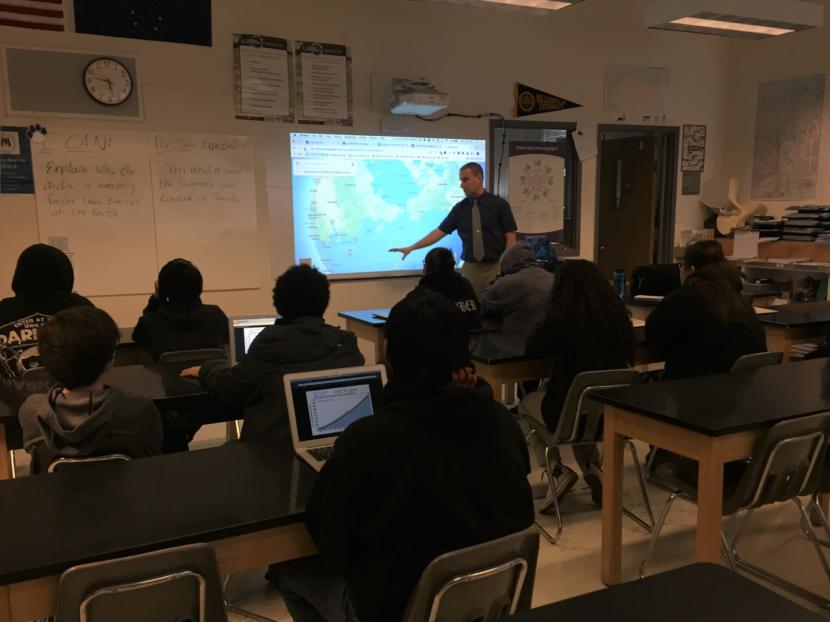
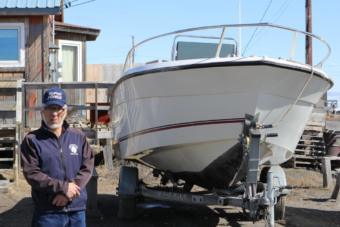
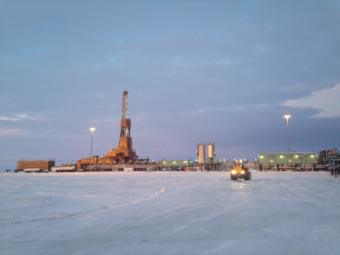
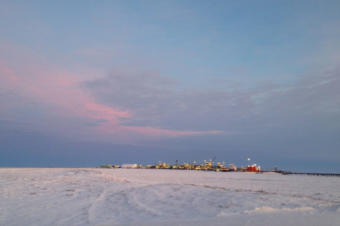
Science teacher Kevin Neyhard spends the end part of each school year teaching his eighth grade science students in Utqiaġvik about climate change. (Photo by Ravenna Koenig/Alaska’s Energy Desk)
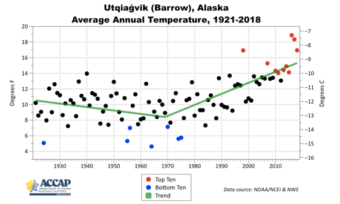
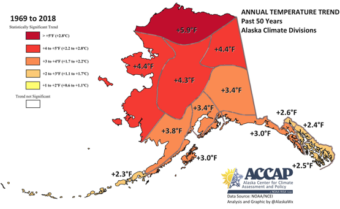
In Utqiaġvik, the average temperature has risen over 7 degrees Fahrenheit in the past 50 years. That’s among the biggest jumps in Alaska and the world.
People in Utqiaġvik are already experiencing impacts from that warming, like changes in the sea ice they hunt from, and increased coastal erosion as the period of time when the shoreline is protected from storms by sea ice has gotten shorter.
And in eighth grade science, students in Alaska’s northernmost town study climate change in a way that encompasses the global picture, but pays particular attention to what’s going on in their own backyard.
Third period is about to start at Eben Hopson Middle School, as science teacher Kevin Neyhard stands at the door to his classroom and ushers in the last stragglers from the hallway.
Neyhard has a lot to get through in this class period. The section he’s teaching right now sometimes gets a bit squeezed, since it’s at the end of the year. But for the past six years he’s been teaching here, he always gets to it eventually.
This is the part of eighth grade science where students in Utqiaġvik learn about climate change.
In today’s class, Neyhard is showing the class data reflecting how carbon dioxide levels and temperatures are rising, and how that corresponds with a decline in Arctic sea ice.
Just half a degree Celsius of warming could mean an ice-free summer on the Arctic ocean, he explains, which would lead to even more warming.
“Why else is the ice important?” he asks his students.
People shout out answers: “Polar bears!” “Seals!” “Walrus!” “Whaling!”
Climate change is personal to the students here, where many people use the land and ocean to access subsistence resources, and even residents as young as these 13- and 14-year-olds have seen a change in the coastline due to erosion.
Neyhard’s approach to this subject gets personal too. He usually starts this unit by handing out a homework assignment where students have to ask an adult outside of school a series of questions about climate change.
“Have you seen anything in your life that you would say is a result of climate change?” he reads out loud to the class, as he goes over the homework. “You know, examples,” he continues. “What have they seen change, if they’ve seen things change?”
Neyhard tells the students what he doesn’t want is for them to go home and say, “Here Mom, you have homework.”
“I want you to talk to people,” he tells them. “That’s the whole point, is to get you to actually talk and learn from people in the community.”
When students come back to class with stories from parents, grandparents, aunts, uncles and other adults, it becomes a sort of crowd-sourced teaching tool. Neyhard puts the answers in a database, and they go over it in class.
His curriculum is largely shaped by a growing national model for science education called the Next Generation Science Standards, which the North Slope Borough School District has adopted. The state of Alaska hasn’t adopted the next generation science standards yet, though they’re considering a framework incorporating it. The standards say students should be able to “ask questions to clarify evidence of the factors that have caused the rise in global temperatures over the past century,” with emphasis on “the major role that human activities play.”
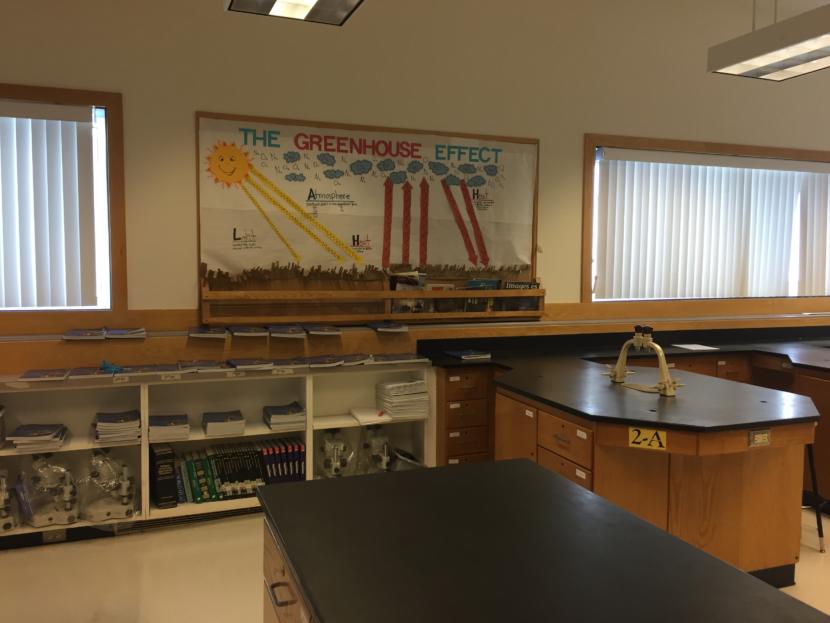
An illustration of the greenhouse effect on the wall of Kevin Neyhard’s classroom. (Photo by Ravenna Koenig/Alaska’s Energy Desk)
There is also a set of locally-developed Iñupiaq standards that relate to the environment and influence how Neyhard teaches this course. For example, they include an expectation that students show responsibility toward the environment by “comparing and contrasting conservation-oriented behaviors with irresponsible behaviors.”
But Neyhard also takes cues from the responses he gets to the annual survey.
“Basically, I want to try to teach in accordance with what this community is feeling and thinking,” he said.
The majority of the responses to the survey reflect a belief that human activity is either partly or fully responsible. So that’s the way he teaches it.
“I do lean towards the human influence of things,” he said.
He also gets the students out of the classroom for their climate change education. Each spring he takes them out onto the shorefast sea ice for a day-long field trip.
“They get the traditional, ecological perspective on sea ice and how it’s changing and shifting from the whaling crews and whaling captains,” Neyhard said. “And then they come back to a home base area … and we drill cores through the ice to learn about it from that perspective.”
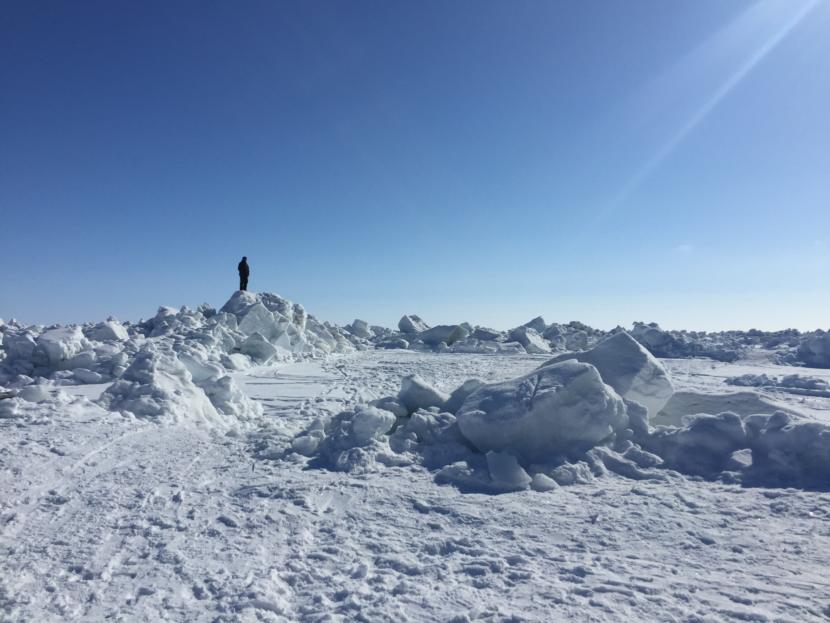
The shorefast sea ice off Utqiaġvik, which local whalers use as a platform for their spring hunt, April 21, 2019. (Photo by Ravenna Koenig/Alaska’s Energy Desk)
He also brings in area scientists to answer student questions.
“They ask about how it’s affecting a lot of the animals: seals, bowhead of course is a big one, polar bears, caribou,” he said.
Neyhard does talk about the challenges and potential consequences of climate change in this class — and that can be scary to some students. But he ends by talking about the ways that people are trying to address some of those challenges.
He keeps track of the adaptations that are being discussed in Utqiaġvik, and shares them with his students — like the idea of building a rock wall along the beach to slow erosion. Neyhard also has students do a final project where they research a particular approach to a climate change problem.
He wants them to walk away from this class not just with a better sense of how their world is changing, but also how people are trying to respond to that change — both globally and here at home.
To begin to comprehend the weight of the oil industry’s presence in Alaska’s Arctic, a good place to start is a baseball field — a small, sandy baseball field in a village on the tundra, not too far from the Arctic Ocean.
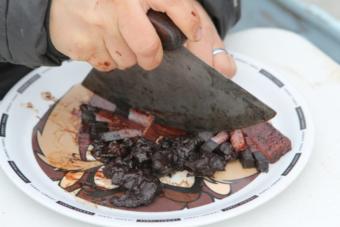
Early last summer, the baseball field was the site of a celebration. Most everyone in the village of Nuiqsut, Alaska was gathered there — kids helped hang streamers and balloons, and elders, bundled up in furs and coats, sat waiting on a caribou hide with open coolers and plastic baggies, ready to receive their share of whale meat.
Later, there was a blanket toss. A circular sealskin was suspended above the ground with ropes and wooden supports at the center of the baseball field. Men and women gathered around, gripped the edges and pulled in unison. One by one, men, women and children jumped on top — and were soon catapulted into the air.
Whaling crews across the Arctic host this celebration, called nalukataq, every summer. The previous fall, Nuiqsut’s crews had boated roughly 100 miles down the nearby Colville River to the Beaufort Sea, to harvest bowhead whales.
According to one 2016 survey, nearly every household in Nuiqsut relies on whale, caribou, fish and other animals harvested near the village to eat — meat they’ve hunted themselves or shared by friends or family. In Nuiqsut, food from the land is the base of nearly every meal. That’s one of the things that makes Nuiqsut, Nuiqsut: It’s a place where centuries-old traditions are cherished, necessary and alive.
Whale meat served at a whaling celebration in Nuiqsut in June 2018. (Photo by Elizabeth Harball/Alaska’s Energy Desk)
But Nuiqsut’s recent history has been defined by a different resource — one that has come to shape the community in a powerful way: oil.
During the whaling celebration, a man named Jim Winegarner strolled along the bleachers, chatting and handing out fliers. Winegarner was working for Hilcorp, a Texas-based oil company. He was recruiting for a training program for oil industry jobs.
“If we can get a bunch of people from Nuiqsut all on that same program, it’ll help you stay together. Like a whaling crew!” Winegarner said to a few residents gathered on the bleachers.
“And then you could start being a whaling captain in the oil business,” he said. “What do you think?”
Winegarner was also the man who could explain the stack of boxes arranged not far from the tables laden with pots of soup and the tubs of whale meat. The boxes were from Hilcorp, Winegarner said: “A planeload of bananas for each whaling captain.”
Call it a gesture of goodwill. Hilcorp is planning an offshore oil project about 20 miles from the island that Nuiqsut’s whaling crews use as a base camp. It’s one of a surge of new oil developments in the works in the region.
With names like Willow, Pikka and Greater Mooses Tooth 2, these new projects have been met with excitement in Alaska. Together, they could go a long ways towards reversing the long-term decline in oil production from Alaska’s North Slope, a potential boon for the state’s oil-driven economy.
But if you look at a map of where many of these oil projects are planned, there’s a dot right in the middle: the village of Nuiqsut.
Nuiqsut is small; its population is some 450 people. It’s rural: There are no permanent roads to the village. The vast majority of people who live there are Iñupiaq.
And for the past few decades, Nuiqsut has been the oil industry’s closest neighbor on Alaska’s North Slope.
For village residents, the stakes are high. Thanks to the village corporation’s ownership of a large swath of land surrounding the community, some of Nuiqsut’s leaders have leveraged benefits — financial and otherwise — for its people. At the same time, the oil projects operate on the same land where residents have long hunted and fished, creating a tension between development and subsistence.
So what does it mean to have oil companies move in nearby? What choices are you forced to make when you want to maintain your way of life, but one of the world’s wealthiest, most powerful industries is knocking on your door?
Something beautiful over the horizon
To understand how Nuiqsut ended up asking these questions, one place to start is the late 1960s — a time when the village as it is today didn’t exist.
Before white settlers colonized Alaska, Iñupiat called the Kuukpikmiut lived and hunted in the area for generations. When the federal government required Iñupiat children to go to school, many people who traditionally came from the area moved 100 miles to Utqiagvik, then called Barrow, the northernmost city in the U.S.
Then there were two seismic moments in Alaska’s history: In 1968, a giant oil field was announced 60 miles east of Nuiqsut, at Prudhoe Bay. That discovery led to the 1971 passage of the Alaska Native Claims Settlement Act.
If Alaska Native people wanted rights to their land — lest it, say, get leased out to an oil company without them having a say in it — they needed to claim it. They needed to form what are called regional corporations and, on the local scale, village corporations.
And to form a village corporation, you needed a village.
So in 1973, the Kuukpikmiut decided to return home.
The story is a legend in Nuiqsut. One person who can tell it is Isaac Nukapigak, one of the village’s original residents.
“Twenty-seven families that have a link to the Colville River made that journey, by snowmachine or any type of all-terrain vehicle that can travel through the tundra,” Nukapigak said. “Not knowing that there was oil. Because it was rich and abundant in wildlife.”
Those 27 families pitched canvas tents, on high ground safe from flooding, and lived that way through the Arctic winter, for 18 months — through blizzards and cold snaps, hunting for food, starting their own school in one of the tents.
“People were prepared. They worked together. It was one big united family — everybody took care of each other,” Nukapigak said.
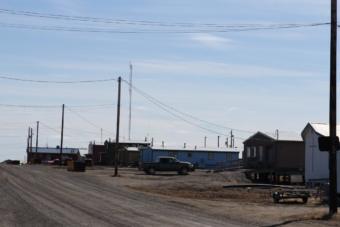
A residential street in Nuiqsut (Photo by Elizabeth Harball/Alaska’s Energy Desk)
Eventually, they built a permanent community organized around a small grid of gravel roads. Now, there’s a school, a fire station, churches, a general store, a hotel and an airstrip. And Nuiqsut is still bound to the reason for its founding: According to a North Slope Borough survey, more than two-thirds of the village depends on subsistence for at least half of their diet.
They called it Nuiqsut — Iñupiaq for “something beautiful over the horizon.”
‘We are dealing with the rest of the world, not just by ourselves’
At his home in the village, Vernon Long, another original Nuiqsut settler, paged through a book he and his father contributed to, shortly after the village was established. It contained maps of the Colville River delta, the region around the village.
The river flows hundreds of miles through the western Arctic and ends at the Beaufort Sea, forming a broad mosaic of wetlands and streams that dimple a landscape that’s otherwise completely flat.
Long’s book of maps shows how Nuiqsut’s traditional hunting areas blanket the region — the places his people harvest caribou, fox, wolves, wolverine, fish, moose, polar bears, ducks and geese and, of course, bowhead whales. For subsistence hunters and fishermen, the Colville River Delta is a kind of breadbasket.
But even in the early days, people in Nuiqsut had a pretty good idea that the Colville River Delta contained another prized resource.
Long recalled a day from his childhood when his grandmother took him berry-picking outside the village.
“We ran into a little pond of water that was about six feet by six feet, bubbling!” Long said.
Long said he called his grandma over and asked her, “‘Grandma, how come this water is bubbling, grandma? Look!’”
“And she comes and she goes, ‘Wow, in the future, you’re going to be rich, grandson,’” Long said.
Long’s grandmother guessed the bubbles came from a natural gas seep. It was a clue that oil — potentially a lot of oil — lay beneath them.
“Grandma was, unbelievably, telling the truth — without realizing what it looks like today,” Long said.
It’s been more than 40 years since Long found the bubbling pond. It’s not too far a walk from his front stoop to see how things turned out.
If you stand at the north end of Nuiqsut, there’s a clump of industrial-looking buildings on the horizon — the Alpine Central Processing Facility, owned by the oil company ConocoPhillips. Alpine was the first in a steady push of oil developments north of Nuiqsut, heading west from the initial discovery at Prudhoe Bay.
Since Alpine’s arrival, there’s been a tension in the village between the old and the new, trying to work itself out.
Vernon Long stands next to his house and one of the boats he uses to travel the nearby river. (Photo by Elizabeth Harball/Alaska’s Energy Desk)
Long said he believes it’s possible for the two to meet halfway — that it’s possible for Nuiqsut to adapt to the increasing number of oil discoveries nearby.
“As we move along to our new discoveries, it pushes away from our real lifestyle, of who I really am as an Iñupiat Eskimo,” Long said. “That doesn’t mean I’m going to lose that. It just means we are dealing with the rest of the world, not just by ourselves.”
Long has woven his own life between Iñupiaq and Western ways. In front of his house, he’d parked the boats he uses to travel the river; he hunts wolverine and wolves. Inside, Long plays video games.
He’s also an artist, and as he talked, he studied an oil painting in his living room that he hadn’t quite finished. It was of a man in a fur-lined coat, standing on an icy shoreline, gazing out at a bright blue ocean and a citrus-colored sky.
Long said his painting already has a buyer: ConocoPhillips.
A ‘North Slope Renaissance’ in Nuiqsut’s backyard
In the two decades or so that Conoco and Nuiqsut have been next-door neighbors, the oil company has established a kind of empire in the area. Conoco has coined a phrase for the industry’s goal in Alaska’s Western Arctic: “The North Slope Renaissance.”
Oil was discovered near Nuiqsut in the 1990s, and the first major project — Conoco’s Alpine oil processing facility — started up in 2000. Alpine is eight miles from the village.
Since then, Conoco has connected Alpine to a growing constellation of drill sites to Nuiqsut’s north and northwest, several others also within 10 miles of the village.
Conoco has long had a major presence in Alaska. Of all the oil companies in the state, it holds the most acreage and produces the most oil. And its interest in the Western Arctic has been growing.
In July, the oil company took the unusual step of flying 30 of its biggest investors and financial analysts to Anchorage, gathering them in the company’s downtown high rise — the tallest building in Alaska’s biggest city. The company also took its visitors on a tour of the North Slope.
Joe Marushack, Conoco’s top executive in Alaska, called the meeting a “great success” at an industry conference a few months later, saying the visit helped raise the profile of the company’s “really, really massive” operations in the state.
“Alaska wasn’t really on the radar screen with our investors, but it’s a really big part of our portfolio,” Marushack said.
“They got to see just what we thought in terms of the potential, the exploration success that we’d had,” he said.
One of Conoco’s biggest projects in the works is a recent oil discovery called Willow. It’s a field about 30 miles west of Nuiqsut, with enough oil to justify building a whole new processing facility — a second Alpine.
It’s estimated it will produce approximately 100,000 barrels of oil daily — an amount worth $7 million dollars at today’s prices, and a full fifth of the crude that now runs down the trans-Alaska pipeline.
Over the past several winters, Conoco has aggressively searched for more oil, drilling more wells than it has in years. Project by project, drill site by drill site, the oil company is steadily expanding its territory near Nuiqsut.
ConocoPhillips’ CD5 drill site in January 2017 (Photo by Elizabeth Harball/Alaska’s Energy Desk)
Conoco’s progress is happening despite legal challenges brought by environmental groups, which point out that before the company arrived, the area was mostly untouched by oil development. Teshekpuk Lake, to Nuiqsut’s west, is prized by conservationists for its migratory bird habitat.
But Conoco has the advantage of tremendous political support. Former Interior Secretary Ryan Zinke declared “the only path for energy dominance is a path through the great state of Alaska,” and the Trump administration is moving to open up more land near Nuiqsut to oil leasing. And in the oil-dependent state of Alaska, the phrase “North Slope Renaissance” has the ring of economic salvation.
Many of the excited conversations about Conoco’s work are happening hundreds of miles from where the company’s projects will actually be built — at the Alaska Legislature in Juneau, at oil industry conferences in Anchorage, at the company’s headquarters in Houston. For most, the drill rigs, pipelines and worker camps are out of sight and out of mind.
In Nuiqsut, it’s a different story
‘We’re surrounded by lights’
Even before the new projects are built, Nuiqsut is already the indigenous community that’s most affected by oil development in Alaska. For a village of 450, that can be overwhelming.
At the office of the Native Village of Nuiqsut, the village’s federally recognized tribal government, administrator Martha Itta described the endless parade of government agencies that show up.
“We usually have two or three meetings a week with different agencies — such as the Bureau of Land Management, the Environmental Protection Agency, the North Slope Borough, the Army Corps of Engineers, all who are responsible for permitting these projects,” Itta said.
All the proposed oil developments require federal environmental reviews before permits can be issued. And while it’s important for people in Nuiqsut to weigh in, the process can be burdensome. Thick three-ring binders in Itta’s office are filled with government analysis of the potential impacts of all the drilling, planned not far from where Itta sat.
That’s on top of the projects near the village where oil is already being drilled and pumped. Things have changed, Itta said. It’s especially noticeable when the sun stops rising during the Arctic winter.
“In the wintertime, when it’s dark, we’re surrounded by lights that, you know, growing up, they were never there,” Itta said. “There was no infrastructure, there was nothing out there but animals.”
Itta was worried about how the oil industry affects the village’s most basic needs — from the animals they harvest to feed their families to the air residents breathe.
“It’s not small things,” she said.“It starts off small, but then, the impacts — just from that one small footprint — it extends all the way to our health.”
She added: “We are having to travel farther away to hunt for our animals, to even be able to see the animals.”
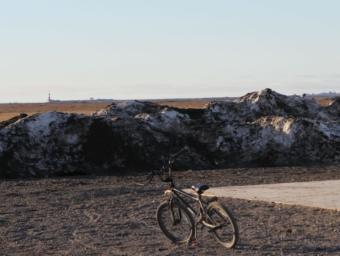
A child’s bicycle on the north edge of Nuiqsut, where oil infrastructure is visible on the horizon. (photo by Elizabeth Harball/Alaska’s Energy Desk)
Between one-fourth and one-third of Nuiqsut’s traditional subsistence range is already physically impacted by oil and gas development, Kuukpik Corporation has reported in comments to the federal government. People in Nuiqsut are technically allowed to hunt near oil infrastructure if they follow certain rules. But many report avoiding traditional hunting spots near pipelines and other facilities.
Alaska’s political leaders often tout oil as a source of jobs and money for communities in the state. Itta had a different take.
“I want to make this clear: We are not rich people. We are not,” Itta said. “We do not get free oil and gas like people think we do. We pay $5-a-gallon for our gas — gas that’s coming right underneath us. Coming from right underneath our feet. Taking out all our resources. Changing our way of life.”
Concerns about oil development grew eight years ago, when an accident happened less than 20 miles from of the village. At a drilling pad operated by the oil company Repsol, natural gas and tens of thousands of gallons of mud spewed out of the exploratory well, flying beyond the pad and onto the tundra. An oil worker posted a video on Youtube showing the aftermath.
“Ain’t f—ing looking so good,” he said.
The Repsol blowout is one of many concerns raised in public meetings in Nuiqsut about future oil developments. Federal agencies post transcripts online:
Nuiqsut residents’ concerns about the snowballing number of oil projects around them are real.
But what makes this already complicated story even more complicated is that it’s not a simple narrative of two clashing neighbors — the village versus the oil industry on its doorstep.
A big reason for that is Kuukpik Corp.
‘We’re providing’
When the oil industry decides to move to your neighborhood, you have a choice: You can fight, or you can negotiate, to try to make the best of things.
Kuukpik Corp. has gone with the second option.
Under the terms of the Alaska Native Claims Settlement Act, Kuukpik Corp. is the for-profit, landowning entity representing Nuiqsut’s indigenous residents.
Kuukpik owns approximately 146,000 surface acres, or about 200 square miles, surrounding the village. That’s the direct result of the 27 original families who pitched tents in the middle of the Arctic four decades ago, claiming the rights to their ancestral land.
Today, some of the children from those 27 families sit on Kuukpik’s board. One of those people is Isaac Nukapigak. He’s also a former whaling captain — an umailik.
“When I was a captain, I would take care of the community — elders, make sure they’re not starving, make sure they have the resources,” Nukapigak said. “Make sure that the wildlife that we harvest, that they get a share it.”
Nukapigak met for an interview on top floor of Kuukpik’s sleek office building in midtown Anchorage. Kuukpik now has several subsidiaries, including a drilling company. It also has a joint-venture partnership with SAExploration, the company trying to do early-stage oil exploration in the Arctic National Wildlife Refuge.
Sitting in a glass-walled conference room, Nukapigak described how being a whaling captain and sitting on a corporate board aren’t as different as one might think.
“You try to use the knowledge that you have as a captain, being a leader, and bring it to Western society through corporate structure,” Nukapigak said. “That’s kind of what we use in order to find balance.”
“Balance” — that’s a key word for Nukapigak and for Kuukpik Corp.
“I think it’s just balance, you know, oil. You’ve got to have a proper balance,” Nukapigak said. “And the benefits that the community enjoys…I know among other communities, it’s kind of like they’re jealous of Nuiqsut. Because we’re providing — we’re providing the community with benefits.”
In the way of whaling captains, Kuukpik is working to provide, but instead of with an animal harvested from the ocean, it’s with oil pumped from beneath their homeland.
And oil has benefited Nuiqsut in concrete ways. Nukapigak brought up a few examples, like the natural gas line that runs directly from Conoco’s Alpine oil facility to the village. People in Nuiqsut pay $25 a month to heat their homes — less than one-tenth of what people pay in some other rural Alaska communities.
And for every barrel of oil produced on Kuukpik lands, the corporation gets some of the royalty money. Some of those dollars go directly to Nuiqsut residents, many — thought not all — of whom are Kuukpik shareholders.
This year, the corporation’s original shareholders with 100 shares are set to receive some $30,000, Kuukpik confirmed, although not everyone in the village has that many shares, and some don’t have any. Nukapigak said that’s a issue that Kuukpik Corp. has been working to address.
Nukapigak does not think oil has robbed Nuiqsut of its other key resource: subsistence.
“Everything is still abundant. Caribou still roam through the community. Fish still come through. Waterfowl still fly in spring. Whales come through, they migrate,” Nukapigak said.
Kuukpik aims to thread the needle — to preserve Nuiqsut’s subsistence resources, land and traditions, while reaping the benefits of oil extraction. Pulling that off — well, that’s the trick.
‘We’ve got to earn their respect’
When up against one of the world’s most powerful industries, Kuukpik can hold its own.Using its leverage as the landowner, Kuukpik has entered into long, hairy negotiations. And it’s come out the other end with some success, forcing oil companies to make significant changes to their plans.
In 2005, Conoco proposed building a bridge over a river to access a drill site. But Kuukpik didn’t approve of the location — over a stretch of river where residents fish. And the quarter-mile-long structure wasn’t built until a decade later, after the oil company agreed to move it elsewhere.
Then, two-and-a-half years ago, Conoco decided to drill the closest-ever oil exploration well to Nuiqsut, three miles from the village. A number of residents were alarmed.
Conoco ended up delaying the project by a year. After months of negotiations with Kuukpik, the company agreed to several special measures — like powering its drill rig with low-emission generators, setting up more air and water monitoring equipment and taking extra steps to cut down on noise. Conoco also agreed to hire Kuukpik subsidiary companies as part of the project.
“It’s a relationship,” said Lisa Pekich, Conoco’s director of village outreach. “Sometimes we have difficult conversations in a relationship, probably like a marriage or any type of relationship. But we keep sitting down and we keep working together and I think overall, that openness and trying to collaborate on solutions has really been beneficial.”
ConocoPhillips’ Alpine facility in 2017. (Photo by Elizabeth Harball/Alaska’s Energy Desk)
But the oil company is also aware of tensions in the village over oil development, and what its presence means for subsistence hunters.
“We recognize subsistence is critically important to the community — to their culture,” Pekich said. “They’ve maintained a very active subsistence lifestyle, which is great, because that’s what we want them to do. Recognizing our facilities are there physically… something that wasn’t there when they were growing up. So, there are some impacts that we have to acknowledge, just physically because we are there.”
Conoco has studied and worked with Nuiqsut on subsistence issues. And the company’s overall message seems to be that its impacts are manageable, that the village can thrive — isthriving — and that Nuiqsut stands to benefit, not suffer, from all the oil projects going up around it.
But the neighborhood is growing. There’s another oil company planning a major project next door, and it’s figuring out exactly what it means to do business on Kuukpik land.
Oil Search is a new-to-Alaska company headquartered in Papua New Guinea, leading the development of one of the most promising oil projects in the state. It’s called the Pikka development. It would be ten miles east of Nuiqsut.
As the project moves forward, Oil Search Alaska President Keiran Wulff said the company is working to understand Nuiqsut’s needs and concerns.
“I’m not sure how many presidents have even been to the villages on the North Slope as much as I have. Because I wanted them to get to know me,” Wulff said.
Oil Search publicly prides itself on its work with indigenous people in Papua New Guinea. Wulff acknowledged that Nuiqsut is different.
“We recognize that people in Nuiqsut don’t really know Oil Search,” he said. “And it’s something where we’ve got to earn their respect.”
And that’s an ongoing process. Kuukpik has a list of concerns about Oil Search’s project. A recent federal analysis determined while it’s being built, it will likely have major impacts on hunters’ ability to access caribou in the area. Wulff said his company has slowed its plans and made a number of concessions.
“We reoriented the roads to minimize the impact on caribou migration. We decreased the size of the footprint. We moved a drill site back significantly, which was at significant additional cost to the project,” he said.
Kuukpik has yet to support Oil Search’s development, although both sides report that progress is being made. Talks between the oil company and the Native corporation continue.
“Having a fair and equitable land use agreement with Kuukpik is our priority, and we are working closely with Kuukpik toward having an agreement soon,” an Oil Search spokesperson said in an email.
Already, though, Wulff is speaking Kuukpik’s language.
“This is about having a balanced development and ensuring that the Nuiqsut people have access to long term prosperity, sustainability, at the same time ensuring that they maintain their subsistence and their culture,” Wulff said. “It’s a balance.”
Balance — there’s that word again.
Balance implies there’s a fulcrum between two valuable resources — between a land rich in animals to eat, and a subsurface rich in fossil fuels. A fulcrum between a traditional culture and capitalist desires. It implies it’s possible for the two to coexist — that whaling captains providing food and corporate leaders providing money can stand next to each other on the same plane.
It also implies that it’s possible for that balance to tip.
When does that happen?
From the oil companies, the answer is: not yet. Not now, and if they do it right, not after they’ve finished drilling everywhere they want to drill, either.
“The impacts outweigh the benefits,” Itta, the tribal administrator, said the day the lawsuit was filed.
Two worlds
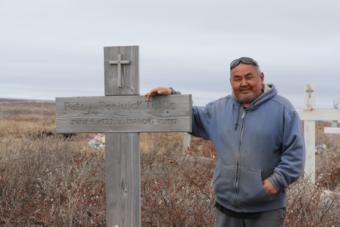
Nuiqsut’s cemetery is on the western edge of town, a gathering of white and brown wooden crosses behind a chain-link fence in the forefront of a great expanse of tundra. Frederick Tukle Sr., a smiling man in a blue sweatshirt smudged with dirt, was there on a June morning, fixing up the graves. Some of them have started sinking into the ground.
When the first oil well went up at Prudhoe Bay, Tuckle said, “we knew it was a matter of time before they reached here. And they did.”
Frederick Tukle Sr. in Nuiqsut’s cemetery (photo by Elizabeth Harball/Alaska’s Energy Desk)
“And now we are completely surrounded with these oil activities,” he said.
Tukle has concerns about oil development. He talked about oil infrastructure deflecting animals that he and others hunt.
“And it hurt us,” he said. “We know that. But we learn to adapt and we learn to live in two worlds. Our Iñupiaq lifestyle sometimes can be seen as versus the oil companies. It can be seen that way. But there’s benefits, too. There’s benefits and losses.”
Two worlds, and what brings them together is the oil below both of them — below the drill rigs visible on the horizon, and below the elders and whaling captains resting under Tukle’s feet.
Home
Six years after Nuiqsut was re-settled, the community came together and approved a document that detailed the village’s history, its culture, its subsistence hunting and how it wanted to face its future.
On page seven, there’s a section that reads: “The people who live here, who hunt and fish and trap here, know this landscape throughout. There are no nameless valleys here, no places vacant of memory and association.”
“This is no frontier to be conquered. It is home.”
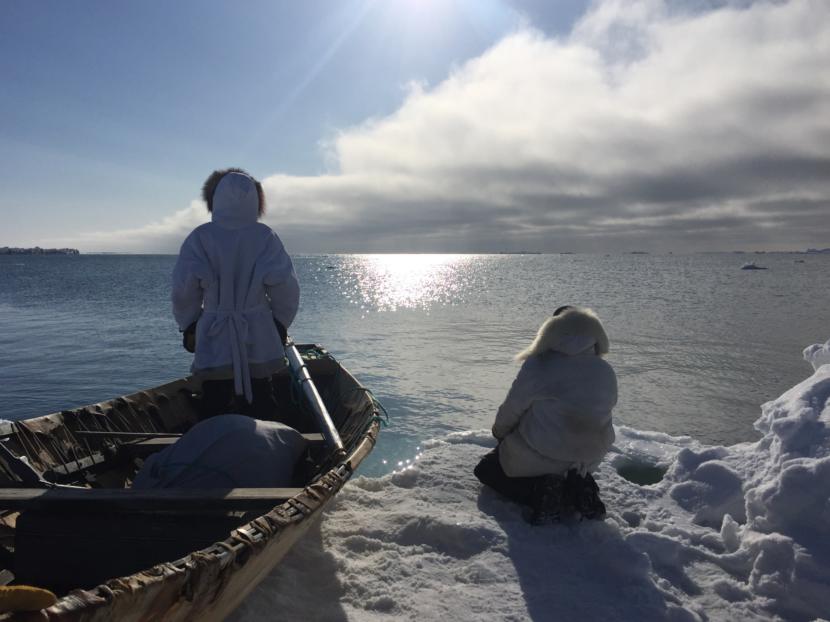
Members of Gordon Brower’s whaling crew scan the horizon for bowhead whales, April 21, 2019. (Photo by Ravenna Koenig/Alaska’s Energy Desk)
On the North Slope of Alaska, the Iñupiat tradition of hunting bowhead whales has an ancestry over 1,500 years old.
Today in Utqiaġvik there are two annual hunts when the whales pass by on their migration. The fall hunt has historically been done on open water, and the spring hunt from the ice that attaches to the coast each winter.
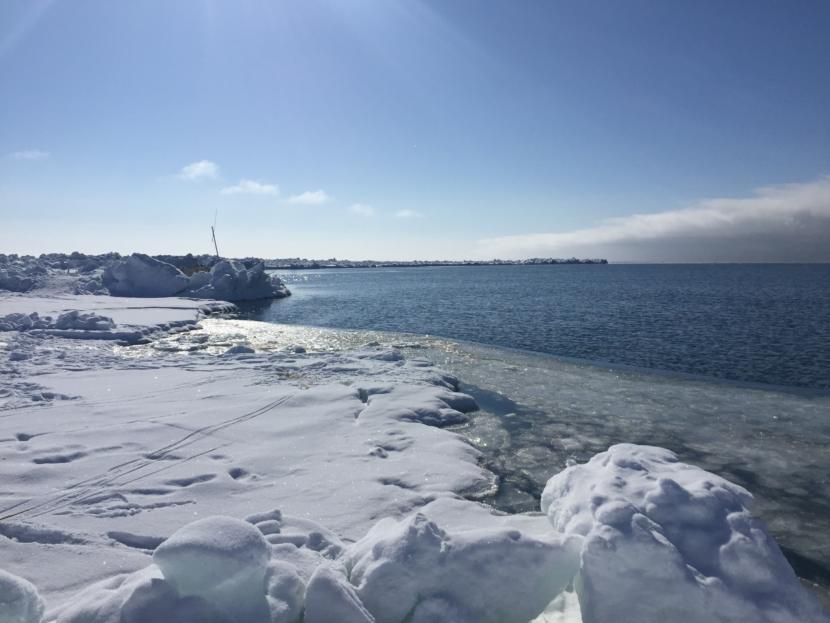
But as temperatures have risen in the Arctic, the ice that serves as the platform for spring whaling has changed dramatically.
And even though whalers in Utqiaġvik say that they’re adapting to that change, some also say the ice is less stable than it used to be — and more dangerous.
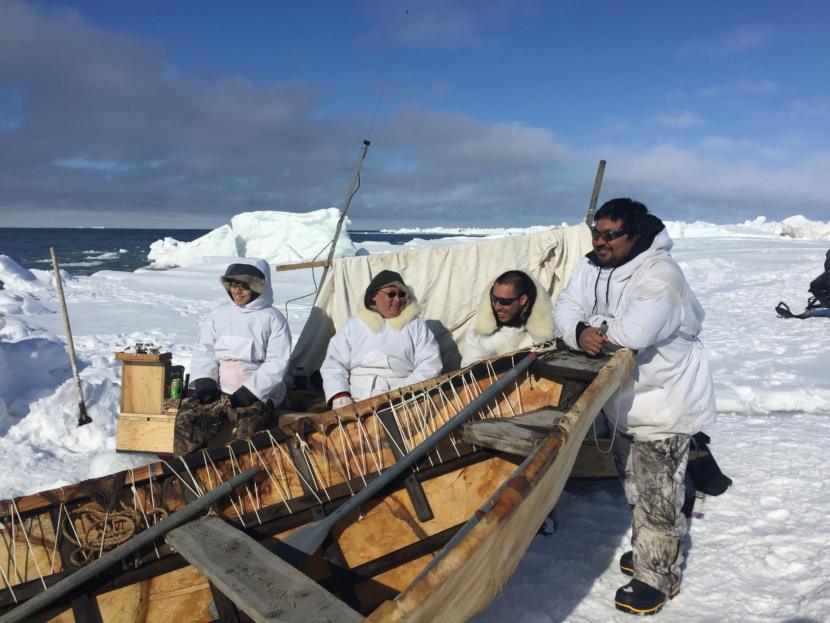
Whaling captain Gordon Brower’s camp at the edge of the ice looks very similar to how his father’s looked when Brower first started going out whaling with him back in the late 1960s: a sealskin boat perched at the edge of the ice, along with a simple canvas windbreak and a wooden sledge covered in caribou skins that serves as a makeshift bench.
Around the boat, a handful of whalers, including Brower’s brother, nephews and grandson, joke and talk as they watch the open water — waiting for the arcing backs of bowhead whales to come close enough for them to chase.
Gordon Brower, second from left, has been whaling since he was a kid in the late 1960s. Iñupiat whalers still use many of the same tools in their spring hunt, including the sealskin boat, or umiak, pictured here on April 21, 2019. (Photo by Ravenna Koenig/Alaska’s Energy Desk)
Though parts of this traditional hunt are the same as when Brower was a kid, there are some big differences. Chief among them: the ice.
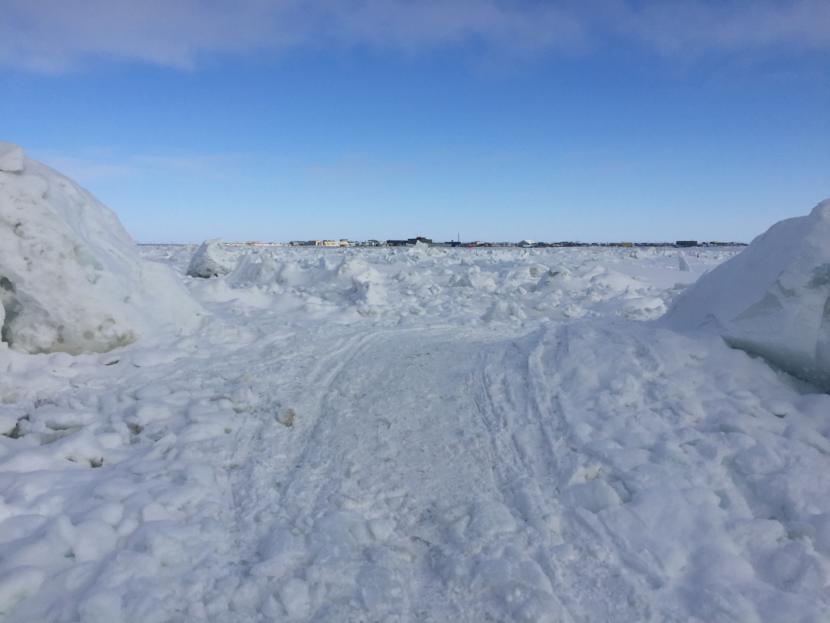
For starters, the extent of the ice that attaches to the coast is shorter than it used to be. Walk a few dozen paces back from the ice’s edge, and you can see the buildings of downtown Utqiaġvik.
“I guarantee you, somebody’s looking at us with binoculars,” said Brower, laughing.
He said that even a decade and a half ago, the ice could extend 10 or 15 miles out from shore. Nowadays it’s usually more like a mile or two.
At least part of that has to do with the fact that Utqiaġvik’s winters have gotten milder.
“Certainly the weather has been very different about creating ice,” said Brower. “Not the very long, sustained 40 below, 30 below type weather.”
The view of downtown Utqiaġvik, from a spot close to where Gordon Brower’s crew set up at the ice’s edge, April 21, 2019. (Photo by Ravenna Koenig/Alaska’s Energy Desk)
It also means that the ice is thinner.
“I think it’s changed quite a bit,” he said. “I mean, it looks the same, it’s just a different size. The ridges are different sizes.”
Brower is talking about pressure ridges: the mountains of this landscape created by the colliding plates of the ice. They not only rise into the air above the ice, they also go down below the water. If they go down far enough, they act like anchors, holding the ice in place on the ocean floor.
The thick ice of the past made bigger pressure ridges, Brower said, which meant bigger anchors and safer ice.
“I think it was a little more stable, and there was a little bit more assurance that the ice you were on was not going to disintegrate on you that easy,” said Brower. “Today you gotta think about it. And be more prepared and be more vigilant about your surrounding.”
Poorly-grounded ice can lead to what’s called a “breakout event” — a phenomenon where a piece of ice (potentially one that people are camped on) breaks free and starts floating away. Sometimes without the people on it even knowing it’s happening.
This past year, the temperatures in Utqiaġvik in the fall and early winter when the ice was forming were some of the warmest on record. And in early February, something really abnormal happened: At least 10 miles of shorefast ice in front of Utqiaġvik broke away, including in places that are typically very well-grounded.
Few people were going out on the ice at that time, and no one was hurt. But Brower said that if the ice wasn’t grounded well enough then, it gives him pause about trusting it now.
“So it’s kind of, like, iffy still,” he said. “If you had a good west wind and the water table came up, it can dislodge it and move it around.”
A small pressure ridge close to Gordon Brower’s whaling camp, April 21, 2019. (Photo by Ravenna Koenig/Alaska’s Energy Desk)
Talking to whalers in Utqiaġvik, they point to different ways that the ice is changing and different ways that impacts what they do.
Some talk about the ice being more susceptible to breakouts. Others say that it’s harder now to find ice thick enough to pull whales up onto.
Some call the ice conditions more “dangerous” than they used to be and speak about it with concern. Others say it doesn’t worry them; that they have the skills and knowledge to navigate the changes.
The thing you hear pretty much across the board is that whalers are finding ways to adapt.
Those adaptations are things like being more alert to how the ice is moving, and being more cautious about places where it might be thin. But it also could include replacing the traditional skin boats with motor boats when ice conditions deteriorate, so that if there is a breakout event, whalers can get back to the safe ice more quickly.
I asked Brower’s 35-year-old nephew Jack Frantz if all this change — and potentially more in the years ahead — makes him worry about the future of whaling in this community. He said it doesn’t.
“I’m always going to be out here hunting,” he said. “The ice conditions could be here or could not be here, but we’re going to find a way to hunt. … Even if the ice wasn’t here, we’d be waiting on the edge of the beach I guess for whales to show up.”
Whalers in Utqiaġvik describe whaling as their “life,” their “pride,” one of the things that brings their community together and connects them to their culture.
As long as there are bowhead whales swimming off the coast of Utqiaġvik in the spring, many hunters say they will find a way to get to them, no matter what happens to the ice.
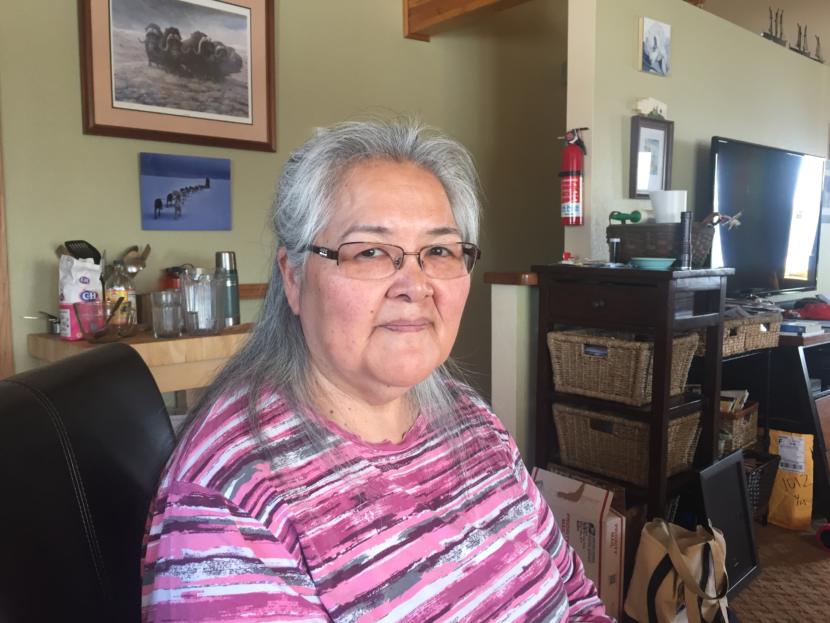
Marie Adams Carroll has worked in various leadership roles in her 40-year career on the North Slope. She was recently inducted into the Alaska Women’s Hall of Fame. (Photo by Ravenna Koenig/Alaska’s Energy Desk)
On Tuesday, 10 women were inducted into the Alaska Women’s Hall of Fame.
One of them was Marie Adams Carroll from Utqiaġvik. She stepped into a leadership role as a young woman on the North Slope during a time of crisis — when subsistence activities were threatened — and has been involved in public life ever since.
She’s been called a folk hero. And people who have worked with her over her 40-year career — or have seen the fruits of her labor — consistently praise her leadership.
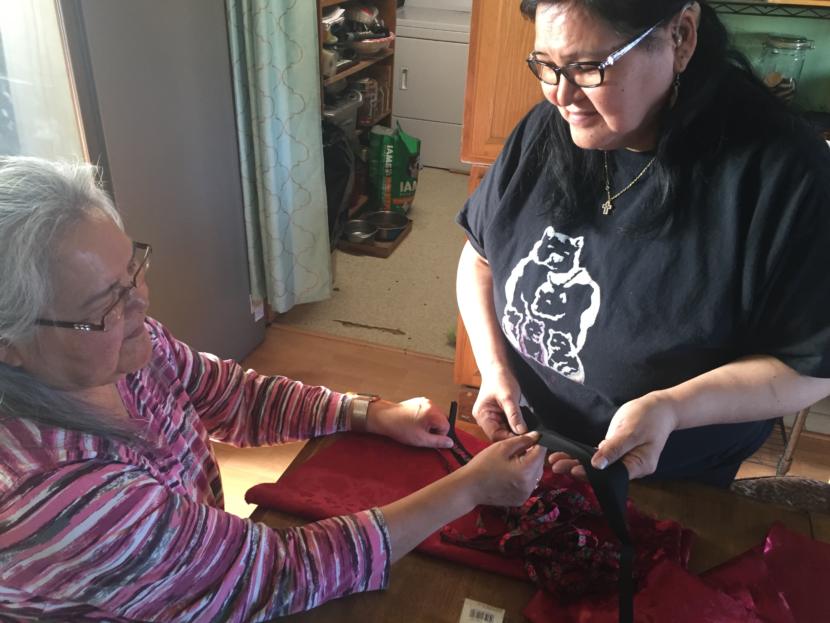
On a recent evening in Utqiaġvik, Carroll sat at her sister’s kitchen table and pulled out silky, crimson-red cuts of fabric for her sister Diana Martin to look at.
“This is real pretty!” Martin exclaimed, “My favorite color.”
Carroll and Martin were working on an atikluk — a traditional Iñupiaq formal shirt that Carroll planned to wear to the Alaska Women’s Hall of Fame induction ceremony.
Marie Adams Carroll and her sister Diana Martin work on an atikluk. (Photo by Ravenna Koenig/Alaska’s Energy Desk)
This house is where the two women grew up, along with nine brothers and sisters. And — you could say — where Carroll’s role as a leader began.
“We’d get all these chairs together and form a train, and play and play,” she remembered, “and about half-hour before mom would come home, I would become a queen.”
“I remember that!” said Martin, and the two women burst into laughter, reminiscing about how Carroll would command her siblings to do various cleanup activities.
Her leadership inclinations may have been sharpened in the clamor of sibling games. But she traces her interest in finding meaningful work back to a serious moment in her childhood: an illness she had when she was 6 or 7 years old.
“I felt like I was in and out of my body,” she said. “As I saw my body drifting away, I thought, ‘But God, I haven’t done anything with my life. I need to do something.'”
She recovered from that illness. But the feeling of needing to make her life mean something — that didn’t go away.
She saw education as a path to that, and she became the first person in her family to go to college.
But in 1977 — before she’d finished her bachelor’s degree — the North Slope was hit by some seismic news: The International Whaling Commission was concerned that the population of bowhead whales was too low to support a subsistence hunt, and had put a moratorium on it. That kicked off a huge fight in northern Alaska for the right to whale.
It was this moment that marked the real start of Carroll’s public career.
Her brother Jacob Adams was serving as chairman of the organization that formed to advocate for the whalers — the Alaska Eskimo Whaling Commission — and he and her and cousin Oliver Leavitt recruited her to work for the organization. A few years after she started, Adams and Leavitt proposed that she lead AEWC, and she became executive director.
At first, some whaling captains didn’t think a woman should be their representative. But that changed before too long, according to Leavitt.
“Marie became central around our life, because she represented us for the whale, and the ability to whale,” he said. “She was kind of the folk hero around here.”
Leavitt said that Carroll led with integrity and intelligence, and was instrumental in preserving the rights of northern Alaska communities to keep whaling.
Eventually, things settled down enough that Carroll felt she could leave whaling issues to try her hand at other things.
She worked in local government for a while — as the city manager for Utqiaġvik, and later as a top deputy for the mayor of the North Slope Borough.
And then another colossal task came her way. The tribal nonprofit health organization on the North Slope — Arctic Slope Native Association, or ASNA — wanted to build the region’s first modern hospital, and they asked Carroll to come on board as health director and lead that project.
At the time, she said, the only medical facility in Utqiaġvik was run down and way too small to serve the needs of the community.
“There were only six exam rooms serving about 5,000 people,” she said. “We had outdated equipment. … When I first started they had duct tape on the nurse’s station.”
It took about a decade to get the new hospital funded, and another few years to build it.
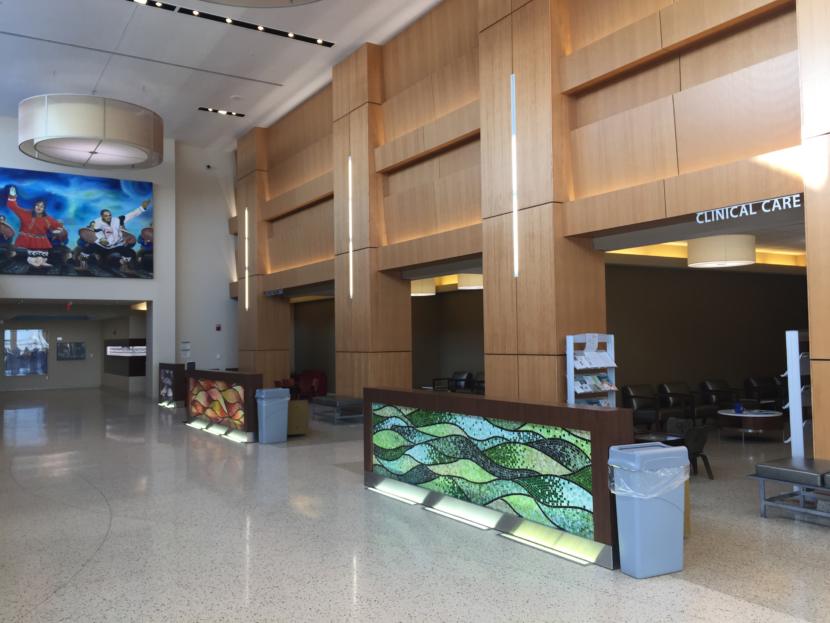
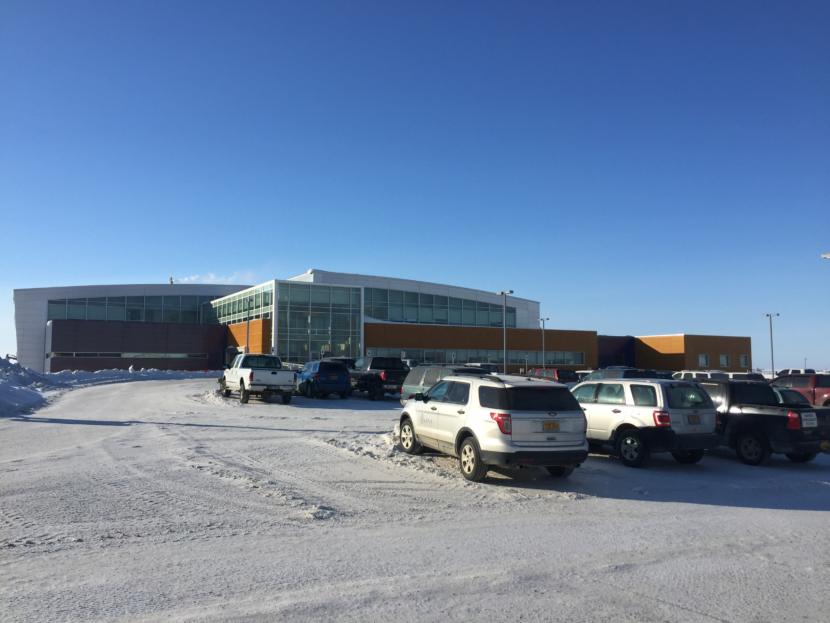
Today, the Samuel Simmonds Memorial Hospital is a large, sleek building in Utqiaġvik, with light filtering into a high-ceiling lobby, and art by Iñupiaq artists decorating the walls.
The lobby of the Samuel Simmonds Memorial Hospital. (Photo by Ravenna Koenig/Alaska’s Energy Desk)
It offers a much better-equipped emergency room than the old facility and a whole list of services that people once had to fly to Anchorage for.
And Carroll is responsible for making that happen. She’s now been with ASNA for 20 years, over a decade of those as president and CEO.
The exterior of the Samuel Simmonds Memorial Hospital. (Photo by Ravenna Koenig/Alaska’s Energy Desk)
Richard Hall — the hospital administrator — said her leadership has had a distinct vision.
“She’s always wanted everyone in this community to have the same type of health opportunities that you have in the big cities,” he said.
Carroll is in her 60s now. She said this is the job she’ll retire from.
But asking around about her in Utqiaġvik — where people speak with pride about her accomplishments and with deep respect for her as a person — it’s clear that the things she’s done on the North Slope will be remembered long after she stops clocking in.
Alice Qannik Glenn, sitting at her kitchen table in Anchorage, where she often records her podcast focused on topics relevant to young Alaska Native people. (Photo by Ravenna Koenig/Alaska’s Energy Desk)
If you look at the stories being told in the world, and you don’t see your perspective reflected in those stories, what do you do?
For one young Iñupiaq woman, the answer to that question was: make a podcast.
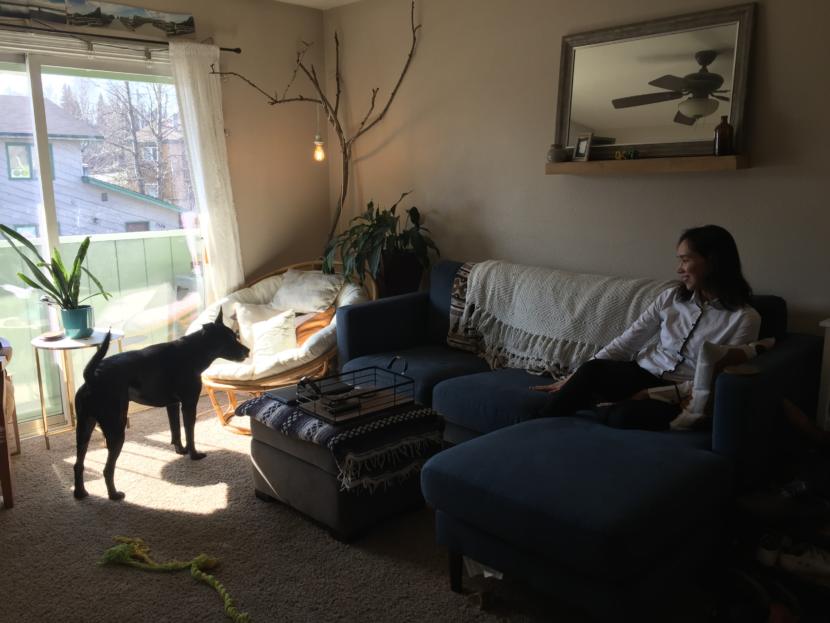
Alice Qannik Glenn met me at the bottom of the stairs leading up to her apartment in Anchorage, her wiggling, black-and-white mutt named Kumak at her side. Her apartment is cozy: full of light and plants, with colorful paintings and prints on the walls. And for the better part of a year now, it’s not only been her home, but also her makeshift recording studio.
“I’ve done a couple of interviews here where we’re just kind of chilling on the couch,” she said, gesturing at her living room. “Most of the time we talk in here,” she continued, leading me back to her small kitchen, where a french press full of coffee and some snacks were waiting for us on a round glass table in the corner.
It’s fitting that Glenn often tapes her podcast in her kitchen. It’s called “Coffee & Quaq.” (“Quaq” is the Iñupiaq word for frozen or raw meat or fish.)
It’s not a food podcast necessarily, though she does have one episode that focuses on Native foods. The podcast’s purpose is much broader: “To celebrate, share, and explore the collective experience of contemporary Native life in urban Alaska.”
Glenn grew up in Utqiaġvik, but has lived in Arizona, Florida and, for the past few years, in Anchorage.
She wanted the title of her podcast to evoke both the contemporary and the traditional parts of Alaska Native life. But she said that coffee and quaq don’t go together literally, a fact that made her dad skeptical about the name when she told him.
“He’s like, ‘Tea and quaq. We don’t drink coffee with quaq, Alice,'” she remembered, laughing. Still, she liked the symbolism — coffee has the added connotation of staying “woke,” which she hoped the podcast conversations would help both her and her listeners do — so she kept it.
Alice Qannik Glenn and her dog, Kumak, in her Anchorage living room. (Photo by Ravenna Koenig/Alaska’s Energy Desk)
Glenn just turned 30 this year, and she said she was inspired to make the podcast because she didn’t see stories being told in the media from the perspective of young Alaska Native people.
That’s a big deal, she said, because when you don’t see yourself reflected in the narratives put out into the world, it’s easy to internalize the message that you don’t matter.
She wants “Coffee & Quaq” to provide that missing representation: to spotlight the ideas and conversations of young Alaska Native people. She also wants it to broaden the range of stories that are told about Indigenous experiences.
“We’re often defined by our disparities, some of the struggles that we’re going through, and I don’t want that,” she said. “Yes, those stories need to be told. But also, many of us are happy, many of us are thriving, many of us are doing great things, and hopefully those highlights can inspire other young Native people to do the same.”
In one episode of her podcast, she talks with two young Alaska Native women — one an artist, the other an artist and curator — about cultural appropriation. In another, she digs into why some Arctic Native people don’t like to use the word “Eskimo” to describe themselves, and even find it offensive.
Glenn said these interviews have been a continuing education for her: a way to engage with important topics and deepen her own thinking by listening to the insights of others.
It isn’t her full-time job yet, but she wants it to be.
“It just feels like magic,” she said. “It’s what I think about when I wake up in the morning, and it’s what I think about when I go to sleep.”
Glenn has a range of interests career-wise: She went to college for aerospace studies, which she said she might go back to one day. But for right now, she’s looking for ways to make the podcast the thing she does 24/7.
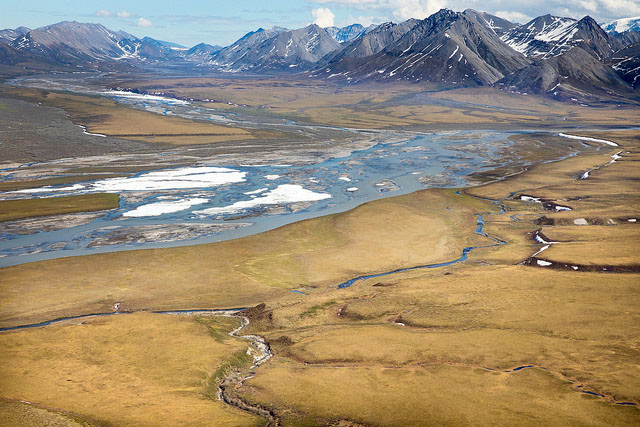
The Canning River, which forms the northwestern border of Arctic National Wildlife Refuge. (Photo: Lisa Hupp/USFWS)
This week, the New York Times published a story uncovering a long-held Alaska secret, revealing that the only exploratory oil well ever drilled in the Arctic National Wildlife Refuge was “worthless.”
Alaska’s Energy Desk reporter Elizabeth Harball talked to Henry Fountain, one of the New York Times reporters who broke the story. This interview has been edited for length and clarity.
Elizabeth Harball: For those who don’t know about this test well drilled in the Arctic Refuge in 1986, Henry, remind us what it is and why it was such a big secret for so long.
Henry Fountain: Well, it’s the only well that’s ever been drilled within the area of the Arctic National Wildlife Refuge. Because it was all proprietary — it was a private deal — the oil companies have kept the information confidential for years. They actually sued the state of Alaska at one point to keep the data confidential. And because it’s the only actual hole in the ground that’s been drilled in ANWR, it’s considered to be valuable information. The times I’ve been to Alaska, it seems like everybody has something to say about “you know, that KIC well — they drilled it years ago. Nobody knows what it said.” So it’s a subject of much interest.
Harball: Many Alaska reporters, including myself, have been fascinated by this secret for a while. It’s just such a good mystery. Do you want to say anything more about what intrigued you about the story and why you decided to try to uncover the results?
Fountain: Steve Eder and I did a story a couple of months ago that looked at what’s been going on with ANWR under the Trump administration. As you’re well aware, the administration has moved to open the area to oil and gas exploration after decades when it’s been pretty much off limits. In doing that story, we kept hearing reports about the KIC well and how that had provided some clues, but nobody knew what the clues were. So it piqued our interest. And then after that story appeared, we started hearing whispers about there might be ways to figure out what was in that well. We were directed to this court case that we ended up writing about, in which the well was a subject.
Harball: You and your co-reporter, Steve Eder, found the answer in Cleveland, Ohio, of all places. Talk me through what led you there.
Fountain: Well, again, it was this 1987 court case. At the time BP owned, I think, 45% of Standard Oil of Ohio. And they were looking to buy the rest of it. So the shareholders of Sohio thought that the offer that BP was making for their shares was low. They wondered if they were getting — their lawyers in particular wondered — if they were getting cheated. And one of the lawyers had realized, “hey, BP had been involved in this drilling project up in ANWR, this KIC well.” And he wondered if maybe they discovered some incredible reserves of oil and were trying to essentially cheat Sohio’s shareholders. So he pursued it through the court with BP, and eventually BP agreed to let him depose a man who was one of their chief petroleum engineers. And that’s where it was revealed, according to all accounts, that the well was not very encouraging, and didn’t have a big finding of huge reserves, and therefore BP was not, in fact, cheating Sohio.
Harball: And that lawyer’s name is Sidney B. Silverman, is that right?
Fountain: That is Sid Silverman.
Harball: And why do you think he decided to talk now?
Fountain: Well he told us, and we put it in our story. He felt because of what the Trump administration wants to do in the 1002 area, that this thing about the KIC well should be part of the discussion, at least. And he knew the secret — he’d been quiet for 32 years. But he felt it was — I wouldn’t say he said it was his patriotic duty, but he did feel very strongly that all the information about this area, or at least whatever information there is, should be on the table. I think that was his motivation.
Harball: In your story, Mr. Silverman calls the well ‘worthless,’ which is fascinating, but also it’s my understanding that a single dud test well doesn’t mean there’s no oil to be found the Refuge — which you say in your story, too. And so if that’s the case, what should we take away from this revelation?
Fountain: It’s true — it’s just one data point and it does not necessarily mean there’s not oil somewhere in the Refuge — significant oil, an economically recoverable amount of oil. The U.S. Geological Survey has done a couple of studies over the years and has estimated that anywhere from a billion or so barrels up to, I think, the highest estimate is 15 or 16 billion barrels, which is Prudhoe Bay size. Nobody really knows. Part of this whole Trump administration process involves a plan to do new seismic studies. And if that were to go ahead — environmentalists and others think that’s not a good idea — but if that were to go ahead, that would provide a significant amount of information that might totally confirm that the KIC well was representative of the entire area, or that the KIC well was not representative of the entire area and, in fact, there are significant reserves there.
Harball: Given everything you said, I’ve been privy to a ton of speculation on whether there will be much industry interest in the ANWR lease sale, when it happens. So what do you think this story sheds light on, amidst the mass of speculation that’s happening right now?
Fountain: It’s a good question. One of the things in all of our reporting from Alaska has been, why aren’t the oil companies more interested? At least from a public standpoint, most of them are not making big statements like, “we can’t wait for the opportunity to explore up there.” So you kind of wonder why they’ve been quiet — whether they know something or they knew something that we didn’t know. I think there will still be speculation, simply because one well is not representative, necessarily, of the whole area. So how much effect this will have, I don’t know. I think there are a lot of other factors involved. Even if there’s plenty of oil, it would certainly not be the cheapest oil to drill for and get. There’s plenty of cheap oil in the Lower 48 these days, particularly with fracking. There might be some concern about reputation, if an oil company aggressively wants to go into the Arctic National Wildlife Refuge, which a lot of people view as a very beautiful landscape, one of the last huge, remaining pristine landscapes in the United States. So there are a lot of factors of why there’s still a lot of speculation.
Close
Update notification options
Subscribe to notifications
Subscribe
Get notifications about news related to the topics you care about. You can unsubscribe anytime.