Family

‘God, no, not another case.’ COVID-related stillbirths didn’t have to happen

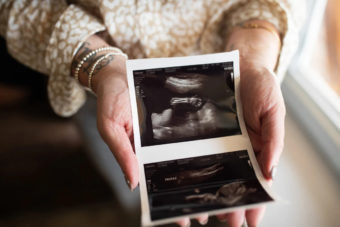
Ginger Munro holds the sonogram of her daughter Elliotte at her home in Ohio. Munro was hospitalized with COVID-19, placed on life support, and delivered her stillborn daughter at 27 weeks. Part of the image is blurred to conceal personal medical information. (Photo by Maddie McGarvey for ProPublica)

This story was originally published by ProPublica.

Content warning: This story contains descriptions of stillbirths.

Late one afternoon last October, Dr. Shelley Odronic sat in her office and, just as she had thousands of times before, slid a rectangular glass slide onto her microscope.

A pathologist who works in rural Ohio, Odronic leaned forward to examine tissue from the placenta of a woman who had recently given birth. She increased the magnification on the microscope. Never had she seen so many tiny, congealed reservoirs of blood or such severe inflammation of the tissue, a sign the placenta had been fighting an infection.

“Right away, I knew it wasn’t compatible with life,” Odronic said.

She asked her secretary to print out the patient’s chart. In dark letters were the words “fetal demise.” A stillbirth, the death of a fetus at 20 weeks or more of pregnancy. But that didn’t solve the mystery. Odronic had examined many placentas from pregnancies that ended in stillbirth. None looked like this — withered and scarred.

Dr. Shelley Odronic works in her office in Lima, Ohio. Odronic, a pathologist, noticed severe damage in the placentas of pregnant people who had COVID-19. (Photo by Maddie McGarvey for ProPublica)

Odronic kept reading. No chronic medical conditions. Good prenatal care. Then, buried in the middle of the report, she spotted something. Seven days before the stillbirth, the mother had tested positive for COVID-19. Odronic wondered if the virus could explain the damage to the placenta. In the world of placenta pathology, a new affliction is unusual, especially one so dramatic in presentation and so devastating in effect.

Her mind traveled to Dr. Amy Heerema-McKenney, a pathologist at Cleveland Clinic and an expert on the placenta, who had trained Odronic during residency. Odronic went to sleep that night with a pit in her stomach and a plan to call her former teacher in the morning.

Heerema-McKenney was in her office when the phone rang. As she listened, she knew that what Odronic was describing was what she and her colleagues had observed repeatedly over the past several months: a patient positive for the coronavirus, a placenta destroyed by COVID-19, a baby stillborn.

Their next discovery was equally stunning. None of the stillbirths they studied involved a pregnant person who had been fully vaccinated. The doctors checked with colleagues across the country and around the world. The fatal pattern held.

Placenta slides in Dr. Amy Heerema-McKenney’s office at the Cleveland Clinic. (Photo by Maddie McGarvey for ProPublica)
Heerema-McKenney, a placenta pathologist, works in the lab. She noticed the impact COVID-19 was having on placentas and stillbirths. (Photo by Maddie McGarvey for ProPublica)

Unvaccinated women who contracted COVID-19 during pregnancy were at a higher risk of stillbirths. They also were more likely to be admitted to the intensive care unit, give birth prematurely or die. Yet their greatest protection — the COVID-19 vaccine — sat largely untouched, buried under doubt, polluted by disinformation.

Pharmaceutical companies and government officials failed to ensure that pregnant people were included in the early development of the COVID-19 vaccine, a calamitous decision made amid the urgency of a rapidly spreading pandemic. That decision left pregnant people with little research to rely on when making a critical decision on how best to keep the babies growing inside of them safe.

At the same time that research was excluding pregnant people from vaccine trials, a full-scale assault on vaccination was unfolding online. Taking advantage of the lack of data, conspiracy theorists, anti-vaxxers and even some medical professionals spread false claims about the vaccine’s safety in pregnancy, leading many pregnant people to delay or refuse the vaccine. Even now, with numerous studies unequivocally announcing the safety of the vaccine for pregnant people, some doctors have failed to communicate the dangers of COVID-19 to pregnant people or the vaccine’s role in mitigating it.

The Centers for Disease Control and Prevention contributed to the confusion with vague early messaging about whether pregnant people should get vaccinated. While Americans lined up at pharmacies and stalked vaccine websites in hopes of securing a shot last year, pregnant people had some of the lowest vaccination rates among adults, with only 35% fully vaccinated by last November. Meanwhile, many Americans were already moving on to their boosters after federal officials that month expanded eligibility for the additional shots to anyone 18 or older. And much of the country was beginning to return to pre-pandemic life. The Sunday after Thanksgiving, for instance, set the record for the busiest day of air travel since March 2020.

November also marked a key moment in the understanding of COVID-19’s impact on stillbirths. A CDC study looking at 1.2 million births in the first 18 months of the pandemic found that more than 8,000 pregnancies ended in stillbirths, including more than 270 of them in patients with a documented COVID-19 diagnosis at the time of delivery.

Although stillbirths were rare overall, babies were dying. The risk of a stillbirth nearly doubled for those who had COVID-19 during pregnancy compared with those who didn’t. And during the spread of the delta variant, that risk was four times higher.

Odronic inspects a placenta. The placenta is vital to keeping a growing fetus alive, delivering oxygen and nutrients as their organs develop. (Photo by Maddie McGarvey for ProPublica)

Indeed, doctors discovered that some stillbirths resulted from COVID-19 directly infiltrating the placenta, a condition they named SARS-CoV-2 placentitis. Cases were found even in people whose COVID-19 symptoms were mild or nonexistent. In some cases, however, placentas were discarded with medical waste without being tested for COVID-19, and parents never learned what led to their baby’s stillbirth.

COVID-19 also led to stillbirths among pregnant people who became exceedingly ill after contracting the virus. It damaged their lungs and clotted their blood, putting their babies in such severe distress that they were born before they could take their first breath.

“These are pregnancies that should not have ended,” Heerema-McKenney said.

She and others had tried to alert the CDC as well as maternal and state health organizations to their findings, but she said they either didn’t get a response or were told they needed to collect more data and publish studies. Pathologists are experts in disease diagnosis, dealing with death and illness from the safe distance of their labs. Convincing obstetricians who met with patients daily or doctors who were making policy recommendations was a challenge.

“I tried to sound the alarm. We tried so hard to get people to listen,” Heerema-McKenney said. “It was a really frustrating place to be as pathologists doing these autopsies, looking at these placentas and saying, ‘God, no, not another case.’”


Around the same time Heerema-McKenney was examining the damaged placentas, Ginger Munro was on life support in a hospital 250 miles away in another part of Ohio.

She and her husband, Kendal, had been trying to have a child for five years. They hadn’t expected that she’d get pregnant in the middle of a pandemic. But when her pregnancy test came back positive in the spring of 2021, she rushed to post a picture of it in an online pregnancy group. “Is it just me or can you see the 2 lines??” she asked.

The pandemic had already brought much change to their lives. Ginger, who lives in the small town of Washington Court House in southwest Ohio, quit her job as assistant nutrition director with the county’s Commission on Aging. She stationed hand sanitizer throughout her house and in her car, and she only went grocery shopping early in the morning. If she noticed someone in an aisle, she skipped it.

“I knew the virus was real,” she said, “but I was terrified to take the vaccine.”

Ginger Munro sits in her home in Washington Court House, Ohio. (Photo by Maddie McGarvey for ProPublica)

Ginger worried that the vaccine’s development had been rushed, and she hadn’t seen any data showing it was safe for pregnant people. At this point, the CDC had not explicitly recommended the vaccine during pregnancy. Ginger already worried she was tempting fate by getting pregnant at 40; she said she didn’t want to risk endangering her baby by taking the vaccine.

Besides, if it was really important, her doctor would have mentioned it, and, she said, she would have followed his advice. But, she said, he never did. Her family hadn’t gotten vaccinated either. In a mostly rural county where less than half of the residents were vaccinated, they were hardly alone.

Her doctor declined to comment through a spokesperson at the hospital system where he works; the spokesperson said the hospital couldn’t disseminate information about the vaccine to pregnant patients before it was recommended.

Ginger’s pregnancy progressed without complications. She and Kendal shared the news of a new baby with Ginger’s two daughters from a previous marriage. At their kitchen table, near a sign that read “eat cake for breakfast,” Sophia, then 14, covered her mouth with both hands while Hailee, then 18, simply beamed.

At a backyard gender reveal three months later, Ginger’s growing belly resembled a basketball against her tiny frame. She leaned in to kiss her husband, her long, dark hair falling onto her shoulders. Red confetti rained down on the deck.

Kendal, an aircraft maintenance and avionics manager at an airport two counties away, worked through the pandemic. In the summer, when they realized his cough was actually COVID-19, it was too late. Ginger was sick.

Having trouble reaching her doctor, she went to two different emergency rooms. One, she said, declined to treat her with monoclonal antibodies, which research had shown can be an effective treatment for pregnant people with COVID-19. The other, which described her in medical records as “an exceedingly pleasant individual admitted with symptomatic COVID-19 pneumonia,” transferred her about an hour away to the University of Cincinnati Medical Center. There, records show, she was admitted with acute respiratory distress syndrome due to COVID-19.

The University of Cincinnati doctor asked Ginger and Kendal — who was on FaceTime because of the hospital’s COVID-19 protocols — about “fetal priority.” Ginger made her wishes clear: Save the baby, their baby, the baby they had tried so hard to have. Kendal, who was worried about both his wife and their unborn child, said he went along with Ginger in that moment.

“You were so scared,” Kendal wrote in a notebook that night. “We told each other over and over how much we loved each other.”

They hung up so the doctors could insert a breathing tube. Before they could begin, Kendal called back three more times just to hear her voice.

Doctors put Ginger on ECMO, a form of life support reserved for the sickest patients. Kendal, Hailee, Sophia and Ginger’s mother and sister were later allowed in the hospital two at a time, and they prayed at her bedside nearly every night. Ginger was sedated, her face swollen and obscured by tubing, her cheeks flattened by the crush of the ventilator straps, her wrists tied down so she wouldn’t accidentally pull out her breathing tube.

Her family took solace in knowing the baby’s heartbeat was steady and her ultrasounds were normal. The doctors gave Ginger medication to help the baby’s lungs mature in case she was born early. After more than 30 days on ECMO, doctors took Ginger off the machine only to put her back on the next morning. She was the first patient in the hospital’s history to be placed on ECMO twice.

The plan, records show, was to deliver at 28 weeks. But the day after Ginger was put back on life support, Kendal got the call telling him the baby was on her way. As doctors prepared for the delivery in Ginger’s intensive care room, the family camped out in the waiting room, jittery from excitement and vending machine snacks. They talked about baby names and future family outings. They pulled the waiting room chairs together to form makeshift beds and covered themselves with blankets they brought from home.

They don’t know if they actually fell asleep before a nurse burst through the doors screaming at them to follow. “She’s coming! She’s coming!” They didn’t make it far before they were blocked by doctors and nurses, some huddled over an incubator in the middle of the hall and the rest crowded around Ginger.

Hailee tried to peer over the sea of blue scrubs to catch the first glimpse of her little sister. She smiled beneath her black mask. She’ll be OK, she said to herself.

But after a few minutes of trying to revive the baby, a doctor told Kendal it was time. Kendal nodded, asked for a chair and collapsed as he tried to process his daughter’s death.

Then another wave of grief washed over him. Someone would have to tell Ginger.

Ginger’s medical records describe a baby born at 27 weeks “without signs of life” after an “uncomplicated delivery.” Her placenta had separated from the wall of the uterus, the risk of which studies have shown increases with COVID-19.

Ginger and Kendal Munro visit their daughter Elliotte’s grave. She was stillborn at 27 weeks. (Photo by Maddie McGarvey for ProPublica)

When Ginger woke up, she looked down at her sunken belly and realized she had given birth. She assumed her daughter was in the newborn intensive care unit. Ginger was barely able to speak around the tube in her trachea, but after a few days in which no one brought the baby to her, she couldn’t wait any longer. Ginger turned to her mother and sister and mouthed the words, “Where’s the baby?”

The room fell silent. They called Kendal, who rushed to the hospital. He told her what had happened. He described their daughter’s dark hair and her long fingers and toes, just like her mother’s.

Ginger, who had always loved the sweet smell of a newborn’s breath, whispered to her husband.

“Did you smell her breath?”

“She wasn’t breathing,” he said.


In the hurried quest for a safe and effective COVID-19 vaccine, pharmaceutical companies and government officials did not include pregnant people in their initial plans. It’s a failure that continues to reverberate.

“They absolutely should have been included in COVID vaccine trials from the beginning,” said Kathryn Schubert, president and CEO of the Society for Women’s Health Research, a Washington, D.C.-based nonprofit that advocates for the inclusion of women in research and clinical trials.

Researchers and advocates have spent more than four decades trying to dismantle the belief that it’s unsafe or unethical for pregnant women to participate in clinical trials. A couple years ago, it seemed like they had finally prevailed.

Shortly before leaving office, President Barack Obama signed into law the 21st Century Cures Act, which established the Task Force on Research Specific to Pregnant Women and Lactating Women. The group found longstanding obstacles, including liability concerns, to including pregnant and lactating people in clinical research. It concluded that recommending halting medication or forgoing treatment while pregnant may actually endanger the health of the mother and her fetus more than the treatment itself.

The need for everything from asthma to depression medication doesn’t stop when a person gets pregnant, and when a catastrophic event such as a pandemic hits, experts said, pregnancy should not preclude someone from receiving life-saving treatment.

Around the same time, researchers discovered that the Zika virus, which was mainly transmitted through mosquitoes, could pass from a pregnant person to their fetus and cause severe birth deformities. A second group of experts joined together to develop separate guidance on including pregnant people in the research, development and deployment of pandemic vaccines.

Both groups pushed to remove pregnant women from a list of vulnerable populations that required additional review before being allowed to participate in research. Instead of proving that pregnant women should be included, manufacturers would need to provide compelling evidence for why they shouldn’t.

In 2018, the federal task force issued recommendations calling for including pregnant and breastfeeding people in biomedical research, and the Department of Health and Human Services adopted some of the guidance. But a gap remained between what the task force and others insisted was needed and what was actually happening.

“We were frustrated because COVID-19 provided an opportunity to implement the recommendations of the task force,” said Dr. Diana Bianchi, the director of the Eunice Kennedy Shriver National Institute of Child Health and Human Development and the chair of the task force.

In February 2021, Bianchi and her colleagues published an article lamenting the exclusion of those who were pregnant or breastfeeding from the initial COVID-19 vaccine clinical trials. “Pregnant and lactating persons should not be protected from participating in research, but rather should be protected through research,” they wrote.

Ruth Faden, the founder of the Johns Hopkins Berman Institute of Bioethics, helped lead the group that issued the guidance after Zika. She and others urged manufacturers to include pregnant people in the development of the COVID-19 vaccine as part of Operation Warp Speed, the federal program that provided billions of taxpayer dollars to pharmaceutical companies to speed up vaccine production.

“There is a playbook in place so that when the U.S. launches Operation Warp Speed, it should be pretty obvious what should be done,” she said. “It’s not like no one knows how to do this, either ethically or technically.

“Nevertheless, it doesn’t happen,” Faden added. “Once again, pregnant people are left behind.”

A spokesperson for Pfizer said the company followed guidance from the Food and Drug Administration. Although pregnant people were not included in the initial vaccine clinical trials, Pfizer tested its vaccine on pregnant rats and did not identify any safety concerns. The company subsequently launched a clinical trial with pregnant women but halted it because at that point the vaccine had already been recommended for pregnant people.

Similarly, Moderna also studied its vaccine on pregnant animals, but the company said it made the decision “to prioritize the study of the safety and efficacy” of the vaccine in adults who weren’t pregnant. It called that approach “consistent with the precedent to study new vaccines in pregnant women only after demonstration of favorable benefit and risk in healthy adults.”

In response to questions from ProPublica, Johnson & Johnson referred a reporter to its website, which didn’t address the relevant issues.

Some government officials, including several from the Food and Drug Administration, said they support having pregnant women take part in clinical studies of vaccines for emerging infectious disease, including COVID-19. A spokesperson for the National Institute of Allergy and Infectious Diseases, which is part of the National Institutes of Health, said the agency did not “dictate the protocol development” for the trials and said that responsibility lies with the companies.

The failure to include pregnant people early on in COVID-19 vaccine trials was, at least in part, a casualty of the tremendous urgency to respond to an intense public threat and develop the vaccine as quickly as possible, Faden said. But multiple groups had published road maps on how to ethically include pregnant people without slowing down that process.

“I can’t tell you how many pregnant people might not have died or how many stillbirths might not have occurred if the playbook had been followed,” she said, “but I’m willing to bet it was a significant chunk that would have been prevented if there had been a full-throated, evidence-based recommendation for COVID-19 vaccines in pregnancy almost simultaneous to when it was available for the rest of the adult population.”


By the time the CDC specifically recommended the vaccine for pregnant people, in August 2021, the damage had been done.
A dizzying and vague series of advisories led to confusion and delayed vaccinations. When the COVID-19 vaccines were first made available in December 2020, the CDC said health care workers and residents of long-term care facilities should be prioritized, but the shots were not explicitly recommended for pregnant people. Instead, the agency said on its webpage for vaccines and pregnancy that pregnant health care workers “may choose to be vaccinated.” In explaining that decision, the CDC said that experts had considered how mRNA vaccines, which do not contain the live virus, work. They concluded that the vaccines “are unlikely to pose a risk for people who are pregnant.”

“However,” the CDC added, “the potential risks of mRNA vaccines to the pregnant person and her fetus are unknown because these vaccines have not been studied in pregnant women.”

In January, the World Health Organization recommended against pregnant people getting the vaccine unless they faced increased risk, such as complicating comorbidities or exposure to the virus due to a job in health care, but the agency later reversed course.

A few months later, in March 2021, the CDC continued its lukewarm messaging that pregnant people “may choose” to be vaccinated. The agency listed some points for pregnant people to consider discussing with their health care providers, starting with how likely they are to be exposed to COVID-19.

After a promising study showed that the vaccine was safe for pregnant people, CDC Director Dr. Rochelle Walensky said at a White House briefing in late April that the CDC was recommending the vaccine for them. But the CDC did not update its website to reflect her comments and said the agency’s guidance had not changed: Pregnant people “may choose to be vaccinated.”

Once again, pregnant people were put in the precarious position of receiving ambiguous and inconsistent recommendations. In May 2021, the CDC reiterated that pregnant people faced an increased risk of getting severely ill from COVID-19, but the language surrounding the vaccine — “If you are pregnant, you can receive a COVID-19 vaccine” — was noncommittal.

A CDC spokesperson, responding to questions from ProPublica, said in an email that pregnant people were part of the first recommendations in December 2020 that encouraged people 16 and older to get vaccinated. At that time, data about the safety and efficacy of the vaccine during pregnancy was limited “because pregnant people had been excluded from pre-authorization clinical trials,” so the CDC included additional supporting language for pregnant people, saying they were eligible and could choose to receive the vaccine. The agency said its recommendations were based on available evidence and evolved throughout the pandemic.

Before making changes to its guidance, the CDC had its team of scientists review available data to ensure that there was “an abundance of evidence.”

“For each update to the statement of risks during pregnancy, multiple types of studies and the strength of evidence for each were reviewed,” another CDC spokesperson said. “These reviews of the evidence were accompanied with discussions among subject matter experts both internally and externally with clinical partners for an ultimate determination of risk.”

Dr. Cynthia Gyamfi-Bannerman, a perinatologist and chair of the department of obstetrics, gynecology and reproductive sciences at the University of California, San Diego School of Medicine, shared the daunting task of making vaccine recommendations for pregnant people as part of COVID-19 task forces for two leading organizations, The American College of Obstetricians and Gynecologists and the Society for Maternal-Fetal Medicine.

In the beginning, she said, the only pregnancy-specific data they had came from a few dozen participants who were inadvertently included after becoming pregnant during the clinical trials and from some pregnant animal data.

“It played out in real time in the COVID pandemic because we see the effects of not including pregnant people in these trials,” Gyamfi-Bannerman said. “We couldn’t make a strong recommendation, so pregnant people were hesitant. I think that directly led to fewer people using the vaccine than we would have wanted.”

At the end of June 2021, the CDC added a general update to its website to reflect the dangers of the delta variant tearing across much of the country. “Getting vaccinated prevents severe illness, hospitalizations, and death,” it wrote. “Unvaccinated people should get vaccinated and continue masking until they are fully vaccinated.”

But it wasn’t until Aug. 11, eight months after the first vaccine was administered, that the CDC issued its formal recommendation that pregnant and breastfeeding people get vaccinated.

“The vaccines are safe and effective,” Walensky said in a statement at the time, “and it has never been more urgent to increase vaccinations as we face the highly transmissible Delta variant and see severe outcomes from COVID-19 among unvaccinated pregnant people.”

August would prove to be the deadliest month for COVID-19-related deaths of pregnant people. The CDC issued an emergency call the next month strongly recommending the vaccine to pregnant people, noting that approximately 97% of pregnant people hospitalized with COVID-19 were unvaccinated. The dangers to symptomatic pregnant people included a 70% increased risk of death, and their developing babies could face a host of perils, including stillbirths.

Researchers have yet to determine exactly why some pregnant people with COVID-19, vaccinated and unvaccinated alike, deliver stillborn babies, while others do not. Attempts to answer that question have been hindered, in part, by incomplete data. The CDC’s statistics on COVID-19-related fetal and maternal deaths are undercounts. The CDC has data on less than 73,000 birth outcomes following a mother’s confirmed COVID-19 diagnosis in 2020 and 2021, of which 579 were pregnancy losses.

That information was sent in by fewer than three dozen health departments, and those estimates don’t include states like Mississippi, which in September reported 72 COVID-19-related stillbirths since the start of the pandemic, nearly double what the state would have expected, according to data from the Mississippi State Department of Health. Preliminary state data shows total stillbirths increased there in 2020 then dipped in 2021, but were still higher than pre-pandemic numbers.

A separate CDC database shows more than 220,000 COVID-19 cases and at least 305 deaths among pregnant people.

“CDC recognizes that pregnant people faced challenging decisions about how to best protect themselves in the setting of uncertainty related to both the infection and the COVID-19 vaccine,” a CDC spokesperson said, adding, “COVID-19 vaccination remains one of the best ways to protect yourself and your family from serious illness from COVID-19.”

Heartbroken and determined, Jaime Butcher has emerged as an unofficial ambassador for the vaccine, posting in online pregnancy and stillbirth forums about the risks of being pregnant and unvaccinated.


No one, she said, told her of the risks. Doctors, the CDC and health officials, she continued, aren’t doing enough to inform people. Even now, well into the pandemic’s third year, the message still isn’t getting through.

“I kept seeing it happening more and more to women and it wasn’t talked about,” she said. “They just say, ‘Oh, get the vaccine,’ which is great, but they don’t talk about what getting the virus can do to pregnant women.”

As a wedding planner, Butcher was surrounded by love. She found it with her husband, then in the daughter growing in her belly, who they named Emily after Butcher’s grandmother.

Butcher suffered five miscarriages before, she said, she opened an email from an in-vitro fertilization clinic confirming her pregnancy in the summer of 2020. She screamed, and her husband rushed to wrap her in a hug.

They waited until she was five months along to announce her pregnancy at Thanksgiving. The next day, Black Friday, they bought a high chair, a tummy time mat and pink onesies.

They were taking precautions, Butcher said, especially since the vaccine wasn’t yet available to her or her husband. But a week later, she woke up with a runny nose, though she didn’t think much of it. Still, she went to the hospital to make sure everything was OK. An ultrasound came back normal.

When her daughter’s kicking slowed the next morning, she called her doctor’s office again. They told her to eat something sweet to get the baby moving. She tried everything she could find: orange juice, Cheerios, Twix, graham crackers, peanut butter and jelly. Nothing worked.

A few hours later, Butcher drove herself to the hospital, where she followed her daughter’s heartbeat on the screen. Steady. Then slow. Then still.

She delivered at 23 weeks. Butcher didn’t know she had COVID-19 until they tested her at the hospital. A lab report later revealed extensive damage to the placenta.

“I was in shock. I was in shock that I lost my daughter, in shock that I had COVID,” Butcher said. “She should be alive, but it’s because of COVID that I lost her.”

A week later, she parked in front of Kohl’s to return the high chair, the clothes still on tiny hangers and the stroller her mom gave her. As she made her way to the register, she saw a baby in an identical stroller. The tears stung all the way down her cheeks.

“You see what you want right in front of you,” she said, “and it’s like, ‘My baby should be here. This shouldn’t have happened.’”

Even before the pandemic, almost a quarter of all stillbirths may have been preventable. The stillbirth crisis has simmered silently in the U.S., claiming the lives of more than 20,000 babies annually. But parents often suffer alone, overwhelmed by grief and guilt.

Butcher, now 45, scheduled her vaccine as soon as she could. Her second dose fell on what was supposed to be Emily’s due date. After getting the shot, she and her husband drove up to Cleveland to visit their daughter’s grave and tell her that her mother got the vaccine in her honor. They let her know how much she was loved and how desperately they wished she was still safe inside her mother’s womb.

They didn’t linger long that spring day. It was a quiet visit. Butcher brought Emily pink flowers, always pink, and said goodbye.

They didn’t know it at the time, but they’d be back in a year to introduce her to her little brother.


Amid the devastation of the pandemic, Heerema-McKenney sees a glimmer of hope. The antibodies from the vaccine have been shown to transfer through the placenta. That immunity in the womb, research shows, reduces the risk of the youngest infants being hospitalized with COVID-19. She continues to encourage pregnant patients to get vaccinated and boosted. If not for them, for their baby.

Heerema-McKenney stands outside the hospital in Cleveland. (Photo by Maddie McGarvey for ProPublica)

While 71% of pregnant people were fully vaccinated as of mid-July, a figure not much lower than national vaccination rates for people 18 or older, only around 2% received at least one of their shots while they were pregnant — suggesting that persuading people who are already pregnant to get vaccinated remains a challenge. Research points to a substantial waning in immunity five to eight months after getting the first vaccine, yet only 58% of pregnant people were boosted. Like with booster rates among those who aren’t pregnant, Black and Hispanic people trail behind.

Heerema-McKenney said obesity, high blood pressure, age and diabetes may also increase the risk of stillbirth, but, she said, it appears the strongest risk factor is not being vaccinated.

“We have a set of data saying that the vaccination is safe, and we have a set of data saying that COVID causes an increase in stillbirth. When you’re seeing those two,” she said, “to me it says, ‘Get the vaccine.’”

Another reason for optimism is that the height of SARS-CoV-2 placentitis appears to have coincided with the dominance of the delta variant; Heerema-McKenney said she has not seen a case of COVID-19 directly infiltrating the placenta for months.

Neither has Odronic, who is relieved to get back to her routine work of cancer biopsies after the punishing period last fall when she saw one to two stillbirths a week. Her hospital honored her in November as Physician of the Year for the “tireless leadership she demonstrated during the COVID response,” the first time the award was given to a pathologist.

Odronic saw one to two stillbirths a week last fall. (Photo by Maddie McGarvey for ProPublica)

But, doctors warn, the virus continues to mutate and the risk of stillbirth remains.

“Maybe we’re out of the woods with this, but we just don’t know,” Heerema-McKenney said. “There’s nothing more tragic than seeing a healthy pregnancy end because of something that’s potentially preventable.”

Back in southwest Ohio, doctors released Ginger from the hospital at the end of October, two and a half months after she was admitted. Her oldest daughter, Hailee, who is now 19, got vaccinated shortly after her mother was hospitalized. Ginger said she wanted to get vaccinated when she awoke in the hospital, but she said her doctors told her to wait a bit.

Since then, she said, her fear of the vaccine came flooding back.

At a recent appointment, Ginger listened carefully as her doctor urged her to get vaccinated, which, the doctor said, would be even more important if she were to get pregnant again. Ginger trusted her. “There’s no agenda behind it,” Ginger said. “I will get the vaccine.”

Ginger continues to wrestle with feelings of gratitude and guilt for surviving when her baby did not. In December, the family held a memorial service for the daughter they named Elliotte Jo and called Ellie. Ginger and Kendal were still too grief-stricken to speak, so Hailee and her uncle prepared remarks.

“You have the best dad that I know would have given you everything under the sun and protected you with every ounce of his being,” Hailee said. “And you also have the best mom to guide you through life. Having two older sisters, you would have had the best wardrobe and many visits to Starbucks.”

She breathed laughter into the room, if only briefly.

In June, the family traveled to Florida. As the waves lapped against the shore and the sunrise turned the sky pink, they etched Elliotte’s name in the sand.

A photo of Kendal with Hailee and Sophia, who are holding their stillborn baby sister, Elliotte. (Photo by Maddie McGarvey for ProPublica)

More people are opting to get sterilized — and some are being turned away

Dani Marietti’s “sterilization shower” in Helena, Montana, features cookies with abortion-rights slogans, such as “My Body, My Choice,” written on them in frosting. (Photo by Ellis Juhlin/Yellowstone Public Radio)

In July, a handful of people gathered in the shade of a large pine tree in Helena, Montana for a going-away party of sorts.

Their friend, Dani Marietti, was going to have her fallopian tubes removed.

It was a decision she had made after a draft of the U.S. Supreme Court’s decision to overturn the constitutional right to abortion was leaked to the press.

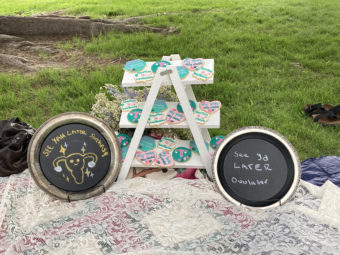
The small group kicked off the “sterilization shower” for the 25-year-old by laying out chalk-written signs that said “See Ya Later Ovulater” and “I got 99 problems but tubes ain’t one.” They munched on cookies that had abortion-rights slogans, such as “My Body, My Choice,” written on them in frosting.

Marietti is a full-time graduate student in Helena working toward becoming a therapist. She doesn’t want kids to get in the way of her career. She had considered permanent sterilization before, but the possibility that the Supreme Court would overturn Roe v. Wade pushed her to seek out an OB-GYN who would help her with a permanent method of contraception.

“‘I want to do this as soon as possible,'” she recalled telling the doctor.

“I always knew I didn’t want children, and of course when you say that as a younger person, everyone is like, ‘Oh, you’ll change your mind,’ or, ‘Just wait until you find the one,'” Marietti says. “I always kind of ignored that.”

Doctors see growing demand for sterilization

Abortion is still legal in Montana, but whether it will remain so is unclear.

State Attorney General Austin Knudsen, a Republican, has asked the Montana Supreme Court to overturn its 1999 decision that said the state constitution’s right to privacy includes the right to end a pregnancy.

The uncertainty around abortion access in Montana and other states where abortion is now or could become illegal, plus the fear of future legal fights over long-term contraception, has seemingly spurred a rise in the number of people seeking surgical sterilization, according to reports from doctors. That includes Marietti, who is having a salpingectomy — a procedure in which the fallopian tubes are removed instead of tied, as in tubal ligation, which can be reversible.

How many people sought permanent sterilization after the fall of Roe won’t become clear until next year, says Megan Kavanaugh, a researcher for the Guttmacher Institute, which gathers data related to reproductive health care across the U.S. and supports abortion rights.

But anecdotal reports indicate that more people have been undergoing permanent birth control procedures since the Supreme Court’s June 24 decision in Dobbs v. Jackson Women’s Health Organization, which struck down Roe.

Dr. Kavita Arora, who chairs the American College of Obstetricians and Gynecologists’ Committee on Ethics, says providers across the country are beginning to see an influx of patients into their operating rooms.

Arora, an OB-GYN in North Carolina, recounted what one of her patients said just before a recent surgery: “She wanted to have autonomous control over her body, and this was her way of ensuring she was the person who got to make the decisions.”

More adults in their 20s and 30s without children are coming to the hospital for sterilization consultations, says Dr. Marilee Simons, an OB-GYN at Bozeman Health Deaconess Hospital in Montana.

Many are women who already use long-term birth control options, but “they are still worried about an unintended pregnancy and what that might mean in the future,” she says.

Most are asking to have their tubes removed to permanently prevent pregnancy. A smaller number of people are asking for hysterectomies, which surgically remove part or all of the uterus. To meet demand, Bozeman Deaconess has dedicated at least one provider to work with these patients multiple days a week.

Planned Parenthood of Montana President and CEO Martha Fuller says clinics statewide have seen an “unprecedented” increase in patients asking to be sterilized, including requests for vasectomies.

A group of people sitting on picnic blankets in a park
Dani Marietti (holding sign) and her friends gather for a “sterilization shower” in Helena, Montana, in July before Marietti was scheduled to have her fallopian tubes surgically removed. (Photo by Ellis Juhlin/Yellowstone Public Radio)

Patients face obstacles

But some people seeking sterilization procedures across the U.S. are being turned away.

Arora says patients who don’t have children and are in their childbearing years are reporting difficulties finding physicians willing to sterilize them. Their reluctance may stem from studies that suggest patients who are sterilized at age 30 or younger are about twice as likely as those over 30 to express regret after getting the procedure. However, other studies had mixed results and found that some women feel less regret over time.

Some patients who have been denied sterilizations have turned to therapists like Barbara DeBree, who has a private practice in Helena and writes letters to providers attesting that the patients have thought through their decisions. “This is not a quick decision for them,” DeBree says.

Cost and insurance coverage can also be issues for patients seeking sterilization procedures.

Helena resident Alex Wright, 23, doesn’t plan to have children and wants to be sterilized.

She plans to schedule a consultation to see whether her provider will perform the procedure. If her regular provider won’t do it, she says she will seek out someone from online lists of providers who are willing to perform the procedure on younger people.

“That’s only helpful if I can get the financial assistance to get it taken care of through those people,” she says. Wright says her insurance company estimates she’ll pay about $4,000 out-of-pocket if she goes with an in-network provider. Using an out-of-network doctor could cost substantially more.

Some fear future “attacks on contraception”

Although some people are seeking permanent procedures in reaction to the Dobbs decision, others are doing so because they believe the U.S. Supreme Court will continue upending reproductive health norms.

Kavanaugh, the researcher at Guttmacher, says Justice Clarence Thomas opened that door by suggesting in his concurring opinion in Dobbs that other precedents should be revisited, including the 1965 Griswold v. Connecticut decision that says banning contraceptives violates a married couple’s right to privacy.

“I think we are anticipating that there’s going to be some attacks on contraception,” Kavanaugh says.

That’s what worries Shandel Buckalew, of Billings, Montana, who wants a full hysterectomy.

The 31-year-old says her doctor thinks she has endometriosis, a painful condition in which tissue that normally grows inside the uterus grows on other parts of the reproductive organs. Buckalew hasn’t undergone the full range of testing that can be required for a diagnosis because she doesn’t have health insurance and can’t afford it.

“Even though I have an IUD [intrauterine device], the amount of cramps and the pain I go through — oh, I get so sick,” she says.

Buckalew hopes a hysterectomy will alleviate that pain, in addition to providing permanent birth control because she doesn’t want kids. But her lack of health insurance makes the procedure unaffordable.

She’s trying to get health insurance before her IUD expires in two years, because she fears the reproductive health care landscape could shift dramatically.

“It feels like my life doesn’t matter,” she says.

KHN (Kaiser Health News) is a national newsroom that produces in-depth journalism about health issues. Together with Policy Analysis and Polling, KHN is one of the three major operating programs at KFF (Kaiser Family Foundation). KFF is an endowed nonprofit organization providing information on health issues to the nation.

Copyright 2022 Kaiser Health News. To see more, visit Kaiser Health News.

Two Alaska families file federal lawsuit against embattled child abuse doctor, Providence alleging child abuse misdiagnoses

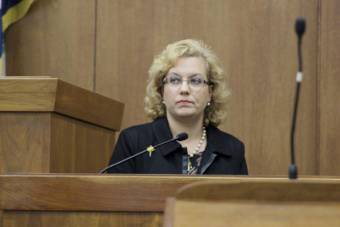
Dr. Barbara Knox testifying on Sept. 14, 2017, at a murder trial in Huntington, W.Va. (Photo by Courtney Hessler/The (Huntington, W.Va.) Herald-Dispatch)

Two Alaska families who lost custody of their infants after what they say were flawed diagnoses of abuse by the state’s embattled former top child abuse physician are suing Dr. Barbara Knox, her former supervisor and Providence Alaska Medical Center in federal court.

The lawsuit, filed July 8, is the latest development in Knox’s brief but calamitous tenure as the head of Alaska Cares, a state-supported multidisciplinary clinic operated by Providence Alaska Medical Center that handles reports of child abuse across the state.

Providence Alaska Medical Center has not filed a response to the complaint in court.

The hospital is “unable to provide information on pending litigation. Additionally, under state and federal patient privacy laws and out of respect for our patients and family members, Providence cannot discuss specifics regarding patient care,” spokesman Mikal Canfield said Wednesday.

Knox did not immediately respond to an email asking for comment.

Knox, a nationally known child abuse physician, became medical director of Alaska Cares in fall 2019. She had recently been put on leave from a position at the University of Wisconsin as the medical school investigated allegations of bullying and misdiagnoses.

During her time at Alaska Cares, staff and families soon reported similar complaints of aggressive behavior and misdiagnoses. By fall of 2021, the entire medical staff of the clinic had resigned and Providence said it was investigating the workplace environment of Alaska Cares.

At the same time, Wisconsin Watch, a nonprofit investigative newsroom, found a dozen instances in which Knox’s diagnoses of child abuse were rejected by officials in court, child welfare workers and other medical professionals.

In January, Knox announced that she would resign days after the Daily News and Wisconsin Watch published a story about Emily and Justin Acker, a Fairbanks-area military family who said Knox wrongly diagnosed their newborn daughter’s brain injury as abuse, leading them to lose custody for nearly a year.

Emily and Justin Acker are among the plaintiffs of the federal lawsuit filed last week. The second family is a Sitka couple, named as John and Jane Doe in the complaint, who lost custody of their infant son after an abuse diagnosis by Knox.

Both families say injuries attributed to child abuse by Knox were actually the result of difficult pregnancies and traumatic births.

Knox conducted “inappropriate, incomplete and deeply flawed” examinations of the two infants named in the case, and a review of the doctor’s work “determined that some of her child abuse diagnoses failed to meet the standard of care,” the complaint alleges.

The Ackers’ daughter and son were in state custody for 11 months.

In a statement, Emily and Justin Acker said they were “deeply hurt” by their experience at Providence Hospital.

“We trusted them to protect and care for our daughter during a very difficult time, but instead, they allowed our family to be torn apart by the opinion of a doctor, who, quite honestly, has no business practicing medicine anymore. They chose to ignore her very disturbing history as a child abuse pediatrician and put us through unimaginable pain,” the couple wrote. “Their actions caused a domino effect of grief and trauma, not only for us but especially for our children.”

“We have suffered every day since this nightmare began,” the statement continued. “I mean yes, it would be very nice for us to win this case, but nothing will ever replace the times and memories that we lost with our children during that time, and that’s the part of this whole situation that hurts us the most. They could never give us back the joy that they took from us, and that’s the biggest reason why we chose to pursue this lawsuit.”

The Sitka family’s two children were out of their custody for more than five months, and both parents faced felony assault charges. Those criminal charges appear to have been dismissed or are otherwise not visible in state court records.

The plaintiffs’ attorney is Mike Kramer, a Fairbanks lawyer who specializes in litigation against government agencies.

The complaint alleges that Alaska Cares knew Knox did not report a “pattern of misdiagnoses” to the Alaska Medical Board. It also alleges that the hospital system has reached “settlements” and “secured nondisclosure agreements” with former staff members who quit because of Knox. And it asserts that Alaska Cares reviewed Knox’s work and “determined that some of her child abuse diagnoses failed to meet the standard of care.”

The lawsuit also named Bryant Skinner, Knox’s former supervisor at Providence, as a defendant, saying he negligently supervised her and failed to act on dozens of complaints about her behavior.

Providence Alaska Medical Center has not released information about the workplace investigation into Knox, and doesn’t comment on patient care allegations.

After leaving Alaska this spring, Knox was hired as a professor of pediatrics by the University of Florida in Jacksonville.

This story was originally published by the Anchorage Daily News and is republished here with permission.

Over-the-counter birth control pills are available worldwide. The US may be next

""
Drugmaker HRA Pharma has asked the Food and Drug Administration to approve an over-the-counter birth control pill called Opill. The agency’s review process is estimated to take about 10 months. (Photo by Peter Dazeley/Getty Images)

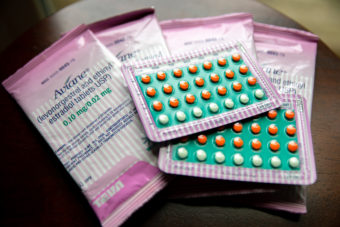
A pharmaceutical company based in Paris, HRA Pharma, is seeking approval from the U.S. Food and Drug Administration for an over-the-counter birth control pill. The pill includes progestin only, not estrogen, and is known as a mini pill. If approved, it would be the first oral contraceptive available in the U.S. without a prescription.

“This could be a really groundbreaking change in access,” says Victoria Nichols of Free the Pill, a coalition of advocates, researchers and health care providers that has helped lay the groundwork and build support for regulatory approval of over-the-counter pill options in the United States.

The coalition’s work began more than a decade ago, but the application for approval — submitted in the wake of the overturning of Roe v. Wade — comes at a time of renewed attention to the importance of contraception access. “I think there’s absolutely greater urgency today to have better contraceptive access across the United States,” says Cynthia Harper, a professor of obstetrics, gynecology and reproductive sciences at the University of California, San Francisco.

Nearly 30% of women of childbearing age report a problem obtaining a birth control prescription or refills, according to survey research published in 2016. The reasons include lack of insurance, not having a regular doctor or challenges making an appointment. “There absolutely are barriers to contraception and access for people in this country,” says Dr. Jennifer Villavicencio, who heads equity transformation at the American College of Obstetricians and Gynecologists (ACOG), which has about 60,000 members. She points to logistical obstacles — or hassles — to seeing a doctor and filling prescriptions as well. “Taking time off work, getting child care, driving, parking, all of those things,” she says.

ACOG has supported access to over-the-counter hormonal contraceptives since 2012. The American Medical Association has also signaled its support. “The science and data has shown for a while that birth control is very safe to offer over the counter and doesn’t need a prescription,” Villavicencio says.

She points to other countries, including Mexico and many others in Latin America and Europe, that have opened up access to oral contraceptives by allowing the pills to be sold over the counter at pharmacies without a prescription. “The lessons learned from other countries who have had over-the-counter birth control have shown us that it works,” Villavicencio says. In 2021, HRA Pharma received a license to bring a nonprescription contraceptive pill to the United Kingdom too.

HRA Pharma’s daily birth control pill is called Opill. Because it does not contain the hormone estrogen, it carries a lower risk of blood clots, which is a risk factor that medical providers screen for when prescribing birth control pills.

This lower-risk profile may make it easier to win over-the-counter approval. “The progesterone-only pill as the first over-the-counter pill in the United States would make a lot of sense,” says Dr. Melissa Simon, a professor of clinical gynecology at Northwestern University.

The progesterone-only pill has a little bit less room for error than the combined pill, which has both estrogen and progesterone in it. “What that means is you don’t have as much room to miss a pill or to even mistime your pill,” says Villavicencio. And because of that, the efficacy with typical use goes down to about 91%, according to the U.K.’s National Health Service. “That is still very effective,” says Villavicencio.

HRA Pharma must meet a bunch of criteria to win over-the-counter approval in the United States. For instance, it must provide evidence that individuals would be able to screen themselves to determine whether the pill was right for them. The company must also show that people could take the daily contraceptive pill as intended without a doctor’s explanation. “That’s something the pharmaceutical company has to prove through their data and research,” says Free the Pill’s Nichols. She explains that the coalition has helped build evidence over the last decade, which she says is strong. “We believe that these pills are safe and effective and that people should be able to follow the simple instructions,” says Nichols.

In March, a group of lawmakers, including the co-chairs of the Pro-Choice Caucus in the House of Representatives, sent a letter to FDA Commissioner Robert Califf urging the agency to review applications for over-the-counter birth control pills without delay. The lawmakers pointed to systemic inequities in the health care system that create barriers to access. “These barriers are disproportionately borne by people of color, immigrants, LGBTQ+ people, low-income individuals, young people, and people in rural communities — individuals who have faced and continue to face the greatest inequities,” the letter stated. The lawmakers said the FDA has an important role to play in reducing barriers to help provide people greater control over their reproductive health.

The FDA review process is expected to take about 10 months, with a decision expected in 2023.

Copyright 2022 NPR. To see more, visit https://www.npr.org.

Remains of Alutiiq girl taken from Kodiak more than 100 years ago will return to Old Harbor

A very old, black and white group photo taken outside
Anastasia Ashouwak, pictured third from right in the bottom row, was part of a group of Alaska Native children, pictured here, sent to the Carlisle Indian Industrial School in 1901. (Photo courtesy: Lara Ashouwak)

An Alaska Native girl who died more than 100 years ago at a boarding school in Pennsylvania will return home to Kodiak Island. Earlier this summer, the U.S. Army began the process of returning the remains of eight Indigenous children from the school to their families across the country.

According to records, Anastasia Ashouwak was taken from an orphanage on Woody Island in the Kodiak Archipelago and sent to the Carlisle Indian Industrial School after her mother died in 1901. Alutiiq Museum executive director April Laktonen Counceller says Ashouwak was part of a group of Alaska Native children sent to the school.

“There were 11 students that went on that journey,” Counceller said. “There’s records of their steamship travel, and the remainder of their travel once they hit the West Coast was by train.”

Indian boarding schools like Carlisle stripped Indigenous children of their culture and had notoriously poor conditions. Just last summer, the Department of the Interior announced it would be looking into the “troubled legacy” of Indian boarding schools in light of the discovery of 215 graves near a boarding school in Canada. It released its first report on the schools in May.

Ashouwak spent the next three years at the school before dying of tuberculosis at the age of 16.

She was buried alongside other children in the school’s cemetery. For more than a century she remained buried under a headstone inscribed with the name Anastasia Achwack.

Counceller says records indicate that Ashouwak was Sugpiaq/Alutiiq and had ties to the former village of Kaguyak on the southern tip of Kodiak Island, which was washed away in the 1964 tsunami. Her family then moved to the village of Old Harbor, where many people still share her last name.

Cassey Rowland is an Alutiiq artist from Kodiak and one of Ashouwak’s descendants. Her father, Ted Ashouwak, who is from Old Harbor but now lives in Maine, is Ashouwak’s great-nephew and closest living relation. Rowland says she never heard about the boarding schools from village elders when she was growing up.

“They just didn’t talk about it, it was just too painful for them,” she said.

Rowland has a daughter the same age as when Ashouwak left Kodiak Island for the Carlisle School, and she’s been honest with her daughter about what happened at Carlisle and other schools like it.

“We’ve been learning about the Indian boarding schools before we even learned about our ancestors being a part of it, and she’s been asking questions and I’ve been telling her the whole truth. I’m not the type of parent that’s going to hide away,” Rowland said.

Rowland and her daughter flew to Pennsylvania earlier in July where they gathered with other members of their family as Ashouwak’s grave was dug up in preparation for her reburial in Alaska. Members of the Alutiiq museum and a Russian Orthodox priest from Kodiak also joined the family.

Rowland said she brought paint to decorate the box that will carry the remains of Ashouwak home — she planned to incorporate Alutiiq and Russian Orthodox designs for the casket.

“And then the bright colors of the island just to bring her home — lots of bright greens and blues, oranges, pinks, so, just trying to make it look like a little girl,” she said.

In June, the Alutiiq Museum repatriated the remains of four Alutiiq ancestors through the Native American Graves Protection and Repatriation Act, or NAGPRA.

Rows of identical graves in graveyard
The U.S. Army is in the process of identifying the children buried at Carlisle, and repatriating them to their families. (Photo courtesy of Lara Ashouwak)

Counceller said Ashouwak’s return to Kodiak is different. The U.S. Army oversees the cemetery at the Carlisle Indian Industrial School. It’s in the process of returning the remains of children who can be identified to their communities.

The Alutiiq Museum knows of another girl from Kodiak buried at Carlisle and hopes to bring her home next summer, Counceller said.

When Ashouwak returns to Kodiak, Counceller said she’ll receive services at the local Russian Orthodox church in the city of Kodiak and an Alutiiq ceremony at the museum. The Alutiiq Dancers — including Rowland’s daughter — also will perform. Ashouwak and her family will then be flown to the village of Old Harbor for a graveside service followed by a potluck.

Counceller says there’s a sense of relief among the community that Ashouwak will finally return home.

“As many of us Native people know, we’re kind of all related around the island so, although this is one individual, it’s a moment for all Alutiiq people to think about how important this kind of work is,” she said.

Rowland says a part of her will also be at peace when Anastasia is finally alongside members of her ancestors in Old Harbor.

“She’s gonna be where she is wanted. We need her home. And she’s gonna feel that, we believe. Her spirit will finally be at rest,” said Rowland.

Rowland says she’ll be processing why it took so long for Ashouwak to return to Old Harbor for the rest of her life.

Services and burial for Anastasia Ashouwak will be Saturday, July 9th, in Kodiak and the village of Old Harbor.

Neglected and forgotten: Volunteers work to restore Native gravesites in Juneau

A woman sprays water on a tombstone in a forest
Jamiann S’eiltin Hasselquist sprays water on a gravestone in a neglected cemetery near Lawson Creek on Douglas Island, Juneau, on June 17, 2022. Hasselquist and other volunteers have been working for over a year unearthing and restoring gravesites in the area. (Photo by Lisa Phu/Alaska Beacon)

Jamiann S’eiltin Hasselquist plays a song from her phone at a gravesite near Lawson Creek on Douglas Island in Juneau. She rests the phone down on the ground.

“It was a T’aaḵu Kwáan song, the wolf song. I suspect that he’s of the T’aaḵu Kwáan, and so I’ve played the song to honor him and his people, and let him hear it through the ground,” Hasselquist said.

The stone grave marker has a Bible at the very top with the gates of heaven underneath, and a wolf under that. It has two names on it — Kitchoshan and Kakantan. The person was born July 5, 1850, and died June 3, 1901.

This is just one of the hundreds of mostly neglected resting places found off Douglas Highway, around the Lawson Creek area, many of which belong to Native people. Hasselquist is part of a group of volunteers who spends time restoring and uncovering Native gravesites, “not letting them be forgotten and keeping them from being built over,” she said. “We know that that kind of thing happened here.”

A tall tombstone with an intricate carving of a wolf's head,in a forest
A gravesite in a cemetery near Lawson Creek on Douglas Island, Juneau, as seen on June 17, 2022. The gravestone has a Bible at the very top with the gates of heaven underneath, and a wolf under that. It has two names on it — Kitchoshan and Kakantan. (Photo by Lisa Phu/Alaska Beacon)

A little further south along Douglas Highway is Sayéik Gastineau elementary school, which was built upon a Native burial ground in the late 1950s.

Since last April, Hasselquist said volunteers have spent hundreds of hours on weekends and in the evenings “chopping their way through” all the growth and foliage — cutting down salmonberry bushes, weed whacking and cutting off tree limbs and old dead trees.

Juneau resident Hanna Schempf is another volunteer.

“You’d whack off enough bushes that you could clear the gravesite you were looking at. And then you’d look through the stems, and you can see other graves just keep going and going and going,” she said.

A 1995 City and Borough of Juneau report on historic cemeteries in Douglas says about 514 graves are within cemeteries that are recognized as “the Catholic, Eagles, Douglas Indian, Masons, Odd Fellows, City, Servian, Asian, Native, and Russian Orthodox.” Today, a few of these sections, like the Eagles and Catholic, are kept up well, but some of the others are not.

The volunteer group has restored or uncovered dozens of Native gravesites, Hasselquist said, including Chief Johnson, chief of the T’aaḵu Kwáan.

“His stone was completely over. We didn’t even know who it was. It was just toppled over,” she said.

Volunteers have found many indentations in the ground though not the markers for each. Some were buried inches underground and uncovered during cleanup. “So we suspect that there are other markers there; we just have to go and find them,” Hasselquist said.

""
Jamiann S’eiltin Hasselquist sprays water on Chief Johnson’s gravesite on June 17, 2022. He was chief of the T’aaḵu Kwáan. (Photo by Lisa Phu/Alaska Beacon)

“Everybody deserves a place of rest with honor, dignity and respect,” Hasselquist said. “We all have an inherent right and a responsibility to care for these areas whether we’re related to them or not. This is part of our community.”

‘Neglected, forgotten and destroyed’

Hasselquist was inspired to do this work from Sitka resident and cemetery restoration expert Bob Sam. She first saw his work with Sitka cemeteries on Facebook and later saw it in person. Last April, the two connected when Sam was in Juneau to work on the Lawson Creek cemetery.

For Sam, restoring and maintaining cemeteries — whether in Sitka, Juneau, or Japan — is his life work. “This is something I’ve been doing since I was a small child,” he said. The work is “not a one-time thing. It’s perpetual care.”

Sam, 68, has family buried in Juneau. He first started cemetery restoration in Juneau in the early 1990s at Evergreen Cemetery, specifically the Orthodox Church section. Then he started working at Lawson Creek after learning more about it from Lingít elder Marie Olson.

“The Native section of Lawson Creek was neglected, forgotten and destroyed. Every headstone was knocked down. There was little evidence that they existed,” Sam said. “It took years to cut brush, remove trash, upright headstones just to find the Native section of Lawson Creek. I could not have done this work without support from Elders who also donated tools and stuff.”

Sam said it’s a responsibility to take care and maintain the gravesites of ancestors.

“We’re all human beings and how we treat the dead defines our humanity,” he said. “If a cemetery looks neglected and forgotten, it gets abused. But if you clean it up, make it look real nice, it gets to a point where it takes care of itself, where people pick up after themselves and show respect.”

""
A neglected cemetery near Lawson Creek on Douglas Island, Juneau, as seen on June 17, 2022. A group of volunteers have been working for over a year unearthing and restoring gravesites in the area. (Photo by Lisa Phu/Alaska Beacon)

A healing process

Though the intent was to unearth and restore Native gravesites, Hasselquist and other volunteers have spent a lot of time on other neglected and forgotten resting places as well.

“We extended after we got the salmonberry bushes down from our ancestral area,” Hasselquist said.

But first, the group had to go through a healing process.

“A lot of things were said out loud, verbalized, just bringing out the frustrations about how we were not tended to and that we just will not be invisible anymore, we will be seen, they will be seen and remembered,” Hasselquist said.

“And so when we got through all of that, there was a weight lifted, and we were looking at the other areas, and we’re like, ‘Let’s go do it. Let’s start working on them.’”

Hasselquist would like to focus and work specifically on the Native section.

“But we’ve been so focused on other areas that it’s consumed our time. So if we could get others to take responsibility for the other areas, at least tending to them by mowing and weed whacking and keeping control of the salmonberry bushes and things like that because it’s just a jungle on that side.”

A woman wearing a mask kneels and brushes off a gravestone
Hanna Schempf traces the engraving on a gravestone in a neglected cemetery near Lawson Creek on Douglas Island, Juneau, on June 17, 2022. Schempf is part of a group of volunteers who’ve been working for over a year unearthing and restoring gravesites in the area. (Photo by Lisa Phu/Alaska Beacon)

Schempf, one of the volunteers, is slowly working on a database of the cemetery that will eventually be public.

“All the information I’ve gathered is publicly available; much of it is accessible for free online. It is, however, very scattered. I’m hoping to pull it all together in a way that makes it easy for families to find their loved ones and find information about them more easily.”

“Many of the people buried in Douglas fought for recognition and respect in life, and fought to be remembered in death. It takes ongoing effort to support that, and a lot of the history of these cemeteries is already irrecoverably lost — loss of physical records, loss of living memories, and neglect of the cemeteries themselves have all played a part. It’s important to work on them now before more is lost,” Schempf said.

Whose responsibility is it?

The issue of maintaining the historic cemeteries in Douglas was most recently brought to the City and Borough of Juneau’s attention in 2018 when former mayor Merrill Sanford offered to transfer the well-maintained Eagles’ cemetery to the city at no cost with the understanding that the city would continue maintenance. The city explored what that process would entail but ultimately no action was taken. Sanford also asked the city to consider acquiring the other cemeteries in Douglas.

The cemeteries and gravesites near Lawson Creek in Douglas are owned by various parties and precise land ownership is not something the City and Borough of Juneau has ever been able to pin down.

A 2019 memo to the Lands Committee said, “There has been controversy concerning ownership of the cemeteries in Douglas since the late 1800s. Discussions about the upkeep of the cemeteries and whether or not they were city property began as early as the 1940s and the topic has been brought to the municipal governing body (Douglas City and the City & Borough of Juneau respectively) every decade since.”

According to the city, “there hasn’t been much movement” on the issue of maintaining Douglas cemeteries since the 2019 memo.

“I think this could be picked up again if the Assembly makes it a priority, which could be the outcome of citizens bringing it up,” lands and resources manager Dan Bleidorn said.

The city’s parks and recreation department currently maintains the Douglas Indian Cemetery, which is across the street from Sayéik Gastineau elementary school and set apart from the other cemeteries surrounding Lawson Creek. While the city doesn’t own it, the city’s been providing weekly maintenance of it since 2012 when a renovation at the school disturbed human remains.

Finding peace

Hasselquist said, for her, choosing to restore Native gravesites “has to do with my own personal life trauma.” The trauma stems from her ancestors and family attending residential boarding school institutions and “the things that were brought home and taken from us.” She’s the first generation of her family who didn’t attend a residential boarding school.

""
Jamiann S’eiltin Hasselquist brushes foliage aside from a neglected gravesite near Lawson Creek on Douglas Island in Juneau on June 17, 2022. (Photo by Lisa Phu/Alaska Beacon)

When the remains of hundreds of Indigenous children were found on the grounds of a former residential school in British Columbia last summer, Hasselquist said working on restoring gravesites “helped with the anxiety and the triggering that was happening.”

“It helps me find more peace,” she said. “And then it feels good to tend to our ancestors and take care of those places. They deserve to be resting somewhere that’s beautiful, and in honor and dignity and respect.”

The volunteers’ work has inspired others to join in through cemetery restoration and clean-up events posted on the group’s Facebook page. Hasselquist hopes to “ignite a spark” in younger people to take care of the areas.

Site notifications
Update notification options
Subscribe to notifications