Subsistence

Students in New Stuyahok practice subsistence skills in the classroom

Senior Audrey Panamarioff is one of the students learning and practicing subsistence skills at Chief Ivan Blunka School. (Photo courtesy of Robin Jones)

When New Stuyahok shifted to a mix of in-person and distance learning as a safety precaution, the school took the opportunity to incorporate subsistence into the classroom.

In Bristol Bay communities, subsistence is one feature of daily life that has stayed consistent during the pandemic. Now, it’s part of the school’s curriculum.

Communities around Bristol Bay have endeavored to protect their residents from COVID-19 for almost a year. The Chief Ivan Blunka School in New Stuyahok was among the many schools that shifted to a mix of in-person and distance learning as a safety precaution. The school decided to use that change as an opportunity to incorporate subsistence into the classroom.

Senior Audrey Panamarioff is one of the students in the subsistence class, and she said it’s a great way to learn about and practice subsistence skills.

Gusty Blunka Jr. (Photo courtesy Robin Jones)

“I feel very grateful to have our way of living as an option in our school,” Panamarioff said. “I learn something new every time that I’m in this class, and I think that this class gives opportunities to students who can’t or aren’t able to go out at home.”

Another student, junior Gusty Blunka Jr., said he appreciates the opportunity to share stories and learn more about his culture.

 “I’m hoping to learn more about what our people do and maybe even live the stories that we were told,” Blunka said. “Then one day, tell my stories, teach, and help others by passing on what was passed on to me.”

Fourteen high school students meet twice a week. They have longer class periods due to block scheduling because of the pandemic. The class is an elective, and it counts towards the students’ Yup’ik studies. Josh Gates, one of the teachers, said the class was a silver lining in a difficult year.

Josh Gates is one of the subsistence class teachers. (Photo courtesy of Robin Jones)

“Well COVID has been a real inconvenience with an exception of making the schedule work out great for a subsistence class,” Gates said. “An hour and 45 minutes is enough time to go outside and go ice fishing or today, we’re going to go haul wood.”

Gates said the class is another way for students to learn and practice a wide range of skills related to subsistence.

“The obvious ones are knowing how to properly use a chainsaw or knowing how to make an ice fishing pole, knowing how to tie a fishing hook,” he said. “But the less obvious ones are how to maintain your tools and machines that are necessary for those subsistence activities.”

Sophomore Maximus Gust said the timing of the class lines up well with the activities he’s interested in.

“The timing fits perfectly with what we do in subsistence,” he said. “Whether it’s from going out on the regular days or making something in the shop on the shorter days.”

Principal Robin Jones and her husband, Ben Griese. (Photo courtesy of Robin Jones)

Principal Robin Jones said the school has gotten positive feedback from the families.

“I think that the community has been overwhelmingly supportive of any of the classes we teach that help the students grow closer to the Yup’ik culture,” she said. “And we’ve even had the opportunity to involve a lot of our Elders, parents, and community members in the classes.”

Jones said the class is a way to better align the school’s curriculum with the community’s traditional lifestyle, and she’s elated by the students’ participation.

“Nothing makes me prouder as a principal than to see how eager students are to share stories and pictures of their hunts with me, because they know I will be so incredibly proud of them,” she said.

Maximus Gust and family, Chief Ivan Blunka School Subsistence Spotlight for January 2021. (Photo courtesy of Robin Jones)

Alaska’s regional subsistence councils hamstrung by stalled appointments

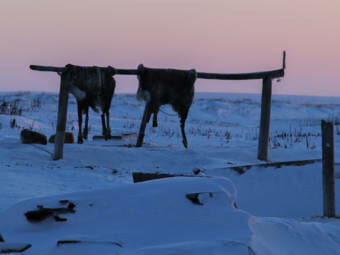
Two caribou hides hanging on a rack behind a house on the east side of Shishmaref (Zachariah Hughes/Alaska Public Media)

A large number of unfilled seats on the councils that manage Alaska’s subsistence hunting and fishing has left advocates worried their voices won’t be heard and confused about the process of filling those seats.
The decisions for opening and closing hunting grounds and setting harvest limits are decided by the more than 100 Alaskans who sit on 10 regional advisory councils that inform the Federal Subsistence Board.

“They’re the ones that are on the ground and making these observations based upon a lifetime of experience,” said Jim Fall, who until recently was the state’s head of subsistence research.

He recently retired from the Alaska Department of Fish & Game after 39 years of service. And he’s been to a lot of these council meetings where a wide-ranging group from across a region have frank and full discussions about the state of wildlife populations, fish stocks and observations about what’s happening in their communities.

“The broader representation you have at a regional council, the better those ideas are,” Fall said.

But this year there are going to be fewer voices at the table. That’s because more than half of the seats are now unfilled.

It’s not due to a lack of interest. The federal Office of Subsistence Management said it dutifully forwarded enough names last fall to the U.S. Secretary of the Interior.

“We still have 35 open seats on all RACs, which means that 56% of 2020 open seats were not filled,” wrote Office of Subsistence Management Acting Policy Coordinator Katya Wessels in a recent briefing to the Federal Subsistence Board. “Some RACs now have as many as eight open seats.”

The Southeast Regional Advisory Council has eight vacancies ahead of its meeting on March 16-18.

Many of those whose appointments were stalled are long-serving members.

Until the end of last year, Don Hernandez has chaired the Southeast Regional Advisory Council. His reappointment has been inexplicably held up and he’s gotten no explanation.

“Either they’re not telling us or they don’t know,” Hernandez said from his home in Point Baker on the northern tip of Prince of Wales Island. “So we don’t even know who to call.”

That leaves the Southeast’s 13-seat regional advisory council with five members.

“That’s just not a real good representation for all of the different issues that we have here in Southeast Alaska,” he said. “So it’s going to be really tough to get anything done at this next meeting, I’m afraid.”

It’s not just Southeast that’s struggling to fill seats. The Western Interior regional council stretches across a large chunk of landlocked territory from Aniak on the Kuskokwim River to the Brooks Range.

“It’s a huge area, it’s like multiple states,” said Jack Reakoff, who lives in remote Wiseman, a former mining camp roughly halfway between Fairbanks and Prudhoe Bay. He was on the board from its inception in 1993. But not anymore; his reappointment was inexplicably held up on the eve of the spring meeting later this month.

“They’re going to be completely overwhelmed for this meeting,” he said.

It’s not clear who or what is responsible for the breakdown in appointments. A Trump administration executive order signed in mid-2019 directed federal agencies to reduce or eliminate advisory boards considered obsolete, duplicative or expensive.

But what is clear is that the Trump administration’s Interior Secretary chose not to fill 35 seats late last year. The recent change in presidential administrations has added yet another layer of uncertainty with people in the federal agencies scrambling for answers.

The Interior Department headquarters in Washington D.C. declined to comment.

The Office of Subsistence Management is soliciting nominations now, but it’s a year-long process. And applicants who file by the February 15 deadline likely won’t be seated until 2022.

There have long been tensions between the rights of rural subsistence hunters and the state over priority for rural subsistence users. Some of those conflicts have recently wound up in court.

Reakoff said there are political actors who have long been hostile to subsistence rights that would cheer the dismantling of the regional advisory councils.

“Rural subsistence priorities have never been palatable to the state of Alaska,” he said.

Rick Green, an assistant in the Alaska Department of Fish & Game Commissioner’s Office, said the state is neutral on the stalled nomination process.

“That is their process to carry out,” Green wrote in a statement to CoastAlaska. “As for their public meetings, yes, there is value to state managers as they bring parties interested in conservation of our resources together for public comments and suggestions and any group that brings the public together for the shared goal of conservation of our trust properties is useful.”

Subsistence priorities are enshrined by the Alaska National Interest Lands Conservation Act. The landmark legislation signed into law by President Jimmy Carter in 1980 expanded national parks and monuments in Alaska but also guaranteed Alaskans have some decision making authority over subsistence rights on federal lands.

“The regional advisory councils are kind of the linchpin of the whole system,” Hernandez said. “Having good functioning, well-qualified advisory councils is the key to make the whole subsistence system work in Alaska.”

But whether the lack of appointments is due to bureaucratic inefficiencies or political wrangling, the outcome will be the same — less input on federal wildlife management decisions by the people whose lifestyle and livelihood depend on it.

State predicts commercial herring harvest will fall short of annual limit

The herring fishery didn’t happen in 2020, but the state continued to survey and map herring spawn. (ADF&G photo)

In an unusual move, the Alaska Department of Fish & Game has set a large guideline harvest level for the commercial herring fishing in Sitka this spring, on the understanding that the fleet is not likely to hit that mark.

In a news release Monday, ADF&G announced a guideline harvest level — or GHL — of just over 33,000 tons for the upcoming Sitka sac roe herring fishery.

But that much probably won’t be harvested. In the same news release, Fish and Game predicts that the commercial harvest will likely not exceed 20,000 tons. Area Management Biologist Aaron Dupuis says the state arrived at that number after speaking to processors about the potential market demands.

“Just from our conversations, like what the individual markets want in terms of herring,” he said. “Part of the reason why we put that in the announcement was, I guess just to temper people’s’ expectations for what will likely get harvested in the fishery. “

Dupuis says 33,000 is already a conservative estimate. The GHL is reduced by 20% of what the state would typically allow from the forecasted population of fish, a mature biomass of 210,453 tons. Even so, he says the state is gearing up as usual for a fishery this year.

“We’re gonna be getting ready for a fishery like we normally do,” he said. “It’s been two years since we’ve had a successful fishery, but we plan on managing it like we normally do.”

But in recent years the fishery has been far from usual. The annual fishery didn’t happen at all in 2019 and 2020. Most of the herring were young and too small to meet international market demands. And the coronavirus added some additional challenges in 2020. Dupuis says he doesn’t expect the pandemic to get in the way of the fishery happening this year.

“Everybody had all of last year to kind of figure out what works on the processing side with the salmon season and with other species, so I think they’ll be able to come up with something,” he said. “For the state, we have standard COVID protocols, especially with the state vessels that were in place last year for the dive surveys. We’ll be able to adequately manage the fishery given those COVID guidelines.”

This year, herring managers believe that most of the available herring stock consists of 5-year-olds (around 86%), which are closer to marketable size than in recent years. Nevertheless, the five-year-olds will be just on the cusp of being large enough to sell. Last year, the marketable size was estimated at around 110 grams. The state estimates age-five fish to weigh in at around 109, with an average weight of the entire herring population estimated to be around 112.

The fishery has continued to see pushback from subsistence harvesters who argue the management of the commercial fishery has harmed the fish population over the last few decades. Herring eggs are highly valued as a traditional food and resource among Indigenous communities in Southeast.

The Sitka Tribe of Alaska brought a suit against the state in 2018, challenging its management of the commercial fishery. The fight continues, with a superior court judge hearing oral arguments this Thursday on whether the state has upheld its constitutional obligation to meet reasonable subsistence needs.

Federal and state officials sign right-of-way permit for controversial Ambler Road

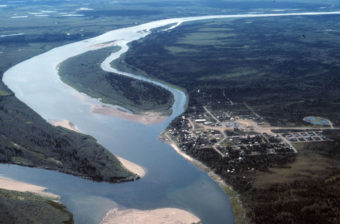
Aerial view of Ambler and the Kobuk River in the summer. (Photo courtesy of the National Park Service via UAF Gates of the Arctic Research Portal)
Aerial view of Ambler and the Kobuk River in the summer. (Courtesy of the National Park Service via UAF Gates of the Arctic Research Portal)

In the latest step in a longstanding dispute between mining advocates and environmentalists, federal and state entities signed a 50-year right of way permit for the controversial Ambler Road project on Wednesday, Jan. 6.

The permit was signed by the Bureau of Land Management, the National Park Service and Alaska’s state-owned development corporation — the Alaska Industrial Development and Export Authority. It allows the privately-owned road to pass through lands controlled by the federal government.

A company called Ambler Metals LLC, a subsidiary of British Columbia-based Trilogy Metals hopes to use the road to access copper, gold, zinc and other mineral deposits in the area, in cooperation with the NANA regional Native corporation.

The road would stretch 211 miles from the Dalton Highway to the Ambler Mining District east of Kotzebue along the Kobuk River. Environmentalists are most opposed to the part of the project that would cross Gates of the Arctic National Park and Preserve.
Bridget Psarianos is an attorney for Trustees for Alaska. The group has filed numerous lawsuits on behalf of conservation groups opposed to the project.

“Putting a gravel road through that area is going to really significantly and negatively impact the environment in that region,” Psarianos said. “The water quality, air quality, wildlife and the communities that are in that region.”

Subsistence advocates have also filed lawsuits over the road, fearful that construction of the project would impact the migration of caribou, a staple of the local Inupiaq diet in Northwest Alaska.

In its environmental assessment released last March, BLM officials flagged potential impacts to local water and air quality, as well as to wildlife migration and erosion.

The project has received millions of dollars in state support. In a statement, Gov. Mike Dunleavy described future efforts in the mining district as responsible resource development that is “key to providing high wage jobs to Alaskans and their families.”

The right-of-way permit came the same day that AIDEA also made the majority of oil lease bids on land tracts in the Arctic National Wildlife Refuge. Considering the pro-resource development attitudes of the waning Trump administration, Psarianos with Trustees for Alaska described these recent decisions as rushed.

“What we’re seeing right now is just a last-ditch, desperate effort by the Trump administration to rubber-stamp as many permits as it can before it leaves office,” Psarianos said.

Psarianos described the decision this week as one of many procedural steps in a lengthy process to get the road built. Construction would still be several years away at the minimum.

Once again, Arctic Report Card shows the abnormal is now normal

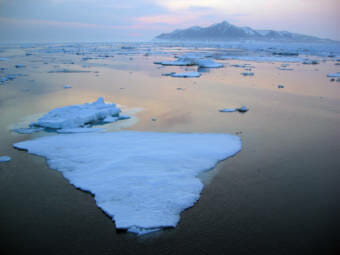
Sea ice floats in the Bering Strait off Cape Prince of Wales. (UAF photo by Gay Sheffield)

The 2020 Arctic Report Card is out, and the results show the Arctic continues to warm at an accelerated rate. This year was the second warmest on record in the Arctic, with impacts to sea ice, erosion and marine ecosystems.

In 2006, the National Oceanic and Atmospheric Administration released its first Arctic Report Card, laying out a timely snapshot of what the coldest parts of the world looked like as the climate warmed.

Rick Thoman is a climate specialist with the University of Alaska Fairbanks.

“Things were starting to change rapidly enough that folks were interested in this near-real time update of a variety of the different parts of the Arctic system,” Thoman said.

Fifteen years later, Thoman is the lead editor of the 2020 Arctic Report Card. He says even though Alaska didn’t have very extreme weather patterns, the Arctic as a whole was impacted.

“Some place in the Arctic every year has some extreme. It varies place to place,” Thoman said. “This year, Siberia, especially Western Siberia was the focus of the warmth, the very early snow melt, the wildfires, some of which were overwinter fires, zombie fires. Last year was Alaska. A couple years ago it was Greenland.”

Thoman says even though Alaska was impacted a little less this year by the warming climate, it still follows the recent trend.

“Whatever the trend is, there’s always going to be years above and years below that,” Thoman said. “We’re at the point now though, for instance with erosion, it wasn’t as much as last year, but it’s always going to be more than it was in the 1950s.”

One of the facets of the Arctic most impacted by a warming climate is sea ice. Thoman says this year followed a trend of shrinking sea ice in the Arctic.

“The lowest it got at any point was the second lowest [on record]. Only the 2012 minimum extent was lower,” Thoman said. “And in the winter, the maximum extent it got on any one day was the 12th lowest.”

Low sea ice extent impacts much of the arctic ecosystem, forcing marine mammals like walruses and seals to haul out on tiny patches of land rather than the thick rich sea ice they’d been accustomed to. Thoman says that bowhead whales in Alaska waters are in a slightly better position than other marine mammals, due to their ability to swim much farther to get to the zooplankton that they eat.

“If their food supply is very far north one year because that’s where the ice is, they have the ability to go and get that food, unlike other species which have a much shorter range,” Thoman said.

While that works well for the whales, Thoman says new feeding routes have the potential to upset subsistence whale harvests from Alaska’s northernmost Indigenous populations.

“From a whale perspective, if they have to go 600 miles of the Alaska coast to find food, for a bowhead that’s not a problem,” Thoman said. “At what point it becomes the whales are there but they’re not accessible for Alaskans, that’s a different question.”

Basically, Thoman says what was once abnormal or unusual in terms of Arctic climate is now normal. The Arctic is transforming, and populations will have to adapt.

Relief and disappointment as Bristol Bay reacts to Army Corps’ Pebble permit denial

Two attendees at a public hearing on the draft environmental review of Pebble, which the U.S. Army Corps of Engineers held in Newhalen in March 2019. (Izzy Ross/KDLG)

When the U.S. Army Corps of Engineers last week denied the Pebble Limited Partnership a federal permit to develop a mine under Section 404 of the Clean Water Act, it surprised people on both sides of the issue.

“I was ecstatic. I was elated. I was so happy to hear that it was finally over,” said Billy Trefon, Jr. from Nondalton, one of the villages closest to where the mine would have been built.

To the south, in Iliamna, Iliamna Development Corporation CEO Lisa Reimers said people feel hopeless.

“Well, we feel like it was — we were lied to by the Army Corps because they said politics wouldn’t be involved. And it ended up being politics,” she said. “The Army stated they’d recommend to build a mine, then out of nowhere they changed their minds.”

Pebble would have been one of the largest gold mines in the world. The Army Corps said last week that the mine proposal didn’t follow Clean Water Act guidelines.

For Trefon, in Nondalton, the project also went against the traditional teachings of elders.

“I was raised up listening to elders telling me that, if you take care of the land, the land will take care of you,” he said. “And it has been doing that for centuries, milleniums. So to us this land is important. The water is important.”

People around Bristol Bay, including Trefon, have focused on Pebble to the point of exhaustion, investing years to understand the issues around the project and its potential impacts.

Many were resigned, and for opponents of the project, the Army Corps’ decision released a wave of relief. Lindsay Layland is the deputy director of United Tribes of Bristol Bay, one of the regional groups opposing the mine. She’s also a commercial fisherman.

“As a fisherman, I’m just… I’m so happy, you know, I’m so proud of the effort that folks in the bay and beyond have put forward, and come together on,” she said.

Opposition to Pebble has been a unifying issue for the three major sectors of Bristol Bay’s fishery. Much of the advocacy over the past decade and a half has been centered on protecting Bristol Bay’s sockeye salmon run — the largest wild salmon run in the world.

“It really comes down to this amazing coalition, this amazing, diverse group of people — from commercial fishermen, to tribes, to sport fishermen, to subsistence fishermen, to hunters and anglers,” Layland said.

The debate has influenced people of all ages. Hailey Carty is a 13-year-old from Dillingham who’s in eighth grade. Pebble has always been a topic close to home.

“This has been something I’ve been protesting against for a few years now, and for it to finally be denied is really, really exciting,” she said.

Many of the people who live in the region and opposed the project also see this as a win in a fight to prioritize and protect subsistence practices.

“This is our land, our food sources, our animals, everything kind of runs off the water,” Carty said. “And for something to be taken away, can affect so many different things. It can just destroy many, many things.”

But for those who backed the project, the decision comes as a harsh blow. The mine proposal had recently seemed poised to succeed.

Sue Anelon works for the Iliamna Development Corporation. Iliamna is another community close to where the mine would have been. Anelon says the area is economically depressed. She sees the Army Corps’ denial as a bad decision for the state as well as the Lake Iliamna region.

“I’m very worried right now, because there’s a lot of people without jobs — they’re depending on the government,” she said.

Anelon said people have to wake up to the economic reality in the state. She pointed out that when Pebble was operating in the area several years ago, it provided jobs. That meant they were able to more fully participate in a cash economy.

“I’ve seen the good and the bad,” she said. “When Pebble was here and a lot of people were working, they were paying for their own groceries, they were paying their own fuel. They were buying trucks, they were buying Hondas. People were paying for things. Now they can’t do that. They have to rely on the government.”

Reimers, the CEO of Iliamna Development Corporation and a board member for Iliamna Natives Limited, has supported the project for years. She disagrees with the Army Corps determination that it was “contrary to the public interest.”

Reimers believes that regional entities like the Bristol Bay Native Corporation have not provided viable economic opportunities for communities like Iliamna, and she said that people who live near the proposed mine site and wanted the project are deeply disappointed.

The Pebble partnership said in a statement that the Army Corps’ decision is a “lost opportunity” for the region, and that it plans to appeal the denial.

Site notifications
Update notification options
Subscribe to notifications