Subsistence

Conservation group: Chilkat and Stikine among 10 most endangered rivers in US

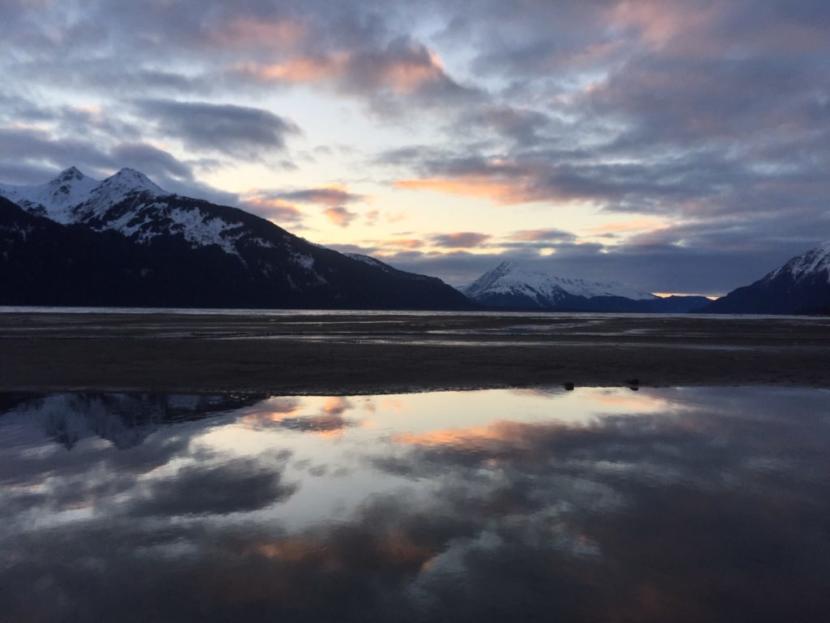
The Chilkat River at sunset.
The Chilkat River at sunset. (Photo by Claire Stremple/KHNS)

Two of the nation’s 10 most endangered rivers are in Southeast Alaska.

That’s according to American Rivers, a conservation group opposed to mining and energy development in wilderness areas.

Kimberley Strong is president of the Chilkat Indian Village of Klukwan. Her village sits on the Chilkat River, recently named the sixth-most endangered river in the nation by American Rivers.

“When you look around the village here, and we’re on the banks of the Chilkat River, you’ll see just in eye shot here there’s two smokehouses to my right, three smokehouses to my left,” Strong said while standing on a bank of the Chilkat River in front of her home.

“This is really a big part of our livelihood, is traditional food gathering. The salmon that runs in the Chilkat River has been part of our life for thousands of years. To endanger that is life-threatening to us,” she said.

Klukwan is one of the longest continually-inhabited places in North America. The name means “eternal village.” The Tlingit have lived on this river for thousands of years, feeding off the rich salmon runs.

But Strong said mining upstream could pose an existential threat to all that.

“This is a food sovereignty issue,” she said. “It’s having access to the natural resources that are around us.”

Strong said in Klukwan, the Chilkat is more than a river: It’s the history of a people and their food source. That’s why she’s fighting for the resource.
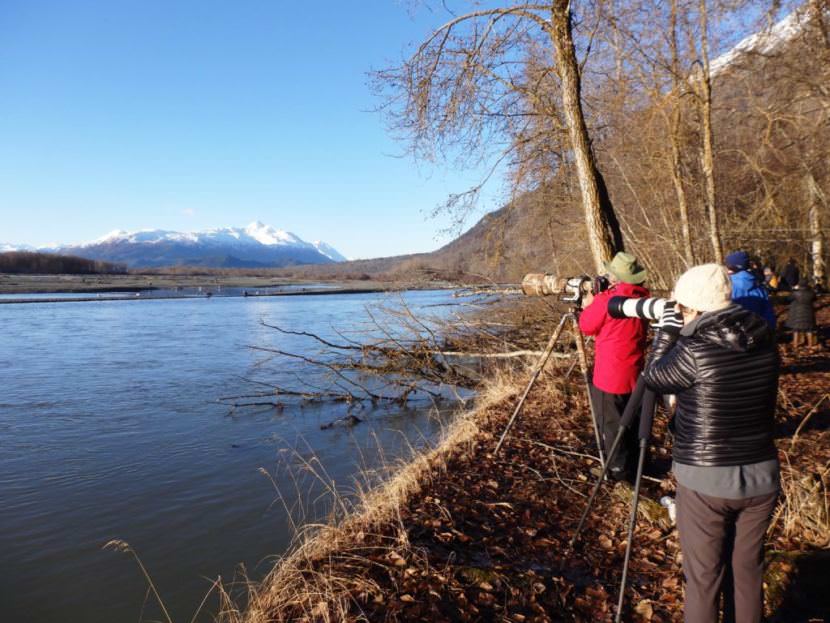
Photographers take pictures of eagles feeding on salmon in the Chilkat River. (Photo by Emily Files/KHNS)
Photographers take pictures of eagles feeding on salmon in the Chilkat River. The river flows through the Chilkat Bald Eagle Preserve. (Photo by Emily Files/KHNS)

American Rivers, an advocacy group based in Washington, D.C., has been releasing its “America’s Most Endangered Rivers” report for over three decades. Communications Director Amy Kober said the purpose of their annual endangered rivers list is to raise national awareness about rivers they consider to be threatened.

“It’s powerful because it’s a call to action. This report showcases 10 rivers facing urgent threats,” Kober said. “These rivers aren’t the worst rivers in the country or the most polluted rivers in the country, but they are rivers really at a crossroads.”

Kober said people have taken action on behalf of rivers they’ve highlighted in the past. She said attention generated by the report helped spare the Hoback River in Wyoming from nearby natural gas development, and it helped spur cleanup actions on the St. Lawrence River in New York and Canada.

The Chilkat River is one of two Southeast Alaska rivers listed in the 2019 report. The Stikine River, which flows out of British Columbia and empties near Wrangell, is 10th.

Both are listed for the same reason: mining development.

On the Chilkat, Constantine Metal Resources is a Canadian company with exploratory permits for a potential mine in the upper watershed. The company has said any future operation would be safe and bring good jobs to the region. A message left with Constantine’s Haines office wasn’t immediately returned.

Not everyone is convinced. Gershon Cohen of Alaska Clean Water Advocacy lives in Haines. He said that Constantine’s Palmer Project would store mine waste that could threaten the ecology.

“There is just too much history of large mines polluting public waters and destroying fishery resources, that we felt this can’t be ignored,” Cohen said.

The Chilkat has runs of all five salmon species that are caught by sport anglers for subsistence and commercial use. It also flows through the Chilkat Bald Eagle Preserve, where those fish feed one of the largest gatherings of bald eagles in the world every fall.
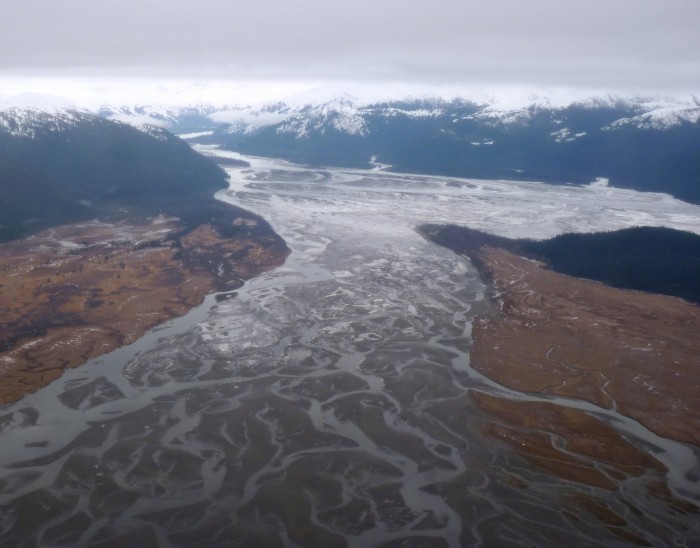
The Stikine River Delta, as seen from the air. The chinook subsistence fishery on the river has been closed. Photo by Ed Schoenfeld, CoastAlaska News.
The Stikine River Delta, as seen from the air. (Photo by Ed Schoenfeld/CoastAlaska)

American Rivers says the Stikine River faces similar threats. Like the Chilkat River, the Stikine is in an active seismic zone — it flows over the Queen Charlotte-Fairweather Fault. There’s a working mine at its headwaters over the border: The Red Chris mine is operated by Imperial Metals, the same company responsible for a massive tailings dam failure at Mount Polley mine in 2014.

Transboundary mining has long been a source of contention between Alaska and British Columbia. Critics say Alaska stands to receive pollution downstream but none of the economic gains from the mine.

The Southeast Alaska Indigenous Transboundary Commission has accused the province of British Columbia of violating the Boundary Waters Treaty of 1909, which prohibits the United States and Canada from polluting each other’s waters.
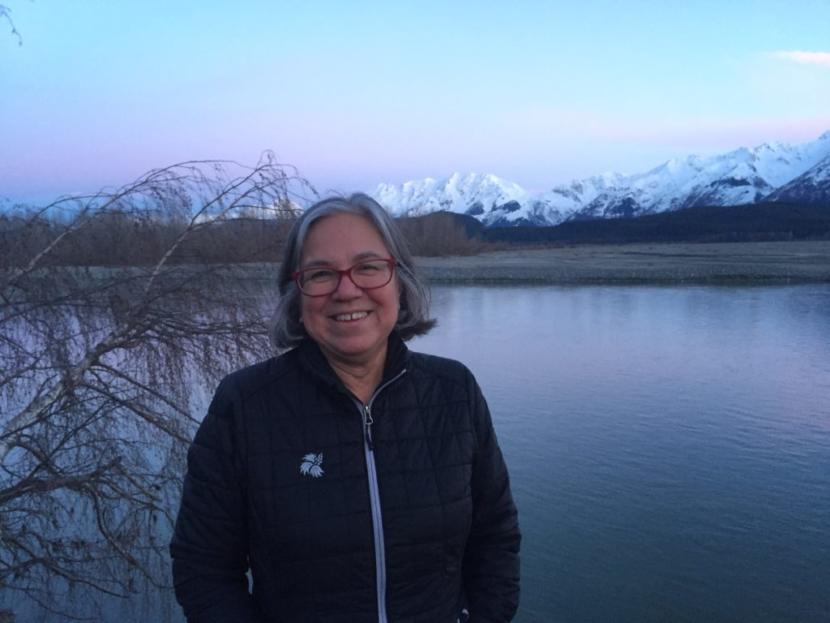
Kimberley Strong on the banks of the Chilkat River by her home.
Kimberley Strong on the banks of the Chilkat River by her home. (Photo by Claire Stremple/KHNS)

Klukwan, on the banks of the Chilkat River, has about 100 residents. Strong said she’s glad Chilkat is recognized nationally as a treasure worth protecting.

But for her, it’s not just a cause — it’s home.

“To hear that other people are now raising up and recognizing the threats that a mine could have on our life here in the valley is heartwarming. And, really, kind of scary, this recognition that it is being threatened. That experts believe it’s being threatened is something to listen to,” she said.
Kodiak goat dairy faces uncertain future amid proposed budget cuts

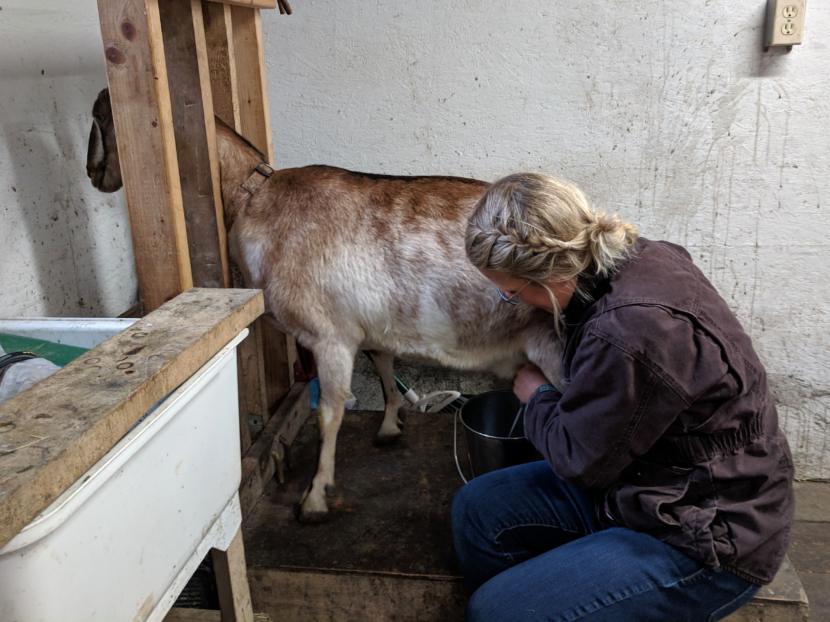
Kelli Foreman milks a Heritage Farms mother goat by hand.
Kelli Foreman milks a Heritage Farms mother goat by hand. (Photo by Kavitha George/KMXT)

Gov. Mike Dunleavy’s proposed budget would eliminate the state’s only dairy inspector, making it nearly impossible for up-and-coming dairies like Kodiak Baptist Mission’s Heritage Farms to sell milk commercially. The House passed a workaround to the issue in their version of the bill last week, but it remains to be seen whether that makes it into the final budget.

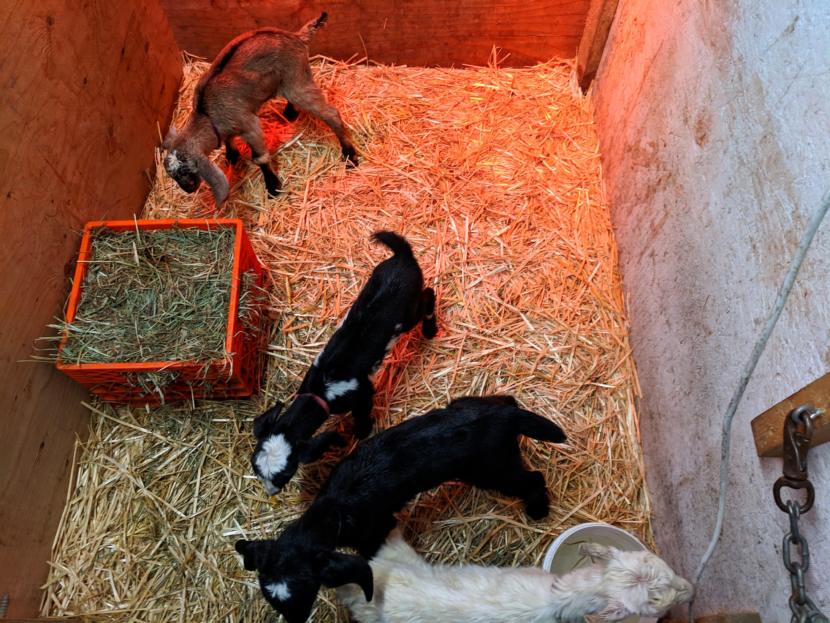
Dressed in work boots and a chore jacket, Kelli Foreman bends to milk a mother goat named Jellybean. Just across from them are four baby goats in a pen. Foreman explains that the newborn kids are bottle-fed with milk she collects from the mothers.

Spring is kidding season for Foreman’s goats, meaning the babies get first dibs on milk. But in a couple months, the mother goats will be able to start producing milk primarily for human consumption.

Continuing a tour of her farm, Foreman walks through a spotless, industrial-looking barn with an indoor milking rack and a shiny new holding tank and pasteurizer.

“This is where the magic happens,” she says with a laugh.

By summer, Foreman predicts that her brand-new automatic milkers will be able to collect about 10-20 gallons of fresh goat milk per day.

For the last two years, Foreman has been working to get Heritage Farms certified as a “Grade A” dairy, the FDA standard for farms that sell the bottled milk you can buy at a store. She says a lot of people tried to convince her that starting a goat dairy was a terrible idea, but Foreman isn’t the type of person to be easily discouraged.

“I remember having people in my life growing up that didn’t take the easy way out, that worked really hard, and those are the people that inspired me,” she says. “And we’re about the kids and families and our community, and so … let’s try it.”

Heritage Farms has been working closely with the Department of Environmental Conservation, state veterinarians and the state dairy inspector to get certified. Every month the state inspector takes samples for lab testing, and every three months they do a facility check. Heritage Farms isn’t too far off — Foreman says they’re set to be certified and ready to sell goat milk, cheese and ice cream by late May or early June.

But Dunleavy’s budget would eliminate the state’s one dairy inspector, leaving Foreman’s dairy without a lot of options for getting their milk Grade A certified.

Four baby goats mill about in a pen at Kodiak Baptist Mission’s Heritage Farms.
Four baby goats mill about in a pen at Kodiak Baptist Mission’s Heritage Farms. (Photo by Kavitha George/KMXT)

Dr. Sarah Coburn, assistant state veterinarian, said Heritage Farms is the farthest along in the certification process.

“They’re the closest, as far as their investment and planning over the past year,” she said over the phone. “They’re the closest to being permitted and going into production this year.”

According to Coburn, the effects of eliminating the dairy inspector are much wider-reaching than just forcing an end to Foreman’s endeavor. Like Havemeister Dairy in Palmer, the last certified cow dairy in Alaska, Foreman purchases her goat feed in-state from Alaska Mill and Feed. Havemeister even purchases the plastic for their milk jugs from a local plant in Palmer itself.

“Really it’s part of a bigger connection of the economy for that community,” she said. “So that’s one thing that I think there’s a bigger impact than just saying it affects that one dairy. And of course, the consumers that are actually purchasing from these dairies.”

Coburn added that other options, like bringing an inspector up from the Lower 48, are just not feasible.

“Basically if the program goes away, as things stand for them, they would not be able to operate,” Coburn said.

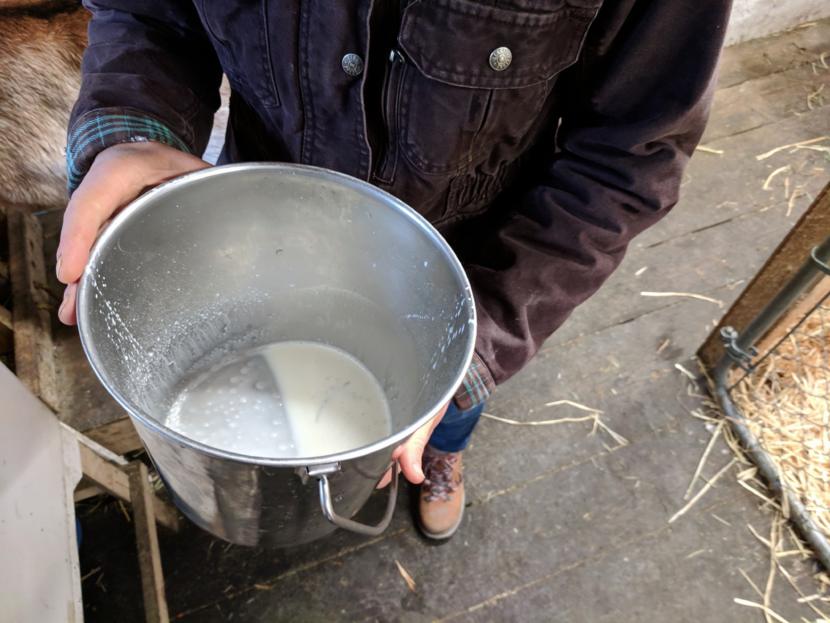
Kelli Foreman, Assistant Executive Director of Kodiak Baptist Mission, holds up a pail of fresh goat milk at the mission’s Heritage Farms in April 2019.
Kelli Foreman, assistant executive director of Kodiak Baptist Mission, holds up a pail of fresh goat milk at the mission’s Heritage Farms. (Photo by Kavitha George/KMXT)

And while she admits she was shocked when the proposed budget came out in February, Foreman said her mind went quickly to figuring out next steps, including contacting her legislators and speaking at a budget town hall in March.

“For me, the best thing to do is show, ‘Look at this, we can do it, don’t take this away from our state, we need this,’” Foreman said, adding, “Even if it’s six months, well, we did it for six months. We did it. I can at least show our kids, ‘We can do it, we did it.’”

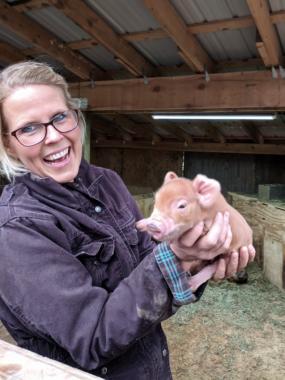
Kelli Foreman shows off a newborn piglet at the Baptist Mission’s Heritage Farms.
Kelli Foreman shows off a newborn piglet at the Kodiak Baptist Mission’s Heritage Farms. (Photo by Kavitha George/KMXT)

And that’s because for Foreman, Heritage Farms isn’t just a business. It’s a way of making sure that Kodiak is a little more self-sufficient.

“I’m not saying our microdairy tomorrow is going to be able to supply all the milk for Kodiak, but it’s a start,” Foreman said. “And that’s a big part of all the agriculture for our state. Maybe not today or maybe not tomorrow, but we really need to think towards food sustainability.”

Foreman said she’s willing to put her skin in the game to achieve that goal. But realistically, she can’t do it alone.

And it’s possible she might not have to.

Last week, the Alaska House of Representatives passed its version of the budget — including an amendment that would allow the state to continue performing inspections while a “fee-based system and fee schedule” is set up. The idea is that dairies would pay a set amount for their own inspections. But it remains to be seen whether that amendment makes it into the final budget — and even if it does, whether Dunleavy will spare it from a line-item veto.

In any case, Foreman said she’s holding off on placing an order for milk bottles until the budget shakes out.

Army Corps begins hearings on draft EIS for proposed Pebble Mine

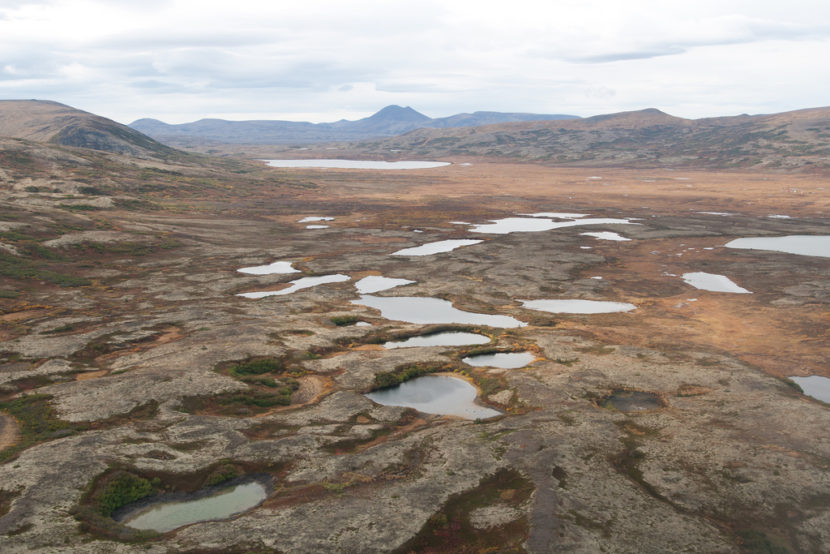
The proposed Pebble Mine site, pictured in 2014.
The proposed Pebble Mine site, pictured in 2014. (Photo by Jason Sear/ KDLG)

The U.S. Army Corps of Engineers continued its series of public hearings on the proposed Pebble Mine and the project’s draft environmental review this week.

Nondalton is the closest community to the proposed Pebble Mine site, sitting about 17 miles east.

More than 30 people attended a hearing Monday on the Army Corps’ draft environmental review of the project.  A handful of residents voiced concern about how the mine would affect fishing and hunting, as well as its proximity to Lake Clark National Park. Few spoke in favor of the project and several, like life-long resident June Tracey remained neutral on the project.

But Tracey said that residents needed an economic boost in the area as the state grapples with its fiscal crisis.

“We get all of our machines,” she said. “We have our Hondas, our boats, chainsaws, that we need gas for. We don’t have any more dog teams. We have a lot of little mutts out there. But that’s not going to help us. And with the state and the federal cuts, we’re going to be hurting.”

Another hearing was held the next day in Dillingham, the largest Bristol Bay community. Its long-standing opposition to the project was apparent.

Many of the roughly 60 people that testified during the five-and-a-half-hour meeting voiced familiar concerns about potential changes to their way of life and the environment. At times, testimony was deeply emotional.

J.J. Larson is a commercial fisherman and third chief of the Curyung Tribal Council.

“Having that up there – the mental effect that has on our people, knowing that someday that dam is going to go, and we’re going to lose our lifestyle,” he said. “It might not happen in my generation. It might not happen in my son’s lifetime or his son’s lifetime.  But it’s like living with a loaded gun pointed to the back of your head and not knowing when the trigger is going to be pulled.”

Several testifiers traveled to Dillingham from other communities. A few of them supported the project, citing the need for jobs.

The Army Corps’ Lieutenant Colonel Penny Bloedel began the closing remarks.

“Thank you for your heartfelt comments,” she said. “We do have – I’m not supposed to be emotional, but we are committed to open and transparent communication and inclusive and collaborative report…”

Later in the week, outside of Homer High School, over 100 people demonstrated against the proposed mine, chanting “Fish Forever, Pebble Never!”

Roughly the same amount of people testified inside, mostly against the project, calling the draft EIS bad science.

Those like Cook Inletkeeper science director Sue Mauger argued the Army Corps underplayed the potential impacts of the mine. Mauger focused on salmon.

“No efforts to link the impacts across life-history stages,” she said. “No consideration of local adaption to thermal conditions, unsupported assumptions about thermal effects on the aquatic invertebrates that make up a salmon’s diet. This document is incomplete and reflects a sad disregard for the very real concerns Alaskans have about this proposed project on Bristol Bay salmon resources.”

Others opposed to Pebble, like Mike Bryeli, expressed frustration and exhaustion while talking about the EIS process.

“You’ve heard it a thousand times over and over for years and years,” he said. “I mean, how many times do we have to do this? Just let this thing die, please. Let it go.”

The Corps maintains that the draft EIS was completed within the constraints of the federal permitting process. The comment period on the draft closes May 30.

State of Alaska petitions federal government to delist Arctic ringed seals under the Endangered Species Act

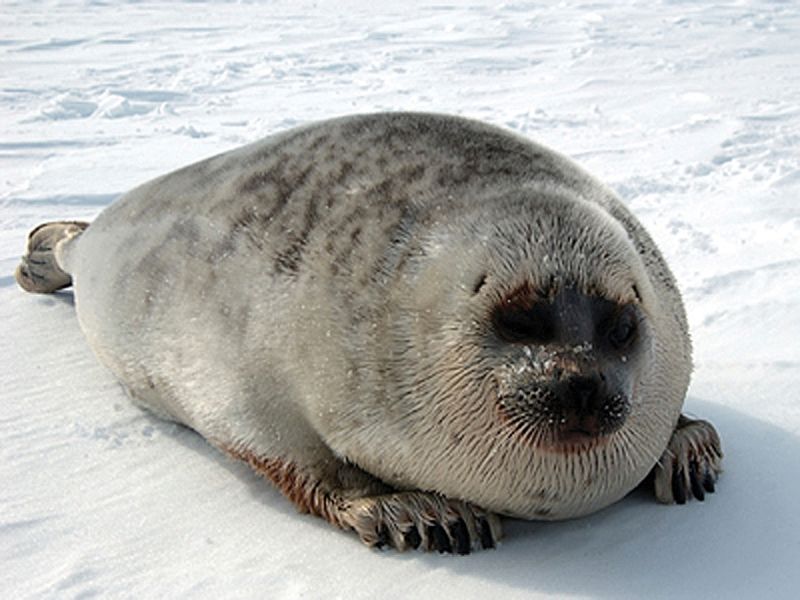
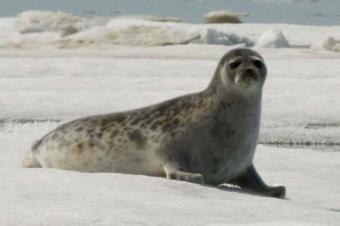
Ringed Seal
Ringed seal. (Public domain photo by NOAA Fisheries)

In the latest chapter of an ongoing debate over the status of Arctic ringed seals, the state of Alaska has petitioned the federal government to take the seals off the list of threatened species under the Endangered Species Act.

Ringed seals were added to the list back in 2012 because their sea ice habitat is expected to decline significantly in the coming years as the Arctic warms. A species can be designated “threatened” under the Endangered Species Act if it’s likely to become endangered in the foreseeable future through much of its range.

But in its petition, the state says that new research and re-analysis of prior data shows that ringed seals are doing well despite documented sea ice loss, and are likely to adapt to changing habitat conditions.

“They’re the most abundant marine mammal in the Arctic, there’s millions of them, and they’re a very resilient marine mammal as far as we can tell,” said Chris Krenz, the wildlife science coordinator for the Alaska Department of Fish and Game.

Krenz said that the “threatened” designation could create hindrances for oil and gas development, as well as for subsistence hunters.

Three North Slope entities are listed as partners in the state’s petition: the North Slope Borough, Arctic Slope Regional Corporation, and the Iñupiat Community of the Arctic Slope.

Subsistence hunting is generally exempt from restrictions under the Endangered Species Act, although the government can put regulations in place if they find that a hunt materially and negatively affects a species protected by the act. There are currently no such regulations for ringed seals, and federal government officials say there are no plans to put any in place.

The National Marine Fisheries Service — the agency responsible for threatened marine species — says that they have 90 days from when the state’s petition was filed to assess it and determine if they need to review the ringed seals’ listing.

Ringed seal
Ringed seal. (Public domain photo by NOAA Fisheries)

The petition comes shortly after an environmental group filed a notice of intent to sue the same agency for not doing enough to protect Arctic ringed seals. They’re pushing NMFS to designate critical habitat for the species in Alaska.

Miyoko Sakashita is with the Center for Biological Diversity, the group that filed the notice. She disagrees with the state’s scientific conclusions and said the evidence indicates that ringed seals stand to be negatively impacted by a continued loss of sea ice.

She added that even if ringed seals aren’t showing decline now, the Endangered Species Act should be used to protect animals before they’re at the brink of extinction.

“What it’s intended to do is protect an imperiled species early enough so that you can make sure that there’s still potential for recovery,” she said.

The state of Alaska, along with the Alaska Oil and Gas Association and other groups, have already challenged the ringed seal’s status in federal court, which ruled against them last year and kept the species protected.

State officials say that the new research and analysis outlined in their petition was not considered by the court in that prior decision.

At Iliamna Lake hearings, residents speak out on Pebble Mine

Igiugig resident Ida Nelson testifies during the Army Corps of Engineers’ hearing on Pebble Mine’s draft EIS. (Photo by Isabelle Ross/KDLG)

Situated in Southwest Alaska, Lake Iliamna is renowned for its pure water, freshwater seals and fish. Now it is the center of one of the most contentious debates in the state.

The Pebble Mine would sit 17 miles north of the lake. It would tap into large deposits of copper, gold and molybdenum. And it would operate at the headwaters of the largest sockeye salmon run in the world. For some, this spells disaster for that habitat and residents’ traditional way of life. But others say it is a chance at renewed economic vitality.

In Kokhanok, around 50 people attended the meeting on Pebble Mine, though far fewer testified. Marlene Nielsen was one of those who spoke in support of the mine proposal.

“What do we have here?” Nielsen asked. “The village council that only has five, six jobs. The school that only has maybe two or three aides. And the store, maybe two. That’s not very much economy here. We need something going here for our kids. But we also need to make sure it’s safe.”

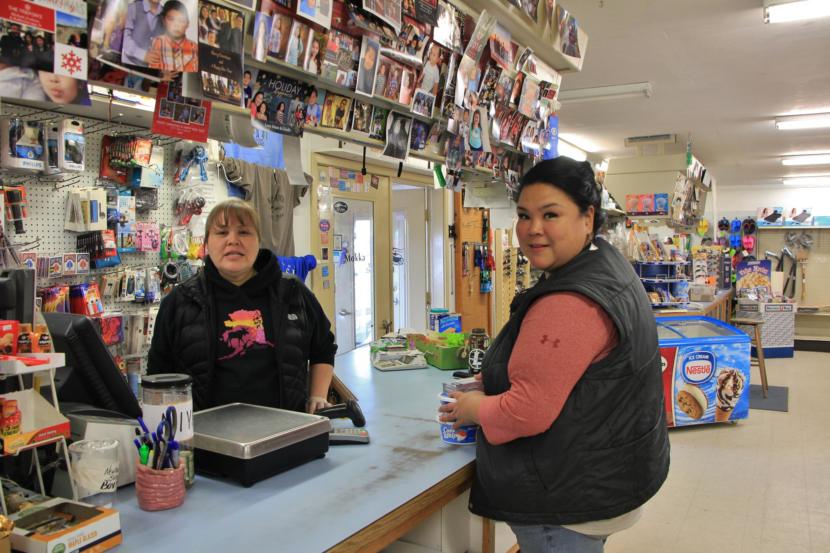
Across the lake in Iliamna, Chasity Anelon shares those concerns. She has worked as an operations coordinator for the Pebble Project for the past 10 years.

“So I’ve lived in Iliamna all my life. I have a daughter and, you know, I choose to live here. This is my home, this is where I want to be. And I am able to live here because I have a job,” Anelon said.

Chasity Anelon, right, at the Iliamna General Store. (Photo by Isabelle Ross/KDLG)

Anelon said that job allowed her to build a house and take care of her family. But she acknowledged that the issue is complicated.

“I’m just as afraid as everybody else,” Anelon said. “But I’m also willing to see the process work, and if they can prove that it can be done safe, I feel like it’s important for people in our lake area to have jobs. There’s been so many people that have left our communities because there’s no opportunities here. And when somebody has a job, and they’re able to come to work and they have pride, it shows. You can tell.”

Those sentiments were echoed at the meeting that evening in Newhalen, where the overwhelming message was that community members were struggling to find jobs. People there largely supported the mine, citing the potential for more employment.

A major argument against the development is its threat to Bristol Bay’s commercial fishing industry. But around the lake, a high unemployment rate and a low number of locally-owned fishing permits means the financial incentive of the mine often outweighs ecological risks to the fishery.

Newhalen Tribal President Henry Olympic is a commercial fisherman. During his testimony, he remained neutral on the project. But he said that, in addition to fishing, he needed to work full-time.

“Me being a fisherman from Newhalen, we don’t get that luxury of getting that help from BBEDC (Bristol Bay Economic Development Corp.) or being in the CDQ (Community Development Quota Program),” Olympic explained.

(Photo by Isabelle Ross/KDLG)

For some, Pebble provides an answer to economic stalemate. But for others, the potential for damage is unacceptable.

The hearing in Igiugig featured mainly anti-Pebble testimony. Those opposed to the mine cited threats to subsistence activities and their way of life. That included Sheryl Wassillie, who stressed the need to prioritize traditional values. In recent years, Igiugig has taken part in revitalization efforts for Yup’ik language and dance, and Wassillie worried that those efforts would be cut short.

“It’s not just about salmon or the abundance of wild animals, but us as people,” Wassillie said. “We are a resource. We belong here and we matter. I want our culture and traditions to be passed down to future generations. If Pebble goes through, it would further push our traditions and culture aside during a time when we are trying to revitalize what was taken from us before.”

Alicia Zackar is a social services worker in Igiugig. She has lived in the area her whole life. The day after the hearing, she drove around town, with one of the kids she babysits in tow.

“I think I first heard about Pebble when I was 16. I’m 26 now, so like 10 years ago,” Zackar said.

Zackar is against the mine. She said that even if it provides jobs in the short term, when the mine closes those jobs will disappear. Still, she can understand why some people support it.

“So my dad is on the fence about it. Like, he likes the idea of getting money and getting jobs. But he also is a hunter and a fisher,” Zackar said. “But we’ve gotten really loud just talking about it. It’s like, ‘Dad, these jobs are going to be gone in, like, 30 years.’ Yeah, it’s going to be good for a bit, but then they’re going to leave it like a ghost town.”

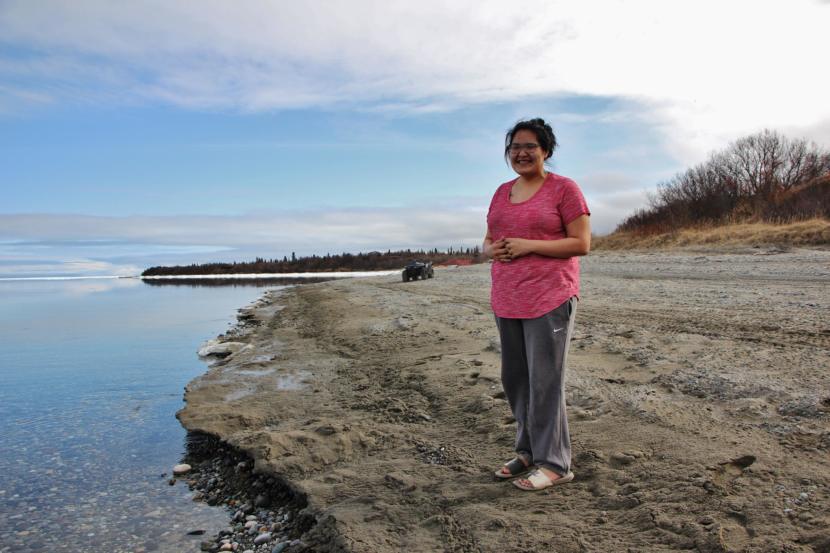
Zackar’s family lives directly by the mouth of the Kvichak River, which feeds into the lake. Walking down to the beach, she points to her family’s subsistence site, directly in front of the house where she grew up.

“My parents’ subsistence net goes — see that red blodge over there? It goes a little bit further than that,” she said. “And then we cut fish, right below my parents’ house right there.”

Alicia Zackar stands on the beach by the Kvichak River, a few feet from where she grew up. (Photo by Isabelle Ross/KDLG)

Zackar wants to raise a family in Igiugig. She said the economic gains from the mine wouldn’t be worth endangering their way of life.

“People that haven’t been here are probably going to pick pro-Pebble, because they haven’t seen how beautiful it is and what’s at risk,” Zackar said.

Throughout the hearings, people across the spectrum expressed the desire to create and maintain communities for their families to live and work. The role Pebble will play is yet to be determined.

The public comment period ends on May 30. There are four hearings left; the next is scheduled for April 8 in Nondalton.

Alaska delegation introduces bills to curb states’ bans on walrus ivory

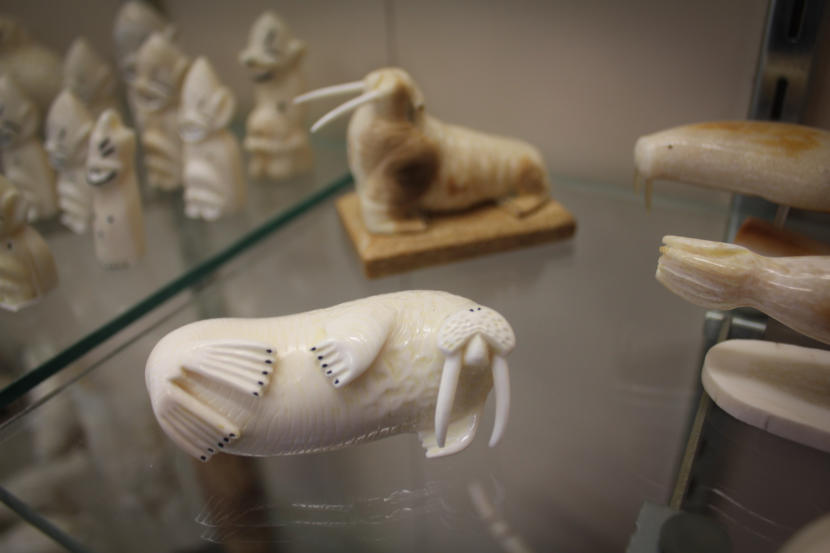
An ivory walrus on display at Maruskiya’s of Nome.
An ivory walrus on display at Maruskiya’s of Nome. (Photo by Emily Russell/KNOM)

Alaska’s congressional delegation introduced legislation in the U.S. House of Representatives and U.S. Senate to pre-empt states from banning walrus ivory, whale bone and other marine mammal products. Through these new bills, the delegation has proposed amending the Marine Mammal Protection Act.

Vera Metcalf, the director of the Eskimo Walrus Commission, said the proposed legislation is a step in the right direction.

“For us, there’s really no way to address the consequences of the ivory ban at the state level, and I’m glad they (the delegation) are moving forward with introducing this legislation that might get us moving and working more to educate the general public about what walrus ivory is to our communities, and why it is important to not include it in the ivory ban,” she said.

The need for this legislation came about when almost 10 states — Illinois being a recent example  — passed state bans on some or all types of ivory, which included the resource Alaska Native carvers use for their livelihood. The U.S. implemented a near-total ban on commercial trade of elephant ivory in 2016.

In an announcement from Alaska’s Congress members earlier this month, Sen. Dan Sullivan said these craftsmen have been attacked by “numerous states banning the sale of sustainable arts made of walrus and mammoth ivory and other marine mammal products legally allowed under the Marine Mammal Protection Act, unnecessarily coupling them with the illicit sale of poached elephant ivory.”

During a recent visit to St. Lawrence Island, local carvers told Metcalf that the inconsistency among state’s ivory bans has been negatively affecting their sales.

“I’ve heard people say, ‘Well it’s getting harder for me to sell ivory because of this fear (in) people that buy walrus ivory arts and crafts.’ I think there is fear of potential prosecution, because I think each state has different information,” she said.

The Alaska delegation says its legislation aims to end the confusion created by other states’ laws and protect Native artisans who work with ivory. Metcalf agrees more needs to be done to protect Alaska Native ivory carvers.

While these two new bills go through Congress, Metcalf said she and her working group will continue to spread the message that the walrus population is healthy and does not warrant listing under the Endangered Species Act.

The U.S. Fish and Wildlife Service made that determination in October 2017, so now the species will continue to be protected under the MMPA for Alaska Natives to harvest sustainably.

“I mean, we certainly promote non-wasteful takes, and we have been sending this message. But also, using all of what is given to us, including the ivory, is very much a part of our communities using the resource for food and ivory for making beautiful handicrafts and art,” Metcalf said.

Under current law, the secretary of the Interior is authorized to restrict the take of marine mammals if the population is dwindling, but the secretary must also have evidence to demonstrate that.

Site notifications
Update notification options
Subscribe to notifications