Subsistence

For decades, the government stood between the Unangan people and the seals they subsist on. Now that’s changing.

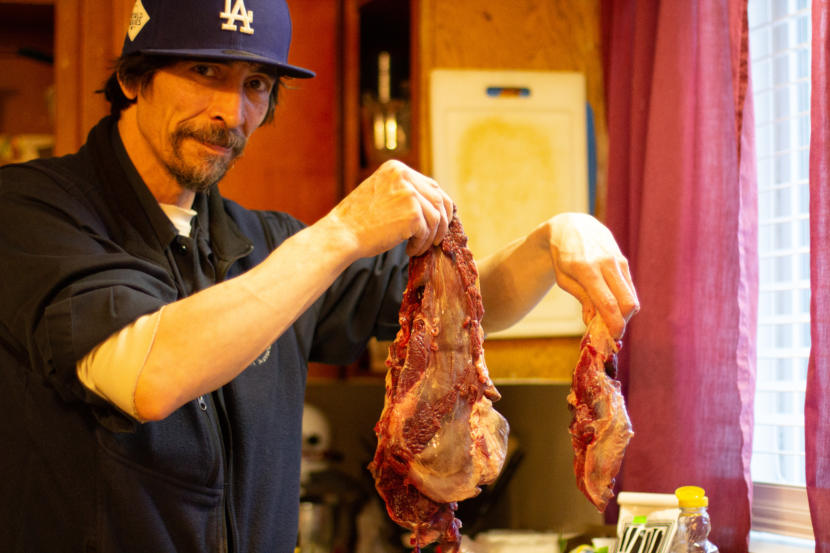
Robert Melovidov holds up fur seal meat that he’s preparing to cook in his home on St. Paul island in January. Unangan people on St. Paul like Melovidov have been pushing the federal government for more than a decade for more freedom to harvest the fur seals they share the island with.
Robert Melovidov holds up fur seal meat that he’s preparing to cook in his home on St. Paul island in January. Unangan people on St. Paul like Melovidov have been pushing the federal government for more than a decade for more freedom to harvest the fur seals they share the island with. (Photo by Nathaniel Herz/Alaska’s Energy Desk)

On the remote Bering Sea island of St. Paul, where groceries have to be barged or flown in, Serafima Edelen and her boyfriend still eat meat most nights. For the past several years, they’ve almost never had to buy it: The island and ocean provide them with an abundance of reindeer and fur seal.

“It was always nice knowing I didn’t have to go and buy any meat from the store — just because of how expensive everything is, living in the village,” said Edelen, 25. “I still refuse to move away. This is home. This is where I want to be.”

Plastic-wrapped chunks of meat fill the chest freezer in a back room of Edelen’s house. Her boyfriend shoots as many as 10 reindeer a year. And in the summer, you can find them both near St. Paul’s beaches, killing and processing fur seals in a subsistence harvest open to the island’s Alaska Native residents, who call themselves the Unangan people.

The seal harvest connects Edelen to her heritage, and to St. Paul. But it also makes a material difference to whether she can afford to live on the island, a 10-mile-wide volcanic speck more than 250 miles from the mainland.

At the island’s grocery store, it’s $6 for a pound of ground beef. A 12-ounce package of Oscar Mayer beef bologna costs $10.
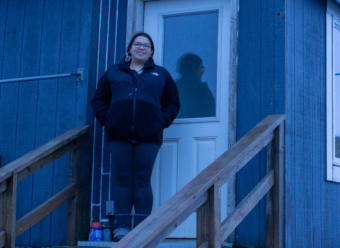
Serafima Edelen stands in front of her house on St. Paul island in January, 2019.
Serafima Edelen stands in front of her house on St. Paul island in January, 2019. (Photo by Nathaniel Herz/Alaska’s Energy Desk)

But last year, health problems kept Edelen’s boyfriend from hunting. And even though fur seals are on or near the island year-round, federal regulations only allow a 47-day subsistence harvest in the summer. Edelen’s job and other obligations left her with little time to participate.

Eventually, she had to go to the store. It felt like crossing a line, she said: “To have to break down and realize: ‘I’m out of meat. I don’t have anything to cook.’”

St. Paul’s tribal government has been petitioning the federal government to relax the regulations governing the seal harvest for more than a decade. And now, the National Marine Fisheries Service is finishing a rewrite — one that would allow seals to be taken more than 11 months a year, and loosen restrictions on which animals can be killed.

Federal managers say the proposed revisions, released in August, will make a healthy, culturally relevant food source more accessible on the island, while granting the island’s tribal government more local control. A scientific analysis accompanying the rule change says it will have no significant effect on the fur seal population.

“There is no doubt that this is an important item, culturally and nutritionally, for the communities,” said Mike Williams, the fisheries service official overseeing the rule changes from Anchorage. “This is real food security.”
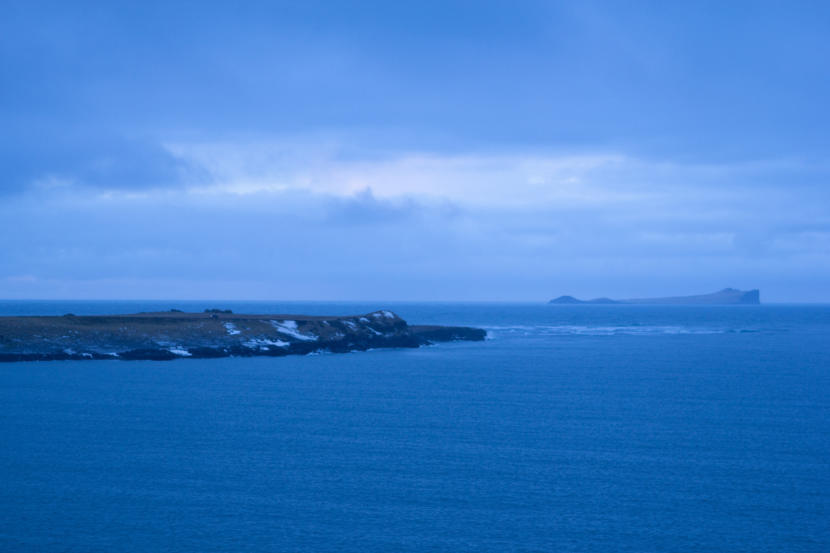
A view of Otter Island, just off St. Paul.
A view of Otter Island, just off St. Paul. (Photo by Nathaniel Herz/Alaska’s Energy Desk)

But the proposal faces opposition from the Humane Society of the United States, which has a decades-long history of activism in the Pribilofs.

The source of the organization’s concern: St. Paul’s fur seal population has been declining for years, and scientists don’t know why. Some 600,000 northern fur seals now return each summer to the Pribilofs, which include St. Paul and its sister island, St. George; that’s down from an estimated 2 million in the 1950s.

The federal government’s proposal leaves an annual 2,000-seal harvest limit in place — it’s designed to make it possible for St. Paul residents to get closer to the cap, since the current rules have had the effect of keeping harvests at far lower levels.

But it still doesn’t make sense for the government to loosen restrictions on the harvest until more is known about the population decline, said Sharon Young, the Humane Society’s marine issues field director.

“We don’t fully understand why there is a decline ongoing,” Young said in a phone interview from Massachusetts. “But there is a decline ongoing, and we’re very concerned that this is not the time to increase the number of animals that are being killed, or to use a way of killing them that is more indiscriminate.”

Some 600,000 northern fur seals, nearly half the global population, return each summer to the Pribilofs.

The U.S. government used to run a commercial harvest on the island, taking about 25,000 seals for their furs each year and sending profits to the treasury.

That harvest long depended on forced labor from St. Paul’s Unangan people — Alaska Natives originally relocated from the Aleutian Islands by Russian fur traders. After Alaska was sold, the U.S. government, for decades, compensated workers with little more than food and housing.

While the commercial harvest ended in the 1980s, the government left behind a legacy of tight regulation of the subsistence harvest — which has effectively limited it to no more than 400 seals a year for the past decade.
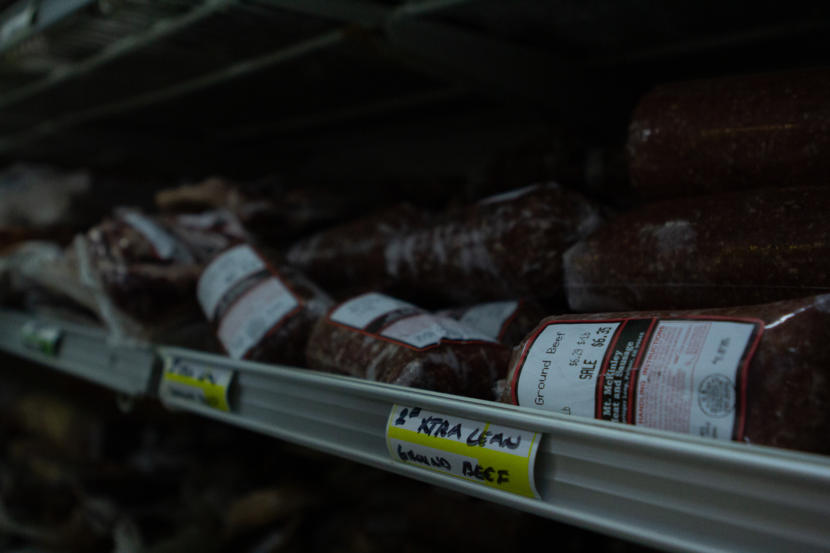
Ground beef at St. Paul’s tribally run grocery store on Wednesday, Jan. 23, 2019.
Ground beef at St. Paul’s tribally run grocery store on Wednesday, Jan. 23, 2019. (Photo by Nathaniel Herz/Alaska’s Energy Desk)

Many of St. Paul’s 500 residents don’t have time to participate because the harvest is limited to seven weeks in mid-summer — when they’re working as commercial halibut fishermen, earning cash to spend on groceries in winter.

The tender meat from the fur seal pups, known as laaqudan, is a favorite of Unangan people on St. Paul. But under the current federal regulations, the pups are off-limits year-round.

Some St. Paul residents still risk criminal penalties by harvesting them illegally, which in the past has drawn federal enforcement agents to the island. Under the proposed revisions, harvesting pups would be allowed.

Tribal leaders leaders say it doesn’t make sense for the seal harvest to be controlled by federal managers in Anchorage and Washington, D.C., when Unangan people live on the island and have a long history of working with the animals. The tribe has its own ecosystem conservation office that does subsistence research and runs the harvest in accordance with federal rules, under a co-management agreement with the fisheries service.

Sitting in the cab of his pickup truck on a dirt pullout overlooking the Bering Sea, Amos Philemonoff, the tribal president, fumed at the government’s restrictions, and the slow process of changing them.

“The harvest of fur seals is ingrained in us out here. It’s a part of who we are,” Philemonoff said, as a sea lion swam by in the ocean below. “To be severely restricted in expressing who we are is just a darn shame. We want nothing more than to live off the land, live off the sea. But unfortunately, we’re regulated out of that.”

‘A sacrifice a lot of guys can’t make’

When the Pribilofs were first occupied by the Russians, explorers described St. Paul’s beaches as so covered with marine mammals that they looked golden from the sea. They could hear the sound of the seals through the fog.

The Pribilofs were uninhabited until Russian colonists were first drawn there in the late 1700s. But Unangan oral traditions hold that they had discovered the islands long before, and used them as hunting grounds.

Before colonizing the Pribilofs, the Russians swept down the Aleutian Island chain in search of furs to sell to Asian markets. They found the Pribilofs while searching for seals to keep supplying those markets, after their harvest of Aleutian sea otters reduced the population to near-extinction.
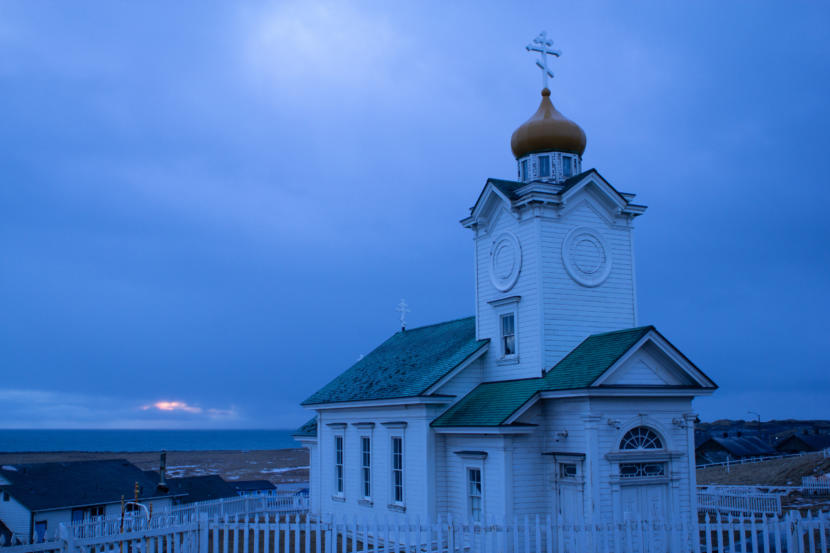
The Russian Orthodox church on St. Paul island, a legacy of the Russian colonization of the Pribilofs.
The Russian Orthodox church on St. Paul island, a legacy of the Russian colonization of the Pribilofs. (Photo by Nathaniel Herz/Alaska’s Energy Desk)

The ensuing commercial seal harvest in the Pribilofs lasted 200 years and depended on the Unangan people, who were forcibly resettled on the islands and conducted the harvest under Russian, then American management. The relationship between the managers and the Unangan people evolved over time, but through the start of World War II, the power dynamics were stark. One government agent, in a 1916 report, wrote that St. Paul’s residents were “living in actual slavery,” under the “immediate control and direction of the United States government.”

Unangan workers were paid largely in goods and services, not cash. The government controlled the distribution of food; only heads of household could pick up groceries at the store. Federal officials tried to pressure Pribilof men out of marrying women from the Aleutian Islands. Visits to the islands were restricted through the 1960s.

The commercial harvest continued through 1984, with about 25,000 seals taken on St. Paul each year. It ended when the U.S. Senate, under pressure from animal welfare groups, failed to renew an international treaty that governed the harvest.

At the time, seal meat was a staple of the Unangan people’s diet: Each St. Paul household ate about 13 pounds a week, according to a 1981 estimate. But when the federal government authorized Pribilofs residents to continue taking seals for subsistence, the regulations largely modeled the harvest on the commercial one, without accommodations for Unangan culture or the Pribilofs’ transition to a cash economy driven by commercial fishing.

Today, the St. Paul subsistence harvest looks much the same as it did 30 years ago. Tribal members meet in the mornings, then drive out to a spot above one of the rookeries where seals have hauled themselves out of the ocean.

Several men will sneak up on a group of seals, cutting off their path to the water, then herd the animals into the uplands — slowly, to keep them from overheating, which taints the meat. The seals are stunned with a long, wooden club, then killed with a cut to the heart and skinned. Participants can take meat home to process and freeze themselves, or deliver it to elders, friends and family.

The basic framework of the system works, according to tribal members. But the strict federal regulations surrounding present several unneeded obstacles, they argue.

Timing is a central problem.

On St. Paul, the subsistence season is only open between June 23 and Aug. 8, posing a dilemma for the island’s many commercial fishermen. Halibut fishing is one of the best cash-paying jobs available on St. Paul, but the peak season comes during the summer. And a single day off the water can cost a boat as much as $30,000, said Philemonoff, the tribal president and a commercial fisherman.

Philemoneff describes fishing as his means of paying for the expensive groceries that replace subsistence foods when they’re off-limits. If it’s the middle of winter and you need cash to buy food at the store, you can’t get it by fishing then, he said — the season is closed. That leaves the summer.

“So, the seal harvest is a sacrifice that a lot of guys just can’t make,” he said. “I’ve got my wife — she goes out and gets us a few seals every year from the harvest. But I can’t expect her to get a dozen for me and my family to put away for the winter.”

Because the harvest is typically held Thursdays and Fridays, Edelen, who works in accounting for the tribe, said she has to take a full day off to participate. She can only take so much time away from her job during the summer, which is a busy time of year. And sometimes, she’s arrived at the tribal office only to have the harvest canceled because too few people show up.

Edelen values the tradition of the seal harvest, she said, and it’s frustrating that it’s scheduled for such a short window.

“I’m stuck. I’m needed at my desk. There’s no one to replace me. I can’t go,” she said. “It’s kind of hard to accept. But I have to keep the roof over my head.”

The tribe also wants more latitude in the harvest timing because of the potential for climate change to affect when seals return to the rookeries each summer. St. Paul residents are particular about the size of the seals they harvest, and they don’t always arrive at the same time of year.

“I’ve seen, after the deadline, up to 1,500 animals that are perfect size, just, bam, show up. And you’re like, ‘Man, where were those?’” said Robert Melovidov, a tribal council member who was foreman of the subsistence harvest last summer. “We have no control over when spring is going to start and when winter is going to start. And those play a very big role in when the animals are here.”
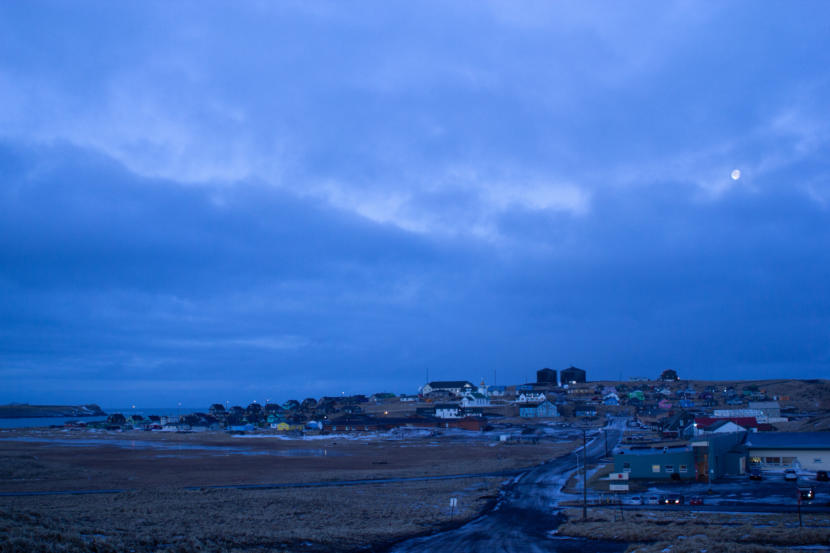
The village of St. Paul.
The village of St. Paul. (Photo by Nathaniel Herz/Alaska’s Energy Desk)

The new rules would also allow tribal members to hunt fur seals with guns between January and May. At that time of year, the animals aren’t hauled out on the rookeries, but individual seals can occasionally be spotted swimming just off shore. Tribal members say the swimming seals could be a source of fresh meat during the winter and spring — but the current regulations make it illegal to hunt the animals during those months.

Also banned year-round is harvesting the laaqudan, or seal pups. The Unangan people describe the taste of pup meat with longing, paired with deep frustration that they can only get it if they risk of being caught.

“If I hear somebody say there’s laquudan, I’m in line right away,” said Edelen. “And I will be that greedy person that grabs a little more than, maybe, I should.”

Elders, at a recent afternoon gathering for tea and cookies at St. Paul’s medical clinic, recalled threats and intimidation as part of the federal government’s enforcement efforts. Families would hide traces of the pups by burning their bones, said Zee Melovidov, 70.

“I remember my mom telling me: ‘Don’t throw ‘em out! Put ‘em in the stove,’” said Melovidov.

Both tribal leaders and federal officials said the ban on harvesting pups is a problem because it happens anyway, and unlike the organized and regulated summer harvest, government and tribal scientists get no data on the number of pups killed. If people are hunting hurriedly or while it’s dark to avoid detection, they’re are also more likely to lose track of an injured pup, or to accidentally kill a female — which has a far more negative effect on the overall population.

“A legal, monitored, reported harvest allows us to ensure that it’s sustainable, it’s meeting conservation goals and it’s being responsive to the fact that fur seals are a public resource,” said Williams, the fisheries service official. “Everything’s better in the light of day.”

‘A public trust resource’

Tribal leaders said the government did not actively police the pup harvesting ban until about a decade ago, when authorities discovered a number of uneaten carcasses left on a beach. That prompted a crackdown, with enforcement agents making trips to the island, which in turn pushed the tribe to work more closely with the federal government to change the regulations.

The tribe’s first request came in 2007. After several years of back and forth, the fisheries service formally opened the revision process.

After the release of a draft environmental review in 2017 and the proposed revisions last year, tribal leaders hoped there might be a legal pup harvest last fall. And after more than a decade of back and forth, Philemonoff, the tribal president, said he’s left with a sense that the federal government is not respecting the tribe’s sovereignty.

He also objects to one idea the fisheries service is considering as part of the revised regulations: hiring an independent contractor to make sure St. Paul residents are following the rules.

The Unangan people have been hunting fur seals for thousands of years, and it would be “insulting” to have the harvest monitored by someone who’s not from St. Paul, Philemonoff added.

“I think we’ve got pretty humane means of harvesting our subsistence resources here on the island,” he said. “And we don’t do it in a wasteful manner.”

Williams said he’s sensitive to the needs of the tribe and the importance of access to subsistence foods. While he works in Anchorage, he lived on St. Paul’s sister island, St. George, for three years, and he still travels to the Pribilofs regularly for research. At an interview last month, his forearm sported a scar that a fur seal pup bite inflicted last summer.

Williams has been working on the rule change since the process started in 2007. He said the he, too, is frustrated about how long it’s taken.

“I would have never predicted it would take 10 years to get through the process — to come to agreement on fundamental issues related to people on St. Paul wanting to eat,” he said.

But, Williams added, the federal government’s obligations are complicated by the seals’ precarious and protected status.

There were an estimated 2.1 million fur seals in the Pribilofs in the 1950s. Today, the population is one-fourth of that and designated as “depleted.” Federal scientists estimate that the number of fur seals born on St. Paul — home to the vast majority of the Alaska population — has been falling 4 percent a year for two decades.

There’s no scientific consensus on the cause of the decline. Researchers, and some St. Paul residents, have eyed industrial-scale fishing in the Bering Sea that targets a species called pollock — one of fur seals’ primary foods — but that link has not been definitively established.
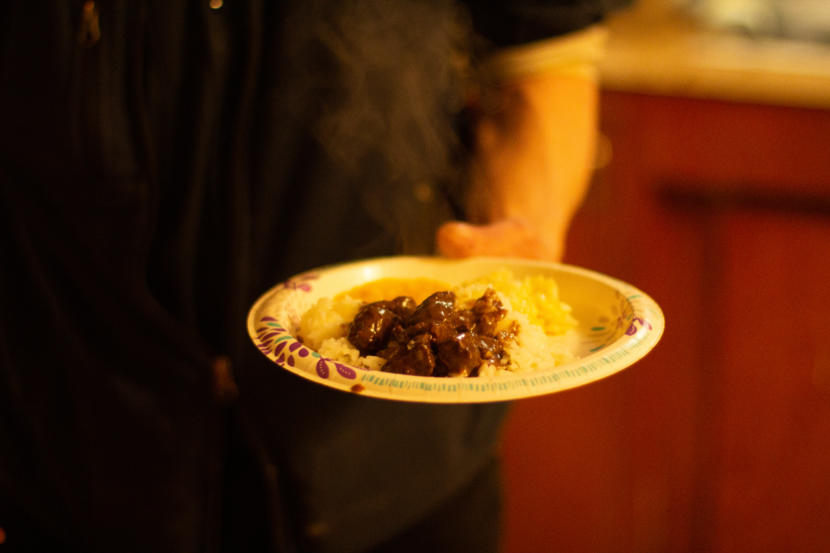
Robert Melovidov holds a plate of fur seal and rice.
Robert Melovidov holds a plate of fur seal and rice. (Photo by Nathaniel Herz/Alaska’s Energy Desk)

The decline, and the uncertainty about its cause, meant the fisheries service had to be especially careful in its drafting and justification of the rewritten harvest rules, Williams said.

The agency’s actions are being carefully scrutinized by the Humane Society, which is concerned about the fur seal population’s overall health, said Young, the organization’s marine issues field director.

The group’s involvement in the Pribilofs dates back more than 45 years, to when it sent an observer to document what it called the “brutality” of the commercial harvest.

Young said she hasn’t seen a “strong justification” for the proposal to change the subsistence regulations — though she acknowledged that she’s never been to St. Paul or engaged its tribal leaders in direct dialogue. Broadly, Young said, her organization’s Pribilofs advocacy is part of its mission to ensure that wildlife management is “humane and sustainable.” In its nine-page formal comment letter to the fisheries service, the group called the government’s proposal to deregulate the subsistence harvest “impermissibly risk-prone.”

“This is a public trust resource. All of the marine mammals of the United States are the property of all the citizens of the United States,” Young said. “The harbor seals here in Massachusetts are not simply the property of the citizens of Massachusetts, any more than the fur seals are the property of the folks in the Pribilofs on whose islands they breed.”

The Humane Society went to court in the 1990s in a failed effort to try to limit the harvest of the Pribilofs’ fur seals; Young said her organization won’t decide on its next steps until it sees the final version of the new rules.

Williams acknowledged that more seals will be killed if the proposed rule change is adopted. But the fisheries service, supported by an 11-page statistical analysis, said in its proposal that even harvesting all 2,000 seals allowed under the cap will not have “significant, negative population consequences,” whether those seals are juveniles or pups.

That’s largely because of the way the seals reproduce. The harvest is restricted to male seals, and because one male can breed with as many as 100 females in a single summer, fewer males are needed to sustain the overall population.

The male pups are even less important from a population standpoint, according to the fisheries service, since the pups already have a higher mortality rate: More than half are predicted to die before they turn two years old.

“We are confident in the biological consequences even if the community needs that full 2,000 animals for food security and subsistence. That is still safe for the population,” said Williams. He added: “The potential impact on the population is barely detectable.”

Williams said he hopes the proposed rule change can take effect in time for St. Paul to harvest pups before the end of 2019.

Residents are excited for year-round access to fresh meat, said Philemonoff, the tribe’s president — in part because it’s much healthier than the processed food at the store.

Philemonoff said he’s a “case in point.” He has diabetes, high blood pressure and high cholesterol, and rather than eating frozen food from the store, he said he’d like more fur seal. His favorite is when it’s cooked in a pot roast, with gravy, over rice or potatoes.

“If I got back to a totally traditional diet,” he said, “I probably wouldn’t have half the issues I have right now.”
Predicting marine heatwaves can have economic implications

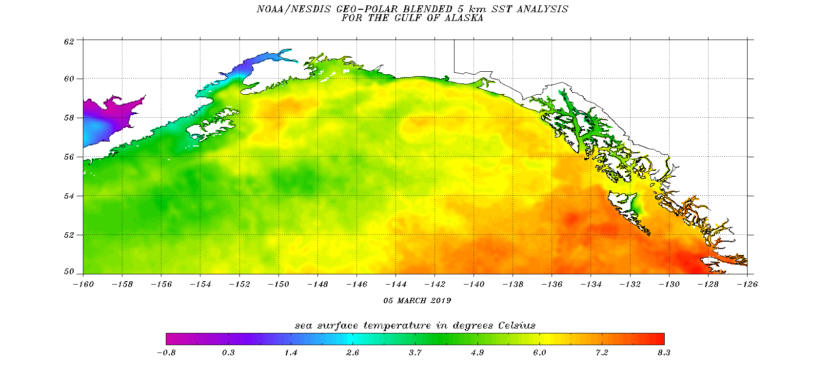
Sea Surface temperature map from the National Oceanic and Atmospheric Administration.
Sea Surface temperature map from the National Oceanic and Atmospheric Administration. (Contour chart courtesy NOAA)

The Gulf of Alaska is once again experiencing a marine heatwave. This follows the infamous warm-water event known as “the Blob,” that formed back in 2014, which scientists have tied to seabird die-offs and declining Pacific cod stocks.

Researchers want to predict when and where the world’s oceans will heat up, but there are economic implications to forecasting the future.

Scientists around the world are working to understand the impacts of marine heatwaves as they become more common. They also want to be able to predict when the heatwaves will happen.

“If I gave you this information about the future, what would you possibly even do with it?” research scientist Alistair Hobday said. “And people’s first reaction is, ‘Nothing. I don’t know what I would do.’”

Hobday works with Australia’s Commonwealth Scientific and Industrial Research Organisation. Hobday said the predictive models for marine heatwaves are about 60 percent accurate currently, slightly better than a flip of a coin.

He wants to boost that number to 80 percent, and he said marine heatwave forecasts have practical applications.

“In Australia, we do forecasting for the salmon aquaculture industry. If you get information that there is going to be a heatwave, you might choose to harvest your fish early. You might choose to provide more oxygen directly by aerating the water so that it has more oxygen in warm water,” he explained. “You might choose to move your cages to a slightly cooler part of the coast.”

Here in Alaska, the state’s Department of Fish and Game wants to provide more predictability in one of Alaska’s most valuable fisheries. Fish and Game biologist Richard Brenner is working to use sea surface temperatures in the Gulf of Alaska to predict when sockeye salmon will return to their natal streams.

“With warmer water temperatures, sockeye salmon sometimes have a difficult time finding adequate prey items,” Brenner said. “Their range where they would they find those prey items can be restricted, and it takes them longer to feed and to sexually mature and therefore return to their natal spawning areas in Cook Inlet and elsewhere.”

Brenner said accurate run timing predictions would help Fish and Game better manage sport, subsistence and commercial harvests, but processors and fishermen may also benefit.

Nate Berga is the plant manager for Pacific Star Seafoods in Kenai. Berga explained that Pacific Star typically purchases all the packaging and equipment it needs before the season begins. It also hires roughly 250 workers that need to be fed and housed.

Run timing predictions could allow Pacific Star to purchase supplies as it needs them and hire those employees in stages, significantly reducing the upfront financial cost every season.

“You’re sitting there waiting for the fish. People get discouraged, and they may want to leave,” Berga added. “That’s happened some seasons, where crew starts to go and all of a sudden fish starts to come in late, and now you don’t have an adequate crew size to handle the volume.”

Berga added that sockeye runs in northern Cook Inlet have been returning late in recent years. Fish and Game’s work may also allow sockeye managers around the state to provide more opportunity if they know a run is late.

Sockeye salmon delivered in Bristol Bay. (File photo by KDLG)

“I think if Fish and Game knew what was coming and felt pretty certain about that, my wish list would be that they would let us fish instead of letting all of the fish go up the river and we’re on the sideline watching that happen,” Berga said.

However, similar temperature-based forecasts have caused tension elsewhere.

Maine’s lobster fishery kicks off every summer as warmer waters cause the valuable crustaceans to molt. But a marine heatwave in 2012 caused the lobster population to shed their exoskeletons early, throwing a glut of lobster onto the market.

Annie Tselikis is the executive director of the Maine Lobster Dealers’ Association. She said the lobster supply chain wasn’t ready and prices dropped.

“So the Gulf of Maine Research Institute tried to time the molt so that they could say, ‘OK industry, this is when you should expect this product to arrive at your shores,’” she explained.

Researchers at the Gulf of Maine Research Institute thought they were providing a service to the industry, but Tselikis said grocery and restaurant wholesalers began using those predictions to haggle for lower prices.

“They just saw a report that said, ‘well the quantity is going to be high and the timing is going to be later, and so why would I buy lobster from you right now? Why wouldn’t I wait and wait for you to get me a better price?’” Tselikis explained.

After pressure from lobster dealers and fishermen, the research institute stopped publishing its work in 2017. It will be a year or more before Fish and Game decides whether it can reliably predict sockeye run timing in Cook Inlet on a day-to-day basis.

Those like Berga say the tool would benefit everyone in the sockeye industry, but he said processors and fishermen would likely wait a few years before hedging any bets on those predictions.

After all, he said, Mother Nature has been known to throw a curveball or two.

Storms erode Bering Sea ice pack; caution is urged

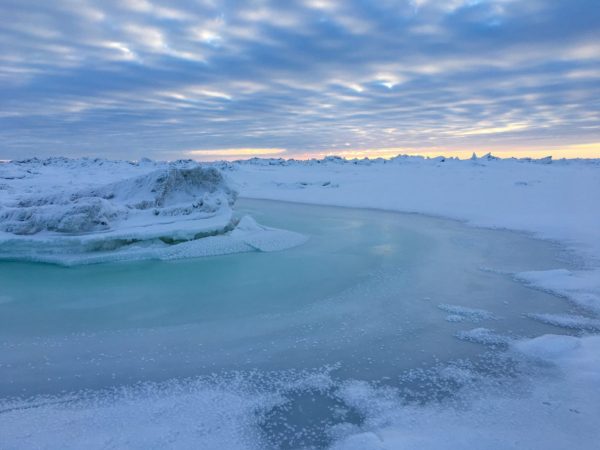
Sea ice near Nome on Jan. 29, 2018. (Photo by Zoe Grueskin/KNOM)

Winter storms and blustery weather buffeting the Bering Sea this month have reduced sea ice coverage by almost 25% since late January. That’s according to climate specialist Rick Thoman.

Thoman works for the Alaska Center for Climate Assessment and Policy (ACCAP) at the University of Alaska–Fairbanks. He says in the last two weeks, more areas of open water have popped up all around Western Alaska.

“As of February 10th, we are seeing significant areas of open water throughout the Southern Norton Sound, as well as areas on the north side of St. Lawrence Island and even on the south coast of Chukotka, west of Provideniya,” Thoman said. Sea ice is typically solid and stable this time of year, but Thoman says even in areas where there is ice, much of it is shifting.

The National Weather Service has issued winter storm warnings for multiple zones within Western Alaska over the last few days, including St. Lawrence Island, the Norton Sound coast near Nome, and Unalakleet. Thoman says sea ice could re-form along the Southern Seward Peninsula Coast faster than in some of the other affected areas.

“If we get through this storm that is in progress currently with decent ice conditions, then we are probably okay,” Thoman said, referring to coast near Nome. “But it looks like a different situation in Eastern Norton Sound, where there is much less ice, and that’s going to take quite a while to form. Might not be much happening as far as crabbing in those areas, same with hunting out on the ice for the Bering Strait communities.”

Thoman adds that in Shishmaref, variable ice conditions could make subsistence hunting on the ice very challenging for the rest of February.

Gay Sheffield works for the marine mammal advisory program, engaging with many whaling communities and hunters in the Bering Strait region. In terms of how subsistence hunting could be impacted by the current sea ice conditions, Sheffield says:

“It’s safe to say our resourceful harvesting communities will take advantage of any conditions… open water isn’t necessarily a bad thing,” Sheffield said.

Looking further north, Thoman says subsistence hunters will have to work around open water, a lack of thick sea ice, and moving ice ridging together.

“Even southern Kotzebue Sound is seeing some open water, as well, and that is really surprising,” Thoman said. “That water is much shallower, and that ice ought to be thoroughly stable here by the time we get to the middle of February — but not this year.”

For residents of Nome and other Bering Strait communities, Thoman recommends waiting for the storm to pass before going back on the sea ice.

“Certainly, if it’s possible, (you) might not want to be out on the ice over the next couple of days until this storm blows through and we see things start to settle down,” Thoman said. “We will have a couple of days of colder, not-so-stormy weather coming up, so while we might not see much in the way of sea ice growth, (we) should see things stabilize at least a little bit.”

As sea ice extent changes dramatically in the Bering Sea, Thoman says it is always helpful to be vigilant and to report your observations. Alaskans who want to share what they see with professional weather observers can contact the local environmental network (LEO).

A Brazil dam accident sparks questions over the safety of Donlin’s tailings dam

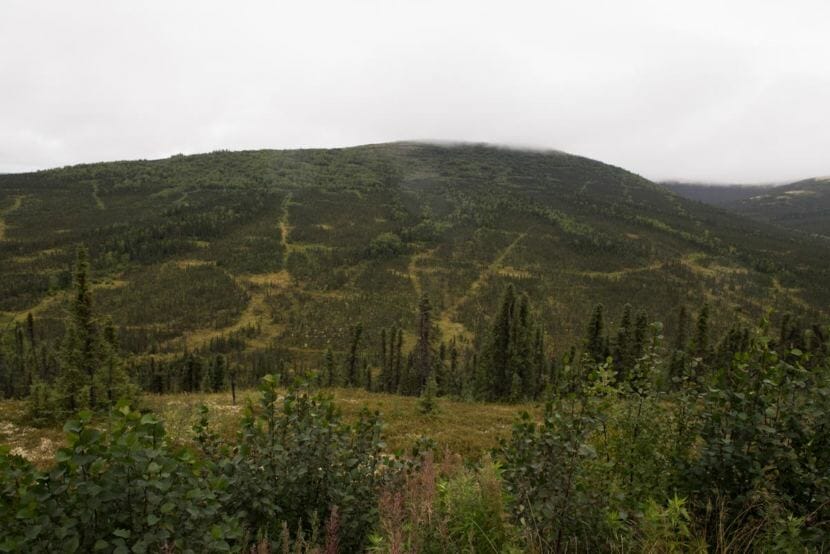
The proposed mine could be one of the biggest in the world — if completed. (Photo by Katie Basile/KYUK)

A tailings dam collapsed last month in Brazil, killing more than a hundred and fifty people. That accident raised fears among some residents in the Yukon-Kuskokwim Delta about the safety of the tailings facility and the dam that Donlin Gold plans to construct for its large gold mine. But Donlin says its design is much safer than the one that collapsed in Brazil.

The dam collapse in Brazil is a nightmare for the communities nearby. Even after the dam is fixed, residents will have to deal with decades of contamination. Articles about that accident made the rounds on Facebook in the Yukon Kuskokwim Delta.

“I watch the film, I watched the flooding, I watched the number of deaths and destructions, and it just sent fear into me because what if that happened and it could so easily happen [here],” said Beverly Hoffman, a Bethel resident who has opposed the Donlin mine for years. In her eyes, this latest disaster is just another example of why the mine shouldn’t be built.

Donlin wants to build one of the world’s biggest gold mines in one of the most remote parts of Alaska. The mine site is 10 miles from Crooked Creek, a village with a population of roughly 100.

The mine site also sits on a tributary of the Kuskokwim River. The river is the biggest food source for the Y-K Delta, where most people rely on subsistence.

And part of that mine would include a tailings dam that would hold the chemical-laced waste forever.

Donlin Gold spokesman Kurt Parkan says the tailings dam the company has planned is safe.

“We want it to be safe, we want to protect the environment, we want it to be absolutely the safest that we can do,” Parkan said.

How mines store waste is always a controversial subject, because that waste never disintegrates. The chemicals carry serious health consequences if released into the water and ground.

But there are a few major differences between the dam in Brazil and Donlin’s proposal. One is the actual design.

The Brazil dam used a design called an “upstream” tailings dam. That type is the cheapest and incorporates the tailings into the design.

Donlin is using what’s called the “downstream” method. It’s more expensive and is considered the safer design among mining experts. The dam is built with rock, instead of using tailings as part of the materials to build the dam. Parkan says Donlin’s design goes another step further..

“Considering the geography and the location and the type of the project, we have included the synthetic liner that’s not required. We’ve also included what we call dry closure which is the draining of the water so that the remaining is dry and covered by rocks and soil,” Parkan said.

Donlin’s proposed tailings dam will hold 412 million cubic meters of tailings, 32 times the amount of the Brazil mine. But the Donlin tailings will look like wet clay — never completely dry.

A Montana-based nonprofit has publicly criticized Donlin’s design in public comment. They think Donlin should use different methods that will dry out the tailings completely and then stack them within the dam. But those methods are even more expensive that Donlin’s current design.

Donlin already has to invest a lot of money into building the gold mine — more than $6 billion. Parkan says he “can’t answer” whether the more expensive methods preferred by the nonprofit were too cost prohibitive.

“There’s so many factors that go into operating the mine,” Parkan says.

The Army Corps of Engineers already signed off on Donlin’s design after its lengthy environmental review that finished last year. But Donlin still has to go through its dam safety certification with Alaska regulators. That will take two years. The state is not required to include the public in the process.

With spring whaling around the corner, sinew thread makers are hard at work

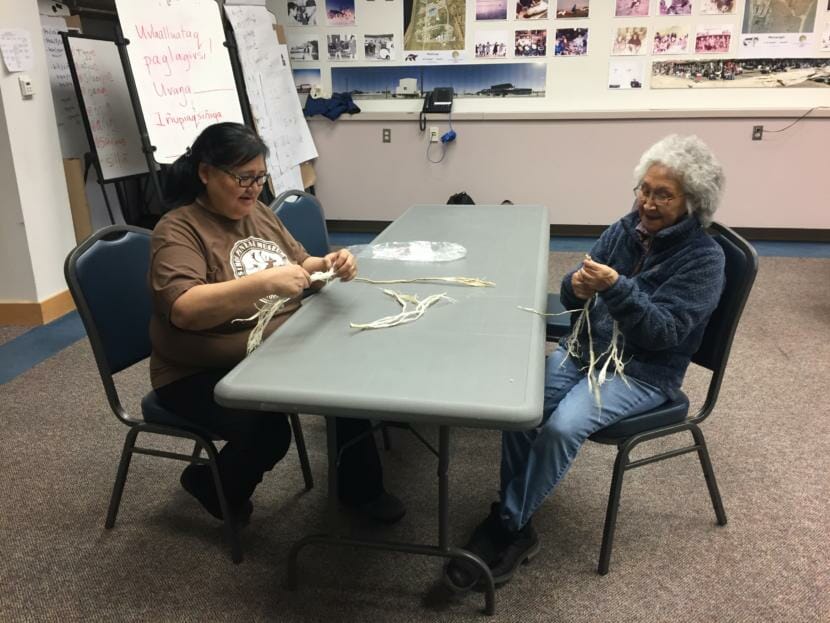
Diana Martin (left) and Nancy Leavitt (right) at the start of an ivalu workshop, where people can come learn how to make thread from caribou sinew. Feb. 2, 2019. (Photo by  Ravenna Koenig/Alaska’s Energy Desk)

In Utqiaġvik, spring whaling is still about two months away, but preparations are already in high gear.

That includes making a traditional thread called “ivalu” from caribou tendons, which are used to sew together the sealskin boats that whalers take out on the ice.

Diana Martin was the first to arrive at the Iñupiat Heritage Center for an ivalu workshop that would go on for most of the day. She’s a curator at IHC and led the way back to the artifact storage area, where she keeps the sinews she’s working on.

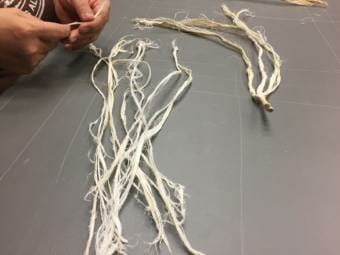
Diana Martin splits caribou tendons. Eventually the split strands will be made into a braided thread used to sew together the sealskin boats that whalers take out to hunt the bowhead whale. Feb. 2, 2019. (Ravenna Koenig/ Alaska’s Energy Desk)

“I have my sinews on the floor because they need to stay cool,” she said, taking several caribou tendons out of a plastic bag.

The work actually started months ago — collecting tendons from family members who brought home caribou.

Then they had to be dried outside in the cold for several weeks. Now they almost look like stalks of a plant: beige and kind of stringy. They crunch when you split them apart.

After they’re split, the strands will be braided into thread.

This whole process takes a ton of time and energy. One skin boat can require over 50 tendons. And some years there are a lot of boats to make thread for.

“At one time there was 17 … that were sewn in one spring,” remembered Martin.

Five of Martin’s 12 siblings are whaling captains, so for the past two decades she’s had her hands full almost every year making sinew thread for their skin boats. She also lends a hand to other captains when they ask her.

She was one of the teachers at the workshop. The other was Nancy Leavitt, an elder and a whaling captain’s wife.

Flora Patkotak, who attended the workshop led by Diana Martin and Nancy Leavitt, holds a braided thread made from caribou sinew. Feb. 2, 2019. (Ravenna Koenig/ Alaska’s Energy Desk)

Workshops like this one have been held for the past few years to teach those who are interested in how to make the thread.

“We learn how to split the sinew, we learn how to clean it, for the ladies who would like to learn,” said Leavitt.

Leavitt said the splitting stage is especially difficult because the tendons are tough. Sometimes it takes two people to pull them apart.

“It builds up your muscles,” said Leavitt. “It’s like you go to the gym, except your arms work a lot and your feet work a lot.”

That raised the question: How do your feet work?

“Like this,” said Leavitt, stepping on one part of the tendon and using her arms to work on splitting a part of it away.

She actually enjoys the work, in part because it’s so all-consuming.

“Everything just falls into place,” she said. “The problems, the stress, the thoughts you have. Most of them just disappear.”

And all the effort pays off when whaling crews get home safely with a new season of whale to feed the community.

So far, seals are adapting to shrinking sea ice

Biologist Lori Quakenbush monitoring arctic marine mammals.
Biologist Lori Quakenbush monitoring Arctic marine mammals. (Photo by USFWS, permit MA220876-1)

Ice seals thought to be most affected by the disappearance of Arctic sea ice seem to be doing well, according to data presented at the Alaska Marine Science Symposium last week.

The two species of ice seals that were declared “threatened” under the Endangered Species Act are, so far, doing well with less sea ice.

“We’re seeing fat seals,” said Lori Quakenbush, a wildlife biologist with the Alaska Department of Fish and Game’s Marine Mammals Program. “They are reproducing earlier than they have in the past, which says they are getting enough nutrition at this point to grow quickly and become reproductive at an earlier age.”

Quakenbush studies marine mammals and monitors their condition. She said that so far, the evidence indicates that ice seals are getting plenty of food.

“We’re looking at stomachs and we’re seeing pretty similar diets to what they have done in the past. So we’re not seeing those big changes either. They’re still eating arctic cod. They’re still eating saffron cod,” said Quakenbush.

Bearded and ringed seals were listed as “threatened” because the Arctic is warming so fast that their ability to use sea ice to raise young could all but disappear by 2100, setting the stage for being “endangered.” Quakenbush is among the biologists watching for warning signs to show up in the seals.

Along the North Slope, ice is forming a month later in the fall and disappearing earlier in the spring. Both ice seals in “threatened” status raise their young on the ice, but ringed seals have a unique behavior. They build snow caves above the ice to protect their pups from polar bears. It was thought that without thick ice for snow caves, ringed seal numbers would plummet. But now Quakenbush is not so sure. She points to populations that are now making do without snow caves in Russia’s Sea of Okhotsk.

“It’s far enough south that the ringed seals don’t build lairs. They pup on top of the ice, so they don’t have to have snow caves to produce pups. There are no polar bears there, so there may be some reasons why they are successful in doing that. We’re starting to see ringed seals haul out on land. We know how they behave when there’s lots of ice, and we’re just beginning to see what they are capable of without that. And I think they might be more flexible in that behavior than we’ve given them credit for,” said Quakenbush.

Quakenbush said that her data for the ice seals has only been analyzed up to 2016. This was before a spike in warm water two winters ago, which does seem to have made more major changes in the region, according to data presented at the Alaska Marine Science Symposium.

“So we might see something upcoming here soon in the data that we have that might make us change our minds about how they are responding, but right now, up through 2016, we’re not seeing any major alarm bells,” said Quakenbush.

Ice seals are not the only marine mammals adjusting to changes in the ice, according the Quakenbush: Pacific walruses are doing so as well. They also used to raise their calves on sea ice, but recently started coming to Alaska’s shores to haul out in record numbers. New haul-outs include Point Lay on the Chukchi coast, which historically didn’t have many walruses. Now there are thousands there most summers, and initial predictions expected that would be bad news for those animals. At first it was not pretty. Walruses spook easily, and they stampeded over everything in their path to get to the safety of the sea — including small calves. The first few years there were lots of dead calves on the beach.

“And we were worried about that going into the future, and after a few years there were less calves that got trampled,” said Quakenbush. “So either females with young calves figured out where in the herd to haul out or not to, we don’t know. But there were fewer calves after the first couple of years of that.”

The other prediction was that hunters would have more access to walruses, but apparently near-shore ice and stormy seas are a bigger problem for humans than walruses, and harvests have declined.

“So two predictions that we made about what could be bad for walruses, just within a couple of years turned around and were sort of the opposite.”

Quakenbush has been watching marine mammals throughout her long career, and she has given up predicting the future for these animals. She said that biologists know what the animals do with ice because they have studied that. But they don’t know what those animals do without it.

“It’s an absolutely fascinating time to be an Arctic marine mammal biologist,” Quakenbush said. “Things have changed so much since I started. So, right, that makes you think all over again about what might be going on, and it wasn’t even in the list of possibilities last year.”

Site notifications
Update notification options
Subscribe to notifications