Subsistence

Which Native voices? On ANWR, lawmakers practice selective listening.

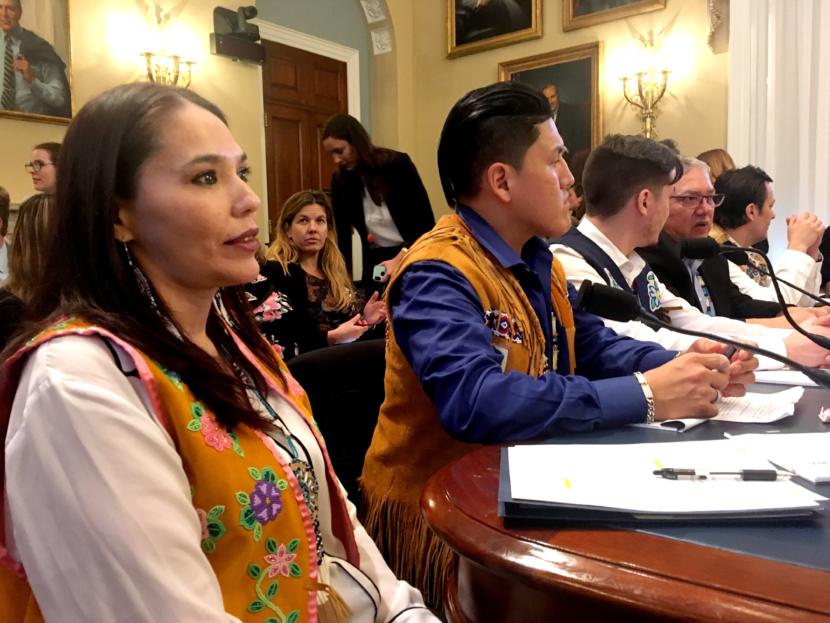
Bernadette Demientieff, director of the Gwich’in Steering Committee, waits to testify at a U.S. House hearing on the Arctic National Wildlife Refuge.
Bernadette Demientieff, director of the Gwich’in Steering Committee, waits to testify at a U.S. House of Representatives hearing on the Arctic National Wildlife Refuge. (Photo by Liz Ruskin/Alaska Public Media)

A bill in Congress would reverse the 2017 decision to open the northernmost part of the Arctic National Wildlife Refuge to oil drilling. A hearing about it in the U.S. House of Representatives Tuesday became a debate — sometimes an angry one — over which Alaska Native people should have the ear of Congress.

Congressman Don Young told his colleagues not to listen to some of his constituents: the Gwich’in residents of Interior Alaska, who had come to testify against drilling in the refuge. Young, Alaska’s sole member of the House, instead pointed to the witnesses from the North Slope: the Iñupiat, who favor drilling.

“These are the Alaska Natives directly impacted. Not the Gwich’in,” Young said. “That’s my tribe. My wife was Gwich’in. My daughters are Gwich’in. We have a few Gwich’in that make a living out of this. By promoting something that’s wrong, by saying, ‘We want to take away from their brothers.’ That’s wrong.”

Young was born in California, but his first wife was Gwich’in. Unlike the late Lu Young, most Gwich’in leaders ardently oppose oil development in ANWR. They say it could disrupt the migration and calving of the Porcupine caribou herd that is central to their culture.

Young suggested some of the Gwich’in witnesses have no business talking about the culture.

“Not someone who’s living in Fairbanks. Not someone that has not killed a caribou in 10 years and probably doesn’t have a license. That’s wrong,” Young said, his voice growing in emotion. “Think about that when you say ‘We want to save the culture.’ Save the culture of the people! Not those that are foreigners or living away from the area. These are not the Natives directly affected.”

Gwich’in leader Sam Alexander, who lives in Fairbanks now, wasn’t having it.

“Mr. Don Young does not represent the Gwich’in. He does not represent the Gwich’in, our voice,” Alexander said.

“I represent Alaska! I represent Alaska!” Young shouted over Alexander. “I don’t represent you! Because you don’t represent the Gwich’in!”

Alexander kept going.

“I am here because the Elders have sent me to be here, so I want to be clear on that,” he said.
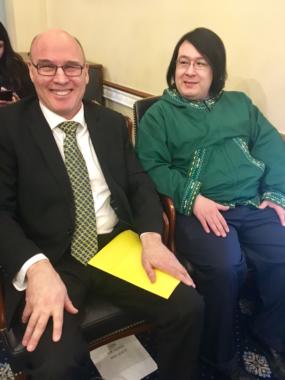
Arctic Slope Regional Corporation Vice President Richard Glenn and Kaktovik Village Tribal Administrator Matthew Rexford were two of the witness who spoke in favor of oil drilling in ANWR.
Arctic Slope Regional Corporation Vice President Richard Glenn and Kaktovik Village Tribal Administrator Matthew Rexford were two of the witness who spoke in favor of oil drilling in ANWR. (Photo by Liz Ruskin/Alaska Public Media)

Alexander also rejected the accusation that people like him are traveling the world, living high off of the environmental groups who will pay as long as the Gwich’in keep saying the right lines.

“Somebody’s telling me I get to take a trip around the world? I got that invitation years ago,” Alexander said. “It’s called the U.S. Army, when I did my three tours in Iraq. So I’ve seen plenty of the world.”

Alexander said he paid for his trip with his veterans disability pay, adding that he’d rather be home with his infant son.

The refuge protection bill, sponsored by Rep. Jared Huffman, D-Calif., cites the caribou and the needs of the Gwich’in. It doesn’t mention the Iñupiat of the Arctic Slope, or Kaktovik, the only village inside the refuge. Their Native corporations would like to drill for oil on land they own that’s bound up in the fight over the refuge.

Fenton Rexford of Kaktovik was angry the bill doesn’t consider the needs and well-being of his people. Rexford said environmental groups and their supporters want to assert their own interests on Kaktovik land.

“This school of thought amounts to nothing more than green colonialism, a political occupation of our lands in the name of environment,” Rexford said.

Arctic Slope Regional Corporation Vice President Richard Glenn told the committee oil development has allowed the Iñupiat to continue to practice their culture while also providing warm homes, sanitary water and sewer systems, better education outcomes, good health and substantially longer lives.

Kaktovik Village Tribal Administrator Matthew Rexford seemed to aim his remarks at the authors of the Democratic bill.

“You say you are concerned about Arctic culture,” he said. “You’ve ignored our culture. You completely disregarded us!”

The witnesses were passionate, but for the Congress members from the Lower 48, there were hints that it wasn’t so much about the needs of Native people but a proxy war: development vs. environment. One of the biggest hints was the mispronunciations.

Words like “Kaktovik,” “Iñupiat” and “Tanana” were mangled repeatedly by members of both parties.

Rep. Paul Gosar, R-Ariz., expressed outrage that the Democratic bill “makes no mention — not one — of the village of Kaskovik.”

The bill to close the refuge to oil drilling could pass the House, but it has virtually no chance in the Senate. Still, each side said it’s important to make the case, keeping the argument fresh in the minds of their political base.
How carving halibut hooks teaches Juneau students both science and tradition

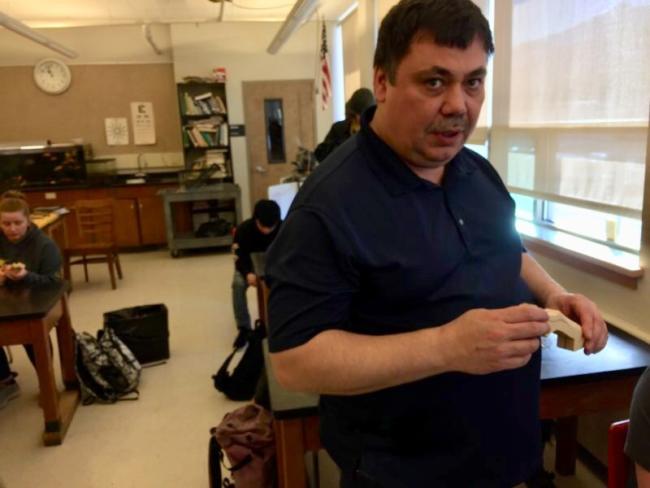
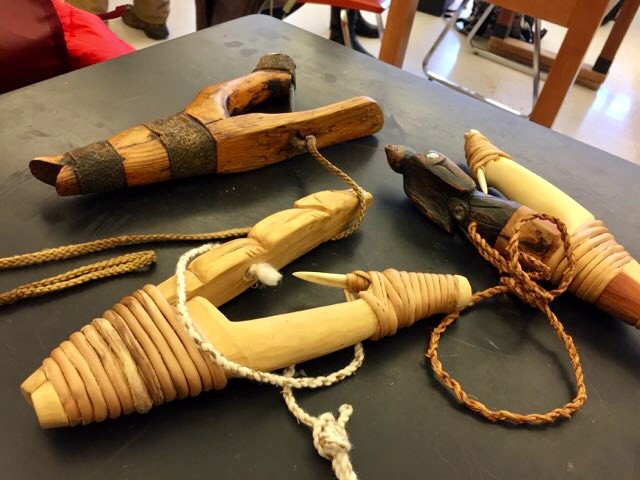
Traditional Tlingit halibut hooks brought as examples to a science class at Juneau-Douglas High School: Yadaa.at Kalé on March 5, 2019. (Photo by Zoe Grueskin/KTOO)

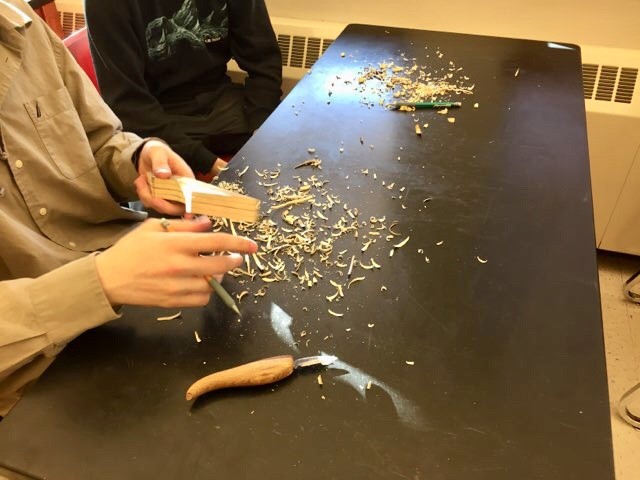
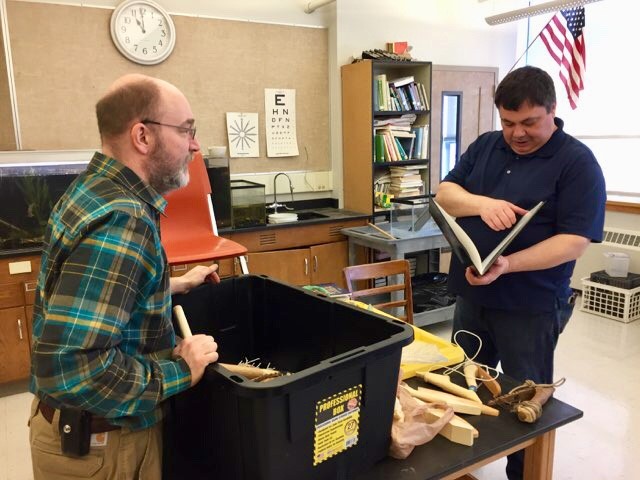
In a science classroom at Juneau-Douglas High School: Yadaa.at Kalé, students are holding carving knives. Teacher Henry Hopkins walks up and down the rows of desks, showing them how to shape the hunks of yellow cedar in their hands.

“The students were working on traditional Tlingit halibut hooks, which sounds like it’s primarily a Tlingit carving project, but it’s actually a science project,” said Hopkins.

Hopkins has taught science at JDHS for nearly 20 years. Before that he taught in rural Alaska, in remote communities with majority Alaska Native populations. He said he quickly realized subsistence activities like hunting and fishing were their own kind of science textbook.

Hopkins started working with Elders and culture-bearers to emphasize that in the classroom.

“It’s important for me that we don’t stop the science to teach Native knowledge,” he said. “I would rather teach the science through Native knowledge.”

Henry Hopkins (left) and Donald Héendei Gregory teach students at Juneau-Douglas High School: Yadaa.at Kalé the science and tradition of Tlingit halibut hooks on March 5, 2019. (Photo by Zoe Grueskin/KTOO)

Take Tlingit halibut hooks: They look almost nothing like the metal circle hooks used by commercial fishermen. They look more like over-sized clothespins. Two pieces of wood are lashed together in a V-shape, with a spike of either metal or bone. Woods of different density are used to achieve the right float, and the hooks are designed to catch only fish of a particular size.

Hopkins said studying — and crafting their own — halibut hooks gives students in his outdoor biology class the opportunity to learn about everything from sustainable fisheries management to changing oceans.

Leading the carving itself is Tlingit carver and teacher Donald Héendei Gregory.

Tlingit carver Donald Héendei Gregory teaches students at Juneau-Douglas High School: Yadaa.at Kalé how to carve Tlingit halibut hooks on March 5, 2019. (Photo by Zoe Grueskin/KTOO)

“My name, Héendei, is translated to ‘in the water’ or ‘into the water area,’” said Gregory, “and we’re Deisheetaan, we’re Raven Beaver, so it’s an appropriate name for a beaver.”

Gregory learned his craft from a long lineage of Tlingit carvers, and he hopes to continue that legacy.

“For me, the most important thing about learning it is to be able to pass it on to the next group of people that want to learn it,” he said. “I don’t want to take anything with me to the grave.”

Gregory has worked with Hopkins for several years, teaching both the science and the tradition of halibut hook carving to students at JDHS. He said the project builds some pretty specific carving skills, but mostly it’s about common sense: paying close attention and working with what you’ve got.

“Oh, I think it’s real important, I mean when you get out of school, if you don’t have common sense, you’re way behind the curve,” Gregory said.

Hopkins said by incorporating Native knowledge and hands-on learning into his science classes, he’s been able to get buy-in from students who’d never engaged much in school.

“Oh yeah, usually I’ll get a number of texts and emails in the summer of kids holding up halibut and these hooks,” said Hopkins.

Once, a student even gave Hopkins a fish. It was a halibut caught on a hook carved in his classroom.

Students at Juneau-Douglas High School: Yadaa.at Kalé begin carving Tlingit halibut hooks on March 5, 2019. (Photo by Zoe Grueskin/KTOO)

As Trump administration contemplates drilling in Arctic waters, North Slope organizations stress need to protect subsistence resources

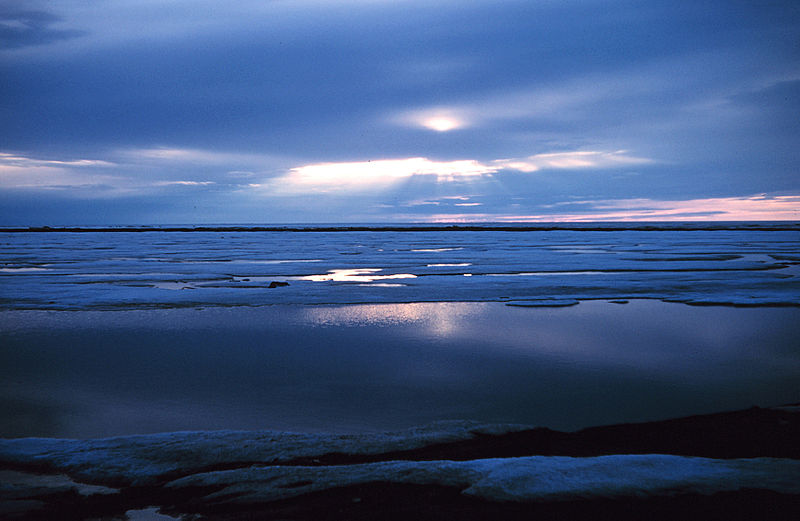
The Beaufort Sea, one of the areas included in the Trump administration’s draft plan for offshore Arctic oil development. (Photo courtesy NOAA)

The Interior Department is expected to release an updated plan soon on where the agency will hold offshore oil and gas lease sales in the Arctic over the next five years.

Many organizations on the North Slope offered comments on the draft proposal. Now they’ll be looking to see whether their feedback resulted in changes to the new plan.

In comments made available on a federal site, most North Slope institutions didn’t express outright opposition to the plan, but they did voice concern for subsistence resources and hunters’ continued access to them.

A point that was repeated by organizations like the Alaska Eskimo Whaling Commission, the North Slope Borough, and Arctic Slope Regional Corporation was the importance of exclusion zones. Those would take areas critical to whaling off the table for leasing — something that North Slope groups point out has been done for previous leasing programs.

AEWC, ASRC and the NSB proposed to exclude a 25-mile coastal buffer zone in the Chukchi Sea, and areas that whalers in Kaktovik and Utqiaġvik use for whaling.

The Bureau of Ocean Energy Management didn’t have exclusion zones in the proposed leasing plan, though some were included in a second option of the plan that BOEM wrote “may warrant further analysis.”

That drew criticism from Voice of the Arctic Iñupiat, an advocacy group composed of 20 Iñupiat leadership organizations on the North Slope. Their comment closely mirrored a letter they wrote last year to then-Interior Secretary Ryan Zinke expressing strongly-worded concerns about the fact that the plan did not set aside important subsistence areas.

The North Slope Borough also wrote that the proposal for six lease sales was “aggressive.” The borough said that such a program could be seen as a threat to the bowhead whale by the International Whaling Commission — the international group that sets the subsistence harvest quota.

“Similarly aggressive programs in the past have drawn the attention of IWC members who were concerned that increased oil and gas activity within the range of bowheads would subject the population to increased industrial noise and oil spill risks,” the borough comment reads. “Unable to directly address the industrial activity itself, the IWC may limit the bowhead quota as its means of ensuring continued protection for the species.”

The borough suggested two lease sales be held instead of six over the next five years.

Another suggestion brought up by several groups was the idea of requiring offshore oil and gas operators to work with local whaling captains to make sure industry vessels don’t disrupt whaling activities.

The Alaska Eskimo Whaling Commission developed the process, and oil and gas companies have committed to it on a voluntary basis. A key component of the agreement is deciding when oil and gas activity should be shut down in certain areas to allow bowhead whale migration to happen unimpeded, and to give hunters free movement on the water to hunt.

A few institutions also stated their support for putting some Arctic waters back on the table for leasing. ASRC was among them, writing that the Obama administration’s actions to limit Arctic leasing had been “extremely shortsighted and arbitrary,” and that offshore development could bring long-term economic stability to the North Slope and Alaska more broadly.

However, ASRC also emphasized their concern that the longstanding subsistence areas were not set aside from the get-go.

“We are encouraged that BOEM has included the Arctic OCS (Outer Continental Shelf) in the DPP,” they wrote, referring to the draft plan, “however we feel the importance of balance is overlooked in the DPP for the sake of energy dominance.”

They emphasized the importance of honoring the exclusion zones to balance energy needs with subsistence protections for the North Slope.

On the other end of the spectrum, the City of Kaktovik submitted a resolution that unequivocally opposed offshore development, as well as development in the Arctic National Wildlife Refuge.

“Our people are divided over the opening of ANWR for oil & gas drilling on land, but stand united in strong OPPOSITION to any offshore oil & gas activity and development,” the City of Kaktovik wrote in their comment, citing concerns for subsistence resources.

Another Kaktovik organization, Kaktovik Iñupiat Corporation, is a member of a corporation called Arctic Iñupiat Offshore, which contended in their comments that with proper protections offshore development can happen safely.

What happens when wild salmon interbreed with hatchery fish?

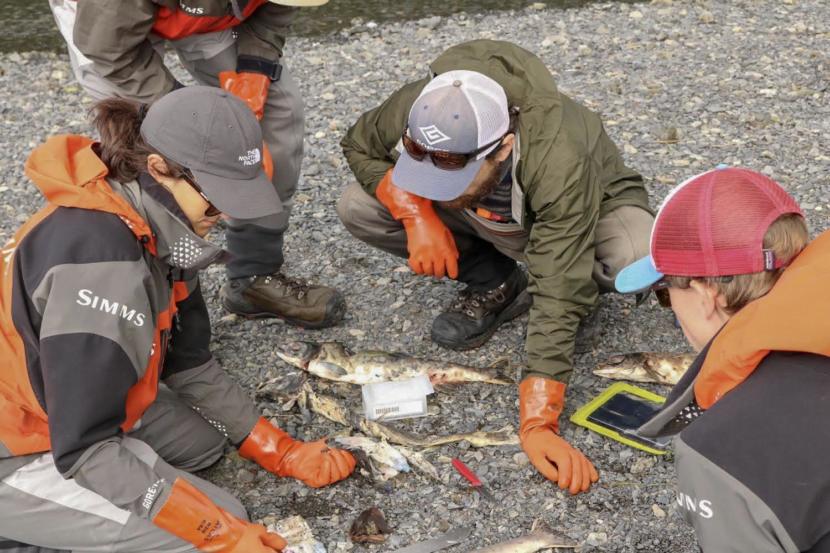
A group of researchers from the Prince William Sound Science Center sample pink salmon carcasses near Cordova as part of the Alaska Department of Fish and Game’s Alaska Hatchery Research Project.
A group of researchers from the Prince William Sound Science Center sample pink salmon carcasses near Cordova as part of the Alaska Department of Fish and Game’s Alaska Hatchery Research Project. (Photo by Aaron Bolton/KBBI)

A research project by the Alaska Department of Fish and Game looking at chum and pink salmon runs in Southeast Alaska and Prince William Sound is expanding to help biologists understand the interplay between wild runs and hatchery strays. There is concern that hatchery fish could alter the genetics of wild populations, posing a threat to their survival.

Homer-based Fish and Game biologists Glenn Hollowell and Ted Otis started tracking hatchery fish found in wild streams around Kachemak Bay in 2014. That was around the time when Cook Inlet Aquaculture Association’s Tutka Bay Lagoon Hatchery reopened after several years.

They wanted to examine how well the hatchery pink salmon homed back to the Kachemak Bay facility, but they found something strange: salmon from other hatcheries.

“When we initially started doing this, we were not anticipating finding any Prince William Sound fish in our samples whatsoever. It was just not something we even considered,” Hollowell explained. “We were very surprised to find that a number of our streams had very significant, double-digit numbers (of Prince William Sound hatchery fish) in 2014.”

The Prince William Sound pinks keep showing up each year, and just the idea that hatchery pinks could stray so far has heated up a dispute over the potential harm on wild runs — namely, whether they could alter the genetics of wild populations in a way that would threaten their survival rate.

That caught the attention Fish and Game’s top salmon geneticist, Chris Habicht in Anchorage. His lab has processed thousands of samples of both wild and hatchery Prince William Sound pinks through the department’s Alaska Hatchery Research Project.

At a recent Alaska Board of Fisheries meeting, Habicht told KBBI that biologists are just starting to understand the pink salmon’s genetic variation.

“So one of the things we’re doing in the study is trying to understand how related populations are to each other. And in particular in Prince William Sound where there’s a big hatchery program, we’re trying to identify variation among populations,” Habicht said.

The hatchery-wild research project found genetic variation in Prince William Sound: That means there are distinct populations. However, it’s unclear how much hatcheries are a factor.

Habicht said pinks in Kodiak and upper Cook Inlet are distinctly different from both hatchery and wild Prince William Sound pinks. He’s hoping to explore that variation in his own smaller study.

“The big question is, where does that break occur?” Habicht noted. “So the first thing we need to do is go out into the field and collect fish from lower Cook Inlet, and what we’re interested in doing is collecting fish that span from lower Cook Inlet up into upper Cook Inlet.”

Habicht said the project still lacks the necessary funding it needs to fully assess whether Prince William Sound hatchery pinks straying into lower Cook Inlet streams could alter the genetics of wild stocks.

But he’s still committed to the project. He plans to walk the banks of the Anchor River this summer, picking up dead specimens for further study.

Alaska lawmakers learn about a subsistence superfood

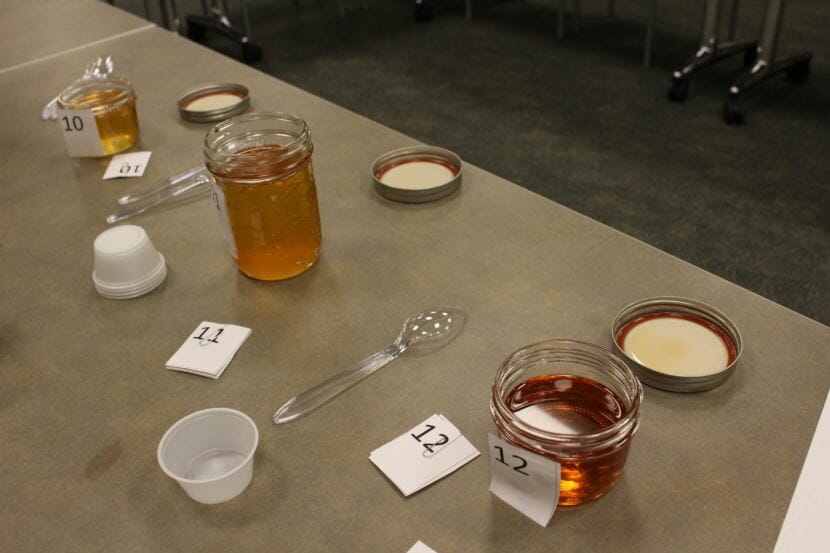
There were two categories for the seal oil: with and without crackling. (Photo by Elizabeth Jenkins/Alaska's Energy Desk)
Seal oil from Southeast Alaska. (Photo by Elizabeth Jenkins/Alaska’s Energy Desk)

The House Resources Committee got an update Monday on the traditional foods movement in Alaska.

It’s becoming more common for public facilities in the state to accept wild-harvested donations, such as deer or seafood. Seal soup has been added to the menu at the Alaska Native Medical Center in Anchorage.

But places like schools, nursing homes and hospitals have yet to incorporate one of the most requested subsistence foods. Melissa Chlupach, from the University of Alaska Anchorage College of Health, called it “Alaska’s condiment.”

“Seal oil is a superfood. It has a high amount of omega-3s that are so healthy for us,” Chlupach said.

The state’s food safety codes don’t allow seal oil in public facilities yet. That’s because it’s been implicated in several botulism outbreaks in Alaska. Rep. John Lincoln, a Democrat from Kotzebue, asked why a food considered safe to eat by many villages raised red flags.

Chlupach and a colleague explained that the rendering process differs across Alaska. There’s a lot of variability.

Chlupach told lawmakers there’s still more work to be done to incorporate a variety of subsistence foods on the menu at public institutions. She encourages people to tell their stories.

“That’s how we can get these foods into our facilities and help heal our patients, help provide foods to the Elders so they can eat the foods they’ve grown up on,” Chlupach said.

Maniiḷaq Health Center in Kotzebue is on the forefront of this effort.

The long-term care facility there has been working with the state’s Department of Environmental Conservation, the University of Wisconsin and the Kodiak Seafood and Marine Science Center to determine the safest rendering techniques for seal oil, with the hopes of someday serving it to residents.

Watch the latest legislative coverage from Gavel Alaska:

The Alaska Roadless Rule decision is moving along. Some tribal governments say it’s moving too fast.

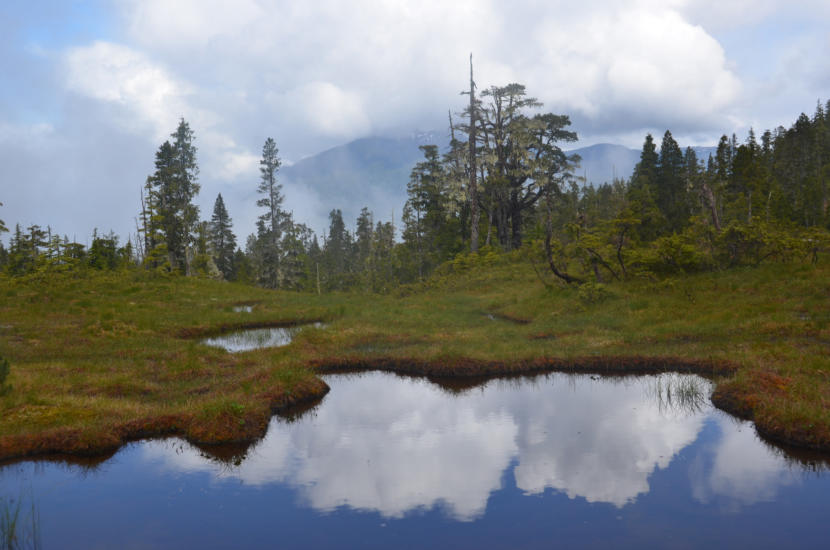
The Tongass National Forest near Wrangell, Alaska, 2016.
The Tongass National Forest near Wrangell, Alaska, in 2016. (Creative Commons photo by Rob Bertholf)

The U.S. Forest Service quietly hit another milestone in its ongoing efforts to consider building new roads in the Tongass National Forest. Last month, it received comments on an important document from cooperating groups.

The state has been providing feedback that could shape the outcome of the new rule, and so have Southeast Alaska tribes.

But some of the tribal governments say the timeline has felt rushed for a decision that could have a major impact on rural Alaska.

Joel Jackson, the tribal president of the Organized Village of Kake, said it’s impossible to separate the Tongass National Forest from the dinner table.

“That’s the way I was taught from my father,” Jackson said. “He never liked the word ‘subsistence’ either. He always explained it to me, it’s our way of life.”

And Jackson feels like that way of life could be threatened if new roads are built in the national forest surrounding Kake. Historically, large-scale industrial logging in the region damaged deer habitat and salmon streams.

Jackson said the village can’t afford to have its main food source jeopardized again.

“We have no other choice but to stand up and say, ‘No more logging. No more road-building in our area,'” Jackson said.

This decades-long battle isn’t centered on the roads themselves. For Alaska’s congressional delegation, it’s about access. Or, as Sen. Lisa Murkowski put it, making sure the Tongass is a “working forest.” Much of the remaining harvestable, old-growth trees are in areas that are hard to get to.

Last summer, Murkowski and a top federal official toured the last remaining large sawmill. And in August, the Forest Service announced it would revisit how — and if — the Roadless Rule should apply to Alaska.

Jackson said he wanted Kake to be a part of that conversation. The plans include Southeast Alaska tribes as cooperating agencies — providing crucial input.

But he said it hasn’t always felt that way.

“That remains to be seen,” Jackson said.

In February, the Organized Village of Kake and the other cooperating agencies received a robust, 500-page document, detailing the various options on the table for the Tongass. From one extreme to the other: from the Roadless Rule staying in place, to the Roadless Rule going away for Alaska. And of course, everything in between.

In any case, Jackson said it was a lot to take in for the small tribal government, and the Forest Service gave them just two weeks to make comments.

“We’re not lawyers or anything. We have to get help to understand a lot of what they’re saying,” he said.

Jackson said he asked the Forest Service for more time — a few more days, so the tribe could sort everything out and make meaningful suggestions.

“They said they had a timeline and they were going to stick to it,” Jackson said.

In an emailed statement, the Forest Service didn’t directly address why it didn’t grant the tribal government the extension. But it said there are other ways for cooperating agencies to participate.

Raymond Paddock, the environmental coordinator at Central Council of the Tlingit and Haida Indian Tribes of Alaska, said he thinks the Forest Service is trying to do its best with the directions it was given.

However, Paddock said, “It was definitely a rushed process.”

Central Council is also a cooperating agency providing feedback on the Roadless Rule.

But ultimately, the tribal government decided not to weigh in on this latest comment period because Paddock said they wanted to defer to the smaller tribes.

“Where we feel those are the most impact areas,” Paddock said.

The Forest Service is shooting for a summer release of its draft environmental impact statement on the Roadless Rule.

As for the Organized Village of Kake, they made the two-week deadline and got their comments in.

But Jackson said it wasn’t without a struggle.

“It just takes a lot of time to go page-by-page,” Jackson said.

Now he’s looking forward to getting back to another big project.

Kake is in the process of restoring a cannery with the hopes of attracting more small cruise ships.

Jackson thinks that’s the future, and he wants those visitors to be able to appreciate the old growth trees that are left.

Site notifications
Update notification options
Subscribe to notifications