Alaska's Energy Desk

Alaska logs 200 days of above normal temps

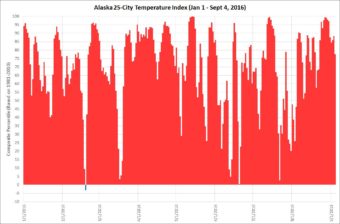
Almost every day of 2016 has been above normal in Alaska. (Graphic courtesy of Brian Brettschneider)

Tuesday marked the 200th day in a row of above normal temperatures for Alaska. Even in a string of unusually warm years for the state, that’s a remarkable run.

Brian Brettschneider is a climatologist in Anchorage who closely tracks Alaska climate data and trends. Alaska’s Energy Desk is checking in with him regularly as part of a new segment- Ask a Climatologist.

The daily average statewide temperature is based on an index of 25 cities across Alaska.

Interview transcript
Brian: Individual cities may have a few below normal days sprinkled in here and there, but on the aggregate it’s been above normal every single day of 2016 except for one and that was Feb. 9.

Annie: And how unusual is that?

Brian: The last two years, 2014 and 2015, were the two warmest years on record, dating back to 1925, when they started keeping stats. Each of those two years had at least 60 days that were in the lowest third of temperature categories. And this year we’ve had no days in the lowest third of temperature categories and only one day that was even slightly below the normal. So it’s almost a near certainty that 2016 will be the warmest on record for Alaska.

Annie: And we keep talking about these warm ocean temperature around Alaska. How much is that a factor?

Brian: Well it’s definitely a factor. You’ve got this unlimited reservoir of warm ocean water which facilitates warm temperatures in the air right above that water, so it really acts as a floor for how low temperatures can go.

Annie: And what are you seeing in the August data for those ocean temperatures?

Brian: For the ocean temperatures surrounding Alaska, and I’m talking mainly south- so Gulf of Alaska, Bering Sea- the summer of 2016 was the second warmest on record. Last year was the warmest on record. And 2014 was the third warmest on record. So it really goes to show how anomalously warm the atmosphere and the environment is around Alaska that really is preventing us from having even normal temperatures.


Most humpback whales removed from Endangered Species List

Map of different populations of humpback provided by the National Oceanic and Atmospheric Administration.
Map of different populations of humpbacks provided by the National Oceanic and Atmospheric Administration.

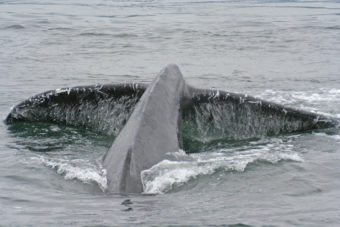
The National Oceanic and Atmospheric Administration announced Tuesday that most humpback whales will come off the endangered species list, but it’s a mixed bag for humpbacks that visit Alaska.

Some sub-groups of humpbacks around the world will remain on the list.

Three different humpback populations swim to Alaska and now they all fall into different categories. The Hawaii population is de-listed. The Mexico population is still labeled as threatened under the Endangered Species Act. The Western North Pacific humpback — which feeds in the Bering Sea and Aleutian chain — is still listed as endangered.
Marta Nammack, a NOAA Endangered Species Act coordinator, says with the variety of humpbacks:

“Our Alaska region is going to have to use a proportional approach to decide what populations is being affected by different things that happen like vessel strikes or fishing gear entanglements,” Nammack said.

Nammack says fishing gear entanglement is a serious threat to the Western North Pacific humpbacks and that’s expected to increase.

The Mexico population of humpbacks labeled as threatened feed in Southeast Alaska waters. NOAA said there wasn’t enough data to indicate a population increase.

Angela Somma, chief of NOAA’s endangered species division, says the agency looked at the impact of climate change on humpbacks and whether that could affect the overall population down the line.

“There certainly are issues to be concerned about, but we found no basis to conclude that potential impacts of climate change contribute significantly to extinction risks to these population now or even in the foreseeable future,” Somma said.

Commercial whaling in the 1800s and early 1900s significantly reduced the humpback population. It was listed under the Endangered Species Conservation Act in 1970 and later the Endangered Species Act in 1973.

Video: Anchorage professor bets on bio-insulation made from mushrooms

From underneath the roads to inside our homes, insulation is everywhere in Alaska.

But traditional foam board is energy intensive to produce and often ends up as plastic litter in oceans and waterways.

A group of researchers at the University of Alaska Anchorage are working to develop an environmentally friendly alternative. 
Professor Philippe Amstislavski stands in front of a group of students from the Alaska Native Science and Engineering Program.

“This is all experimental, nobody has ever done this,” he said. “We didn’t have any clue how this would work.”

The high school students have spent weeks in the lab this summer, designing molds and filling them with a coarse, grey mixture. They’re finally getting the chance to see how their experiments turned out.

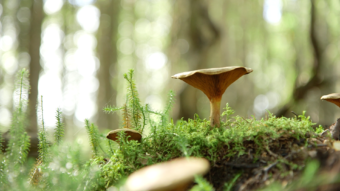
The objects are light and foam-like, some are a little crumbly, while others keep their structure as they’re passed around the room for everyone to admire. They all have one thing in common; they were grown from an unlikely local substance- mushrooms.

“We have a long history in the north of using mushrooms for food, medicine — now we’re experimenting with using them for insulation,” Amstislavski said.

Over the past year and a half, Amstislavski and his team at UAA have been developing a new type of insulation, designed to overcome the environmental issues caused by conventional foam products on the market today.

“We have problems with particulates in our waterways and our oceans,” he said. “Pink board or blue board that we use for insulation is typically made out of oil-derived polymers that are non-biodegradable.”

The researchers instead use a mix of local fungus cultures, sawdust, and other natural ingredients to grow their own bio-material blocks in the lab. When Amstislavski shares his research with friends and colleagues, they’re often skeptical.

“The first question we always get ‘Is this going to kill me if I touch it?'” he said. “It’s not toxic. It’s not going to jump on you and try to take over your body.”

The researchers still have a lot of questions to answer when it comes to determining if the new bio-material will be a viable alternative to foam insulation. They need to test whether it can handle freezing and thawing. And make sure it won’t get waterlogged.

Back in the lab, Anchorage high school student Charitie Ropati, from ANSEP, is measuring her own recently grown insulation block, designed to be used in future home construction.  She’s impressed.

“I didn’t know that living organisms could be used to build these kind of things,” she said. “I was like, wow, I could actually use this kind of stuff.”

Ropati isn’t the only one who sees potential in the bio-material. Amstislavski and his partner have been invited to Washington D.C. to showcase their insulation at a national competition later this month.

Gone glacier: fashion magazine depicts Mendenhall melt too soon

John Neary Mendenhall Glacier
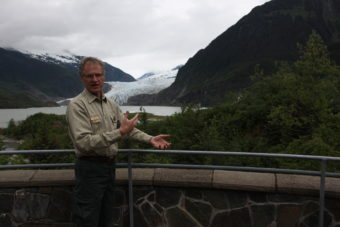
John Neary, the director of the Mendenhall Glacier Visitor Center, in front of the actual glacier. (Photo by Elizabeth Jenkins/KTOO)

The magazine Marie Claire sent a team of journalists and fashionistas to the Mendenhall Glacier in the summer. The story that appeared in its September issue is called On Thin Ice: Can the Fashion Industry Help Save the Planet? But as first reported in the Juneau Empire, the magazine got a couple of key things wrong.

“It felt like I was in Frozen, that’s the only way I can describe it!” said Nina Garcia in a video on Marie Claire’s website. She was describing what it’s like to enter the ice caves at the Mendenhall glacier.

Garcia is the creative director of the magazine. You’ve probably spotted it when you wait in line at the supermarket. This month’s cover featured Sarah Jessica Parker.

And inside, there was an article about the effects of climate change on glacier ice and how the fashion industry can help by reducing wasteful packaging. But some of the photos’ captions are pretty off. Or, as Nina Garcia would say as a judge on Project Runway:

“I think you made a real big effort. However …”

However, one of the pictures looked like it’d been put through an Instagram filter. It was supposed to depict the Mendenhall glacier in 1970.

“And we know, that at that time, nugget falls was falling — well, in the 70s — it was falling onto the glacier,” said John Neary, the director at the Mendenhall Glacier Visitor Center.

He thinks the photo was actually taken some time in the 1990s.

Then there was another photograph in the magazine spread — captioned “The Mendenhall Glacier today.”

“The other photo was more strange. It was — from what I can tell — a picture from the top of Thunder Mountain looking at that Thunder Mountain Basin with the airport behind it and then North Douglas,” he said.

You can see a rolling mountain with grass and only a little bit of snow. No glacier anywhere in sight.

When the article came out, Neary says he was in Denali National Park on vacation and initially he was disappointed. But he recognizes everyone makes mistakes.

“And I don’t fault them for it because it’s a long ways away from where they are,” Neary said.  “And they did a really good job of fact checking. I got follows ups about this fact and that fact but they just missed this one.”

No doubt, the Mendenhall Glacier is shrinking. In the past 30 years, Neary’s noticed extreme change. And scientists say the glacier won’t be visible from the visitor center by the end of this century.

Neary says even though Marie Claire got the photos very wrong, he found the overall message of the story interesting.

It’s from a different take than I would write an article on but at the same time people are coming from really different places than I am, too,” Neary said. “And if they’re coming from the New York fashion scene, then maybe that article really appeals to their sensibilities.”

As the Marie Claire article concluded, you shouldn’t have to choose between fashion and the glacier

Should the Permanent Fund invest in oil tax credits?

Former Attorney General Craig Richards addressed the Alaska Permanent Fund Corp. board on Sept. 2, 2016. Photo: Rachel Waldholz, Alaska's Energy Desk
Former Attorney General Craig Richards addresses the Alaska Permanent Fund Corp. board on Sept. 2, 2016. (Photo by Rachel Waldholz/Alaska’s Energy Desk)

The Alaska Permanent Fund Corp. board had an unusual visitor at their meeting Friday.

Former Attorney General Craig Richards showed up to pitch an unconventional investment idea: oil and gas tax credits.

The presentation came as Gov. Bill Walker’s administration faces a problem — or rather, as several of Alaska’s smaller oil and gas companies face a problem.

Those companies have earned tax credits from the state for things like exploration work. But for the last two years, the governor has vetoed payments for those credits. That means companies are holding IOU’s from the state, with no idea when they’ll actually get paid.

The administration estimates the state now owes more than $700 million in those IOU’s, or redeemable tax credits.

In the past, companies could sell the rights to those credits to a bank or outside investor. But that market has dried up.

And that, Richards told the Permanent Fund board, creates an opportunity.

“The proposal to the Permanent Fund would be that they view these tax credits very much like a state of Alaska bond,” Richards said in an interview after his presentation. “You have the potential to purchase a credit from the state … for yields that are something like 10 percent, whereas if you were going to go buy a state of Alaska or a state of Washington bond, it might yield 2 percent.”

Richards was a Permanent Fund board member himself until he resigned as attorney general in June. He’s currently on contract with the governor’s office, where he’s been brainstorming solutions to the oil tax credit dilemma, along with Walker’s oil and gas adviser, John Hendrix.

He said, like bonds issued by the state, tax credits are debt Alaska has to pay.

The difference is, there’s no deadline. So it may be several years or more before that payment comes.

But many companies need the money sooner than later. They were planning to use it to pay for next year’s work, or took out loans against the credits and now have to pay those loans back.

Right now, they don’t have many options.

They can sell their credit certificates to bigger companies on the North Slope, which can use them to offset future taxes. But for various reasons, the credits aren’t actually worth all that much to those companies. Richards said he’s hearing the big producers are only willing to pay maybe 20 or 30 percent of the credits’ face value.

What you need, he said, is an outside investor who isn’t bound by the same rules as North Slope producers. They might be willing to buy the rights to those credits, for, say, 70 percent of face value, on the assumption that at some point the state will pay the full amount.

Would go for this plan, if he were still on the Permanent Fund board?

“If I could get the tax credits at 70 cents on the dollar, absolutely,” Richards said. “If I could only get them at 95 cents on the dollar, probably not.”

As for the current Permanent Fund board members, they asked only a few questions, giving no real indication what they thought of the plan.

Kara Moriarty of the Alaska Oil and Gas Association was also listening. Her group represents several companies who are owed credits.

Moriarty said she still has plenty of questions. But no matter what, she said, the key issue remains the same.

“Whether you’re paying an investor … or you’re paying the companies themselves, at the end of the day it still comes down to, when is the state going to pay it?” she said.

For now, that’s a question with no clear answer.

As waters warm, Arctic fish populations change

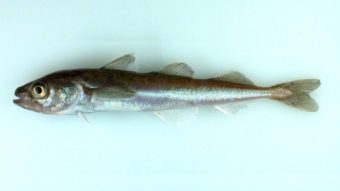
Arctic cod is an important part of the marine food web. (Photo courtesy of NOAA)

A new report shows more fish are moving to Arctic waters. The U.S. Geological Survey and the Bureau of Ocean Energy Management teamed up to create the inventory, which describes more than 100 species of fish found in the Chukchi and Beaufort Seas — including 20 species new to the region.

The Alaska Arctic Marine Fish Ecology Catalog for the Beaufort and Chukchi Seas has been a long time coming. Biologist Milton Love has been working on the project since 2009. He says both Arctic seas appear to be changing.

“We’re starting to see either new introductions of temperate fishes from the south or at least larger numbers of them, particularly in the Beaufort Sea,” said Love.

At this point, Love isn’t sure what these changes mean for fish traditionally found in the Arctic. Since the area has historically been difficult to sample, it’s hard to establish if fish are coming from the south, growing in population, or both.

One species that could be affected is Arctic cod, a major player in the marine food web. Love says the species does better in near-freezing water.

“If ice becomes less predominant over time and waters warm, then perhaps Arctic cod will not do as well,” he said. “There are a number of predatory birds and mammals that certainly feed in great quantity on Arctic cod.”

If those species aren’t able to eat anything else, they could be impacted, too.

Because of the importance of Arctic cod, the team analyzed the effects of a warming climate on the species as well as its major competitor – saffron cod. As temperatures rise, both species will likely shift north. That would expand the range for saffron cod, but restrict the range for Arctic cod.

Love sees a wide range of uses for the new report, from evaluating environmental impacts on the region to monitoring changes in fish distribution and managing fisheries. It also includes traditional Iñupiaq names to improve communication between researchers and local communities.

Site notifications
Update notification options
Subscribe to notifications