Arctic

The Arctic Suicides: Your Questions Answered

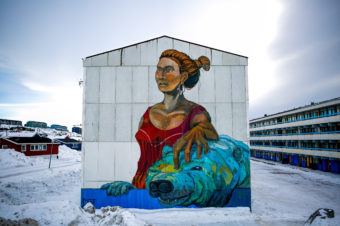
An artist's rendering of the Woman of the Sea, part of an Inuit legend, decorates an apartment block in downtown Nuuk, Greenland. Although Inuit culture was beaten down by Danish colonizers, it's now changing and thriving. John W. Poole/NPR
An artist’s rendering of the Woman of the Sea, part of an Inuit legend, decorates an apartment block in downtown Nuuk, Greenland. Although Inuit culture was beaten down by Danish colonizers, it’s now changing and thriving.
John W. Poole/NPR

Last week, NPR published a special report on suicide in native Arctic communities. Reporter Rebecca Hersher spent 10 weeks in Greenland, the Arctic country with the highest known suicide rate in the world. It’s 82.8 suicides per 100,000 people each year — six times higher than the U.S. suicide rate. She interviewed Inuit people in the Greenlandic capital, Nuuk, and in small towns on the country’s remote east coast. She spoke with community leaders and mental health professionals who are trying to prevent suicide and come to terms with its underlying causes.

Here, Rebecca Hersher answers some of your questions around the series.

The headline, “The Arctic Suicides: It’s Not The Dark That Kills You,” makes it clear that people don’t kill themselves because of the dark. So is it the cold?

A lot of people asked this. Honestly, when I started reporting this story, I asked this question, too. The dark and cold seem like natural culprits for the high suicide rate in Arctic communities. In a lot of Greenlandic towns, the temperature stays well below freezing for six months or more, and, depending on how far above the Arctic circle you are, the sun doesn’t come up for weeks and weeks in the winter. But when it comes to suicide, cold and dark are just not the problem, or at least they’re not the main problem (one can never truly know why any one person kills himself or herself).

In Greenland, and in other parts of the Arctic, there is a suicide “season” — a time when the most people die by suicide. It’s well known among public health officials and priests and teachers and other people who professionally worry about people in the community. The suicide season is spring. When the dark and the cold finally lift, and the sun is up and the ice is melting. That’s when people end their lives. It’s not the dark or the cold. It’s something a lot more complicated (which you can read about here).

A visitor rows an inflatable dinghy loaded with fresh water to a small dock at the old settlement of Kangeq, Greenland. The village was officially shut down by the Danish government in the 1970s, and its residents were moved to a concrete apartment block in the capital city. John W. Poole/NPR
A visitor rows an inflatable dinghy loaded with fresh water to a small dock at the old settlement of Kangeq, Greenland. The village was officially shut down by the Danish government in the 1970s, and its residents were moved to a concrete apartment block in the capital city.
John W. Poole/NPR

I’m very curious about why there was no mention of suicide among young girls/women. Do the suicides only involve boys and men? It seems like there should be some mention of this issue.

In Greenland, and in almost every part of the world, men kill themselves at higher rates than women. In Greenland, the majority of suicides are among men and boys, so we chose to focus on men in our story. In the U.S, the suicide rate among men is about three times higher than among women, and middle-aged white men are at the greatest risk. There are many potential reasons for this — the number of men who own guns is much higher than the number of women, and many men exhibit more impulsive or violent behavior than females. However, the suicide rate doesn’t tell the whole story. According to lots of studies, the most of recent of which came out this month from the CDC, women experience suicidal thoughts at least as frequently as men do, and perhaps even more so. Although they do not die by suicide as often, women certainly struggle with the idea of suicide, and the rate of death by suicide among women is climbing. In Greenland, the trend is similar. The suicide of a high school girl in Nuuk in December sent shudders through the capital, and in the last five years, the rate of suicide among young women has been climbing. Last year, Greenland’s National Board of Health noted that suicide prevention efforts should focus on both men and women, especially those under 25 years old.

It sounds like the Inuit culture in Greenland has been beaten down and demonized since colonization by Denmark began in the early 1900s. Are there any efforts to preserve Inuit culture?

Absolutely. Despite the twentieth-century pressure cooker of rapid modernization plus colonial racism, modern Inuit culture in Greenland is rich and complex. Part of that comes from Greenland’s increasing independence from Denmark. Most people in Greenland are Inuit — it’s about an 80 percent majority of the 56,000 person population. And starting in 1979, the government in Nuuk has taken on more responsibility for governing the largest island in the world, including public health and education. The official language of Greenland is West Greenlandic, and there is an entire agency devoted to bringing that native language into the modern era by adding vocabulary and standardizing spellings. There are new Greenlandic museums telling the history of the Inuit people. As of last year, Greenland’s first official art historian is in charge of the national art gallery in Nuuk, and the Inuit Circumpolar Council, an advocacy group for Inuit people around the Arctic, represents the interests of Inuit people at the United Nations.

Not only is Inuit culture being preserved in Greenland, it’s thriving and changing and becoming something new and modern. There’s even a smartphone app in the works for translating from Greenlandic to English.

Anda Poulsen plays the traditional Inuit drum and sings the old songs by the ocean in Nuuk. A family therapist, he started a support group for parents who had lost a child to suicide. Courtesy of Anda Poulsen
Anda Poulsen plays the traditional Inuit drum and sings the old songs by the ocean in Nuuk. A family therapist, he started a support group for parents who had lost a child to suicide.
Courtesy of Anda Poulsen

What about suicide in other native communities?

Suicide is a big problem in native communities around the world. In the circumpolar region alone — from Greenland through northern Canada into Alaska and across the Bering strait in the destitute Russian region of Chukotka — thousands of native communities struggle with very high suicide rates as well as alcoholism and child neglect. Just this month, the Attawapiskat First Nation in northern Ontario, Canada, declared a state of emergency after 11 people attempted suicide in one night.

Farther south, the situation is just as dire. Aboriginal people in Australia and New Zealand have had high suicide rates since their communities were disrupted by conquest or colonization. In the U.S., the suicide rate among American Indians age 18 to 24 is about three times higher than the rate in the general population. In some native communities in the U.S., the suicide rate is even higher than it is in Greenland. For example, among Alaska native men 15 to 24 years old, the suicide rate is about twice that of Greenland’s.

Is there any joint work between Greenland, Canada and Alaska to address the issue?

There are a lot of joint public health and suicide prevention programs. One, called the Resilience and Suicide Prevention Project, was developed in Canada. Beginning next year, the Greenlandic Ministry of Health will use it to build emotional resilience among community leaders and teach people how to recognize and react to suicidal behavior. The Arctic regions also collaborate to make mental health services more accessible. Like the towns of Alaska, Greenlandic towns are really isolated — you need a helicopter to get to most of them. Because the population is so spread out and hard to visit, and because in both Alaska and Greenland there are not enough psychologists, therapists and psychiatric nurses, it’s hard for people to get face-to-face care. For about five years, Greenland has been using a telemedicine system developed in Alaska, which puts patients in touch with doctors via video link. Doctors and patients I spoke with think the system is a vital addition to hospitals in remote parts of the country, but almost everyone acknowledges it has some limitations. Patients with chronic or complicated problems are evacuated to larger towns for care.

How can we help?

Suicide is a problem in every community. You can help the people in your life by listening and educating yourself about the professional resources available for people who are struggling with suicidal thoughts.

This Q&A with psychologists explains what to say if you’re worried about someone, and what specific questions you can ask a young person who seems depressed.

and sled driver approach a glacier outside Tiniteqilaaq. Victor Cerutti
and sled driver approach a glacier outside Tiniteqilaaq.
Victor Cerutti

Copyright 2016 NPR. To see more, visit http://www.npr.org/.

Federal board closes caribou hunting to non-locals in the Northwest Arctic

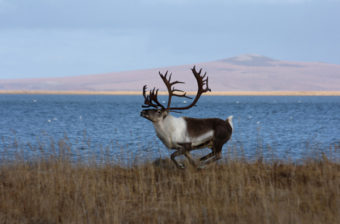
Male caribou running near Kiwalik, Alaska. (Photo by Jim Dau/ADF&G)

In the Northwest Arctic, caribou hunting has been contentious for years. Alaska’s largest herd continues to decline while tensions have emerged between rural subsistence users and outside hunters.

Last week, the Federal Subsistence Board voted to close the vast area to all but local caribou hunters. The closure will last for one year, but biologists aren’t sure it will make much difference.

From Kotzebue to Kobuk, from the Chukchi Sea coast to the northern Seward Peninsula, Game Management Unit 23 covers thousands of acres of federal public lands. Earlier this year, the Northwest Arctic Subsistence Regional Advisory Council called on the Federal Subsistence Board to close them to all non-federally qualified caribou hunters.

The Council argued the closure was necessary to conserve the dwindling Western Arctic Caribou Herd and to stop outside interference with subsistence.

“There’s a long history of user conflicts in Unit 23,” said Chris McKee, the Wildlife Division Chief at the Office of Subsistence Management (OSM). “We hear repeatedly from federal subsistence users: Outside hunters camping on traditional hunting grounds and a lot of other issues surrounding perceptions of wasting meat. It’s something we’ve heard about for many, many years.”

McKee oversees the team of biologists in charge of analyzing potential changes to federal wildlife regulations. The Board takes their analysis into consideration when approving or rejecting proposals.

“But this is a case where the Board actually went against our recommendation,” he said. “OSM’s recommendation was to oppose the closure.”

That’s because McKee and his biologists don’t think the closure will help conserve the herd. Hunters harvest about 13,000 caribou in Unit 23 each year, with local residents accounting for approximately 94 percent of the total take. That means outsiders only harvest about 600 animals on average.

“You’re looking at 5 percent or less of the entire harvest in the unit,” said McKee. “From a biological perspective, eliminating that 500 or 600 animal harvest is going to do nothing to change the trajectory of the herd.”

Currently, biologists estimate the Western Arctic Caribou Herd has about 200,000 animals. That’s less than half the population of 10 or 15 years ago. Biologists aren’t exactly sure what has caused the decline, but they say natural aging, decreased calf survival and climate change are likely contributors.

Meanwhile, McKee said some rural residents blame outside hunters for flying over the herd and changing its migration patterns. Biologists aren’t sure if that’s true. But even if it were, McKee said closing federal lands wouldn’t stop that problem because people can still fly to hunt other species or sightsee.

Still, the Board voted 5 to 3 in favor of the closure because of support from the regional advisory council and public testimony. In their analysis, OSM biologists wrote that at a February hearing in Kotzebue, the “vast majority of those present … were in support of the special action request.”

McKee said another factor was that the Board can only close Unit 23 to outsiders for one regulatory year. The council would have to propose another special action request to close it again next year.

“I think that was another consideration that played in the board’s mind, like, ‘Well, let’s see if it helps this one year and re-evaluate,” he said.

McKee said he has been fielding frustrated calls from outside hunters who have already booked their trips and are now out of luck. The closure will also bar caribou hunting by Alaskans from urban areas and rural Alaskans who have since moved away. The closure will be in effect from July 1 to June 30, 2017.

Committee to work out differences on bill drawing from rural power fund

The state House and Senate are trying to work out their differences over a bill that would draw money from the Power Cost Equalization Endowment Fund.

The $900 million fund subsidizes the high cost of electricity in rural areas. Because the state government has a $4 billion deficit, some lawmakers have suggested drawing money from the fund to pay for other state costs.

Sen. Lyman Hoffman, D-Bethel, speaks in support of Senate Bill 196 on April 13 in this screenshot from the Gavel archive.

Bethel Democratic Sen. Lyman Hoffman crafted a bill that would limit the draw from the PCE fund to years when the fund earnings are more than what’s needed for the power cost equalization program. This program costs about $40 million per year.

The Senate unanimously passed the measure, Senate Bill 196.

But the House made changes to the bill. These changes made it less likely that excess fund earnings would be redirected back into the fund.

Those changes concern Hoffman. When it was time for the Senate to decide Wednesday whether it would agree with the House’s changes, Hoffman spoke up.

“They changed the formula on how the excessive earnings will be distributed,” Hoffman said. “And I believe that that formula will potentially put the fund in jeopardy and want to go back and revisit the differences between what the Senate has done, which is a more sound approach to the fund.”

As a result, there will be a conference committee to rewrite the bill so that both houses can agree to it.

Hoffman will be the Senate chairman of the committee, which will also have Eagle River Republican Sen. Anna MacKinnon and Fairbanks Republican Sen. Click Bishop. The House members will be chairman Dillingham Democrat Bryce Edgmon, Eagle River Republican Dan Saddler and Fairbanks Democrat Scott Kawasaki.

The Legislature formed the conference committee on what was an otherwise quiet day in the Capitol.

Coast Guard visits Nome, prepares for increase in Arctic traffic

The Coast Guard Cutter Healy breaks ice near the city of Nome. (Public Domain photo by Chief Petty Officer Kip Wadlow/U.S. Coast Guard)

The U.S. Coast Guard is gearing up for a busy summer in the Arctic.

In preparation for the flagship voyage of the Crystal Serenity, a thousand passenger cruise ship set to sail through the Northwest Passage this summer, the Coast Guard has been hosting search and rescue drills, tabletop exercises, and meeting with communities along Alaska’s coast.

A contingent of Coast Guard officials visited Nome Monday. Rear Admiral Dan Abel led yesterday’s meeting at Old St. Joe’s community hall.

“Clearly Nome is a hub and we need to make sure we enfranchise what’s important to Nome with a plan,” Abel said.

The Coast Guard contingent heard comments from Nome’s Mayor Richard Beneville, City Manager Tom Moran, along with business and nonprofit representatives.

Both sides agreed that activity in the Arctic isn’t slowing down.

“What is happening here in the far north is the opening of the Arctic,” said Mayor Beneville. He and others at the meeting continually referred to the Arctic as a ‘new ocean.’

Nome and others along Alaska’s coast will see a bump in visitors and summer revenue from ships like the Crystal Serenity, but there is concern about the region’s ability to deal with a potential disaster at sea.

Tom Vayden chairs the Local Emergency Planning Committee.

“I think it’s very important that the major players remember that Nome is here with a lot of resources and that we can be on the ground first and help,” Vayden said.

He urged better communication between the Coast Guard and coastal communities like Nome.

The Coast Guard and the Department of Defense are scheduled to host the Arctic Chinook Drill in late August, just days after the Crystal Serenity passes through Nome’s port.

Permafrost-preserving technology may work better farther north as climate warms

Technologies used to preserve permafrost under roads around Fairbanks may within a few decades be better-suited for areas farther north, such as the 414-mile Dalton Highway, which stretches off to the south in this photo taken near its northern terminus at Deadhorse. (KUAC file photo)

Some 200 big rigs travel the Dalton Highway on an average day to bring supplies to the giant Prudhoe Bay oilfield complex. All that trucking requires regular repair work along the 414-mile mostly gravel road – an ongoing and costly challenge that could become even more if road-building technologies developed to protect permafrost under roadways no longer work.

“In Alaska and in the Arctic, the air temperatures are going up,” says Jeff Currey, an Alaska Department of Transportation engineer. “But they are not going up in the summertime so much as they’re going up in the wintertime. That’s when we need the cold temperature to make these technologies work, to drive that cooling of the permafrost.”

Jeff Currey, a materials engineer, has worked for decades building roads with air-circulating and thermosiphon technologies to keep the permafrost underneath from thawing. That makes soil under the roadbed sink and settle, creating dips and humps that require costly repairs. But Currey and other engineers say there’s now growing concern that warming in the far north may make those technologies ineffective here.

“We’re seeing that some of these techniques that we have become accustomed to, that are working very well for us, may cease to work maybe sometime midcentury, because of the temperature changes,” he said.

Billy Connor directs the Alaska University Transportation Center at UAF’s Institute of Northern Engineering. He says concerns about how long permafrost-preserving technologies will work in this part of Alaska came up again last month in a talk about the $54 million project to rebuild a stretch of the Dalton Highway about 75 miles north of Fairbanks.

“We asked the question – if it continues to warm, at what point will these technologies cease to work?” Connor said.

Currey says while engineers study new solutions, the existing technologies will continue to be used – farther north.

“A technology that works well in Fairbanks now will probably still work well in the Brooks Range sometime into the future,” he said.

Currey says some answers may come from data that’ll be generated by sensors to be buried in and around the Dalton project site.

Power Cost Equalization Fund could pay for community assistance

The Senate Finance Committee is looking to re-route money from the Power Cost Equalization Endowment Fund to replace the Community Revenue Sharing program that the state government started when oil prices were higher.

The concept arose from a concern over Senate Bill 210, which would reduce the amount that municipalities receive in revenue sharing. Without a source of revenue other than the state’s annual budget, this program – which legislators want to rename community assistance – would disappear.

That’s where the second Senate Bill 196 comes in. The bill originally was written to use excess money from the Power Cost Equalization Endowment Fund to offset some of the state budget. But under a new version, this money would instead go to assist communities.

Sen. Mike Dunleavy, March 14, 2016
Sen. Mike Dunleavy, R-Wasilla, speaks during a floor debate last month. (Photo by Skip Gray/360 North)

Some legislators wanted to use more — if not all — of the fund this year. Wasilla Republican Sen. Mike Dunleavy asked why this isn’t happening.

“We’re experiencing a $4 billion hole. There’s a billion dollars in this fund,” he said. “Why wouldn’t we use this fund to at least backfill some of the deficit?”

However, under the latest versions of both bills, the $930 million PCE fund would continue to be used primarily for a program to help rural electric ratepayers. In years when the fund earns more than the roughly $40 million that’s needed for that program, up to $30 million would go to community assistance and up to $25 million would go to rural, bulk fuel and renewable energy programs.

Bethel Democratic Sen. Lyman Hoffman supports both bills. He doesn’t want to spend the PCE money all at once on the budget.

Hoffman said the fund could provide a lasting source for both power cost equalization and community assistance – as long as the main PCE fund remains intact.

That will help communities that have come to rely on revenue sharing while taking pressure off the state budget.

“If the dollars were taken, there would be a one-time use, and people in rural Alaska would end up paying substantially more in electric costs,”

But not all municipalities are happy about the change. Anchorage would receive $5.7 million in the coming year, which is $9 million less than the revenue sharing in the past. In future years, Anchorage would receive no more than $2.3 million.

Anchorage Mayor Ethan Berkowitz’s chief of staff Susanne Fleek-Green says it will cost residents more in taxes or reduced services. The municipal government had budgeted for a $5 million reduction, and must make up the gap.

Sen. Lyman Hoffman, D-Bethel, during a Senate Finance Committee meeting, March 29, 2016. (Photo by Skip Gray/360 North)
Sen. Lyman Hoffman, D-Bethel, during a Senate Finance Committee meeting on March 29. (Photo by Skip Gray/360 North)

“To counteract the effects of this legislation, the municipality will have to add to the additional burden being felt by property owners in the municipality,” she said. “This bill effectively is shifting an additional $4 million to property taxpayers in Anchorage, Eagle River, Chugiak, Girdwood and all other parts of the municipality.”

Under the latest changes, municipalities would receive $30 million in community assistance, compared with $50 million in Gov. Bill Walker’s budget.

Rural communities are largely protected from community assistance cuts. An extreme example is Aleutians East Borough, which receives nearly $10,000 for every one of the 39 residents who lives in unincorporated areas.

Every community with fewer than 500 residents would receive at least $400 per person in state assistance.

Alaska Municipal League Executive Director Kathie Wasserman says she’s can support using the Power Cost Equalization Fund for community assistance. But the reduced amount of aid – combined with a formula that benefits some place more than others – puts her in a difficult position.

“I’ve just had trouble with the formula that’s presently in place,” she said. “No matter which direction the Alaska Municipal League goes, whether to support the formula or not support, I throw a number of my municipalities under the bus, so that’s why we’re just not taking a position on the formula at this point.”

Both houses have until Sunday to act on the bills.

Correction: A previous version of this story misstated the amount Anchorage would receive under the legislation.


Site notifications
Update notification options
Subscribe to notifications