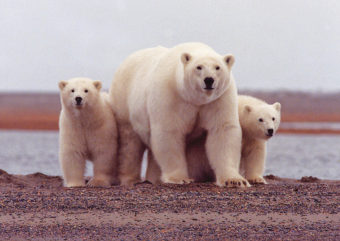
A polar bear mother watches carefully with her cubs along her side along the Beaufort Sea. (Photo courtesy USFWS)
Cooperation across the Bering Strait was strengthened this week when the United States and Russia signed a joint wildlife agreement.
Officials from the two Arctic nations met in San Diego to discuss polar bear and snow goose monitoring efforts in Alaska and Chukotka.
James Kurth, Deputy Director of the U.S. Fish and Wildlife Service, signed off on the agreement alongside his Russian counterpart Amirkhan Amirkhanov, deputy head of the Federal Service for Supervision of Natural Resources.
The two have worked together on wildlife management in the past. A similar joint management effort took place between 2013 and 2015. At this week’s meeting in San Diego, Russian and American officials also discussed results from their joint study on the dynamics of the Bering and Chukotka Seas’ ecosystems.
The U.S. Fish and Wildlife Service was unavailable for comment on the agreement.
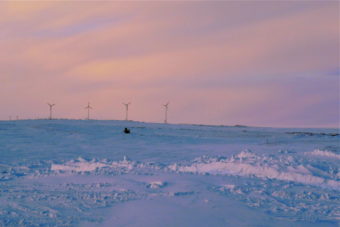
These four wind turbines in Chevak, pictured in March 2012, provide some renewable electricity to the village, but residents still pay high rates. (Creative Commons photo by Joseph)
Rural Alaskans can pay three to five times more for electricity than those in urban areas. That’s why the state launched the Power Cost Equalization Endowment Fund in 2000. It’s paid roughly $40 million annually to subsidize rural energy bills.
But some are questioning if the fund, now worth $900 million, should be committed to benefit only about one in nine Alaskans.
Senate Finance Committee Co-Chairwoman Anna MacKinnon alongside Sen. Pete Kelly. (Photo by Andrew Kitchenman/KTOO)
Senate Finance Committee Co-Chairwoman Anna MacKinnon, an Eagle River Republican, said the state government could consider tapping the fund.
“You’ll see Power Cost Equalization come before us. There’s a billion dollars in that fund,” she said. “That billion dollars has been benefiting a selected group of Alaskans with Power Cost Equalization. But is that the highest and best use of those dollars now?”
MacKinnon is a sponsor of Senate Bill 196, which would rebudget fund earnings for other purposes. In years where fund earnings are greater than what’s needed for the Power Cost Equalization program, 60 percent of the excess earnings would go to the state government, 30 percent would go to renewable energy projects, and 10 percent would build up the endowment.
The fund lost money this year, so no excess money is available. It’s not clear whether MacKinnon and other lawmakers are looking beyond Senate Bill 196, to use the fund itself to help close the state’s budget shortfall.
Bethel Democratic Sen. Lyman Hoffman – another sponsor of the bill – sees Senate Bill 196 as a way to protect the fund’s principal while helping the state.
“So what we’re trying to do with this bill is to assure that during those high years, the fund only pay for its intended purpose – and if there are excess earnings, that those earnings be sent back to two different programs,” Hoffman said.
Rep. Bob Herron, another Bethel Democrat, said power cost equalization is fair to rural residents. He notes the endowment was started after the government paid for dams that provide power to cities.
Gov. Bill Walker wants to make sure that if changes are made to the fund, they’re considered along with his plan to close the budget shortfall. He wants to ensure everyone in the state shares the burden.
Walker expressed concern that the combined impact of Power Cost Equalization changes with Permanent Fund dividend changes would put too much of the burden on rural Alaskans.
“That’s why we have focused on a sustainable plan that is a broad-based plan, so that we take into consideration rural Alaska’s situation, which is unique versus urban Alaska,” Walker said. “We’ve tried to take all of that into consideration. That’s why one piece at a time doesn’t really work.”
The Senate Finance Committee heard testimony supporting Senate Bill 196 on Wednesday, but didn’t vote on the bill.
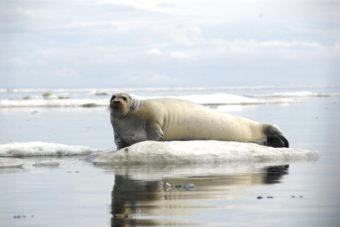
A bearded seal rests on ice off the coast of Alaska June 21, 2011. (Public Domain photo by John Jansen/NOAA Alaska Fisheries Science Center)
One of the warmest winters on record in Alaska means the spring season for bearded seals, or ugruk, has come nearly two months early for some hunters in Western Alaska. Warm weather makes the hunt a little easier, but locals are concerned about precarious sea ice and unpredictable weather.
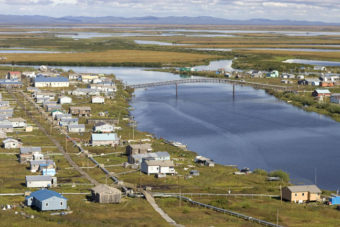
The village of Wales sits out on a point, along the Bering Strait coast, midway between Kotzebue Sound and Norton Sound.
“We live right on the bottleneck of the Strait,” explained Clyde Oxereok. He’s a seal hunter in Wales. He says hunters there are already gearing up for their spring ugruk hunt, which usually doesn’t start until April.
“Some of the hunters there are saying we have to get ready now because our leads are opening up, and when they open up, we’re hungry for the fresh meat and the fresh oil, and it’s coming earlier every year,” said Oxereok.
Ben Payana is also a seal hunter from Nome. “I’m a King Island descendant. My dad was born and raised for a little bit on King Island, and he brought me up doing all the ocean hunting, marine mammal hunting and that’s what I do now, every year.”
Payana explained the basics of hunting a seal. “Right now, if I were to go seal hunting, I would try to get up somewhere high and look out on the ice and try to find some leads, and then you’d go load up your snow machine and little row boat or whatever you’re going to retrieve the seals with,” he explains. “(Then you) try to find your way to that lead and then hang out on the edge of the ice there until some seals swim by, and then hopefully you’ll see one, shoot one, and be able to retrieve it in time,” he said.
Seal hunting can happen year-round and there are many species. Hunters usually wait until April to hunt ugruk, but the weather has been unseasonably warm this February.
As Payana stood along the coast in downtown Nome, he looked out over the sea ice.
“I see a lot of jumbled up, not very good ice for traveling,” he said.
Only a few days ago, steam rose from a large swath of open water, but a north wind blew big chunks of ice back up against the coast, so today, the bumpy, blocky edges peak out from windblown snow that seems to stretch for miles. Payana says there’s another problem with this ice.
“ … (it’s) not very thick ice out there for the seals to be denning in, because they should be having their pups in March and April, too,” he said. “I’m not a seal, but I would imagine they would prefer some thicker ice and more snow cover so they can have a nice safe den for their pups,” said Payana.
The story of this year’s sea ice up and down Alaska’s northwest coast is, well, jumbled.
“It’s a complicated picture,” said Becki Heim. She leads the Sea Ice Program for the National Weather Service in Alaska. There is no shore fast ice at Unalakleet to the south, or up in Kivalina to the north this year. Residents along the coast have posted photos and videos of thin ice and open water on social media sites all winter. Heim blames offshore winds.
“(The winds) have continued to blow the thickest ice that keeps refreezing out into the deeper waters offshore,” explained Heim. “What it’s doing is it’s leaving very thin, new ice near shore, so that’s why there’re more leads and thinner ice and access to the water,” she said.
Heim said it’s not rare for wind and sea ice to interact this way. But Clyde Oxereok said in recent years, not only is the ice less reliable but so is the weather.
“We can’t predict the weather,” he said. “We’re not going to 60 or 80 miles, even 30 or 40 miles anymore, which we used to do, because we knew the weather would hold. Now, we can’t predict that anymore. So that being said, we have to harvest what’s there when it’s there when we have the opportunity to go and get it.”
Otherwise, said Oxereok, they could miss out on the ugruk harvest entirely.
Dennis Davis of Shishmaref has also seen the weather become more unreliable in the winter.
“When I was growing up with my grandpa in Kotzebue in the late 80s and early 90’s, when they had dog teams and stuff like that,” said Davis, “you had to know how to read the weather or wonder what it’s going to do. Nowadays, it’s either hit or miss. You never know what’s going to happen,” he said.
People like Davis understand that the Arctic is always changing. But what’s unclear is how best to adapt to the increasing uncertainty of what change means for the sea ice, the weather, and a subsistence lifestyle.
The community of Selawik, near the mouth of the Selawik River, is home to over 800 people. The site of the village, spread between riverbanks and an island, is also called Akuligaq, meaning “a river fork.” (Photo by Steve Hillebrand/USFWS)
Legislators are looking to cut the state budget deeper than Gov. Bill Walker’s proposal to reduce spending by $100 million.
But some lawmakers – especially those from rural areas — are raising concerns about where these cuts will fall.
More than five weeks into the legislative session, House finance subcommittees recommended the first cuts to the budget for the fiscal year that starts July 1.
They include $9.8 million in cuts to education programs, as well as cutting all $2.7 million in state funding for public broadcasting.
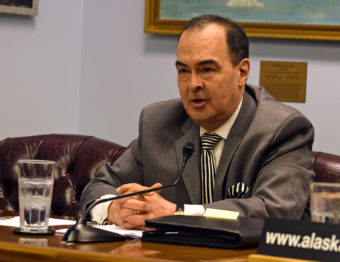
Rep. Daniel Ortiz, a Ketchikan independent, says eliminating the $2 million for a prekindergarten program is a mistake.
“It’s about investing now so that you don’t have higher costs later,” Ortiz said. “And it just makes good economic sense to do this. Yeah, we get the $2 million reduction but, you know, it’s going to be hard for anybody to chart the costs to the state later on down the road.”
Other proposed cuts include eliminating state funding for rural schools and libraries to increase broadband internet access. As well as a state program to fund mentors for teachers, which is aimed at retaining new teachers in rural Alaska.
Wasilla Republican Rep. Lynn Gattis says none of the cuts are easy, but they’re necessary. That’s because the state has a $3.5 billion budget shortfall.
“There’s nobody sitting here, and I suspect nobody in the audience, that’s very comfortable with any of these cuts,” Gattis said at an education subcommittee hearing. “Somebody said to me, ‘You’re making me make a choice: the right arm or the left arm. And the unfortunate part is — which arm do you write with — is where we’re at in making these cuts.”
Juneau Democratic Rep. Sam Kito says the state should be looking for new revenue, like Walker has proposed, before cutting programs that disproportionately benefit rural areas.
“The libraries in many of these communities become the focal point in trying to maintain connections with the outside world to try and engage students with technology,” Kito said.
For Anchorage Republican Rep. Mike Hawker, the debated education cuts are a small fraction of the overall cuts that are needed to close the state’s budget gap. He contends that the state expanded programs during oil boom years that it can no longer afford.
“The decisions that I want to see coming out of this Legislature are the difficult decisions to reduce our spending to a level that is sustainable,” Hawker said. “To do that, there is no question that we are going to have to be reducing programs in areas across the state that are good, that are desirable that people want but that respectfully we just can’t afford these days.”
Nome Democratic Representative Neal Foster says he hopes, before the budget is completed, the effects of the cuts are geographically balanced.
“I agree that cuts have to be made,” Foster said. “I’m sad to see that so many of these cuts are being made out of rural Alaskan programs. And so, I know it’s the beginning of the process, so I’m hopeful.”
Subcommittees are completing their work on the budget over the next week.
Sen. Donny Olson joined the the Alaska Senate’s Republican-led majority caucus on Wednesday. The move by the Golovin Democrat means that 16 of the 20 senators now caucus together.
Sen. Donny Olson, D-Golovin, at a Senate Democrats press availability in March 2015. (Photo by Skip Gray/360 North)
Olson said he’s honored to join the majority and will lend a strong voice for rural Alaskans.
He joins Sen. Lyman Hoffman of Bethel, another Democrat, in the Republican-led majority.
Senate Minority Leader Berta Gardner, an Anchorage Democrat, said her caucus members were disappointed.
But she said they’re pleased the majority will benefit from a member with progressive values, who supports public education and Medicaid expansion.
Olson represents District T, which covers much of the state. It stretches from Fort Yukon to Nome, and includes the North Slope and Northwest Arctic boroughs.
Rural Democrats have joined Republican-led majorities for many years. All six Democratic legislators who represent areas outside of Anchorage, Fairbanks and Southeast Alaska caucus with the majority.
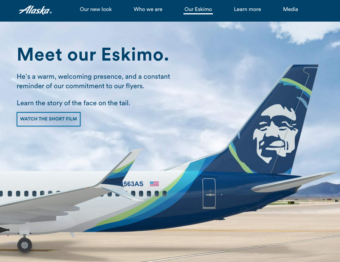
A screen capture from Alaska Airlines’ website. Amid criticism, the phrase “Meet our Eskimo” was changed to “Meet the Eskimo.”
When Alaska Airlines unveiled a new look for their airplanes and website, many Alaska Natives took offense to a phrase in their marketing campaign.
Alaska Airlines’ website prominently featured the familiar face of a smiling Alaska Native elder and included the phrase “Meet our Eskimo.” It’s sparked a controversy and a new conversation about what “Eskimo” means to Alaska Natives.
The phrase was quickly changed to “Meet the Eskimo,” but some Alaska Natives say that doesn’t go far enough.
“I would rather be called ‘Inupiaq’ because that’s what I am and my children are Yup’ik,” said Blossom Twitchell from Kotzebue. “I want them to be able to connect to their culture and people won’t group us in as little people that live in igloos and give little Eskimo kisses all the time. We are so much more than that. We have culture and traditions that have been passed down for generations and I don’t believe the word Eskimo does our heritage justice.”
After the Alaska Airlines redesign incident, Twitchell decided to take it a step further by starting a petition asking the Bureau of Indian Affairs to stop identifying people’s ethnicity as “Eskimo” in federal paperwork. The petition had 75 supporters as of Saturday evening.
Much like the familiar face on the tail of the Alaska Airlines planes, no one seems to have a definitive answer on where the word Eskimo came from. An article by University of Alaska Fairbanks linguist Lawrence Kaplan said the word meant “eater of raw meat” and might have been given to the Inupiaq people by Western explorers. The article also says the Canadian version of the word could have come from an Ojibwa word meaning “netter of snowshoes.”
The word isn’t used much in Canada where it’s considered offensive by many Inuit in the country. But Alaska Natives say they have been using the word for a while.
“In my first memories, we used Eskimo when referring to ourselves or each other,” said Nels Alexie, a Yup’ik elder from Bethel. “Then along the way we started using the word Yup’ik to describe ourselves.”
Like many Yup’ik interviewed for this story, Alexie is accustomed to the term and has no firm position about whether it’s appropriate or not.
Other Yup’ik elders, however, don’t like the term.
“If we stop using the names other people give us, they will understand,” said Theresa John, an associate professor of indigenous studies at University of Alaska Fairbanks. “Our ancestors were proud to be Yup’ik and were strengthened by their way of life. They wanted us, their descendants, to keep our tradition alive. Not to act like it’s not there, but to understand it and to live it.”
John also added noted that “Eskimo” isn’t part of the Yup’ik language, or any Native language in Alaska, originally.
Tiffany Zulkosky from Anchorage, and the former mayor of Bethel, sent a letter to Alaska Airlines expressing her disappointment about their website statements and invited them to participate in the racial equity summit sponsored by the First Alaskans Institute.
Alaska Airlines CEO Brad Tilden
In a statement, Alaska Airlines CEO Brad Tilden apologized on behalf of the company for the “insensitive reference.” The airline stated it is looking forward to working with the Alaska Native community to ensure their actions reflect their respect for all Alaska Natives and Alaskans.
Close
Update notification options
Subscribe to notifications
Subscribe
Get notifications about news related to the topics you care about. You can unsubscribe anytime.