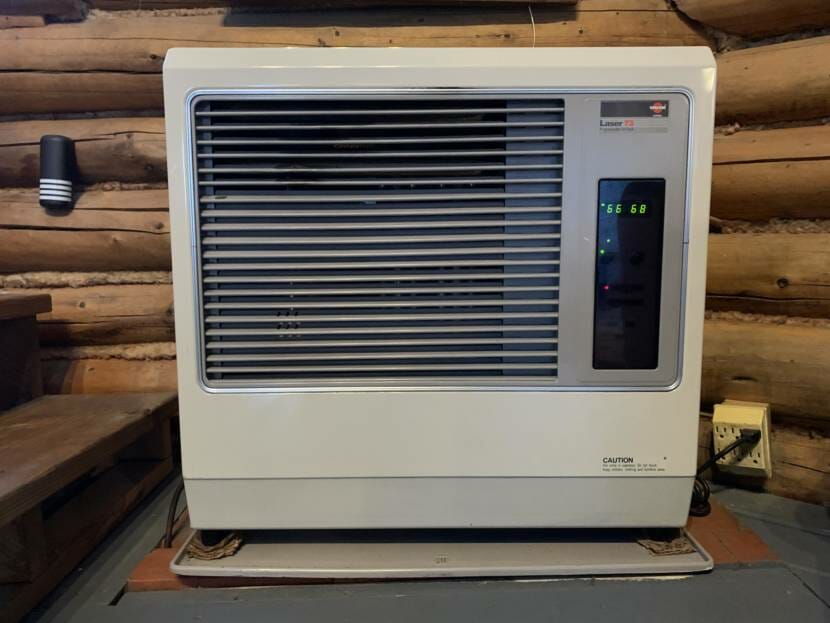
Step into any home in rural Alaska and there’s a good chance that a Toyostove is what’s keeping it warm. Toyostoves are heaters that run efficiently on stove oil. But the supply of Toyostoves in Alaska is running low, and it’s yet another symptom of the COVID-19 pandemic.
Bethel Toyostove dealer Grant Fairbanks has four Toyostoves in stock, and he said his supplier told him they can’t fill any additional orders until November at the earliest.
“And then those supplies will be limited. So it’s going to be a rough year for people that want to get a Toyostove,” Fairbanks said.
Rural Energy Enterprises is the only Toyostove importer for all of Alaska and several other states. CEO and President Jason Evans declined an interview with KYUK but wrote in an email that the company has half the inventory of Toyostoves it normally does. He said that the company has placed limits on the number of Toyostoves that dealers can purchase so they don’t create a run on the low inventory.
Evans added that the shortage has, “no end in sight.”
For the limited number of Toyostoves that are available this year, Evans said they may be more expensive due to huge increases in shipping costs. Toyostoves generally cost between $1,000 and $3,000.
Toyostoves are made by a company in Japan called TOYOTOMI. Fairbanks said that company is facing the same pandemic-fueled problems that are plaguing the auto industry.
“They are having a very hard time getting computer chips and circuit boards and relays, and then also ocean shipping,” Fairbanks said.
Evans, the statewide importer, confirmed this explanation for the shortage. During the COVID-19 pandemic, demand for computer chips skyrocketed as more people are staying home and using electronic devices. On top of that, various COVID-19 outbreaks temporarily shut down major ports, creating shipping backlogs that still haven’t been resolved.
Robert Pitka is the tribal administrator in Toksook Bay, a village with about 650 people on the coast of the Yukon-Kuskokwim Delta. Pitka said that in Toksook Bay, Toyostoves are ubiquitous.
“Practically every household in Toksook I know of uses Toyostoves,” Pitka said.
He says about half of homes also have a wood stove, but many rely solely on Toyostoves to heat their homes. Like any appliance, Toyostoves can break down. Pitka said the tribe was planning to use coronavirus relief funds to stockpile several Toyostoves this year. That way, they could provide a replacement for families if theirs stopped working. But so far, he said that the tribe has only been able to purchase one.
Pitka said that for many rural communities in Alaska, the Toyostove shortage could become a matter of life or death.
“It’s an emergency need. I can only put it that way,” Pitka said. “Sooner or later, someone’s going to break down a Toyostove. We can’t just leave out a family in the cold.”
While the Toyostove shortage will hit families hardest, businesses that sell the heaters will suffer as well. In Bethel, Fairbanks said that he sells anywhere from 20 to 80 stoves per year. He had expected a strong year of sales because villages like Toksook Bay have coronavirus relief funds to spend.
“And so they want to buy Toyostoves, and they can’t get them,” Fairbanks said. “It’s really gonna hurt my business.”
Fairbanks said that while Toyostove sales will suffer, another business opportunity will open up: repairing old, broken stoves.
“I encourage people, instead of buying a new one, to rebuild them because you can rebuild an old Toyostove for half the price of a new one and it’s just as good,” Fairbanks said.
He said that even if people in Y-K Delta villages pay to ship their broken Toyostoves for him to repair in Bethel, it would still be cheaper than buying it new. But he won’t be able to service all the Toyostoves in the region. For anyone in rural Alaska that is mechanically inclined, he said that this would be a good year to start a Toyostove repair business.
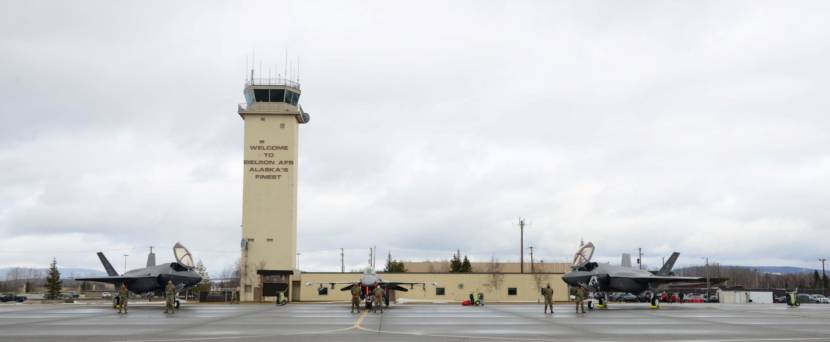
Eielson Air Force Base hosts F-35 fighter aircraft on April 21, 2020. On Tuesday, Air Force Lt. Gen. David Krumm told Alaska legislators that housing and school concerns are obstacles to attracting military families to parts of the state. (Sean Martin/354th Fighter Wing)
Military leaders in Alaska told state lawmakers on Tuesday that a lack of housing and concerns about schools make it hard to attract military families to the state.
Air Force Lt. Gen. David Krumm said the Air Force isn’t allowing service members to bring their families to Eielson Air Force Base near Fairbanks due to a lack of housing. He said the Air Force is working at every level of government to address the problem.
“But we’d really love your help in making sure that builders are incentivized to build homes,” he said. “We are bringing people. We want them to bring their families.”
Krumm pointed out that there will be a demand for Air Force members at Eielson, with F-35 fighter aircraft based there.
Krumm and other military leaders spoke to the Legislature’s Joint Armed Services Committee at an annual meeting that was delayed by COVID-19.
Krumm said he’s also focused on schools and childcare to improve the quality of life for Air Force families in the state. He cited the low number of teachers and counselors per student compared with some other states as being sources of concern for military families.
And he said many other states make it easier for military spouses to work by being more flexible in accepting professional licenses from other states.
Army Maj. Gen. Brian Eifler also talked about the importance of housing. He pointed to improvements the Army is planning for the barracks at Fort Wainwright in Fairbanks, including a new building planned by 2030.
And Coast Guard Rear Adm. Nathan Moore said the pandemic has been particularly difficult for those stationed in parts of the state that are far from military bases.
“We certainly feel like our Coast Guard men and women that are in these remote locations have had a rough year and a half,” he said. “The COVID restrictions have been tough on people, both from a resiliency standpoint (and) a mental health standpoint.”
The leaders also address lawmakers’ questions about COVID-19 vaccinations.
Krumm said the Air Force is educating members on the vaccine, which has been ordered for all members except those who have valid medical or religious reasons for not receiving it. He says 2-2.5% of Air Force members in the state are seeking exemptions.
Krumm also says COVID-19 restrictions imposed on the military in the state have helped.
“We have proven that we have minimized the spread of COVID-19 on our installations when we implement mitigation measures,” such as wearing masks and maintaining social distancing, Krumm said.
More National Guard members have asked for vaccine exemptions. Maj. Gen. Torrence Saxe, the Alaska National Guard adjutant general, said 5-10% want exemptions so far.
Wasilla Republican Sen. Mike Shower said it’s important to him that military members aren’t “kicked to the curb” and denied future benefits if they refuse the vaccines.
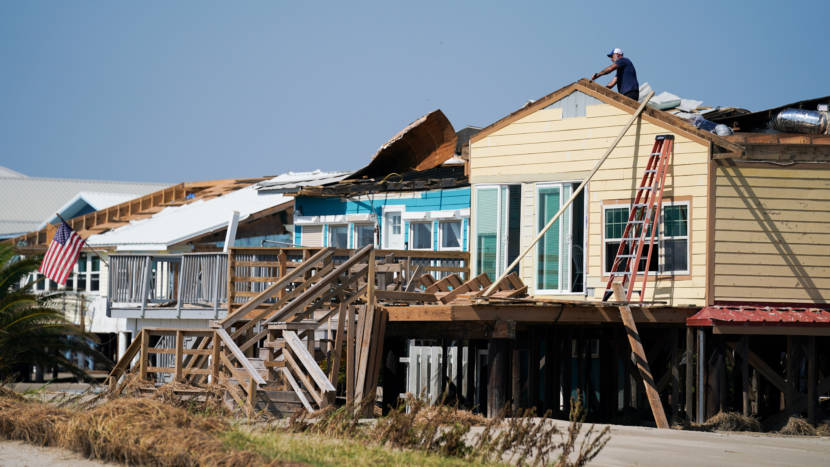
A man works on the roof of a storm-damaged house on Sept. 4 after Hurricane Ida swept through Grand Isle, La. A new poll finds that two-thirds of Americans say if their home is hit by an extreme weather event they’d rather rebuild than relocate. (Sean Rayford/Getty Images)
Even as climate change increases the frequency and intensity of extreme weather events, from fires to floods and hurricanes, two-thirds of Americans say if their home is hit they would rather rebuild than relocate, a new NPR/PBS NewsHour/Marist poll finds.
Republicans were the most likely to say they would hunker down and rebuild (81%). But more than 6 in 10 Democrats and two-thirds of independents said so as well.
Forty percent of Gen Z and millennial survey respondents said they would be more likely to move — by far the biggest percentage among generations.
The poll of 1,220 adults, which was conducted Sept. 20-26, found about 3 in 10 Americans say they have been personally impacted by an extreme weather event in the past two years. It also asked whether such recent events generally have changed people’s thinking about where they live. For a large majority they have not. Fewer than 1 in 10 said such events have made them want to move from where they currently live. But those most likely to want to move were lower income (12%) and Black (16%) or nonwhite (14%).
In Thibodaux, La., 44-year-old Pamela Wiggins is repairing minor damage to her home after Hurricane Ida blasted her town with Category 4 winds. She’s unemployed and says the cost of living in the path of hurricanes has become prohibitive.
“Every time they see there’s a storm in the Gulf [of Mexico], we automatically fall under the evacuation,” she explains. Wiggins estimates Hurricane Ida cost her $6,000 in savings — from hotel rooms to rental homes, to the $50 of gasoline she needed each day to keep a generator running for three weeks before the power came back.
She has lived in Louisiana her whole life. But once her house is repaired, Wiggins says she is determined to sell it and leave the Gulf Coast.
“This plays on you mentally, when you have to go through that. And it’s not the storm itself, it’s the aftermath of the storm that weeds you out,” she says.
Billion-dollar disasters
The mounting cost of climate-fueled disasters has been seen in communities across the country, from New Orleans after Katrina to New Jersey after Superstorm Sandy. It’s all been to the tune of billions of dollars — and the price tag is only going up.
In 2020, for example, extreme weather events caused $95 billion in damage, “the fourth-highest inflation-adjusted annual cost total since 1980,” according to a report from the National Oceanic and Atmospheric Administration. NOAA found the total cost of billion-dollar disasters in the U.S. over the last five years exceeded $600 billion.
And those climate-fueled disasters have become more frequent. The Congressional Research Service found 10 or more such events each year since 2015 with a “record-tying 16 such events in just the first nine months of 2020.”
The cost to the American taxpayer and insurance companies has also exploded in recent decades as Congress tries to grapple with how to respond. Starting this month, many homeowners in flood-prone areas will see higher rates from the debt-ridden National Flood Insurance Program. The Federal Emergency Management Agency has also faced criticism for racial inequities in disaster aid, with many who need help the most unable to get it.
Westerners are more likely to want to move
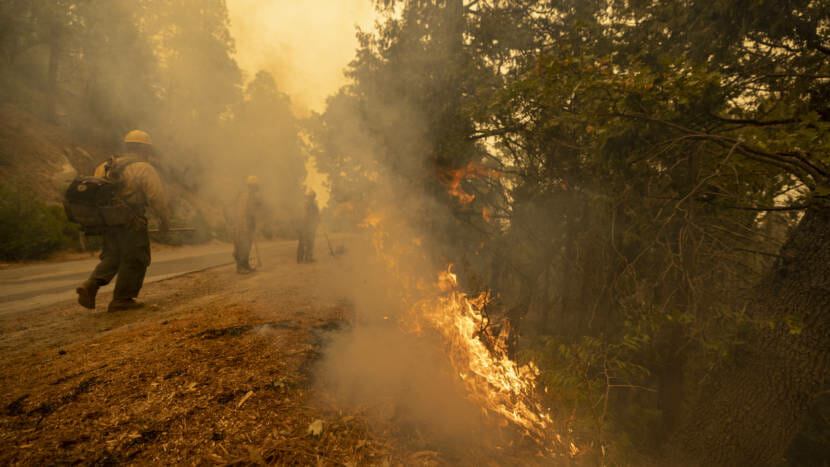
The West has faced years of devastating drought, increasingly destructive wildfires and widespread exposure to toxic smoke. (David McNew/Getty Images)
The new survey broke down responses regionally, and those living in the West were most likely (14%) to say they want to move away because of recent weather events. The region has faced years of devastating drought, increasingly destructive wildfires and widespread exposure to toxic smoke.
“We have smoke today, right now, from all these fires,” Lorie Luiza says from her home in the foothills above Sacramento, California. “You can’t breathe, you get sore throats and headaches, and so it’s difficult, you have to shut all the windows and everything.”
Luiza tells NPR that she wants to relocate — at least during the summers — and has been looking for property in Washington state. But as a Republican, Luiza worries the liberal state government there won’t be any more effective than California’s in reducing the threats from wildfire, something she believes can only be solved with increased logging of federal forests.
“The political arena that’s feeding into these fires is really disturbing,” she says.
There’s debate over which is a bigger factor in the rise of megafires — climate change or the need for more aggressive forest management. Fire scientists say both are to blame.
The two major political parties view the solutions to climate change very differently. Democrats are much more likely to make the issue a priority and believe infrastructure investments and increased regulations on polluters are necessary to reduce greenhouse gas emissions fast enough to avoid the most catastrophic impacts. Republicans who acknowledge the issue, on the other hand, are concerned about the potential energy costs to consumers and expenses to businesses.
Former President Barack Obama signed on to the Paris climate accord to try to curb warming with efforts made by countries across the globe. Former President Donald Trump then ripped up the deal in his early days in office. President Biden has rejoined Paris, but his far more ambitious climate measures are stalled in Congress. They’re key to U.S. credibility at a U.N. climate summit in Glasgow next month, where the U.S. hopes to persuade other countries to take more aggressive climate action.
Copyright 2021 NPR. To see more, visit https://www.npr.org.
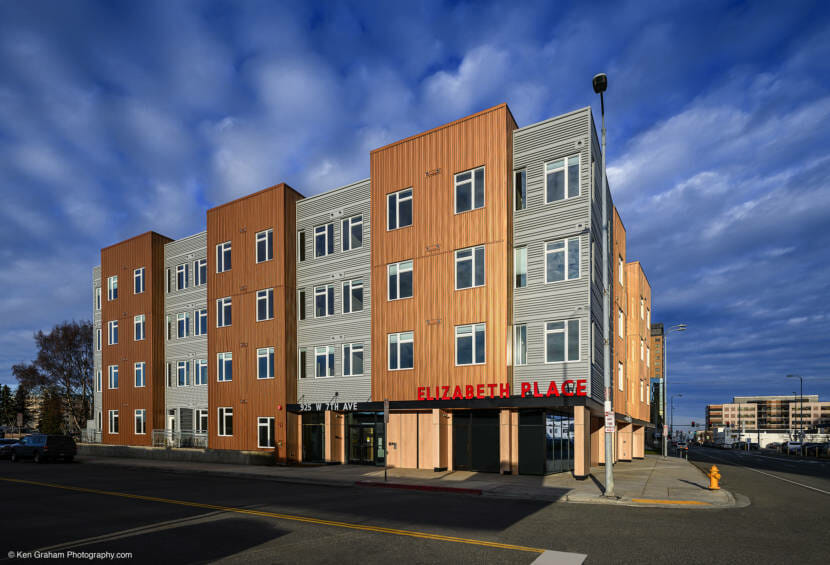
Elizabeth Place, a mixed-income apartment development in Downtown Anchorage. (Courtesy of Ken Graham)
The federal eviction moratorium, which protected tenants who couldn’t pay rent from being kicked out of their homes, ended last month after a Supreme Court decision. But Alaska renters struggling to pay their landlords and utilities due to the COVID-19 pandemic have another option to receive support.
The Alaska Housing Finance Corporation opened another round of rental assistance applications last week. AHFC CEO Bryan Butcher says the corporation worked to get the first round of relief money out quickly. Butcher sat down with Alaska Public Media recently to explain how the process works.
Below is a transcript of the conversation, with minor edits for clarity.
Kavitha George: Could you describe the need for rental assistance in Alaska over the last few months? How has that been impacted by the end of the eviction moratorium?
Bryan Butcher: When we started the rent relief program with federal money this spring, we knew that there was ultimately going to be an end to the eviction moratorium, and there was really a focus on getting the process streamlined to get the funding out as quickly as we could. Of course, it never gets out quickly enough, but we were happy that we have pretty much led the nation — certainly per capita — in the amount of money that we’ve been able to get out the door.
We’ve gotten out more than $131 million to landlords and utilities. And so when the eviction moratorium ended, virtually all of the people that had applied to the program have had some money provided to catch them up on their rent and to pay into future rent and utilities.
We’ve also worked very closely with the court systems to make sure that if evictions do come into the court system, that they’re aware of our program. They can contact us and make sure that if somebody qualifies for help, and the funding hasn’t made it out yet, but it will be making it out, that they understand that and that eviction proceedings don’t start as a result of the fact that maybe there’s a lag between when applications come in and when the money actually goes out.
Kavitha George: How many Alaskans have taken advantage of the program already? And if a renter hasn’t yet applied, where do they find more information?
Bryan Butcher: The initial opening to sign up for the rent relief program was this spring, in March, and a third of all rental units in the state applied, which is both good news and bad news. The good news is we got the information out, and there probably aren’t a whole lot of people that needed the help that didn’t sign up for the help. The downside is that’s an awful lot of Alaskans that are really in financial need as a result of this pandemic.
Fortunately, we have the funds to help them out. And so we’ve reopened the process to have more folks sign up. They can sign up now on our website, alaskahousingrelief.org to find out if they qualify. Signup is through 11:59 p.m., Friday, Oct. 1.
Kavitha George: Who is eligible for rental assistance?
Bryan Butcher: You have to be at 80% of area median income for your community. And as an example, in Anchorage, that would be $77,840 a year, or $6,487 per month for a household. On the website, the first thing it does when you put in your information is it tells you if you’re eligible or not. So you really have to go on the website to find out for your community where that line is. But people that are at that point and have been detrimentally financially impacted by the pandemic would qualify.
Kavitha George: How does the assistance payment work? When you apply, if you’re approved, where does that money go?
Bryan Butcher: If you’re eligible, then we collect paperwork, and when we have your information — lease payments and other things — we then determine what we’re able to do for you. Those payments go to the landlords and to the utility companies, they don’t go directly to the renters. We want to make sure that whoever is owed the money gets the money paid on behalf of the renter.
Kavitha George: The application period that recently opened, is that for new applicants, or can people who had already received assistance apply again? How does that work?
Bryan Butcher: That is for new applicants. Those people that are in the system already are continuing to be processed. The federal rules for the program allow us to pay forward up to three months if they still qualify, but no more than that. Once your three months of assistance runs out, we then have a checking process to make sure you qualify and then you could be eligible for an additional three months. So this signup period now is for folks that either didn’t get their paperwork in, weren’t aware of it, or didn’t want to take advantage of it then, but want to take advantage of it now. So it should be a whole new group of people.
Kavitha George: There was a waitlist after the last round of rental relief applications. After this round, do you expect there will still be a waitlist? Will everyone who needs rent money be able to get it?
Bryan Butcher: That’s really the question that we’re not going to know till Oct. 1, when the signup closes. And then we start to go through how many people need help and what level of help they need. We may be in a situation where we have funds available and we can look at doing something else, or we may be in a situation where all the funds we have available then will be spoken for. So it really depends on what the numbers are, as they come in.
Kavitha George: What advice do you have for renters and landlords working through pandemic-related financial struggles right now?
Bryan Butcher: It’s really important that the renters and the landlords communicate with each other because the landlords, for the most part, if they have good renters, they don’t want to lose them. Not just because those are good renters that have had financial hardship, but also who else they may rent to in a recession caused by a pandemic — many people are in difficult financial situations. And so there’s really an incentive, I think, for a landlord to want to work with the tenant. But communication between the two of them so that landlords don’t unilaterally make decisions to move forward on things without being aware that financial assistance is coming, would be difficult for both of them.
Kavitha George: Anything else you’d say to someone who’s on the fence about applying?
Bryan Butcher: Just that sometimes people have said, “Well, you know, if Alaska doesn’t use all this money, it can go back to DC and it can reduce the debt or it can reduce income taxes,” and that’s not the way the program works. Any money that Alaska or other states don’t use goes back and gets redistributed to California or Texas or states that have more of a need. So it’s really important that if Alaskans have a need and this is an opportunity to get them out of a financial hole they’re in, that they take advantage of it, because if it doesn’t benefit Alaskans, it’s just going to benefit somebody someplace else.
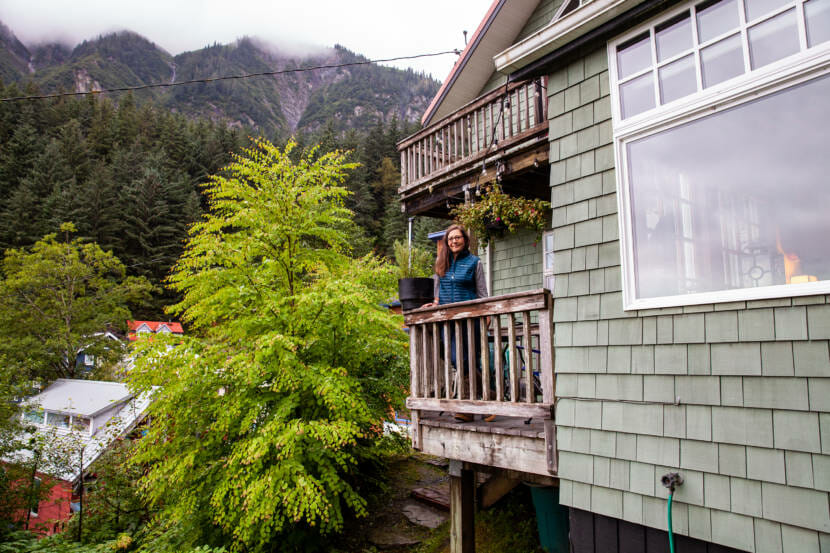
Sally Schlichting stands on the deck of her Starr Hill neighborhood home on Aug. 24 in Juneau. In the city’s new hazard maps, her home is shown as being in a severe landslide zone. (Rashah McChesney/KTOO)
The City and Borough of Juneau is asking its assembly to adopt updated hazard maps. A new scientific report puts about half of the structures downtown at moderate to severe risk of landslide or avalanche. But some residents say they aren’t ready for the upgrade.
The Starr Hill neighborhood is nestled into the side of Mount Roberts above downtown Juneau. Sally Schlichting is pushing through some brush on the steep hillside behind her home of 20 years.
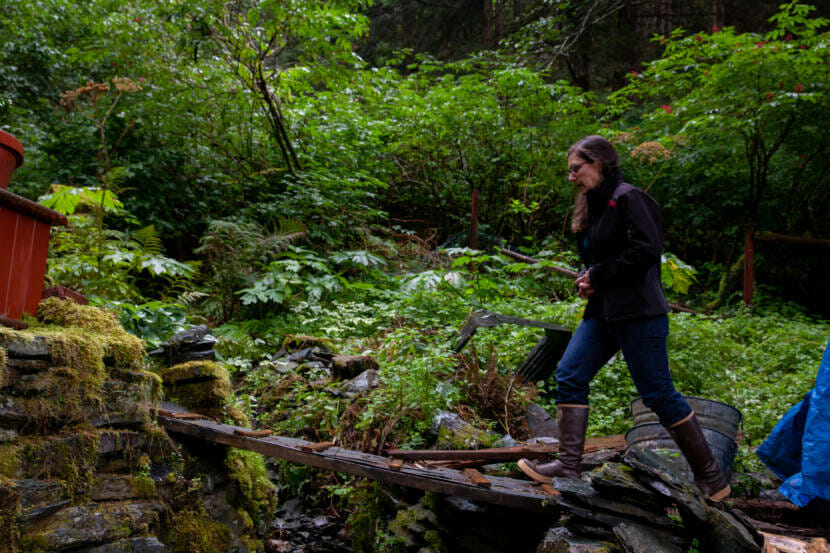
“This is a rather unique situation,” she said, gesturing at a stone-lined gully.
When it rains, water flows down the hillside through the gully. She says debris has come down, too, in storms. So when she looks at the new hazard maps the city is proposing, she’s certain this is where the contractors think there’s a severe risk of landslides.
“We had previously been in a moderate landslide zone. And these maps now had us depicted in a severe landslide zone, which was kind of a shock and a major change for us,” Schlichting said.
It was a major change for about a dozen of her immediate neighbors, too. She says the new maps — and all geotechnical information that comes with them— are a lot to digest.
“We just got this information, maybe a month or so ago, and we all need to kind of catch up,” she said. “We need time to catch up with the city in all of this. When it’s your home, and the place where you raised your kids…”
The buzz of neighbor’s saw cuts Schlichting off, but her point is this — it’s emotional, too. She’s lived here for decades, and she says nothing really bad has happened yet.
“I felt like, you know, I felt blindsided by it, but perhaps not too surprised. After I read the report, I felt like the science seems pretty sound,” Schlichting said.
So she’s one of a lot of downtown residents questioning whether or not these new maps do them too much financial harm to be worth their intended public safety value.
Sally Schlichting walks up over a drainage ditch in her backyard on Aug. 24 in Juneau. (Rashah McChesney/KTOO)
And this is the tricky piece — hazard maps ideally come before development. Now the assembly has to decide whether it’s right to adopt the maps or wait until it’s clear what the effects will be on the significant number of people whose downtown property would then be in a hazard zone.
“From my perspective, it wasn’t wise to make those changes without a full understanding of the impacts the changes might have,” said Mike LeVine, chair of the city’s planning commission.
While he can’t speak for the commission as a whole, he said it’s complicated to adopt the maps because that comes with changes that could affect people like Sally Schlichting.
The commission was divided on the issue, but the majority voted to tell the assembly to wait to adopt new safety maps until residents have a better sense of what it means for their homes. Others said the science speaks for itself and voted to recommend the assembly adopt the maps.
“It is not clear, at least to me, whether these changes could have effects on property values for individual owners,” LeVine said. “And could these changes have effects on homeowners’ ability to sell their property or to get financing for purchasing a property? I don’t have the answer to these questions.”
The city doesn’t have those answers either.
“They’re tough questions. They’re very important questions, and we obviously don’t know the answer to them. They’re market questions,” said Teri Camery, Juneau’s senior planner. She’s in charge of the project to evaluate landslide and avalanche risk downtown. She says from a public safety perspective, the city needs new maps now. The ones they have are from the ’70s.
“We know they are outdated. They’re inaccurate. And we’ve had a lot of really serious storm events in Southeast Alaska the past few years. We’ve had deaths from landslides in both Sitka and Haines. And it’s just really critical to get updated hazard information to protect public safety and public property,” Camery said.
Camery says that even though these areas are already developed, there are still a lot of important decisions to be made about where development can increase, and where it may need to be cut back.
Money is also the reason why the department asked the city to adopt the maps now and consider regulations and the market implications later. There’s federal money available for both the maps and the regulations that will affect homeowners, and they come at separate times. Initially the planning department thought it needed the maps to be accepted before it got money to talk about regulations. Camery says that might not be the case any longer.
But back on Starr Hill, Sally Schlichting is worried her home could lose market value and even become uninsurable. Ultimately, she’s not sure if she wants this map upgrade at all.
“Would I like to see them get passed? I think I, I struggle with that,” she said.
She says she wants people to be safe. And for her, that makes the discussion worthwhile.
The maps will be considered in Committee of the Whole meeting on Sept. 20 before they are scheduled for a first reading before the assembly.
Either way, the maps are out there. Regardless of whether the assembly adopts them, they’ll be available on the city’s website.
Correction: the maps will be considered at only one meeting on Monday, September 20th.
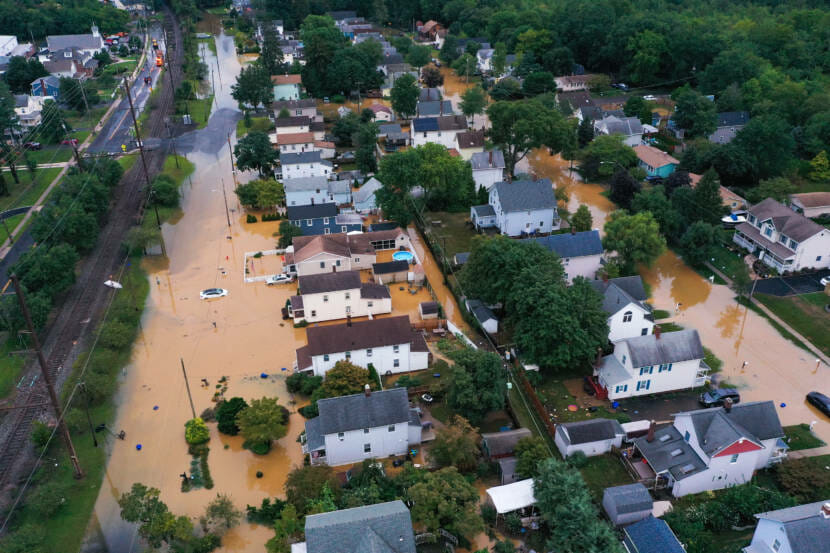
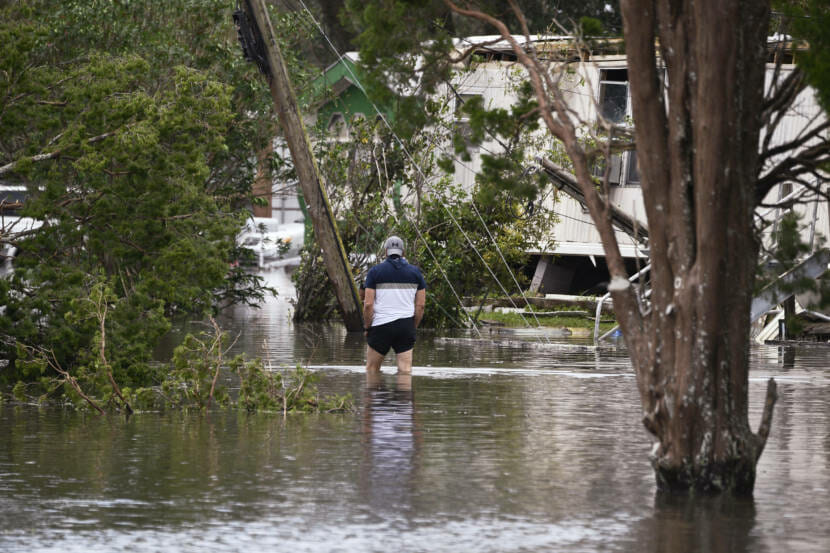
Homes that were sold by the Department of Housing and Urban Development between January 2017 and August 2020 are in federally designated flood zones at almost 75 times the rate of all homes sold nationwide in that period. New Jersey is one hot spot. Here, flooding from Tropical Storm Henri in Helmetta, N.J., this August. (Tayfun Coskun/Anadolu Agency via Getty Images)
Editor’s note: This story has been updated with additional responses to NPR’s queries from the Department of Housing and Urban Development, which it did not provide before the story was published.
The first thing Larry McCanney fell in love with was the tree in the front yard. It cast shade on the porch of a house that, if he were honest, needed some work. But McCanney is handy, the price was right and the location was perfect, just a couple of miles from his childhood home in Burlington, N.J.
“We just kind of wanted to get our family started, and it was affordable for us,” McCanney says. “I’m still paying college loans off 11 years later, [and] we wanted to ensure that we were purchasing a place that, should I lose my job or if [my wife] lost her job, we wouldn’t be out of a house in two months’ time.”
There was one unexpected thing about the house: The seller was listed as the secretary of housing and urban development.
The homes that the Department of Housing and Urban Development (HUD) sells are foreclosures. The previous owner was unable to pay their federally insured mortgage, and the house was seized by a bank and turned over to HUD. Only a small percentage of foreclosed homes in the United States end up being sold by HUD, but the numbers add up. Between 2017 and 2020, HUD sold nearly 100,000 homes around the country.
Like McCanney, many buyers are first-time homeowners excited to find a house they can afford. There is a nationwide shortage of affordable homes, especially for low-income families. Providing safe, affordable housing is HUD’s mission.
But an NPR investigation finds that the homes HUD sells are disproportionately located in flood-prone places, compared with Zillow records of all homes sold in the United States. The agency does not fully disclose the potential costs and dangers of living in harm’s way, and some of these transactions have happened as local governments are buying out properties in the same areas to mitigate flood risk.
NPR analyzed tens of thousands of homes sold over a nearly four-year period and found that while HUD sells flood-prone homes in almost every state, a handful of states stand out as hot spots.
The findings include:
Homes that were sold by HUD between January 2017 and August 2020 are in federally designated flood zones at almost 75 times the rate of all homes sold nationwide in that period.
Louisiana, Florida and New Jersey stand out as hot spots. More than one-fifth of homes sold by HUD in Louisiana were in flood plains. In Florida, it was about 12% of homes sold by HUD, and in New Jersey, 7%. In comparison, Zillow’s records show that 0.1% or less of all homes sold in these states are in flood zones.
In many cases, buyers of HUD homes get less information about flood risk and the cost of flood insurance than if they were to purchase the house from a private seller.
Neighborhoods where HUD sold homes have lower median household income on average than areas where HUD did not sell homes.
Interviews with people who bought homes from HUD in multiple states make it clear that many buyers don’t learn that their houses are in an official flood zone until after they’ve made an offer or paid a nonrefundable deposit. And even if a house doesn’t flood immediately, the cost of managing flood risk can be significant.
There is no federal regulation requiring HUD to disclose flood risk to potential buyers. Most buyers find out their new house is prone to flooding when they are notified that they must purchase flood insurance, which happens so late in the homebuying process that it is often too late for families to back out of the purchase.
That’s what happened to McCanney. “That’s the one disappointment in this area. We’re in a flood zone, so we have to pay pretty expensive flood insurance,” he says. “I didn’t really take that into account when we first bought it.” This summer, a rainstorm flooded the park across the street and sent a foot of water into McCanney’s basement after his sump pump broke. McCanney says they’re eventually hoping to move to a house that’s not in a flood zone.
Housing and climate experts say the pattern of HUD home sales in flood plains raises questions about whether the agency fully appreciates the growing risks posed by climate change. And it suggests the housing agency may be inadvertently exposing families to catastrophic inundation, such as a foot or more of water in their home.
“This is an incredible insight,” says Laurie Schoeman, the resilience director for the national housing nonprofit Enterprise Community Partners, which manages affordable housing around the country. “It only bolsters the reality that a lot of homes that have provided shelter to low-income households are in areas of greater risk. These homes are in really vulnerable areas, and it puts households at risk.”
HUD spokesperson Michael Burns says one reason that HUD homes are disproportionately located in flood zones is that the agency does not choose the homes it sells and is likely to end up with homes that banks can’t or won’t sell because they are less marketable. Being located in a flood zone can make a home less marketable, he says, because buyers need flood insurance.
The agency is aware of climate-driven flood risks to homes, Burns says. “Millions of people in the United States live in areas prone to flooding, a threat that is only growing as climate change worsens,” he wrote in a statement to NPR. “Ensuring that federal agencies, including HUD, have the right tools and policies in place to increase resilience nationwide is a key priority of the Biden-Harris Administration for combating climate change and building strong, equitable communities.”
HUD does not disclose flood risk in its home listings
Many buyers of HUD homes don’t learn that their houses are in an official flood zone until after they’ve made an offer. That is too late in the process for many families.
A property’s flood risk needs to be disclosed early, when potential buyers are still weighing their options and before they make a deposit, as NPR has reported.
HUD could prominently display information on flood risk and the cost of flood insurance in its home listings. The underlying information is already available from a sister agency: The Federal Emergency Management Agency (FEMA) provides the vast majority of residential flood insurance and publishes official flood maps.
But unlike real estate sites such as Realtor.com and Redfin, the official HUD Home Store website posts listings on the main page that buyers see without information about flood risk. Many HUD homes are cross-listed on multiple websites, but HUD specifically directs potential buyers to their website.
After this story was published and aired on Morning Edition, HUD spokesperson Michael Burns confirmed that the agency has access to “certain FEMA-generated flood insurance data,” and requires that the buyers of HUD homes in flood zones obtain flood insurance in order to get a HUD-backed mortgage. But, Burns said, disclosing specific information about flood hazards would go beyond the agency’s role as a mortgage insurer for the homes it sells.
Schoeman says HUD should work with real estate agents and local groups that often help market and sell HUD homes, to make sure that the risk of flooding is clear from the get-go. Those groups could also help buyers understand how to mitigate flood risk, for example, by waterproofing a basement, updating yard drainage or raising the home’s foundation.
“We need to let people know ‘Your dream house is wonderful, and here are the steps you’re going to need to take to protect it from flooding, because you’re in a flood zone,'” says Schoeman. “That’s the conversation we need to have. Not, ‘Here’s your house!’ And then you find out later after the first flood, ‘Oh boy, I’m in a really bad situation.'”
Housing and climate experts say the pattern of HUD home sales in flood plains raises questions about whether the agency fully appreciates the growing risks posed by climate change. Climate change helped fuel Hurricane Ida, which caused deadly floods from the Gulf Coast to New England, including in Norco, La. (Patrick T. Fallon/AFP via Getty Images)
Low-income households have the most to lose
NPR’s analysis finds that the households in neighborhoods where HUD has sold homes are poorer on average than those in areas where HUD has not sold homes.
Long-term costs of flood damage can do tremendous harm to families, especially those who put their life savings into a home and live paycheck to paycheck. Low-income households are more likely to face health problems, displacement and bankruptcy after a major flood. In the long term, flooding can wipe out a family’s generational wealth by driving down home values or destroying homes altogether.
That worries some experts, who say HUD appears to be inadvertently concentrating marginalized people in risky areas and setting families up for big financial losses down the road.
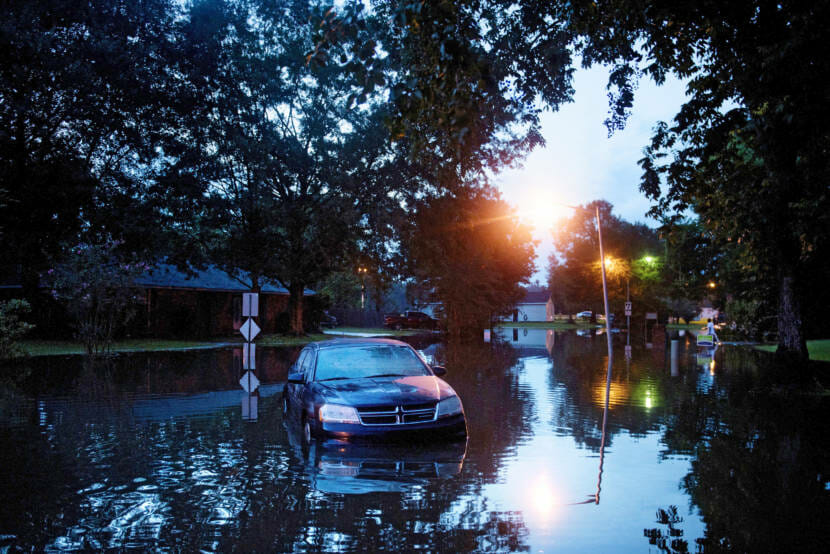
Global warming is driving more frequent and severe flooding in much of the United States. Floods that used to occur once in a lifetime are now happening every few years in some places. NPR visited multiple neighborhoods in the Tampa Bay region, along Florida’s Gulf Coast, where HUD sold more than 100 homes between 2017 and 2020. In several of those neighborhoods in coastal Pinellas and Pasco counties, streets routinely flood even on sunny days due to sea level rise.
The threat of inundation — as well as the allure of affordable homes located in flood plains — is particularly clear in places that have suffered catastrophic flooding in recent years, like the area around Baton Rouge, Louisiana.
Jonathan Stewman bought his house in Denham Springs, Louisiana, in the spring of 2019. Homeownership was a lifelong dream, and he was excited to move in with his wife and two toddlers. They painted the porch and put in some new front steps. Now, they like to ride four-wheelers in the big backyard, and he’s building the kids a swing set.
Stewman grew up in an apartment in nearby Baton Rouge and always dreamed of having his own place, a family and a yard for the kids. “I never knew what it was like to stay in a house. So when I moved here, it felt like home immediately,” Stewman says.
Stewman works overnight shifts at a local refinery. He says they purchased the house for just $110,000. He wouldn’t have been able to afford anything more.
Stewman purchased his home just three years after a massive, climate-driven rainstorm dumped more than 20 inches of rain over the area in less than 24 hours. Stewman and his wife were told by their real estate agent that their house took in about 2 feet of water that day. But the benefits of the house seemed to outweigh the risks. “I got a good deal on it,” he says.
Baton Rouge, La., and its suburbs experienced massive floods in August 2016. In the years since, state officials have worked with the federal government, including HUD, to move people out of harm’s way. HUD simultaneously sold homes in official flood zones in the area. (Brendan Smialowski/AFP via Getty Images)
Still, he wants to be prepared for future floods. Stewman is saving money to raise the home at least another foot off the ground. “I have a family here, and I just want to make sure it is safe and secure at all times,” he says.
HUD should proactively help families like the Stewmans protect themselves and their homes, says Robert Bullard, a professor at Texas Southern University and a longtime environmental justice researcher.
For one thing, it’s a stated priority of the current administration. On his first day in office, President Biden promised to address climate change in an equitable way. This summer, the White House directed all federal agencies to examine whether their climate-related programs adequately serve marginalized communities, including poor people and people of color.
“HUD has to step up. No doubt about it. That equity lens needs to be applied to all of HUD’s policies,” says Bullard, who is a member of the White House Environmental Justice Advisory Council. “That’s not rocket science, but it means cooperating with other agencies.”
For example, HUD could work more closely with FEMA, which produces flood maps, provides flood insurance and allocates money for climate-related mitigation projects such as raising houses.
Burns, the agency spokesperson, suggests that infrastructure spending proposed by the Biden administration would “make housing more resilient for millions of families and … ensure communities are better prepared for future disasters.”
HUD initially did not respond to specific questions about how it might work more closely with FEMA to reduce flood risk, or how its home sales in flood zones might impact low-income buyers. After this story was published, Burns wrote in an email to NPR, “Locking low-income homebuyers out of a great number of affordable homeownership opportunities because the homes are located in communities within flood zones not only runs contrary to the Administration’s objectives of achieving greater equity in homeownership, but prohibiting sales based on income would be comparable to sanctioning a resurgence of redlining.”
In response to the story, Burns also wrote HUD is “engaging with FEMA and other federal partners to look at policies, operations, and actions” that would make the nation’s housing stock more resilient to climate change.
State and local governments criticize HUD
Some local officials say HUD needs to do a better job working with state and local agencies too, especially in places where homes have flooded repeatedly.
In many such communities, local officials are trying to move people out of harm’s way by purchasing homes and knocking them down. Demand for home buyouts has steadily increased in recent years, and the federal government helps pay for them through multiple programs, including one administered by HUD.
Officials in Louisiana have embraced home buyouts as a solution in the flood-prone state. Hundreds of homes are being purchased through state programs and demolished to create catchment areas in growing flood plains.
Pat Forbes is the director of the Louisiana Office of Community Development, which oversees buyouts and administers federal disaster-relief money through HUD’s Community Development Block Grant program. That program pays to elevate and flood-proof homes and to move people to higher ground.
“That’s incongruous with a lot of other directives coming from HUD, where we are not allowed to put folks in harm’s way,” Forbes says.
For example, after a 2016 storm flooded over 50,000 homes in and around Baton Rouge, the state offered buyouts. FEMA sent more than a thousand letters to residents, telling them that they needed to elevate their homes or move. The areas targeted for buyouts included the town where Stewman lives. NPR’s investigation found that HUD sold at least 19 homes in that town between 2017 and 2020.
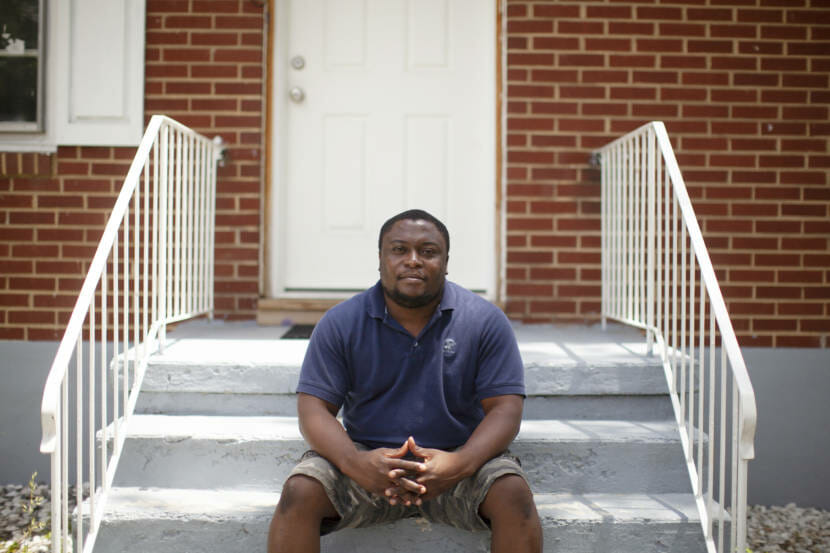
Akouete Yemey purchased his house in Roanoke, Va., from HUD. The house is located in the highest-risk flood zone. Yemey says buying directly from the government initially made him trust that the house was safe. He is considering a government buyout so his family can move to higher ground. (Ryan Kellman/NPR)
In Florida, federal data obtained by NPR and member station WLRN show that four homes sold by HUD in Miami-Dade County are listed as “severe repetitive loss properties” by FEMA. Such properties have been flooded and rebuilt multiple times, at taxpayer expense. All together, the properties incurred nearly $500,000 in flood insurance payouts between 1999 and 2015.
Flagging them as “severe repetitive loss properties” is intended to reduce the cost to the federal government of repetitive rebuilding, and to protect residents and prevent them from living in high risk areas by prioritizing the houses for elevation or buyouts.
In response to this story, HUD spokesperson Michael Burns told NPR that the agency cannot comment on the specific properties in Miami-Dade County, but that HUD “has an obligation to sell properties” in its inventory “so that the properties do not become the source of neighborhood blight and depress property values in neighborhoods.”
And local officials in other states echo the concerns raised by Forbes in Louisiana. The government of Roanoke, Virginia has spent years trying to move families out of repeatedly flooded homes along a creek, only to have HUD step in and sell one of the houses to a new owner after it fell into foreclosure.
A similar dynamic has played out in Burlington County, N.J., where Larry McCanney bought his home. The county is extremely prone to flooding, and buyouts are an important part of the local government’s strategy for preventing repeat flood damage. Some of the funds for buyouts have come from FEMA and HUD, more evidence of how parts of the federal government are sometimes in conflict on climate change.
NPR’s analysis shows that HUD sold more than 30 flood-prone properties in the county between 2017 and 2020, including a house in a creek-side neighborhood where the county has actively tried to purchase repeatedly flooded homes.
Mary Pat Robbie has directed the county’s resource conservation department for 20 years and was unaware of the HUD sales. She says it’s frustrating that HUD never reached out to the county. If it had, perhaps the county could have stepped in to prevent a flood-prone home from changing hands.
“You’re really preventing that buyer of the house from dealing with the agony of having their property destroyed,” she says. Robbie has worked directly with many homeowners who survived floods in the county, and she says people often don’t understand how upsetting it is.
“I’ve dealt with a lot of homeowners,” she says. “They lost so much of sentimental value that they’re never going to get back.”
After this story was published, HUD spokesperson Michael Burns responded that the agency was not aware of concerns about coordination with local and state governments, and that HUD “welcome[s] additional feedback directly from local officials on this issue.”
——————
Methodology: Through a Freedom of Information Act request, NPR obtained records of real estate owned (REO) single-family properties that HUD sold from January 2017 to August 2020. NPR cross-referenced the records with FEMA’s flood maps to identify homes in special flood hazard areas and also cross-referenced the records with American Community Survey data to analyze neighborhood characteristics of these homes. You can access NPR’s analysis and data here.
Copyright 2021 NPR. To see more, visit https://www.npr.org.
Close
Update notification options
Subscribe to notifications
Subscribe
Get notifications about news related to the topics you care about. You can unsubscribe anytime.

9(MDEwMjQ0ODM1MDEzNDk4MTEzNjU3NTRhYg004))
9(MDEwMjQ0ODM1MDEzNDk4MTEzNjU3NTRhYg004))