Family

After more than a decade, overcrowded Shaktoolik is finally getting new homes

A couple and child sitting on a couch
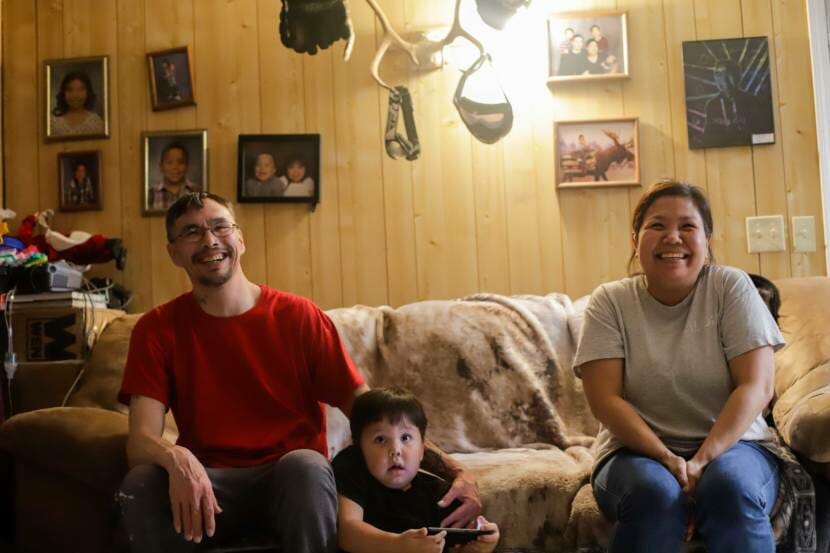
Sophia Katchatag, her husband Murphy Katchatag and their son Eric, Jr., 4, watch TV in their small, two bedroom home in Shaktoolik, Alaska, in January 2022. (Photo by Jeff Chen/Alaska Public Media)

The smell of moose soup and the sounds of “Teenage Mutant Ninja Turtles” fill Sophia Katchatag’s small, two-bedroom home in the Norton Sound village of Shaktoolik. She and her husband share one room with their two younger children. Their two older kids share another room.

“I mean, I would love for me and my husband to have our own bed, but we just work with it,” she said.

Their teenage daughter wants her own room, too, but Katchatag said expanding isn’t financially feasible even with two incomes, especially with the recent spikes in lumber prices. She said she feels lucky to have her own place at all, which the family inherited in May and renovated with money from the region’s tribal housing authority. In the past, they shared a single bedroom in her mom’s house, living with extended family.

“To be honest it was hard, it was challenging,” she said. “Not having your own privacy, your own space and having to be on everyone’s schedule, do things on their time.”

Statewide, Alaskans are twice as likely to live in an overcrowded household than the national average. Rates are highest in small, off-the-road-system communities like Shaktoolik, where around 60% of residents live in overcrowded conditions. The federal Department of Housing and Urban Development defines overcrowded as more than one person to a room in the house, including the living room and kitchen, and severely overcrowded as more than 1.5 people to a room.
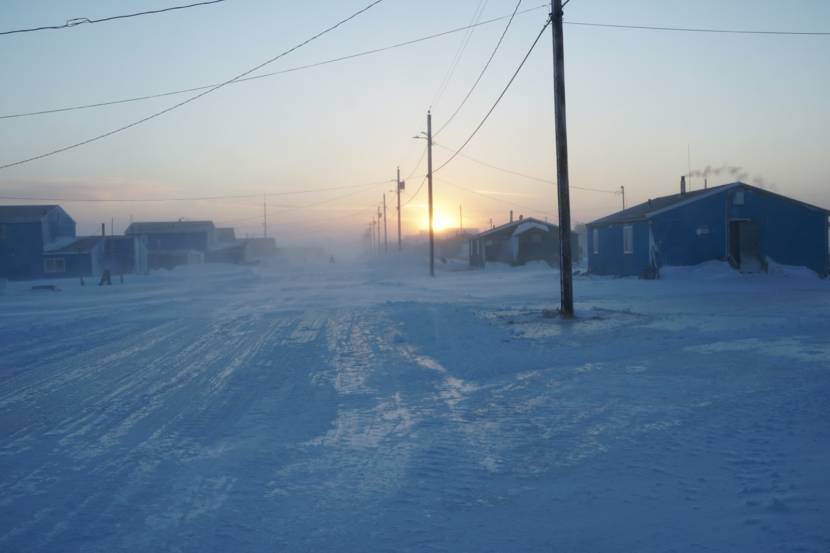
A wind-whipped village street in winter
A winter storm whips through Shaktoolik in January 2022. (Photo by Erin McKinstry)

“To be honest, in some of our places, if you’re living in a house that only has 1.5 individuals per room, that’s not going to be one of the more overcrowded houses in your community,” said Brian Wilson, executive director of the Alaska Coalition on Housing and Homelessness.

The problem is perennial, but the COVID-19 pandemic has made living with it harder.

Cramped conditions offer little space to work from home, conduct virtual schooling or quarantine, and they put multigenerational households at increased risk of infection, especially in communities with limited access to water and sewer.

“You know if one person in that home contracts COVID-19, it is impossible to physically space out and prevent the spread of that,” Wilson said.

Thankfully, he said, the places in the state with the highest rates of overcrowding also have the highest rates of vaccination. And in Shaktoolik, the tribe used federal COVID relief funding to retrofit an old clinic as a quarantine house. But, he said, the risk is still high.

“These are primarily smaller communities where everybody knows everybody, and it’s a beautiful thing culturally to say that if I live in one of those communities and I see my uncle or my brother or my friend’s nephew in a houseless situation, that I take them in,” Wilson said. “Unfortunately, the byproduct of that is the severe overcrowding, which can also be a very dangerous.”

Not enough homes
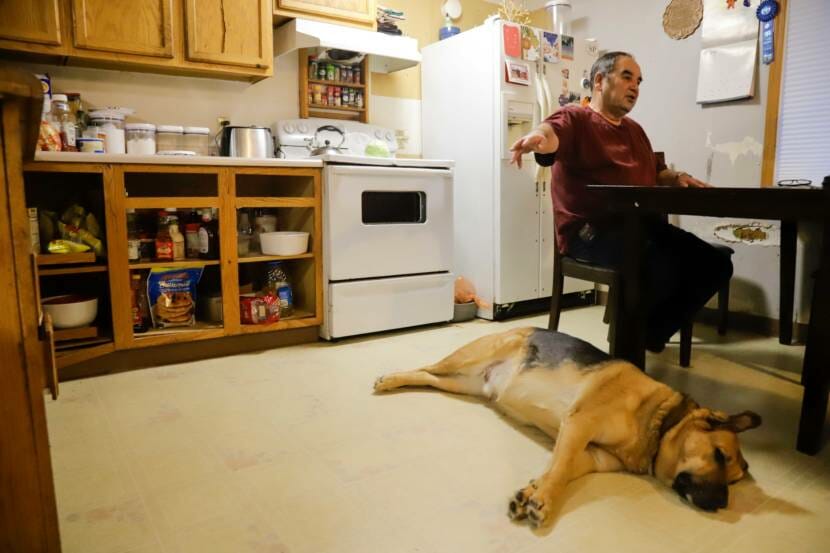
A man sitting at a kitchen table with a large dog lying on the floor next to him
Bering Straits Regional Housing Authority commissioner Eugene Asicksik has worked on housing issues in Shaktoolik for decades. He sees progress, but not enough. (Photo by Jeff Chen/Alaska Public Media)

Former Shaktoolik mayor and current Bering Straits Regional Housing Authority commissioner Eugene Asicksik said overcrowding leads to a host of problems in his community.

“You have too many adults living under one roof,” he said. “I think that adds to the social problems that occur when you have adults arguing or, you know, having a different opinion or fighting over the TV remote control and all that stuff.”

He’s been working to address housing issues in Shaktoolik for decades, and he does see some progress being made. But he said part of the problem is something that can’t be changed: Shaktoolik’s geography. The few vacant homes need work because of the harsh climate and substandard construction. And because the town is only accessible by barge or small plane, high construction costs keep people from building more or renovating.

“Everything has to be ordered,” Asicksik said. “One sheet of plywood can cost you over $100, $130 sometimes.”
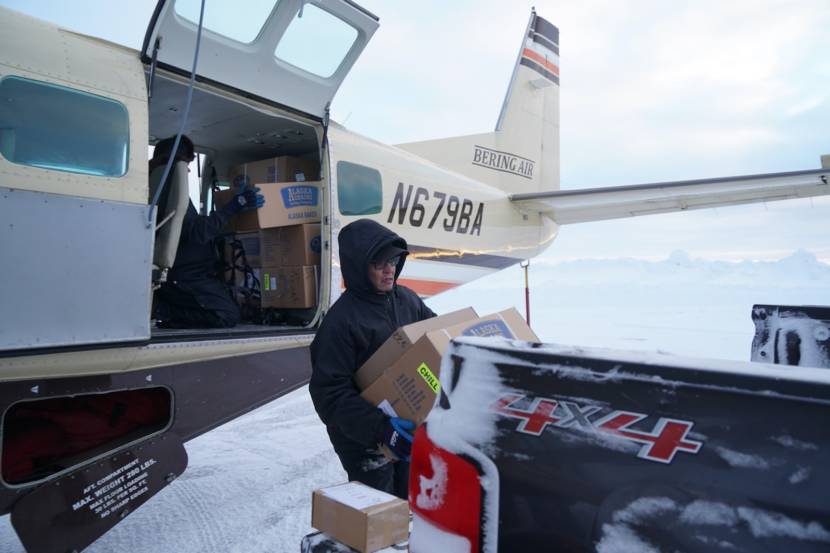
A man unloading boxes from an airplane into the bed of a pickup
Agent Reuben Paniptchuk unloads a Bering Air flight at the Shaktoolik airstrip in January 2022. Bush planes are the village’s only lifeline in the winter months, when conditions don’t allow for barge access. (Photo by Erin McKinstry)

Financing is difficult, too, because most of the land is owned by the village corporation instead of homeowners and bank loans are often inaccessible. Asicksik said he learned that personally, when he expanded his own home to make space for his children and grandchildren, and he had a hard time accessing a loan because he didn’t own the land. He had to put everything he owned up for collateral.

Climate change is also eroding buildable land and slowing down economic activities like crab fishing, which used to provide more jobs in the village.

And, Asicksik said, there’s a lack of awareness and resources to address the problem.

“I don’t think there’s much consideration to what goes on in the bush,” he said.

Roughly 250 people live in Shaktoolik, which is about 125 miles east of Nome. The community is around 97% Alaska Native.

The region’s federally funded tribal housing authority is responsible for the bulk of the town’s residential construction. They haven’t built here in more than a decade, but thanks in part to federal COVID relief funding, Shaktoolik is getting four new modular houses.

That’s welcome news for city clerk Isabelle Jackson. Like many other residents, she’d thought about leaving because of the high cost of living and lack of housing options. But the subsistence lifestyle and the tight-knit community have kept her here. She’s waited almost 10 years for a home of her own.

“I remember the moment when they called me, and after they said I’m one of the recipients for a three-bedroom home, I started crying. I got quiet. Tears rolled down my eyes, just for, you know, happiness,” Jackson said.
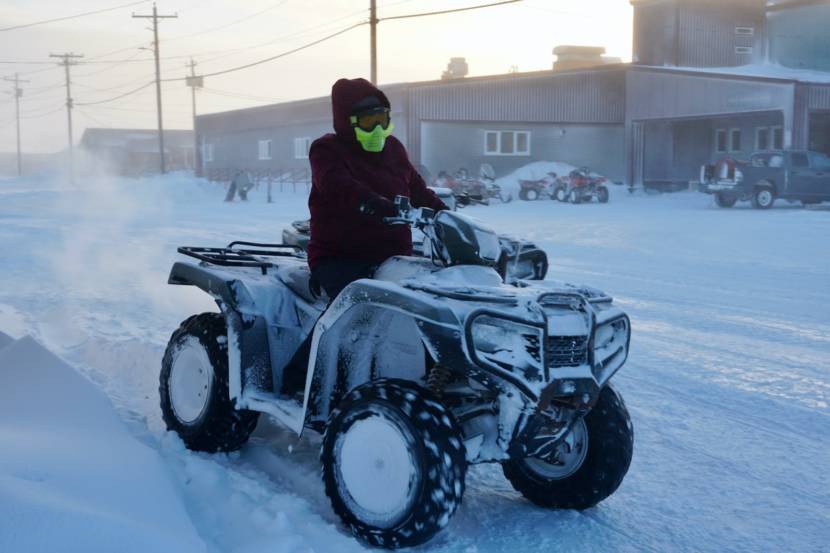
A woman driving and ATV on a snowy street
Isabelle Jackson rides her ATV between her home and the Shaktoolik city office, where she works as the city clerk. She’s been on the waitlist for a new home since 2013. (Photo by Erin McKinstry)

Jackson will pay an income-based rent for 25 years and then own the home outright. Right now, she and two of her kids share a hallway. Her father, who’s sick, sleeps on the couch. That’s been particularly difficult during the pandemic ,when they’ve worried about spreading the coronavirus.

“We’re, like, helping each other out, you know, taking care of him right now. But yeah, it’s difficult when my son wants to, you know, play and stuff, but he has to, you know, be quiet and have that respect,” she said.

Tackling a complex problem

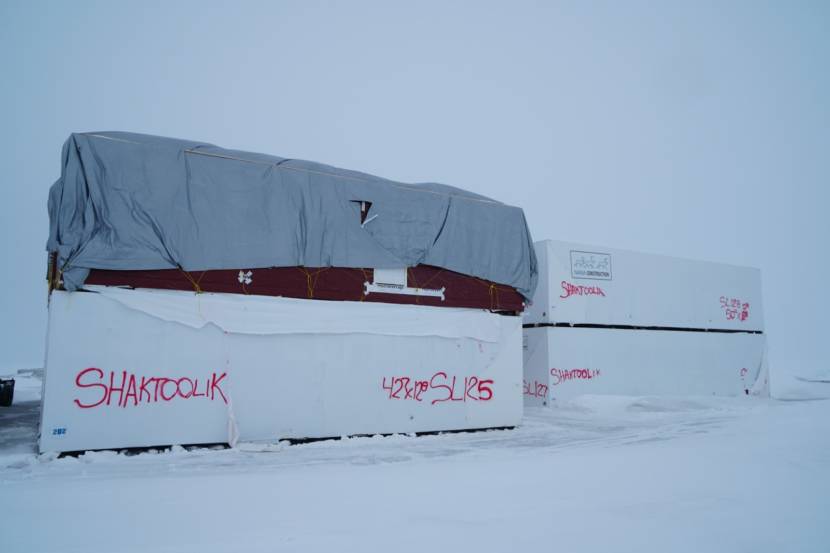
Shaktoolik’s four new modular houses, including Jackson’s, are stacked in Nome’s shipyard until the barge can access Shaktoolik in the spring. They were pre-built in Big Lake by NANA Construction last summer, but weather delayed their arrival.
Shipping containers stacked up in the snow
Shaktoolik’s four new modular homes sit in Nome’s shipyard. Recipients were chosen based on a number of criteria, including current housing conditions, veteran status, and length of time on the waitlist. (Photo by Erin McKinstry)

Jolene Lyon, CEO and President of the Bering Straits Regional Housing Authority, said that ideally they would have built them onsite to help create job opportunities for residents. But when the extra funding from the CARES Act and American Rescue Plan came in, they wanted to act fast.

“Our main objective is to get homes up and going in these communities. And in this instance, this was the fastest way to do it,” she said from her office in Nome. “Right now, COVID is frightening too many people. Being able to have your own space alleviates a lot of that mental stress.”

The tribal housing authority serves 17 villages in the Bering Straits region, which is the third most overcrowded region in the state. Lyon said building in such a diverse and remote region isn’t easy. From different soil types to harsh winter storms to permafrost, there’s no one-size-fits-all design.

“The challenges are not just in building a home, it’s designing a home that works for the environment in the community that you’re in,” Lyon said. “And so we ask the tribe as much information as to what they want, versus what we’ll be able to provide for that build.”

Normally, federal funding allows the housing authority to bring new homes to each village every decade, but the extra funding is helping them build more homes more quickly. In addition to the modular homes, they’re also bringing three new homes to the remote island of Diomede and four to Wales on the western tip of the Seward Peninsula.
A woman carrying a stepladder outside in the snow
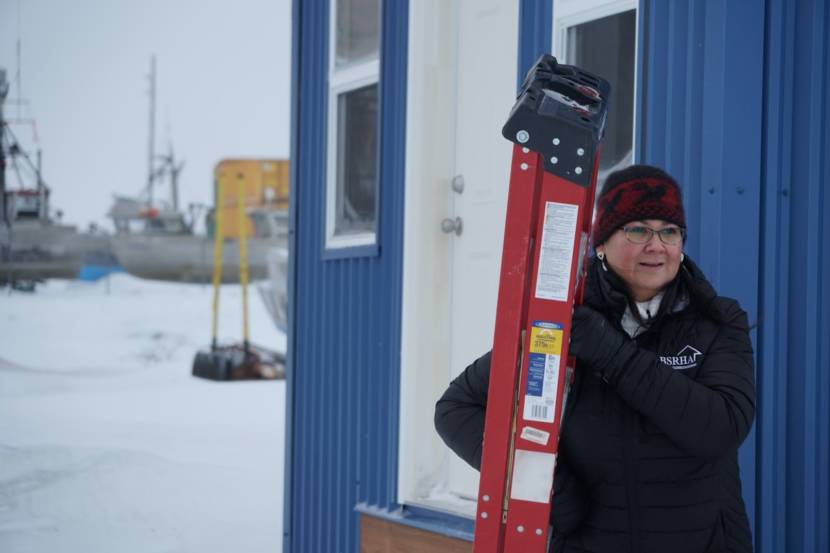
Bering Straits Regional Housing Authority President and CEO Jolene Lyon carries a ladder from the tiny home that will head to Diomede in the spring. The organization hopes to use the design as a model for future projects. (Photo by Erin McKinstry)

Still, it’s only a small dent in the problem.

“We don’t have the funding,” Lyon said. “That makes it very difficult and frustrating sometimes, when you know that the need is greater than that. And you could deliver on doing more but it’s just that’s not the reality of it.”

And even if they did have the funding, income requirements and program guidelines keep some people in the region from accessing new homes.

Lyon said the region needs an estimated 400 new homes to meet the need and alleviate overcrowding. They’ll tackle the problem one home at a time.
3.7 million more kids are in poverty without the monthly Child Tax Credit, study says

""
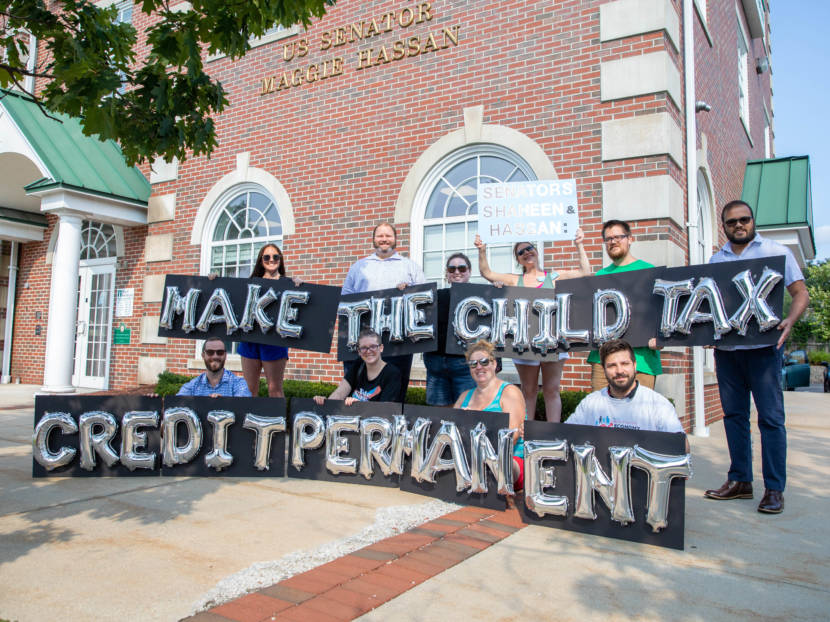
New Hampshire parents and other supporters gathered in Sept. 2021 to push for making monthly child tax credit payments permanent. (Photo by Scott Eisen/Getty Images for ParentsTogether)

Since the monthly payments from the expanded Child Tax Credit expired at the end of 2021, nearly 3.7 million more children are in poverty, according to a new study from Columbia University.

In the span of just one month, from December 2021 and January 2022, the monthly child poverty rate increased from 12.1% to 17%, the highest rate seen since the end of 2020. Black and Latino children experienced even higher increases in poverty, with 5.9% and 7.1% increases, respectively.

The study comes from the university’s Center on Poverty & Social Policy, which had been tracking child poverty rates and the impact of the monthly expanded Child Tax Credit payments. Since the payments started going out in July 2021, an increasing number of children were no longer in poverty. In other words, the longer the monthly CTC payments were in place, the more families it helped.

The CTC’s expanded program sent checks out monthly rather than one annual lump-sum of money during tax season. It also increased the amount of money getting sent to families, and expanded the number of families who were eligible for the payments. Families who file taxes will get the remaining half of the credit when they file this year.

Researchers say child poverty rates often fall during tax season as people get their returns. So, the second half of the credit received from filing taxes is “likely to result in substantial, but temporary, dips in monthly child poverty rates.”

After April though, researchers say the child poverty rate “could be persistently high through the rest of 2022” if the monthly Child Tax Credit payments aren’t renewed by Congress.

Copyright 2022 NPR. To see more, visit https://www.npr.org.

2 years into the pandemic, 5 Alaskans reflect on all that has changed

Five Anchorage residents reflect on how the COVID-19 pandemic has shaped their lives, two years in. (Alaska Public Media)

Over the course of the COVID-19 pandemic, Alaska Public Media reporters have reached out to dozens of Alaskans to see how the pandemic has changed their everyday lives. We’ve talked with business owners who had just opened their doors when the pandemic started and health care workers treating the state’s sickest residents and people in assisted-living homes reuniting with their families after some restrictions eased.

As the pandemic approaches the start of its third year, we wanted to check in with some of the Alaskans from those earlier stories. We asked about how the past two years have shaped them, how they’re adapting and their hopes for the future.

They spoke of illness, loss and isolation. But they also spoke about growth — a new baby, a new house — plus reuniting with friends in different ways and optimism that the worst is over.

Hear from five Anchorage residents, in their own words:

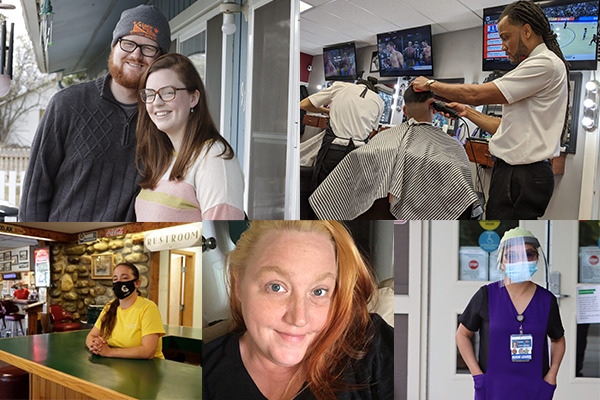
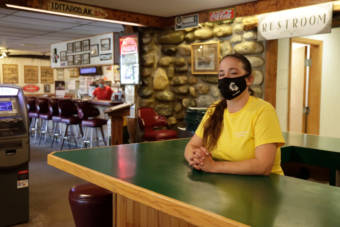
Melissa Hutchinson, a waitress at Gwennie’s Old Alaska Restaurant

A woman standing behind a bar
Melissa Hutchinson. (Matthew Faubion/Alaska Public Media)

“Early on in the pandemic, I was very concerned with the closures of the restaurants, concerned about all of the people who were going to be out of work, you know, myself and my coworkers included. The struggle of being able to pay bills and everything was very real. Luckily, in the short term anyway, the added unemployment did seem to help everybody through that.

As things progressed, when we re-opened, there were constantly changing protocols. We were continuously trying to keep everybody safe but keep everybody working. Then trying to get people back to work was really difficult — so lots of hours actually, putting in a lot of work trying to make things work with less staff than we had anticipated coming in the next year.

In an effort not to work people into utter exhaustion, we eventually had to take our night crew, bring as many of them as we could to days, so we could open a second kitchen for the summer. And yeah, so we’re strictly breakfast now. We close at 3 p.m.

We’re definitely, I think, past our major fear of the pandemic now. Pretty much everybody I know has gotten COVID. We’ve moved past it. I know several people who’ve lost someone that they loved, usually an older person, usually people with some very serious underlying conditions. So I think we’re kind of moving past the absolute terror phase of all of that, which is a good thing. It’s still a bit of a challenge, for sure, trying to keep everybody safe but still trying to get back to normal.”

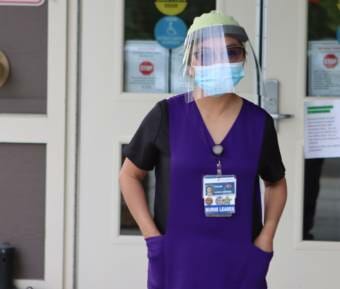
Connie Mast, director of nursing at the Providence Transitional Care Center

A woman wearing purple scrubs and a face shield
Connie Mast. (Photo by Tegan Hanlon/Alaska Public Media)

“From the beginning, I had to eat separately from them. I had to sleep separately from them. And when I go into the house when I get home from work, I have to tell my kids, ‘Don’t go near.’ I have to take a shower right away before I can even go out with them. I had some fear because I work in a health care facility. I even told them, ‘We don’t go out. No friends allowed in the home.’ They can’t go out with friends. We just have to stay more of the time.

But now, I don’t know, the key is really the vaccination. My kids are vaccinated, my husband, all in the family are vaccinated. So now, compared to before, we’re more open. There’s still caution when they go out. For me, there’s fear, but I want them to move on with their life as well. Two weeks ago, they wanted to go out to a movie. I had hesitation, but I let them go out. I said, ‘Go out with your friends, but always wear a mask. Do not eat or drink inside the movie theater.’ But we have to enjoy, we have to explore things. We have to go out for mental health and emotional support as well.

There’s a light at the end of the tunnel. This will be it. We’re moving forward toward a new 2023 without having this. It’s like normal, it’s like the flu, that we just have to be vaccinated every year to be protected, so that there will be no host that they can do another variant again. So I’m very optimistic that this will be the last thing, then we’re going to go to normal.”

Chuck Seaca, planned a wedding for July 2020, until the pandemic forced his plans to change

A young couple standing outside their front door
Chuck and Maggie Seaca. (Photo by Matthew Faubion/Alaska Public Media)

“My at-the-time girlfriend, now wife, and I had just moved back to Alaska, planning a huge wedding that summer. I think we were planning to have over 300 people up in Talkeetna. We originally decided to postpone the celebration, but to have a small ceremony on the glacier in Wrangell-St. Elias, where we had gotten engaged, and then we were planning in the summer of 2021 to have the big wedding reception.

At Wrangell-St. Elias, it was a wonderful wedding. I think there were 11 people there just out on the glacier. Super meaningful and super small. It was disappointing to not have family there. We figured they’d all be at the celebration next summer, and then we decided to cancel that celebration once COVID didn’t calm down.

Before the pandemic I was not married, didn’t have kids, didn’t own a house, and now all of those things are true. We bought our house last year and then had a little baby girl that just is about to turn 6 months old this month. She’s healthy and just started sitting up and she can giggle now. Of places to be during a pandemic, taking care of an infant and getting to work from home while that infant is around has been quite the opportunity. I think we’ve brought her outside of the house only a couple times throughout her entire life, so definitely excited to be able to bring her to other people’s weddings and see all the family that’s there.”

Shawn Idom, owner of Hair Science barbershop

A man cutting hair in a barber shop
Shawn Idom. (Photo by Mayowa Aina/Alaska Public Media)

“The pandemic for us, it was kind of a rough point in the beginning. It was the first time that we had ever been shut down, or had a mandatory shutdown. I’ve been in business for 15 years and that was the first time that had happened. So that was the biggest adjustment, being considered a nonessential worker, and I think we were out for 6 or 7 weeks. So that was a big adjustment.

And then just getting everybody back. We were always… being a barber you have to kind of stay up on the sanitation, disinfection and things like that. But we really wanted not only to make sure that our customers were safe, but to make sure that our staff felt safe. A lot of our customers were appreciative of a lot of the health things that we were doing to just make them feel comfortable. Because in the beginning there was so much uncertainty, like: ‘Do you get this if somebody just rubs elbows with you?’ There’s a lot of different things that we just didn’t know. So we just tried to do our part as a business owner, but also as Alaskans just trying to do the right thing, which is making sure we weren’t compromising anybody’s health.

I’m just grateful the doors are still open. There was some economic repercussions, even still, that people are going through. During the summertime, for example, tourism hasn’t been as busy as it usually is, so that’s something that all businesses are affected by. Because those are the extra population, extra people that come in every summer, that we just haven’t had in the last few years. But, the base of our clientele — the community that we’ve been able to rely on for years and years — they showed up. And I’ve got to contribute most of our success in being able to weather this to them.”

Tisha Pike, an Eagle River mother who started to homeschool her son after the pandemic closed classrooms

 A selfie of a woman
Tisha Pike is an Eagle River mother who moved her son to homeschooling after the pandemic impacted the Anchorage School District. (Photo courtesy of Tisha Pike)

“When the pandemic started, honestly, I had just had my knee replaced. I was one of the last surgeries before they shut everything down. So I was on lockdown a lot harder than a lot of people.

Our biggest challenge was schooling. The Anchorage School District was going to school, and then they shut everything down and they went to ASD virtual learning or whatever. And some kids just can’t hack that, my kids was one of those kids that couldn’t hack that, and we struggled for a while. If parents have time to sit their kids down and do homeschool, it’s fine. Most homeschool programs are set up so that it’s learn at your own pace. So if we can only do school one day a week, then we do school one day a week. If we can do it five days a week, we do it five days a week. There’s so much room and flexibility in there.

My big concern is him getting socialization. I mean, education or whatever, we can cover that with books and learning apps and all that kind of stuff. We can cover that part, but it’s the socialization that you can’t make up for.

We have certain parameters where we can’t go out and hang out with everybody because of the pandemic. I have health issues and I can’t catch COVID, I can’t get sick. So we’ve been hunkered down a lot more than other people, but what we have done is we’ve made sure everyone in our circle is vaccinated. He gets to play with his cousins or our friends’ kids, and we do that at least two or three times a week, so he is getting some socialization. But through elementary school, that’s when they learn how to behave and it molds them to be a better person and how they’re going to do at work and if they’re going to be an introvert or extrovert. So it’s been a struggle to make sure that he’s getting everything. I think we could do homeschool until fifth or sixth grade, but at some point he’s going to have to go back to public school.”

Note: The interviews were lightly edited for length and/or clarity.

This 16-year-old wanted to get the COVID vaccine. He had to hide it from his parents

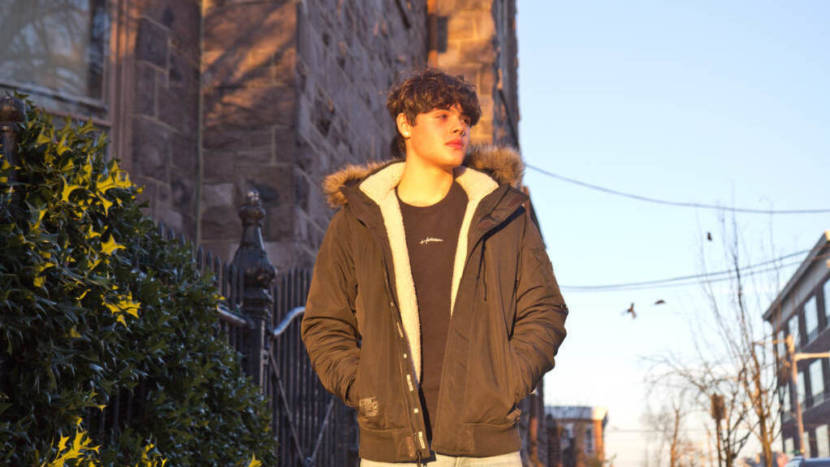
A portrait of a young man walking down a city street
Nicolas Montero, 16, wanted to get vaccinated but had to hide his plans from his parents, who are opposed to COVID-19 vaccination. (Photo by Kimberly Paynter/WHYY)

High school junior Nicolas Montero stays busy. He runs track, works night and weekend shifts at Burger King and keeps on top of his schoolwork at Neshaminy High School in Bucks County, Pennsylvania.

But Montero’s packed schedule is also strategic — he says it’s a way to stay out of the house.

Montero and his parents are separated by a political and cultural rift common throughout the U.S.: He says his parents are part of a small but vocal minority who oppose COVID-19 vaccination and have refused to let him get the shots.

“The thing about these beliefs is that they alternate by the day,” said Montero, who is 16. “It’s not one solid thing that they’re going with, so it’s just really baseless. It’s like one thing they see on Facebook, and then they completely believe it.”

The impasse eventually led to an act of quiet defiance: Montero traveled to Philadelphia, where a little-known city regulation permits children age 11 or older to be vaccinated without parental consent.

Not all states require parental consent for vaccination. Alabama allows teenagers 14 and up to consent to their own medical care, including inoculations. In Oregon, the age is 15. Rhode Island and South Carolina allow 16-year-olds to get COVID-19 vaccinations on their own. In Delaware, you need to be only 12 to get vaccines related to sexually transmitted infections (STIs).

That’s the case as well in California, for those 12 or older who would like to get vaccines for STIs. But now California state lawmakers are considering a bill that would allow those minors to consent to all Food and Drug Administration-approved vaccines, including the COVID-19 vaccines.

In Montero’s home state of Pennsylvania, minors can make their own medical decisions in specific circumstances — if they get married, are legally emancipated from their parents, enlist in the military or are pregnant, for example.

A November 2021 Kaiser Family Foundation poll found that 30% of parents with 12- to 17-year-olds said they will definitely not vaccinate their children. In light of this, two National Institutes of Health scholars wrote a piece in The New England Journal of Medicine advocating for states to expand their existing statutes to include COVID-19 vaccines as a medical treatment to which minors can consent.

Montero said he thinks most of his parents’ beliefs about the vaccines come from social media. “I try to explain to them that the vaccines are safe. They’re effective,” said Montero. “I try to explain that we know people that have been vaccinated, even our own family members who’ve been vaccinated for months and experienced no side effects. But nothing seems to get through to them.”

Montero’s parents did not respond to multiple attempts by NPR and WHYY News to speak to them for this report.

Though he was able to find a way to change his own situation, Montero worried about teens who can’t travel to a place where the laws are different. So he penned an op-ed in his high school paper, The Playwickian, advocating for the age of consent for vaccines in Pennsylvania to be lowered to 14.

“I know that this is something that teenagers all across the country are experiencing right now,” said Montero.

Last summer after school let out, he didn’t need to be in the suburbs to go to class, so he asked his aunts if he could come visit them in Philadelphia.

A portrait of a young woman standing in front of a shop window
Brittany Kissling, Nico Montero’s aunt, says there’s a divide in their extended family over the issue of COVID-19 vaccination. (Photo by Nina Feldman/WHYY)

“He gets to roam the city, get the city life. He loves that,” said Montero’s aunt, Brittany Kissling, who lives in Philly’s Port Richmond neighborhood. “The kid did not want to leave.”

A week turned into the entire summer.

While Montero was staying in Philadelphia, bouncing between his two aunts’ houses, his friends were getting their first COVID-19 shots. He was worried he might get sick. Worse, he was concerned he might transmit a coronavirus infection to his elderly grandmother.

“My abuela, she’s completely vaccinated, boosted and everything,” said Montero. But he said he was still worried that he could transmit a breakthrough infection.

So he started doing some research. And he found the handful of states that allow teens to get vaccines without parental consent.

To his surprise, Montero discovered that a bill proposing the law be changed in Pennsylvania had been introduced in the state’s House of Representatives. If the measure were to become law, it would mean that anyone age 14 or older could give informed consent to be vaccinated for any vaccine approved by the U.S. Advisory Committee on Immunization Practices.

As his research deepened, he learned that in some other states, minors could get vaccinated without parental consent. He also learned it was legal to do that in the city of Philadelphia.

Expanding access to vaccines

Philadelphia’s rule came into place in 2007, when the city’s Board of Health passed a regulation that allows anyone age 11 or older to get vaccinated without a parent, provided the young person can give informed consent.

Philadelphia Health Commissioner Cheryl Bettigole said the regulation is designed to remove any additional barriers to vaccination.

“It can be very difficult, especially for lower-income parents, to get time off work to go to those appointments,” Bettigole said. “These are low-risk interventions. It just makes it easier for parents and families to be able to make sure their kids are vaccinated.”

The regulation also went into effect the year after the FDA approved a three-shot regimen of the human papilloma virus (HPV) vaccine for young people, recommended in the years before they become sexually active.

It is common for states and municipalities to create specific legislation for minors with the aim of increasing access to vaccines that prevent sexually transmitted infections, according to Brian Dean Abramson, an author and adjunct professor of vaccine law at Florida International University’s College of Law.

“The rationale behind this was that you may have children who are being abused and don’t want their parents necessarily to be informed of the fact they’re seeking medical interventions for that, or children who may be sexually active and are afraid that their parents will react very negatively to that if they seek some kind of medical treatment.”

In turn, said Abramson, those policies have laid the groundwork for children to get vaccinated in the event of a disagreement like the one between Montero and his parents.

Montero was thrilled to learn of Philadelphia’s regulation. One summer afternoon while his aunt was at work, Montero found a Philadelphia pop-up clinic offering vaccines. He was anxious on his bus ride there — not about needles or side effects, but that his parents would somehow catch him and prevent him from getting his second shot.

He knew his aunts would support him being vaccinated — both of them had been, and Kissling manages a pediatrics office. But he was worried that if his aunts knew, word would get back to his parents. So he waited to tell them until after he got his second shot.

He returned to Bucks County for the start of the school year and arranged for a weekend visit in early September to see his aunts and grandmother again. He planned the trip just in time for his second dose.

“I did feel really liberated when I got my second shot,” Montero said. “I felt like I was protected.”

A growing family divide

When Kissling and her sister learned their nephew had gotten vaccinated, they were amazed.

“He was so proud,” recalled Kissling. “He had his card, and we were like, ‘Wait, when did this happen? How did this happen?’ ”

Just before Thanksgiving, Montero’s parents found out. They reacted the way Montero and his aunts worried they would: Kissling said Montero’s mother blamed her and her sister for influencing her son and for being neglectful enough to allow him to get vaccinated. The tension has grown to the point where Montero can’t even speak to his parents.

Kissling said her family would rarely even discuss politics until recently. Now, though, she said, it’s hard for the whole family to spend time together. She has left in the middle of dinners to drive back home to Philadelphia because the discussions have gotten so heated. She’s not expecting a resolution anytime soon — her family is one that’s more likely to sweep conflict under the rug than resolve it, she said.

“Now, there’s a divide,” said Kissling. “It’s sad because at the end of the day, family should be family.”

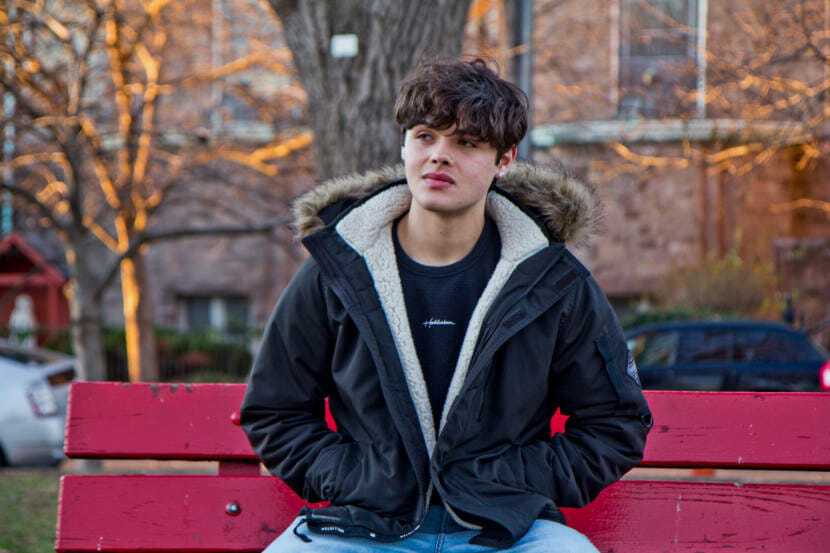
A young man sitting on a red park bench
16-year-old Nico Montero wrote an op-ed about getting vaccinated for his school’s newspaper. (Photo by Kimberly Paynter/WHYY)

To cope with the tension at home, Montero has doubled down on his extracurriculars: He’s learning to pole vault for the track team. He joined the school paper, on top of world language and environmental action clubs.

Each evening after school, he lays claim to one of the private rooms at the public library, where he spreads out his books across a small desk and diligently does his homework. Recently, he was working on a paper about the history of U.S. involvement in Puerto Rico, where his grandmother is from. He was reading a thick book on the Puerto Rican independence movement.

“When I started reading this book, like almost every single page, my mouth is just wide open,” said Montero. “Like, I couldn’t believe that these things happened to my people.”

He hopes to visit the island one day and is learning to cook Puerto Rican dishes from his grandmother in the meantime, which he can now do without constantly worrying that he might infect her.

Montero has ambitions to go to college in Washington, D.C. From there, he said, he wants to go to law school.

Kissling says she’s inspired by her nephew’s independence. But she knows he’s still a kid who needs support and guidance. That’s why she tries to stay in touch with him every day: texting, joking, asking him what he wanted for Christmas. (She expected AirPods or Amazon gift cards. Instead, he sent her a wish list of more history books about Puerto Rico.)

“He plays it off with a smile, and he laughs about it, and he says, ‘Aunt Britt, it’s just giving me more motivation to do what I need to do and get where I want to get,’ ” Kissling said of her nephew’s fraught relationship with his parents. “But deep down, I know it has to affect him. I’m 34. It would affect me.”

This story comes from NPR’s health reporting partnership with WHYY and KHN (Kaiser Health News).

Copyright 2022 WHYY. To see more, visit WHYY.

Juneau community mourns missing and murdered Indigenous people: ‘One of our strengths is our voices’

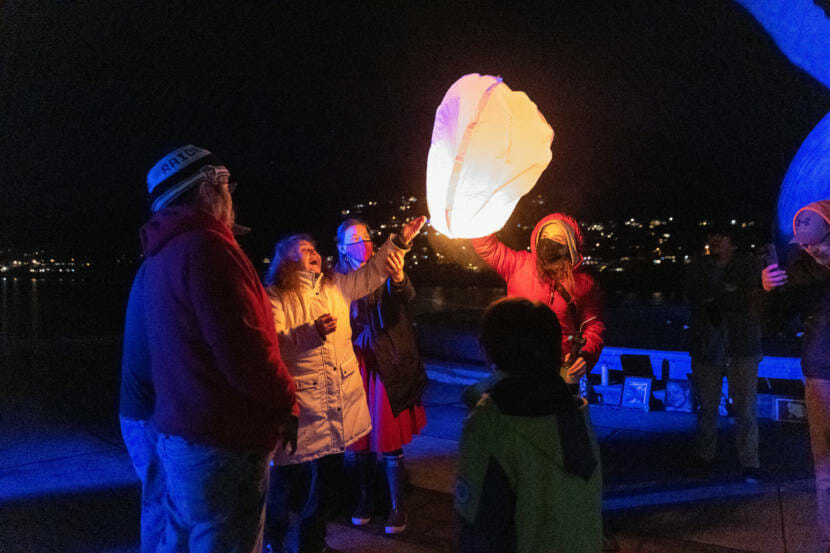
Attendees of a vigil honoring missing and murdered Indigenous persons light lanterns at Overstreet Park on Feb. 14, 2022, in Juneau (Photo by Lyndsey Brollini/KTOO)

Valentine’s Day this year marked three years since Tracy Day went missing.  

Day, who is Lingít, is one of several Alaska Native Juneau residents who disappeared and haven’t been found. About 30 people gathered on Monday night to share their stories and sing to their missing loved ones. 

A row of seven portraits sat propped up near the whale statue in Overstreet Park in Juneau. All were of Alaska Native people who went missing in Juneau or nearby communities. Most have not yet been found or were found dead. 

One of the missing people is Tracy Day.

Tracy Day has been missing since Feb. 14, 2019. (Photo courtesy of Juneau Police Department)

Mike Kanaagoot’ Kinville stood looking at the portraits, then turned to share his story about Day. His family and Day’s family have been close for generations, so he has a lot of them. Like, when Day was 14-years-old, and she ran away from home in Juneau and beelined for his house in Ketchikan.

“She had known that I was a drinker at one time and she came looking to drink with me,” Kinville said. “And I had gotten sober since then, so I was in a position to take her in and started doing foster care for her.”

Kinville said she stayed with the family for nearly three years. He said she had a lot of charisma — that she was joyful and mischievous at the same time — and that she was “kind of a smart aleck.” 

Kinville’s family ended up taking care of Day’s daughters, too. The older one, when Day went away to nursing school; the younger one, after Day went missing. 

“Our families are tied together really close,” Kinville said. My mom and dad took in Tracy’s mom when she was a teenager, too. That’s pretty Lingít too, the generational ties back and forth together,” he said.

Before Day disappeared, Kinville says she had her ups and downs. She struggled with substance use and her mental health. It’s the kind of thing a lot of families experience but don’t usually talk about. 

“You learn to guard your heart to a certain extent with situations as much as you can, but you still get bruised,” he said. “And, in this case, heartbroken. It’s just, the heartbreak can’t heal because we don’t know what happened to her.”

Kinville said that what makes it even harder is that before she disappeared, Day seemed like she was getting some stability in her life. 

“We were hopeful,” he said.

As he looked down the row of photos of Juneau’s missing again and talked about each of the families they left behind, he got choked up. 

“You know, I said heartbroken, but what it feels like is an ache in my soul,” Kinville said. “It’s just so deep, you know, deeper than my bones. This sense of this unresolved pain that goes on and on. It’s really difficult. My heart goes out to the families of these missing people. I imagine I have their sympathy as well. The other part about it that’s difficult is, you know, life goes on for everybody else, and things go back to normal, and that part of us is still missing.”

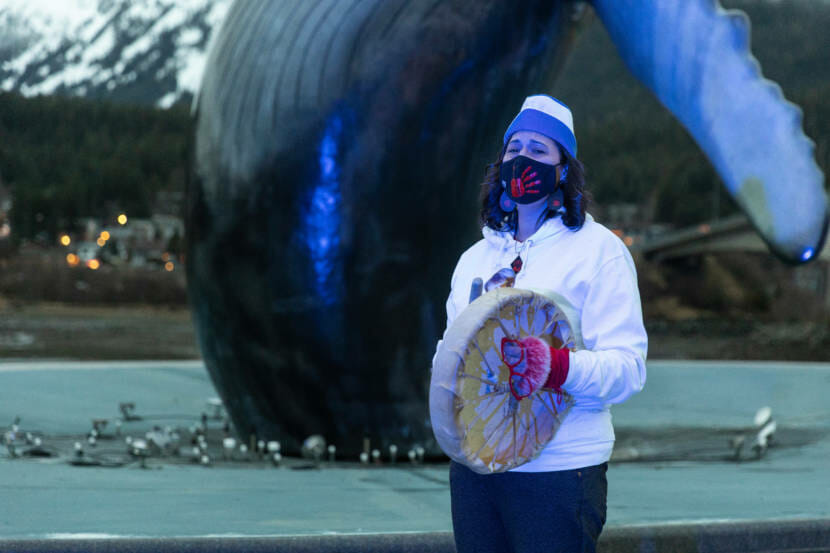
Jamiann S’eiltin Hasselquist drums at a vigil for Tracy Day and other missing and murdered Indigenous persons at Overstreet Park in Juneau. Hasselquist is part of the Strong Women singing group. (Photo by Lyndsey Brollini/KTOO)

Kinville said he’s hoping the vigil will help people understand what it’s like to love someone and not know what happened to them. It’s a wound that won’t close. 

“It’s important for a community to come together and not give up on the people who are missing and not marginalize these people. What’s common here is race and income bracket, you know. That’s not the society that I want to live in, and I think we can do better than this,” he said.

It’s a common criticism among families in Juneau who’s Alaska Native relatives have gone missing that they just don’t get the attention from the community or law enforcement that other people do. 

The Strong Women group sings at a vigil to honor missing and murdered Indigenous persons in Juneau, Alaska. (Photo by Lyndsey Brollini/KTOO)

Several women sang throughout the night for those who have missing and murdered Indigenous relatives.  They’re called Strong Women, and Rhonda Butler is one of them. Butler is the President of the Alaska Native Sisterhood Camp 2 in Juneau. She said she and the women who joined her sing to bring strength to families who are struggling from these losses. 

“One of our strengths is our voices, and if we don’t use our voices, no one will hear. So we’re here to share a couple songs with everyone here in honoring Tracy Day and all the other missing and murdered Indigenous peoples,” she said.

Candles lit in honor of Tracy Day and other missing and murdered Indigenous persons at a vigil at Overstreet Park in Juneau. (Photo by Lyndsey Brollini/KTOO)

The temperature dropped as the sun went down, but people stuck it out. They lit candles and sheltered the flames from the wind. Then they started lighting flying lanterns. 

Toward the end of the evening, as the snow started to fall more heavily, one woman said she wanted to sing a hymn for Tracy Day. Day’s twin sister Angela jumped up and ran over to join in. 

They huddled together, rocking and shivering as they sang “How Great Thou Art,” as the flickering light from sky lanterns faded off into the distance over Gastineau Channel.

The FDA postpones a highly anticipated meeting on the Pfizer vaccine for young kids

""
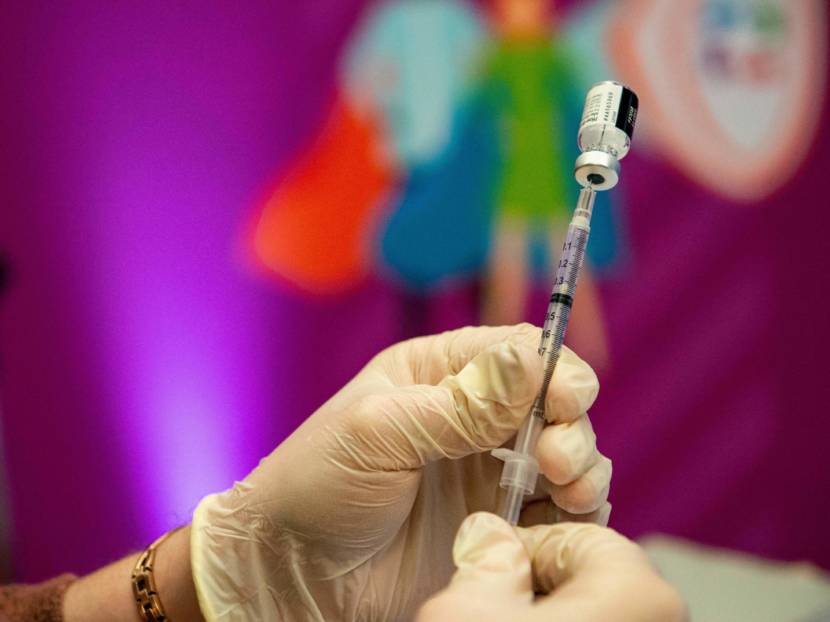
A medical worker prepares the Pfizer-BioNTech Covid-19 vaccine booster in Hartford, Connecticut, in January. (Photo by Joseph Prezioso /AFP via Getty Images)

A highly anticipated meeting of expert advisers to discuss whether to recommend the use of the Pfizer-BioNTech COVID-19 vaccine for young children has been postponed.

The Food and Drug Administration said Pfizer told the agency that new data have recently emerged regarding its emergency use authorization request for the Pfizer vaccine in children 6 months through 4 years of age.

The agency said that its preliminary assessment and need to allow more time to evaluate additional data led it to postpone the meeting scheduled for Tuesday, Feb. 15.

“We believe additional information regarding the ongoing evaluation of a third dose should be considered as part of our decision-making for potential authorization,” FDA officials said in a statement.

Pfizer and BioNTech were applying for authorization for the first two shots, given three weeks apart, of an expected three-shot regimen while the companies worked on collecting data for the third dose.

But a statement from the companies showed that they had changed course. The decision means access to a COVID-19 vaccine for the youngest children will be delayed.

“Given that the study is advancing at a rapid pace, the companies will wait for the three-dose data as Pfizer and BioNTech continue to believe it may provide a higher level of protection in this age group,” the statement said. “The companies expect to have three-dose protection data available in early April.”

The FDA needs time to review new data

“At this time, it makes sense to wait to evaluate a third dose before taking action,” said Peter Marks, director of the FDA’s Center for Biologics Evaluation and Research, in a briefing with reporters Friday afternoon. He said the flood of cases related to the omicron surge had caused new data to come in rapidly and that the agency needs time to analyze it.

In young kids, three shots appear necessary to achieve the full immunization. The third shot, given eight weeks after the second, isn’t a booster. The companies said in December that two shots for children older than age 2 but under 5 didn’t prompt the expected protection.

The vaccine dose under regulatory review is 3 micrograms per shot, a tenth of the amount given to adults and teenagers. For children ages 5-11, the dose is 10 micrograms.

The scheduled meeting would have looked at only the first two shots in the immunization series not the data for all three shots. That was an unorthodox regulatory move that might have gotten the authorization and vaccination moving faster. Pfizer and BioNTech said in a Feb. 1 statement that they applied for authorization this way because of the “urgent public health need.”

The FDA said it would do what it could to make a decision quickly about expansion of the Pfizer vaccine for the youngest kids.

“We realize the need for a vaccine for COVID-19 — even with the drop in cases,” FDA’s Marks said in the media briefing. “We will do our part to move ahead as fast as we can.”

Copyright 2022 NPR. To see more, visit https://www.npr.org.

Site notifications
Update notification options
Subscribe to notifications